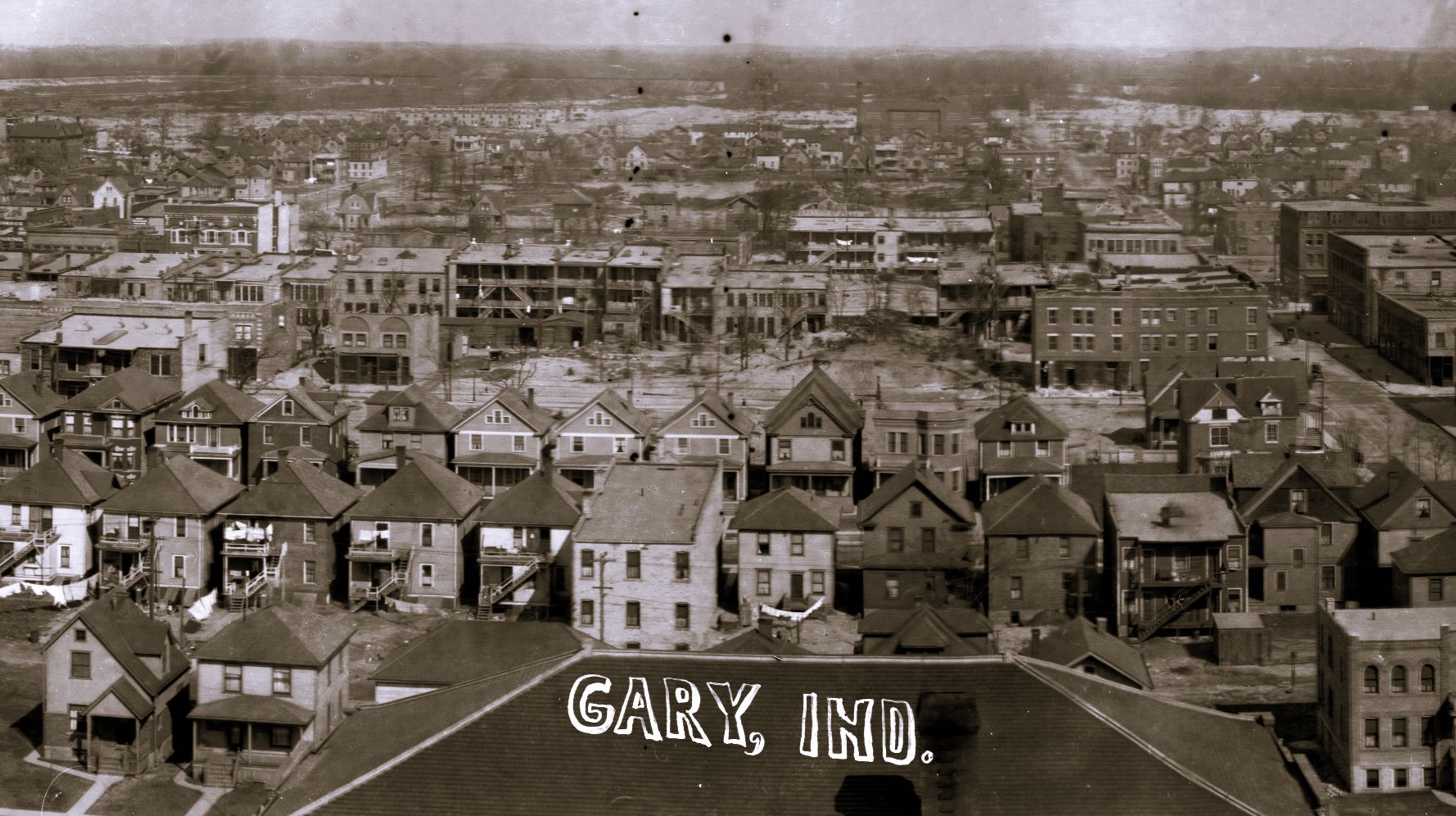
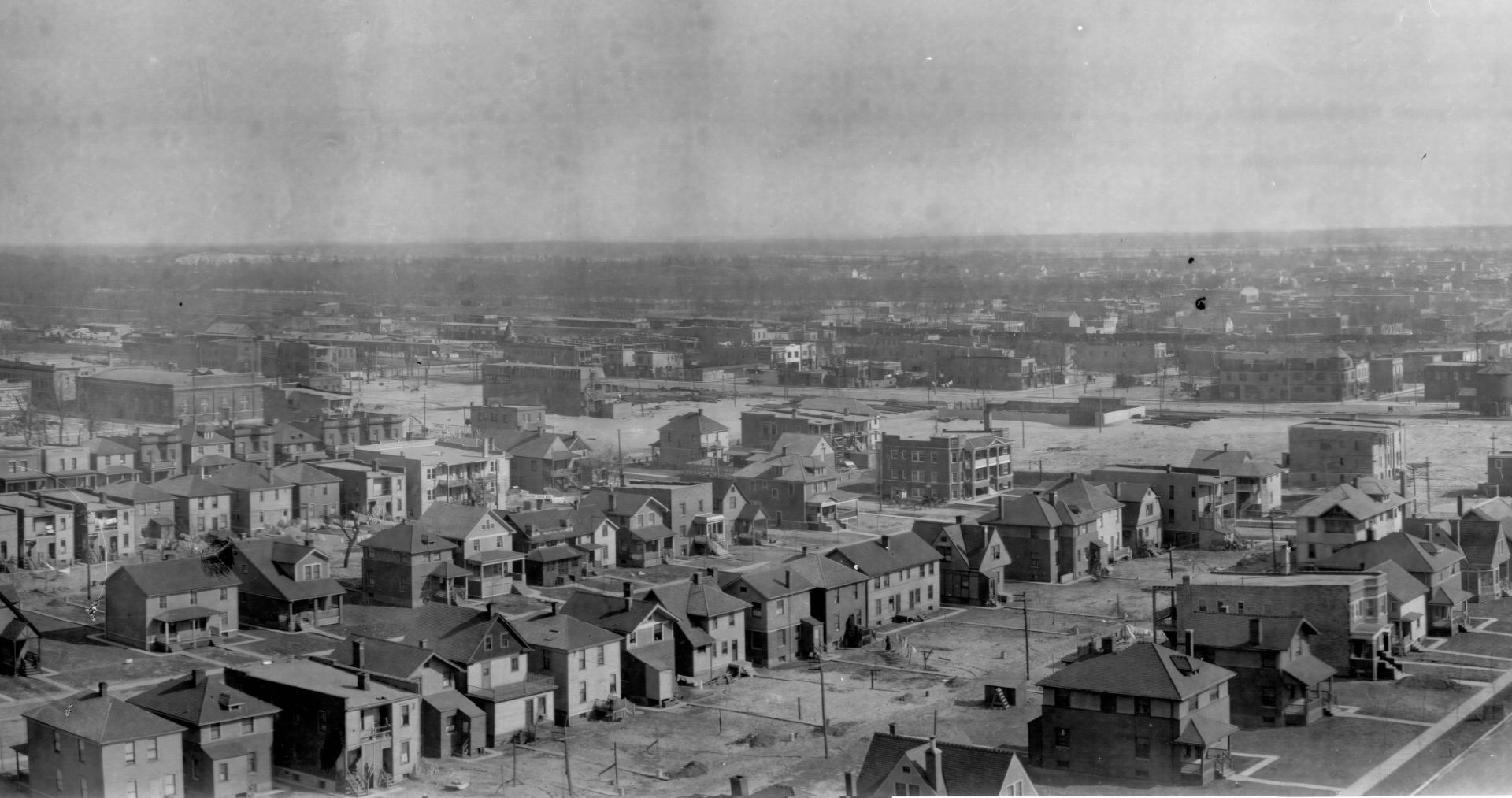
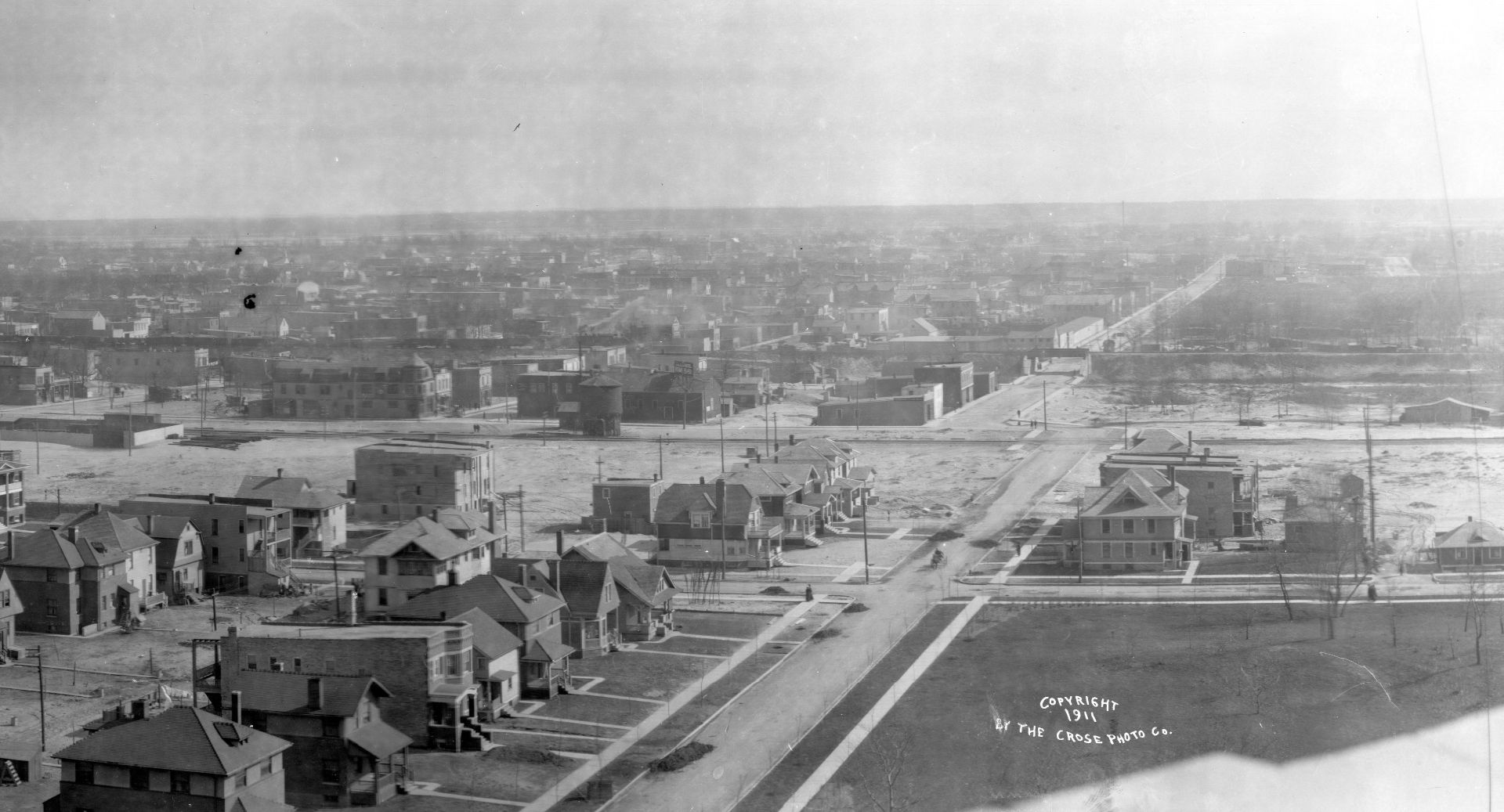
The situation today in Gary, Indiana is deeply rooted in its past. One of the most repressed and exploited cities in the United States, it was literally designed to be that way, born a company town entirely under the dictation of U.S. Steel and its chairman, Elbert H. Gary. Spending a week there investigating conditions in 1924, Karl Reeve pays particular attention to the city’s schools, and their role in codifying power and powerlessness in Gary.
‘Gary is Like a Prison House: City Workers Under Heel of the Steel Trust’ by Karl Reeve from The Daily Worker. September 24-October 1, 1924.
STEEL TRUST TO STAGE HUGE EXPOSITION IN GARY WHILE WORKERS’ JOBS DISAPPEAR.
GARY, Ind., Sept. 23. While the 20,000 workers in the Gary mills of the United States Steel Corporation are working only one, two and three days a week, with from three to six thousand men laid off, the Chamber of Commerce has chosen this time to stage an “Exposition,” to demonstrate the “prosperity” enjoyed by the steel trust town. The “Greater Gary Exposition,” being held all this week, whose largest exhibitor is the United States Steel Corporation, is an advertising and money making proposition. The Chamber of Commerce is to receive twenty per cent of all receipts on admission charges, and the carnival company staging the “show,” headed by Henry Marks, is to get the rest.
Two Bits to Get In.
The Gary steel workers are to pay twenty-five cents to get in and after they get in they are expected to buy something from the business men’s booths.
In conjunction with this campaign to sell the goods produced in Gary, the Chamber of Commerce is issuing special literature to catch the eye of business men and induce them to settle in Gary. The prospective manufacturer and business man is told in this literature that Gary is an open shop town, with plenty of labor and no unions except in the printing trades.
“There is available at all times a large surplus of high-grade female workers,” says the Chamber of Commerce bulletin entitled, “Gary Forges Prosperity.”
The Chamber of Commerce, dominated by the United States Steel Corporation, feels satisfied that there are no unions and that there is a surplus of labor, because under those conditions they can pay the workers much less wages and make more profits for themselves. “The average normal number of workers employed in Gary industries is 26,875,” says the Chamber of Commerce. “Over 90 per cent of the workers are male and are employed in the several units of the United States Steel Corporation.”
But the most important inducement held out to manufacturers, the most important proof offered by the United States Steel Corporation and the Gary banks that Gary is an ideal town–for the large employer of labor–is the low wages paid to the workers, 90 per cent of whom are admitted to be steel trust slaves.
44 Cents An Hour.
“The average minimum wage for industrial male workers is 44 cents per hour; for female workers, 25 cents per hour. With the exception of the building and printing trades, practically every establishment in Gary operates under the American plan,” says the Chamber of Commerce.
The United States Steel Corporation controls the lives of over 90 per cent of the citizens of Gary. Under the leadership of Elbert H. Gary, the Steel Trust has gained control of every institution in the town which molds public opinion and influences the thoughts of the workers.
The paternalistic Steel Trust takes the children when they enter school, and makes them into efficient slaves to be fed into the Gary steel mills. The steel mills quickly wear out the physical machinery of the workers, a season in the hot foundries and open hearth work marking permanent lines of suffering in the steel slaves’ faces. Therefore, the Steel Trust does as much as it can to build up the bodies of the steel workers while they are still school children, with the hope that they will last a little longer in Gary’s mill.
The fact that the public schools are designed to train the children of Gary’s workers for only one purpose in life is put into fancy language by the Chamber of Commerce. “In addition to excellent academic instruction, features of the ‘Gary Plan’ are the opportunities offered for healthful physical development and for natural selection by the individual student of vocational courses,” says the Chamber of Commerce.
The Gary Plan.
The “Gary Plan,” of which the Gary employers boast so much, teaches the children largely the narrow, confining factory work which restricts their immature minds rather than broadening them, as would scientific or cultural courses.
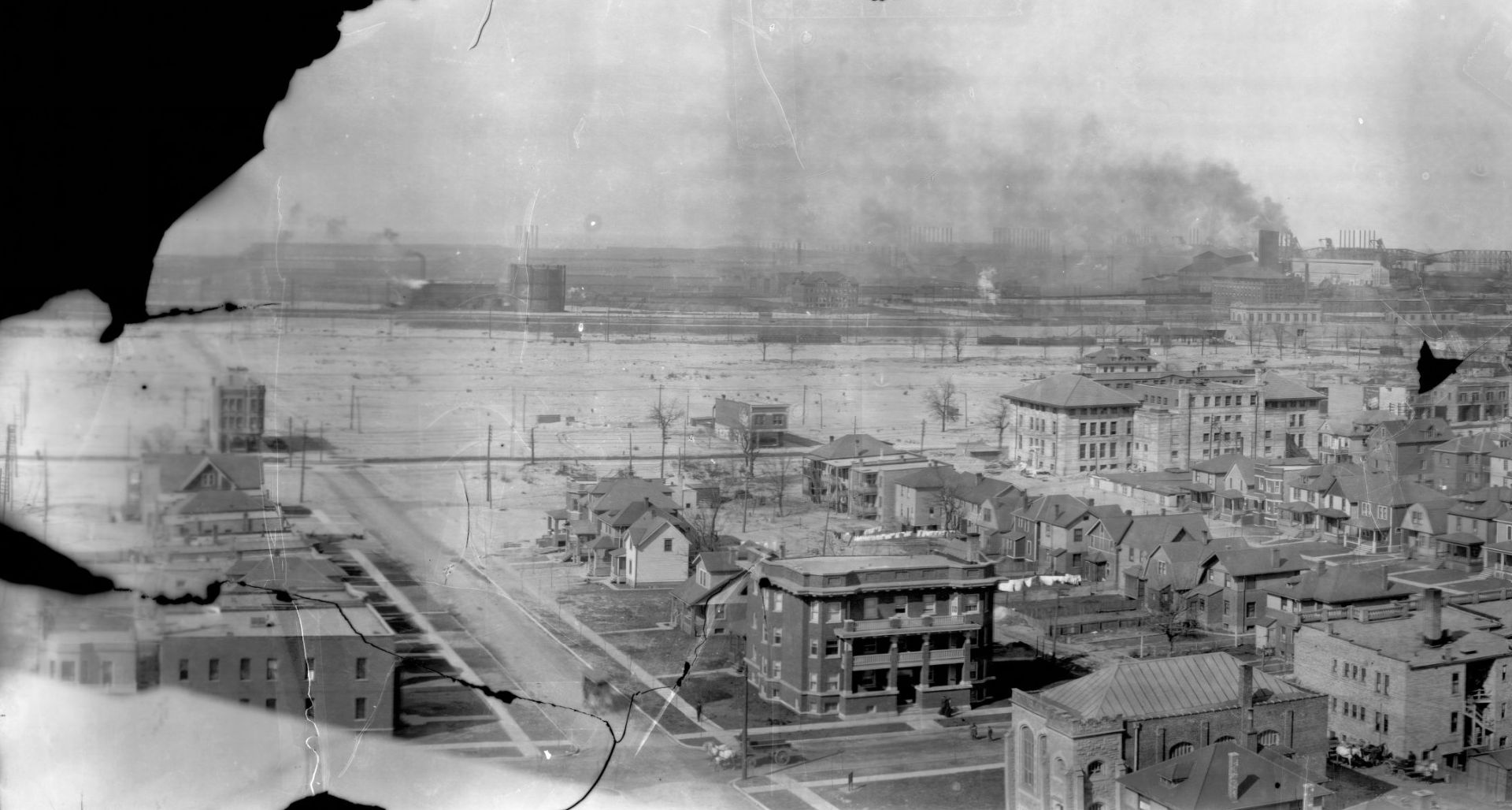
“In the high schools,” boasts the Steel Trust controlled Chamber of Commerce, “vocational training is offered in the following courses: animal husbandry, automobile mechanics, commerce, forge, foundry, machine shop, printing, shoe repairing, cooking, millinery and sewing.”
It is noticeable that most of these courses enable the Steel Corporation to transplant the children from high school to the semi-skilled steel mill trades. The town thus uses its high schools to take the place of a private trade school which Elbert Gary would have to maintain if he did not have the high schools to do that work for him.
There is only one local paper in Gary, The Post-Tribune, which is obviously, as all the Gary workers know, tool of the United States Steel Corporation. The Post-Tribune has been engaged for the last few months in trying to make the steel workers who can’t even buy a job anywhere, believe that there is no unemployment in the steel mills. The Chamber of Commerce realizes the value of the paper to the town’s non-union employers. “The educational value of the Gary Post-Tribune is worthy of especial note,” the Chamber of Commerce announces. “The Gary Post-Tribune is a potent force in the life of the community.” The service of the Post-Tribune consists of doing any dirty work for the Steel Trust which comes to hand.
The “Greater Gary Exposition” is proof that Gary is a splendid town for the employers and for the United States Steel Corporation, and a good town for the workers to keep away from.
***
CHANCES ARE 106 TO 2 FOR JOBS IN GARY.
“Boom” Talk is Bitter Pill to Workers
GARY, Ind., Sept. 24. If you want a job in the Gary mills of the United States Steel Corporation, it is best to check your self-respect outside and lose your identity in a mob of hungry unemployed. Even then the chances are 106 to 2 that you won’t get work, judging from my own experience.
“Where’s the employment office?” I asked a blue uniformed guard, who at first glance appeared to be a Chicago city policeman, but who on closer inspection WORE a badge revealing him as a private watchdog for the “Illinois Steel Company, No. 16.”
Guard Is Mum.
He showed me the employment office of the Steel Mills, about a mile down the private cement road belonging to the steel corporation. This guard was well trained in his job, for he would dispense no information. “Is it hard to get a job in here now?” I asked, but he put me off with the reply, “l don’t know anything about it. You’ll have to see the employment man.”
In front of the employment office were four more policemen, and a crowd of steel workers and laborers looking for a job. I went inside and was told to “Get outside and wait. Mr. Hoffman will come out in half an hour if he wants to hire anybody.”
Along with 106 other members of the army of the unemployed, I lounged around a small gravelled yard. They spent their time speculating on their chances of a job, and discussing the unemployment crisis.
I went inside again and asked a man with a blue shirt and a bald head if there were any jobs open. “I don’t know,” he replied. “Go outside and wait. I doubt it. We’ve laid off about 3,000 men and it’s hard now to get a job even as a laborer. Our men who are laid off are trying to get rehired and we have nothing for them. We very seldom hire an outsider these days.”
An Army of Jobless.
The army of the unemployed was well represented here. Some of them told me they had not eaten yet that day. One fellow about 18-years-old asked me for two bits. After the “lucky” ones get a job, they work in the blistering heat of the steel mills, or work around the plant as laborers in the open weather for a small non-union wage. Laborers, I was told, receive $4.40 for a full day’s pay, or $24.00 per week for a full week. But many of them are working on part time. A ten-hour day prevails.
“I don’t care much whether I get a job or not,” one Italian laborer told me. “When I work, I am going into debt all the time because I can’t support a family of five on the wages they pay. When I am out of a job it isn’t much worse. I fall behind whether I work or not.”
“I don’t know what the workers will do this winter,” a colored Negro laborer said. “It takes pull, now to get any sort of a job. If you want a job as laborer now you have to know some foreman or superintendent. These fellows don’t care much for the workers. They like to keep a large surplus of unemployed so there is no chance of forming a union.”
“Nothing Doing Today.”
Finally a beady-eyed individual stalked out of the employment office and the job-hunters flocked around him. He sauntered slowly around the yard, chewing tobacco, and spitting it out in a stream that did not interrupt his grin. He walked in again with the laconic remark that there was “Nothing doing today,” and the crowd stood around discussing the situation bitterly for a few minutes and then dispersed. Later I learned that two men were hired.
Just as the employment man emerged from the yard a newsboy came around selling the Gary Post-Tribune. “Look at that damn paper,” a worker next to me who bought one said. There were three headlines on the frontpage advertising a much-heralded steel “boom” which the Post-Tribune has been trying to cook up for the last half year. “That paper is controlled by the Steel Corporation,” the worker next to me said. “It prints stories every day trying to show that employment in the steel mills is always improving, but as a matter of fact, all the workers know it’s getting worse all the time. They hired about four hundred men to work on the new tube mill, but at the same time they fired about 1500 from the steel mills.” “John Gross, foreman of the tin-plate shop gets $17,000 a year salary and Glissen, head of the steel mills, gets over twice as much” another. worker, a good union man, told me. “No wonder the heads of the company are against the formation of a union in the mills.”
This process of being told “Nothing doing,” and going home to a hungry family is indulged in twice a day by the Gary unemployed. The afternoon I went out for a job there were 106, and I was told that many more than that generally apply in the morning. At the new tube works the same story was told. “Nothing doing today, you might stop around tomorrow, but we can’t promise you anything.”
United Medieval Fortress.
The Gary plants of the States Steel Corporation, covering an immense area, are as inaccessible as a medieval fortress. Surrounded by a high wire fence, spiked on top, they are further guarded from public gaze by a squad of several dozen special uniformed police. Every approach to the plant, every door and gate, is well guarded by these special police. The roads leading into the tube works and the other plants are privately owned by the steel corporation, and even the street cars to the plant go along these private roads.
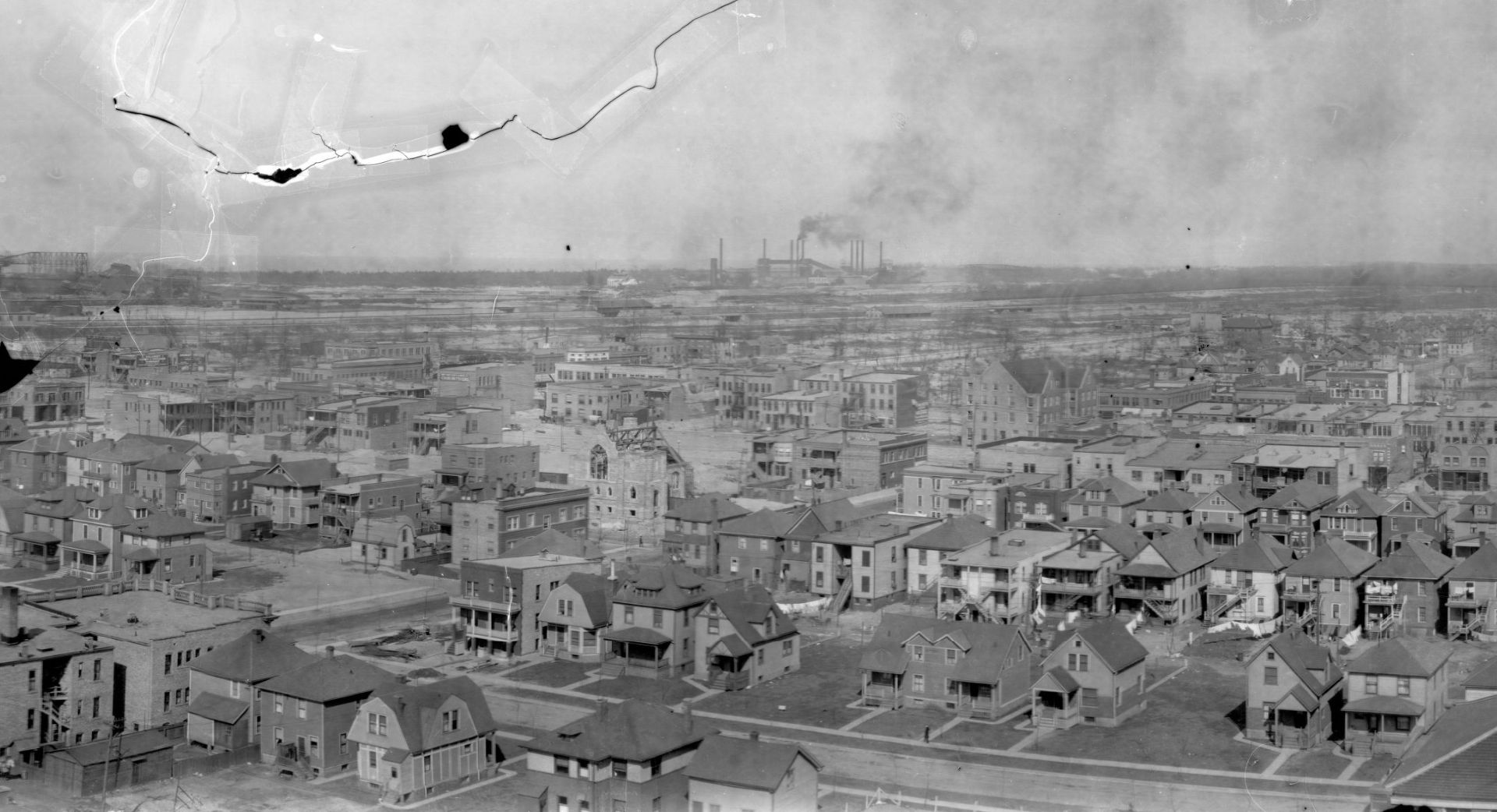
While I was standing there a Michigan automobile drove up and asked one of the “cops” for permission to drive over the private roads to see the plant. This was refused. The guards are used to psychologize the workers. Every worker who enters the plant is gazed on suspiciously by the guards. It is more like a prison than an industrial plant.
“You fellows browbeat the workers,” I remarked to one special policeman. “The company uses you to break up unionism talk, to spy on the workers, and keep them in the proper cowed frame of mind. I’ll bet a hat there is another layer of spies who are used to keep their eyes on you and see that you properly behave yourself.”
The guard refused to discuss the subject, but he grinned sheepishly.
***
GARY PLAN IS TO KEEP HIS SLAVES TAME.
Paternalism Is Paying Proposition
GARY, Ind., Sept. 25. The United States Steel corporation, under the management of Elbert H. Gary, president, carries out a paternalistic policy of making the workers believe they are well treated, while at the same time it pays the lowest of wages and extracts the most profits possible out of the workers.
The plan followed for some years by the United Steel Corporation has been to select some phase of the workers’ living or working conditions, start a campaign which yields the company millions of dollars worth of advertising at a small outlay, and at the same time strengthens the grip of the corporation on the lives of the workers and increases the usefulness of the employes to the company.
The Gary School Plan.
Such a plan was followed in the ballyhooing given the Gary school idea, whereby the workers’ children were taught semi-skilled trades which would increase their value to the company, when they should have been studying scientific and cultural courses to broaden their intellect. The Gary plan was based on the false capitalist psychology of such psychologists as Professor William McDougall, whose theory of rigid grades of intellect out of which it is hopeless for the average workers to climb, has been discredited. But that did not matter. Gary needed a system which would give him some advertisement and at the same time give him docile slaves, well-trained at an early age to be his vassals in the steel mills. So the campaign for the caste system in the schools was inaugurated.
A Safety First Drive.
The latest campaign of the United Steel corporation has been a “Safety First” drive, which makes the pretense of having the interests of the workers at heart. Following the spreading of red lettered signs throughout the plant pleading with the men not to get hurt, and the printing of numerous elaborate pamphlets praising themselves for printing these pamphlets, the capitalist newspapers throughout the country began to commend Gary for his beneficence to his employees.
But again in the safety campaign, Gary was doing something which gave his corporation a larger margin of profit, and which cost him little, and which was of no value to his employes.
Gary admits that his paternalism toward his employes and his safety campaign is a business proposition, designed to keep down the class conscious and revolting spirit of the working class. “I want to tell you gentlemen that in my opinion one of the greatest questions for consideration by the capitalists of America today is the question of the treatment of their employes,” Gary said in a speech to the iron and steel manufacturers of the country as far back as 1911. “SO AS TO MAKE IT CER TAIN IN THIS COUNTRY THERE WILL NEVER BE ANY EXCUSE FOR THE ADVANCEMENT OF THE IDEAS OF THE ANARCHIST OR SOCIALIST. IF THOSE WHO REPRE SENT CAPITAL, THOSE WHO REPRESENT POWER, WILL MAKE IT ABSOLUTELY CERTAIN THAT NO EXCUSE IS OFFERED FOR ATTACK ON THE PART OF THE MEN WHO ARE EMPLOYED THEY WILL BE DOING SOMETHING FOR THEIR COUNTRY WORTH WHILE.”
Later, when Gary’s paternalism was in full swing and when he was reaping millions of dollars out of his slaves in war time profits, Gary said, at a meeting of the presidents of the subsidiary companies of the Unite States Steel corporation in 1919: “Above everything else satisfy your men if you can that your treatment of them is fair and reasonable and generous. Make the steel corporation a good place for them to work and live. Give them playgrounds and parks and schools and churches, pure water to drink, opportunity to keep clean, places of recreation, enjoyment, rest, TREATING THE WHOLE THING AS A BUSINESS PROPOSITION, DRAWING THE LINE SO THAT YOU ARE JUST AND GENEROUS AND AT THE SAME TIME KEEPING YOUR POSITION AND PERMITTING OTHERS TO KEEP THEIRS, RETAINING CONTROL AND MANAGEMENT OF YOUR OWN AFFAIRS, keeping the whole thing in your own hands.”
Purely Business.
Gary thus reveals that the paternalism of the United States Steel corporation is a purely business proposition, designed to give the employes just enough consideration to prevent them, from demanding a living wage, but giving them consideration only in those things which increase the profits of the company and at the same time buy the steel trust some cheap and valuable advertising. Gary issued orders that money wanted for added safety devices would gladly be advanced by the company to its various branches.
But the large number of accidents in the Gary plant continue in spite of the much-heralded safety campaign. The steel corporation is forced to admit these accidents in its own pamphlets. It is worthy of note that statistics on accidents and violent deaths within the Gary mills are not revealed in the safety pamphlets of the company.
They do, however, declare that, “Hand labor causes nearly one half of all accidents.” In this way they try to place the blame for their accident and death rate upon “hand labor,” and attempt to shift the responsibility from their shoulders, where it rightfully belongs. They further admit that they have not decreased accidents to any appreciable extent in spite of all their “safety” blustering, and try to excuse themselves for the accidents by declaring in Safety Bulletin No. 10: “A majority of these accidents cannot be controlled by safety devices and appliances.”
***
GARY WORKERS UNDER YOKE OF STEEL TRUST
City is Like Prison House—Little Children Feel the Iron Grip
GARY, Ind., September 28. Founded by the company of which Elbert H. Gary is chairman and built by one of the biggest trusts in the world, which thru the firm of J.P. Morgan, fiscal agents for the corporation, is connected with all the other large American trusts, the town of Gary is a prison house for the steel trust slaves.
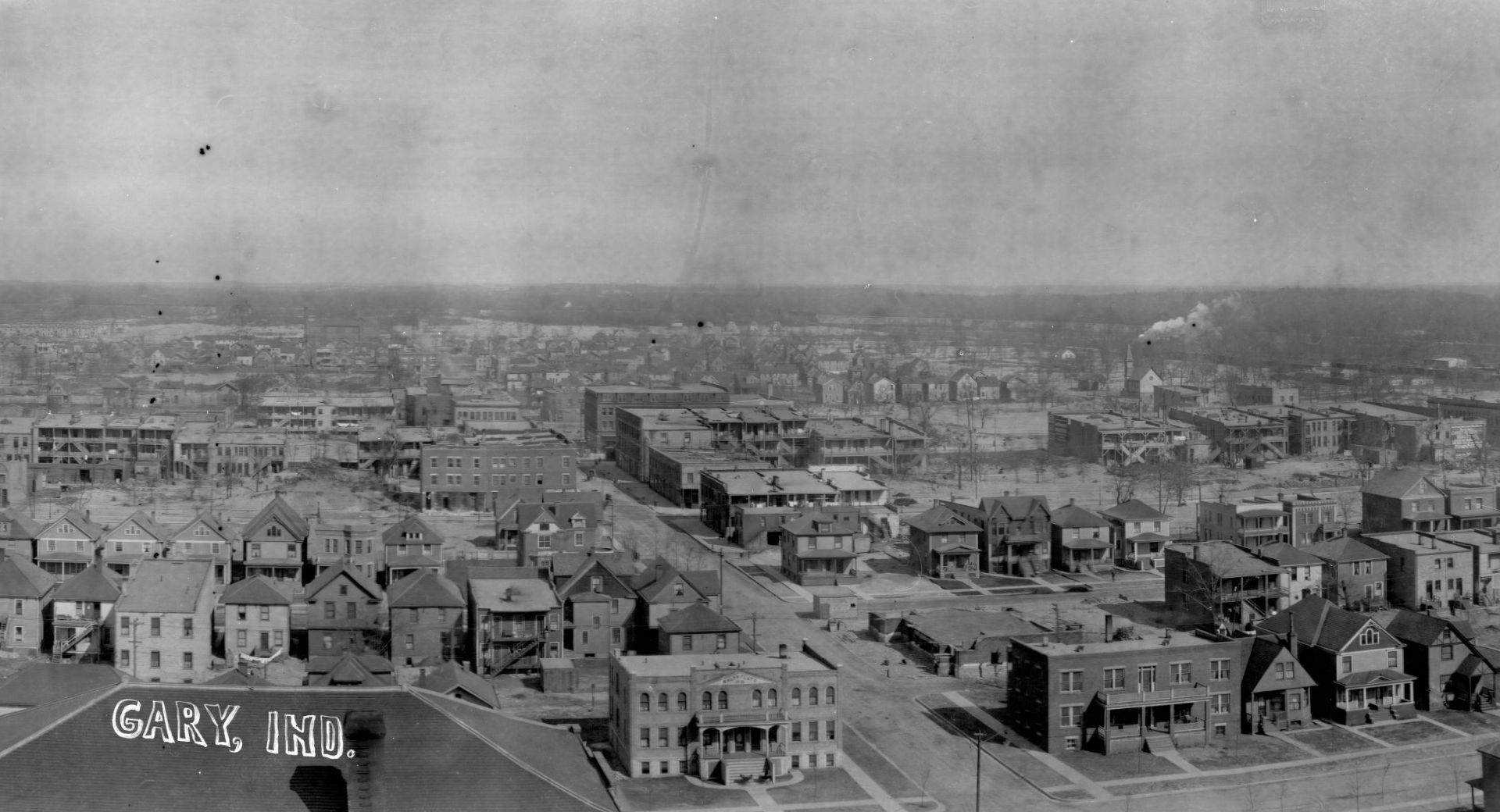
The steel workers of Gary, forming over 90 per cent of the population, are held in the vice of the most complete and vicious paternalism and of the lowest of low standard non-union living conditions, to be found anywhere in America.
The United States Steel corporation owns the city of Gary, in all its branches. “In 1906, the United States Steel corporation decided to build a big steel plant in the middle-west and selected the sand waste on the shore of Lake Michigan—and thus was the city of Gary born,” says Arundel Cotter, in “The Authentic History of the United States Steel Corporation.”
Trust Owns Buildings.
Every institution in the town is owned or controlled by the steel trust, Even the public library was donated by the steel barons, Andrew Carnegie donating $65,000 for the erection of the building and the Gary Land company, owned by the U.S. Steel corporation, supplying the site for the library. The Y.M.C.A., another institution which is always at the beck and call of the steel trust, has good reason to back up Elbert Gary in his oppression of the workers. Gary donated the large Gary Y.M.C.A. building to that organization at a cost of $260,000. The Gary hospital, we learn from Cotter’s book, was built and is maintained by the United States Steel corporation. The United States Steel corporation incorporated the town, laid out the streets, laid the sewers, sold what real estate it wanted to dispose of, built the homes of the workers, besides supplying the only place where the residents of the town had a chance to earn a living.
Morgan’s Gold.
From its very inception, the town of Gary was owned in every way by the United States Steel corporation, and at the present day a worker cannot live in Gary without taking upon himself the oppressive yoke of one of the most despotic monopolies in existence. The Gary Land company owned by the steel trust, its first subdivision erected 1,200 residences, many modern apartments, and 150 business blocks. The Gary Land company now owns at least 13 subdivisions.
A few years ago the city limits of Gary comprised 26 square miles, only eight square miles of which belonged to private owners, most of these eight square miles being bought from the U.S. Steel trust on agreements whereby to a large extent the purchaser had to obey the wishes of the steel corporation.
Children Also Enslaved.
The Gary public schools were placed by Elbert Gary in the hands of W. Wirth, who developed for his master the Gary or platoon school system. Two school buildings, the Emerson and Froebel, were erected with steel trust money, and Gary’s wishes were served in the manner of training the children of the steel trust slaves.
Gary was founded by the steel trust for the purpose of making as much money as possible with as little outlay as possible. “Every device for the saving of time, material, labor and money to obtain the best product was adopted by the United States Steel corporation in founding Gary,” we are told by Edward Garstin Smith in a frank tale of the founding of Gary, entitled, “Gary, Indiana, America’s Magic City.” The public schools of Gary proved no exception to the rule of making profits from the workers at least cost.
“Social, political and industrial changes have forced upon the school the responsibilities formerly laid upon the home—now the school is charged with the physical, mental and social training of the child,” states Lee F. Hanmer, in a recently published report on the Gary school system. A little later he further reveals that the platoon school system is made to serve the steel trust by placing most of the time and energy of the courses on physical and vocational training. “Progress was rapid,” says Hanmer. “Painting and printing were added in 1911. The foundry, forge, and machine shop came in 1913.”
Factory and Forge.
Even the elementary grades are departmentalized. Statistics given for the Emerson, Froebel and Jefferson schools, the largest and best known platoon schools” reveal this predominant emphasis on vocational and physical training, “the ranking of studies on the basis of time,” says Hanmer’s report, “allows 2,697 hours for physical training; 1,605 hours for drawing and shop, and 1,600 hours for auditorium work” Thus 24 per cent of the total time allotment in the elementary grades is devoted to physical training, 14 percent to shop work, 14 percent to auditorium work, and only three per cent to history, two per cent to geography, three per cent to spelling, Seven per cent to language, and five per cent to science.”
Slaves After Death.
In childhood the residents of Gary are taught in the public schools only those things which will make them better slaves of the steel trust. When they grow up and carter the mills, they get their wages from the U.S. Steel corporation on a non-union wage basis. They read the Gary Post-Tribune, practically owned by the steel trust. For entertainment they have to patronize cheap theatres owned by chamber of commerce members who are dominated by the steel trust
They have to pay rent to the steel trust, and buy goods of the, steel trust or from concerns dominated by the steel trust. If they ever had and money to put in the bank they would have to bank with a steel trust bank. When they die they are no doubt buried in ground owned by the United States Steel corporation.
***
GARY SCHOOLS FACTORIES FOR DOCILE SLAVES.
Platoon System Makes Steel Mill Robots
GARY, Ind., Sept. 29. The Gary or platoon school system, which is the pride of the head of the United States Steel Corporation, Elbert H. Gary, admittedly neglects the minds of the children while it aims to produce steel mill slaves, who will not bother to inquire into fundamental principles involved in the industrial system.
The platoon school system has been tried out in Gary, under the patronage of the United States Steel Corporation, which founded the town and controls! its policies—and has been found a failure.
Gary System Is Ineffective.
Even an investigation conducted by the board of education of Gary itself, has admittedly found the Gary system ineffective. The platoon system which has recently been the subject of the condemnation of the Illinois and Chicago Federations of Labor, teaches the children to become mere machines, able to perform such mechanical work as is required in the steel mills, but learning nothing about basic principles involved in their work and study.
For a long while in the report on the Gary schools, conducted by the general educational board, at the request of the board of education and the city school superintendent of Gary, the subject that is being constantly borne in mind by those who know their Gary, is dodged. But the heat and smoke of the steel mills cannot be escaped in a report dealing with Gary’s peculiar educational institutions. After many chapters of dodging, the thing that has been suppressed finally bobs to the surface in an unguarded moment—the end of the chapter on “Industrial Work.”
“It is only fair to add,” says the report written by Abraham Flexner and Frank P. Bachman, “that the training received hy some of the pupils in some of the shops proves of direct vocational value when they enter certain of the industries on which the prosperity of the city is based.”
Report Is Lengthy.
This report is published in eight volumes, dealing with every phase of the Gary platoon school system. Of course, it is to be expected that the board of education, so close as it is to the United States Steel corporation, and dependent as it is upon the steel industries of the town for financial upkeep, is expected to favor the Gary plan. However, glaring defects are pointed out even in this prejudiced report.
In spite of protests that “The shop work in Gary is not primarily a preparation for earning a livelihood as a mechanic or artisan,” the investigators are forced to conclude that, “The Gary scheme springs from a thorough analysis of the existing social situation. The truth of this statement being particularly evidenced by the provisions made for industrial work for boys, household arts for girls, and recreation for all.” In plainer language, the Gary system aims to fill the need for an adequate supply of trained steel mill slaves for the steel trust mills.
The training given the pupils in the platoon schools however, is only broad enough in scope to enable them to do the mechanical tasks required of them in the U.S. Steel corporation’s mills. It is admitted in the report that fundamental principles are sacrificed to superficial industrial processes.
Do Not Develop Minds.
“Somewhat elaborate practical and written tests were given in order to provide an objective basis for judgment as to what is achieved by the system of industrial instruction,” says the board of education report. “In general, it is fair to say that while displaying considerable practical competence, pupils had not been led to reflect and had, in consequence, extracted little of intellectual value from their shop work.
“To boys working in the foundry a test in the use of patterns was given. On the whole their work was well done; they attacked the task with readiness and confidence, and they carried it through in a business-like way, with little loss of time through mistakes or hesitation. A written examination and oral questions showed, however, that only limited attempts had been made to form a background of ideas and knowledge drawn from this and related industries.
“In order to test the work in the machine shop of the Emerson school, the seven high school students who had the longest experience in this shop were provided with a piece of soft rolled steel, which they were required to manipulate in accordance with the outline of a blue print furnished them. Subsequently the boys took a written test designed to ascertain how far they comprehended the reasons for what they had done and also whether they had been led to see the wider uses and implications of the machines and processes that they had been employing. The boys displayed confidence and a fair degree of skill in dealing with common machine operations, but oral as well as written questions showed that their grasp did not penetrate below the surface.”
Turn Out Docile Slaves.
The Gary school system, which the employers are attempting to saddle on the children of cities throughout the country, thus brands itself as superficial. The platoon schools teach the children, to be docile slaves in the steel mills, who know the processes of blacksmithing, forge and foundry work, but who do not have their minds developed. “The shop men are doubtless under the impression that they are constantly giving instruction,” says the report, “but the truth is that in a large sense instruction has not been a part of the serious business of the department.”
The investigators, as was to be expected, term the Gary plan of developing industrial slaves, “A large and generous conception.” But even they are forced to admit that this conception “falls too far short of execution,” because it does not develop the mind of the child. They evidently did not realize that Elbert H. Gary is not interested in “the mind of the child,” but is interested in developing “hands” for his steel mills who know the processes required about fundamental principles. This inquisitive state of mind, which is bound up with all true education, would be dangerous to Gary’s profit system and would endanger the millions of dollars profits extracted from the Gary steel trust slaves.
Good Thing for Gary.
“After making every possible allowance, it remains to be admitted that in respect to administration and instruction; Gary might fairly have been expected to make a better showing,” the report concludes.
The platoon system fails when the educational welfare of the children is the criterion. When the needs of the Gary steel mills for physically strong, docile, and contented steel mill slaves is the test, the Gary platoon system is a howling success.
Tomorrow I will write about another phase of the platoon school system, the steel trust’s brainchild.
***
GARY SCHOOL PLAN TRAINS MENTAL ROBOTS.
Platoon System Good for Plute Class
GARY, Ind., Sept. 30. The Gary school plan, or the platoon school system, is the last word in the dictatorship of the capitalist class of large employers as to what the children of the workers shall study. Elbert H. Gary, head of the steel trust, has been busy for many years in all parts of the country endeavoring to establish his plan of employers’ control of workers’ education.
The platoon school system has three main features the importation of industrial work into the school, the departmentalization of study even in the elementary grades and the machine-like standardization of each study which is controlled by a supervisor.
The dictation by supervisors of exactly what each teacher should give out to the pupils makes it easy for the employers, through control of these supervisors, to dictate the entire educational training of the children wherever the platoon schools prevail. The dictatorship of the capitalist class thru these supervisors is an attempt to drive liberal thot out of the schools and further establish the “goose-step” described in Upton Sinclair’s book of that name.
Capitalist Dictation.
“The real thing in the Detroit system was the fact that somebody or some bodies were dictating and dominating to the last detail the teaching of every subject,” one of the committee of nine Chicago teachers who investigated the platoon schools of Detroit for the Chicago Teachers’ Federation, reported a few months ago.
“I met the same material everywhere, even the same sort of presentation of that material. The teachers, so far as they took any part in the presentation of that material at all, seemed to say pretty much the same thing. The children all talked alike and everything seemed to be uniform all over the city.
Supervisors In Plenty.
“The reason, I found, is that in Detroit they have a supervisor of social science, a supervisor of literature, a supervisor of music, a supervisor of art, a supervisor of physical education, a supervisor of safety education and a supervisor of health education. I think this uniformity is very dangerous. I hope I shall never live to see a world where all people act alike and talk alike and think alike, if they think at all.
“Efficiency, the efficiency of the business world, is the watchword of the Detroit schools.
This is indeed the goose-step in the public schools of America. And the system of supervisors is a part of the Gary plan, and was established in 1906 when Elbert Gary and the steel trust founded the town of Gary and made her school system a nucleus for the propagation of the Gary or platoon school system plan, which eliminates thinking, but produces industrial robots.
Judge Gary Busy.
The activity of Elbert Gary in attempting to establish this dictation throughout the country has been widespread and persistent. On last January, even the conservative Hearst puppet, Mayor Hylan of New York City. mixed up in a political squabble, revealed that Gary was active in permeating the educational system of New York City with his “industrial slave” idea. “The people of this city know what an uphill fight it has been to make progress in the construction of public schools because of the malicious propaganda and obstruction of the Gary system,” Mayor Hylan declared on January 12. “The Gary system, the Rockefeller educational group, and their man Howard Nudd of the self-styled Public Education Association, have always had the policy of retarding the construction of needed public schools, thus creating congestion, which in turn tends to a denial to the children of a fundamental education and the limiting of their training to workers for the mill and factory. These men continue to squawk about the public schools of our city, simply because we have refused to allow our schools to become recruiting stations for the Gary-Rockefeller interests.
Factory Slaves.
“These same interests are attempting to retard the policy of fitting the children for the professions and the higher walks of life instead of condemning them to the daily life that begins and ends with the shrill whistle of the mill or factory.”
In a meeting in the Methodist church at Evanston last February, students of Northwestern university further exposed Elbert Gary’s attempted domination of the child minds of the country when they disclosed that “Not only are Elbert H. Gary, of the United States Steel corporation, and Robert W. Campbell, his son-in-law, on the board of trustees at Northwestern, but there are three or four other men also identified by retainer with the steel trust.”
Filling Minds With Dope.
The Gary school system fostered and propagated by the United States Steel corporation, sometimes called the platoon school system, or camouflaged by the harmless sounding name “work, study, play schools,” is leading the assault for the molding of the minds of America’s children along capitalistic lines.
Elbert H. Gary, chairman of the United States Steel corporation and champion anti-unionist, presumes to assert his right to dictate the type of schools which shall prevail in America. He has formed a united front of capitalism with the capitalistic politicians and heads of our schools to whom he dictates policies which favor the employing class.
Charles W. Eliot, who was president of Harvard for 40 years before he died declared, “A scab is a good type of American hero,” and that “every laborer should experience a sense of joy in his work.” Under the Gary platoon school system the employers, headed by the steel trust, attempt to use America’s educational system to inculcate into the children’s minds) the idea that to succeed they must be good slaves to their masters–the employers.
The Daily Worker began in 1924 and was published in New York City by the Communist Party US and its predecessor organizations. Among the most long-lasting and important left publications in US history, it had a circulation of 35,000 at its peak. The Daily Worker came from The Ohio Socialist, published by the Left Wing-dominated Socialist Party of Ohio in Cleveland from 1917 to November 1919, when it became became The Toiler, paper of the Communist Labor Party. In December 1921 the above-ground Workers Party of America merged the Toiler with the paper Workers Council to found The Worker, which became The Daily Worker beginning January 13, 1924.

