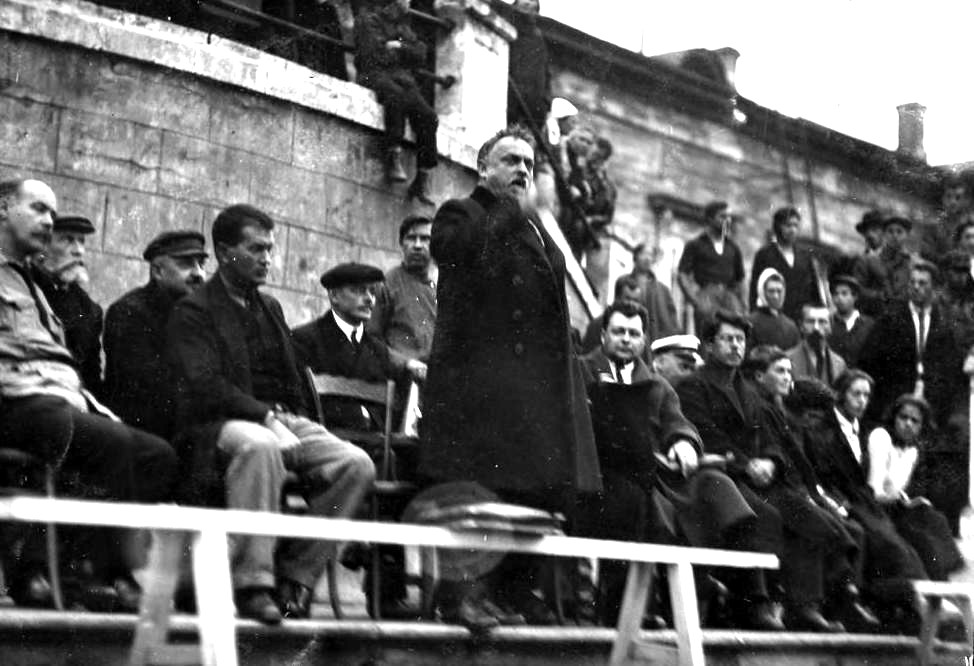
Continuing Haines book with IV. State Health Insurance, V. The Medical Union, and, importantly, a biography of VI. Dr. N.A. Semashko, the Commissar of Health.
‘Chapters IV, V & VI’ by Anna J. Haines from Health Work in Soviet Russia; Vanguard Studies of Soviet Russia. Vanguard Press, New York, 1928.
IV. State Health Insurance
It seems at first strange that not until 1922—five years after the Revolution—was there any organized form of state health insurance, an obvious service for a socialized state to undertake. But it must be remembered that in the early years of the Soviet regime factories and the larger business enterprises were not under state management, but were conducted by committees of the workers in those factories. Many of them had introduced health insurance as part of their running expenses, but these arrangements were accidental and not standardized. With the adoption of the New Economic Policy and the taking over by the state of the management of large-scale industry there was for the first time an opportunity for working out a unified program of social insurance, in which the Commissariat of Labor, the Trade Unions and the Commissariat of Health could all join.
This program includes provision for old age through pensions, the partial or complete support of those temporarily unable to find work, and the extension of medical aid to all ill or crippled workers, to wounded ex-soldiers and to the members of the immediate families of all these classes. Such an all-embracing social responsibility is naturally expensive, and anywhere from fifteen to twenty percent of the wage bill of any business enterprise, whether under state or private ownership, must be set aside from the proceeds of the business to cover this tax. However, it takes the place of most of the public and private charity funds in other countries, since it aims to care for all the aged and the ill workers and those dependent on them.
Offices of the organization are set up in every community where there are 2,000 or more people eligible for insurance, i.e., workers for wages; there are few offices in the rural parts of the country as the great majority of peasants work their own land without the help of hired laborers. In every county seat there are administrative officers who establish the standards for pensions and other kinds of assistance in that locality, this decentralization allowing for variation in standards and cost of living in different places. The central headquarters in Moscow outlines the general principles and coordinates the work in all parts of the country, settles disputes, maintains a staff of legal advisors and inspectors who can be sent to any outlying district, and carries on an educational campaign regarding the benefits to be obtained by state insurance. (A more detailed discussion of organization and administration is given in How to Set Up the Machinery of Social Insurance by B.M. Feingold, published by the Commissariat of Labor, Moscow, 1926.)
It is only with the provisions for health service that we ate concerned. This aid is usually given through the regular clinics and institutions of the local health departments, whose budgets are increased by subsidies from the insurance funds, but in places where these are inadequate the insurance fund may establish institutions of its own.
The basic institution is the “first aid station” required by law to be maintained in all establishments employing 100 or more workers. Medicines, dressings, instruments and a stretcher service are part of a first-aid station. A doctor or a feldsher must be continually in attendance there; his duties include treatment of emergency illness or accident and of minor short-time ailments. He is also the sanitary inspector of the plant and responsible for the installation of safety devices, better ventilation and proper toilet facilities. In general the Russian factories are still below the standards of American factories in these respects, but the Russian traditions of sanitation and hygiene are so primitive that what seems to us a rather mediocre achievement is often a distinct advance. There is the intention to keep these first-aid stations as emergency and prophylactic outposts only, and to have all genuine cases of illness referred to more central clinics having a specialized medical service. Insured workers and their families are given precedence at these general clinics and are being educated to understand that it is usually better to walk a mile and be treated by a specialist than to have immediate attention from a less qualified person. It has been found that a working man and his family average fifteen visits a year to out-patient clinics. The average number of patients seen by a doctor in an hour is seven and a half, and it is on this basis that the insurance department regulates the employment of its own doctors or the subsidy to the budget of the health department.
Free hospitalization is also given to workers and their families, the norm to be supplied by local institutions being one bed for every 100 insured workers and an additional bed for every 150 members of the insured workers’ families. One maternity bed is allowed for every 200 working women. In Moscow it was found that the average insured worker was ill 13 to 14 days out of each year and that the factory workers showed an even higher average—18 days a year. Those working on power sewing machines averaged 26 ill days a year, textile workers 19, leather workers 18, chemists 18, metal workers 17, typists 16, printers 14. The average length of time one patient occupied a bed was found to be 22 days, but there was a wide range in time according to the type of disease. For example, a tuberculosis bed had four patients a year, a bed in the nervous-disease ward six, a bed in the medical wards, fifteen, a surgical bed ten patients, a maternity bed twenty-seven patients in a year. (These figures are taken from State Insurance and Medical Aid, Moscow, 1926, pages 72 and 43.)
In order to save the cost of hospitalization of certain diseases the insurance funds maintain a home visiting medical service on the same basis as the out-patient work. Drugs, eye-glasses, crutches and other equipment are furnished freely, but where these supplies may be limited there are three categories of recipients. The first to receive help are those who by means of the equipment can go back to their former positions or to some new work of the same rank; the next to receive it are those who, with such help, can do some work; and finally come the members of the families of insured persons and those former workers who are completely invalided.
The State Insurance Fund is also responsible for paying a full salary to all women for the six to eight weeks absence from work before and after child-birth. It arranges through a commission for the allowance given in place of a salary to all workers during protracted illness. This allowance does not encourage malingering as it is only about one-fifth of the original salary.
Since the financial resources of the insurance department are so often drawn upon to help workers ill with preventable disease (50 percent of the applicants for sick benefits in Moscow are victims of tuberculosis), the officials, like those of our own large insurance companies, have come to take a lively interest in preventive medicine. Venereal, tuberculosis and alcohol dispensaries are aided by insurance funds, as well as the various types of institutions under the Department for the Protection of Motherhood and Infancy. Many health resorts, vacation homes and sanitoria are also subsidized from these funds. In 1924 there were 25,000 patients sent to sanitoria by the insurance department.
In addition to this preventive work with individuals the insurance department is eager to investigate conditions in factories and working places, especially where some hazard to health is obvious. There is an Institute for Occupational Diseases in Moscow which carries on continuous research into the effect of different trades and different industrial processes on the workers’ health. It maintains a 75-bed hospital, employs 13 physicians permanently and operates five different research laboratories. It is claimed that only under a system of state-owned industry is it possible for the well-being of the worker consistently to be put ahead of profits to the industry; in some cases this means that quick, cheap (and dangerous) processes of labor must be replaced by slower and more expensive methods which do not imperil the workers’ health.
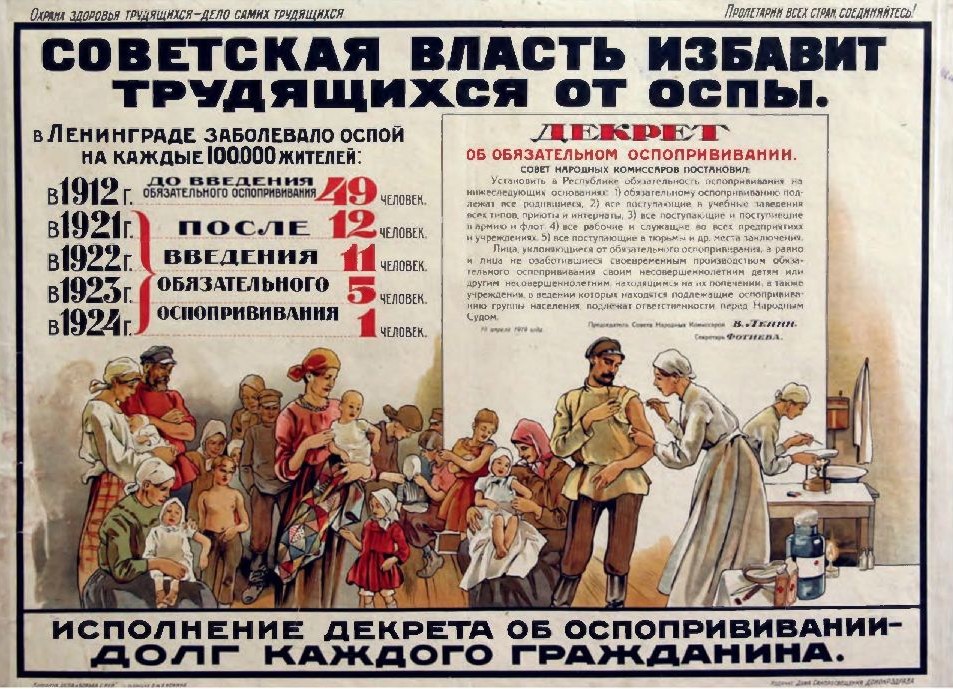
Dr. Alice Hamilton, Professor of Industrial Hygiene in the Harvard Medical School, after a visit of investigation to Russia wrote in the Journal of Industrial Hygiene for February, 1925: “It is accepted that the worker’s welfare is far more important than what he produces. Consequently the difficulties which we encounter in this country when we wish to make a thorough study of a given factory or a given industry in which we suspect some unusual hazard are unknown in Russia. It is therefore easy to see what an excellent field for the study of occupational disease Soviet Russia presents. While we were there the Institute for Occupational Diseases was examining the litharge men from the rubber works, none of whom was ill; but since it was desirable to discover whether any were absorbing lead they were all instructed to report to the Institute at the end of the day’s work and to spend the night there so that a full examination could be made. Dr. Friefeld in the hemotologic laboratory was finding interesting blood changes in most of them. There was no question of a sensitive or hostile employer, no question of an argus-eyed industrial insurance company, no question of frightening the men or of leading them to bring unwarranted claims for compensation and no fear on the part of the hospital that it might get into trouble with the insurance company and so lose the chance of having any more cases of suspected plumbism sent to its wards. Here the whole question could be treated as openly and as thoroughly as if it were a problem of pneumonia or typhoid fever. Given the fact that industrial medicine is recognized as a branch of the medical curriculum fully equal in importance to any other, that it is enjoying the services of some of the ablest men and women in the medical profession and that their work is meeting with enthusiastic cooperation and with no obstacles except the lack of money, it would seem that we are justified in looking for great things in this field to come out of Russia.”
V. The Medical Union.
One of the unique contributions of present-day Russia to the problems of health work is the Medical Workers’ Union, the professional organization to which belong all the workers in hospitals, sanitoria and other medical institutions of the country. To many Americans the idea of a doctors’ or a nurses’ “union” is distinctly unpleasant, conveying a mercenary connotation which is really not inherent in the word. Certainly in Russia the connotation does not exist, for the Medical Union was founded in 1920, at a time when all workers received food and lodging and clothing and recreation in return for their labor, but practically no salary in money. The aims of the unions of those days were educational and to some extent political, but not mercenaty.
Just as there was a more or less successful attempt to eliminate the social differences implied by the two words “profession” and “trade,” so there was an elimination of the professional organizations as they are known in this country, and a reorganization of all workers, whether mental or manual, into unions based on the kind of institution in which they worked. Thus there were founded educational unions, including teachers, artists, actors, janitors and scene-shifters; medical unions, including doctors, nurses, pharmacists, laundresses and chauffeurs; as well as textile workers’ unions; building trades’ unions; and office workers’ unions, including bookkeepers, typists, cleaners, etc.
The growth of the organization of medical workers has been evolutionary, the present union being the heir of several pre-revolutionary associations. In the early eighties the “middle medical personnel” of several provinces in Russia had organized themselves into professional societies for mutual aid. The term “middle medical personnel” included the feldshers, the midwives and the nurses. By 1905 there were seventeen such organizations which united in publishing the Medical Workers’ Journal and were planning to combine into an All-Russian Association of Medical Workers. The abortive revolution of that year, however, caused the government to become very suspicious of all such professional groups and to take repressive measures against them. As a result there was a decline among these organizations both in interest and in unification until the successful revolution of 1917, when they again became very active. They continued, however, as a separate association of “middle medical personnel” until 1918, when they dissolved their individual union to help in founding the present All-Russian Medical Workers’ Union.
The history of the smaller pharmaceutical workers’ association is very similar, except that even as early as 1870 they had begun to unite and to work for better standards of education and living conditions for druggists. They were gaining some degree of success when they also were caught by the reaction following the attempted revolution of 1905, and with most other trade unions were driven into a semi-legal or illegal existence. From 1917, when the labor movement was legalized, they again became active and were very successful in improving the standards of their work and wages. In 1919 the nationalization of drug-stores was carried out with the cooperation of the union members, but it was not until 1920 that they were willing to merge their separate union into the All-Russian Medical Workers’ Union.
Of all the groups of medical workers the doctors were the slowest to see the advantage in an association which would include them on the same footing with the other workers for the people’s health. Czarist Russia, like other Western countries, had its medical association, encouraging the exchange of scientific and social opinion and protecting the interests of the medical profession. This association continued after the Revolution and rather definitely resisted the overtures toward affiliation made by the All-Russian Medical Workers’ Union.
The idea of the amalgamated union of all the health workers in Russia had been conceived by the Union of Middle Medical Personnel and under the driving force of the latter was founded in 1918. By 1920 the pharmacists, veterinary workers and sanitary inspectors had joined it and it was strong enough to go to the All- Russian Centra! Council of Trade Unions and obtain an injunction against the legality of the separate professional association of doctors. This latter organization was dissolved with considerable hard feeling, although a number of individual physicians accepted the invitation to join the victorious Medical Workers’ Union.
The Union, however, realized its need of including in its membership the majority of the doctors if it was really to represent the medical workers of Russia. It therefore again approached the leaders of the former medical association with the suggestion that the latter reorganize as a doctors’ section within the Medical Workers’ Union, and this compromise measure has finally been effected. At the first meeting of the new “doctors” section,” representing practically all the physicians in Russia, a resolution was passed “recognizing the necessity of active cooperation of the Russian physicians with the organized proletariat and the mass of working people.” The section also declared “that the Russian doctors should show their solidarity with the proletariat in the trade union movement and should enter as an organized body into the Medical Workers’ Union, which is to be considered a non-partisan organization doing creative work…At first the doctors were not very active in the union work although the resistance of the great mass of doctors to union membership ceased. But gradually the doctors’ sections were drawn into union activities, working on the basis of the sections.” The foregoing quotation is taken from A Short History of the All-Russian Medical Workers’ Union (page 20) published in Moscow in 1923.
This history of the Medical Workers’ Union has been given in some detail in order to show the practical steps taken to overcome what was in Russia, as it would be in any country, the prejudice of a highly trained, scientifically minded professional group against the apparent merging of its identity with less trained and even illiterate manual workers.
According to the union rules, the following are ineligible to membership, even though occupying a position in a medical institution: Persons employing laborers from whose work they profit financially; persons profiting from private trading; superintendents in private institutions having vested in themselves the right to hire and discharge other workers; criminals, members of the pre-revolutionary police force, former White Army soldiers; priests or other church officials; physicians having a private practice and having no connection with any public service (this does not mean those private practitioners who practice only in the hours after their public service is over, for they may belong to the union) ; persons in prison or exile. The entrance fee is graduated according to the salary of the worker and the annual dues are 2 percent of the salary. Any assessments over this amount must be voluntary.
The routine meetings of these unions are apt to be vivid occasions, with a picturesque red-kerchiefed laundry worker in the chair, a woman doctor graduated from the Sorbonne as recording secretary, and committees including the tolerant, humorous-eyed director of the institution who may have been a famous specialist fifteen years ago, an excitable young doctor who is equally enthusiastic for communism and for medical research, a sleepy stove-man whose high boots reek of poorly cured leather, and several rows of whispering, stolid nurses and orderlies. The meetings last long into the night, as much of the detailed administration of the hospital or clinic is discussed and decided here. Complicated technical details have to be put into slow and simple language, a process often exacting heavy toll from the patience of the nimble-witted doctors, but when the session is at last over there has usually been worked out a rather remarkable understanding of the situation, together with the intelligent cooperation of different groups among the staff. These union meetings are a real school of democracy.
VI. Dr. N.A. Semashko, the Commissar of Health
To the leaders who are making history in the Russia of today, institutions, ideas, and people in collective masses constitute the interesting and determining factor in life, but to Americans, a greater value always seems inherent in the individual. If Nikolai Alexandrovich Semashko had accomplished in any other country what he has done in Russia, he would probably be a well-known figure in the medical circles of the world. The initiation and growth of the Commissariat of Health from nothing to its present enormous size is a monument to Dr. Semashko’s mental energy and tact in handling men.
Before the Revolution there had been no central health organization although several different departments like the army and the railroads, were doing unrelated health work. In general, doctors, like other professional men in Russia, were not sympathetic to the workers’ revolution, which deprived them of their property and private practice, and offered them in exchange hard work and low salaries as state officials. Out of this disaffected personnel and unorganized material setting Dr. Semashko has created an integrated Department of Health with a loyal group of men and women carrying out its complicated details over a wider area than that which any other state controls. He has been able to do this because everyone recognizes the sincerity of his interest in the health of Russian people, whether they be Slav or Semite, Communist or Cossack, peasant or professor. He is everywhere recognized as a party man of old standing, but in his appointments and his support of efficient fellow-workers he seems never to question anyone else’s politics. Therein is probably the secret of his having gained the respect and loyalty of so many of the medical profession in Russia to whom the theory of Communism is still abhorrent.
Dr. Semashko was born in the Orlov Gubernia in 1874. Growing up in the country he laid the foundation for a rugged good health which many radical leaders of Russia have lacked. Another characteristic which one senses on meeting him, and which was probably developed in his early years close to primitive conditions, is a quiet self-reliance, a practical ability to take care of himself and of others in any emergency, and this also is not a characteristic of all Russians. It is told of him that he showed very early much sympathy for the peasants and an intolerance for the way in which they were treated by the landowners. Once when he was quite a little boy he doubled his fists and started to fight a local official who had sent a young peasant, a friend of his, to jail because he had outraced the official’s horse on the road. And yet this sympathy with the peasants’ joys and sorrows never became sentimental. Perhaps from his very closeness to them he learned their weaknesses as well as their strength—their very human devotion to people rather than to ideas or ideals, and that selfish individuality bred by generations of wrestling single-handed with nature which makes them so uncomprehending of the meaning of socialism. Semashko never became a Populist, although many educated people of his generation, inspired by Tolstoi, gave themselves to this movement.
The nearby schools gave him his early education—a rather formal and bookish education under strict, almost military, discipline. During the last years of his course at the gymnasium (a school which corresponded to our high school and junior college years combined) he sought mental stimulus outside of the state supervised curriculum. With a number of other eager young students he organized a club for the study of political and social questions. Although their attitude was not very radical the young men took themselves seriously, and since those were the days of suppression of free thought and speech their professors also took them seriously. When the existence of the club was finally discovered most of the members were expelled from the school with a document prohibiting their entrance to any university, but Semashko was luckier than his fellows. He was an excellent student and had stood at the head of his class for several years, so that he escaped to the medical school of the University of Moscow with only a severe reprimand.
Coming to Moscow in 1893 he found a great many other students full of the same dissatisfaction with current political and social conditions as himself. This more mature group of young people was not content with a passive study of problems, but carried on a campaign of active propaganda. Reading clubs were organized and libraries of illegal books circulated among the intelligentsia, and much radical literature secretly distributed among the workers. Nikolai’s father had died while he was still at school and his university education was obtained by his own efforts, this necessity to work making it all the more difficult for him to find time to participate in the activities of radical circles. By his third year, however, he was already well known, and after some slight clash between the students and the police he was imprisoned for some months, together with several other leaders. The regimen was severe—small dark cells, no exercise, no reading matter, but finally they prevailed on the warden to give them one book. On unwrapping it they found it to be the Bible, in French. However, the Bible is more interesting than many would believe, and besides, Semashko became a very good French student during the next three months. At the end of that time he was exiled to his old home in the Orlov Gubernia, to be under police surveillance for a year and a half, and permanently expelled from the Moscow University.
While in the country he read omnivorously in science, history, philosophy and political economy, and also conducted a Sunday-school for workers on the railroad. These Sunday-schools were very popular and a legal means of educating illiterate adults, their political, social or religious significance depending largely on the personality of the teacher. By this time Semashko was teaching Marxian Socialism in his school. It is significant that he chose railway workers, and not his old friends the peasants, for pupils.
In 1897 his exile was over and he immediately entered Kazan University in order to complete his medical course. Again throwing his energy into radical channels we find him organizing secret political clubs among the city workers. In these activities he met and became the friend of Rykov, the present prime minister of Russia. Also he met an enthusiastic young woman student burning with zeal for social service, who became his wife. In those early days she helped him with his clubs and with the underground distribution of literature, until in 1901, during a sympathetic strike of the students on behalf of some poorly paid factory workers, Semashko was imprisoned as one of the leaders of the demonstration. After several months’ imprisonment he was released, but was refused permission to enter the city of Kazan or any other center of commerce. Owing to this prohibition he settled in the suburbs of the city and with considerable difficulty finished his medical studies and took his final examinations.
His first independent medical practice was in the Samara Gubernia, but in 1904 he moved to Nizni-Novgorod where he immediately became active in underground political work. The next year he was arrested again, and imprisoned for about a year. Having now the reputation of being a dangerous radical he knew that he would be so watched that further activities would be almost impossible, and on his release from prison he left Russia to join the group of emigrant Russians in Geneva.
Plekhanov, his mother’s brother, was there the leader of the Menshevik Socialists and as such distinctly cold toward his Bolshevik nephew. But there also he met and became the personal friend as well as the co-worker of Lenin. Pamphlets and journals were prepared here for distribution in Russia and other countries; party policies were fought over and adopted in semi-secret all-night sessions. It was a frugal, feverish life, exceedingly intellectual and unpractical, but very satisfying to the eager spirits of the participants.
In a few years the split in the Socialist Party was so serious that the Bolshevik group under Lenin’s leadership moved to Paris and the Semashko family joined them there, settling in the suburbs where their home and their children provided happy recreation for the serious idealists who were the parents’ friends. Dr. Semashko supported himself by his medical practice, but found time to be secretary of the Foreign Bureau of the Central Committee of his party and to devote much energy to the founding of a school for workers in Paris, and to speak publicly for social insurance, and for the eight-hour day. By 1913 the group of agitators were under such suspicion from the French government that it was necessary to find another home, and this time Dr. Semashko left the central cities of Europe for the Balkans where he worked as a doctor more or less obscurely until the March Revolution in Russia.
As soon as possible he tried to reenter Russia, but found that the Kerensky government was not especially hospitable to such a well-known Bolshevik as himself. He was detained at the frontier for several months, but finally entered Moscow in September and resumed both his medical and his political activities. He became a councilman for the Zamoskovresky ward, took part in the October Revolution and immediately afterwards was made head of the Moscow City Health Department.
This was an unorganized jumble of private hospitals without funds on which to operate, a few wretchedly equipped public hospitals and a dwindling staff of disgusted doctors, feldshers and nurses. While he was trying to bring some cohesion and plan of work to this mass of material the whole Soviet government moved down to Moscow from Petrograd, and almost immediately Lenin asked his old friend Semashko to draft a scheme for a Department of Health on a nation-wide scale.
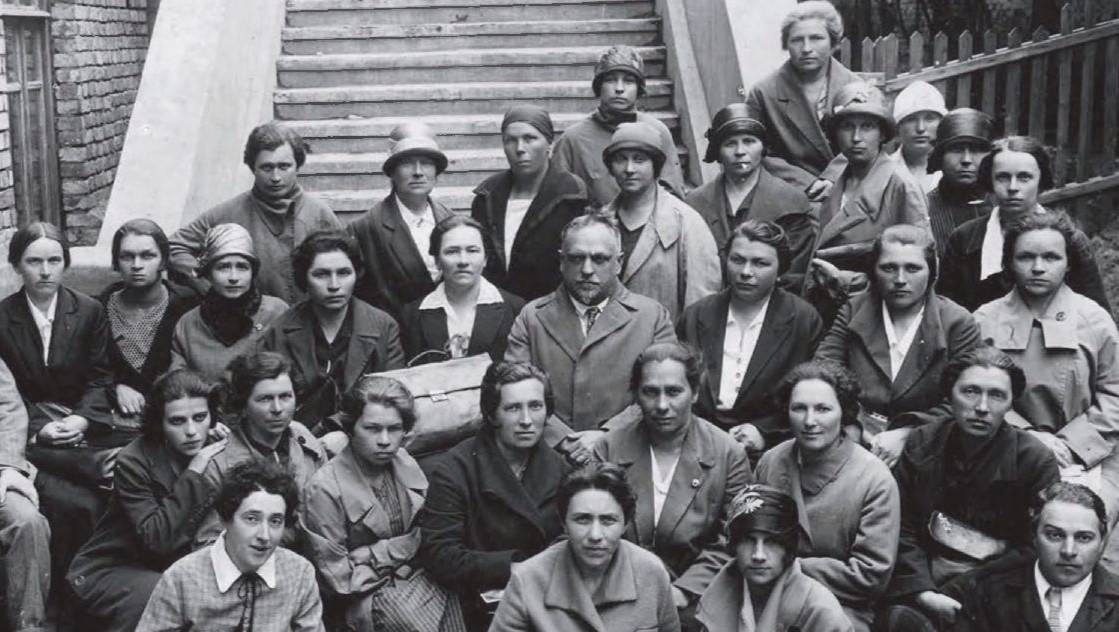
To one who had been thinking in collective terms for so many years the paper plan for such a department was not difficult. The really great accomplishment has been to vitalize the plan. Socialized medicine has never been and cannot be a source of revenue to the state; on the other hand, like a public school system, it is tremendously expensive, and from the beginning even some of the Communists could see it only in that light. Semashko had Lenin and several others behind him in the fight for the recognition of the People’s Commissariat for the Protection of Health, but after it was created there remained the problem of making it work. Here Dr. Semashko was more alone, for the majority of people with whom he had to deal belonged to the aristocratic-minded old medical profession among whom Lenin’s approval was not a conspicuous help. The health conditions in Russia at that time, though exceedingly bad for the country, were perhaps of some assistance to the newly established Commissariat. Epidemics of typhus, cholera and malaria were raging; typhoid fever, small-pox and scarlet fever were increasing. In such a crisis it Was easier to appeal to any physician’s loyalty to his profession, and also easy to make everyone appreciate the necessity for state control of the medical situation. By the time the worst years of plague and famine were over and a more constructive policy of prophylactic work brought into consideration, the Commissariat of Health was firmly marching, and the Commissar was granted by all to be a wise general of forces.
From 1922 to the present time have been years of gradual expansion and consolidation. Formerly famous specialists found themselves again at the head of their profession, irrespective of their political beliefs—that is, so long as they gave their scientific activity their whole attention, which the majority wanted to do. Dr. Pavlov is head of the Institute for Preventive Medicine in Leningrad, Dr. Speransky director of the Institute for the protection of Motherhood and Infancy in Moscow, and they with many others have wider opportunities and facilities for research than was possible in their former days of private practice. There are positions open to every doctor in Russia; two women physicians at least who were formerly nuns and who still wear their religious costume are now being employed by the government.
Much of the doctors’ willingness to work when people of other professions have sabotaged, much of the tolerance toward them on the part of a somewhat politically suspicious government is due to the general confidence in Dr. Semashko. Of all the Commissars he is the easiest to approach, the only requirement being that one put into writing one’s reason for seeking an interview with him, and then wait one’s turn in an ante-room decorated with signs “Smoking Not Allowed in the Offices of the Commissariat of Health”, “Do Not Shake Hands; It Is a Waste of Time and May Spread Disease”—slogans which are directed against two of Russia’s favorite habits. The Commissar himself is short, fat and jovial, definite in his questions and answers, showing a close and realistic knowledge of the many details of his department. One comes away from an interview feeling that one has been face to face with one of the real builders of the new Russia.
PDF of original book: https://archive.org/download/healthworkinsovi0000anna/healthworkinsovi0000anna.pdf

