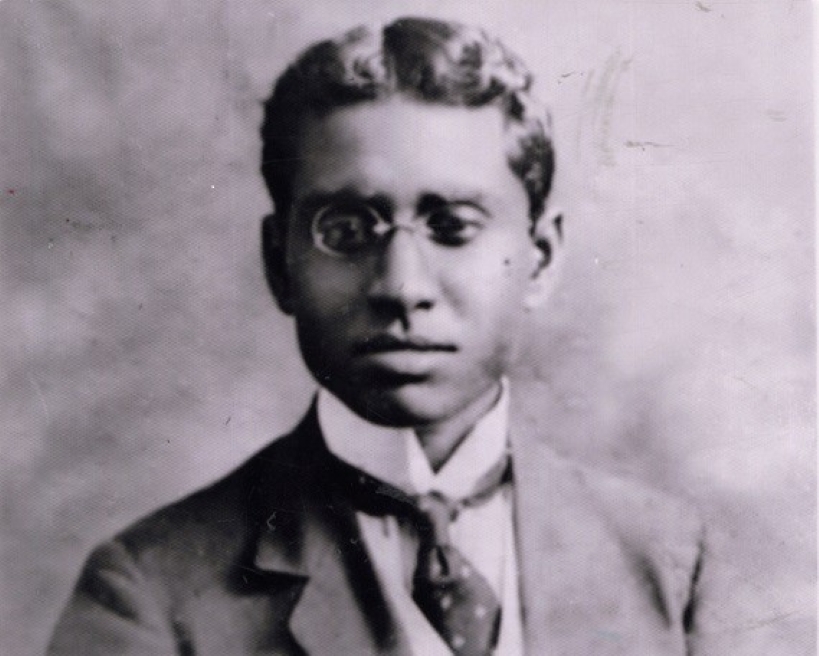
As the leading imperialist power of the time, Britain led the world in attempting to isolate and undermine the Soviet Union, for years actively and directly working for the reactionary reversal of the Russian Revolution. India naturally played a large role in the plans. Born in today’s Bangladesh, Luhani was living in London when the Russian Revolution broke out, becoming an early supporter of the Comintern and a political rival of M.N. Roy (later to be close collaborator) in the founding of Indian Communism. A leading Indian voice of the Comintern throughout the 1920s, he participated in the Third World Congress and was then active Continental Europe among the Indian exile community before returning to Moscow in 1925. Working as a Comintern reporter as well as teaching at university, Lohani would be accused of leading the ‘decolonization deviation’ at the debates around 1928’s Sixth World Congress as the Comintern moved into the Third Period, and would lose his authority with the rest of the International’s so-called ‘Right,’ most associated with Bukharin’s leadership. Recanting in 1929, he would then become a leading voice against M.N. Roy when he was expelled. Luhani himself was not spared the Purges, arrested in February, 1938 during Bukharin’s trial and executed on September 17, 1938.
‘India and British Policy towards the U.S.S.R.’ by G.A.K. Luhani from International Press Correspondence. Vol. 7 No. 24. April 14, 1927.
The Conservative Government of Great Britain is endeavouring unceasingly on the European terrain to create a coalition of Powers for the purposes of its policy of encirclement of the U.S.S.R. with a view to eventual intervention. The contradiction of interests among the European Powers and the gradual maturity of the forces of the class struggle within each European country not the least in England itself quite often neutralise or postpone the result of the activities of British diplomacy in this direction. These factors of the European situation are fairly well known.
But British policy towards the U.S.S.R. has another and, perhaps, a more sinister side a side to which not enough attention has been paid up till now and which has gained in importance with new developments in the world situation.
The very difficulties which its diplomacy meets within Europe dictate to the Conservative Government in Great Britain the need to utilise to the utmost the possibilities within the British Empire itself for its policy of aggression against the U.S.S.R. Further, the doubtful allegiance of which we have had a proof at the last Imperial Conference in London of the British “dominions” towards “the ideal of Empire” circumscribes, in its turn, the particular area of the British Empire outside England in which to concentrate the preparation of forces which will be deployed by Great Britain at the moment of the next world crisis.
The particular area in question is India.
In the past the colony of India stood to Great Britain int an economic relationship highly important for the latter for its development as a first class industrial power. In the present period, when capitalism in Great British is with difficulty postponing the inevitable process of decomposition, the economic importance of India to Great Britain is immensely greater. Correspondingly great is also its political importance, considering the development of social forces within India itself and its exceptional position as being practically synonymous with what is called the “British Empire”.
Since 1870 when Great Britain became officially an “Empire” it has used the man-power and resources of India for purposes of its Imperialist expansion. It has made mercenary soldiers out of the exploited and starving Indian peasants and used them in the three continents of Asia, Africa and Europe as cannon fodder in its wars to extend its exploitation and oppression to other peoples of the East or to strike down its other imperialist rivals for colonial markets. The latest example is the presence of troops from the Punjab in Shanghai and Hong Kong. That there had been “troubles” among these troops and that a pant of them had to be withdrawn from Shanghai is a significant symptom. It is the beginning of the end of something incalculably odious in the history of imperialist barbarism in the East.
The objective situation within India, without the contact with the world shaking events in China, has been and is revolutionary. As the social forces of revolution in India. held in check by severe repression begin to organise themselves under the impact of Chinese events, the British foreign office will no doubt be preparing to send more diplomatic notes to the Commissar of Foreign Affairs of the U.S.S.R., perhaps in the same inconsequential style as the last one, but certainly with the same threat to break off diplomatic relations.
Any student of the Indian situation must be impressed, by the intense and ostentatious military preoccupations of the British Government in India. More than one-third of the entire revenue of India continues to be used every year for the military budget. It is well known that a very costly railway line built purely for the purpose of rapid transport of troops has been pushed across the North-West frontier of India right up to Afghanistan. Along this frontier there have also been established strong aircraft bases, equipped with the best that the technique of British production of war materials can provide. One of the first duties which the present Viceroy performed on arrival in India was an extended tour of this frontier. A policy has been followed of late of occupying all the available territory, inhabited by mountain tribes, between the administrative frontier of India and Afghanistan. In view of this provocative policy of Great Britain on the north-west frontier of India, the Government of the U.S.S.R., it will be remembered, concluded last year a treaty of neutrality and non-aggression with Afghanistan.
As a sign of the general extension of military activities by the Government of India, may also be noted the despatch of an expeditionary force equipped with considerable artillery to another frontier of India, namely the north-eastern frontier between Burma and the Chinese province of Yunnan. With the naive hypocrisy habitual to the British Government, particularly in India, the expedition is announced to have been undertaken for the purpose of “liberating slave tribes” on the Sino-Burmese frontier.
It is well known that the British Government, by a policy of “protection” and special subsidies, has developed in India a technically well-equipped iron and steel industry financed to a considerable extent by Indian capitalists. The products of this industry have begun successfully to compete with similar products of European and American manufacture. But it may not be generally known to what a great extent the very large productive forces represented in this industry have been diverted by the British Government for the purpose of its war policy. As a matter of fact however, the steel industry in India was called into being and helped to establish itself with the express purpose of providing a technical basis in India for British militarism.
How far this has been realised is remarkable. Giving evidence before an official commission last year, a representative of one of the Indian steel-producing firms said that his firm received “from time to time” orders from the ordnance (war materials) department of the Government of India, “for various parts of gun mountings and other munitions” as “their plant was particularly well adapted for the manufacture of a large variety of casting for munition purposes”. The same firm was also asked to undertake the “manufacture of aerial bombs weighing respectively 5 cwts., 1 cwt., and 20 lbs. The probable number required was stated to be 5000 or more per month. The representative of the firm further said “in the event of war, a vast quantity of special steel for manufacture of high explosive and shrapnel shells, gun-tubes and jackets, ribs, barrels etc. were certain to be required at very short notice. Their works could be turned on to this class with little or no delay”.
It is difficult to see to what military purposes within India there can be applied “the five thousand or more per month” of aerial bombs, manufactured at one factory alone. The output is certainly too much for the ordinary “civil” purposes of British administration in India, which, habitually massacres workers and peasants by bombing them from aeroplanes. The reason for this vast accumulation of war materials must be sought outside India; it is vitally connected with the direction in which British, foreign policy is moving. And we know sufficiently well the master-idea behind British, foreign policy since the consolidation of the U.S.S.R. as the historic and irresistible centre of the world revolution.
In this connection it is important to note the repercussion in India of the recent British Note to the U.S.S.R. The repercussion closely follows the present line of division in the Indian nationalist movement. The upper sections of the Indian bourgeoisie have for some time past made common cause with British imperialism and have been co-operating with the latter in the administration of India under the so-called constitutional reforms of 1919. As the real issues of the revolutionary struggle in India become more apparent, these bourgeois elements lean more and more on British imperialism, which they go out of their way to identify themselves with on the basis of a common interest in the exploitation of the masses of India.
We see, for instance, that a principal organ of the reformist bourgeois Party which has accepted ministerial posts in the Bengal Government, strikes a note in its comment on the Chamberlain letter which comes very near to justifying the attitude of the British government towards the U.S.S.R.
“With their burning faith in Marxian Communism”, this paper says, “the representatives of the Soviet Government were rash in having undertaken not to spread discontent in the British Empire. The recent British Note to the Soviet Government justly reminds the latter that it did make that promise in June 1923 and should not break it”.
Coming now to the middle class, petty-bourgeois and intellectual elements which constitute the vast majority of the nationalist movement and which are now at last orienting towards an alliance with the exploited masses of workers and peasants, we find quite another attitude with regard to the British Note to the U.S.S.R. In the circles of the Swaraj Party, the Indian National Congress (more particularly its Left wing), the British Note is unhesitatingly condemned and it is maintained that the British Government had no case to put up.
For example, the “Bombay Chronicle” (Congress Centre) describes the British note as “pompous and petulant”. It refers to the “seriousness of the Chinese situation and the increasing labour discontent” in England as having “unhinged” the mentality of the conservative party.
“Let the die-hard Tories of England understand”, the paper continues, “once for all that if the Communists of Russia talk of the revolt of the East and economic revolution throughout the world, it is not because they are inspired by special hatred towards England, but because their hearts and minds are set on the extreme yet logical doctrines of equality and fraternity which cut at the very root of all the old systems so dear to Britishers.”
The “Indian National Herald” of Bombay (Congress Left wing) says “The British Note…reveals the denseness of the Tory mentality…The impetus to national freedom and economic emancipation has no doubt come from the achievements of Russia… but imperialists cannot successfully resist the tide of economic freedom whether in England or China or India”. The paper reminds the Tories of the “overt acts they themselves committed against Russia by the fomenting of internal disturbances. Under the inspiration of Mr. Churchill, about 100 millions were squandered towards the overthrow of the Russian Government.” “Yet the British Note laments confirmed belief of Russia that the British Empire or at any rate the British Government epitomizes the spirit and tendencies of revolt within Russia’s borders and outside her immediate frontier”.
The “Swarajya” the organ of the Swaraj Party in Madras, characterises as “wanton” “the spirit of provocation behind the British note”. It says: “The Soviet reply has returned cold reason for intemperate criticism”. “The fundamental fallacy of the British Note”, according to the “Swarajya”, “consists in the assumption implied in it that what is right when done by British officials is wrong if done by Russian, and that when international disputes arise, the British Empire is to be judged by one standard, and all others by another. It is obvious that only British Imperialists and none other will acquiesce in at distinction so monstrous and one-sided”.
“Forward”, the Swarajist organ in Bengal, considers the British Note as a step in the development of the British policy of intervention against the U.S.S.R. It says: “The force of circumstances which are too strong at the present moment for British imperialism has compelled it to put on the war paint. The clash of interests on the shores of the Pacific in China has become too crude, and Britain cannot possibly conceal the mailed fist too long in the velvet glove”. “It is but natural”, the paper continues, “That Britain should see red everywhere in her numerous dependencies and spheres of influence…The seed of discontent is there in the chained population, and it is only the easiest thing to connect the two and explain the results as those of Soviet intrigue!”
“Forward” concludes: “The Soviet idea has persisted. It seems to bear a charmed life…The conflict between imperialism and Sovietism is eternal…Sovietism, if it is of the genuine brand, is bound to be at war with imperialism at all points.”
International Press Correspondence, widely known as”Inprecorr” was published by the Executive Committee of the Communist International (ECCI) regularly in German and English, occasionally in many other languages, beginning in 1921 and lasting in English until 1938. Inprecorr’s role was to supply translated articles to the English-speaking press of the International from the Comintern’s different sections, as well as news and statements from the ECCI. Many ‘Daily Worker’ and ‘Communist’ articles originated in Inprecorr, and it also published articles by American comrades for use in other countries. It was published at least weekly, and often thrice weekly.
PDF of full issue: https://www.marxists.org/history/international/comintern/inprecor/1927/v07n24-apr-14-1927-inprecor-op.pdf

