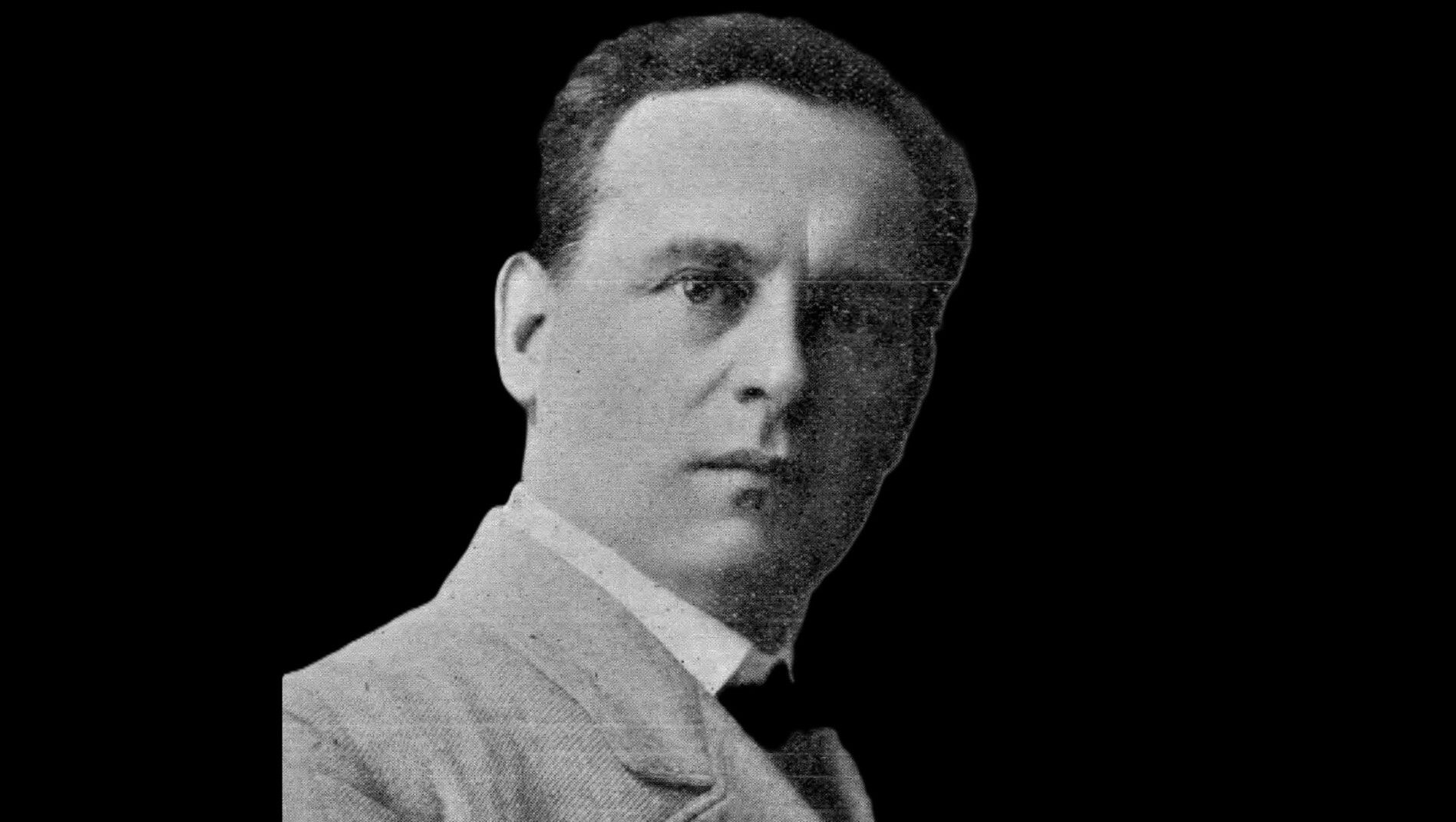
Stimulating reflections from Lewis on the character and role of the politician acting under capitalist ‘democracy,’ as well as the attitude of the class-conscious worker towards ‘keeping them honest.’
‘Good and Bad Politicians’ by Austin Lewis from Revolt (San Francisco). Vol. 2 No. 5. July 29, 1911.
Says old Machiavelli: “As sovereignty may be attained in two ways, without being indebted either to fortune or to virtue, it is proper that I should here detail them both; though the examination of one of them, might perhaps be more appropriately placed under the article republics. The first is pursued by usurpers who obtain power by nefarious means, and the second by such private individuals who are raised by their fellow citizens to the dignity of princes of their native country.”
The attainment of power by nefarious means is the chief criticism of the present conditions at the hands of the respectable. The quaint paragraph above quoted makes clear the distinction between the ideal and what actually occurs.
The method of political distinction in a republic is supposed to be and has always been taught to be the raising by their fellow citizens of private individuals, by reason of their virtues, to conspicuous positions.
But there are the usurpers who attain power by nefarious means, and against them are latinched all the thunders of the respectable.
Politics must be cleansed or the republic will perish, say the Puritans. They maintain that, American institutions are as nearly perfect as human ingenuity can devise, but the existence of bad men nullifies the beneficent operation of the institutions. Hence the Augean stables must be flushed and none but good men returned to office. The call for good men has resounded through the land.
In one sense, this cry justifies the criticisms passed upon governmental institutions and is a recognition of the truth of charges made by the muckrakers and a confession of the political abuses which have followed in the train and become the most notorious advertisement of the greater capitalism.
The latter of the two methods of obtaining political distinction as given by Machiavelli is the one ostensibly aimed at in a representative democracy. Private individuals who are raised to dignity–by their fellow citizens form or should form in the estimation of political idealists the governing body, and should have the machinery of government in their hands. This moral luster is supposed to supply the place of social and class prestige which have been the accompaniments and ornaments of administrative officials in monarchical countries.
Given a small community in which the people are at about the same social and economic level, such a community as was predicated in the formation of the republic, and the ideal, barring accidents and limitations is not far from being practically realized. Keen struggles for political power in a community where the contestants are well known, where their private life as well as their public record is a matter of general information, would naturally be carried on within certain well-defined bounds. In this respect the political strife in a small and comparatively poor community would approximate very closely in standard to political strife among the members of a highly favored class like the English governing class of the eighteenth century.
There would be, moreover, a distinct ethical advantage in the case of the republic. Among the members of the superior caste, ordinary morals indeed were held secondary to established position and intellectual ability. In the republic the necessity of appeal to the average man who may not so readily detect intellectual superiority but is sensitive to the prevailing ethical code necessitates a demand for men who are able to go before the mass of ordinary citizens void of offense in the general public estimation. This was unquestionably the case in the early days of the republic. The standard of public morals was fairly high, and in the well-settled and established communities political life was decorous to a degree. It is easy, of course, to point out examples of bribery and corruption, of manipulating votes, and of all the little tricks which are inseparable from contests in which only the strictest watching can prevent men from taking advantage of one another; but there was no wholesale corruption. Such cheating as there happened to be was small and local and consisted of the petty frauds which members of a community engaged in small business would be likely to practice on one another.
When we arrive at the point, however, where there is a conflict between the law and the economic interests of a rising class, a new condition arises: Then ability to break the law becomes a commodity which has a distinct value in the market, and a premium is placed upon the unethical. Thereupon arises the professional politician, in the bad and modern sense.
The trade of professional politician is looked upon with some scorn under any circumstances. Such scorn is, however, traditional, and is a survival of the opinion held by a class rich enough to make an avocation of politics: and which therefore despised those who demanded pay for political services.
In a social state, however, where poor men are eligible for political position, a bare living, at least, must be provided for those who give their time and ability to political life. Politics thereupon becomes a trade, but not necessarily an evil trade. Where, however, the funds provided for the maintenance of politicians are not sufficient to enable them to maintain the appearance of prosperity essential to their social position, the professional, who after all must make his career in the life which he has marked out for himself as his chosen vocation, becomes inclined to supplement his income by irregular and dishonest additions. He thus becomes an object of merchandise and offers, his services to those who, having specific political work to do, are ready to pay for it.
This is already an acknowledged fact in the United States, and all sorts of remedies are proposed. One of the most favored of these is to increase the pay of politicians to the point where they would not be so likely to succumb to temptation at the hands of the wealthy. This is a remedy favored strongly by the fair prosperous who, judging the pay of professional politicians in comparison with their own economic standards, find it ludicrously inadequate. But the majority of the electorate, on the other hand, are inclined to think the salary of a professional politician quite comfortable in comparison with their own economic circumstances, and would oppose any wholesale increase in the salaries of public officials as extravagance and as tending to the formation of a favored class of public servants with incomes and social position much above the average of their constituents. This, too, was exactly the condition which was sought to be avoided at the institution of the government, and the tradition still prevails to such a degree that it is doubtful whether it can ever be upset.
Moreover, there does not seem to be any reason to suppose that an increase in the economic rewards of officials would tend to greater honesty on their part, as there is no probability that the public service could ever offer salaries at all commensurable with the rewards which the greater capitalists would hold out for the performance of specific political work.
Such work must of necessity, it will be observed, be in contravention of the law. Otherwise it would not be so rewarded, as the ordinary legal business of the greater capitalism would be transacted without the necessity of additional pay.
The solution of the corruption of politics lies in one of two directions, therefore: either the greater capitalism will so completely control affairs that the laws will mirror its economic necessities and the constitutions be so interpreted that those necessities have legal sanction, or the greater capitalism must vanish.
The former of these alternatives would result in the formation of a dominant political caste, as in England. The career of politics would cease to become a profession and would he what it formerly was in England, an amusement of the dominant class, and we should have a condition of affairs very similar to that which maintained in the eighteenth century. England, in which the sons of the dominant class took an active personal interest in politics. held high official positions and controlled the executive, legislative, administrative and judicial offices. There is no question that under such conditions the more sordid of politics would tend to disappear, that actual bribery and corruption of politics would cease, and that the ambitions of per sonal leaders would become the motives of immediate political action.
Some such solution of the present condition is sought by the “better classes,” who openly express their desire that the existing type of politician should be changed, and impress upon the young men of their own class the necessity of taking up politics and wresting the political management from the hands of the demagogues. A beginning in that direction has been made in some quarters and the advent of the new type has been hailed with derisive epithets such as “silk-stockinged.”
But the limited suffrage was one of the chief reasons for the continued possession of power by the limited aristocratic group above mentioned. Today those who are advocates of selectness in politics eagerly discuss the limitation of the voting power and complain that the suffrage rests upon too broad a basis. In fact, distinct steps have been taken looking to a limitation of the suffrage in various parts of the country. But such a limitation is inconceivable in this or any other modern community. The bourgeoisie has brought the suffrage in its train as a necessary and unavoidable concomitant of its own progress, and the enfranchised voters will march at the funeral of the bourgeoisie. The revival of a privileged aristocratic class in possession of the economic power and at the same time in exclusive control of the political offices is at the present date in the world’s history an impossibility and may be left out of our calculations.
The alternative, the elimination of the greater bourgeoisie, can only be introduced in terms of the triumph of the proletarian, for the proletarian is the only force which can furnish the motive power for the destruction of that latest form of economic tyranny.
Under the conditions, of proletarian victory and the triumph of industrial democracy, the conditions of present-day politics would not be likely to operate, and such matters as the graft of politicians could not very well arise.
The matter of good and bad politicians is a present-day question, transitory and of no particular interest to the proletarian.
Between good and bad politicians the choice of the proletarian voter is frequently confined to the latter. The so-called good government leagues and political purity leagues are most frequently opposed to the working class, and the latter suffer more conspicuously at their hands than at the hands of the bad politicians. This arises from the fact that those organizations are generally controlled by the middle classes and small bourgeois who find their immediate economic interests in antagonism to the interests of organized labor. They resent the demands of organized labor: in fact, they cannot afford to accede to them and maintain their position in face of the economic pressure to which they are subjected in their competition with the greater capitalism. Hence it comes about that, generally speaking, the condition of labor is worse in those regions where the small bourgeoisie is in power. The most sweeping municipal ordinance against trade union activities was passed in Los Angeles, a town notoriously under the domination of the small bourgeoisie. In the same State. California, which is admittedly an advanced community from the labor standpoint, armed scabs were allowed freely to walk about in Oakland, a town under the influence of the small bourgeois. Many other such instances could be given.
Generally speaking, there is an antipathy between the good politicians and the laboring class, arising from a more or less conscious understanding on the part of the workers of their, economic interests. So an open appeal to ethics in political matters is generally rebuffed by the labor vote, to the disgust of the respectable, who regard the attitude of the worker in this matter as evidence of his irredeemable obtuseness on moral questions.
The question continually arises at election times, but can be dismissed easily, for it does not concern the working class. The shame of city governments and the corruption prevailing in the legislatures are the concern of the bourgeois alone; they do not reflect upon the proletariat, and the latter suffers nothing from their persistence, neither does he gain anything by their removal under the present condition of society.
The only salvation of the worker lies in his independent political attitude, that determined isolation from capitalist politics which is the result of his economic isolation, and his invincible antagonism to all that the present system implies.
His political actions are neither ethical nor unethical they depend upon no bourgeois conceptions as to what constitutes good or bad politics: they are aimed frankly at the acquisition of power and derive their propulsion from the immediate economic needs of the proletariat as displayed in its industrial movements.
Revolt ‘The Voice Of The Militant Worker’ was a short-lived revolutionary weekly newspaper published by Left Wingers in the Socialist Party in 1911 and 1912 and closely associated with Tom Mooney. The legendary activists and political prisoner Thomas J. Mooney had recently left the I.W.W. and settled in the Bay. He would join with the SP Left in the Bay Area, like Austin Lewis, William McDevitt, Nathan Greist, and Cloudseley Johns to produce The Revolt. The paper ran around 1500 copies weekly, but financial problems ended its run after one year. Mooney was also embroiled in constant legal battles for his role in the Pacific Gas and Electric Strike of the time. The paper epitomizes the revolutionary Left of the SP before World War One with its mix of Marxist orthodoxy, industrial unionism, and counter-cultural attitude. To that it adds some of the best writers in the movement; it deserved a much longer run.
PDF of full issue: https://www.marxists.org/history/usa/pubs/revolt/v2n05-jul-29-1911-Revolt.pdf

