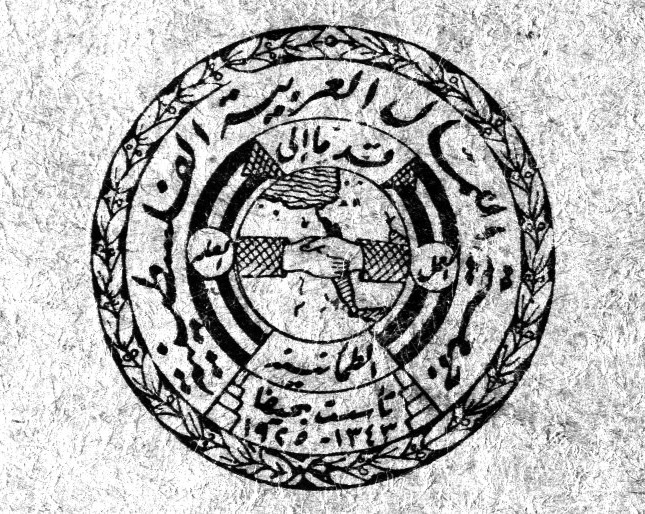
Berger on the immediate and wide response to the formation of the Palestine Arab Workers Society. While official founded in 1925, it wasn’t until sixty delegates gathered for the 1930 congress that the Palestine Arab Workers Society was really founded. Held in Haifa during January, 1930 in the period of radicalization after the 1929’s revolt, P.A.W.S. would grow to 50,000 members at its height, organizing 1936’s General Strike against British rule. Opposed to the partition, P.A.W.S., aside from its Nablus branch, did not survive 1948’s Nakba.
‘The Echo of the Arab Workers Congress’ by Joseph Berger from International Press Correspondence. Vol. 10 No. 7. February 13, 1930.
The response which the Arab workers congress in Haifa has called forth in the Arabian countries is very manifold. The rise of an independent workers’ organisation, which in the decisions of its congress stands for the fight for the everyday interests of the workers and at the same time for the Complete independence of Arabia, was bound to arouse the lively interest of the whole of the Arabian public.
It became clear, as soon as the decisions of the Congress were published, that here it was not a case of one of the many stereotyped congresses, conducted by the clique of the Arab executive committee, with cut and dried decisions against the Balfour declaration, appeals to British “justice” and protests regarding the question of the wailing wall. Here it was not a meeting of “leaders”, but it was the workers who discussed and decided–workers from the workshops bench and factory. The attempt of the nationalists to achieve a sort of declaration of a “national united front” by the workers’ congress, was frustrated. For the first time there took place an Arab Congress, the convocation of which was not in the hands of the official aristocratic invitation-and-appointment machine, but the election of delegates was carried out by the working masses.
It is therefore quite understandable that official nationalism cannot be satisfied with the results of the Congress. The nationalists still hope, however, to be able in time to extend their influence in the newly created workers’ organisations and are refraining therefore from directly attacking it. There was only one nationalist newspaper which was unable to control its class instinct: it openly opposed the economic demands of the Congress (eight-hour day, increased wages, labour protection), because any improvement of the situation of the workers is not desirable at the present moment from the national point of view. The Arab workers can compete with their Zionist rivals only when they underbid them by more moderate demands. Therefore, economic demands of the Arab workers mean support of Zionism.
Zionism, however, is far from being pleased with the results of the Congress. The reformist organ, which, as a result of the impression which the convocation of the Arab workers Congress made on the Jewish and even the Zionist workers, vacillated for a time and for a moment interrupted its undermining and incitement work against the Congress immediately after the publication of the resolutions resumed its campaign of hate and calumny. While the bourgeois Zionist papers are endeavouring to exaggerate the nationalist influence at the Congress but nevertheless admit that it is undoubtedly to be regarded as an expression of the will of broad masses of Arab workers, the Zionist social fascists are attempting to discredit and denounce the Conference as such.
Things have gone so far that in the English edition of the socialist “Davar” the Congress is denounced to the government as the work of the Communists or of the secret police, while it attempts to persuade the Jewish workers that it took place under nationalist influence. The historic event represented by the meeting of the Arab workers’ Congress has created so much confusion in the reformist ranks that they are entangled in their own lies, calumnies and contradictions.
Meanwhile, the central committee elected by the Congress has proceeded from words to deeds. The mishandling of a worker in the big cigarette factory “Mabruk” in Haifa evoked a protest strike of the workers. The Arab trade union took up the defence of the workers and set up a number of new demands (such as the introduction of the eight hour day, abolition of exploitation of children–children of 12 years are employed in the factory–increased wages). The Arab trade union has addressed an appeal to the Arab workers of the whole country to support the strike action and enter the trade unions in masses.
At the same time there is taking place the formation in various parts of the country of local groups of the central trade union. In many places the creation of these local groups has encountered the resistance of the Arab employers, who after the decisions of the Congress understand the danger which threatens them from a class organisation of Arab workers.
The government is attempting on its part to intimidate the workers by threats. A portion of the Syrian delegates did not arrive at the workers’ Congress in time because the French government refused to grant them permission to attend the “Bolshevik” Congress in Haifa. The British government in Palestine (Executive organ of MacDonald and Lord Passfield) sends spies and police against the workers, and threatens to dissolve the trade union which has only just been founded, should its activity assume a political character.
After a splendid beginning, the organised Arab labour movement is now confronted with the difficulties of every-day systematic work and it must force its way step by step in hard struggle until it achieves.
International Press Correspondence, widely known as”Inprecorr” was published by the Executive Committee of the Communist International (ECCI) regularly in German and English, occasionally in many other languages, beginning in 1921 and lasting in English until 1938. Inprecorr’s role was to supply translated articles to the English-speaking press of the International from the Comintern’s different sections, as well as news and statements from the ECCI. Many ‘Daily Worker’ and ‘Communist’ articles originated in Inprecorr, and it also published articles by American comrades for use in other countries. It was published at least weekly, and often thrice weekly.
PDF of full issue: https://www.marxists.org/history/international/comintern/inprecor/1930/v10n07-feb-13-1930-inprecor-Virginia.pdf

