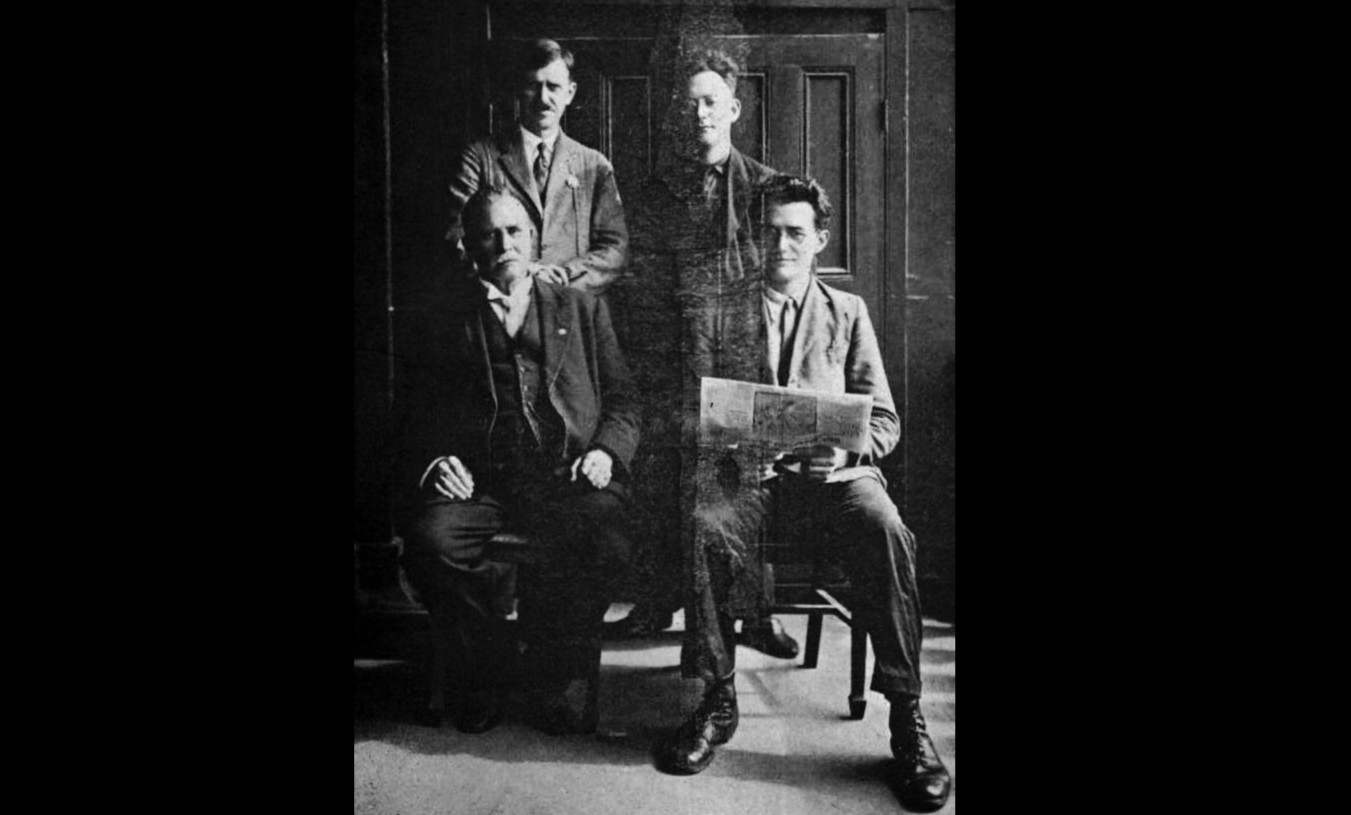
The International Workers Delegation was sent to China as part investigation, part solidarity tour, and part organizing mission for the future Pan-Pacific Trade Union Secretariat. It included Tom Mann of the British Minority Movement, Early Browder representing the T.U.E.L., the traitor Jaques Doriot and from Russia, Sydor Stoler, then the Comintern representative to Australia. Their visit coincided, as this report illustrates, with great revolutionary, and counter-revolutionary, events of that most dramatic of years in Chinese history.
‘The International Workers’ Delegation in Hunan’ by Sydor Stoler from International Press Correspondence. Vol. 7 Nos. 41 & 42. July 14 & 21, 1927.
(Secretary of the International Workers’ Delegation).
I.
Our visit to the Hunan Province, though it was rather short, nonetheless constitutes a very important chapter in the work and studies of the International Workers’ Delegation.
During our ten weeks’ stay in China we had the unusual good luck to pass through a large portion of the territory occupied by the Nationalist Government. The territory we covered represents, so to speak, a cross-section of the whole complex of political and social forces and relations to be found in revolutionary China. We passed through a complete scala of these political and social forces, beginning with Canton, the starting point and until recently the center of the national revolutionary movement, through the province of Kiangsi, where we saw and felt very definitely the process of differentiation in the national revolutionary front, then on to Wuhan, the seat of the Central Kuomintang and of the Nationalist Government.
First Canton and the Kwantung Province, where we came into contact with vigorous trade union and peasants’ movements which were hindered in their development by the reactionary forces that were still in the saddle, with a little and shrewd Napoleonic type of a Tupan–General Li Chi-Hsin playing the role of the overlord…
Then through Kiangsi, where we found the movement younger, less vigorous and experienced, yet a rapidly growing revolutionary mass-movement. In this province we first came into contact with open and flagrant reaction. We reached the city of Konchow just at a time when the masses of workers and peasants were mourning the loss of their leader Chin, who had been assassinated by Chang Kai-shek’s hirelings. As we proceeded further North, toward Nanchang, we found ourselves thicker and thicker in the midst of a reaction that stifled the atmosphere with numerous crimes against the workers’ and peasants’ organisations and against the Central Kuomintang. At Nanchang we found reaction in full bloom. Similarly at Kiukiang.
It was upon our arrival at Hankow, that we breathed fresh air again. The enthusiasm we found among the masses in the Hupeh Province and the attitude of the Central Kuomintang and the Nationalist Government towards the workers and peasants reassured us once more…
Our train left Hankow shortly before midnight on April 19th. At every station, without a single exception, all along the line, all through the night and the following day, the Delegation were greeted by masses of peasants and workers who crowded the platforms with banners and bands. Every half hour or so we were roused by a distant discharge of firecrackers, that made the neighborhood rattle. This was the signal to us that we were approaching a station and that we were expected to come out and address the crowds which came to greet us. For over twenty-four hours we were so to speak in a fever of expectation…We divided our comrades into shifts, each one taking a turn at speaking, while the others attempted to rest…
Torrents of rain poured down all through the night and the following day. But as we progressed, the crowds at the stations became larger and larger. At the Hsien-Lin Station (still in the Hupeh Province), hundreds of peasants had been waiting in the rain for more than four hours (our train was of course late because of the long stops and meetings).
A big mass meeting was held at Yochow on the following day. The train had to stop for several hours. A huge procession marched through the town to the so-called “School of October 10th” which had been founded and run by American missionaries, but which has been taken over by the Nationalist Government. More than 6000 people attended this meeting.
At about six o’clock in the afternoon we reached the station Milo, where a mass-meeting with 5000 people was held. There we learned that reaction is still running high in that neighbourhood. The peasants are suffering untold misery under the rule of the gentry. The Kuomintang has not yet been organised in this town. The Trade Unions are in the preparatory stage. Some 70 peasants’ groups (not yet Peasants’ Union) are already in existence; but they are still very weak.
We arrived in Changsha shortly before midnight of April 20th. We were met by many thousands of people who had been waiting for over ten hours at the station (accumulated lateness and a misleading telegram account for this delay).
With music and cheers and revolutionary songs and slogans resounding through the night and arousing the entire city a long procession through the town brought us to our quarters the former Y.M.C.A. Building.
This was the first symptom of significant and deep-going changes that have already taken place in Hunan…What was formerly the Y.M.C.A. is now “The People’s Club”. This People’s Club, a modern, splendidly kept building with its spacious meeting hall and stage (where many of our meetings were held), with its recreation rooms and playgrounds and dormitories, resembles very much some of the “People’s Clubs” and “Workers’ Clubs” in the Soviet Union. It was there that we first saw former mansions and aristocratic clubs turned into Workers’ and Peasants’ Clubs…The People’s Club of Changsha is visited daily by hundreds of peasants’ and workers’ families who come to see and inspect the Club.
In no other place visited by us did we find such a powerful and well-organised mass-movement. The planfulness and method which were reflected at every mass meeting and gathering we witnessed, convinced us of an unusual maturity of the mass-movement in Hunan, and also of the presence of a strong, clear-headed, really revolutionary leadership. The revolutionary fervour, the enthusiasm and responsiveness of the masses in Hunan impress one at the outset that the revolutionary movement has furrowed deep here into the consciousness of the masses.
The Trade Unions in the Hunan Province are the class organisations of the workers; they are the revolutionary school of the working masses, and they can serve as a barometer for determining the degree of organisation, discipline, militancy, fighting capacity and revolutionary consciousness of the working class. There are 430,000 workers organised in the Trade Unions of Hunan. The front ranks of this powerful working class army is of course occupied by the industrial proletariat about 90,000 strong.
It is interesting and instructive to note the process of growth and development of the Hunanese Trade Unions. At the time of the February 7th, (1923) incident (the Wu Pei fu massacre) the number of workers organised in the Trade Unions of this province was only 20,000. By the 30th of May 1925 their number rose to 70,000. At the time when the Northern Expedition began (in the summer of 1926) the Trade Union membership rises to 110,000. And finally, since the Nationalist Government was established in Hunan the Trade Union membership has constantly increased, and it is now fast approaching the half-million mark.
The workers and their Trade Union organisations in Hunan also played and still play a very prominent part in the stamping out of reaction, which from time to time is trying to raise its head against the revolution.
The problems that still confront the Trade Unions of Hunan are:
1. The betterment of the conditions of the workers and the raising of their standard of living. Some progress has also been made in this field. We were informed that most of the industrial workers in this province work ten hours a day, and that the printers, textile workers and railwaymen generally have the eight hour day. But there is still an enormous task before the Trade Unions in relieving the hard and unbearable conditions of labour of the mass of the workers, particularly of the women and children.
2. The struggle against the reactionaries. The gentry, the corrupt public officials and the compradores have formed a solid united front against the Trade Unions. As a result many workers have lost their lives in this struggle. This was the case in Changsha, in Shantung, in Shi-Kwan (antimony mines) in the Suey-Ko mountain district and also along the Yueh-Han Railway line. This brings us to:
3. The problem of training and arming the workers and Trade Union pickets for self-defence. We were very glad to hear that the Government has furnished the Trade Union pickets with a number of rifles. However the main question of arms still awaits its solution, because of a keenly felt lack of arms. There is a general desire on the part of the workers to receive military training in order better to be able to defend the revolutionary government and to fight the reactionaries. This, too, is a good symptom, and a source of strength for the revolution,
I shall now pass on to the peasants and the land question. It should be pointed out here that not only in Hunan, but everywhere, literally everywhere we went, in every town and village and district of Kwangtung, Kiangsi, Hupeh and Hunan which we passed through, and from every organisation connected with the Chinese Revolution, as well as from every government and political organ with which we came into contact–the problem that was on everybody’s lips was: the Peasant Question.
In Hunan, where the Revolution has shot its deepest roots and where the trade union and peasant movements represent powerful revolutionary factors which have actually shaken the old feudal system to its foundation and begun the social revolution, the peasant question and the land problem are literally crying for their solution. Again and again, whether in our interviews with the representatives of the Provincial Government, or of the Kuomintang, or with the leaders of the Trade Unions, the Peasants’ Unions, the Women’s Union or with the representatives of the Nationalist Army–the peasant question came up as the central theme, the decisive problem…”Something must be done”…“Delay is dangerous”…”The land question must be solved”…These were the words expressing the sentiments of everyone we spoke to.
II.
What is the actual condition of the peasants in Hunan?
Due to the oppression of the peasantry by the militarists, and to the inhuman exploitation by the landlords the mass of the peasants were reduced to an utter state of poverty and pauperism. The visible results of this oppression were:
a) An increase in idle lands, especially in the Western part of the province;
b) an alarming increase of the number of poor peasants; c) a noticeable decrease in the size of the farms;
d) simultaneously with the impoverishment of the bulk of the peasantry an increase in landlordism;
e) decline of harvests, because the peasants working the land were to poor to buy fertilizers;
f) growth of banditry (particularly in southern Hunan); unbearable conditions drove many thousands of peasant to resort to banditry. The result was that the peasants were robbed and much land given over to waste.
g) exorbitant land rents: 60 and 70% of the harvest is very commonly handed over by the tenant to the landlord as rent;
h) usurious rates of interest on loans contracted by the peasants. 5-6% per month is a very common rate of interest; as high as 10% per month is not an infrequent occurrence.
It is quite obvious that with such conditions existing, the peasantry is in a state of rebellion against their oppressors. This feverish state of revolt of the peasantry makes it easy to understand the rapid advance of the national revolutionary forces against an enemy that was numerically much superior. No military power can for long dominate any considerable territory with the peasants against them.
But the peasant movement does not stop with the driving out of the militarists. On the contrary, it only begins its real struggle after the militarists have been driven out. While the militarists have gone, the old feudal system with its medieval rule of the landlords, corrupt gentry and magistrates remains. The mass of the peasantry live in utter misery. 70% of the peasants are either poor tenants who are robbed of the major part of the crops by their landlords, or they are small peasants who, although they have a piece of land, have not enough to feed themselves and their families.
There are at present no less than 5,130,000 peasants organised in the Peasants’ Unions of the Hunan Province. In one district alone (Han-Yan District) there are 600,000 organised peasants. Four other districts (San-Tan) have about 300,000 organised peasants each. In 53 of the 75 districts in this province there are Peasant Unions, while in many other districts, peasants unions are in the process of formation. Compared with the peasant’s movement and the peasants” unions in other provinces under the Nationalist Government, that of Hunan is far ahead (in Kwangtung the Peasants’ Union comprises 1,000,000 members; in Kiangsi about 500,000; in Hupeh about 1,000,000).
We were told by the representative of the Hunan Provincial Kuomintang that some time ago the Kuomintang adopted a resolution to hate the rents for farmlands lowered. However it was found that this measure could not be carried out effectively because of the resistance of the landlords and of the reactionaries in general. The efforts to fix maximum rates of interest on loans at 20% also failed. Therefore the most recent decision adopted by the Kuomintang is to ‘nationalize the land’ and to give it to the peasants at a low rentage. A representative has been sent to the Nationalist Government, we were told, to present the case.
Whereas formerly the peasants did not even put up the rent question clearly, they now clamour unmistakably for the land…In many places the peasants refused to cultivate the land as long as the land remains undistributed. Only in a very few places could the rent be lowered and very inconsiderably at that (Han-Yan and Han-Shan districts). The peasants are no longer satisfied with the demand for lowering rents. They are demanding nationalisation and the distribution of the land.
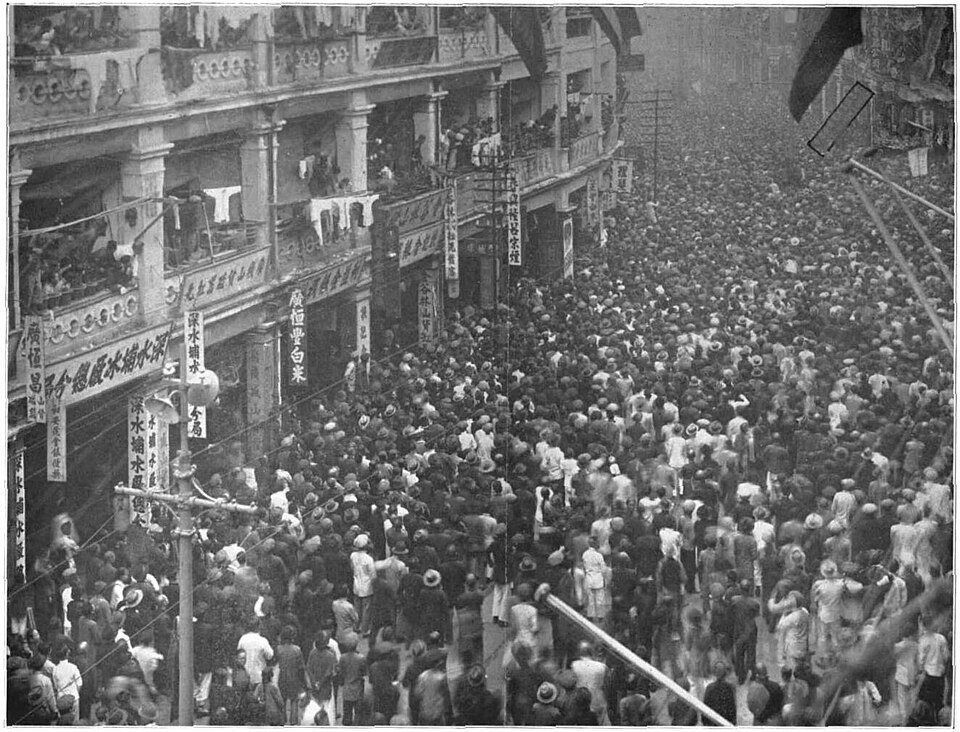
It should be pointed out here that the peasant revolution has actually begun in Hunan. The cases are constantly increasing in number where counter-revolutionary landlords have been compelled to flee and to abandon their land. There are also numerous cases where the landlords come to the Peasants’ Union and hand over their title deeds with the request to take the land over. A very common occurrence in Hunan is the so-called political or judicial confiscation of land, i.e., the confiscation of the land of the corrupt gentry and of reactionary landlords who are in league with the militarists and counter-revolutionists.
The question of local self-government for the peasantry is another burning issue that occupies the agrarian population of the Hunan Province. For decades and centuries the peasants have suffered from the oppression of the corrupt magistrates who together with the gentry developed their system of exploitation and oppression to perfection. The militarists based their power in the villages on just this cream of feudalism: the magistrates and corrupt gentry who were in league with the landlords. But while the militarists have been defeated and driven out of the territory now under the Nationalist Government, the magistrates and gentry, like the landlords, remained. We saw them everywhere on our way from Canton to Hankow. They still exercise their feudal dictatorship over the population, and the worst sufferers are the peasants.
In Hunan the process of supplanting the old feudal and patriarchal magistrate system has also proceeded further than in any of the other provinces we passed through. The actual reorganisation of the system of local government has already set in. Special commissions are being set up in the various districts of the Province to take over the administration of local affairs. These commissions are composed of representatives of the Kuomintang and the Trade unions and Peasant Unions. They have the highest powers to conduct the struggle against reaction. While the old magistrates are still officiating in the villages, they are gradually being pushed out and supplanted by so-called “Citizens’ Councils”, which are directly elected by the population.
In many places the Peasants’ Union is the highest authority for all kinds of questions. This is the case wherever there is a strong and well-organised peasants’ union…
Not only in Hunan, but everywhere along our route, wherever there were peasants and peasants’ organisations, we heard the cry: “Arms for the peasants! We have no guns and no ammunition! The Peasants must be armed!” We heard it at Shiu Chow (Kwangtung), we heard it at Nanan, at Kanchow, at Linkiang, at Nanchang, etc. etc. In Hunan the need for arming the peasantry is very strongly felt.
The question of arming the peasantry is of course closely related to the land question and to that of the reorganisation of the village government. And as regards the stamping out of reaction, the arming of the peasants is an absolute prerequisite. In many places the reactionary landlords and gentry still maintain their armed militia which is used as a weapon against the peasants and Peasants’ Unions. If there is to be real self-government in the villages, the disarming of the reactionary landlords’ militia and the arming of the peasants is an urgent necessity.
We learned that wherever the peasants cannot get hold of rifles, they organise self-defence corps with picks and plows. But the insufficiency of such weapons in the struggle against reaction is self-evident. We were told of many plans and projects for obtaining arms and ammunition for the peasants. Cases were cited where the peasants had captured thousands of rifles from the Northern troops; but invariably these arms were handed over to the Nationalist Government or army…
Educational and cultural work is progressing very rapidly in the villages. We were told by the peasants representatives that new text books are being issued in the village schools. Special peasant committees examine the books to see that the old feudal ideology does not creep in. The peasants are very critical also about the banners and slogans which are used in their schools.
The peasant women are also arising from century-long bondages, and they are demanding their due share in the revolutionary movement. They participate in demonstrations and are voicing their demands for active participation in the Women’s Unions and in special women’s meetings.
The peasants are also carrying on a determined struggle against gambling and opium-smoking, which are the two evils inherent in a system of feudal oppression and exploitation…
Our visit to Hunan made us feel the throb of the pulse of the Chinese Revolution. It has strengthened the conviction we already had, that the two classes which constitute the mainstays of the Chinese Revolution, are the workers and peasants. It demonstrated to us very convincingly the leading and decisive role played in the Revolution by the working class and the Trade Unions. It revealed in full, glaring light the fundamental importance of the peasant and land questions.
From what we have seen and heard in the four provinces we visited, but particularly in Hunan, it would seem that certain measures to relieve the condition of the peasants are absolutely and immediately necessary to guarantee the revolutionary alliance of the peasantry. Such measures are: a radical reduction of rents; the confiscation of lands owned by reactionary gentry and counter-revolutionary landlords; the abolition of the system of multiple taxation and of collecting taxes in advance (in some places in Hunan, for example, the peasants have paid up taxes for the next ten years); the prohibition of usurious rates of interest on loans; the disarmament of the reactionary landlord militia and the systemating arming of the peasantry through the peasants’ unions; the development of co-operatives and of mutual aid. In the question of local self-government for the peasants, it is necessary to break up completely the corrupt and oppressive magistrate system and to inaugurate a really democratic system of self-government through peasants’ councils with the aid of the peasants’ unions.
Thus the revolutionary alliance of the tens of millions of peasants will be assured.
Simultaneously, the growth and development of the revolutionary trade unions and the leading role played by the working class in the liberation movement of China will ensure a steady, unvacillating direction and thoroughness to the Chinese Revolution. The arming of the workers and trade union pickets is another task that calls for solution as the best guaranty against reaction.
With these measures carried out, the Chinese Revolution will be invincible, and its final victory assured.
***
Hundred Thousand People in Changsha Greet International Workers Delegation.
Hankow, April 25, 1927. Tom Mann, Earl Browder and S. Stoler, of the International Delegation, returned to Hankow yesterday after a five-day trip through Hunan to Changsha and return. When asked about his impressions of Changsha, Tom Mann said to a representative of the “Peoples Tribune”:
“Never before have I seen such spontaneous demonstrations of revolutionary enthusiasm as we witnessed in Changsha. In my 71 years, 46 of which have been spent in dealing with mass movements and mass organisation, I have learned to be quite critical, and I can feel the depth of the emotions which stir the people, In Chansha I was convinced, as were all of us, that here the heart of the Chinese revolution was beating. On our first day there, we spoke with more than a hundred thousand people; the entire population seemed fired with the same spirit; and throughout was the most perfect organisation. We were really inspired by our visit.”
The delegates were also deeply stirred by their contacts with the revolutionary forces along the railway to Changsha. In the 24-hour ride, they found that every station, 28 in all, meetings were gathered, of peasants principally, waiting to meet the delegation and demanding speeches from them. This continued even throughout the night without respite, although the train was seven hours late in starting, and the crowds had to wait all that time. For six or seven hours during the night a cold rain, with a high wind, added to the discomforts of the waiting crowds but in no case had a meeting dispersed before the arrival of the train.
The train was ten hours behind its original schedule in arriving at Changsha, which was after 11 o’clock at night. To the astonishment of the Delegates, they found a crowd of 30,000 people awaiting them, most of whom had been there throughout the day. An impromptu meeting was held at the Station, followed by a lantern-procession through the city.
At the mass meeting called by a joint committee of the Trade Union. Peasant Union, and Student Union, there were more than 80,000 persons present. A few hours later, at the meeting of the Kuomintang, there were 12,000. Other meetings were held with the Provincial Kuomintang, Provincial Government, Labour and Peasant Pickets, Labour Research Classes, Changsha Military Academy, Union of Employees of Foreign Firms, Communist Party; and interviews were had with leaders of all different organisations. Another street demonstration was held on the evening of the departure of the Delegation.
“After seeing and feeling Changsha”, said Tom Mann, “I feel that, no matter what may be the temporary setbacks from time to time on the surface, the real revolution deep in the hearts of the Chinese people, is unconquerable by any combination of forces. The Chinese revolution has become the very fabric of their lives. It will perform its work thoroughly. I am sure that the same spirit that animates the masses of Hunan will permeate soon throughout China.”
International Press Correspondence, widely known as”Inprecorr” was published by the Executive Committee of the Communist International (ECCI) regularly in German and English, occasionally in many other languages, beginning in 1921 and lasting in English until 1938. Inprecorr’s role was to supply translated articles to the English-speaking press of the International from the Comintern’s different sections, as well as news and statements from the ECCI. Many ‘Daily Worker’ and ‘Communist’ articles originated in Inprecorr, and it also published articles by American comrades for use in other countries. It was published at least weekly, and often thrice weekly.
PDF of full issue: https://www.marxists.org/history/international/comintern/inprecor/1927/v07n41-jul-14-1927-inprecor-op.pdf
PDF of full issue: https://www.marxists.org/history/international/comintern/inprecor/1927/v07n42-jul-21-1927-inprecor-op.pdf

