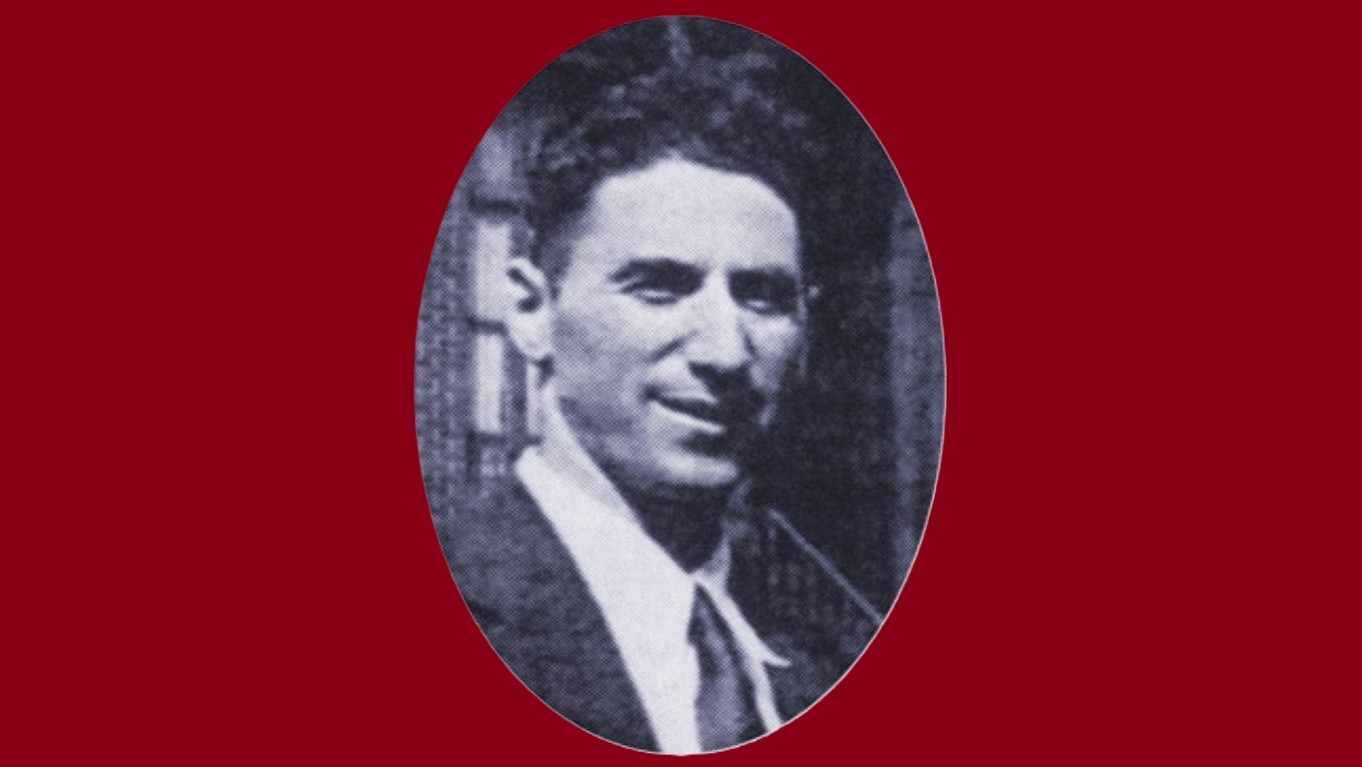
Abern on the outcome of the C.P.’s February, 1926 National Organization Conference held to consolidate the reorganization of the Party based on the shop and street nuclei that was also part of the ‘Bolshevization’ of Comintern sections to create uniform organizations and political profiles that was begun in 1924.
‘Work of the Organization Conference of the Workers (Communist) Party’ by Martin Abern from Workers Monthly. Vol. 5 No. 6. April, 1926.
How the Workers Communist Party of America through a series of definitely planned organizational measures, guided by the experience of the class struggle, will bring itself into ever closer contact with the working masses was powerfully demonstrated during the three days of deliberations at its National Organizational Conference held in Chicago, February 20 to 22, 1926.
Every Party organizer, representatives of the language bureaus, members of the C.E.C. and of the Young Workers’ League National Committee participated. None were sparing in criticism of past or present organizational shortcomings. All had something concrete to contribute. Forceful slogans were carefully linked up with organizational steps directed particularly towards anchoring the Party more firmly in the trade union movement: such slogans as: “Every Party member a union member,” “Organize the unorganized masses,” “Face toward the heavy industries,” “Take up leadership in the struggles for the every day needs of the workers.”
The measures for every campaign engaged in by the Party were discussed from the point of view of their actual relation to the present status of the labor movement. The discussion on each question was based on the trade unions. It is precisely because of this process that the conference marked a big forward step towards: (1) Turning the party toward mass work; (2) broadening the base of our work, especially among the unions; (3) putting the shop and street nuclei on a functioning basis; (4) broadening the Party apparatus by drawing more elements into responsible Party work in every field of activity; (5) extending and developing the Party democracy on the basis of democratic centralism; and (6) establishing closer connection between the Party leadership and the membership and bringing the Party executives into the closest touch with the mass of the Party membership.
Basis For Development of Labor Movement.
The methods of work pursued by the Party must of necessity correspond to the existing situation in the labor movement. In recognizing this the conference proceeded to analyze this situation, noting the further expansion and consolidation of American imperialism as well as the apparent prosperity, relatively, of the working class. Coupled with these facts there is the dangerous development represented by the efforts of the trade union burocracy to shape the policy of the movement to fit into the American imperialist framework. There is the conscious and deliberate expansion of class collaboration schemes established with slight changes or adaptations in the different industries, the efforts of the present American Federation of Labor leadership enunciated in its new “wage theory,” proposing collaboration with management toward elimination of waste in industry, the growth of labor banking and increase of labor insurance corporations, while organization of the labor movement is at the lowest ebb reached in years. Little or no efforts are being made by this burocracy to resist the dangers of company unionism which is invading strongly the basic or key industries, such as transportation. Simultaneously the state forces have been strengthening and centralizing their power immeasurably, directing blow after blow against both organized and unorganized workers.
However, the conference also noted that despite this tightening grip of American imperialism upon the workers, despite its successful bribing of the trade union officialdom, signs are unmistakable of a slowly rising militant revival and of the beginning of energetic mass resistance and with it a more rapid rise of class consciousness of the American workers.
This has been demonstrated by the recent numerous strikes, viz.: the anthracite strike, the longest in the history of that industry; the Passaic textile workers’ strike, the strikes in the clothing industry. It has been demonstrated by the organization campaign now being initiated by the militants within the needle trades unions and the machinists’ unions. The stirring toward revival of some of the organizations in the railroad transportation industry; slow but certain signs of revival for independent labor and farmer tickets; united front labor tickets in the coming elections such as in the Northwestern agricultural states. All these point in the same direction. It has also been demonstrated by the approach toward consolidation again of the alleged progressive farm bloc in congress.
Recording these developments the conference could concentrate on its tasks in further strengthening the Party organization. Reports were made by the organizers and then followed discussions of the various manifestations of the efforts of reactionaries to forestall this reviving militancy through outright betrayals and through attempted expulsions of Communists and left wingers from the unions. The discussion which followed showed a thorough recognition of the immensity of the tasks of effectively connecting a numerically small party with a huge industrial proletariat.
The Party Trade Union Work.
Why this is at present the most important field of activity for the Workers (Communist) Party of America was answered by the debate following the report on this question. More speakers participated in this subject than on any other point on the agenda. More painstaking details of organization and tactics were brought out. This was the first conference at which the role and function of Party fractions in building a broad opposition movement within the unions was discussed since the reorganization of the Party.
The first item taken up under this heading was the campaign of the Party to organize the non-union Party members into the trade unions. At present only fifty per cent of the Party members eligible to join are in the unions. Organized instruments of the working class: unions, co-operatives, working class political parties, are the weapons to mobilize against the capitalist and imperialist government. To pit unorganized forces against the might of Wall Street is like preventing the ocean waters from roiling with a forbidding hand. Without our Party organizing itself into the unions, organizing Communist fractions with a definite policy for winning the masses therein, talk of overthrow of capitalism becomes a child’s dream.
On the next step, the actual building of the opposition movement and the acceleration of its development along left lines as swiftly as conditions allow, notes of organization were carefully compared. Notes also of achievements and of errors made. In pointing to the reawakening militancy of the workers, all agreed that the most simple issues will form the basis in innumerable instances for initiation of the opposition movement. This has been further emphasized by every recent defeat suffered by the trade unions. The issues to which the practical slogans must correspond are: Those of wages and working conditions, trade problems, strike situations, and the organization of the unorganized. The conscious expression within this broad opposition movement must be the Party fractions.
The concrete situation within the unions in the various industries were broadly discussed. It was noted that the unions in the heavy industries demand the greatest attention, but also present the greatest problems. In the coal mining industry while labor has become more homogeneous and the masses more accessible because of their concentration within one local union to each mine, despite the militancy and class consciousness repeatedly displayed by the miners, the actual organization of this strong left wing expression still remains to be accomplished.
In the steel industry which is almost entirely unorganized, particular co-ordination of the activities of Party union fractions and Party nuclei is needed. In unions of trades of the more skilled workers such as building trades where the consciousness and degree of development varies, the problems of the beginning and further consolidation of the opposition movement becomes fundamentally the same— the emphasis on the simple issues. Even within the needle trades unions, with their higher degree of political consciousness of the members, where fraction work has proceeded further than within other unions, every new measure, every organizational step, must take into account the general state of development of the trade union movement as a whole.
The conference recognized that, during this process of laying the basis for a broad opposition movement within the trade unions in America, to insist on acceptance of a complete program embracing all the issues of the Communist Party before a left wing will go along in common struggle against the burocracy, or even of a developed left wing is sheer nonsense. That in itself shows real progress.
The First Experiences of the Reorganized Party
The American Party is now completely reorganized on the shop and street nuclei basis. It has been done very swiftly. The Party membership responded enthusiastically and the results in Party activity among the workers in the factories, in the unions, etc., even in the short six months since reorganization commenced, had demonstrated that the Party already was benefiting by the changed structure. Not many elements throughout the Party had been lost, and even these were yet available, through proper approach, for reentry into the Party ranks.
The real problem growing out of the swift reorganization had shown itself in every instance to be the establishment of firmer connections between the leading committees and the nuclei and the establishment of section, sub-section, and nuclei executive committees capable of leading in the work. A slower tempo of reorganization would perhaps have made this simultaneous development possible. Now, however, that was recognized to be the problem demanding a real solution.
The conference brought out the common difficulties of the shop and street nuclei in all the districts. Among these problems to be met are the still existing language difficulties, the attendance at the nuclei meetings, drawing each member into active work in the shop, union, fraternal organizations, etc. In other words, the problem of the activization of the nuclei. The districts had had varying experiences and results. Where one district had solved one problem, another had succeeded in overcoming another difficulty. One checked the other, indicating that a common line in all the districts would make it possible to develop the work of the nuclei in a common definite direction. To the surprise of many, it was noted that already the attendance at the meetings was higher than in the old Party units. In the language units the attendance had been very low, often only 15, 20, 25 per cent; in the English branches the attendance was from 50 per cent upwards. In the shop and street nuclei a mean had already been reached averaging higher than in the old form of organization. Still, the attendance had to be appreciably increased. However, it must be recognized that this question is but a part of the major question: Making the nuclei live, teem with activity.
To that end, the sub-section and section committees must have on them the livest and most capable comrades. These committees must be responsible for the direction of the shop and street nuclei, must be in direct contact with the nucleus executives, aiding them in the elimination of routine work, discussing in detail Party campaigns and their application through the Party nuclei, and organizing the educational apparatus.
Opportunities for Nuclei Work.
Real contact with the masses and active participation in their struggles is the only guarantee for active functioning of our shop and street nuclei. To this end it becomes necessary to concentrate much more than heretofore on taking up all the issues arising in the shops and becoming the champions of the interests of the workers. Several organizations at the conference pointed out from actual experience how in one shop a nucleus had gained real influence by leading the fight against a wage cut. In other instances by leading fights to eliminate obnoxious shop regulations, against firing of militant workers; against speed-up conditions and long hours, for better help and safety regulations, etc. Many other issues arise of similar character in the shops which the nuclei can take up, not only with a view to making the fight on these passing issues themselves, but to connect them up concretely with the general working class political issues, and also to use them as a basis from which to proceed to initiate the campaigns of the Party, ever gaining in momentum. Thus we must convince the workers from practical experience of the need of the struggle for power.
The work of shop and street nuclei must be coordinated on a practical basis. At each nucleus meeting there must be reports on shop conditions from the members; periodically reports from each member on his individual activity in the shop, trade union, fraternal organizations; emphasize trade union reports; Workers’ Correspondence is to be stressed. The material in the stories of Worker Correspondents forms the basis for live shop bulletins. The nucleus executive must take up the qualifications and interest of every member and assign work to him accordingly. This will take long but it will prove effective. If 50 per cent of our Party membership could be depended upon to distribute systematically and regularly a minimum amount of literature, leaflets, Daily Worker, pamphlets, the Party life and activity could be immeasurably increased. It must not be forgotten that literature forms one of the main means of propaganda among the mass of workers. All our members must get into this work and not sneer at “Jimmy Higgin’s” work.
In the old form of organization, the Party had no genuine mass contact. The membership in the language branches rarely concerned themselves with the issues and problems of the working class but instead confined themselves to internal problems to a large extent, national questions, and some work in the language benefit societies. Now, in the shop and street nuclei, our Party has been jerked around toward the mass of the working class in the shop, mills, and factories. It is groping its way toward contact and activity with the working class generally. It is learning that a good political platform is not sufficient; participation in and leadership of daily struggles of the workers is a prerequisite to gaining their confidence and approaching the workers on the fundamental political issues of the day.
The conference brought out that the Party membership did not yet comprehend fully the functions of the street nuclei. Many members in street nuclei regarded themselves as second class members; only those in the shop nuclei were the real stuff of which Party members are made.
The members of the street nuclei must also turn their faces toward the shops. Their work as individuals must be carried on in the shops and mills even as though they were members of the shop nuclei. The efforts must be toward development of shop nuclei in factories where we have only one or two members. Shop activity is incumbent upon all. The work in the residential areas must be carried on too. Yet the shop nuclei will also be called upon to aid in this work. Street nuclei must interest themselves in shop activity and in particular shop nuclei which they can aid.
Not sufficient contact is had between the leading functionaries and the nuclei, nor has sufficient attempt been made to draw wider strata of the membership into the apparatus. The leading comrades must be more in direct contact with the nuclei and members, giving guidance and experience. Many more functionaries are required in the reorganized Party. The Party democracy must be widened. The leading committees all the way down the line must be held responsible for selecting additional comrades for responsible work, making them feel responsibility and confidence to do more important Party work, either inside or outside the Party.
Protection of Foreign-Born.
The campaign for protection of the foreign-born workers establishes itself as one of major political importance for the Party and the working class. Millions of foreign-born workers are affected by the registration, finger-printing, deportation laws now before congress for disposal.
Into the campaign to organize councils for the protection of the foreign-born must be drawn the mass of workers in America, those organized into the trade unions, the mass of unorganized chiefly foreign-born workers in the basic and key industries. The liberal groups throughout the country can be mobilized for the protection of what few civil rights still remain in autocratic America. A mass movement of protest, perhaps the greatest in the history of American labor movement, can be organized to struggle against such vicious anti-labor bills. The Workers (Communist) Party must be in the forefront in this campaign, demonstrating to the workers the existing oppression and further suppression of the working class, both their standard of living and their civil liberties and political rights.
We can utilize this situation to drive home the need of organizing the unorganized workers into the labor unions as a partial protection against the attacks of the capitalist political powers. To protect their own interests, the organized labor movement must be impressed with this need of an organization drive; the rank and file must exert pressure on their leaders to initiate such a drive, and particularly to line up in support of the foreign-born workers and against the reactionary bills. Unity and solidarity of the American born and foreign-born workers as a class against united American capitalism; common struggle against the bills shall be stressed everywhere. So outspoken and brazen are the lackeys of Wall Street with the anti-working class bills, that the necessity of the workers organizing an independent political movement which might prevent the passage of such bills should make itself more easily felt among the workers.
The campaign for the protection of foreign-born workers therefore links itself with the Party campaign for a United Labor ticket for 1926 an the development of the sentiment for a Labor Party. The organization conference received reports from the district organizers and language bureau secretaries on the programs of this work; a number of the districts have already concrete achievements to record. This campaign therefore must be employed, as it can, for the mobilization of a vast movement of protest of the entire working class against capitalist aggression of a most crude, cruel and brazen character.
Laying the Basis for Political Consciousness.
The Labor Party came in for considerable discussion. The Party has learned greatly from the experiences in this field of work in the past years and is not likely to repeat its errors. It became apparent immediately that the methods required to develop the Labor Party movement at the present time are entirely different from those pursued during 1923-24, when this movement had attained considerable volume. At that time the methods of pressure to obtain immediate maximum results were necessary to spread the ferment which was taking hold as quickly as possible. Now the method required was the slow diligent one of building a basis; that is, creating sentiment, endeavoring step by step to give it organized expression.
The first steps in this work are yet agitation and propaganda among the organized workers particularly. The endeavor must first be to achieve unity on a local scale, utilizing all the local situations in the labor and political movement, such as divisions in the ranks of the capitalist parties, quarrels between the labor burocracy as to their allegiance to one political charlatan or another; the numerous local betrayals by so-called friends of labor and so on. Our comrades in engaging in this work must take extreme care to prevent unnecessary division among the progressive ranks, to prevent splits of labor tickets and movements. These are death to budding progressive movements for independent political activity by the workers. The base of course must be the organized labor movement in the trade unions. The organization conference delegates expressed hopes for one further forward step in this work for the elections in 1926, in which our Party puts forward the slogan, a United Labor ticket.
With hundreds of experiences the Party has had throughout the country in the West, in Minnesota especially, in North Dakota, Illinois, New York, Pennsylvania and elsewhere, with its experiences with the Socialist Party, the labor fakirs, our Party has learned that the development of the movement for a mass party of the workers, in the form of a Labor Party is not a single step or action, but involves a long period and series of steps. With each the maturity of the workers ripens; with each step the class basis of such a movement is strengthened and deepened. In this, to be sure of any success at all, our Party members must be in the trade unions, fighting for and with the workers on the elementary problems before them. Confidence in the Communists first on smaller things, then on bigger issues—that is the approach to the masses.
The conference in its three days of discussion took up of course many other problems; the DAILY WORKER, agitprop work, work among the Negroes, only touched; women’s work, many other questions too many for discussion here. Essentially they were handled the same, What are our resources? What have we done? What were our errors? What can we do that will better the situation?
The Young Workers’ (Communist) League offered a problem in that large numbers formerly of the youth were now in the Party and the League was stripped of many active elements. The conference, however, did little if anything toward a solution of this question beyond declaring the need of Party aid to the Y.W.L. in each city. This shortcoming of the conference must be remedied. Nor was the agrarian question discussed.
The organization conference was carried through in a healthy manner. The Party has been in a factional struggle, but is now emerging therefrom. At this organization conference, it was nevertheless possible to carry on practical discussion on Party problems and campaigns without bringing the differences forward in a detrimental manner. The increase in educational activity of the Party, for instance the Workers’ Schools in New York and Chicago, besides the establishment of many more classes than ever in the Party history, the wider distribution of fundamental Party literature, the Many experiences and particularly the aid of the Communist International, are raising the theoretical level of the Party. This is making itself felt throughout the Party in its approach to questions of policy and tactics. Less personal, more fundamental and political! The Party is growing—in understanding and work among the masses.
While the organization conference marked one big forward step, the major problems have by no means been solved. That is the problem of real Bolshevization of the Party, development of a broad Communist leadership, and immeasurable expansion of the mass work, particularly in the trade unions—these must be solved before the Party can be said to have gone through successfully the fire of proletarian struggle and revolt.
The Workers Monthly began publishing in 1924 as a merger of the ‘Liberator’, the Trade Union Educational League magazine ‘Labor Herald’, and Friends of Soviet Russia’s monthly ‘Soviet Russia Pictorial’ as an explicitly Party publication. In 1927 Workers Monthly ceased and the Communist Party began publishing The Communist as its theoretical magazine. Editors included Earl Browder and Max Bedacht as the magazine continued the Liberator’s use of graphics and art.
PDF of full issue: https://www.marxists.org/history/usa/culture/pubs/wm/1926/v5n06-apr-1926-1B-WM.pdf

