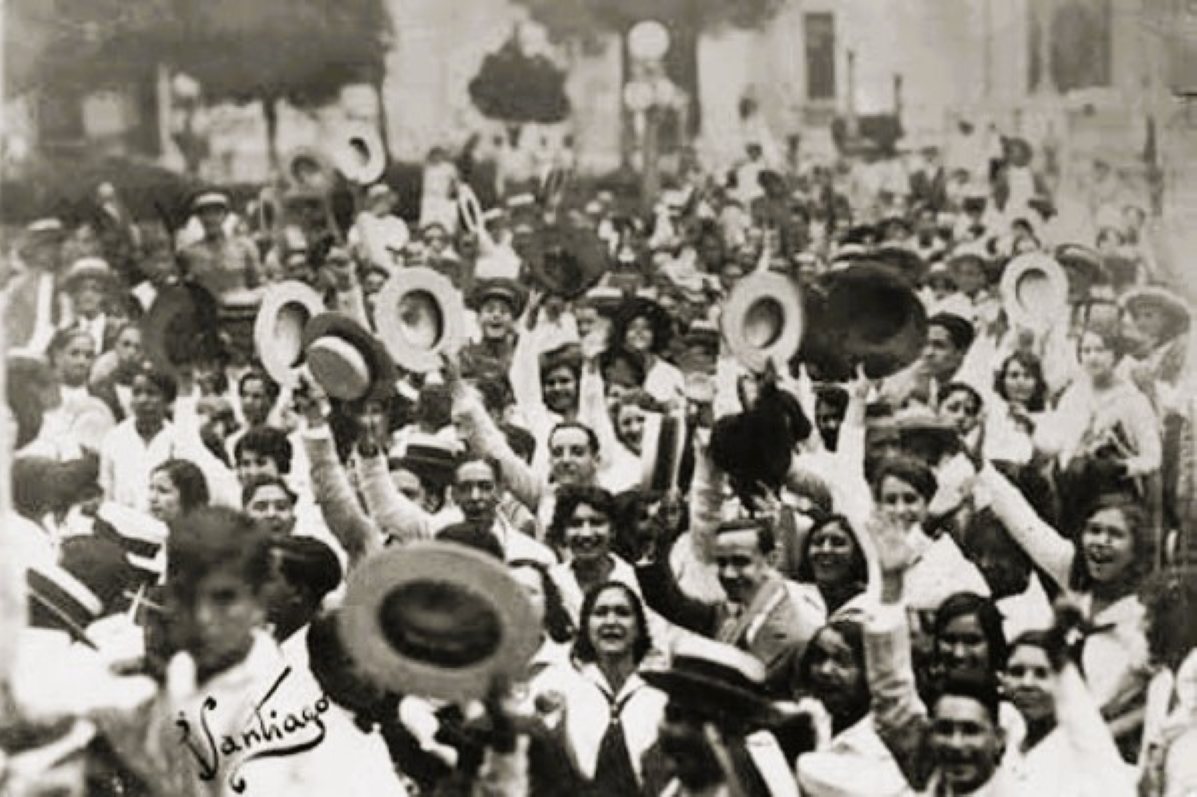
Comments on the position and tasks of the five hundred or so members of the Cuban Communist in 1931 (the year Raoul Castro was born), just a couple of years before the Cuban Revolution would overthrow the U.S.-basked Machado regime in which the C.P. would play one of the leading roles.
‘Our Present Tasks in Cuba’ by O. Rodriguez from The Communist. Vol. 10 No. 6. July, 1931.
Comments on the Directives of the Caribbean Buro of the CI to the CC of the Communist Party of Cuba
THE Caribbean Buro of the CI has formulated a series of practical directives to the CC of the CP of Cuba suggesting concrete measures for the carrying out of the Party’s immediate tasks. The directives confine themselves to the following propositions:
1. Mobilization of the masses for the immediate concrete struggles from the angle of the demands outlined for the Program of Action;
2. Organization of the unemployed, discussing the forms of organization and the nature of the activities of the organizations of the unemployed;
3. Immediate tasks of the Party’s trade union work;
4. Strengthening the Party organization.
The following constitutes an elaboration and explanation of these directives.
***
The revolutionary struggle in Cuba at the present time is of such great importance as to deserve the utmost attention and active support of the world revolutionary movement, especially of the revolutionary movement on the American continent.
Cuba is, in fact, one of the most important colonies of Yankee imperialism. It is held in economic bondage by one of the greatest combinations of Yankee finance capital centering in the National City Bank. To maintain this regime of imperialist exploitation, the United States government is keeping in power the fascist band of Machado which stops at nothing to suppress the revolutionary movement of the masses, especially the revolutionary movements of the workers led by the Communist Party of Cuba.
The Cuban working class, led by the Communist Party, occupies at present the front trenches of struggle against Yankee imperialism.
PRESENT CRISIS AND THE WAY OUT
The misery and suffering of the Cuban masses at the present time is especially acute because the world economic crisis, precipitated by the collapse of United States “prosperity” in 1929, found Cuba in the throes of a deep depression lasting since 1924. The price of sugar, which is the principal product of Cuba, had declined from 23 cents a pound 10 years ago to about 1 cent a pound in 1930.
The decline in the price of sugar continuing since 1924 had resulted in an even faster decline of the standard of living of the workers and of the peasantry. The daily wage of a full-fledged cane-field laborer is about 40 cents. With this pittance the workers have to buy their food (rice, potatoes, beans) imported from abroad, at high prices controlled by monopolistic export houses.
Wages are continually being cut. Unemployment keeps on increasing. Today there are in Cuba about 600,000 unemployed out of a total population of less than 4,000,000.
Yankee imperialism, in order to maintain Cuba as a supplier of raw material, has confined Cuban economy within the bounds of one industry—the cultivation of cane sugar, the refining being concentrated in the United States. The growth of other industries— let alone the free economic development of the island—has been retarded and effectively checked. The collapse of the sugar market since 1924, topped by the present world economic crisis, has produced a catastrophic condition on the island.
Now Yankee imperialism and that section of the Cuban bourgeoisie which supports its rule are looking for a way out of the blind alley in which Cuba finds itself. On the economic field these searchings for a way out of the crisis proceed mainly along two lines: First, the rationalization of the sugar industry, with special emphasis upon cheapening the cost of production (reducing wages) and limitation of output as part of a world scheme to raise and stabilize the price of sugar, which is embodied in the so-called Chadbourne plan. Second, the diversification of Cuba’s agriculture with a view of raising a number of foodstuffs formerly obtained from abroad. This plan has been presented to the world as a “radical” change in Cuba’s economic structure directed towards the building of “a national prosperity along the same lines which have proved so successful in the United States.” (“Cuban Readjustment to Current Economic Forces,” Trade Information Bulletin No. 725, United States Department of Commerce.)
On the political field, the efforts of Yankee imperialism and its supporters are directed towards a consolidation of the bourgeois forces around the above-outlined economic program and around a concentrated attack upon the revolutionary movements of the masses, in the first instance upon the working class, the revolutionary unions and the Communist Party, with the methods of fascist terror.
Machado’s manifesto of January, 1931, gives an outline of this policy. The manifesto singles out the Communists as the greatest “menace,” holding out the olive branch of peace to those who wish to collaborate with the present regime. It says:
“An impartial observer can clearly see that the Communists are working under strict instructions of the Fifth Congress (of the R.I.L.U.) which took place in Moscow. Through small strikes, through public demonstrations, through the bringing about of constant unrest they are trying to destroy the stability of the government…They picked out Cuba because this republic, due to its position on the continent and due to its nearness and historical relations to the United States of North America, is very important for them.”
The fascist terror against the revolutionary movement is in full swing. At the same time the efforts to conciliate certain elements of the opposition, in order to bring about a consolidation of all bourgeois forces against the revolutionary ferment among the masses, are continuing under the guidance and pressure of Yankee imperialism and its ambassador in Cuba, Guggenheim.
The April 2 statement of Machado, issued through his Secretary of the Interior, Vivancos, says:
“The administration of President Machado is more anxious, perhaps, than any other group of officials or individuals in Cuba to bring a happy conclusion to the political dissensions which for some time have threatened the stability of the republic, and I can say on behalf of the government that the administration is willing to restore constitutional rights throughout the island and recommend to Congress the enactment of a liberal amnesty law for all political prisoners confined in prisons at the present time.”
Machado assumes in this statement the face of a lamb and the voice of an angel. But he does not fail to point out that in exchange for the blessings of constitutional rights which he is willing to restore to the bourgeoisie he demands the “immediate cessation of violent acts, systematic disturbance of public order and peace, and all other anti-government demonstrations.”
In other words, for a few crumbs of concessions to the upper strata of the bourgeois opposition Machado demands the cessation of all struggles against his regime and the rule of Yankee imperialism in Cuba. He demands complete support for his fascist terror against the toiling masses and their revolutionary organizations. Ambassador Guggenheim is guiding and facilitating the carrying out of this policy by flirting with certain sections of the opposition while rendering all possible support to the Machado regime. This is very well shown in his latest statement which says: “It is true that I would welcome a cessation of the difficulties that are embroiling Cuba, but it is not for me to interfere. I am friendly with leaders of both government and the opposition, but I have consistently urged hat the only possible satisfactory solution to the present internal problem of Cuba is a strictly Cuban solution.”
The leaders of the nationalists, Mendieta and others, are participating in the negotiations for this bourgeois-imperialist peace. They do not present any demands for the improvement of the conditions of the workers and peasants. The nationalist leaders stand ready, for a few political concessions to the bourgeoisie, further to surrender Cuba and its toiling masses to the rule of Yankee imperialism and its native tools.
While this bargaining is in process, tending toward a consolidation of the bourgeois forces and intensification of the fascist terror against the masses, the student youth, who constitute the shock troops of the nationalist movement, are engaging in sporadic acts of individual terror, isolated from the mass movements of the workers and peasants, without a consistent revolutionary program and aims. In this way the revolutionary student youth is merely becoming a plaything in the hands of the bourgeois opposition which is looking towards conciliation with the present regime and collaboration with Yankee imperialism against the masses.
The “peace” between Machado and the bourgeois opposition of Menocal and the rest, which is being realized under Guggenheim’s pressure and leadership, will constitute a victory for Yankee imperialism. It demonstrates once more the utter helplessness and inability of the nationalists to wage or lead an effective struggle against Yankee imperialism and its Cuban bourgeois supporters.
This “peace” is the imperialist-bourgeois way out of the present crisis in Cuba. It is a peace of hunger and fascist terror for the masses. It is a peace for the further enslavement of Cuba by Yankee imperialism.
The Chadbourne plan, which is a part of the peace, is resulting in increased unemployment, lower wages, intensified speed-up on the sugar plantations under the terror of government troops and military guards, and ruination of the small farmers who are badly hit by the limitation of sugar crops.
The policy of financial retrenchment, also part of the Machado-Guggenheim-Menocal peace, is resulting in wage reductions of the lower-grade government employees and no appropriations for the relief of the starving masses, while the expenditures for the upkeep of the army and the Machado fascist bands are increasing.
The present taxation policy—the emergency law—part of the same peace of hunger and fascist terror, which is also represented as a means of “encouraging the growth of native industry”—imposes a crushing burden upon the workers, peasants, and the poor population of the cities. At the same time the application of the emergency law facilitates the export of “native” capital for investment abroad and enables Yankee imperialism to get still more of a stronghold upon the resources and economy of Cuba.
And last, but not least, is the consolidation of the bourgeoisie for a ruthless campaign of fascist terror against the toiling masses and the national-liberation movement of Cuba. This is the chief aim of the bourgeois imperialist peace pact prompted by the catastrophic economic conditions on the island and the imminence of a revolutionary upsurge of the toiling masses.
STRUGGLE OF THE MASSES AND LEADERSHIP OF THE COMMUNIST PARTY
It is under these conditions that the Communist Party of Cuba is attempting to fulfil its role as the revolutionary vanguard of the working class which is destined to head the anti-imperialist and agrarian revolution in Cuba. These efforts of our Party are still being seriously hampered by strong remnants of petty-bourgeois reformism and radicalism as well as by serious weaknesses of the Party organization.
The turn initiated in the Party’s work about November, 1930, following the letter of the CP USA to the CP of C has already produced, good tangible results. What is necessary is a more conscious understanding of the full meaning of this turn, and a more decisive application of the new methods of work and organization.
As to the general orientation of the Party: There seems to be a tendency in the Party to proceed from the point of view that since the working class and the Party are not yet ready for the seizure of power there is little else that the Party can do to mobilize the masses for struggle.
The result of such a non-Bolshevik point of view is that the Party fails to speak to the masses about their immediate revolutionary tasks. The Party does not show the masses the revolutionary way out of the present crisis. Consequently, the Party cannot effectively organize and lead the daily struggles of the masses, through which alone the masses will arrive at the task of seizing power under the leadership of the Communist Party.
What is the Party’s policy to mobilize the masses against the growing wave of fascist terror? Merely to denounce it is insufficient, just as it is insufficient merely to proclaim the slogan of a Workers’ and Peasants’ Government. The masses are suffering from concrete attacks. Their revolutionary organizations are broken up. Their meetings are dispersed, and the participants jailed, wounded, and killed. Their leaders are imprisoned and assassinated. Their press is outlawed. They are compelled to work on the sugar plantations under the lash of troops and rural guards.
Will the masses fight against these attacks? Certainly. The Cuban Party has already led splendid mass struggles of this character, as in March, 1930. That was a general strike. But general strikes cannot be had every day, whereas the masses are compelled to fight against these fascist attacks almost daily.
The Party has not yet developed the method of organizing the widest masses of workers and peasants for a day-to-day struggle against the fascist terror of the Machado regime. The Party has not even formulated a clear program of partial demands against this terror, such as the right to organize, strike and picket; the freedom of press and assembly; unconditional liberation of all political prisoners; and withdrawal of all troops and military guards from the sugar plantations.
Especially was it important for the Party to place itself at the head of a mass movement for such partial demands when Machado promulgated his emergency decrees initiating the latest phase of the terror regime. By doing so the Party would have demonstrated in practice its leading role in the revolutionary struggle and the hegemony of the proletariat. Failure to do so has resulted in the bourgeois “opposition” being able to parade as the opponents of Machado’s terror, deceiving and demoralizing the masses in preparation for peace with Machado against the masses. Failure by the Party to assume the initiative and mass leadership in the campaign against the Machado terror has also resulted in the nationalists appearing as the only force combatting Machado, whereas in reality they were merely a plaything—whether willingly or unwillingly —of the bourgeois opposition, without seriously damaging either the Machado regime or the rule of Yankee imperialism. On the other hand, with the Party and the working class at the head of the struggle against the Machado terror, the revolutionary nationalist youth and the poor population of the cities must and can be won over to the side of the revolutionary mass movement on a wide anti-imperialist united front.
Similarly on the question of the emergency law and the Chadbourne plan. The Party was hesitating as to whether or not it should initiate a fight against the law. Why? Is not this law part of the so-called stabilization scheme of the bourgeois imperialist peace compact which is now being consummated? Is it not directed chiefly against the workers and peasants, while also striking against the city poor and even against some sections of the merchants? Nevertheless the Party did not develop a campaign against the law, confining itself—after some hesitation—to several meetings of protest against it. Just because this emergency law affected the overwhelming majority of the Cuban population, with the exception of the bourgeois top, this was no reason for hesitating to initiate a fight against it. On the contrary. This was a basic reason for the Communist Party and the working class to put themselves at the head of a real people’s movement against Yankee imperialism and the Machado regime.
The same applies to the position of the Party on the Chadbourne plan. As was shown above, this plan aims to “stabilize” the sugar industry by rationalization of production and hence more unemployment, wage cutting, speed-up under military supervision, ruination of the small peasants. This plan, together with the emergency law and the intensified fascist terror against the masses and their revolutionary organizations, is the bourgeois-imperialist attempt to solve the crisis in Cuba. Hence, the Party should have challenged the Chadbourne plan by initiating a campaign for mass struggle against it as part of a general campaign against the bourgeois-imperialist way out of the crisis which is being incorporated in the Machado-Guggenheim-Menocal peace compact.
The Party must work out a Program of Action for the present phase of the Cuban revolution, showing the masses the revolutionary way out of the crisis and the next steps in the struggle. On this Program of Action, as against the bourgeois-imperialist peace program of hunger and fascist terror, the Party must strive to mobilize the masses of workers and peasants for everyday struggle, aiming to win for this struggle the revolutionary nationalist youth and the poor population of the cities. Thus will be created, the true united front in the anti-imperialist and agrarian revolution headed by the working class and led by the Communist Party.
This Program of Action must be a program of concrete demands, answering the burning needs of the masses in the present crisis. We have already indicated the nature of the partial demands to be directed against the fascist terror. These demands must be connected with such demands as immediate unemployment relief, the eight-hour day, a minimum wage, cancellation of all peasant indebtedness, abolition of all indirect taxation and all taxation upon the peasantry, social insurance against unemployment, old age, sickness, and the like. Only by means of such a program of demands will the Party be able to mobilize the masses for revolutionary struggle against the fascist terror, the Chadbourne plan, the emergency law; against unemployment, wage cuts, and speed-up; against the whole peace compact of Machado-Guggenheim-Menocal. Only with such a program of demands, linked up in our agitation with he basic slogans of the anti-imperialist and agrarian revolution— such as complete national independence of Cuba, confiscation of all large estates and distribution of the land to the peasants, confiscation and nationalization of all imperialist enterprises, a Workers’ and Peasants’ Government—will the Party be able to raise the movement to the level of revolutionary struggle for power.
In developing the campaign around such a Program of Action, the Party will also be able to make a successful appeal to the revolutionary nationalists to join the common struggle which is to be headed by the working class. The experience of the last six months amply demonstrates the correctness of our contention that the refusal of the nationalists to support the revolutionary struggles of the masses, and the policy of isolated, sporadic acts of individual terror by the nationalist youth, are only helping the bourgeois “opposition” to secure for themselves better terms of peace with Machado and Yankee imperialism at the expense of the toiling masses and the cause of the national independence of Cuba. This lesson must be driven home to the masses generally, and especially to the revolutionary nationalist youth and to the poor population of the cities that is following the nationalists. These elements must be shown that only by joining with the revolutionary movement of the masses, in a revolutionary anti-imperialist united front, can they bring about the national liberation of Cuba. And the most effective way to win these elements for such a united front is for the Party to mobilize the workers and peasants on a Program of Action against the Machado-Guggenheim-Menocal peace pact. In the struggle for this program the working class will demonstrate to the revolutionary nationalists that it—the working class—is destined to head the anti-imperialist and agrarian revolution, and the Communist Party will prove that it alone—as the Party of the working class—is able to lead it.
In order to be able to unfold these activities among the masses, the Party must continue to wage a determined and systematic struggle against all tendencies towards sectarianism (either seizure of power or nothing), opportunism (united fronts from on top with yellow trade union leaders, dragging the Party at the tail end of the nationalists), putchism and conspiratorial romanticism, and remnants of anarchist ideology in relation to Party discipline. All these tendencies are the result of the pressure of petty bourgeois ideology upon the masses and upon the Party. Whether this ideology takes the form of frank reformism, or of radicalism, its effect is the same. It hampers the growth of the Party as the political party of the Cuban proletariat, it retards the development of class consciousness of the workers, it stands in the way of establishing the hegemony of the proletariat in the anti-imperialist and agrarian revolution, it undermines the building of the Party as a disciplined Bolshevik Party. A systematic struggle against all such tendencies is a basic part of the development of the Party’s mass activities.
The Party must also radically improve its composition and organizational structure. This question deserves special treatment by itself. Here it is essential to point out the following:
While the Party membership is growing (500 members at present as compared with about 300 a year ago), the composition of the membership continues to suffer in three essential respects: (1) A very low percentage of workers from the basic industries on the island, such as sugar plantations and mills, and marine transport; (2) similarly a low percentage of native-born Cubans; (3) very few Negro workers, though one-third of the population is Negro. These defects are especially strong in the Havana organization.
From the point of view of Party structure the following are the basic weaknesses: (1) There are no factory nuclei; (2) along with street nuclei, there exist what are called trade union nuclei which are identical with the Party fractions; (3) absence of a Party press.
It is obvious that these weaknesses in the composition of the Party membership and in the organizational structure reflect the weaknesses of the Party’s work among the masses. Because the Party carries on little, if any, activity on the sugar plantations, in the sugar mills, among the transport workers, the Party has a very small membership among the workers of these industries. Similarly, because the Party does little among the Negro workers, there are practically no Negroes in the Party. And because the Party is not orientated towards the basic sections of the Cuban proletariat, which is employed on the plantations and in mills, the Party has no plantation nuclei, or mill nuclei. These organizational defects, in their turn, hamper the development of the Party’s work among the basic masses of the working class.
A radical reorientation of the Party towards the basic sections of the Cuban proletariat, and a corresponding rebuilding of the Party organization on the basis of shop and plantation nuclei, is indispensable for the successful mobilization of the mass struggles for the Program of Action. The Party must also find the means of establishing a Party organ, even if it be only a small bulletin. This is absolutely essential for the further growth of the Party.
There are a number of journals with this name in the history of the movement. This ‘Communist’ was the main theoretical journal of the Communist Party from 1927 until 1944. Its origins lie with the folding of The Liberator, Soviet Russia Pictorial, and Labor Herald together into Workers Monthly as the new unified Communist Party’s official cultural and discussion magazine in November, 1924. Workers Monthly became The Communist in March, 1927 and was also published monthly. The Communist contains the most thorough archive of the Communist Party’s positions and thinking during its run. The New Masses became the main cultural vehicle for the CP and the Communist, though it began with with more vibrancy and discussion, became increasingly an organ of Comintern and CP program. Over its run the tagline went from “A Theoretical Magazine for the Discussion of Revolutionary Problems” to “A Magazine of the Theory and Practice of Marxism-Leninism” to “A Marxist Magazine Devoted to Advancement of Democratic Thought and Action.” The aesthetic of the journal also changed dramatically over its years. Editors included Earl Browder, Alex Bittelman, Max Bedacht, and Bertram D. Wolfe.
PDF of full issue: https://www.marxists.org/history/usa/pubs/communist/v10n06-jun-1931-communist.pdf

