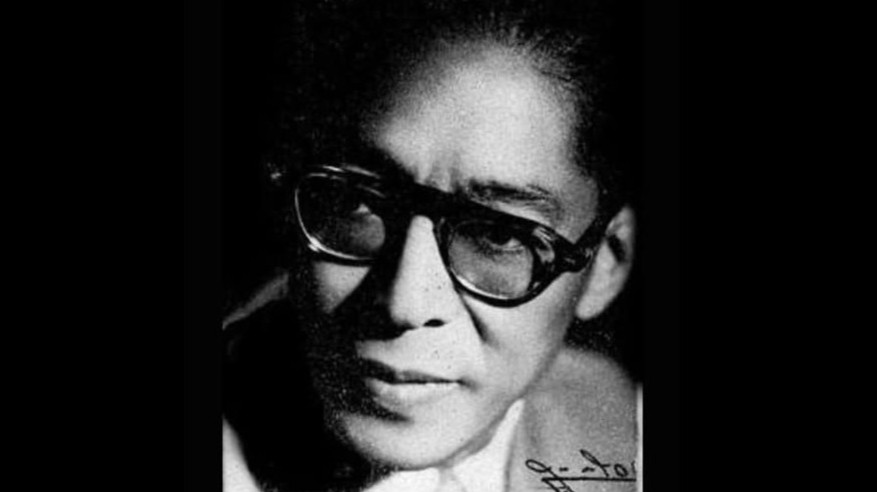
Regino Pedroso was born in 1896 of Spanish, African, and Chinese descent, leaving school at 13 for work, including on building sites, in steel mills and rail shops, He published his first poems while still at work, eventually moving from the factory to the newspaper office. Writing for La Prensa and others, Peluso’s poetry was a part of those revolutionary years of the early 1930s. He became an editor of Mases, magazine of the Cuban Anti-Imperialist League in 1935 when he and other editors were arrested and sentenced to six months in prison. It was in prison that Pedruso wrote this marvelous autobiography-manifesto. Becoming a major figure in Cuban poetry, after the 1959 Revolution he would be, among other things, Cultural Attache to the People’s Republic of China.
‘Auto-Bio-Prologue’ by Regino Pedroso from International Literature. No. 7. 1935.
Auto-Bio-Prologue
A Poet Now in Prison for His Political Activities
Name—Regino Pedroso.
Age—In what I have hoped, dreamt, lived, 100 years; as concerns the revelation of the realist truth, five years; as concerns pure biologic fatality, was born in 1898.
Place of birth—within a narrow political geographic concept. I was born in Union de Reyes, Matanzas province, Cuba. But I might say, more dialectically, that I was born in the world.
Race—human; pigmentation, black-yellow (without any other mixture).
Places of study—the shops, the fields, the factories and the sugar plantations.
Ideology—son of America. Born in a country politically and economically enslaved by Yankee Imperialism; classified by traditional concepts of bourgeois religion, philosophy and science as an individual of inferior race—Ethiopic-Asiatic—belonging, a proletarian, to the most oppressed and exploited class; what could my ideology be, with those three fatalities, geographic-historical, ethnical and social-economic?…That which comes from Marx, finds its synthesis in Lenin and today surges into the world with the International of Justice.
Objective and criticism—to contribute to the affirmation of a social lyricism in this young American land.
We believe in the excellence of art as the supreme manifestation of beauty, but we only understand and justify its utility and eternal reason when it tends to reflect and interpret the anguish, dreams, desires and disquiet of great masses of men.
This supposes, naturally, an acute sensibility before life in the creative artist—and life is a tragedy!—a pupil open over the flesh of emotion, in order to look at the world and feel it; a maturity of thought realized in the heat of living and, finally, a definite return from the lands of dreams.
When the poet has come this far, he shall no longer feel the fresh coolness of immaterial things. His unedited song shall have coagulated into the cry made muscle, he shall no longer bring the pure voice of virgin gladness, and his pupils, now dilated by the horizons of the world, shall no longer reflect only landscapes of dead images. Before the spectacle seen, he shall have lived
in himself his own spectacle, and when he sings he shall go inevitably through the same clamor, to the tragedy of men.
Then, if the feeling is deep and communicates a beauty of thought or the tremor of a new emotion, and if it succeeds in awakening a sentiment of social justice or human preoccupation, then is well worth the sacrifice of the pure voice and the simple mental game for the new expression, which is, now, a fire in men’s souls and a call to their consciences.
But if art thus becomes politics, then we shall have to admit, without reservations, that a politics so arrived at is also, humanly, esthetic.
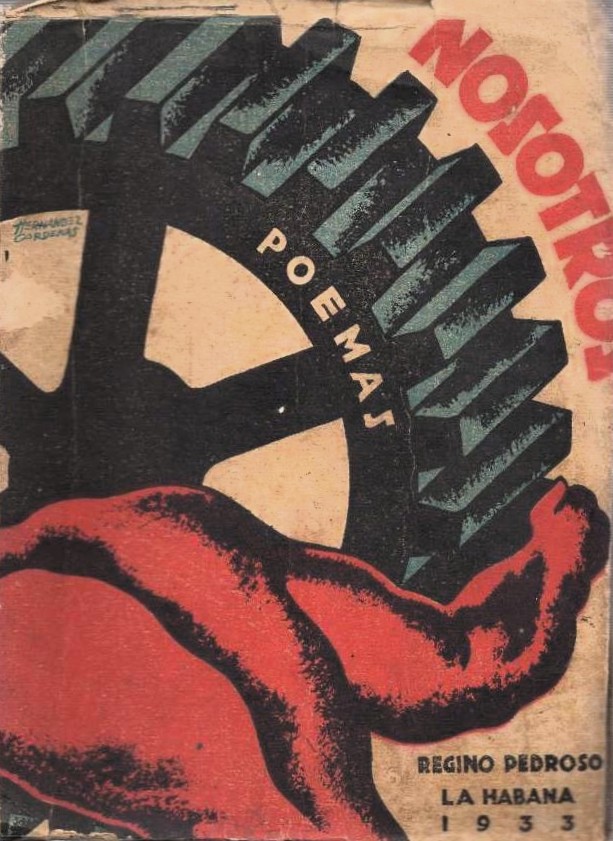
Auto-criticism—this book comes with me, or rather, I came with it under the tragic sign of our times. Like a dying dog which still barks at us of the past.
Nevertheless, we surge into the present under the imperative of living fully a new era, or else be strangled.
Had we come earlier, the songs and the landscape would have been other.
Perhaps, from yesteryear, beautiful constellations of words still glitter over the old, distant roads…
It was dawn. I did not know my own voice, and I no longer even lived my own sorrow.
Later—in the sleepless inquietude of things—I asked myself many questions which have now found their answers. It is from that moment—not from the remote yesterday, but from the immediate yesterday, that several poems have found their way hither. They belong to the work which I would have done five or six years ago. They are reflections of the esthetic-individualist conception of life and art which I then held.
I would have preferred that my present work appear separately, completely unchanged from my previous work. But this book marks fatally the rhythm of my life. And just as my life, although cut from yesterday’s night by the light of a new day, has not ceased—biologically—to be itself, so this book drags behind it, although pared by the sickle of a blank page, and without other nexus than the flesh of a common binding, an idealist past. But I have wished to indicate here the process of inquietude—perhaps a trifle anarchist—which formerly lighted me the way.
I can say, then, that such are the bitter currents through which, almost naturally, I have reached these seas. They have, therefore, their full justification here.
But since that time life—that is to say, the felt reality, has become a shadow upon our hearts, although our eyes now see deeper than ever into the profound darkness. And now we sing what we see, what we live: the anguish which embitters our mouths, the anxiety of the morrow which inflames our pupils and, above all, this slave misery of today which cakes between our hands.
All the immense night violated by gestures and torn by cries
Proclaims: finally, once the man be known, and that, in my judgement, is the essential thing—no merchandise should pass through the customs houses of the future unless the traveler be scrupulously identified—so much fraud can cover a personality! I believe that I have the right, more so than anyone else, to introduce my book.
I shall declare, then, that I come from the Proletariat, and here I am with the future of this baggage of leaves…
But with the inquietude with which an impatient traveler might say to the inspector who scrutinizes his bags: trinkets, cigarettes, clean linen and so forth, upon reaching this frontier of the public, I shall briefly explain, perhaps a little nervous at the prospect of an examination, but sincerely convinced that I carry neither opium nor contraband opportunism: We, poems.
Havana, Cuba
Literature of the World Revolution/International Literature was the journal of the International Union of Revolutionary Writers, founded in 1927, that began publishing in the aftermath of 1931’s international conference of revolutionary writers held in Kharkov, Ukraine. Produced in Moscow in Russian, German, English, and French, the name changed to International Literature in 1932. In 1935 and the Popular Front, the Writers for the Defense of Culture became the sponsoring organization. It published until 1945 and hosted the most important Communist writers and critics of the time.
PDF of full issue: https://www.marxists.org/subject/art/literature/international-literature/1935-n07-IL.pdf
 Revolution's Newsstand