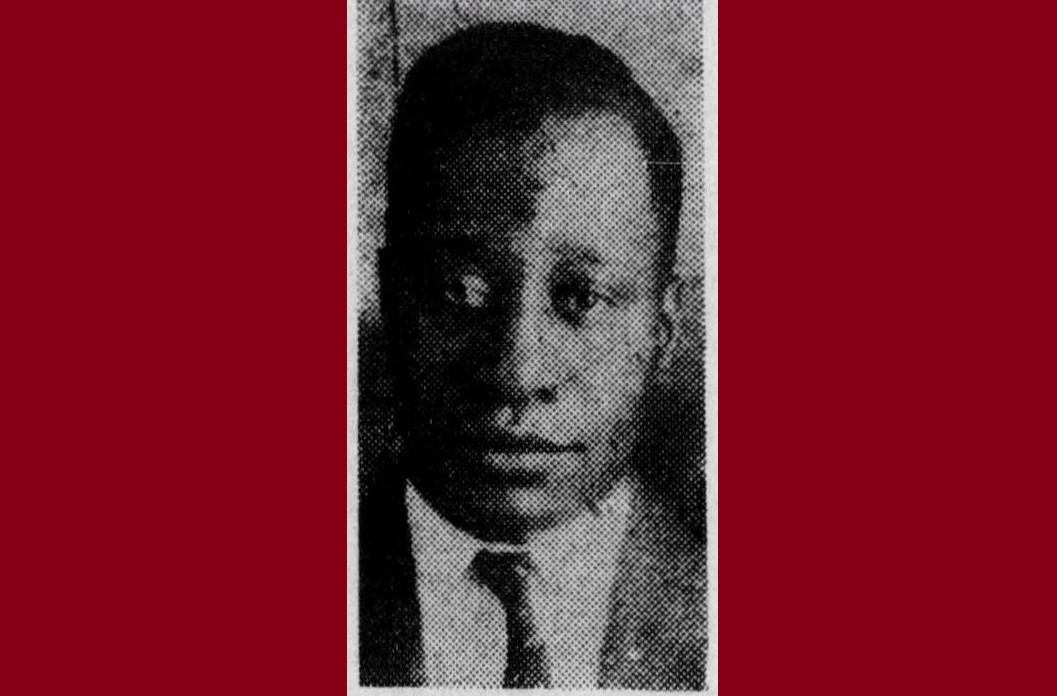
Otto Hall, older brother of Harry Haywood and a formidable comrade in his own right, was a Communist Party field organizer and Central Committee member instrumental in developing the Party’s Black work in the late 1920s. Here, Hall continues his reportage on a recent tour of the country.
‘The “Real” New Negro’ by Otto Hall from The Daily Worker. Vol. 5 No. 18. March 27, 1929.
Defense Corps Organized by Negroes Smashes Lynching Bee of White Mobsters
In a previous article we reported on the general conditions of Negro workers in Northern industrial centers, as seen by us on our recent tour. The present article will tell of the reaction of these workers to these “slum” conditions.
This tour, in which all districts were covered, from the Atlantic to the Pacific coast, brought the writer in contact with many thousands of Negro workers in all important industries in which they are allowed to work. These workers were very frank in expressing their opinions regarding conditions as they saw them.
Those of you who have been interested in the “Negro Question” and have been keeping up with all the literature extant purporting to deal with this question, have heard much about the “New Negro” who seems to have appeared during and since the recent world imperialist war. And as a result of this much bunk is extant about this supposedly new type of Negro, and many wrong impressions prevail. Many have assumed that the “noisy complaints” and whinings of a certain group of Negro intellectuals representing, as they call it, the “cultured tenth” expressed in poetry, essays and novels, are the “voice” of the “New Negro.” This is erroneous. These Negroes represent only a rising Negro capitalist class who want to be taken into the great white capitalist class and together with them exploit all the workers.
Modern “Uncle Toms.”
There is not much that is “new” about this Negro that they refer to at all. Many of this type are the same old “handkerchief heads” who have only exchanged the cotton bandanna for a silk one. In other words, they are the modern “Uncle Toms” who instead of wearing the old “cotton jeans” are now appearing in “cutaway” coats and “top” hats.
The real “New Negro” is to be found among the workers who have been drawn into the industries. The consequent process of proletarianization is making these workers more and more class conscious. Their resentment against conditions is not expressed in loud mouthed “vaporings” or whining pleas for justice but by determined attempts to organize and fight for better conditions. These “New Negroes” voted the Communist ticket in the recent election campaign because they were convinced that the old bourgeois parties do not serve workers but capitalists. There were more of those who voted our ticket than is commonly known. In almost every district where our candidates were on the ballot. I spoke with Negro workers who had voted our ticket. In such out of the way places as Spokane in the far west and mining centers like Wheeling, W. Va., and Triadelphia, I found Negroes who voted for our candidates. They told the writer that what convinced them more than anything else of our sincerity was the campaign we carried on in the South.
“Party Practices What It Preaches” A woman worker in Denver told the writer that when she heard of Comrade Foster’s arrest in Delaware for advocating complete equality for all workers, regardless of color, she was convinced that our Party practices what it preaches. When she was told that our Party is a permanent organization that not only carries on election campaigns but organized the workers for a continuous fight against the bosses till capitalism is finally overthrown, she said that she had been waiting for this kind of an organization for a long time and that she was willing to join and fight with us. These workers are the real “New Negroes.”
Negro Defense Organization.
Another example of this “New Negro” was found in a certain city whose name will not be mentioned for obvious reasons. Many Negro organizations have drawn resolutions against lynchings, petitioning presidents, governors, etc., in a vain attempt to check this vicious “pastime.” But a certain new “defense” organization tried a more effective method.
A Negro who was suspected of the “usual crime” was picked up in the heart of the “black belt” of this city late one night by a gang of white hoodlums in an automobile. Some Negroes noted this, and suspecting the purpose of these “hoodlums” notified some members of this “defense” organization. These Negroes, about 25 in number and well-armed, got into automobiles and followed these hoodlums to the outskirts of the city where a mob with all the equipment for a lynching festival was waiting for the victim. Before the mob had a chance to accomplish their design these Negroes who were following them caught up with them, held the mob at bay, and took their intended victim away from them. And in spite of the protests of the mob that they were not going to harm the “darky” but were just going to have a little “fun,” marched them back to the city and turned them over to the chief of police. The chief of police refused to hold any of the mob but I wanted the Negroes to turn over to him the Negro who was to have been lynched. This request was refused and the chief was warned that the next time this mob attempted anything like that they would not be taken to jail, but would be killed on the spot. The news of this episode spread all over the state and this organization has now from 800 to 1000 members.
Pershing Speaks to Negro Workers.
This defense organization shows not only interest in Negro workers but class conscious white workers as well. George Pershing, well known organizer of the anti-imperialist league passed through that city on his recent tour. While there he spoke at a street meeting to Negro workers out in the “black belt.” A Negro policeman attempted to interfere with him and arrest him. This policeman told him to take that “stuff” he was talking out of that vicinity and go away to the whites where he belonged. Several Negroes in the crowd who were members of the defense organization got around the policeman and prevented him from breaking up the meeting. One of them told the policeman that if they wanted to listen to the speaker it was nobody’s damn business and that he would not “get well” if he attempted to butt in. After Pershing finished speaking the leader invited him to speak before their organization. They told him they were very much interested in what he had to say.
Not Interested In Religious Bunk.
Another interesting incident dealt with how the “New Negro” looks upon religion. In a midwestern city the writer was billed to speak at a church. This church differed with many churches in that the entire membership from the pastor down were workers. The preacher was of the type known as “Jackleg” preacher, a type that is now disappearing, one who was not a permanent fixture anywhere but who goes where he is “called” and who usually works at odd jobs during the week and preaches on Sunday.
As was his usual practice before meetings, the writer visited this place early in the afternoon to become acquainted and make connections. In the pastor’s “study” were a couple of preachers and a few workers, members of the congregation. They were discussing conditions generally and talking about the scarcity of work and the condition of the Negro workers. One of these preachers said that this period was predicted in the book of “revelations” or something of that sort, and we must be like “Daniel” who although cast into the lion’s den never lost his faith in God. These workers told him that this was the “bunk” and that they were not interested in what happened 2,000 years ago, but wanted to know what could be done to better their conditions now. They said, “That is the reason why we asked this ‘gentleman’ to come down here and speak to us. What we want to know is how to organize and fight against these hard times and ‘Jim Crow’ conditions. My family cannot live on the book of revelations.”
Although the writer never liked to speak in a church it was sometimes unavoidable and this meeting was fruitful and got good organizational results.
The next article will deal with the organizational results of the tour and our future prospects.
The Daily Worker began in 1924 and was published in New York City by the Communist Party US and its predecessor organizations. Among the most long-lasting and important left publications in US history, it had a circulation of 35,000 at its peak. The Daily Worker came from The Ohio Socialist, published by the Left Wing-dominated Socialist Party of Ohio in Cleveland from 1917 to November 1919, when it became became The Toiler, paper of the Communist Labor Party. In December 1921 the above-ground Workers Party of America merged the Toiler with the paper Workers Council to found The Worker, which became The Daily Worker beginning January 13, 1924.
PDF of full issue: https://www.marxists.org/history/usa/pubs/dailyworker/1929/1929-ny/v06-n018-NY-mar-27-1929-DW-LOC.pdf

