History, of course, moves forward and not backward. What is understood by us today as the definitive end of the post-war revolutions–the autumn 1923 events in Germany, Poland, and Bulgaria–were seen in their immediate aftermath as the beginning of a new wave of revolutions. And perhaps they could have been.
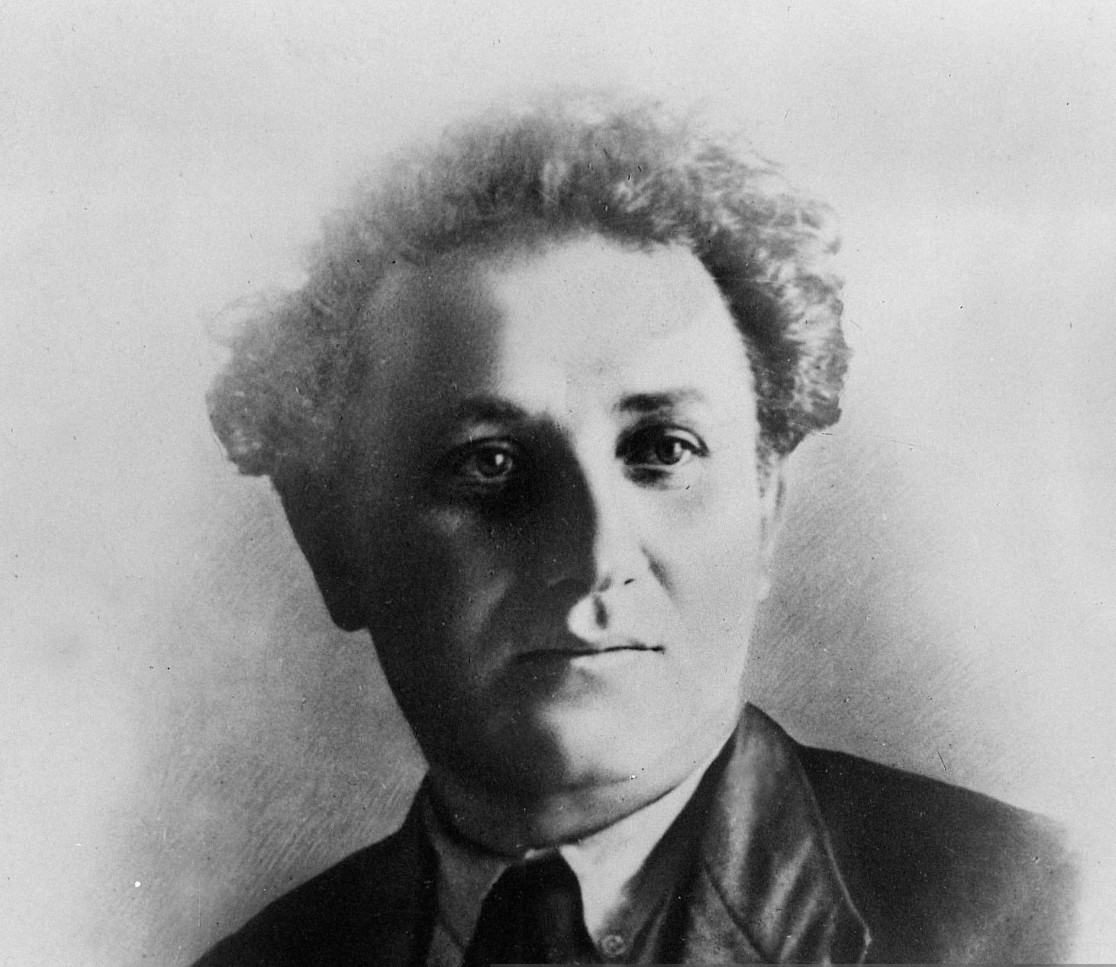
‘The Second Wave of International Revolution’ by Grigory Zinoviev from The Liberator. Vol. 7 No. 1. January, 1924.
WHEN, in October of this year, the full scope of the impending revolution in Germany was revealed, the Russian Party rose as one man. The manner in which the Russian Communist Party reacted to the prospect of revolution in Germany is of the very greatest importance. After two years of the New Economic Policy, the Party was called upon to decide what its attitude should be to the approaching revolutionary struggle in Europe. This was a severe political test. Would a regeneration of the tissue of the Party organism take place? Would some of the fatty deposit of “nepism” be discarded?
The Russian Communist Party stood the test. Its answer was unanimous. It reacted to the approaching revolutionary storm as a proletarian revolutionary party and one of the chief divisions of the Communist International should.
The pace of events has now slackened (November, 1923). The proletarian revolution in Germany is again undergoing tremendous difficulties, and, as a result, depression is being felt among certain sections of our Party, especially among the youth. Rosy optimism is giving place to the blackest pessimism.
It is now obvious that in October we all somewhat overestimated the speed of events and underestimated the difficulties which stood in the way of a victorious proletarian revolution in Germany. Time intervals will be longer than we at first expected, although they are now calculated in months instead of years. The most prominent representatives of revolutionary Marxism, beginning with Marx himself, have been liable to mistakes as to time intervals. Let us recall the mistakes which were made at the beginning of the revolutionary events of 1918-19 in Germany by the greatest of revolutionary realists, Lenin. In a letter addressed to the All-Russian Central Executive Committee in October 1918, Comrade Lenin wrote:
“The crisis in Germany has only just begun. It will inevitably end with the passage of political power into the hands of the German proletariat. The Russian proletariat is following events with the greatest attention and enthusiasm. The most backward workmen of all countries can now see how right the Bolsheviks were in basing their tactics upon the prospect of the support of a world-wide workers’ revolution, and in not fearing to make many heavy sacrifices…But the Russian proletariat is not only following events; it is also exerting every effort to assist the German workers…During the last few days world history has unusually increased its pace toward a world-wide workers’ revolution.”
Very much in the same way our Party, and in fact, all of us, estimated the situation in Germany during last October. We also believed that world history had unusually increased its pace towards the world-wide workers’ revolution.
Somewhat later, towards the end of 1918, Comrade Lenin wrote as follows:
“We therefore say that never before has a world revolution been so imminent; never before has it been so evident that the Russian proletariat has set up its power, and that we shall be followed by millions and tens of millions of the world proletariat…Three months ago, when we said that there might be a revolution in Germany, we were laughed at and told that only half-crazy Bolsheviks could believe in the possibility of a German revolution. Not only the bourgeoisie, but the mensheviks and left-socialist-revolutionaries called the Bolsheviks traitors to patriotism and declared that a revolution in Germany was impossible.”
Comrade Lenin, in concluding his pamphlet “The Proletarian Revolution and the Renegade Kautsky” (November 10th, 1918), wrote:
“The foregoing lines were written on November 9, 1918. On the night of November 9-10, news was received from Germany that a successful revolution had begun, first in Kiel and other northern coastal towns, where power passed into the hands of the Soviets of Workers’ and Soldiers’ Delegates, and then in Berlin where also power passed to the Soviets. The conclusion to the pamphlet on Kautsky and the proletarian revolution which still remained for me to write has now become superfluous.”
The above quotation shows how at that time Comrade Lenin and we all were convinced that this final victory, the proletarian revolution in Germany, had been won.
On November 6, 1918, on the occasion of the first anniversary of the November revolution, Comrade Lenin in a speech said:
“We are celebrating the anniversary of our revolution at a moment when very important events are taking place in the international workers’ movement, and when it has become clear to even the most sceptical and doubting members of the working class that the world war will not be ended by agreement or by the force of the old governments and the old ruling bourgeois class, but that it is leading Russia and the whole world to a world-wide proletarian revolution and to the triumph of the workers over capitalism.”
“When we seized power in October,” Lenin wrote, “we were but a few isolated sparks in Europe. It is true that the sparks were increasing and proceeded from us. This was a great achievement, but still the sparks were few and isolated. But now we see a conflagration which has seized the majority of the countries–America, Germany and England. We saw how the revolution passed from Bulgaria to Serbia. We saw how the revolution of workers and peasants passed through Austria into Germany. Many countries have been involved in the conflagration of the workers’ revolution.”
In connection with the Hungarian revolution, Comrade. Lenin on January 9, 1919, said:
“Old people say, ‘Our children have grown up and become adults. We may now die.” We are not preparing to die, we are going forward to victory; but when we see. such children as Soviet Hungary, we can say that we have done our duty not only in Russia, but on an international scale (italics ours, G.Z.) and that we are prepared to undergo the greatest difficulties in order to achieve complete victory.”
Having studied Marx and Engels, we can understand why such a type of error (over-estimation of the pace of events and of time intervals) were for them unavoidable. These errors proceeded from those powerful qualities which made Marx and Engels not only great scientists and theoreticians of socialism, but also great revolutionaries.
We, at the end of 1923, are of course not indifferent to the question of time intervals. Whether decisive events will take place a year or two earlier or later is important. Yet, from the historical point of view this question is a secondary one. Fundamentally, the estimates made by our Party and by the Communist International in October 1923 were and are correct. Important, and in fact, decisive factors are continuing to operate in favour of revolution in Germany. The path which the German proletariat and its Communist Party is now pursuing is a difficult and thorny one. But ultimate victory is assured.
LOOKING back on the events which took place during September, October and November 1923 in Bulgaria, Poland and Germany, we are led to conclude that they mark the beginning of the second wave of international proletarian revolution. The first wave began in 1917 (with the great Russian Revolution) and ended somewhere about 1920, having spread to a number of European countries. The first wave began as a direct result of the world imperialist war. Its elemental sweep was tremendous. There was a time when we were perfectly justified in believing that the wave was so powerful that it would sweep away the bourgeois power over the whole of Europe. But at the time of the first wave, the influence of the communists was insignificant. The very word “Communism” was, practically speaking, heard in Europe for the first time in 1919. During the period 1917-1920, the Communist International was in its stage of formation, and the heroic uprising of the Sparticists in January 1919 was the uprising of a small minority. The wave of 1917-1920 was unable to shake capitalism to its foundations. It was but the first reminder of death.
Then came the ebb. The years 1921 and 1922, and the first half of 1923, were a period of extreme and worldwide reaction, the capitalist offensive, the disintegration of social-democracy, the suppression of the old trade unions and the enfeeblement of the working class. At the last meeting of the Enlarged Executive Committee of the Communist International, it was felt, if not actually foreseen, that a new revolutionary wave was approaching. The slogan of the Workers’ and Peasants’ Government and the resolutions on the agricultural and national questions proceeded from this presentiment of fresh revolutionary struggles. That this second wave of the international proletarian revolution has already begun is now perfectly clear. The events in Bulgaria, Poland and Germany, whatever their immediate outcome may be, have proved that the bourgeoisie has not subdued Europe, and that new revolutionary struggles are not far distant. The second revolutionary wave (the end of 1923-?), is distinguished from the first revolutionary wave (1918-20) by the fact that international communism is now asserting a far more powerful and organized influence upon the march of events. The sweep of the movement which began in the second half of 1923 has so far been more restricted than that of 1917-20, which was directly connected with the imperialist war. But the element of organization and communist consciousness among the proletarian vanguard is to-day undoubtedly stronger. The experience accumulated during these years by the advanced section of the proletariat of the world will reveal its influence in the near future. We shall see events which the wiseacres would have declared utterly impossible. We shall certainly see the great social-democratic parties, who are now playing a counter-revolutionary role, collapse like houses of cards, and workers who now place their trust in the social-democrats, pass en masse into our camp.
It is true that the movement in Bulgaria and Poland has been crushed. It is true that General Seekt triumphs in Germany. Nevertheless, the events that took place in Bulgaria, Poland and Germany during September and October 1923 mark the beginning of the second wave of the international proletarian revolution. The pace of events is still not swift enough; our revolutionary impatience is only natural. But speaking objectively, events are moving with unusual swiftness. Less than two months elapsed after the Bulgarian uprising was suppressed in blood before the Bulgarian communists were again on their feet, and at the elections, conducted under the violent control of the Tsankov Government, the bloc of communists and peasant gained important victories. That which the Russian workers and peasants, after their defeat in 1905, required several years to perform, is being performed in Bulgaria in a few weeks. The same, in all likelihood, will take place in Germany. The workers will recover from the blows of reaction much quicker than many think. One need not be a prophet to foretell that in the winter and spring a new mass outbreak of the revolutionary movement in Germany is inevitable.
The second wave of the international proletarian revolution has begun. It rose higher in Germany than anywhere else. It did not however reach the height necessary for the victory of the proletariat and has now begun to subside. But it will inevitably rise again.
The second wave is still not the “World November,” but it is a gigantic step towards the “World November.” The second wave of the international proletarian revolution is already beating heavily against the edifice of European capitalism. The edifice will surely crumble.
We shall err many times more in questions involving time intervals, since there are not scientific instruments for determining such questions with exactitude. The Marxian method is a powerful weapon in our hands, but it cannot save us from over-estimating the pace of events and from inaccuracy in matters of time. But fundamentally we have not erred, do not err, and shall not err.
Whatever the immediate outcome may have been, the events of September and October 1923 mark an important stage in the preparation for the final victory of the international proletarian revolution.
***
“Well informed” gossips have spread the legend that serious differences existed within the controlling organs of the Russian Communist Party regarding the German Revolution. Penetrating Socialist-Revolutionary and Menshevik readers, analysing various articles in our press, arrived at similar conclusions. As a matter of fact, after mature examination, every decision, without exception, connected with the events in Germany, was adopted completely and unanimously. The same complete unanimity prevailed within the Executive Committee of the Communist International, which came to its decisions on the German events after careful examination in conjunction not with the German Party alone, but also with representatives of many other closely concerned sections of the Communist International.
The Liberator was published monthly from 1918, first established by Max Eastman and his sister Crystal Eastman continuing The Masses, was shut down by the US Government during World War One. Like The Masses, The Liberator contained some of the best radical journalism of its, or any, day. It combined political coverage with the arts, culture, and a commitment to revolutionary politics. Increasingly, The Liberator oriented to the Communist movement and by late 1922 was a de facto publication of the Party. Max Eastman would sell the paper to the Party and In 1924, The Liberator merged with Labor Herald and Soviet Russia Pictorial into Workers Monthly. An essential magazine of the US left.
PDF of full issue: https://www.marxists.org/history/usa/culture/pubs/liberator/1924/01/v7n01-w69-jan-1924-liberator.pdf

