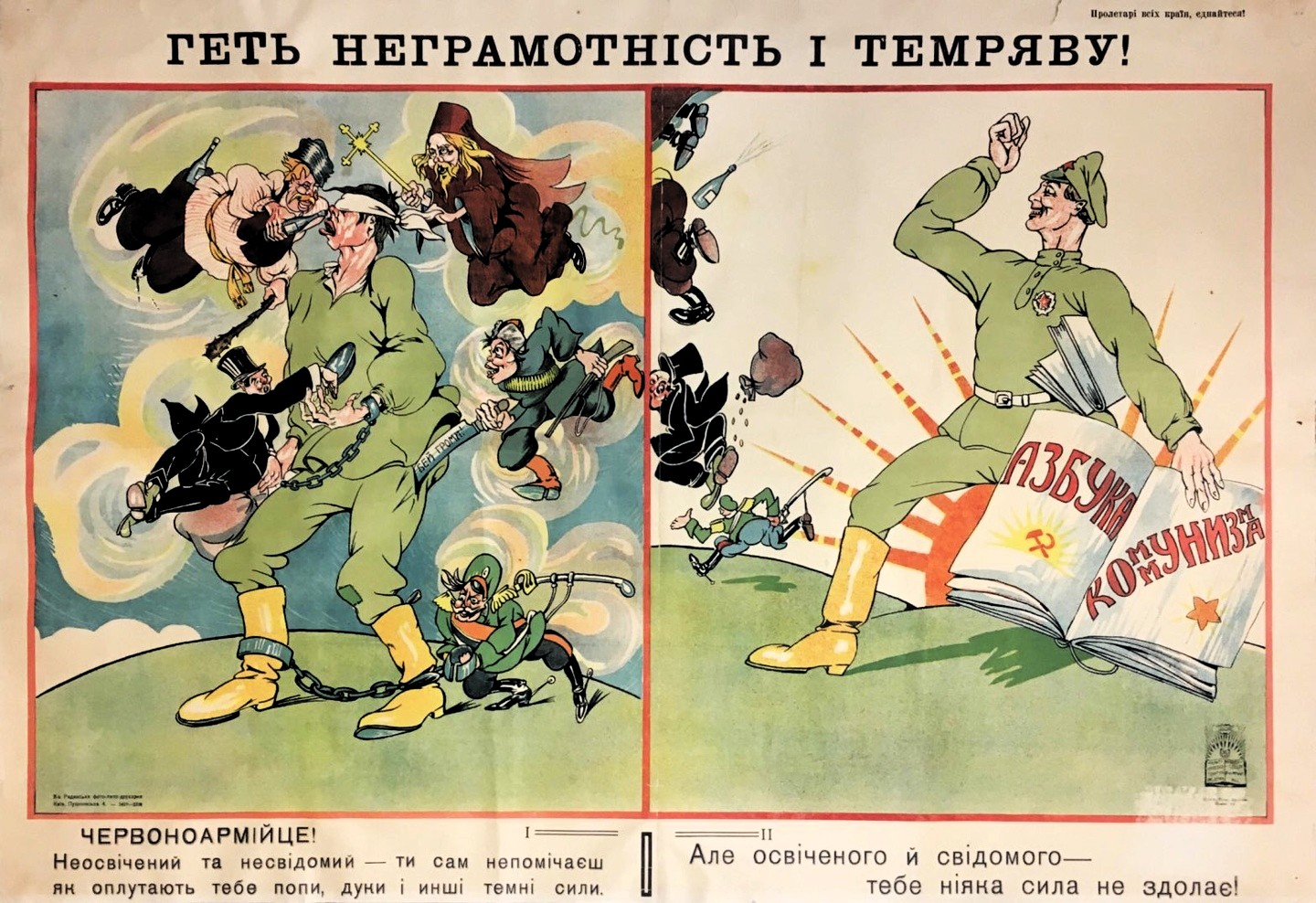
A look at developing Communist publishing concerns in Europe, mainly in Germany, that exhibited around the Comintern’s Sixth World Congress.
‘Comintern Publishers’ Exhibition in Moscow’ by Robert from International Press Correspondence. Vol. 8 No. 60. September 6, 1928.
During the ten years of the Comintern’s existence, the work of communist and revolutionary publishing has made great progress in all countries. In the capitalist countries (in this part of the exhibition technical reasons have prevented the Soviet Union from being represented) the work of our publishers falls under three main headings: the publication of agitation material meeting the needs of the moment, the creation of propagandist and instructive literature on the principles of Marxism and Leninism, and the issue of literature for winning over the great masses tending to the Left, and sympathising with the Soviet Union.
The exhibition shows that successful work is already being done. The first of these tasks has been taken in hand in at least 40 countries, and in no fewer than 47 languages. Communist agitation literature is available from Argentine to Korea. During the last few years communist publishing work has received a mighty impetus from the great Chinese revolution, and has made great advances in the colonial and semi-colonial countries, in Asia, and in South America. As far as the suppressive policy of the bourgeoisie permits it, Marxist Leninist instructive literature is being systematically published in a great number of countries, and much valuable propaganda literature has been issued dealing with the Soviet Union.
In Germany revolutionary publishing work is exemplary. A few examples: the Internationale Arbeiter Verlag (International Labour Publishers) devote themselves chiefly to the publication of agitation literature. During the last election campaign these publishers brought out no fewer than 26 pamphlets, in mass editions (apart from the May Newspaper and the satirical election paper “The Sting”) all dealing with urgent questions of the labour movement (parliamentary policy, German social democracy, arbitration in actual practice, Soviet Union, social policy, neo-imperialism, Roman Catholic Party, Phoebus scandal, etc.). Other valuable publications of this firm are its contributions to the history of the German revolution: the Spartacus Letters, Frölich’s “Ten years of War and Civil War”, and the “Illustrated History of the German Revolution”. This last work is appearing in separate parts at an extremely low price, placing it within the reach of broadest possible circles. Besides this, the firm has published an excellent edition of Rosa Luxemburg’s Complete Works, and an excellent series of “Elementary Text Books of Communism”.
Much success is also to be recorded for the publishing firm Verlag für Literatur und Politik, Vienna and Berlin, which was founded in 1924. It intends to publish the theoretical works of orthodox Marxism and Leninism, as also a complete edition of Lenin’s works, in the German language. Its “Marxist Library” already comprises 10 volumes, and is extremely popular among the German workers. This firm is further endeavouring to spread international revolutionary belles lettres, and has been very successful with a number of works by revolutionary writers of the Soviet Union. Gladkov’s “Cement” ran into three editions, and was reprinted both by social democratic and communist newspapers. The number of readers of “Cement” may be estimated at some hundreds of thousand. Another important publication issued by this firm is the theoretical periodical “Under the Banner of Marxism”, the sole periodical in Germany standing for orthodox Marxism, and dealing with every theoretical problem from the standpoint of dialectical Marxism.
The Verlag für Literatur and Politik has thereby been enabled to gain at the same time an acknowledged position among the bourgeois intelligentsia of Left tendencies, to penetrate into non-party and social democratic strata, and even to push into the background the social democratic publishing firms.
The “Neue Deutsche Verlag” is another extremely successful publishing firm. Its original object was the publication of the periodicals and pamphlets of the I.W.R., but its activities have expanded beyond these narrow confines, and it has become the centre of the Left movement in Germany. Its weekly, the “Arbeiter-Illustrierte Zeitung” (A.I.Z. Workers’ Illustrated) is characteristic of this development. In 1922, when “Russia in Pictures” was founded in support of the Russia relief fund, the monthly edition was 20,000 copies. The circulation has increased from month to month with the growing trend to the Left among the broad strata of the working class. At the present time this paper has a weekly circulation of almost 400,000; it is the largest workers’ illustrated paper in the world, and the only one of its kind. Its propaganda for the Soviet Union and for the red class front is of paramount importance for the further development of the German labour movement.
The “Neue Deutsche Verlag” also publishes a number of other periodicals meeting the urgent needs of the German labour movements: “New Russia”, “Film and People”, “The Worker Photographer”, the satirical newspaper “Der Eulenspiegel” (“The Wag”), and, recently, a number of peasant newspapers.
The “Neue Deutsche Verlag” is accomplishing at the same time valuable publishing work in the sphere of social policy; it publishes scientific textbooks dealing with this subject, as also literature on the Soviet Union and against capitalist rationalisation. This firm is the publisher of the “Illustrated History of the Russian Revolution”, and of many works of revolutionary belles lettres, etc. In this direction the firm has still many opportunities for further development and expansion.
The “Universum Bücherei” is another undertaking worthy of mention. This represents a new type of book co-operative. The members of this book community pay a small sum quarterly, receiving in return a richly illustrated and superior monthly magazine, and every three months a volume of one of the works of the latest proletarian writer, well bound and in attractive form.
A point of decisive importance for revolutionary publishing work is the method of distribution employed, the channels through which the revolutionary book is spread among the masses. The bourgeois book trade is naturally prejudiced and partisan against revolutionary literature. Besides this, the reader from the working class must be differently served, and offered conditions different to those possible for the bourgeois book purchaser. The starvation wages of capitalist rationalisation do not allow the workers to go to the bookshops. The proletarian book must find other means of reaching its readers.
The sale of literature requires a special apparatus, and the amount of literature sold will increase in proportion to the increasing efficiency of this apparatus. In Germany there are about 50 book dealers and literature sales centres in sympathy with us, and dealing chiefly in revolutionary literature. The literature distributors of the various proletarian organisations group themselves around these literature centres, forming their chief buyers, and pass on the literature received on preference terms (discount and easy payments) to the members of the organisations and their sympathisers.
Experience is already showing us that the system of the collective supplying of whole organisations, nuclei, local groups, trade union sections, etc. through the agency of their appointed literature distributor, is one of the best and most efficient methods of sale. In many districts this system has been developed to such an extent that it has been found necessary to appoint professional distributors occupied solely with the sale of literature. The selling apparatus must be further developed on these lines in the future.
Another selling centre has recently been established for those districts or works not yet possessing their own literature distributors. This supplies literature directly, on extremely advantageous terms, on previous receipt of the amount. This organisation will further contribute to carry the revolutionary book to those to whom it has hitherto been inaccessible.
The press can do much towards encouraging the sale of literature, as may be seen from the results obtained by those newspapers which have contrived, by means of attractive supplements, careful reviews, and extracts from literature dealing with the pressing problems of the day, to give a decided impetus to the sale of literature in their sphere of circulation.
In France the sale of literature has made rapid strides in the last few years. All important publications in theoretical literature are issued in comparatively large editions and excellently got up. The “Bureau d’Edition, de Diffusion et de Publicité” concentrates its efforts on the publication of the general literature of agitation and propaganda, whilst the “Editions Sociales et Internationales”, another publishing house supporting Left tendencies, publishes Lenin’s works, as also revolutionary writings of a belletristic character. The sale of revolutionary literature has doubled since 1926. An illustrated periodical: “Nos Regards”, in the style of the A.I.Z., has been appearing in France for some months.
In Great Britain the growth of the Left movement has brought with it new readers for Marxist literature. The most read books are John Reed’s “Ten Days”, Lenin’s “State and Revolution”, and Bukharin’s “ABC of Communism”. It is interesting to note that this literature is chiefly sold in London, Scotland, and the industrial districts of South Wales and Lancashire.
In the United States the “International Publishers” were founded in 1924. This firm has published 66 books in the three and a half years since then. Bukharin’s “ABC” and “Historical Materialism”, and the compilation “Russian 10 Years After”, have already reached their second and third editions. An important advance is the publication of the classical works of Marxism, hitherto very little known in America. The weaknesses of the American labour movement are mirrored in the methods of selling revolutionary literature: Two thirds of this literature are sold to bourgeois booksellers, universities, public libraries, and individual buyers.
International Press Correspondence, widely known as”Inprecorr” was published by the Executive Committee of the Communist International (ECCI) regularly in German and English, occasionally in many other languages, beginning in 1921 and lasting in English until 1938. Inprecorr’s role was to supply translated articles to the English-speaking press of the International from the Comintern’s different sections, as well as news and statements from the ECCI. Many ‘Daily Worker’ and ‘Communist’ articles originated in Inprecorr, and it also published articles by American comrades for use in other countries. It was published at least weekly, and often thrice weekly.
PDF of full issue: https://www.marxists.org/history/international/comintern/inprecor/1928/v08n60-sep-06-1928-Inprecor-op.pdf

