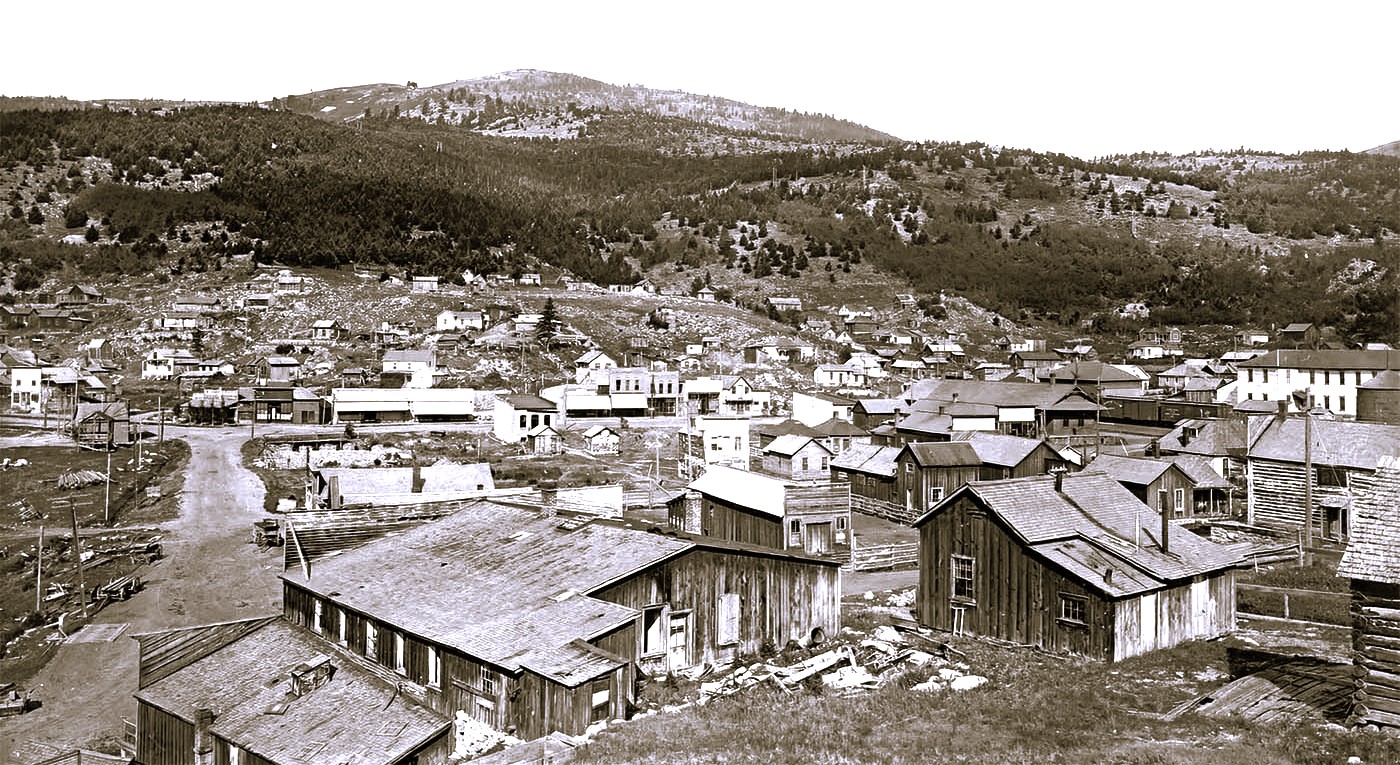
Every inch of this country has been contested. A wobbly shares memories of his youth in then already deserted mining town of Marysville, Montana–site of some intense, lost class war history in the late 1880s and early 1890s as the Knights of Labor and then the Western Federation of Miners faced the ruthlessly exploitative mining companies and their state and vigilante accomplices.
‘Marysville–Busted’ Mining Town’ by Delegate M-8-186 from Industrial Worker, Vol. 10 No. 33. August 18, 1928.
The Story of an Old Time Battle of Organized Labor.
Marysville, Montana, is deserted. The railroad was torn up three years ago. The masters of production have passed away. Marysville lives only in the memory of old time miners and others as the scene of one of the fiercest contested and bloodiest labor conflicts in the history of Montana. One wonders while wandering among the deserted buildings, empty stores and hotels if this decay of a once busy city is not a form of retribution to blot out the deeds of violence that have been committed against the workers here.
In 1888 Marysville was at the height of its prosperity. The writer was then a lad of thirteen. Everybody in the camp belonged to the Knights of Labor then carrying on a nationwide struggle for the eight-hour day. My father was a miner. He worked as did all the miners in the vicinity of Marysville, twelve hours a day. The camp was seething with unrest. Wages were $3.50 a day and living costs high.
Over in Butte, Augustus F. Heinze was paying his men $4.00 for an eight-hour day, and the miners were flocking to Butte, leaving the smaller camps without man-power. Of course the 100-percenters of that day howled just as they do now. The phrases and epithets used to stigmatize union labor were different but meant the same. As I recall it after the lapse of forty years they called the union men “Lepers of Labor” and “disturbers of peaceful communities.” The powers that be of that period had tacked up on all the tunnels a notice to the effect that any man who joined the Knights of Labor would be promptly fired and any man already belonging thereto must immediately drop out of the terrible organization or suffer the same penalty. The miners walked out and the ensuing strike lasted for eight months.
The long struggle was marked by the usual repressive measures; gun men were imported; there were beatings and hangings and on April 16, 1889 occurred the famous “Marysville Riot.” The regular troops came in and peace was restored. The military arms of government was used as usual to overawe the strikers and they were forced to go back to work under worse conditions than before. The effect of the strike was reflected, however in the growth of the union spirit and the legislature was forced to act. To avoid a repetition of the same bitter struggles, the legislature in May, 1890, passed an eight-hour bill. The wages were reduced 50 cents a day, however, and conditions remained in a bad way.
Then in 1893, an organizer for the old Western Federation of Miners came in and quietly organized the camp. Everybody that worked in the mines rejoiced. There were murmurs of a coming strike which must have reached the bosses’ ears. They took the initiative in action and on the morning of October 9, 1893, 28 deputy sheriffs entered the town looking like walking arsenals. They paraded up and down the streets, swaggering and bullying, evidently intent on provoking the trouble they had been sworn to prevent.
An old miner by the name of Dave Truesdale was their first victim. Uncle Dave was known as an active and loyal union man and had evidently been marked for slaughter. His death precipitated the climax. As soon as the men learned that Uncle Dave had been killed they came down from the mines and gathered at what would now be called a community hall.
The deputy sheriffs gathered their forces at the old Wortman saloon for they knew that as soon as Uncle Dave’s funeral was over, there would be battle. And battle it was, too. The miners dispersed immediately after the funeral and an ominous quiet reigned in the town until dusk. When the shadows had deepened into early night, the miners gathered in front of the schoolhouse with every available firearm in the camp. In a silent, determined body they made their way toward the Wortman saloon. It is impossible to gather intelligible details of what followed. It was Marysville’s day of vengeance.
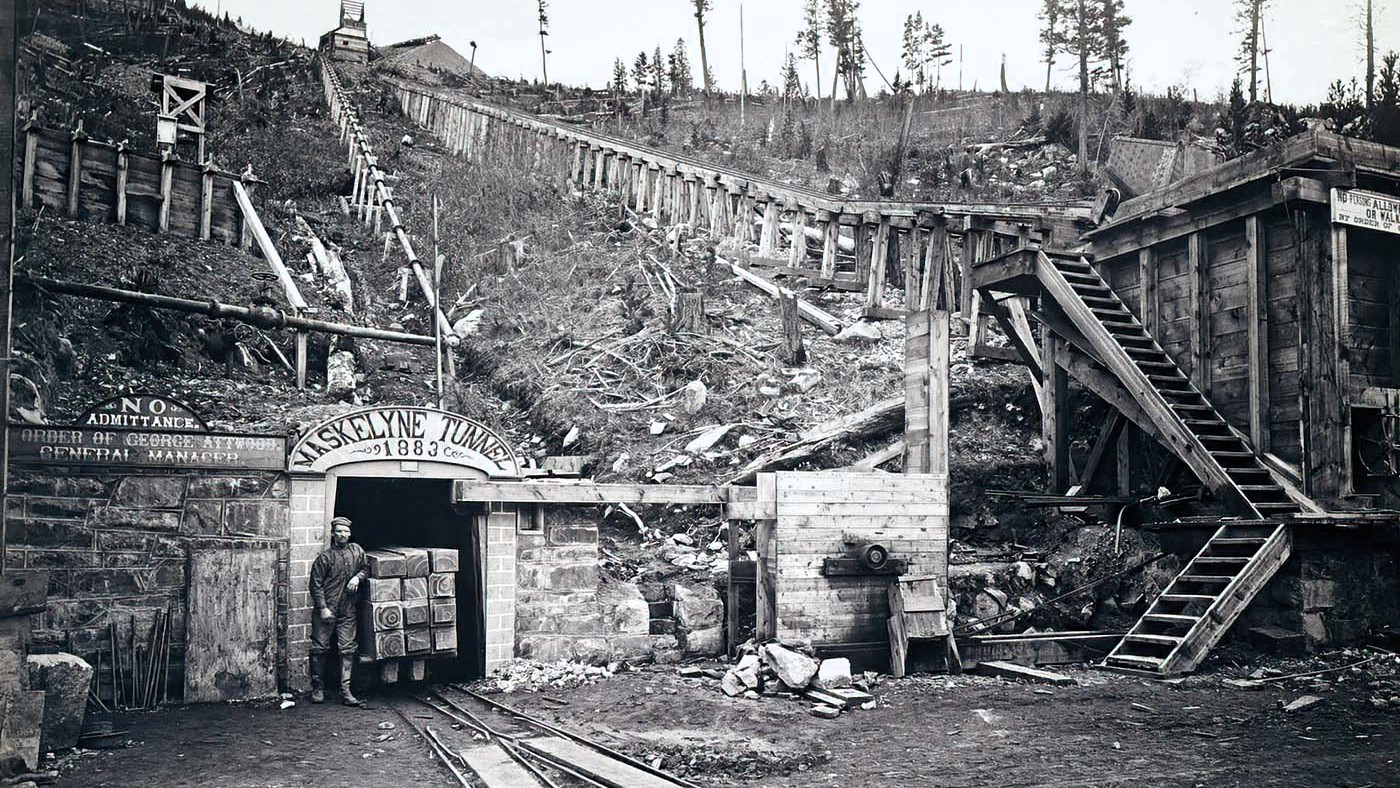
When the battle was over the miners had lost five men so far as known. No one knows how many of the imported gunmen were killed for the Wortman saloon where they were lodged was burned during the night. There were no deputies in the town in the morning.
My father was one of the striking miners. In the morning after the battle, I heard him say to Mother,
“Pearl, I sure enjoyed myself last night.” And Mother replied, “Don’t talk. The children are all awake and may want to know too much. I am curious, but ‘curiosity killed a cat’.”
Mother and the rest of us went to Helena as did the families of others of the strikers, shortly afterward. It was a case of safety first. Disorders followed of course. There were lynchings and murders of miners at the instigation of the mine owners. The old Vigilantes were revived and many a citizen awoke in the morning to find the mystic “3-7-77” on his door. But a strike is never lost and a determined struggle always wins results. Mines cannot be run by brute violence and peaceful production cannot go on in the midst of constant vendetta and reprisals. The tide of public opinion was turned as usual by the long drawn out contest and became indignant at the high-handed actions of the mine-owners and their hired killers. The Helena Independent denounced them and the legislature was forced to act. The Vigilantes were forced by public opinion to disband to prevent another battle of Marysville.
So the strike was won but at an awful cost of lives and suffering. The miners had learned the lesson of organization. Had they and the public been educated to organization before the trouble it would have been prevented. But it seems to be the only way the public will learn so the price, though dear, was well paid.
So, as one wanders through the almost deserted town, with its two stores and its rows of empty buildings and abandoned residences, and sees the worked out mines that once produced millions for the operators, the ghosts of the murdered workers seem to stalk there among the echoing old walls and to point the finger of retribution as a reminder that Marysville shall live hereafter in the memory of the miners as a spot of horror for the deeds that were done in capitalism’s name.
The Industrial Union Bulletin, and the Industrial Worker were newspapers published by the Industrial Workers of the World (IWW) from 1907 until 1913. First printed in Joliet, Illinois, IUB incorporated The Voice of Labor, the newspaper of the American Labor Union which had joined the IWW, and another IWW affiliate, International Metal Worker.The Trautmann-DeLeon faction issued its weekly from March 1907. Soon after, De Leon would be expelled and Trautmann would continue IUB until March 1909. It was edited by A. S. Edwards. 1909, production moved to Spokane, Washington and became The Industrial Worker, “the voice of revolutionary industrial unionism.” A victim of finances and internal disputes, the IW ceased publication in 1913, only to be revived in 1916 and surviving as a weekly, sometimes more, until 1931. Easily among the most important working class newspapers in U.S. history and an essential resource on the wobbly, and larger radical labor experience.
PDF of full issue: https://washingtondigitalnewspapers.org/?a=d&d=IWW19280818

