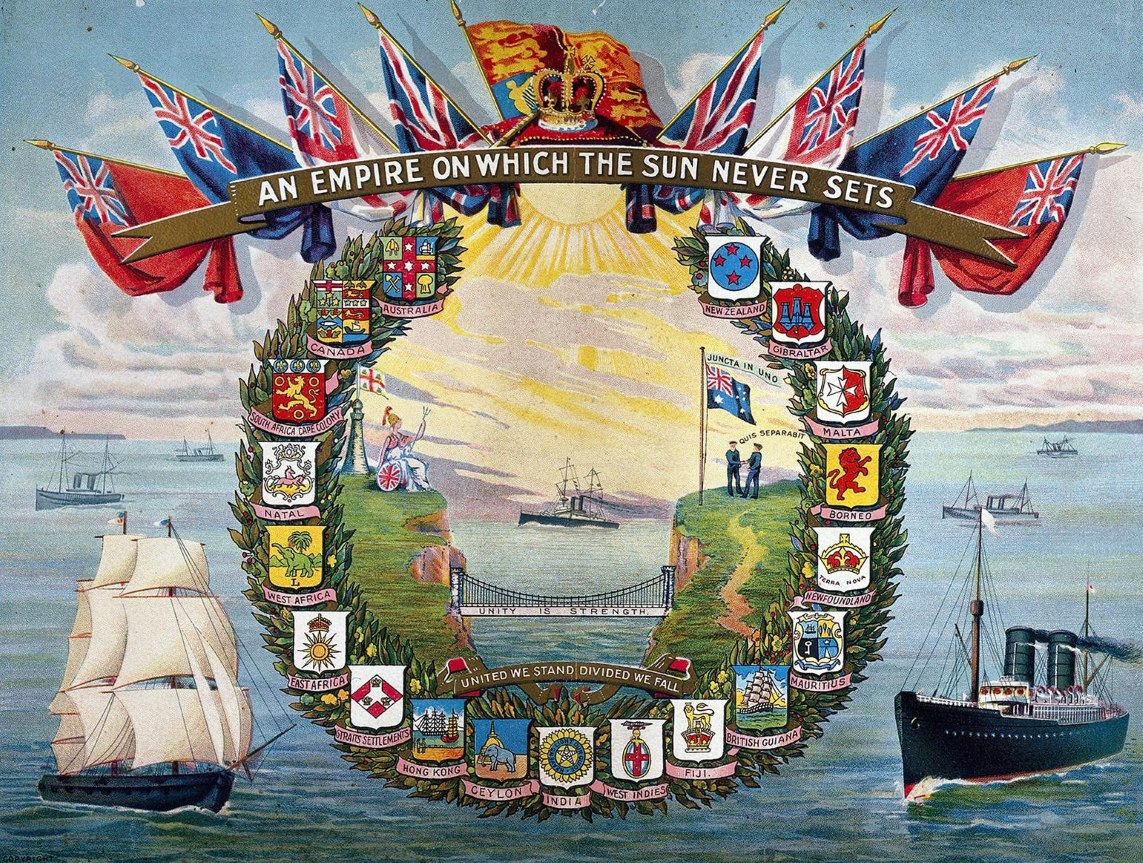
The British Empire’s unwilling coaling station in the Mediterranean.
‘The Struggle for Malta’ by W. Miller from International Press Correspondence. Vol. 10 No. 28. June 12, 1930.
MacDonald’s minister for foreign affairs, Henderson, publishes in a Blue Book of 100 pages the correspondence referring to the conflict existing between the Vatican and the English government since the beginning of 1929 with respect to the little island of Malta. This island, lying in the middle of the Mediterranean, south of Sicily, halfway between Gibraltar and Port Said, with its population of a quarter of a million, this island, small as it is, is of great importance to the British world empire, for it supplies a naval base ruling the Mediterranean, and is of special service as a coaling station for the English warships on their way to India and Egypt.
Hence the sensitiveness of the English imperialists about everything concerning Malta. That this sensitiveness is shared by the Social Democratic MacDonald Government need be no cause for wonder, for this government represents the imperialist interests of England precisely as they were represented by the former Conservative Baldwin government.
Malta is supposed to be “autonomous” territory of the British Empire. It need not be said that this autonomy exists on paper only, and that in reality England, with its warships, fortresses, and garrisons, is the sovereign lord of Malta. Italy is a tenacious rival of England in Malta. Fascist Italy, with the aid of the mighty Catholic clergy, is stirring up an anti-English Irredenta. This is based on the assertion that the population of Malta is “Italian”. Historically this is not true, but that is of course a negligible detail in the imperialist game of intrigue. The island lives in extremely backward economic conditions, so that the backward population, for the most part under the influence of the powerful Catholic priests, may be made use of to serve the purposes of the various parties, without comprehending where their own interests lie.
Since the conclusion of peace between the Pope and Mussolini, the Catholic clergy of Malta has placed itself demonstratively at the service of anti-English pro-Italian propaganda. This corresponds fully to the intentions of Mussolini, who has contrived, by means of his peace with the Pope, to ensure that the Catholic clergy and Catholic religious orders serve the aims of Italian imperialist propaganda in the Orient and in the colonies.
Whenever political relations are stained between Italy and England, the Malta problem advances regularly into the foreground. This is again the case at the present time, especially since the failure of the naval conference and Mussolini’s great imperialist propaganda speeches.
Of late the Vatican has sought every opportunity of utilising the clergy in Malta for the purpose of attacks on England. These clerical attacks are directed especially against the prime minister who has been in office in Malta since 1927, Lord Gerald Stickland of Sizergh, who represents the interests of English imperialism with especial energy and brutality. Stickland’s interference in the internal affairs of the Italian order of the Franciscans gave first rise to the Italian clerical propaganda against him. A letter of protest from Cardinal Gasparri, against Stickland, was read from the pulpits. When Stickland abolished the equal rights enjoyed by the Italian language in the law-courts and schools (the authorities are English, the language of the people Maltese, a tongue closely related to the Arabic), Italian clerical agitation was redoubled. An attempt was made to assassinate Stickland.
Besides this, the Vatican interfered directly. The English ambassador at the Vatican was sent a note protesting “against the persecution of the church in Malta”. A papal pastoral letter to the Maltese bishops threatened with excommunication all electors and adherents of Stickland, and demanded that Stickland should abdicate, as an enemy of the church. The papal court declared categorically that it would not negotiate with England on the Maltese question until Stickland had been withdrawn.
England, on the other hand, entered a protest against the interference of the Vatican in the internal affairs of the Empire, and demanded with increasing energy the cessation of the anti-England propaganda of the clergy. By the end of May the conflict between the Pope and London, in reality a masked conflict between Mussolini and London, had reached such a point that diplomatic relations were broken off. The English ambassador at the Vatican was recalled. At the same time MacDonald declared to the world, through his confidence man in Malta, Sir Augusto Bartolo, also recalled to London that Mussolini had his hand in the game.
The Blue Book now issued by the MacDonald Government condemns the interference of the Pope in the severest terms. The Vatican is accused of participation in a conspiracy against British rule in Malta, in the interests of Italy.
Involuntarily an interesting comparison occurs to us: Only recently this same Pope initiated a campaign of slander against the Soviet Union, and interfered in the most brutal manner in the inner affairs of the Soviet Union. But not only was no protest heard from MacDonald on this occasion, on the contrary, his governmental authorities participated semi-officially in this conspiracy. The calumnious masses held against the Soviet Union were attended by the heads not only of the Church of England, but of the army, the navy, and various authorities.
MacDonald discovers reactionary clerical machinations, papal conspiracies, only when they are directed against the British Empire. Soviet Russia? That is altogether another matter!
International Press Correspondence, widely known as”Inprecorr” was published by the Executive Committee of the Communist International (ECCI) regularly in German and English, occasionally in many other languages, beginning in 1921 and lasting in English until 1938. Inprecorr’s role was to supply translated articles to the English-speaking press of the International from the Comintern’s different sections, as well as news and statements from the ECCI. Many ‘Daily Worker’ and ‘Communist’ articles originated in Inprecorr, and it also published articles by American comrades for use in other countries. It was published at least weekly, and often thrice weekly.
PDF of full issue: https://www.marxists.org/history/international/comintern/inprecor/1930/v10n28-jun-12-1930-inprecor-Virginia.pdf

