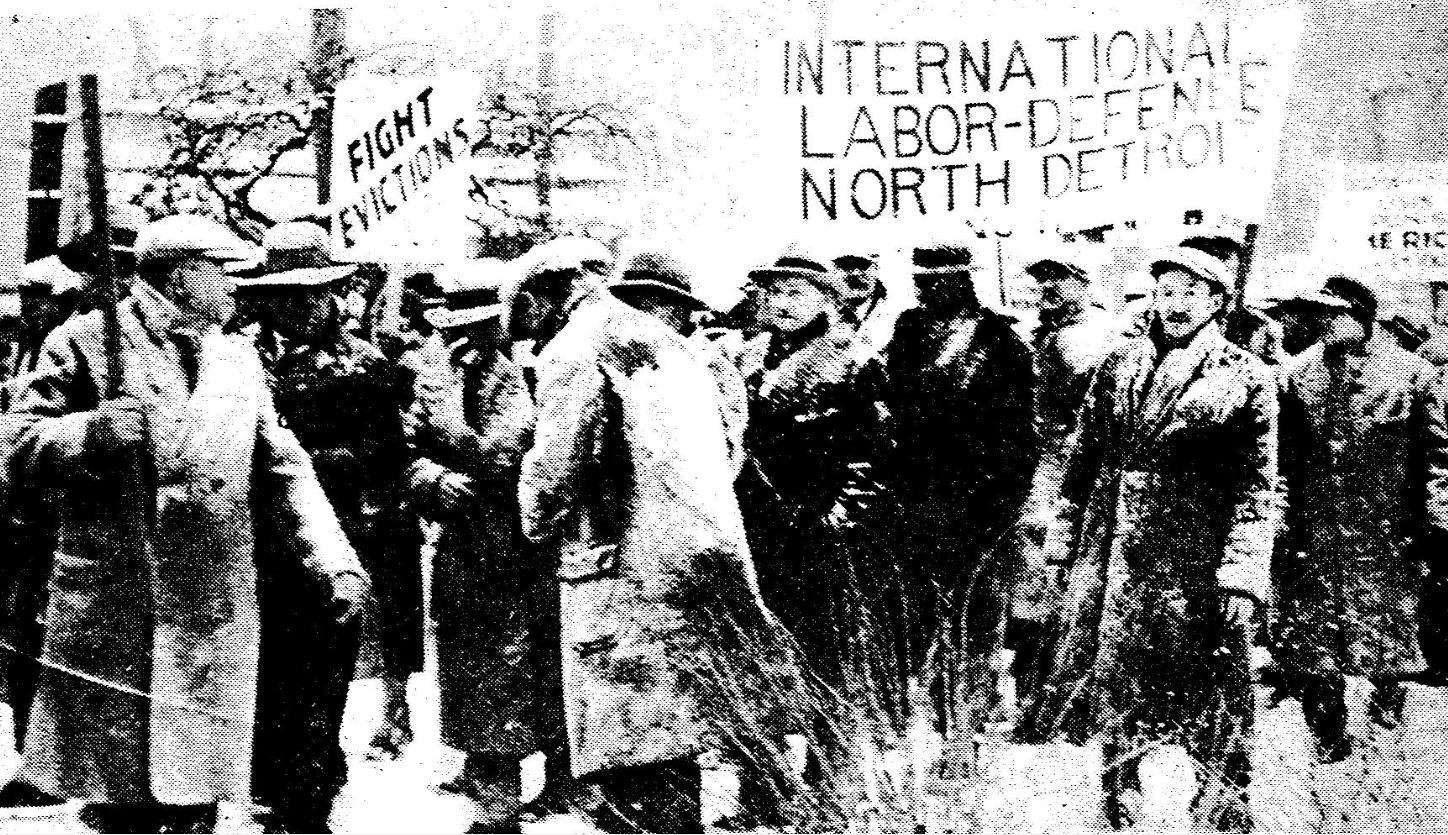
Founded as a project of an ‘Old Bolsheviks’ gathering in 1922, what would become International Red Aid, here with its first international congress, was the Comintern’s global class war prisoner defense organization and merged with many already existing national organizations, as with the Labor Defense Council in the U.S. Known by its Russian initials MOPR, it was among the most successful of the Comintern-affiliated bodies. Here it is referred to as the International Red Relief. In the States it was known as the International Labor Defense.
‘First World Conference of the International Red Relief’ by I. Amter from International Press Correspondence. Vol. 4 No. 53. July 31, 1924.
The First World Conference of the International Red Relief has come to an end and begins a new year with a full understanding of the tremendous tasks that confront the organisation.
The Conference met in Moscow and was attended by repre sentatives from Soviet Russia, Germany, Poland, Czecho-Slovakia, Bulgaria, Hungary, Rumania, Jugoslavia, Lithuania, Esthonia, Italy France, Spain, Turkey, Switzerland, Denmark, Egypt, Java, India, China, United States, Argentine and Brazil. The delegates were, or the most part, men and women who have been working actively in the organisation of the I.R.R. and therefore know its tasks.
The main work before the conference was the adoption of plans whereby the great masses of the workers and peasants could be drawn into the organisation and filled with a sense of solidarity with the fighters of the working class who have been sent to prison by the brutal capitalist regimes. The I.R.R. is an organisation for collecting funds for the support of these revolutionary fighters and their families, for protecting them before the courts of the reactionary bourgeoisie and for taking care of political emigrants who are obliged to flee from the claws of the White Terror. But the I.R.R. has another most important function: to enlighten the working masses as to the significance of the struggle for which the revolutionaries are thrown into prison and tortured.
The conference unanimously adopted a resolution calling on the sections to form membership organisations organisations including the industrial workers, peasants and sympathetic elements As a United Front non-party organisation, the committees are made up of representatives of all proletarian political parties, trade unions, co-operatives, youth and women’s organisations etc. As a non-party organisation, the I.R.R. supports and protects all revolutionary workers and their families irrespective of their party affiliation.
The reports of the delegates revealed the brutality of the methods that the bourgeoisie and the bourgeois state employ in the vain hope of demoralising the revolutionary movement. By employing the torture-methods of the middle ages and adding modern means of torment such as the electric chair–the bourgeoisie believes that the revolutionary workers will be terrorized. But the capitalist system itself is furnishing the con-itions that force the workers and poor exploited peasants to fight. The International Red Relief, as a revolutionary auxiliary organisation, is mobilizing the workers and peasants to the support of the fighters of the working class the victims of bourgeois “justice”. From all the countries where Social Democracy still has a hold on the workers, came the reports of the treachery of the bureaucracy of the Social Democratic parties and reformistic unions. The revolutionaries have been persecuted and denounced by the reformists, many of whom are even members of the secret police (ochrana) of the capitalist states. From the colonies came the reports of the savage treatment of revoluonaries by the imperialist regime ruling the countries. Terrorization, torture, murder, persecution of the families–these are some of the means whereby the bourgeoisie tries to destroy the revolutionary movement.
One of the important points was that of legal help. In many countries it is extremely difficult to procure lawyers to defend the revolutionary prisoners. In some cases, the Social Democrats refuse to assist. In other countries, the Communists are not permitted to appear before the courts. In all countries every obstacle is put in the way of the proper defense of proletarian prisoners so that, as in Germany, one may get rid of 40 or 50 revolutionaries in one batch. The conference decided that every step must be taken to organise legal help so that as many revolutionaries may be kept out of the hands of the bourgeoisie so possible.
The conference emphasised the necessity of agitation and propaganda. March 18th is the international day of the International Red Relief. It is a day when the working class the world over thinks of the heroic struggles of the proletariat of Paris during the days of the Commune. This is a day on which the victims of the revolutionary class war must be held in remembrance when the world proletariat must be called to new effort to demand the release of revolutionary proletarians and to consolidate their ranks for the revolutionary struggle.
The activity of the I.R.R. has been most successful in Soviet Russia. In fact, the aid that has been given to the prisoners in the capitalist prisons has come chiefly from the workers and peasants of Soviet Russia. Nowhere in the world is there manifested such solidarity with the revolutionary prisoners as in Soviet Russia. This was particularly evident in the speeches of the delegations sent to the gala opening meeting of the conference at the Zimin Theatre, Moscow. Soviet Russia’s workers and peasants know what reaction means. For decades they suffered the most brutal treatment and repression at the hands of the Black Hundreds of the tsar. Hence their sympathy with the prisoners in capitalist countries. From January 1923 to June 1924, they have collected more than 368,000 dollars for the relief of the victims in capitalist prisons. But that is not all. The Russian Section of the I.R.R. has carried on a most intense propaganda. It has reached the most remote parts of that vast country. 2,500,000 Russian workers and peasants are members of the I.R.R. and the number is constantly growing. The political activity of the I.R.R. therefore, must be carefully weighed. Propaganda, literature etc. must be issued in large quantities. The splendid example of Soviet Russia must be copied in all countries. The International Red Relief as a revolutionary auxiliary organisation must reach all sections of the working class. It must draw them into the relief work. It must clearly explain the meaning of the class struggle, it must stand behind every fighter thus broadening the struggle and leading to the day when the proletariat will rule the world over.
The great majority of the revolutionaries in capitalist prisons are Communists and Communist Youths. It therefore becomes the duty of every Communist to enter immediately into the ranks of the I.R.R. and propagate its work. Every revolutionary worker, however, whether still in the Social Democratic parties, in the syndicalist or anarchist organisations, all the revolutionary peasants’ organisations and cooperatives, are intensely interested in the struggle. They must be drawn into active work for the I.R.R. The proletarian press must be pressed into service. The film as one of the most effective methods of propaganda must be exploited.
International Solidarity is the slogan of the International Red Relief! International Red Relief must be given to every fighting proletarian in the name of the revolutionary struggle in the name of the emancipation of the working class!
International Press Correspondence, widely known as”Inprecorr” was published by the Executive Committee of the Communist International (ECCI) regularly in German and English, occasionally in many other languages, beginning in 1921 and lasting in English until 1938. Inprecorr’s role was to supply translated articles to the English-speaking press of the International from the Comintern’s different sections, as well as news and statements from the ECCI. Many ‘Daily Worker’ and ‘Communist’ articles originated in Inprecorr, and it also published articles by American comrades for use in other countries. It was published at least weekly, and often thrice weekly. A major contributor to the Communist press in the U.S., Inprecorr is an invaluable English-language source on the history of the Communist International and its sections.
PDF of full issue: https://www.marxists.org/history/international/comintern/inprecor/1924/v04n53-jul-31-1924-Inprecor-cpgb.pdf

