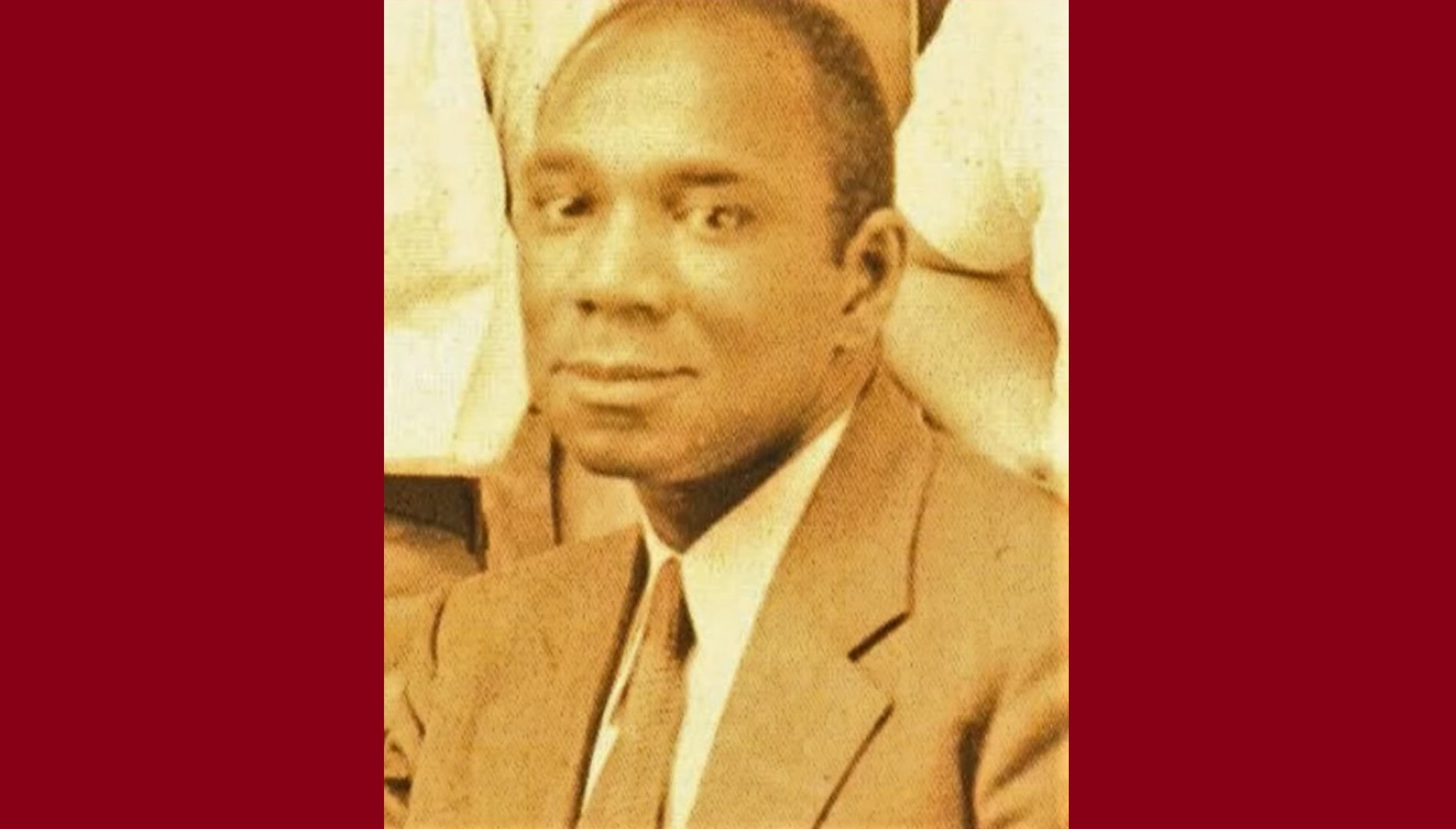
Amis looks at the mechanisms of exploitation in Southern tenant farming, peonage, and convict labor. Born Benjamin DeWayne Amis in Chicago in 1896, B.D. Amis was a leading Black Communist in the 1930s. Active in the N.A.A.C.P. before joining the C.P. in the later 1920s. Moving to New York, and wrote extensively for the Daily Worker, active in the leadership of the American Negro Labor Congress, then in 1930 Secretary of the replacement League of Struggle for Negro Rights, and editor of The Liberator. There he also be involved with the I.L.D. and the Scottsboro, Angelo Herndon and Mooney defense campaigns. An important secondary leader of the Party, he would move to Cleveland as District Organizer (6). He would travel twice to the Soviet Union in the mid-30s, spending almost two years there, where he studied and wrote for the R.I.L.U.’s Negro Worker and worked for the International Trade Union Committee of Negro Workers. Returning to the U.S., he would focus on labor work as Field Organizer for the Steel Workers Organizing Committee from his base in Philadelphia, where he was also head of the city’s large National Negro Congress. At the end of the 30s he would be instrumental in organizing Black service workers into Local 758, Catering Industry Employees Union of the A.F.L.’s Hotel and Restaurant Employees and Bartenders International Union serving as its Secretary-Treasurer. Remaining active his long life Amis died in 1993 at nearly 97.
‘The Negro National Oppression and Social Antagonisms’ by B.D. Amis from The Communist. Vol. 10 No. 3. March, 1931.
“The Negro agricultural laborers and the tenant farmers feel most the pressure of the white persecution and exploitation. Thus the agrarian problem lies at the root of the Negro national movement.” (Thesis, Sixth World Congress.)
THE Civil War, a struggle between the industrial bourgeoisie of the North and the slave owners of the South, did not achieve the real emancipation of the slaves. It is true that by an amendment to the federal constitution bourgeois democratic rights were granted, supposedly to guarantee the new freedom. For the first time the Negroes were granted the right to vote, to hold public office, to obtain an equal education, which for a brief period were enforced by Negro militia and northern federal troops.
But the northern bourgeoisie entered into a rapprochement with the overthrown southern plantation lords, thus deserting the propertyless former slaves. The northern capitalists were unable to carry the bourgeois-democratic tasks of the war to the end, the taking of the land from the slave holders and giving it to the slaves. If this had been done, the former slaves would not have been forced to return to their former masters after their cowardly betrayal by the northern bourgeoisie, to obtain a livelihood.
Thus the Negro masses of the South, left propertyless by their northern “friends,” were abandoned to their fate at the hands of their former masters. The former slave holders soon denied the Negroes their newly granted democratic rights and reduced them to a state of semi-slavery, the plantation system.
Nominal slavery had passed away, but the subsequent dependence of the betrayed Negroes upon their previous masters continued the institution in another form. The plantation tenancy system was adopted by the landlords as a means to continue their robbery of the Negro masses, and continued to contribute to the development of industrial capital, in the North and South.
TENANCY
What then is tenancy? It is a vile abortive remnant of slavery, successfully enforced by a corrupt social system that is intent in its purpose to crush and subject the Negro toilers of the South, to facilitate huge profits for the white ruling class and maintain its power over the workers. Tenants can be divided into five classes:
1. croppers whose work animals and implements are furnished by the planters; 2. standing renters who pay a stated amount of farm products for the use of the land and whose work animals and implements are usually all furnished by the planter; 3. share tenants who pay a stated share of the crop for the use of the land, but generally furnish their work animals; 4. share cash tenants who pay the rent partly in products and partly in cash and furnish their implements; and 5. cash tenants who pay entirely cash for the use of the land, furnishing all of their farming equipment.
A notable feature of tenancy is that the owner supplies not only the land but usually part or all of the required capital and equipment. In return he receives a share of the crop. The tenant furnishes all of the labor and occasionally part of the equipment, receiving part of the crop after harvesting.
The standing renters and croppers are the most dependent of all the classes of tenants. The landlords supply them with almost everything and as a result they receive comparatively no returns from their labor. They are so dependent that they know not what liberty is and they are subject altogether to the desire of the landlords, being practically chained to them. It is from the labor of this class of tenants that huge profits are derived. They have no capital with which to pay rent and provide the elementary necessities of life.
CONTRACTS
Conferences are held with the tenants, usually at the beginning or end of the year. At such a time the tenant agrees to sign a contract which is enforced by the laws of the various southern states. In many instances the tenants are illiterate. But even if they understand, because of sheer force and intimidation they sign away what few rights they have.
These contracts are decidedly unfavorable to the tenant. The interpretation of the agreement is always in the hands of the planter, who is assisted by the courts and officers of the law to enforce its terms. The contract always is determined by the desires of the planter. To question the word of a landlord is criminal. The landlords make the laws and either execute them or hire lackeys for the purpose. There is no appeal for the tenant. He is reduced to a serf, or peon.
A CONTRACT
A typical contract reads in part:
“Said tenant further agrees that if he violates the contract. or neglects, or abandons or fails (or in the owner’s judgment violates this contract or fails) to properly work or cultivate the land early or at proper times, or in case he should become physically or legally incapacitated from working said lands or should die during the term of his lease, or fails to gather or save the crops when made, or fails to pay the rents or advances made by the owner, when due, then in case of full possession of said premises, crops and improvements, in which event this contract may become void and cancelled at the owner’s option, and all indebtedness by the tenant for advances or rent shall at once become due and payable to the owner who may treat them as due and payable without further notice to the tenant; and the tenant hereby agrees to surrender the quiet and peaceable possession of said premises to the owner at said time, in which event the owner is hereby authorized to transfer, sell or dispose of all property thereon the tenant has any interest in, and in order to entitle the owner to do so, it shall not be necessary to give any notice of any failure or violation of this contract by the tenant, the execution of this lease being sufficient notice of defalcation on the part of the tenant, and shall be so construed between the parties hereto, any law, usage or custom to the contrary notwithstanding.”
The terms of such a contract are not only binding, but place the destiny of the tenant completely at the desire of the owner.
BOSS SUPERVISION
After the tenant has signed the contract, the landlord sends out a rider whose task is to supervise all the work on the plantation. The boss divides the land among the tenants, giving them a certain amount of fertilizer to use on the acres for cultivation. Also he tells when the crop should be planted. The tenant is forced to start work as soon as there is sufficient light and toil until dark. In the summer the usual starting hour is 4 o’clock. An hour is permitted for lunch. For the wife who works, she is granted two hours for lunch, the extra hour to prepare the meal.
Ordinarily the cropper works from sun-up to sun-down, six days a week.
DIVISION OF PROFITS
Without money with which to pay rent or buy the elementary necessities of life while they are waiting on the maturing, harvesting, and selling of the crop, tenants consequently obtain their supplies on credit from the planter or merchant who takes a lien on the crop. This credit system makes it possible for the store keeper or owner to charge exorbitant prices for supplies.
After the crop is harvested and sold, the planter deducts from the profits whatever debts the cropper has contracted during the year. The value of the articles is left solely to the will of the plantation owner, who never figures in the favor of the cropper.
The landlord owns in most cases the tools of production, the land, stock, and by an unwritten law, the cropper. Whatever profits are derived from the year’s transactions are eaten up by the debts accumulated during the off season, according to the accounting of the landlord. Rarely only does the cropper receive a profit. When he does the amount is so small that it does not better his condition. Thus from one year to another the tenant finds himself in debt to his landlord, who keeps the books and decides the division of profits.
In the South there are upwards of 38,000 plantations averaging about six tenants each. In 1925 there were over 625,000 tenants in the South, operating nearly 23,000 acres. Some of the large plantations have been broken up into small farms, because of depression, the owners finding farming unprofitable.
The sufferings from tenancy are numerous. The children of tenants are denied an education, forced to spend the majority of their time in the field. The tenants cannot establish an independent life, but are dependent almost entirely upon the planter for every breath they draw. In a few cases some cash tenants, who have the right to bargain off their crops, have a slightly higher standard of living. They are not dependent upon the landlord to furnish all the food, clothing, and supplies. But the high rentals nearly reduce this group to the same level of the standing renters and croppers.
Tenancy provides the system of robbery by the white ruling class of the Negro victims. From the plantation lord down to the petty merchant, each has a hand in exploiting and robbing these people. The creditor always collects his debt, owed by the tenant, from the landlord who in turn sufficiently increases the amount to reimburse him against any loss he may sustain in undertaking such a risk.
PEONAGE
Tenancy has an accompanying evil known as peonage. Peonage is the scourge that enslaves thousands of black agrarian workers. To prevent any possible chance of the tenants leaving the lands or shifting from one plantation to another, the system of peonage has been adopted. Peonage is the sharpest expression of a present-day feudal social antagonism (slavery remnant) which firmly fastens the ponderous chains of bondage upon its hapless victims, to assure the plantation owners of permanent, cheap, and docile labor, thereby securing the position of these parasites to continue their oppression and exploitation and drive to the bottomless economic abyss this “caste of untouchables.”
ENFORCING PEONAGE
After the Civil War, the southern states were intent to secure free labor. Many enacted vagrancy laws which compelled every freed person to enter the service of some planter and remain there regardless of wages received. The amount of wages was determined by the former masters. One found without a job was arrested and convicted and either placed on the chain gang to build public highways or leased to landlords. This in reality was a return to slavery. The Washington government interrupted this practice. But, after the withdrawal of troops from the conquered area, the Negroes were disfranchised and the democratic rights previously granted were ignored. Various states, upheld by the courts, passed elusive laws providing for involuntary servitude for debt. States adopting this system were Florida, Georgia, Alabama, North and South Carolina, and Mississippi. Failure to obey contracts for employment, the slightest violation of a contract, or temporary unemployment, drew the wrath of this law which was enforced by the rural courts. A few states attempted to hide the actual enslavement of Negroes with “hidden” plantations on which men, women, and children were kept in involuntary servitude, peonage.
To hold a tenant by fair or foul methods became the cardinal ambition of the planter. To lose his laborer meant to lose his profit. The crops would not be planted, consequently no harvesting.
A STATE LAW ON PEONAGE
The case of Bailey vs. The State of Alabama upheld a law which provided that any person who made a contract in writing to perform a service for another and thereby obtained money or other personal property from such person with attempt to defraud the person, and who left his services without performing that service or refunding the money or property, was guilty of a misdemeanor. The law further provided that any person who made a contract in writing for the rent of land, and obtained money or personal property from the landlord with the intention of deceiving him and left without performing such service, refunding the money, or paying for the property, was also guilty of a misdemeanor. The penalty for the offense was a fine not exceeding $300 and, in default of payment, imprisonment for a period of not more than 12 months. To make this law further effective it was amended so as to make the failure of any person who entered such a contract to perform the service or to cultivate the land or refund the money or restore the goods, prima facie evidence of intent to injure or defraud his landlord. According to the decision delivered by the Alabama Supreme Court, the accused should not be allowed to testify as to his intent or purpose, or “to rebut a statutory presumption.” In as much as employers thereafter made such contracts with their laborers when only the employer and employee were present, it became an easy matter to enforce compliance with such contracts through minor rural courts.
REPRESSIVE MEASURES
A way of securing peons is for an employer or his agent to go to a town or city and hire a group of laborers. He agrees to pay certain wages and transportation and provide the necessary provisions from the commissary, the company store. The laborers, indebted to their employer, trade out their meager wages at the company store. By false methods, trickery, and even foul play the employer keeps the peon in perpetual debt. What books are kept (by the planter only) have false entries. A peon with a large family is most desirable to the planter, who is afforded a greater opportunity to increase his robbery of large numbers of permanent victims through his false bookkeeping system. Ofttimes to assure that the peons do not attempt to run away, their children are taken from them.
To keep the peons on the plantations it is necessary to establish iron authority over them. The overseer is the terrorist of every plantation. He uses the whip and gun to strike terror among the peons, subjecting them to the will of the boss and slavery conditions. Women and children alike become the personal property of the white master. The latter grow up in ignorance, and the former are prostituted by the white masters. By the use of sheer force these people are not allowed to leave the plantation, only on very rare occasions. If perchance a victim escapes, he is arrested under false pretexts, as jumping a contract, cheating, or false promises. Generally there is no trial. But the officer returns the unfortunate peon to the plantation camp, where he is severely punished. Besides receiving a brutal beating, the cost of an officer to arrest him is charged to the peon. This debt he is bound by law to pay. The rest of his life is given to pay the debt. He is a peon, forced through downright robbery and slave-whipping barbarism to remain in slavery.
It has been cited that many laborers after being caught have been locked up in stockades at night after working in the fields with a gun levelled continuously at them.
CONVICT LABOR
Convict labor and the chain gang have resulted from peonage. The need of the South for a large supply of laborers has been used as a pretext for the landlords to conscript men and women. A flimsy charge would place one in jail. Planters bargained with the courts for their prisoners, paying the fines, and putting many in involuntary servitude. By forced restraint and cooperation from constables, sheriffs, and other court officials the prisoners released by the courts to the planters are kept in bondage and avenues of escape are closed. If one gets away, bloodhounds are put on his trail and when caught he is subjected to fiendish torture. Planters when brought before courts on charges of peonage and using convict labor have answered that they had to whip Negroes brutally once in a while to keep them from rebelling.
In 1919 in Elaine, Ark., a rebellion of Negroes in peonage took place. These victims, because of the worst forms of oppression, struck a blow for economic liberty. But they were shot down, overpowered, and arrested. A mob court held a mock trial and sentenced 67 to long prison terms and 12 to death.
During the Mississippi flood it was revealed that peonage was rampant. The planters objected to having their peons removed to the Red Cross camps for fear of escape. They did not consent until they received assurance from the Red Cross officials that their “niggers” would be returned to them.
The state, using the national guard, compelled the peons to work throughout the flooded area. The most brutal methods were employed to prevent all attempts to escape. However, many fled to the North, telling of the horrible conditions existing on the peonage farms. This was in 1928.
The fact that there exist on the statute books of the federal government laws prohibiting peonage does not safeguard the rights of the Negroes. This remnant of slavery, fastening its iron hold upon millions of unfortunate victims, has its roots in a roguish social order whose dastardly rulers in their mad rush to amass riches out of the sweat and blood of the workers and peasants exploit and oppress the entire toiling class. The defenseless Negroes considered as a “caste of untouchables,” and who in the majority are agrarian workers, have not been liberated. Amendments to the present constitution will not free them. Only an agrarian revolution, with the proletariat assuming the hegemony, under the leadership of Communists, will finally achieve freedom for this oppressed potential nation.
“It is a Yankee bourgeois lie to say that the yoke of slavery has been lifted in the United States.” (Resolution of the Communist International on The Negro Question in the United States.)
These social antagonisms (remnants of slavery) “stink of the disgusting atmosphere of the old slave market. This is downright robbery and slave whipping barbarism at the peak of capitalist ‘culture.’” (ibid.)
There were a number of journals with this name in the history of the movement. This ‘The Communist’ was the main theoretical journal of the Communist Party from 1927 until 1944. Its origins lie with the folding of The Liberator, Soviet Russia Pictorial, and Labor Herald together into Workers Monthly as the new unified Communist Party’s official cultural and discussion magazine in November, 1924. Workers Monthly became The Communist in March,1927 and was also published monthly. The Communist contains the most thorough archive of the Communist Party’s positions and thinking during its run. The New Masses became the main cultural vehicle for the CP and the Communist, though it began with with more vibrancy and discussion, became increasingly an organ of Comintern and CP program. Over its run the tagline went from “A Theoretical Magazine for the Discussion of Revolutionary Problems” to “A Magazine of the Theory and Practice of Marxism-Leninism” to “A Marxist Magazine Devoted to Advancement of Democratic Thought and Action.” The aesthetic of the journal also changed dramatically over its years. Editors included Earl Browder, Alex Bittelman, Max Bedacht, and Bertram D. Wolfe.
PDF of full issue: https://www.marxists.org/history/usa/pubs/communist/v10n03-mar-1931-communist.pdf

