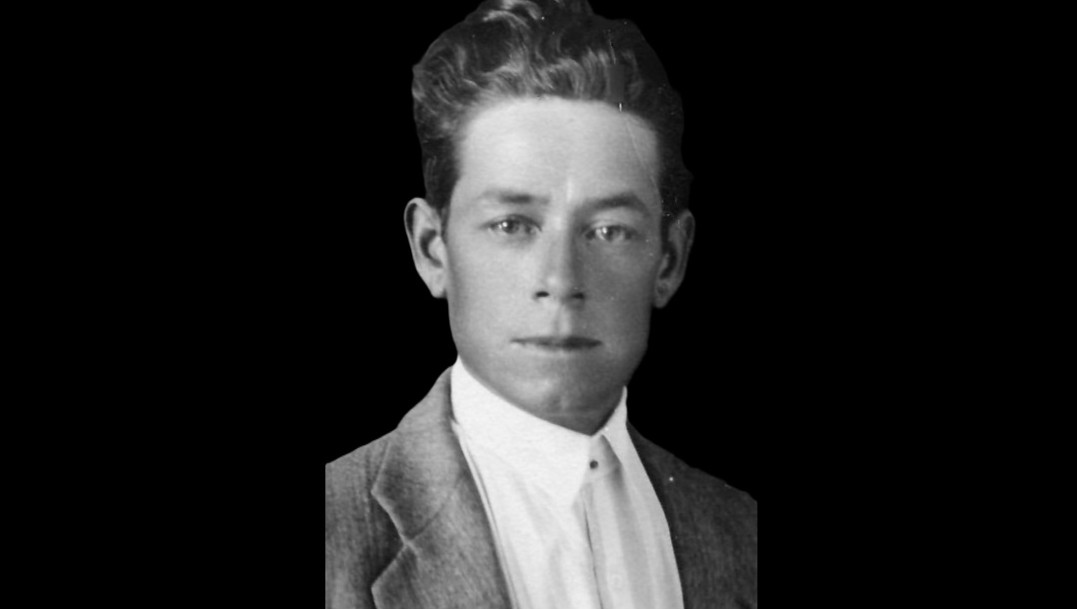
Guerrero looks at the forces looking to U.S. military intervention into Mexico, both within the Diaz regime and in the States, with the unleashing hemispheric-scale consequences the results of which could be catastrophic for all.
‘The Prospective Intervention’ by Práxedis G. Guerrero from Regeneración (Los Angeles). Vol. 1 No. 11. November 12, 1910.
The old question of armed intervention in Mexico on the part of the United States government is growing of interest apace with the factions of the revolutionary movement which becomes ever more visible through the rented cloak of Porfirian peace. With these growing interests and tendencies vary the opinions, the fears and the hopes based upon the so very much exploited possible intervention. The reigning oligarchy of Mexico desires an intervention and is of the belief to be able to draw Into the land the United States army in order to sustain in power the regime of Porfirio Diaz or of the successor chosen by the oligarchy. A part of the people, for sure, a small one, fears that intervention on account of the periodical admonitions of the dictator’s press and of popular economists to consider gravely the “American peril.” Other few politicians, with the ambition to constitute themselves as an oligarchy in substitution of the one in power use the Intervention cloud as their strongest argument against the idea. of revolution so inconvenient for their projects and ambitions. But the large majority of the Mexican people, though in most of them predominates the firm belief in the infallible coming of such intervention, are ready and fully made up in their: minds to offer resistance to the last ditch, they consider the Intervention as an inevitable danger to be combatted to victory or to defeat.
In the United States the government and the capitalists would rather impede the revolution than to venture an intervention, from which might rise disastrous complications for the imperialist policy. A war of extermination would have to be waged against Mexico. And who could calculate what such a procedure might call forth in all Latin America, or even within the territory of the United States? A part of the Yankees, the jingoists of professional patriotism, of a type of which there is no lack anywhere, are in favor of conquest by arms. They imagine it to be so easy to be done.; A few cannon shots of bombardment of unprotected Mexican harbors. Two or three wholesale killings, called battles, in which the greater numbers coupled to superiority of war machinery give the palm of victory to Uncle Sam. A promenade of the fleet all along the coasts of Mexico. A triumphal march across the country, and on the spot the submission of the vanquished and the new rule established. It is all so easy–said.
The sincerely candid yet rather superficial people are equally in favor of the idea of intervention moved by the humanitarian purpose of doing away with the atrocities of the Porfirian tyranny, in the sincere belief that annexation would result for the good of the common people of Mexico in as far as the laws and liberties existing this side of the border would extend their blessings across the time to better the conditions in the southern sister republic. Yet the jingoists as well as the well-meaning honest and sincere candid people are both very much mistaken. Neither is the conquest by arms of Mexico such an easy thing to accomplish, nor would, as will be seen from this article, an intervention actually benefit or improve the conditions of the oppressed.
A third element that might directly stand in the way of the imperialist policy of expansion of Wall street and the government of Washington, is opposed to the idea of intervention. This element is composed of the Socialists, Anarchists, Unionists, and free thinkers and iconoclasts and agnostics of all denominations. To these is to be added the Anti-Imperialist League and the recently formed anti-intervention league which is rapidly taking definite form in all parts of this country with an ever-increasing host of upright and women sincere men and from all walks of life regardless of politics or religion. These all represent a vast sum of militant energies, all veterans in the respective camps of their chosen struggles, who as individuals as well as corporately can seriously counteract, If not even impede entirely any predatory actions against the Mexican people, that might be attempted from the White House, and its souffleurs the conquistador holders of vast concessions and monopolies.
As a matter of fact, as things actually stand, the Intervention is not a sure but merely a possible danger; and from the future attitude of the above mentioned elements will largely depend the increase or the decrease of the menace of the problem rising before us in such shape today that we cannot disregard it. The oligarchy enthroned in Mexico, with Diaz, Corral, Creel or whosoever be may be at the head, will directly, or Indirectly, force the intervention of the government of Washington. These “scientific” Machiavellis of our days will without the least doubt play a double game as done so frequently in the past, to make believe that the trouble is not caused at all by the tyrants of Mexico. But the government in Washington will be well on the lookout and consider very carefully its actions, weighing in the balance all the national and exterior factors, that might be liable to draw them into disaster Instead of an easy victory and apogee of their policy of expansion.
But should after all the factors, which in those days loom up almost like formidable powers, become reduced to zero by some unforeseen circumstances; or should the proud conceit of some mandarins of Uncle Sam grow into complete blindness, and the armed intervention become an actual occurrence, it would have as a first result the immediate downfall of the oligarchs of Mexico, and a union of the tolling people, of the army and of the bourgeoisie to fight intended conquest in a body. A part of the army, an infinitesimal small part to that, may remain faithful to the government, but will be laid low before the soldiers of Uncle Sam could arrive to their aid. There will also be no lack of leaders of peace, advising the submission to the tyranny at home as the best means to stop the invader. But only few will listen to their siren songs in those days of the terrible effervescence of a nation. Those leaders will prove of no more resistance to the trend of the revolutionary events, than a straw to stop a torrent. War will then take the lead. War without quarter, Implacable war of extermination. Old rancor, slowly lingering hatreds, that had cooled down or were merely dormant for the time being, will break into light rabidly, with shrill outcries, indomitable in force, inflated and whipped to the surface by a stupid intervention, as soon as the energies of an atrocious and largely oppressed people take active form in a struggle of revindication. The cleft of ethnical prejudices will widen to an abyss which to overbridge or fill out again civilization will need centuries. In short the intervention will accomplish just the reverse from the dream of the humanitarians perceiving it only as a saving grace. It is bound to produce in both peoples a psychological regression; and, alas, by far too late the jingoistic Yankee elements will come to realize the turpitude of their undertaking. For they will learn by bitter experience that the conflict will not be decided by great battles, or armour-plate engines of destruction on the high seas.
The big guns are but of rather limited value in up-to-date guerilla warfare, the supreme weapon of an oppressed people, by which an almost invisible force of individuals is in the position day for day to carry destruction into the ranks of a wide display of military masses.
The rule in the Philippine Islands, with all its unholy alliance of the government in the White House with the monastic orders, causes only unending trouble; it is hardly more than a ridiculous decoration stuck vaingloriously and painfully into the own flesh. A sad vanity, and the enforced consecutive necessity to keep up the prestige of a formidable power, induces the alleged victor to display in painful resignation and assumed pride of upright manhood the painful badge, but the twitchings in the back cannot dissimulate the pain and real disgust at the bottom of it all. Sooner or later the savage medal must needs fall off, leaving a deep sore of rotting flesh.
Mexico annexed or intervened will prove worse than the Philippine Islands, incomparably worse. The Mexican shoe is mighty narrow for the foot of Yankee imperialism. Let him put on the shoe by means of intervention, and mighty soon he will be seen to hobble along painfully, stumbling and tripping, not to the great days of imagined triumphal ambition, but to the ultimate shame of the breakdown of all forces, of all strength, devoid of all glory, and the entire nation will be dragged down in the fall.
The intervention of American imperialism is also not merely a question of nationalities and flags; it harbors also serious complications in the social problems whose solution is seeked by advanced minorities in all lands. The attempt to avoid them or to switch them off, temporarily, will not save the countries from meeting them sooner or later. To face them with the light of reason might save two peoples from a grave disaster.
The revolution must needs come, defying the threatening intervention. We Mexicans have the right to mold our own destinies, however angrily may look upon our actions the despots of all lands. May the lovers of justice bethink well the consequences of the intervention, and impede such action in whichever form it should be presented as being in favor of tyranny or in favor of the Mexican people, for in either case it will prove a foolish act of tragic if not disastrous results.
PRAXEDIS G. GUERRERO.
Escrito Por Trabajadores Y Para Los Trabajadores. Regeneración is easily one of the most important, radical Spanish-language papers in U.S. history, and given its role in an actual revolution, one of the most important in any language. Regeneración was the official organ of the Mexican Liberal Party, an anarchist and later anarcho-syndicalist party. The paper was founded in 1900 by Flores Magón brothers; Jesús published the paper with his brothers Ricardo and Enrique writing, and Liberal Party leader Anselmo Figueroa editing. With imprisonment, illegality, revolution, exile, and war getting in the way of publishing, the paper went through several phases since its beginnings. In 1904, the paper moved its production to San Antonio, then St. Louis, and then Los Angeles where it would stay for nearly a decade. Jesús returned to Mexico City where he published a more moderate version of Regeneración, while Ricardo continued published the increasingly radical one in the U.S. Regeneración, expanded with the revolution, and in 1910, the paper added in English language section, edited by British anarchist William Charles Owen. With natural allies in the growing I.W.W., the paper served as an organizing tool in the Mexican Revolution and was instrumental in popularizing the struggle with U.S. audiences and workers. 20,000 copies were circulated weekly at its height. The paper ran afoul of the U.S. authorities well before the rest of the left did in World War One and ended printing for good in 1918. Ricardo Flores Magón was in constant legal battles until his final arrest in the 1918 Palmer Raids for violation of the Espionage Act, along with thousands of other radicals. He died, some say was murdered, in Leavenworth Prison on November 21, 1922.
PDF of full issue: https://www.marxists.org/history/usa/pubs/regeneracion/1910/n11-nov-12-1910-reg-eng.pdf

