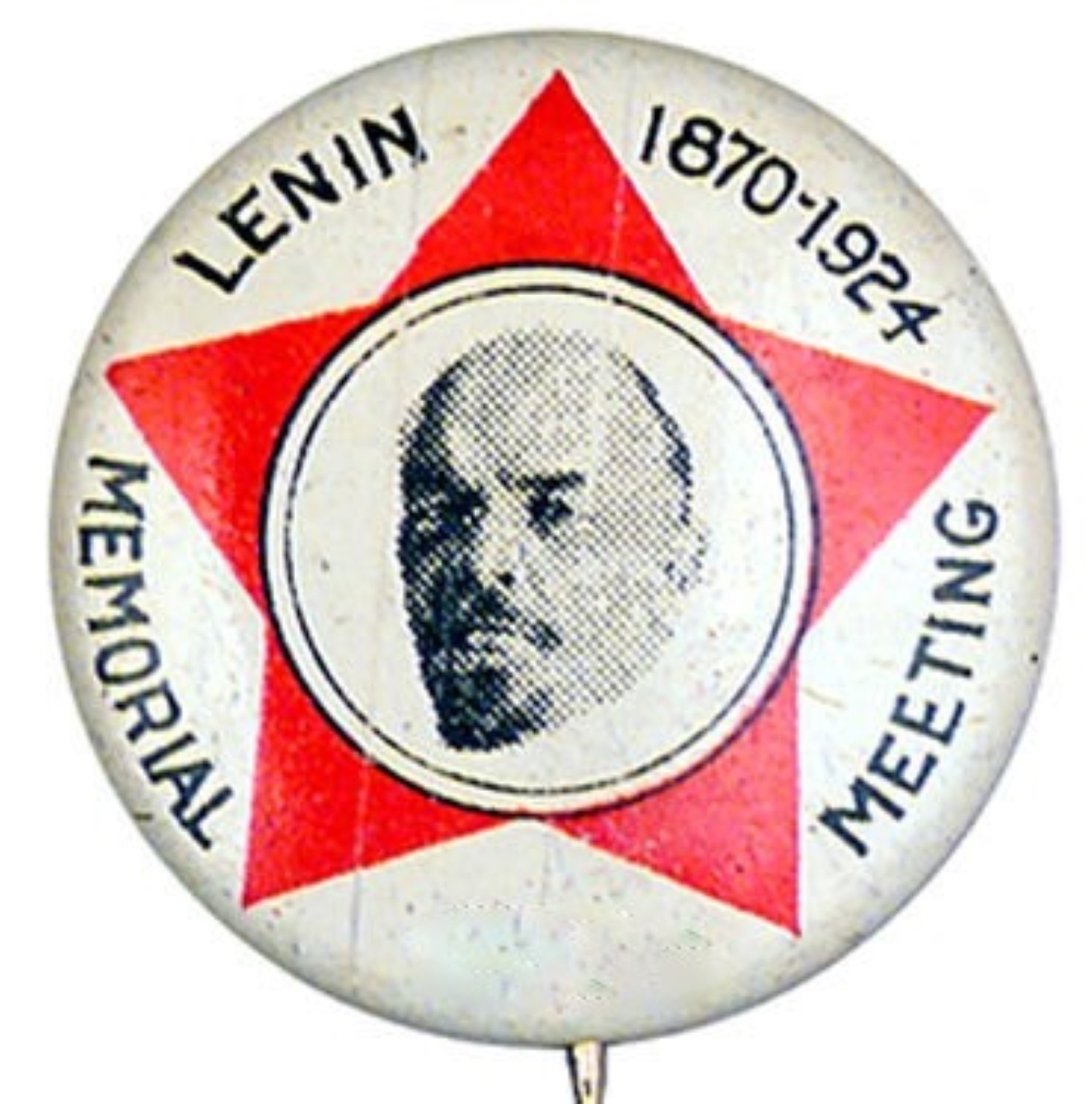
Lenin addresses differences between Mensheviks and Bolsheviks over policy in the Duma and relations with the Cadet party.
‘The Platform of Revolutionary Social-Democracy’ (1907) by V.I. Lenin from Selected Works, Vol. 3. International Publishers, New York. 1937.
As is well known, the Party Congress will meet in a few weeks’ time. We must very energetically begin to make preparations for the Congress and discuss the main tactical problems which the Party will have to solve there.
The Central Committee of our Party has already drawn up the Congress agenda, and it has been published in the newspapers, The main points on that agenda are: 1) the immediate political tasks, 2) the State Duma. The necessity for the second point is obvious and can give rise to no objections. The first point is also necessary in our opinion, but it should be formulated differently, or, to be more correct, it should be given a somewhat different content.
In order to start an immediate all-Party discussion on the tasks of the Congress and the tactical problems it will have to settle, a conference of delegates of our Party organisations in both capitals and of the editorial board of Proletary drew up on the eve of the opening of the Second Duma the draft resolution printed below. We intend to outline here how the conference understood its tasks, why it placed the particular questions in the forefront in the draft resolutions, and the main ideas that were embodied in these resolutions.
The first question: “the immediate political tasks.”
In our opinion, the question should not be put before the Congress of the Party in this way in the epoch through which we are now passing. This is a revolutionary epoch. All Social-Democrats are agreed on that, irrespective of the faction they belong to. It is sufficient to read the preamble of the resolution passed by the Mensheviks and Bundists at the All-Russian Conference of the Party in November 1906 to convince oneself of the accuracy of our statement.
And in a revolutionary epoch we cannot confine ourselves to a definition of the immediate political tasks for two reasons in the first place, unlike epochs of “peaceful” and petty constitutional work, the fundamental tasks of the Social-Democratic movement are brought to the forefront and require detailed analysis. In the second place, in such an epoch it is impossible to determine the immediate political tasks, for the distinguishing feature of revolution is that sweeping changes, rapid turns, unexpected situations, sharp outbursts become possible and inevitable. It is sufficient to point to the possibility and probability of the dispersion of the Left Duma and of the electoral law being amended in a Black Hundred spirit in order to appreciate all this.
It was all very well for the Austrians, for instance, to define their “immediate” task as “the struggle for universal suffrage” when all signs pointed to a continuation of the epoch of more or less peaceful consecutive and continuous constitutional development. In our case, however, do not even the Mensheviks in the above-mentioned resolution speak of the impossibility of a peaceful path, and of the necessity of electing to the Duma not pleaders but fighters? Do they not recognise the need for a struggle for the constituent assembly? Picture to yourselves a European country with a settled constitutional regime that is likely to last for some time, in which the slogan “constituent assembly” and the contrasting of a “pleader” to a “fighter” in parliament could be discussed, and you will understand why it is impossible under such conditions to define the “immediate” tasks in the way they are defined in Western Europe. The more successful the work of the Social-Democrats and the revolutionary bourgeois-democrats in the Duma will be, the more probable is it that a non-Duma struggle will break out which will confront us with immediate tasks of quite a special nature.
No. It is not so much the immediate tasks that we must discuss at the Party Congress as the fundamental tasks of the proletariat in the present period of bourgeois revolution. Otherwise, we shall find ourselves in the position of those who become helpless and filled with consternation at every turn of events (as repeatedly happened during 1906). In any case we cannot determine the “immediate” tasks any more than we can foretell whether the Second Duma and the electoral law of December 24 (11), 1905, will last a week, a month or six months. And so far the Party as a whole has not yet defined the basic tasks of the Social-Democratic proletariat in our revolution. Unless this is done we cannot have a consistent policy based on principles, the quest for definite “immediate” tasks cannot be successful.
The Unity Congress did not pass a resolution appraising the situation and the tasks of the proletariat in the revolution; it did not do so notwithstanding the fact that draft resolutions on this subject were submitted by both trends in the Social-Democratic Party, notwithstanding the fact that the question of appraising the situation was on the agenda and was discussed at the Congress. Thus, everybody regarded these questions as important, but the majority at the Stockholm Congress was of the opinion that they had not been made sufficiently clear. The discussion on these questions must be resumed. We must consider, first, what is the nature of the present revolutionary situation judged by the main tendencies of social-economic and political evolution? Secondly, what is the political grouping of classes (and parties) in present-day Russia? And thirdly, what are the main tasks of the Social-Democratic Labour Party in the present situation, with the present political grouping of social forces?
Of course, we do not shut our eyes to the fact that some Mensheviks (and perhaps the Central Committee as well) understood the question of the immediate political tasks to mean simply the question of supporting the demand for a Duma, i.e., a Cadet ministry.
With his customary and highly praiseworthy, of course, impetuousness in pushing the Mensheviks to the Right, Plekhanov has already come out in defence of this demand in Russkaya Zhizn of March 8 (February 23).
We think this is an important, but a subsidiary question, and that Marxists cannot put it separately, without an appraisal of the present state of our revolution, without an appraisal of the class content of the Cadet Party and of the political role it is playing at the present time. To reduce this question to pure politics, to the “principle” of the cabinet being responsible to the chamber under a constitutional regime, in general, would mean the complete abandonment of the standpoint of the class struggle and the adoption of the standpoint of a liberal.
That is why our conference linked the question of a Cadet cabinet with the appraisal of the present state of the revolution.
In the preamble to the resolution dealing with the subject we begin first of all with the question which all Marxists regard as a fundamental one, namely, that of the economic crisis and the economic situation of the masses. The conference formulated this as follows: the crisis “does not reveal any signs of speedy liquidation.” This formula errs, perhaps, on the side of excessive caution. But the important thing for a Social-Democratic Party, of course, is to establish the undisputed facts, to indicate the main lines; the scientific treatment of the question can be left to Party literature.
On the basis of the crisis (second point of our preamble) we point to an intensification of the class struggle between the proletariat and the bourgeoisie (this is an undisputed fact and the manifestations of this intensification are a matter of common knowledge) and then to the sharpening of the social struggle in the rural] districts. Strikingly obvious events such as lockouts are not observed in the rural districts, but even such government measures as the November agrarian laws (“bribing the peasant bourgeoisie”) prove that the struggle is becoming more acute, that the landlords are forced to exert all their efforts to split the peasantry in order to weaken the general peasant onslaught.
We do not know where these efforts will lead in the end. All “uncompleted” (Marx’s expression) bourgeois revolutions “ended” with the well-to-do peasantry passing over to the side of order. In any case Social-Democracy must do its utmost to develop the consciousness of the broadest strata of the peasantry, to make them understand the class struggle that is taking place in the countryside.
Further on, point 3, registers the main fact in the political history of Russia during the past year, viz., “the swing to the Right of the upper classes” and “the swing to the Left of the lower classes.” We were of the opinion that particularly in revolutionary epochs, Social-Democracy must at its congresses sum up the periods of social development, apply to them its Marxian methods of investigation, teach the other classes to review the past and treat political events from the point of view of principles and not from the point of view of the interests of the moment or of a few days’ success, as is done by the bourgeoisie, which in fact treats all theories with contempt and shrinks from making any class analysis of present events.
The strengthening of the extremes means a weakening of the centre, The centre is not the Octobrists, as some Social-Democrats (including Martov) mistakenly suppose, but the Cadets. What is the objective historical task of that Party? Marxists must answer that question if they want to remain true to their doctrines. The resolution answers: “to put an end to the revolution by accepting concessions to which the Black Hundred landlords and the autocracy [for the Cadets stand for voluntary agreements] would agree.” In his well-known work The Social Revolution, Karl Kautsky very well explained that the difference between reform and revolution is that the former leaves power in the hands of the oppressing class which suppresses the uprising of the oppressed by means of concessions to which the oppressors can agree without destroying their power.
This is precisely the objective task of the liberal bourgeoisie in a bourgeois-democratic revolution, viz., to preserve the monarchy and the landlord class at the price of “reasonable” concessions.
Can this task be carried out? That depends on circumstances. A Marxist cannot say that this task cannot be carried out under any circumstances. But if the bourgeois revolution does end in this way it will mean: 1) that the productive forces of bourgeois society will have the least freedom for development (the economic progress of Russia will be incomparably quicker if the landlord estates are broken up in a revolutionary way than if they are reformed in accordance with the Cadet plan); 2) that the chief needs of the masses of the people will not be satisfied, and 3) that it will be necessary to suppress the masses by force. If the masses are not forcibly suppressed, Cadet “peaceful,” constitutional evolution will not be possible. We must firmly bear this in mind and instill it in the minds of the masses, Cadet “social peace” means peace for the landlord and the manufacturer, it means “peace” that will come after the peasants’ and workers’ uprising is suppressed.
Stolypin’s court-martial repression and Cadet reforms are the two hands of one and the same oppressor.
II.
Only eight days have passed since our first article on this subject was published, and political life has already given rise to a number of important events which have confirmed the statements we made then and which as an “accomplished fact” (or as a fact that is becoming accomplished?) have shed a glaring light on the urgent questions to which we then referred.
The Cadets’ turn to the Right is already marked in the Duma. Rodichev’s support of Stolypin in his advocacy of moderation, caution, legality, pacification and of not inciting the people, and Stolypin’s support, the famous “whole-hearted” support of Rodichev, have become accomplished facts.
This fact has brilliantly confirmed the correctness of the analysis of the present political situation which we made, prior to the opening of the Second Duma, in the draft resolutions that were drawn up between February 28 (15) and March 3 (February 18). We refused to follow the advice of the Central Committee to discuss the “immediate political tasks.” We pointed out that in a revolutionary epoch such a proposal was altogether out of place. For this question of a policy for the moment we substituted the question of the fundamentals of socialist policy in a bourgeois revolution.
And a week of revolutionary development has fully confirmed our anticipations.
Last time we analysed the preamble of our draft resolution, The central point of that preamble was the statement that the weakened party of the “centre,” i.e. the liberal-bourgeois Cadet Party, is striving to put an end to the revolution by accepting concessions that the Black Hundred landlords and the autocracy can agree to.
It was only yesterday, as it were, that Plekhanov and his adherents in the Right wing of the R.S.D.L.P. declared that the Bolshevik idea, which we persistently advocated during the whole of 1906 (and even earlier, since 1905, since the publication of the pamphlet Two Tactics), was a semi-phantastic hypothesis, begotten by a rebel point of view of the role of the bourgeoisie, or at any rate an untimely warning, etc.
Today everybody realises that we were right. The “efforts” of the Cadets are beginning to materialise, and even a newspaper like Tovarishch, which probably hates Bolshevism for its ruthless exposure of the Cadets more than anyone else, says in connection with the rumours1 which Rech denies, about the negotiations between the Cadets and the Black Hundred government, that “there is no smoke without fire.”
We can only welcome this revival of “Bolshevik week” in Tovarishch. We need only note that history has confirmed all our warnings and slogans, history has exposed the utter levity (levity, to say the least) of those “democrats,” and unfortunately of certain Social-Democrats as well, who waved aside our criticism of the Cadets.
Who said at the time of the First Duma that the Cadets were bargaining with the government behind the scene? It was the Bolsheviks. It transpired subsequently that even a man like Trepov was in favour of a Cadet cabinet.
Who were the most energetic in conducting a campaign of exposure in connection with Milyukov’s visit to Stolypin on January 28 (15), in the heat of the election struggle (alleged struggle) which the party of alleged people’s freedom was waging against the government? It was the Bolsheviks.
Who, at election meetings in St. Petersburg, and in the first days of the Second Duma (see the newspaper Novy Luch), called attention to the fact that the two-million franc loan of 1906 was practically given to Messrs. Dubasov and Co. with the indirect assistance of the Cadets who rejected Clemenceau’s formal offer’ to oppose the loan openly in the name of his party? It was the Bolsheviks.
Who on the eve of the Second Duma made the cornerstone of the policy of consistent (i.e., proletarian) democracy the exposure of the “treacherous nature of the Cadet policy”? It was the Bolsheviks.
A very slight breeze was enough to blow away like a feather all talk about supporting the demand for a Duma ministry, for a responsible ministry, and for subordinating the executive to the legislature. Plekhanov’s dreams of making this slogan a signal for the decisive battle, or a means for enlightening the masses, turned out to be the dreams of a well-meaning philistine. No one now would even venture to support such slogans seriously. Life has proved, or to be more exact, has begun to prove that, in fact, the issue here is not the “principle” of more completely or more consistently carrying out “constitutional principles,” but the fact that the Cadets are striking a bargain with reaction, Life has shown that those were right who, behind the liberal exterior of alleged progressive general principles, perceived and exposed the narrow class interests of a frightened liberal who gives nice names to vile and filthy deeds.
The correctness of the conclusion drawn by our first resolution has thus been confirmed much sooner than we could have expected and much better too: not by logic, but by history; not in words, but in deeds; not by resolutions passed by Social-Democrats, but by the events of the revolution.
The first conclusion to be drawn is: “The political crisis that is growing before our eyes is not a constitutional, but a revolutionary crisis, which is leading to a direct struggle of the masses of the proletariat and the peasantry against the autocracy.”
The second conclusion, the corollary of the first is: “The coming Duma campaign must therefore be regarded and utilised only as an episode in the people’s revolutionary struggle for power.”
What, in essence, is the difference between a constitutional crisis and a revolutionary crisis? It is that the former can be settled on the basis of the existing fundamental laws and system of state, whereas the latter demands the break-up of these laws and of the feudal system. Hitherto, the idea expressed in our conclusions was shared by all Russian Social-Democrats, irrespective of faction.
Quite recently, however, a trend has arisen among the Mensheviks which is inclined towards the diametrically opposite view, namely, that we must abandon all thought of a revolutionary struggle, but abide by the existing “constitution,” acting on its basis. The following are the significant points in the draft resolution on the attitude towards the State Duma, drawn up by “Comrades Dan, Koltsov, Martynov, Martov, Negorev and others with the participation of a group of practical workers” and published in No. 47 of Russkaya Zhizn (it is also published as a separate leaflet):
“…2) The task, which is now taking central place in the Russian revolution, of an immediate struggle for power reduces itself [2] under the existing relation of social forces [?] mainly to the question [?] of the struggle for [?] popular representation,
“…3) The elections to the Second Duma, which resulted in a considerable number of consistent [?] supporters of the revolution being elected, showed that a consciousness of the need for such a [?] struggle for power is maturing in the minds of the masses of the people.”
Confused and evasive as the expressions contained in these points may be, their tendency is clearly revealed: instead of the revolutionary struggle of the proletariat and peasantry for power—reduce the tasks of the workers’ party to a liberal struggle for the present system of popular representation, or on the basis of the latter. We must wait and see whether really all the Mensheviks will endorse such a presentation of the question now, or at the Fifth Congress of the Party.
In any case, the Cadets’ turn to the Right and Stolypin’s “whole-hearted” approval of them will soon force the Right wing of our Party to make up their minds definitely: either to continue the policy of supporting the Cadets, and thus finally to take the path of opportunism, or to break completely with the policy of supporting the Cadets and adopt the policy of the socialist independence of the proletariat and of a struggle for freeing the democratic petty bourgeoisie from the influence and hegemony of the Cadets.
The third conclusion to be drawn from our resolution reads: “Social-Democracy, as the party of the advanced class, can under no circumstances at the present time support the Cadet policy in general, or a Cadet ministry in particular. Social-Democracy must exert every effort to expose the treacherous nature of that policy to the masses: to explain to them the revolutionary tasks confronting them; to prove to them that only if they display a high degree of consciousness and are firmly organised can the concessions which the autocracy is likely to make be converted from instruments of deception and corruption into a means for advancing the progress of the revolution.”
Generally speaking, we do not deny that partial concessions can be obtained; nor do we pledge ourselves beforehand not to make use of them. The wording of the resolution leaves no doubt on that score. It is possible also that a Cadet ministry may, in one respect or another, come under the category of “concessions made by the autocracy.” But while not refusing to take “payment in instalments” (to use Engels’ expression), the working class party must under no circumstances forget another particularly important feature which liberals and opportunists often lose sight of, namely, the part played by “concessions” as an instrument of deception and corruption.
No Social-Democrat, unless he wishes to become a bourgeois reformist, must forget this side of the question, The Mensheviks unpardonably forget this when in the above-mentioned resolution they say: “…Social-Democracy will support all the efforts made by the Duma to subordinate the executive to itself.” The efforts of the State Duma mean the efforts of the majority of the Duma. Experience has shown that the majority may consist: of the Rights and the Cadets as against the Lefts. The “efforts” of such a majority may subordinate the “executive” to itself in such a way as to make the position of the people still worse, or to obviously deceive the people.
Let us hope that in this instance the Mensheviks simply displayed an excess of zeal, that they will not support all the efforts of the majority of the present Duma in the above-stated direction. But what is characteristic, of course, is that prominent leaders of the Mensheviks could accept such a formula.
As a matter of fact, the Cadets’ turn to the Right compels all Social-Democrats, irrespective of faction, to adopt a policy of refusing to support the Cadets, a policy of exposing their treachery, a policy of an independent and consistent, revolutionary, working class party.
March-April 1907,
NOTES
1. These lines were already written when we read the following in the leading article in Rech of March 26 (13): “When the exact data about the notorious negotiations between the Cadets and the government in June of last year are made public, the country will know that if the Cadets are to be blamed at all for these negotiations ‘behind the back of the people’ it can only be for the unyielding attitude to which Rossiya has referred.” That’s just it: “When the data are made public!” And in the meantime, in spite of this challenge, the Cadets do not publish “the exact data” concerning the negotiations in June 1906, or the negotiations in January 1907 (Milyukov’s visit to Stolypin on January 28 [15]) or the negotiations in March 1907. But the fact remains that they have conducted negotiations behind the back of the people.
International Publishers was formed in 1923 for the purpose of translating and disseminating international Marxist texts and headed by Alexander Trachtenberg. It quickly outgrew that mission to be the main book publisher, while Workers Library continued to be the pamphlet publisher of the Communist Party.
PDF of full book: https://archive.org/download/selected-works-vol.-3/Selected%20Works%20-%20Vol.%203.pdf

