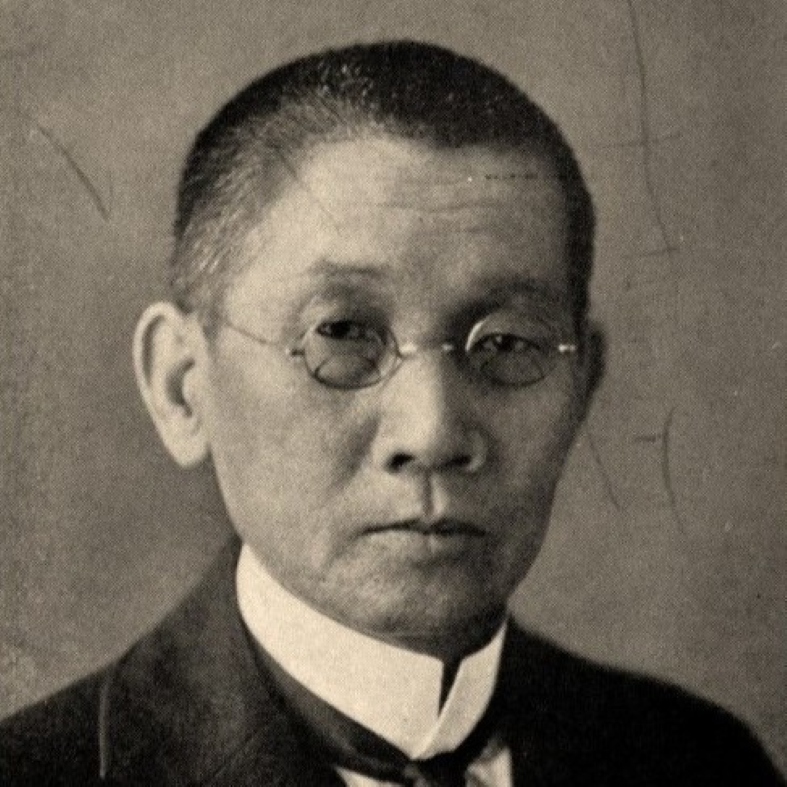
A substantial essay from Katayama from the end of World War One on the origins and outlook of Japanese imperialism, its Pacific-wide rivalry with the United States, and the prospects for a different, working class, relationship. Katayama, already active in the Socialist movements of both countries for decades, was living in New York City at the time of this article.
‘Armed Peace on the Pacific’ by Sen Katayama from Class Struggle. Vol. 2 No. 4. September-October, 1918.
Peace reigns over the Pacific. For Japan and the United States are allies, now that they have a common enemy: Germany, autocratic, militaristic Germany.
But there is a difference between Japan and the United States in the present world war. Japan has never declared that she is fighting to make the world safe for democracy, while the United States has. Japan is on the side of the allies because of the treaty of alliance with England.
The Japanese form of government is autocratic. The tyranny within, is combined with a cringing foreign policy giving rise to much dissatisfaction among the intelligent classes. The Okuma and Terauchi ministries have been influenced directly or indirectly by England.
This servility led Japan to enter the war not on her own account, but in the interest of England and her colonies, while these same colonies treat the Japanese as a backward race and practically exclude them; I mean to say that Japanese workers are excluded from Australia, New Zealand, Transvaal and other colonies in Africa, and are even treated in Canada as undesirable compared with Chinamen.
The foreign policy of Japan is also illustrated by the “Gentlemen’s Agreement” with the United States, which is in reality a Japanese Exclusion Act on the part of the United States. But Japan promised of her own free will not to send any workers to this country, and begged the United States not to enact an exclusion act.
Yet, in spite of the fact that no Japanese workers have been permitted to come here for the past ten years, there has grown up an anti-Japanese movement along the Pacific coast, carrying on an agitation as if the Japanese were swarming at the very door of America. In reality Japan has not sent any workers to this country for twenty years. The Japanese workers in the west are almost all from the Hawaiian Islands, where they were originally imported by American Sugar kings, as contract labor, under the most enslaving conditions. And when Hawaii was then annexed to the United States, the poor contract laborers left for the Pacific coast because they were now free from the slavery of the former contract arrangement. This migration to the coast continued until it was prohibited by the President under the new immigration law in completion or extension of the Gentlemen’s Agreement.
The complement of this weak foreign policy is drastic reaction and brutal suppression at home, for it is always the case that the worst tyrants are the ones who debase themselves before those whom they regard as their superiors, and then compensate themselves by taking it out on those lower down.
The government is powerless before the possessors of wealth, and sacrifices the interests of the people as a whole. The workers are enslaved for the benefit of the rich, and every attempt at organization and emancipation is suppressed with increasing severity by the police.
At the same time nothing was left undone to build up a powerful militarism, and a well organized bureaucracy, as soon as the big interests felt that they were firm in the saddle.
At first, when the old regime was overthrown, fifty-one years ago, the new government was really revolutionary. The tenants took over the land which they had formerly rented from the feudal lords, and the government assessed a tax of 3 per cent. on the land after fixing the valuation on the basis of the productivity of the soil. Castes were abolished, time-honored privileges and licenses such as the right to brew rice wines, were confiscated. Buddhist monks were permitted to marry and to eat fish and animal flesh. The hereditary salary of the old military classes together with their privileges were taken from them, and they were thrown on the street to earn their own living. All restrictions on trade and industry were done away with.
But as soon as this new capitalist state developed a fairly strong central government, and had gained the confidence of the people, there was added a strong centralized bureaucracy and a powerful army and navy, based on conscription.
At first the constitution was really liberal, comprising five articles which are the Magna Charta of Japan. Everything was to be decided by public opinion, councils and assemblies were created, so that the people should govern themselves and that public sentiment and activity should not become stagnant as formerly. It was to be a new era of universal justice, freedom and enlightenment.
Soon it became clear that these aspirations were not being realized. The interests behind the government, and in it, began to oppress the people and to suppress revolts that sprang up everywhere, with iron and steel.
It was not possible however, to overcome the popular sentiment in favor of a constitutional government based on parliamentary representation and after ten years or more of agitation, the constitution now still in force, was promulgated.
While the new constitution was liberal on paper, it was far from being so in operation. The five articles of the old constitution were acknowledged and accepted, but in the meantime there had grown up a new nobility with ranks, titles, privileges and favoritism to strengthen bureaucratic rule. And over and above all the Emperor was made an absolute ruler by divine right.
The Emperor of Japan is commander in chief of the army and navy, executive head of the national administration, declares war, makes peace, signs every death warrant, has absolute right to pardon for any crime except one committed against himself or his family.
Everything that the Emperor does, however, must be countersigned by one of his responsible ministers. Thus his governing power is limited by those who are legally of his own creation. And the responsibility for all that he says and does rests, not on him, but on the shoulders of the minister who signs. The Emperor is thereby made divine and inviolable.
Thus the real power governing Japan rests with the ministers, but unfortunately they are responsible, not to the people nor even to the Imperial Diet, but to the Emperor only. They say and do what they like in his name, or at any rate there is no way of differentiating his views from theirs, or theirs from his. Everything is done, however behind the authority of his name, and this unique arrangement of the Japanese constitution gives the ministers absolute freedom to use the name of the Emperor to suit themselves.
That is why Japan became so autocratic and imperialistic. Under cover of the divineness and inviolability of the ruler politicians exploit the country for their own self-interest in combination with the capitalists. The people are powerless before the bureaucracy, which has not only the authority of the great power and influence of the Emperor’s name, but is very well organized in addition. The bureaucracy has shaped the system of education to suit its own purposes, and has entirely suppressed any liberal tendencies. It is tightening its grip over the people more and more, through police power and militarism.
This state of things stands in apparent contradiction to the weak foreign policy previously described. But the fact is, the Japanese are not diplomats, they are parvenus in this field, and so they either resort to force, or otherwise go to the opposite extreme by following a policy of subservience. Either they adopt the catchword, “Always be ahead of the other fellow,” “Strike without a word,” or “Be the first to take advantage of every opportunity,” such as was the case in the war with China in 1894-1895 and with Russia in 1904-1905, or they observe a cringing policy towards England, and the other great western powers. And this crude method of the militarists is made feasible by the fact that the force of public opinion has been eliminated, and that the workers have been kept from organizing, so that they are reduced to a condition of cannon-fodder.
The Chinese are the very opposite to the Japanese in these matters. They are entirely at home in the sphere of diplomacy, and are keen and shrewd in the conduct of negotiations. They have not attained political unity and centralization of power, but have learned by long training to use their industrial capacity as a weapon. Their method is the boycott and they maintain it to the point of efficiency, violations sometimes having resulted in instant assassination. Thus even the great Chinese masses are highly developed in the economic field, but politically the country is ruled by the educated classes comprising about 5,000,000. When the whole race awakens to the value of political in addition to economic power, China will assume a new role representing a definite break with the past. The importance of this situation cannot be over-estimated when we take into account that the economic interest of the civilized world after the present war will converge on the Far East, which is the coming sphere of capitalist exploitation.
Meanwhile the Chinese play off one nation against the other in competition, in order to take sides in the end with the strongest as the best means of attaining their purpose. Thus the recent Chinese-Japanese pact shows that the educated classes of China who are ruling the country politically have taken sides with Japan as the best way of satisfying their interests, because Japan appears to them at present as the strongest power in the Far East.
That a situation of this kind is fraught with great possibilities, either for good or for evil, of that there can be little doubt. Is the armed peace of the Pacific to be an intensification of armament opening up the way to a succession of wars? Or is the armed peace to be converted into a lasting peace? The answer depends on whether the white race is going to build its peace plans on the backs of the yellow peril, or whether it will include the yellow nations in the universal brotherhood. Is the peace to be organized around the Atlantic, and against the Pacific, or is it a lasting world peace to include both Atlantic and Pacific?
As intelligent a man as Bernard Shaw answers this question in a manner somewhat as follows: Speaking on the alliance of nations, he shows the utter impossibility of the white and yellow races understanding each other, referring specifically to the English and the Japanese. “We deal in alliances and in guarantees, and behind it there is always the threat of war.” “When we establish an organization which will make us less anxious about the future there will still be the important question of the balance of power between eastern civilization and western civilization, between the white and the yellow nations. The present war has given us reason to be very anxious on this point.” In the New York American of December 19, 1915, Shaw continues to deal with this subject. He concludes that an effective alliance requires psychological and political homogeneity, that the English and the Japanese cannot understand each other in view of the great difference between races of different color, which extends even to the sense of smell, just as a blood-hound senses a criminal in this respect. Thus Shaw has reached the point where he decides international questions of the future by the odor test.
His socialism and internationalism are narrowed down to the white race. It is necessary to form a strong alliance among the white countries to subjugate the yellow nations. “The time may approach when the white civilization may have to fight for its life against the whole mass of yellow and oriental civilization. We want to produce a combination that will make an attack of that description virtually impossible.”
Shaw has also addressed himself directly to the Japanese in a monthly published in Japan “The New East.” “The truth is the West was beginning to fear the East. From the moment when the Japanese in the Manchurian war showed themselves so formidable in conflict with one of the great powers of the world, the West not only began to fear that its old military, superiority over the East might be lost and that the white man might have to fight for his liberty, if not for his life, against the yellow man, it also began to concentrate its fears upon the Japanese as “the Prussians of the East.” Western America feared for itself, England feared for Australia. That is how the matter stands at present.” And further, “We are extremely glad to have the Japanese on our side in the war just as we were extremely glad to have the Russians. But no sooner did the Revolution in Russia set us free to express our real feelings towards the fallen government of the Czar than it was published to all the world that “we had dreaded it even more than we had dreaded the Kaiser.” “Now I must not imply that we feel towards the government of the Emperor of Japan as we did towards the government of the Czar, but I do most earnestly warn our Japanese friends that only in so far as Japan makes itself felt in the East as a socially advanced state will it gain the confidence of the Western allies.” He urges Japan to avoid the horrors of capitalist imperialism and concludes with the following very good bit of advice: “Much of the prosperity of Japan is due to her power of following western example; but that prosperity will be her ruin if she does not study the fate of Europe for warnings as well as examples.”
But let us see how the Japanese themselves look at these matters. Marquis Okuma, the late premier of Japan, in answer to the following question put to him by S.S. McClure: Is the peace of the Pacific better insured with or without a strong navy on the part of the United States? answered thus: “I have always entertained doubts about the principle of armed peace; it has caused the present war in Europe…The idea of keeping peace with armed force seems quite dangerous. If the United States intends to take care of her interests in the Pacific by the use of some naval force, it will be alright but the idea of armed peace has already proved a dangerous thing, and after the war I hope such ideas may change. My impression is that Japan stands for the same idea as the United States. I have no objection to American naval expansion, but such an idea as protecting China with the American navy may cause an uneasy feeling in another country, with the apprehension that if such an idea extends a little further it may be regarded as a sort of menace. The result will be an unnecessary conflict.” An old-fashioned diplomat–old Marquis Okuma, and this round about way of opposing armed peace in the Pacific is aimed at any policy of militarism in the United States.
Japan is really extremely suspicious of the true aim of the present military and naval policy of the United States. In regard to the relations between the two countries, the old Marquis said with his own peculiar sarcasm, “As to Japanese exclusion, it might be an apt suggestion just for a joke, that just like everybody else, so we should send a similar mission to America to preach the same principle of humanity.”

There is a champion of the Asiatic Monroe Doctrine in the person of I. Tokutomi, editor of the Kokumin Daily; the late Prince Katsura rewarded him as a faithful supporter of the bureaucracy and of imperialism by making him a life member of the upper branch of the Imperial Diet. He is most conservative, but very intelligent, his work is widely read and exerts a great influence among the people in spite of his prostituted pen. Up to the time of the 90’s he was a progressive liberal and had a great following among the Japanese youth, but now he is conservative and imperialistic which may seem strange but is not such a rare occurrence even outside of Japan. Incidentally, he is financially independent on account of his life membership.
Tokutomi said to S.S. McClure: “The mission of the empire of Japan is summed up in the pursuit of the Asiatic Monroe Doctrine. By an Asiatic Monroe Doctrine I mean that the affairs of Asia should be managed by Asiatics.” Tokutomi wants to break “the arrogance of the white man’s clan.” He is an ideal opponent of Bernard Shaw who wants the domination of the world by the white race. As to Japan’s foreign relations Tokutomi says: “Japan has nothing to demand from the world except that she be given equal treatment by European and American countries; that the Japanese be admitted into the circle of mutual friendship and they shall not be treated as an inferior race.” His imperialism is garbed in the form of an Asiatic Monroe Doctrine and tacitly claims Japan’s special interest in China.
There is yet another type of imperialist quite influential with the younger generation. It is Prof. Nagai, former editor in chief of the “New Japan,” a monthly organ of Marquis Okuma. Prof. Nagai’s imperialism is based on a broader principle than the Asiatic Monroe Doctrine. “Just as it is wrong to proclaim America for Americans, it is equally so to say Asia for the Asiatics. If we recognize American exclusiveness as criminal, an attempt to monopolize the resources of Asia is self-contradictory.” He is in favor of an alliance between Japan and China because it will be mutually beneficial, and “is a fundamental condition by which Japan will accomplish a great mission towards the civilization.” China has things which are needed objectively, namely, raw materials, Japan has the subjective, namely a crowded population. He goes on to say that “any Japanese who has travelled in the United States may undergo the experience of entering a restaurant ordering food, but simply because he is Japanese he cannot get a piece of meat or a glass of water. The Americans uphold justice and humanity with their mouths. Their moral attitude toward other races is lower than the Japanese believed it to be. In spite of the fact that they close their own door against another race, they demand an open door to the land of the yellow race. In reality, they consider the earth their property and have the ambition to subjugate the colored races as their slaves. The present world war is at bottom a conflict between the white races among themselves to decide who shall dominate the colored races. If under such conditions a nation of the colored race shall rise up and attempt to realize its ambition in the interest of world civilization, it will be the object of greater antagonism and oppression that is now directed against Germany.
“The nineteenth century was a period of nationalism. The nations overthrew the autocratic rule of the nobility and established constitutional government. The twentieth century ought to be a period of humanity by co-operation of self-governing countries. This period should witness the breaking down of the autocracy of the white race, and the building up of universal co-operation. Just as it is a crime that the nobility and the rich should monopolize the government of a nation, so it is a crime that any one nation or race should monopolize the whole earth and its wealth. As a country should be a country of the entire people, so the earth must be the earth of entire humanity. The so-called liberty of the white race is not the great liberty of all humanity but is a limited narrow liberty confined to their own borders.
“But just as we cannot expect to find in the nobility the means of overthrowing its own autocracy, so we cannot look for a movement in the white countries to overthrow the domination of the white race. Just as the movement against the nobility of old Japan came from the heimin class whom they had oppressed and trampled under foot so the means of breaking down the autocracy of the white race is sure to come from those whom they oppressed–the yellow race.”
The imperialism of Mr. Nagai is altruistic. He wants Japan to dominate not only Asia but to end the white domination of the world. He believes that world co-operation on the basis of self-government is the mission of Japan among the awakened colored races. No doubt he will get many supporters among the intelligent people, especially after the bitter experiences that the Japanese industrial world has met with, such as for instance the recent embargo on gold and steel by the United States against Japan. His facts are irrefutable, however, and many Japanese must think as he does in the matter of foreign relations. Hence he represents a considerable portion of the Japanese people. The recent Chinese-Japanese pact must be looked upon as a result of the popular demand represented by Mr. Shintaro Nagai and his following.
While Mr. Nagai refutes the idea of an Asiatic Monroe Doctrine as a foolish dream that is impracticable, yet the great mission toward the world which he assigns to Japan is to be carried out by the present regime which is militaristic and capitalistic and imperialistic in every way. He does not approve of the present rigid militaristic education, but favors a more free and progressive system. Nevertheless he is an imperialist and supports the expansion of armament.
All these developments have a bearing on the peace of the Pacific, and come to a head concretely, in the form of the relations between Japan and the United States; the entire process in its further course centers on this point.
The attitude and sentiment of the people of the United States towards the Japanese in this country, has not thus far been such as to lead to a favorable solution of this problem. The Japanese over here are subjected to many handicaps and disadvantages because they are denied the rights of citizenship; not that this has ever been tested through court procedure, it is simply an administrative act. To show what this means, a Japanese cannot sell newspapers to make a living on account of the regulations incidental to citizenship. And the California land legislation is the worst thing of all. The Japanese government is satisfied with the Gentleman’s Agreement for the time being, but the Japanese people cannot be made to see the justice of the status of inferiority imposed on the members of their race.
Furthermore, the relations between the two countries outside of America should be clearly understood if they are not to lead to shallow jingoistic animosity. Japan is determined to maintain her interest in China by force, at the same time that the United States seeks to maintain the open door policy. This on the face of it looks like a policy of retaliation in which Japan is saying “hands off” in answer to the anti-Japanese movement in America. But this country itself tore off the mask recently when the embargo on the shipment of steel to Japan showed how completely the latter was dependent on the United States for this basic commodity. This certainly threw a scare into the relations between the two countries.
The fact is that Japan is poor in iron, at the same time that the demand for this article has been increasing at an accelerating pace. Thirteen years ago Japan required 136,000 tons against which she produced 97,000 tons; in 1916 her demand had grown to 671,000 tons of which she produced only 140,000. The deficit was made up by importation from China. In 1917 the production of iron bars was 578,000 tons and the demand 997,000. In May the Japanese government gave out an estimate of iron requirements as follows: (in 000’s)
1918—1919—1920—1921—1922–1923
Iron bars 745—1150—1310—1410—1460–1500
Steel 1165—1650—1850—2030—2110–2340
Steel products 820–1180–1320–1490–1560–1580
While is it true that Japan is pervaded by militarism and imperialism just as a similar tendency took place in the West, it would be a serious mistake to over-estimate this factor to the exclusion of underlying forces. It is true that the Japanese masses are conservative and patient; but they are by no means born slaves. They have from time to time revolted against their oppressors, and although they were never strong enough to achieve their independence they have each time made the yoke less heavy and the conditions less severe. And those who were at the head of the successful revolutions were always upright and able, like the triumvirate of the revolution of 1868, Okubo, Kido, and Saigo, who were statesmen of the first order, and friends of the people. Saigo was imprisoned and then exiled, Okubo was assassinated, and Kido was poisoned on account of his liberal influence.
The revolt of the tenant farmers against the feudal lords in 1868 was a unique sort of mass movement peculiar to Japan. When the tenants have complaints and their demands are not heard by peaceful means such as petitions, they organize a forced appeal under mob rule. They hoist a rice straw mattress on bamboo sticks as a flag, and each carries a sickle in his belt and a bamboo spear on his shoulder. They go from village to village and recruit tenants, destroying the houses of the village mayors, who are hereditary officers, and were mostly rich landlords in feudal times. As the crowd proceeds they are fed by the villagers. When they reach the castle gate they are generally received by a representative of the lord who promises them remedies.
This form of appeal is used even to-day by discontented farmers and tenants against the government. And the old spirit is often displayed in labor strikes. The workers in Japan are not allowed to organize, so where the western workers pursue the method of first demanding an increase of wages, or shorter hours, etc., and strike only after they have failed previously to get a hearing or a satisfactory result, the Japanese workers strike first and negotiate afterwards. Thus a labor strike of this kind often can develop into a riot. Sabotage was used long before it was known under that name from the western world.
Among the city people, the custom of public demonstrations has developed remarkably. It was first started during the Russo-Japanese war when a lantern procession was gotten up to celebrate a victory over the Russian army. In the beginning it was encouraged by the government for the purpose of stirring up jingo spirit but the people discovered in these harmless processions a power that is greater than the power of the police. And this was shown on the 9th of September 1905, when mass demonstrations took place at the conclusion of the treaty of Portsmouth between Russia and Japan. It was interpreted by the foreign press and its agents in Japan as a popular outburst of dissatisfaction against the treaty, but the real truth is that it was a spontaneous popular outburst against the oppressive war government of the late Prince Katsura. For a few days Tokio, a city of 2,000,000 population, was entirely in the hands of rioters and mobs. They first started to destroy police stations of which most were burnt down, and attacked policemen, so that there was no police in the city for some days. The government called out troops, but they were in sympathy with the crowd and would not shoot at them, so that the demonstration was highly successful.
This same spirit stirred the people of Tokio in 1906 when the Socialist party got up a monster demonstration against raising the carfare on the street cars. Street cars were burnt, car-sheds and company offices attacked. This brought results, for the government did not allow the company to raise the fares. Several socialist comrades who were leaders in the demonstration were caught, tried and imprisoned.
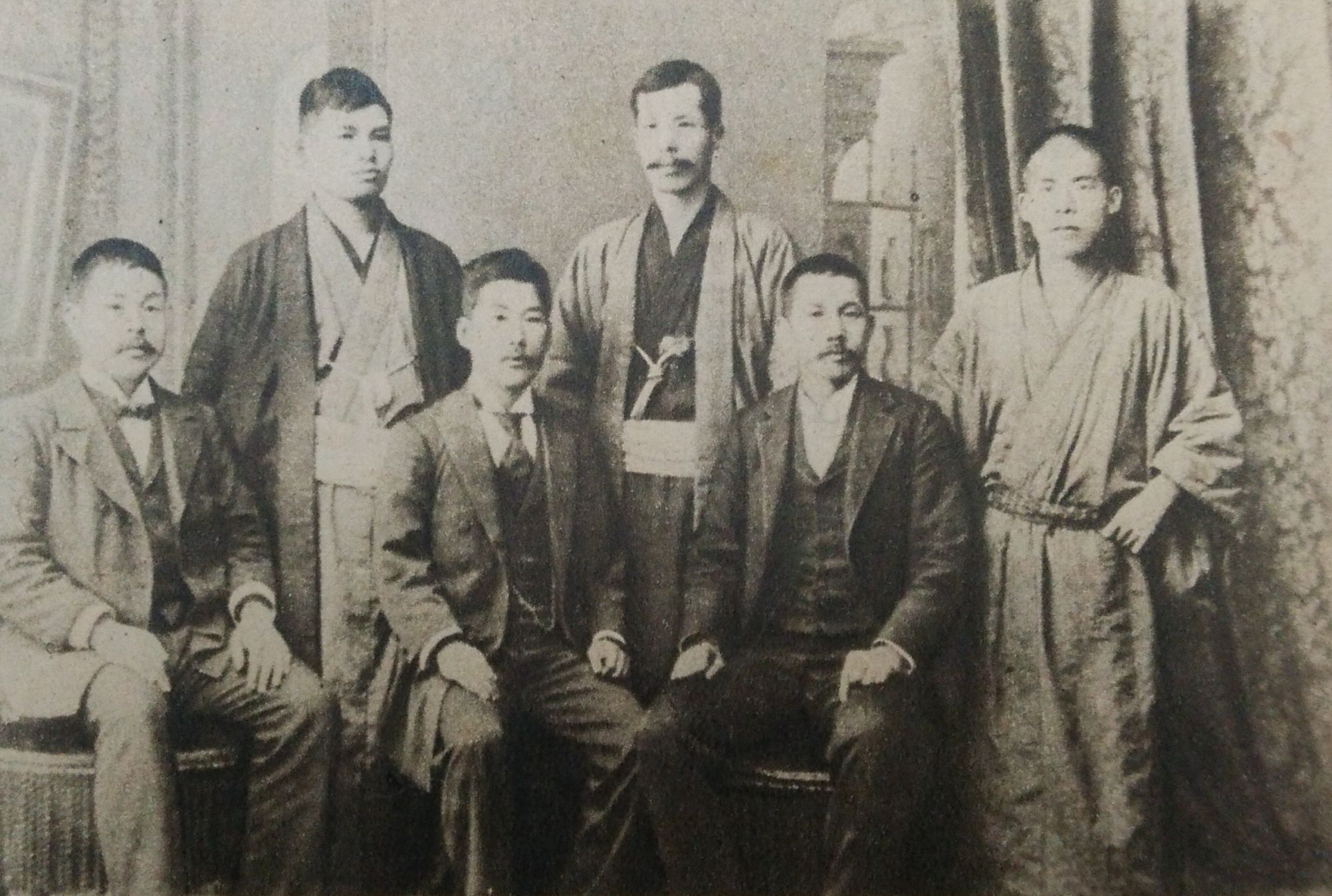
The next popular outbreak was in 1913, at the time of the reactionary ministry of Prince Katsura, who by the trickery of using the army minister as his puppet, forced the resignation of Marquis Saionji. This last Katsura ministry that then followed, was the most hated in the history of Japan. After only thirty days it crumbled under the pressure of popular opposition which developed into angry mobs in the city of Tokio. The crowd first gathered around the parliament building, and proceeded to attack many pro-government dailies and to destroy police stations, fighting the police forces in the streets of the city. The next ministry in 1914 under Count Yamamoto was also forced to resign by popular opposition.
We must not lose faith in the people of Japan, therefore, who after all are the real center of power, and who will yet strike at the right moment against reaction and oppression. Nor are there indications wanting that point to the overthrow of the bureaucracy. Corruption has developed to a sensational extent among those high in position, and unrest among the workers and the farmers is increasing. The imprisonment of a naval general for taking bribes a few years ago caused the fall of the Yamamoto ministry, and a scandal at the Waka Matsu Steel works resulted in the suicide of the chief engineer, who was at the same time a high military officer.
The masses are beginning to see the light. In the Far Eastern Review of Shanghai of March, 1918, we read under the title “Bolshevism Contagious,” “Japanese journals have been remarking with some consternation, others with satisfaction, that the one development of the great European war which has stirred the masses of the Japanese people to intelligent interest has been the rise of the Bolsheviki. The announcement of the ethical tenets and war purposes of France, Great Britain and America has made a painfully small appeal to the Japanese as their journalists have frankly admitted, but the chaotic rise of the illiterate Russian masses has proved to be of engrossing interest. One sees in the liberal Japanese papers more and more comment in recent months upon the limitation of suffrage, upon the autocratic manipulation of public affairs by the militarists, upon the age and conservatism of the members of the Genko, and upon the heavy taxation and misery of the masses who are now said to be anything but patriotic except when under arms. We hear now that the time has come for the second revolution, that under the bureaucracy no strong young men are being developed, and that strong old men who rose to eminence after the first revolution are not alive to the needs of the age. A radical society has recently been organized among the university students and graduates which announces a program that must look very Bolshevistic to the bureaucrats and which was suppressed by the police at the first meeting at Kanda. There is no reason to look forward to violence and revolution in Japan but there is every reason to believe that there is enough interest and sufficient yearning after a more democratic form of government to force from the bureaucracy some very important concessions, within the next few years. The spokesmen of the old school have been announcing emphatically of late that Japan is not fighting to make the world safe for Democracy, but the keen popular interest which the press and the people are taking in the collapse of autocracy in Russia would seem to indicate that the rulers and the people are not so much of one mind and thought as the former would sometimes have us believe.”
The editor of the Far Eastern Review thinks there is no reason to look for revolution in Japan, but that the government will become more democratic within the next few years. We know better on this point. We know that the bureaucracy has become more and more conservative and reactionary, we know that the present regime cannot develop liberal tendencies or concessions, and that it will not give in to the just demands of the people as provided in the five articles of the constitution.
Nor will the coming peace solve the Eastern question automatically. Even if Prussian militarism is crushed and Siberia is invaded, there will still be left the militarism of several armed nations that have vital interests in the Pacific and that are ready, each, to fight for its own purpose. The end of the war, instead of removing the danger, may bring it closer.
The workers of these countries, however, have no conflicting interests, and therefore have no quarrel with each other by adhering to these interests. They must not leave matters to the capitalists to decide as they think best for themselves. The workers must not accept views which are foreign to their interests such as those of Bernard Shaw, to the effect that the Japanese and the English cannot understand each other, or the views of any one else who construes things so as to split the working class by lines of color, or odor, or some other quality which has nothing to do with the matter.
We do not care in how many ways the workers of one country may differ from another, both can understand that two and two make four, and both can solve scientific problems, the Japanese as well as the English. The domination of the white race will break down, not to be replaced by a new domination, but by the equality of races, by the absence of the dominion of one over the other. Awakened India will not be dominated by the English, awakened China will not be satisfied with her present status, because no race that has seen the light will submit to domination by another.
This harmony of races and nations, and with it the peace of the Pacific must be founded on the international solidarity of the working class. The workers must understand each other, must be given the facts correctly, and must learn to see that the divergent and diverging interests are not their interests. They must not be split up by considerations of color, odor, instinct or anything else, but must be guided by their economic unity. The armed peace of the Pacific must be converted into a lasting peace based on the harmony of interests, on the international solidarity of the workers. And a lasting peace must be a proletarian peace. Only the solidarity of the working class of the world can avoid future wars, not only in the Pacific, but also in the Atlantic and everywhere else.
The Class Struggle is considered among the first pro-Bolshevik journal in the United States and began in the aftermath of Russia’s February Revolution. A bi-monthly published between May 1917 and November 1919 in New York City by the Socialist Publication Society, its original editors were Ludwig Lore, Louis B. Boudin, and Louis C. Fraina. The Class Struggle became the primary English-language theoretical periodical of the Socialist Party’s left wing and emerging Communist movement. Its last issue was published by the Communist Labor Party of America.
PDF of full issue: https://www.marxists.org/history/usa/pubs/class-struggle/v2n4sep-oct1918.pdf

