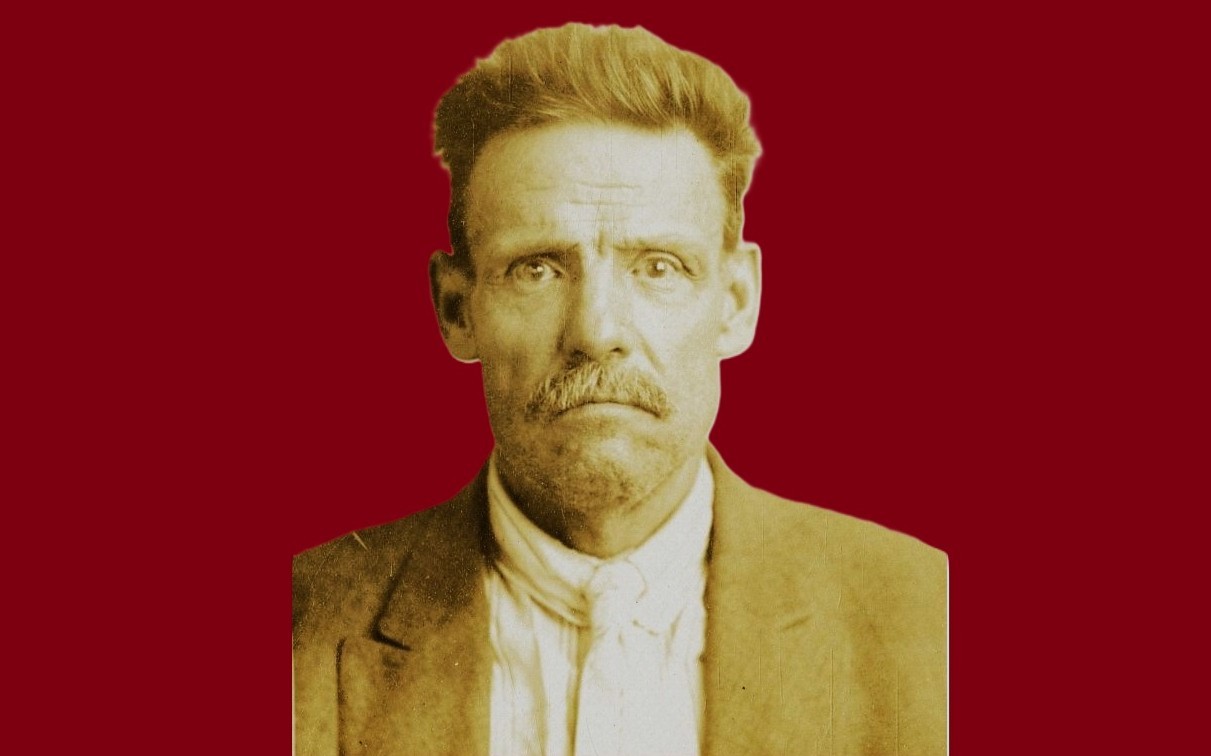
Already a senior veteran when he helped found the I.W.W. in 1905, George Speed gifted us with a real piece of working-class history in this 1924 autobiography. Serialized in Industrial Worker, and written while still very much active in his sixties, Speed recounts his long and remarkable life of labor activism. Born in 1855 in Baltimore, Speed moved to New York as a teen to apprentice as a hatmaker in 1870, becoming a member of the International Silk Hat Finishers Association. His life over the following decades finds him at one important moment for the class after another as he devotes his life to the emancipation of his class. Leading figures, and many now lost to history, are met as he journeys from the Knights of Labor to Haymarket, Coxey’s Army to the Pullman Strike, the early years of the S.L.P. to the founding of the I.W.W. and many of its most important battles. Innumerable arrests and jail cells, including Leavenworth; debates and splits in the movement; development form his youthful involvement in anti-Chinese actions to his vigorous support for multi-racial, integrated unions; and so much more. He would remain active in the I.W.W., including as a militant in the hard-fought 1927-8 Colorado Mine War well into his seventies, until his death in Seattle on August 24, 1931 at 76. This work is a treasure trove first-person account of the people, places, and events for an incredibly rich period of working class organizing. Because of its length, it is also include as a PDF for download at the end.
‘Fifty-Two Years of Work Seeking the One Big Union’ by George Speed from Industrial Worker. Vol 6. Nos. 29-41. June 14-July 26, 1924.
Of Him the I.W.W. Proclaims That His Years Are a Sheaf of Deeds Well Done for the Welfare of the Wage-Working Class
INTRODUCTION
To invite attention to the life of George Speed, and to do it properly, requires delicacy and honesty. To have known the man and to have been intimately associated with him and his methods, reveal the social, human conscious impulses of his life. At sixty-nine, George Speed appears fit for at least another generation of effort. Ungreyed, virile, even youthful appears the man.
Speed was early wedded to the workers’ cause. One day when asked had he never thought of a home and all the soft influences, he said simply and quietly, “Up in Eureka, long ago, there was a girl I might have asked to marry me, but I thought over the conditions of my life, added thereto the purpose I then had to struggle against the inequalities of this system, and I passed it up once and for all. Never since have I been tempted.”
Never had Speed wavered in his devotion to his self-imposed task; but he is a man of lively friendships, absolute loyalty and quick sympathy. Every shout or groan of labor registers in his consciousness.
I wrote to a friend that I was editing George Speed’s life and immediately received a reply, “Don’t tell me George Speed is dead!” He is much alive and earnest. Years and decades seem to beckon him forward. Let us fall in step with this veteran and matching our steps to his experienced stride, let all us workers press forward to industrial unionism. Brief is his story as written in his own modest way, let us be brief in our purpose to organize and imitate his example. Editor.
HIS STORY
Workers who have dreamed of and struggled for the freedom of the working class will find nothing strange in the events related in this story of a union man’s life except its duration for fifty-two years of effort. Credit for a hardy body must be given to those who reared me and not to the writer or to the food or shelter modern conditions make possible: Others can join in the statement that memory cannot record the number of arrests, of releases without trial, of imprisonments after kangaroo convictions, of assaults, of threats and of steady purpose to win out in the end. To have struggled for fifty-two years in the labor movement is not in itself a license for personal publicity, but I have been assured that the proceeds of this publication will be given to the funds devoted to the fight against the criminal syndicalism law in California and have therefore consented to write these memoirs.
I was born in the city of Baltimore, Maryland, in porn in the tender age, my May 18, 1855. At a parents moved to New York where I attended school until fifteen years of age. My brother was a member of the International Silk Hat Finishers Association and he interested me in union activities. What first vitally affected me in my life was a monster mass meeting held in Tompkins Square, New York City, than a military parade ground in the early 70s during the panic. Six speakers from as many stands addressed the multitudes and each stand flew a red flag. Order prevailed until like a thunderbolt out of a clear sky, the police swooped down, clubbing their way through the crowd, to arrest the speakers. Instead of running with the frightened crowd, I went up the steps of a house and looked at the stampede until a policeman mounted the steps and inquired of a woman if I belonged there. She said, no, then the policeman struck me across the back with his club. I called him a name as I ran, he came after me but I easily out-stripped him in the crowd.
Shortly afterwards, while standing on a curb, I noticed an old man come from a doorway carrying a basket. He could hardly walk and placed his hand upon a telegraph pole to aid him in stepping to the street; when a policeman, leaning upon the opposite side of the pole, raised his club and felled the old man. Such wanton brutality sent shivers through me and I spoke aloud, “Did you see the brute?” From that day I lost all respect for the police. From then on my interest was on the side of the workers.
Father Encouraged Me to Think
My parents were open-minded and liberal. They placed no restraint upon their children as what they should read, study or discuss, nor did they dictate what church or Sunday school we should attend. They only insisted we should go to school. They believed that all things in a worker’s life lead to the same goal. To my parents do I give all credit for making it possible for me to grasp new thoughts more readily than many others whose parents placed their children in strait jackets by way of education.
As a boy, I was fond of asking questions dealing with current social or political events. My father was an old line democrat. I informed him that in reading the press, I found that both parties always accused each other of being corrupt and I asked him how was I to judge of the merits of either of them.
“My boy, you must learn by your own experience. Be observant; act in accord with what you thing right and just,” answered my father. As a result I had no confidence in either party.
At sixteen, I worked in a spar and ship repair yard and was to serve seven years as an apprentice for which I was to receive a quarterly allowance for clothes, these sums to be increased every year. Being large for my age, I was called upon to help laborers to pack in material but I had expected to learn a trade and took interest in it and felt this was an imposition. I ordered my partner to heave a plank down when opposite the boss and then turning toward the boss, I told him that I had come to learn a trade and not forever to carry planks. If he wanted me to do laborer’s work, I wanted laborer’s wages or he could get some one else. I then walked off the job.
Old Time Union Power
At seventeen years old, I was apprenticed to the silk hat trade. This was in May, 1872, and made me a junior member of the International. After working some two and a half years, I had an altercation with a fellow apprentice, a nephew of the boss, then serving his last year. He tried to impose upon and boss me around and his actions forced me to give him a trimming. For this I was discharged but the “trade” took up my case and I was sustained and the boss was ordered to reinstate me or he would not be allowed another apprentice until my term was served. During the time I was idle, the trade cared for me and after six weeks placed me with Day on Park Row, where I finished my time. At that time, apprentices were limited by the trade to two for one shop regardless of the number of journeymen employed and every shop must be established at least one year before being entitled to one apprentice and must employ five journeymen before it could secure a second apprentice. Thus the union had control of the work in that industry which must be run according to the union rules and regulations which were tacked up in every shop. Afterwards, if I mistake not, a ten-year ban was placed against apprentices.
Day was a retailer having several stores. His were “skin” shops where all hats were made over, but he received prices as high as Knox and Dunlap. The cost of the finest silk hat at that time was $72 a dozen, which sold in stores from $10 to $14 retail. Day bought old hats at an average of $9 to $10 a dozen, the cost of making them over at most, $12. Day was a money maker. He had placed in the crown of these skin hats, “Hatter to His Royal Highness, the Prince of Wales, 54 Regent Street, London, England.” I often wondered how long a man would last in that store if he told the truth to a customer.
When Saturday came, I learned that I must remain in the shop until closing time so I asked him about supper and he handed me a dollar. Having this I called the other apprentice and treated him to supper. Upon our return, several men were in the store. I handed Day 40 cents, the unspent amount of the dollar he had given me.
“Keep it, my boy, keep it,” he said, with a grin all over him. Afterwards, I found this was to leave the impression he was liberal. I thought he was a pretty good fellow myself, but I was stung as he took it out of my pay.
For the Fourth of July he gave the errand boy six packages of firecrackers and I found six packages upon my bench. This made me indignant. I thought I had outgrown such things, so I tore up the package and I threw the firecrackers away. Saturday came, the boy received but $2.50 wages, for Day charged him 50 cents for the firecrackers and the lad got a whipping when he went home because be bought firecrackers out of his wages.
Good light is required in the making of hats. Over our heads was a skylight that was covered with dirt and waste paper thrown from offices in the upper stories of the building. It had been raining and the old gutter was choked up. I climbed up to the roof to sweep down the muck. Day came into the shop, asked where I was. Then he came out all huffed up and yelled, “Sweep it off and be quick about it or I’ll come up and sweep it off and you too.” Like a flash my broom went down the gutter and a bucket of dirty water went over Day, at which the boy laughed. Day gave him a boot and then sneaked in without saying a word to me. He did not dare fire me because he would not be able to get another apprentice and he was making off my labor, $25 to $30 per week.
At another time he wanted me to peddle some old stock on Saturday afternoons from a stand in the street. I refused and was told I was not worth my salt. I told Day to make out my discharge and state therein the reason for same. I told him he would then find out the price of salt. Day did not comply with my request. He realized the power of our union.
CHAPTER II.
After serving my time I worked as a journeyman several seasons, the trade being seasonal–spring and fall and my father being a sea captain, I took to the sea during the dull seasons. In July, 1878, I shipped in the America for San Francisco, where we arrived after an uneventful voyage of 128 days. Upon leaving the port of New York, the second mate, Parker, hit several men, one of them was struck in his bunk. When the crew was called aft to be placed within their respective watches, the man who was hit in his bunk came out and cursed the second mate for which the captain ordered him “logged.” Whereupon Big Tom Kerwin jumped up and said, “No, you don’t, captain, if the mate hits him he’ll fix him and if he can’t I will. You had better put back to port, captain, we won’t stand for any of that rough stuff. She will be a good ship or you will put back.” As a result the captain came through and she was a good ship.
Shortly after my arrival in San Francisco, I shipped on a schooner on a two-forty lay, that is out of every hundred dollars of the ship’s earnings, every member of the crew got $2.40. I wanted adventure and thought this was my show to get it. We had arms aboard for a hunting and fishing trip to lower California. We entered a lagoon and anchored. One of the ship’s boats was sent to explore. In the mean time, we shoved anchor and went to the further end of the lagoon. That boat’s crew was lost for four days, and it was hard to find them because the topography of the whole bay was changed between high and low water. I was nervous about them knowing they had but little provisions and I protested we ought to search for them. Going aloft, I discerned a light in the distance and I insisted we man a boat to search for the lost ones and carry water and provisions to them. We started out, pulling the boat for several hours and then found ourselves in shoal water, so that to walk a mile in any direction one would not be deeper than his knees. When the mate wanted to put back we would not stand for it and we pushed the boat for several hours. At last we found deep water. At daylight, we saw an object in the water at a distance and at 10 o’clock in the morning, we came upon our shipmates, built a fire on the beach and had a feed. They had found nothing worth while and were feeding on shellfish. Late that night we got back to the vessel. Next morning we went over to an abandoned salt mine and gathered up all the copper utensils and stripped a schooner of her sails and gear. We then baled two large stocks of mochilic dye weed, which we were told was worth $600 per ton and we cleaned this place out. We then sailed for the nearby islands and gathered guano and abalones to about 200 tons or more and then a deck load of sea turtles. We fished with salmon nets and tons of fish of no value were brought ashore.
This trip consumed three months and when we returned we were told by the officers that they could not find a market for the stuff but that they would give us $15 per man. We refused and entered complaint before a United States attorney and the vessel was tied up several weeks. Our case was turned over to a sea shark by the U.S. attorney. I stayed ashore as long as possible and finally shipped on the Pacific mail boat Granada to Panama. I made several trips and when our case against the schooner was settled, I received a measly $15. A worker may just as well go to hell as to expect to get a square deal in the courts of today, when they are up against those who have ample means.
Finds a California Bedroom
Disgusted with the sea, I then struck out for a land job and got work about nine miles below San Jose with a rancher named Little to top mustard in his wheatfields. When night came, I asked for my room only to find there was plenty of room on the ranch or anywhere else outdoors, or like Christ I could flop in the manger. This amused me. Said I, “Gee, to think they have shelter for stock but any place is good enough for me.” But the rancher was a fair sort of fellow and was only carrying out the custom of California, the state that recognizes but one Biblical saying, “Take up thy bed and walk.” It is a saying in California that a ranch hand may sleep anywhere so he does not disturb the hogs.
Soon, however, I managed to get quartered in the house where I could read to the old couple and argue the pros and cons of things with the old man. This ranch had a fine stock, the house sat back from the road about a quarter of a mile and the lane to the road was studded with trees, while the gate could be opened or closed without getting out of the buggy.
Once a Morgan stud got out of his stall with the halter on and scampered down the lane, where I had a tug of war with him. Between us, we broke the gate post. When Little got back from town he had to get out of the buggy to open the gate. At supper he growled about it blaming some peddler for breaking it with the hub of a wagon wheel. I listened to him for a time and then told how it had happened. He was surprised but said no more and from then on had full and complete confidence in me. His wife wanted to make a match for me with a young school teacher of San Jose. They planned to go East and place me in charge of the ranch during their absence, but I refused on the ground that I did not think I was fitted for the job.
Next I tried mining. At Sulphur Creek, where I first sought work the superintendent asked me if I had ever worked in a mine before. I said, no, but I was in need of work and he told me, “See the foreman of retorts and if he has nothing see the mine foreman and if he is full report to me again in the morning.” Upon seeing the superintendent next morning, he asked what luck I had had and when I told him he called me into the office and directed his assistant to write a note to the foreman instructing him to put me to work in the mine.
While I was there, but several weeks afterwards, the assistant superintendent’s house burned down and the boss timberman got out a subscription list and headed the same with $20. Only a few refused to contribute. This occurred in the dining room at a general meeting of the men and the assistant superintendent was presented with a tidy sum and he made a little speech in which he earnestly thanked the men for the same and their kindly consideration. All the company suckers felt proud until the general superintendent showed the man he was by condemning the whole business in strong terms, stating that it was no credit to any of them, either the givers or the receivers.
Meets Bootlicking Workers
There was also a fellow named Getz, the boarding master and store manager. This stomach robber was fond of airing what little knowledge he had and the bone headed workers listened without question while he was telling of the virtues of the master class; how, through their honesty, perseverance, sobriety and industry they did push their way to the front and thus made it possible for us poor mudsills to work and make an existence. His remarks were an insult to the intelligence of an ass. He said their welfare was in the hands of the employers and he implied that the workers had none of these virtues and that was why they were failures. As none contradicted or questioned him I butted in and refuted his statements and told him a few things I don’t think he forgot for a time as he had little to say about his virtues after that.
My boss quit and a little fellow named Captain White took charge. This chap was clannish and it was but a short time when most of the old timers hit the trail. I was among the last to go. He accused me of having dumped waste in an ore bin. I denied it, but I knew my time had come and, when he became abusive and threatened, I called him and he went down the hill with a shovel behind him. He left my time in the office.
When I was getting my pay, I could see the superintendent regretted I was going and he wished me luck. I declined to wait for the stage, parted with the bulk of my outfit and hiked out, lost the trail and roamed in the mountains until the morning of the fourth day, when I heard a rumbling of a stage upon the other side of the gulch, then I saw a clearing and men working. When I climbed down I was asked if I wanted work and was offered a job digging spuds. This rancher wanted me to jump right in. I told him I was hungry and had no sleep. He said I might go house over to the and get a meal; but instead of going in I lay down upon the cellar door and slept until wakened at noon. In the afternoon I dug potatoes, had a good sleep, woke up fresh, ate breakfast and then told the boss spud digging and I did not agree, then hiked another twenty-four hours before reaching a railroad which took me back to San Francisco.
My next job was benchman, then headerman in Squaw Rock Tunnel. The conditions in the camp were frightful. The men were hopeless and apparently helpless but few had any care or seeming desire for improvement. Seeing no effort to get action on the job, I quit and returned to the city. Then, I took my first and last job from an employment shark, whose firm name was Hanson and Company. Arriving on the job, I met a little boy and asked him. “Do you know the fellow who just passed?” “He worked for my papa,” answered the boy. Four days was all I could stand from this stomach and pay robber who tried to beat me out of one day’s pay but the kid put me wise. Reaching the city, I called on Hanson, paid him my respects and came within an ace of being arrested.
Observes Election Methods
I then lit out and struck a job in a lumber camp at Loma Prieta. The 12-hour day was in fashion. I thought a 12-hour day was a long shift, but when I got to the bunkhouse I found it was a short day because all I could hear was “work” and the new records made on this or that job. This talk got on my nerves. I said but little for a while but I determined to change that line of talk if possible. After some six weeks of effort, I got them to discuss something worth while instead of their ability to break their backs for the boss and then be thrown on the scrap pile.
While I was there an election came on and I pointed out the means certain companies used to have their slaves vote and as a rule that these slaves did so vote because they feared to lose their jobs. This was contradicted by an old civil war veteran who denied that any such methods were used. This camp was controlled by the Southern Pacific Company and the vet came in contact with the very thing I had described. In this precinct, the election booth was in the company office and the men were called in one at a time and requested to vote for the three company favorites. When the veteran’s turn came he kicked so hard that the ballot box was brought outside, but then a company man addressed them pleading with them to vote for the three candidates as all the voters were company employes and by so doing, they would help the company and help themselves. They did as requested through fear of losing their jobs, but not the veteran. He realized the truth. Why did these men do as the company man asked? Because they distrusted one another, lacked moral courage to vote in accord with their own conviction and for fear of losing their jobs. It is this moral cowardice which is a basic factor that keeps the workers in a defenseless position preventing them from doing the things they know ought to be done for fear their boss or even their companions may criticise their acts. Upon the closing down of this camp, I returned to the Bay region and took an active part in the A. F. of L. in Oakland.
CHAPTER III.
Dr. Coyle gave six lectures upon the subject, “Why Workingmen Do Not Attend Church.” A committee of union men asked Dr. Coyle if he would permit a reply, which was readily granted. We selected six persons for this duty and among them was Jim Andrews, a socialist, and Charlotte Perkins Stetson, afterwards Charlotte Perkins Gilman. I had taken some interest in the problem of the unemployed and in the activities of the Salvation Army. I imparted my findings to Jim Andrews. Feeling he could not do justice to this phase of the matter he asked permission for me to use a portion of his time at the meeting to reply to Dr. Doyle. My remarks were based upon close investigation of the work of the Salvation Army among the idle workers and they brought protest from a minister of a fashionable church and several refined Christian ladies, one of whom asked me whether I represented workingmen or tramps? My answer to her was well received and the lady who asked the question wrote an article to the press. Some other lady answered and vindicated what I had said.
In San Francisco, I was a member of a small group who took advantage whenever possible of a custom to participate in mass meetings dealing with public questions, political or social. At this time, San Francisco was blessed by a Purity League presided over by a Mrs. Ellis, whose mission was to cleanse the city of vice after the manner of Dr. Parkhurst of New York. She wanted to close all brothels and beer halls where women were employed, without making any provision for their employment in an honorable manner. Her mass meeting was held at Metropolitan Temple and Mrs. Ellis was the principal speaker. Several others spoke, among them Mrs. Anna Ferry Smith, so I rang in but it was difficult for me to get recognition.
Exposes Welfare Hypocrisy
I got upon the stage filled with fashionable dressed women and my effort was to point out to them that they were dealing with effects and not causes which produced the conditions against which they complained. I asked them if they would give any of their leisure or employ these girls. I illustrated with cases which had come under my observation and I quoted the wages received by girls in great stores where these women dealt and also the conditions and inducements forced upon and offered these same girls by some of the employers. Pointing out the economic causes which drove many poor girls to the street or suicide, I showed that some girls’ wages were as low as three and four dollars per week, and the men folks of these women owned and grew rich from property devoted to prostitution.
When I finished, Mrs. Ellis jumped up flushed and angry and twice hurled at me, “Young man, I could keep my virtue at three dollars a week. There is not excuse and I want you to understand it.”
Enemies Camps Captured
At a subsequent mass meeting held by the Salvation Army to raise $30,000 to establish a colony in Salinas for the benefit of the unemployed, at which meeting, Booth Tucker was the principal speaker and Hugh Cregg, president of the Chamber of Commerce was chairman, and with a gathering of notables decorating the platform, we came prepared with a set of strong resolutions showing the attitude of the Salvation Army toward labor and the exploitation of the unemployed. I was selected to spring the resolution. Grimes, a blacksmith, was to start something to give me the opening, but he was nervous and having doubts that he was equal to the occasion, he failed and it was well he did fail because when it did come off it was perfect.
When the chairman arose to adjourn the meeting, Oliver, of the Cooks’ Local 44, saved the day by asking the chairman if he had not forgotten something and moved a vote of thanks be extended to the Salvation Army for its noble efforts in behalf of the unemployed. Sitting in a gallery right over the stage, I arose and asked if I might amend and made a five-minute talk showing that private enterprise was inadequate to furnish all with employment and when the applause was over, I sprung the resolution. As it was read the crowd was spell-bound and remained so for a minute after I was through. Then bedlam broke loose.
I put the resolution to a vote. Booth Tucker was walking up and down the stage waving his hands and trying to get the band to play while the crowd shouted, “Put the vote.” So the meeting stormed out into the street in an uproar.
In this confusion, another meeting was called upon the San Francisco Mint steps and Fifth street was packed with people from Market to Mission streets. Next morning the papers came out with big headlines with the resolutions in big type in the center of the first page together with glowing accounts of the meeting.
We received letters from all parts of the country commending the work done in exposing the religious grafters. This wound up the Salvation Army from pulling off any more money-making schemes. At several other public meetings of a political and social nature, we introduced resolutions with varying success. One notable resolution was on prison made goods. I hung out in this plan until the need of a job stared me in the face.
Went to Redwood Forests
I shipped then to Eureka, Humbolt County, and was offered a job as soon as I hit the dock. This job was in the redwoods where the wages then ranged from $50 for swampers to $150 for bull punchers per month. In the winter, there was work in the mills. These wages are better both in amount and purchasing power than those paid today.
About this time, a reputed ten million dollar syndicate made its appearance, took options on plants, slashed wages in woods and mills and fathered the gigantic stealing of the redwoods.
While this was going on, I received a leaflet, written by W.C. Owens on the “Causes of Poverty and Its Scientific Remedy.” It so interested me that by morning I knew it by heart. It also contained a list of books a worker needed to read. I met with some difficulty in getting these books having to send as far as New York City for them, but after I had read a few, I joined the International Workmen’s Association, which was formed in groups of nine. This active body was the prime factor in building up the labor movement on the Pacific coast. Classes were held for the study of Marxian economics. Every member who organized nine other workers became chief of a group. Quite a number of groups were established and much literature was distributed and agitation carried on preparing new ground for organization. Upon one’s activity, he advanced to first, second and third degree, which last entitled the worker to sit as a delegate in the Congress of the Pacific Coast Division of the International.
This ten million dollar syndicate sent circulars all over urging men to come to Eureka and Humboldt Counties, California. These circulars carried lists of jobs which were below the standard and they told of a hospital established to care for the sick and injured.
To offset this, a few of us got together, among them was Dan Cronin, a fearless fighter; Dave Mackay, Greasham, Gardiner and a few others, and the writer. Dan Cronin was among the first to feel the blacklist. He left California for Washington and Oregon, where he took active part in organization work in that section and he was arrested for his activities and placed under $5,000 bail. He refused to accept the bail, thereby strengthening his position among those with whom he was working. He aided in keeping the fires of organization burning by the solidarity he displayed when n the master’s jails and as a consequence, these cases were never brought to trial.
We rented Russ Hall in Eureka and issued dodgers calling a mass meeting for the purpose of organizing the woodsmen and mill men. At this meeting, thirteen members were initiated but in a few months, we built up a fair sized organization. Among those who joined were elements we needed to get rid of in the easiest and best way. We sent for organizers of the Knights of Labor, and they sent us a man named Johnson. We took out a charter in that body and cleared out the undesirables as they were not eligible to membership in the Knights of Labor. Afterwards, the organization grew rapidly until we had three assemblies in Eureka and five in the outlying districts numbering above two thousand members.
Early Union Victories
We put up a fight against the company hospital and won, forcing Company Dr. Garberson to leave for other parts, but our success attracted others, as the Knights permitted 10 per cent of business men to join. It checked our work as they endeavored to use the organization for political purposes. In their attempt to elect one of these politicians to master workman I was approached by this element and asked to support a candidate for master workman, whom I knew to be a politician. They then said they would place me in nomination when a favorable opportunity came. After getting this information, we placed in nomination one whom the politicians dreaded and I exposed their game and defeated their slate. At the District Assembly we prevented their henchman, whom we afterwards discovered was a “dick,” from going as delegate to the National Convention. Later, I accepted a job as financial secretary at $5 per week and this money went to buy books for a library. We got out a paper called the Western Watchman which for a long time was a thorn in the side of the vested interests.
About this time the anti-Chinese agitation was running riot through California and it made it difficult to reach the workers on a sound economic basis as they laid their ills to the Chinese. During a tong war, a white boy was shot. Up went a cry, “To Centennial Hall” and a crowd assembled around that place, the doors were forced, an open meeting held, city officials and one or two ministers pleaded with the crowd but the mob would stand no delay and they were yanked off the platform. Action spoke louder than words. Squads went out and all the Chinese in the city and the surrounding country were herded together with their belongings and they were placed in a warehouse on the city dock.
Chinese Run Out of Humboldt
Next morning, we hired Mayor Walsh’s towboat. Brown was placed in charge and I was named as his assistant. We went to Fay’s shingle mill where all Chinese were employed. While Brown was arguing with Fay, I said “Come on,” and we went to the mill and brought out all the Chinese, marched them down to the boat and placed them aboard. Fay asked me by what authority I did that and I answered, “By the force of public sentiment which is higher than any written law.” I also told him, “If we did right we would take you and leave the Chinese. We should deal with the master instead of the slaves.”
We then went to the light house and fishing camp and gathered up the ones there with their property. None of the Chinese was injured and none of their property was destroyed. Humboldt was cleaned of Chinese as all were shipped to San Francisco on the steamers City of Chester and the Humboldt.
After this, the business men organized a Committee of Fifteen and things quieted down until Tallent of the Cutting Packing Company of Eel River brought up a crew of Chinese. This caused a flare up and the Committee of Fifteen called a mass meeting and tried to whitewash proceedings and introduced a resolution giving Tallent ten days’ notice to clean his camp. When this compromise came to a vote, I was the only one to object. Then a committee was elected to visit Tallent, not a worker among them. I put the case before the K. of L., and I was elected as a committee man to question Tallent. Arriving there, I met the other committee, listened to their sloppy and sentimental confab with Tallent and when my turn came told him I represented a body that did more acting than talking, that these other gentlemen were virtually self-appointed and that he, I assumed, was a business man of some discernment and as such would not bring in Chinese in defiance of public sentiment without some assurance of protection. This he admitted. I requested that he furnish the names of those who had given him this assurance. Of the names furnished, some were on the Committee of Fifteen, one of whom was a member of the K. of L. and who was present when I brought in my report. He looked sheepish when I brought out his name and soon sneaked out of the assembly. No further action was taken.
Afterwards when a railroad contract was let to Co tractor Lemmon, he planned to bring in Chinese to do the grading. We informed Lemmon that if he so attempted we would deal with him directly. He did not bring in the Chinese. White men built that section of the road.
This, however, solved no difficulty. Our lot was not improved as it was not the Chinese but the white employers who robbed us.
CHAPTER IV.
During the trial of the so-called anarchists in Chicago, I collected considerable funds for their defense and the Western Watchman featured the case. Threats were made against this action and our press and a vigilance committee was formed. While standing near Holliworth’s saloon, near the Vance hotel, this Holliworth came out and threatened me with lynch law. While the crowd stood at a distance, I accused him of not having the guts; but that if he could get some poor simps to do his dirty work, no doubt he would like to have me lynched. He quit and slunk into his den.
At the following election, I cast my first vote by scratching names off the Democratic ticket and writing In and voting for the eight so-called anarchists. This caused widespread comment in the press.
During the campaign, I was introduced to Fletcher, candidate for Railroad Commissioner, by a fellow K. of L., with the request that I introduce him to the K. of L. assembly for a short talk. I asked Fletcher if we had not met before and if he was not a delegate to a labor convention representing the stone-cutters. He was more than pleased at meeting a fellow delegate. We discussed the acts of the convention. He felt assured I would recommend him, but he did not want it known publicly that he was a K. of L. I led him on and he let out his feelings against the radical group in the convention. Then I informed him that I was one of that group. He wilted and I was denied the pleasure of introducing Mr. Fletcher.
At the next general election of the International Workmen’s Association I was sent as a delegate to the Congress of the Pacific Coast Division. Upon my return to Eureka and to my job at Flannagan and Bronson’s camp, I was called into the office and questioned about the strike that was being called and I was asked if that was not my mission in San Francisco. I told them this was all news to me and that it was false. At that time, the 12-hour day was in vogue on the coast and the boss informed me that the 10-hour day would be better for all; that he himself would like to be more with his family and that he put in more time on the job than did the men. He also said that in Mendecino, the neighboring county, they worked longer and paid less. He said he would be willing to give money to organize Mendecino. I asked him if his firm was a member of the Pacific Coast Lumber Pool and he admitted it. I asked if the Pool did not fix the output of each plant and conditions of work on the most equitable basis possible for the employers. He admitted this. I said then the apparent disparity of wages and hours is due to the fact that shipping facilities in Mendecino are poor, insurance rates higher, less clear lumber per thousand, thus equalizing the difference between the two counties. We did not do his dirty work by striking. We parted friendly and I still held my job during the city election.
At the city and county election, I was called into the saloon office of McNally, the political boss of the city with four or five of his lieutenants and was advised as to what they wanted me to carry out to act in accord with their instructions which would be to my material advantage. I listened to their plea but said little. When they had finished, I presented my views. This riled them and they told me what would happen.
I acted as delegate to the joint convention held in San Francisco composed of delegates from the Knights of Labor and the A. F. of L. unions. The bringing of these two bodies together brought into being the first Federated Trades Council in the city. The Sailors’ Union was organized in 1885 by the International Workers Association and was the most militant body in the city. Its walls were decorated with literature like a modern Wobbly hall and it had an advisory committee of five. Practically speaking, B.G. Haskell shaped the committee’s policy and it played an important role in the early days of San Francisco.
Going back to Eureka, I received a telegram with a request that I call out the sailors as the strike was on. As chairman of the Executive Board of the K. of L., we got action and called the strike and succeeded in getting the mates out and had the port pretty well tied up. For this I got what was coming to me, I was called into the office and discharged for interfering in a strike in which I, according to the company’s reasoning had no business. I told them that while working I could talk only nights and Sundays and now I could talk every day in the week. This was the sailor’s first strike. I with several others were informed we would not get a job from Puget Sound to San Diego.
Intelligentia Proves Parasite
Soon after this, the Keweir Colony was organized upon the plan of Laurence Grundland’s Co-operative Commonwealth at Three Rivers, Tulare County, California, in that section known as the Sequoia National Park. I was offered a membership, accepted and worked several years in the colony which built a road from Advance to the timber where we expected to engage in logging operations. Dissension broke out between the idealists and dreamers who expected to live in a paradise without doing any useful work and the workers who knew plenty of good hard work was required if we were to make headway. We discovered these non-workers when they attended meetings, could flatter us with fine phrases but wanted to live off workers as they had ever done. We were divided into two camps, workers and drones, the workers at East Branch and the drones at Advance.
Our split was widened by the efforts of the Colony paper to get new members by glowing accounts of the wonderful success to which we objected as misleading. New members came in at $500 per. We objected to such articles that would put Los Angeles real estate sharks to shame and that people who came in by such inducements were of no real value. We learned that visitors and prospective members were carefully watched to see that they did not get in touch with the workers and were kept away from those who were doing the real work. These drones dreaded meetings and they tried to prevent the workers from putting through a program which the workers regarded as vital–that of preserving the principles upon which the Colony was founded. This struggle continued and when the drones attempted to haul away from the upper camp material necessary for us and which we had produced, we ordered the five teamsters to go back as they came, empty. This they were forced to do and warrants were issued for our arrest. I was the only one in camp when the deputy arrived to serve a John Doe warrant. He asked me where the boys were, I answered,
We Were Called Lawless
“You as deputy get mileage, don’t you, and are interested to make your job as profitable as possible, ain’t you?” and he said, yes, “Then, go hunt for them and the more miles you make, the more mileage you get.”
Then a rumor was spread around Visalia and Tulare that we were lawless and anarchists. Several deputies came out, put us under arrest and brought us to Visalia. We were released without bail and awaited trial of their right to the property we had refused to let them carry off. They had entered a replevin suit.
We had hoisted a red flag on a mountain peak in commemoration of the Chicago murders. We posted a bill on the side of the Crawford hotel, Visalia. It read, “Lecture by B.G. Haskell. Subject: “The Coming Revolution. Dynamite and Its Uses. To be delivered (this space was left blank and afterwards I filled it in). At Visalia Courthouse, January–at 10 o’clock. Admission one bale of hay. For tickets apply to J.J. Martin.”
Just before the trial opened they came to me with a request that we drop the case. I answered, “You started this fight, we will finish it.” Their case was so weak it only lasted an hour. We won hands down and got judgment. They could produce no claim.
Shortly afterwards some of the colonists began to see the light and one who had turned in six or eight horses receiving for the same, time checks representing hours of labor, asked my advice how he could get his stock back, that he was going ranching in the valley and needed the horses. I told him, “If you want them, take them. They are your horses.” He finally took them, was arrested for stealing and this frightened him almost to death, but the case never came to trial. We, the workers, lost our labor time and those who had some little property in the colony lost all of it. Had they listened to the voices of those who were not lulled to sleep by high sounding phrases, they could have saved some of their property as these drones had no real title to the land not having paid for it and the tract is now part of the Sequoia National Park.
Discovers a Stoolpigeon
Returning to San Francisco, I found Dr. O’Donald waging an anti-Chinese fight and he was threatening to turn things inside out. Wiseman, a bakery worker and a man full of energy and active in labor circles, entered into the fight and endeavored to force O’Donald to act and carry out the plans made. He formed a group organization which met at the corner of Norton and Kearney streets, now Maiden Lane. I was induced to join this body although I was not in full harmony with it, but I lacked the necessary moral courage to get out. It was supposed to be strictly a secret body, limited to fifteen members, every man supposed to be a staunch union man. Seeing two new faces and noticing one desirous of getting names and addresses, when we were supposed to go only by numbers, I asked what he followed. He stated he was an express man, located away out in the mission and that he had been a master workman of the K. of L. I made a motion that our charter be closed and no more be admitted. This was carried only to be violated in the next meeting. This to me was serious business and being so lax in living up to our mandate the whole thing began to look like a joke and I and two others resigned.
Having strong doubts of the expressman, I decided to watch him. I inquired as to his stand, found he had none, when by chance, I saw him standing at the old Lick House. I waited around over an hour before he left and followed him right down until he entered the office of Chief of Detectives Lee. Then I waited there an hour or more until he got onto a Sacramento street car in which I also followed him out to Polk street, where he entered a house. I then warned Wiseman and his followers. Several weeks afterwards Wiseman and two others were arrested for conspiracy, tried and received six months. Wiseman afterwards went to New York, became editor of the Bakery Workers’ Journal, studied law, became an active politician, a henchman of Reform Mayor Seth Low, started a bakery and fought the Bakery Workers’ 10-hour law and defeated it.
CHAPTER V.
Now, the International Workmen’s Association, having accomplished so much in building up the labor movement on the Pacific Coast, melted away. I then joined the Socialist Labor Party and became active in its work, speaking in and out of season. I functioned as an organizer meeting with arrest often for street speaking. The ones who would attempt to break up meetings at that period were the workers. At times we would have to gang up for protection. At a meeting held at Seventh and Market Streets seven were arrested. Next evening we met at the same place with a number of banners inscribed with mottos: “Do not speak, you will be subject to arrest,” “Don’t Be a Slave,” “Dare and Do.” “The Rich Appear Great, Because We Are on Our Knees–Rise.” For this we were again arrested; but the press began to ridicule the police and we were let alone for a time. In those days, newspapers differed from those of today. They made a joke of the police at that time, but now they would urge the mobs to hang a worker.
About this time, I took part as a delegate in a plan to reorganize the Central Council of the local unions. When the report was brought in with a model of the proposed form, structure and platform, it was adopted without a dissenting vote and we were thanked for the care and intelligence displayed in the draft. Then Blume of the International Cigarmakers stated that labor in San Francisco had now shown its class spirit and had an up-to-date socialist program, one which labor could rally around. Right there he spilled the beans; they wanted none of it and afterwards repealed the whole thing. Thus was demonstrated the impartibility of capturing organizations. For that task, education, knowledge and discipline spread among the membership of the desired body is necessary, and then you don’t have to capture them, they come of their own free will to you.
While a member of the S.L.P., I ran for supervisor and received some 1,400 votes, also did what was possible in any strike that loomed up. Among the largest of these was the Geary Street Railroad strike and later I figured in the wide spread agitation concerning the unemployed.
At the time of the Coxie Army movement, San Francisco had an organization known by the name of the Brotherhood of Labor, dominated largely by men who looked upon the money question as the whole source of our ills. It was here that I first met Chas. T. Kelly, who after became known as General Kelly of the Coxie Army, who acting as chairman of a meeting, declared a motion carried and I called his hand and forced a reconsideration which defeated him by a large vote. The unemployed were camped on a sand lot now the site of the present San Francisco post-office. Before the Coxie Army was ever started, the men in San Francisco began to organize. They were called into a meeting in the Brewery Workers’ Hall and there they took on a form of organization and a machinist named Fry was elected general of the first army and this body then started East. I attended several meetings and was offered a command but refused as I could not see where any good could come to the unemployed by such tactics. However, this idea spread like wild fire and even attracted attention in Europe. William E. Stead of the Pall Mall Gazette, gave great publicity to it and called the movement a “petition in boots.”
Myself being up against it I determined to leave the city in search of work. While I was active in the labor movement on the larger side I nearly always had a job in productive labor of some sort. I left for Sacramento and met with people I knew and started street speaking to large crowds on several occasions. Street fakirs tried to make a deal with me but I passed them up. My intention was that if I failed to get work in any town I could at least speak and if arrested when released I could start all over again. I was there but a few days when Mearl and Colonel Baker came to Sacramento and asked me if I could not speak for them, thus helping to raise an army in Sacramento. I agreed to assist them, but had no idea of going with the army, but the rapidity in which the army was being organized, it began to dawn upon me that I could accomplish better results by joining the army.
Two days before the San Francisco division arrived, I went to the “jungle” to join Company C, Sacramento Division, feeling I could reach more workers with the message of labor and class solidarity, then beating around the country in search of the elusive job. Next day, a committee called upon me and informed me that they had elected me Colonel of the Sacramento Division of the Army of the Unemployed. They also told me that the San Francisco division had met with some opposition in Oakland and were delayed in their arrival in Sacramento. Therefore when they reached Sacramento, we were prepared to take a train for Ogden, Utah. In the Sacramento Army there were about 1,100 men, many of whom were tradesmen.
Rank and File Tactics Win
About ten Hijacks boarded the train in Nevada. When they tried their play, we ditched the whole bunch on the desert and I judge they were good hijack men for a week or so anyway. When 100 miles from Ogden, I received a telegram asking my intentions and where we were going. This was from the superintendent of the Southern Pacific. I did not consider it advisable to answer the same. We arrived in Ogden at dusk and were received with open arms by the Populists. As the boys piled out of the side-door Pullmans, each company built fires along the track and cooked their meals and prepared for sleeping. Officials came to me and asked that I advise the boys to sleep in the cars as the night air would be bad for them. I answered, “Sir, the fact that the men have prepared to sleep outside is evidence that such is their choice and it is not for me to dictate to them or ask them to take the box cars.” Could they have prevailed upon us to take the cars it was their intention to lock the doors of the cars, attach an engine and dump us out on the desert.
Next day I was haled before Governor West, who informed me that he had 600 men under arms and that I could not go through Utah, that he had been prepared to meet us. I informed him we were in Utah and that he would not turn troops on men with folded arms. He then had me brought into U.S. Court where I was questioned. We were offered passage on the “cushions” and supplies if we would turn back. For his opposition to the army, Governor West was denounced by the Populists, who were strongly with us and assisted us as well as could be expected. They told the governor that the place for him at this time was in Salt Lake and to let us alone.
At this time, General Kelly arrived to take charge of the San Francisco division. I perceived Kelly’s mental attitude toward me at once. I had met him and had been in contact with his work in the Brotherhood of Toilers.
We camped at Utah and 28 box cars were furnished All crowded into them and we went through to Council. Bluffs without a hitch. At stops along the route, tables were built and piled with food to satisfy our needs. Everywhere we were heartily greeted by the Populists. Money donated to the army provided tobacco, cakes, fruit, etc. At a great mass meeting held in Omaha, people lined up as they would for a great opera singer. We stationed several men with hats and the crowds passed by in single file and they filled those hats with several thousand dollars. What was known as the Populist Party was then in its heyday and it gave the army earnest support.
From Council Bluffs we began to travel by foot to Des Moines, but the farmers along the route hauled all our baggage. Every town had a spread for us and everywhere we made large collections. Some 20 or 30 miles from Council Bluffs, an incident happened. An engine was seized and aboard it were two young women and run out to this town. The railroad company ordered the track to be torn up about half a mile below the town. The section boss was running out the rail when the matter was reported to me. Knowing this would cause a wreck I went down and forced him to replace the rail. He was shaking like an aspen leaf. Governor Jackson of Iowa called out the militia and made dire threats. At Avoca, school children marched with a band at the head of the column with little white ribbons on their breasts reading “Iowa State Militia” and Governor Jackson drew in his horns.
Disturber Breeds Trouble
While all was not harmony within the army and Kelly’s refusal to give any accounting and his inordinate desire to have his picture taken sitting on his horse caused considerable comment. Colonel Baker of Kelly’s division committed an affront and was given a mock trial and driven out of camp. I took his part and denounced the unfair method. This riled Kelly but he tried diplomacy with me and he offered me a colonelcy in the San Francisco division. I informed him the Sacramento boys had elected me to the position I held and I would only relinquish it upon their request and then willingly but never to take another place. He then called a council and made an effort to expel me and the meeting almost ended in a riot. I rushed to mount a wagon, made it and began an address to calm the turbulent crowd and forced Kelly to reinstate Baker and Company C of the Sacramento division which he had undertaken to expel. Company C had set out upon an independent march but stages were rushed out to bring them back. Kelly was strongly warned not to interfere again in the affairs of the division under my supervision.
At Alita I was offered a fine horse which I refused, stating that as the men walk and live so will I. An effort was made to induce me to take charge of the whole army. In refusing this, I sometimes question the wisdom of my action.
All the day before entering Des Moines we marched in a heavy rain and were covered with mud. At night the men scattered to find shelter. Some dozen of us stumbled into a barn and we lay down in the roadway of the barn. In the morning when the farmer opened the door a drove of hogs made a wild rush to the end where we lay and ran over us. At this the farmer threw up his hands in wonderment. He soon calmed down and we were all invited to eat a hearty breakfast. We finally got our forces together but we were a sorry looking bunch. As we entered Des Moines we were escorted to a large vacant stove foundry in the outskirts of the town where we were liberally provided for during our ten days’ stay, while carpenters were building a fleet of boats or scows, eight by twelve feet in dimensions, so that we could sail down the Des Moines and Missouri rivers.
Army Mans Flotilla
We had ill devised oars made out of poles with boards nailed on and masts stuck up with blankets for square-sails. We presented the appearance of an ancient Roman fleet or a bunch of South Sea Islanders on the war path. Several dams down the river had to be jumped before we entered the Missouri.
CHAPTER VI.
When we reached Quincie, Ill., we had a week’s stay and in fact, we were on exhibition in our camp on an island and we charged 25 cents admission. The army had some good entertainers and glee clubs to amuse the crowd and on the side, had balloon ascensions and steamboat excursions with speech making afternoons and evenings. General Kelly’s specialty was the singing of religious songs. Being an ex-member of the Salvation Army, he was an expert in the art of begging. His talks were all of the sentimental kind, winding up with “All in favor of free silver at sixteen to one, raise your hands.” Then, he would proceed to gather in the free silver. But the boys got weary of this business and insisted we move on.
I followed my first intention of talking along economic lines and dealing with working conditions, the trend of the times and the need of organization.
Kelly at all times traveled far ahead of the army. After leaving Quincie our next stop of importance was Alton, Ill. Our camp was some miles below the town and on the farther side of the river. There, the boys took the boats out on the banks and began caulking them. A gang of railroad thugs came down and made an attack upon the boys, but the thugs got more than they bargained for and had to retire quick step, well bruised and with three guns taken from them. One of our boys was hit by a stone while coming down the river.
Kelly wanted to be pulled in boat to Alton. I protested the time lost and difficulty of pulling against the stream and shallow water. By crossing the river better time could be made. After considerable talk, he backed down. I then agreed to go within a half a mile of Alton where I met a crowd on the river bank where the chief dick of the railroad thugs was talking. While having quite a set-to with him, and the work he was doing, I was placed under arrest and taken to the lock-up. The officials wanted to know something about the cause of arrest and my captors could not give any satisfactory answer. I was not locked up. Evidently the city was not hostile to us nor in sympathy with railroad bulls. I accomplished my mission for which I was sent and supplies were given to us and a city marshal escorted me back that evening, telling me that thugs were lined up along the river bank.
Evils of Greed Exposed
As I was not in accord with the methods of Kelly in keeping all accounts secret and his practice of handing the army affairs arbitrarily, I demanded that a committee be elected to audit all accounts and that account books be kept of all expenditures. There were many rumors of embezzlement afloat. This widened the breach between us. One of Kelly’s former supporters slipped away to St. Louis and reported events, but he had little or not tact. Kelly had stated that he “was going to pull the leg of St. Louis for a couple of thousand.”
Drifting down the river, we halted on an island. Some hours after I came to where Kelly’s gang was camped. I had threatened an exposure when we reached St. Louis. Here I was threatened with lynching by his gang. Our crowd informed them that if they wanted to start anything they would be met half way. Our defiance weakened them and they then proceeded to St. Louis.
We got in touch with the officials of the labor unions and stated our grievances. They held that the controversy between Kelly and me was one of jealousy about his leadership. This was far from the case. My one desire during the trip was propaganda work for the socialist and labor movement and at that time I desired to verify my charges as to Kelly’s mishandling of funds. I demanded that they force him to produce vouchers, books, receipts, of money received and expended. Knowing this could not be done and feeling no useful results could be obtained, I informed these trades unionists of Kelly’s intent and if they thought to contribute to Kelly’s army, to divert such funds to the miners who were on strike at Centralia, Ill. As for ourselves, we asked no favors, nor feared results. As far as working together any longer, that was impossible. The people of St. Louis furnished us ample supplies. The Star Tobacco firm gave us 600 pounds of Star tobacco. But Kelly failed to pull the leg of St. Louis to the extent that he expected.
Determination Wins
At St. Louis, the two divisions of the army separated. Kelly went down the river where several men were drowned in an eddy. Our division crossed to East St. Louis, disposed of our boats and went out on the railroad and camped in some willows. We then sent four railroaders to town to ride a freight out to a spot designated by a tree and there stop the train. While waiting for this we saw men with lanterns searching for us. During the darkness we had left our camp and crossed over to another road. Suddenly the train stopped, our committee took care of the engineer and some 450 men piled aboard. At the next stop, the conductor received a telegram to hold up the train. He came to me shaking. We instructed the conductor to wire back that the train was going through without the superintendent’s consent; that a wise policy would be non-interference and let us adhere to the railroad time table.
At Carlysle we unloaded and mapped out our course. We drew up our demands for food and I presented the same early next morning to the mayor at his home. He was reluctant to comply and I pointed out to him that it was a pure business proposition, the men were hungry and must be fed or else they would be compelled to overrun the town in search of food; to comply would in the end be the cheaper course. After half an hour’s parley, he came through and a full quota of supplies was sent.
Here, at Carlysle, I had an opportunity of using the question I had asked of my father when a boy. A committee was appointed by the governor of the state to investigate state institutions. This committee was talking to a large group of men and I was asked a number of questions by them. I then inquired if I might ask a question or two and they readily consented. I asked, “Are you not an investigating body appointed by the Governor and did he not select you from both political parties and the purpose was to show impartiality in this investigation?” “Certainly,” was their answer. “Sirs, isn’t this a fact that when both of your two parties stump the state for office that you both accuse each other of corruption and of being unworthy of support? Gentlemen, is not that about the only real truth that is told?” With a great laugh, the discussion ended.
While we were in conference among ourselves about our next move, the sheriff of the next county was listening and when we quit talking, he sneaked off. Meeting me afterwards he wanted to know which way I was going, informing me that I could not go through his county. I asked him if his office of sheriff gave him the ownership of the country, and also if as sheriff he was in the habit of telling people his business. Being a pompous chap, he blurted out, “Of course, I don’t tell people my business.” To which I replied, “You and I are in exact agreement, neither do I tell people my business.” Upon leaving he said I was in damn poor business, herding men around the country.
Politician Rebuked
At Centralia, Illinois, a strike was on of the coal miners. We arrived there ahead of the sheriff and were camped in a park, where food was being supplied us by the mayor and town marshal and the miners were suspicious that we might take their places. That night a messenger came to me and I went with him to the railroad depot where I met the sheriff and several others. It was suggested that they could find employment for us in the mines and they offered us a wage higher than was demanded by the striking miners. In refusing I asked the sheriff if these strikers did not have their wives and families with them, were they not voters and if so was it not through them he was elected to his job and now he was serving their interests by trying to break up their homes. He grew indignant, pulled a gun and threatened me and said I wouldn’t work if I could get it. I answered, “No, under no such conditions would I or any of the boys work, we leave that to those who lack all principles.” In the morning we pulled out and jumped a train about four miles out and went through Mount Vernon. We got to a small town, when down swooped an engine and one car carrying a body of armed thugs, some of whom were menacing us with their guns out of the cab. We were all perched on the top of cars and were ordered off. Not one budged. This was a dry town but some of these fellows were shot up to give them courage. We sat still and one came up and requested us to leave. We refused and told them we would not stir while their force acted in such a manner. One of our party, Texas Red, jumped off the top of a car and approached a fellow with a gun and ordered him to put it up, as he did not know how to play with it. This fool did as he was told. Their bluff did not work.
When we got ready, we left the train, selected a good camp site, got a good supper and breakfast from the people and the mayor informed me he had no use for the railroad and all he would request of us was that we stay together and not overrun the town. Our railroad thugs put back from where they came with no feathers in their caps.
Transportation Becomes Difficult
The farther East we got the more obstacles we met with in getting trains. Then, next we were compelled to grease the tracks on an up grade to capture a train. From Marlboro came a train with a warrant for my arrest. When the dicks put me on the train all the boys jumped on to it and went with me, as a result the warrant was dropped, so I did not see the inside of the local jail and we remained in town for three days and were treated fine. In the meantime they tried to make arrangements with the railroad to carry us to Paducah at half fare but failed. Then the sheriff told us, “The county line is only five miles from here and I have treated all of you well and if you will march yourselves across the county line, I don’t give a damn what you do to the railroad. But we don’t want trouble.” We lit out and striking a small town had our meal and the mayor informed me of a good place to catch the train; but finding it more difficult to make headway, our band began to break up. Quite a few were thrown in jail for riding a railroad which was in the hands of a receiver. This was after they left the main body. We finally broke up at Evansville, Ind., Kelly’s division disbanded at Portsmouth, Ohio, and he went by the cushions to Washington. I made my way to Chicago where they wanted me to take part in another attempt to organize an army, but I had had full and plenty of it. While there I took part in the A.R.U. strike and first met Debs. I also spoke at mass meetings and strike picnics.
Sole Hope Is Organization
During this trip I felt, in fact knew, there was nothing to be gained by the workers going to Washington and I pointed out the reasons why nothing could or would be done. But it did give me the opportunity of addressing thousands of people and I tried to give them something of a real educational value. It mattered not to me whether I had a position as an officer of the army or not, provided I had a voice and vote and the privilege of speaking at all gatherings. What experiences I gained was worth while. Opportunity was there to learn the workingman’s weaknesses and his strength, his follies and his wisdom. I lived as did the men in the ranks, tramped over the roads as they did and I used my best efforts to see that all received alike whatever supplies were no hand.
VI.
Every company had its own captain who reported the number of men present and the rations would be so issued. When extras were to be divided, I would stand upon an elevation and watch those in line to see that there was no pushing out of those who lacked the power of resistance against the aggressive ones. Whenever anyone attempted to double up or crowd out the weaker ones that man was ordered out of the line or to the rear. In the distribution of clothing of any kind where there was not enough to go around, I would organize a fair lottery for the articles so that all might have a chance or a share. Ready appreciation of this plan was shown by the men and thus we maintained a self-discipline and order and we found it practicable to get rid of elements that were disruptive or harmful to the organization. Unlimited patience was required as the only force we had to control this large body of men was persuasion and moral courage. When the men saw that the desire was to serve the best interest of all the respect and confidence of the men was won.
Leaving Chicago after all this, I got a job on the drainage canal, which lasted ten days when I got fired for agitating. I then decided to work my way West. While waiting for a freight at the depot, I met the railroad dick with whom I had trouble at Alton, who alighted from a passenger train. He recognized me at once and offered me a job but I told him I was westward bound. Reaching Cornell, Iowa, I got a job shocking corn and earned $16.
My next stop was Stuart, where I took a room and placed my little roll under the pillow with the exception of about $1.50. Leaving the house, I forgot my money and thought of it at the restaurant. I returned and told the landlady about it but she informed me, “You left nothing. You are a tramp.” I thanked her telling her she was a lady.
That night, McFarland, who was running for Secretary of State on the Republican ticket was billed to speak. I attended the meeting. The Populists at this time were a strong factor. “Mc.” told his audience that a man seeking office should be conversant with economic conditions and that he, McFarland, had traveled clear to the west coast to acquaint himself with farming conditions throughout the great West. He then proceeded to flay the Populists. It was the first time in my experience where questions were asked. A farmer asked him why the difference of four and five per cent in the rate of interest on money and the poor farmer was counted out. I took a try at it and as none other seemed to care to do so, I asked him about a dozen questions. Every question related to the answers he had given to my former ones. Soon I had him rattled and the meeting broke up in disorder. Next day the townspeople came to me and asked that I give them a talk. I had a crowded house and they presented me with a collection of $17, and a storekeeper at the meeting called me up to his store and gave me an outfit from head to foot and a rest up in the hotel for several days.
I went to Omaha and from there made a through run to Cheyenne and thence to Medicine Bow. It was bitter cold. I struck a job from a restaurant keeper digging a trench for a water pipe, which lasted a week. I went out to a camp fire on the prairie one evening, where seven or eight men were camped, to find they were talking about me. I did not let on and enjoyed the whole talk for a half hour before I told them. Next day we all traveled a freight together.
In this journey I reached Salt Lake where a strike was on and I took a hand in organizing a branch of the S.L.P. For this a bull was about to arrest me but the crowd became menacing and he let me go. While going through Nevada, I slept in a roundhouse and fell in the ash pit where I nearly smothered in the ashes, but at last reached San Francisco not much the worse for wear.
Trick by Seceders Foiled
Again I became active in the S.L.P. At the time of the Kangaroo split in that organization, I was local treasurer. At the meeting to consider this question, myself and G.B. Benham, one of the leaders of the secession, were nominated for chairman and I was elected.
After the vote was taken to secede from the S.L.P. by the Benham-Harriman faction, a call was made. upon me to turn over the funds. I informed them that they had voted themselves out of the S.L.P. and had not claim on its funds. They haled me into court to force me to come through but they did not get the funds.
When I got back, Kelly was mooching on the radical movement and I quickly put an end to his work. At a street meeting in Oakland, I exposed him as word had come to me that I was to be done up. I was talking from a large dry goods box, while his gang tried but failed to get me and I finished my talk in a short while. After his dump went out of business he was trying to work the Populist party.
During this period I was working steadily on a tug boat, speaking and acting on committees when we were brought out of our easy going spell by a denunciation in the Weekly People, of members against whom we had heard not one word of suspicion, against those we had learned to revere and respect, and these were expelled without a trial. At this time I was organizer, and when action was to be taken in support of what had been done in New York I objected and opposed the endorsement of New York. I insisted we should hear both sides and make our deductions from the evidence presented and that I refused to convict without a hearing. This divided us into two camps. Those who were blind followers of De Leon absented themselves from the meetings and at the same time hall expenses increased and we were forced to close the hall. But we still adhered to the principles of the S.L.P. Those who refused to give a hearing reorganized and went upon the tenor of their way. They had within the S.L.P. what may be termed a spy system, and a letter was shown me from the State secretary accusing me of various misdemeanor. This individual I did not know, but it so riled me that I quit my job and went to Los Angeles.
Treachery Exposed
When I went to their hall, none knew me. I went to their reading room for several days, saying nothing, but read the papers. On Sunday, I heard a lecture and asked questions and took the floor for five minutes. When the meeting was over they all flocked around me and wanted to know if I was an S.L.P. and if I wasn’t I ought to be. I inquired for the secretary and cut loose on him and the organized and challenged them to produce one particle of evidence in their slanderous letter. There was no fight in them and they sneaked away like whipped curs.
Upon my return to San Francisco, Olive M. Johnson wrote an article to the Daily People flaying me, implying that I was not sufficiently developed for the S.L.P. I had told her that inalienable rights were an exploded theory. A short time after this I was asked to rejoin, which I did. I was informed that an article had been written in my defense but it was never published. I again became active in the S.L.P.
Beginning of the I.W.W.
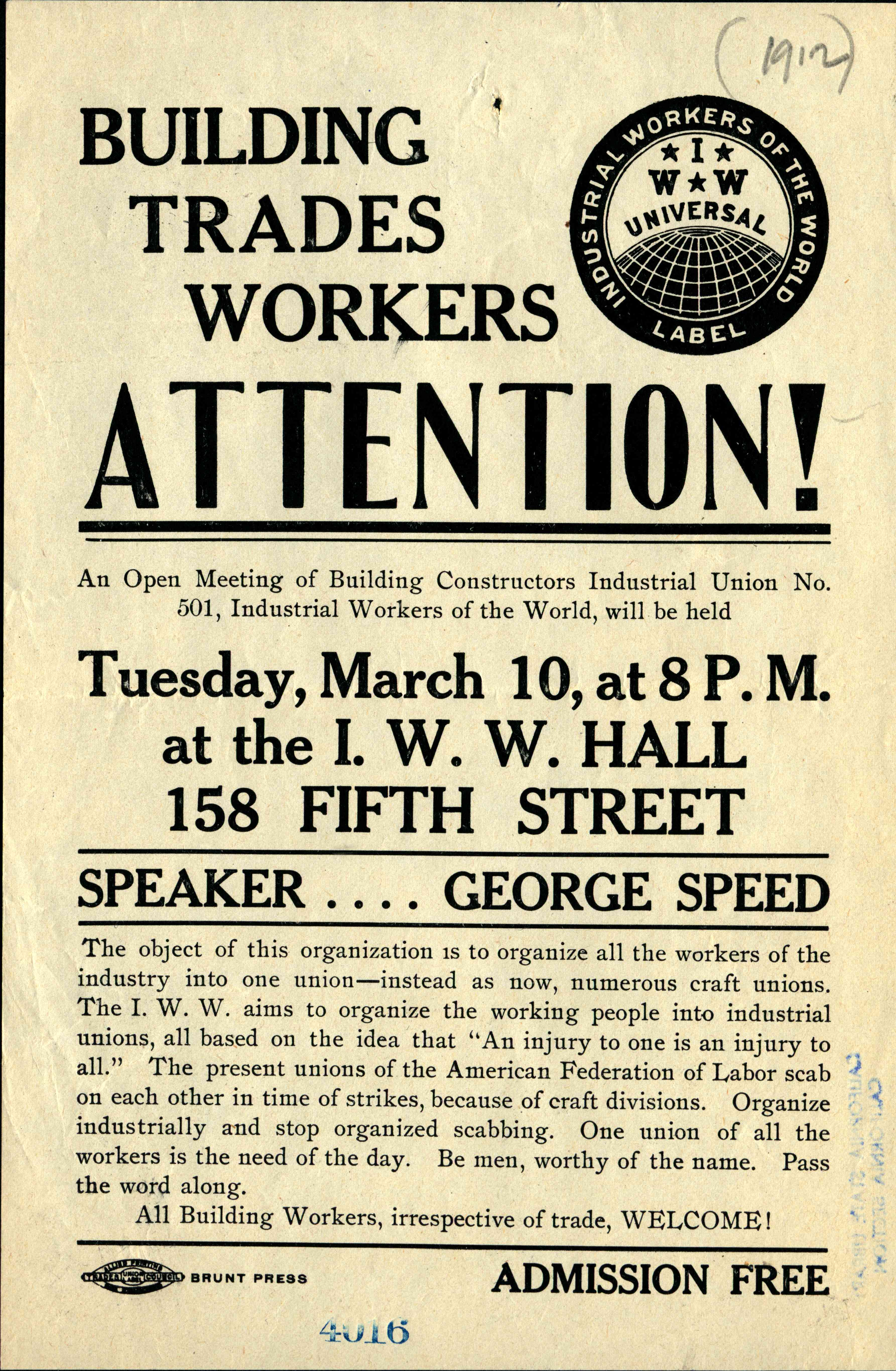
And now a new influence was being felt in proletarian affairs. We received a circular or manifesto from Chicago calling for a convention of all active proletarians to consider the formation of a proper organization based on industrial lines. Out of this grew the Industrial Workers of the World, generally called the I.W.W. I took part in the formation of an Industrial Union Club and acted as its treasurer, six months prior to the first I.W.W. convention. I was also a member of the Socialist Trades and Labor Alliance, known as the S.T.L.A. and thus became a charter member of the I.W.W. and was elected president of Local 173. Several requested me to accept the office of General Organizer of the I.W.W., but I declined. I drew out of the S.L.P. as I always had believed economic action was more important than political action. I have always held that the moral and ethical standards are a reflex of the mode of living and that political policies were dominated by those in control of finance and industry and that political actionists would ever try to dominate over industrial actionists. My effort was to avoid friction between members of the I.W.W. and members either of the S.L.P. or the Socialist Party, holding we were in the embryo state of class organization and our time must not be wasted discussing the merits of any political organization, we were here to find ways and means for organizing workers on the job. With the formation of the I.W.W., I divorced myself from any activities with political parties while at all times I have taken in lectures dealing with any phase of the labor question.
On one occasion, the speaker was the Rev. Cantrell, who wound up all his sentences with, “and insofar we have socialism.” He spoke of the post office, life saving stations, parks and other things and when he described each, he proclaimed, “and insofar we have socialism.” I got the floor and told the crowd I would fill out the list a little further as there were unmentioned, the reform schools, poorhouses and jails “and insofar we have socialism and since socialism was so well established we might adjourn.” Cantrell, poor fellow, got very angry and asked me if I did not think he had sense enough to know what he was talking about and challenged me to debate or fight. Then an S.P. member arose and moved that I be barred from the socialist platform, for which compliment I thanked him.
Logic of Facts Quoted
On another occasion the candidate for Mayor was speaking, using socialist slogans, “Join the Union of your trade,” “Vote as you strike,” “Take political action.” When I got the floor, I told him that the workers in this community had complied with his every demand, they had always voted as they struck, that is one against the other; they had joined the unions and organized for political action and would he now have union men who had followed his advice scab on their own political party born of the trades union movement by voting the socialist ticket and I suggested that according to his logic he had fulfilled his mission and should adjourn sine die.
When San Francisco was visited by earthquake, the I.W.W. quarters were destroyed and the membership scattered, but we kept a nucleus, got a tent, opened on a lot and rebuilt our forces. Then came the Moyer, Haywood and Pettybone trial at Boise, Idaho. We issued a call for a conference and received a hearty response from 78 unions and held three huge demonstrations, one at Woodsworth Pavilion where we had four speakers, P.H. McCarthy of the Buildings Trades was one, and I speaking last. I suggested that upon adjournment we line up ten abreast and march down Newspaper Assassins’ Row and find out why they always want to hang workers first and try them afterwards. This was done. When we arrived at Lotta’s Fountain George Holmes mounted the platform, the red flag was swung to the breeze. Then the police swooped down and riot took place with casualties on both sides. Numbers were arrested but the jails and county buildings being in a bad condition, many were released.
Reporters Are Disgruntled
At another meeting in Walton’s Pavilion, we had two trades unionist speakers, one, Walter McArthur of the Sailors’ Union, representing the San Francisco Labor Council and for the I.W.W., Vincent St. John and myself. I again was the last speaker. During my address, I alluded to the press and repeated the famous toast of John Swinton. Evidently the reporters were a bunch of cubs because they did not seem to know that John Swinton was one of the best newspaper men that ever lived. When the ringing scorn of Swinton revealed their intellectual prostitution, the reporters present threw a scribbled note on the stage, “This is getting too hot for us,” and they departed amid the shouts and uproar of the crowd. This incident in all probability secured us a far better write up than if nothing unusual had occurred.
CHAPTER VII.
I used good judgment and did not consume any more time than necessary and the Trades Unionists gave us credit for having the facts of the case more fully than they did and to us they looked for information. So our influence won for us the things we desired. P.H. McCarthy sent in several of his henchmen in an effort to change the tide, but their proposals were turned down and we were thanked for our efforts in behalf of the cause for which. the conference was called.
Organizes for the I.W.W.
About this period, I was requested to come to Portland, Oregon, to act as organizer for the I.W.W. I remained in that city three months. Many meetings were held and many members were recruited for the I.W.W. We held a demonstration on the Plaza commemorating the release of Moyer, Haywood and Pettybone. We hewed out a piece of cord wood in the shape of a club–bristling with big spikes and we labeled this, “Teddy’s Big Stick” and four men carried it on a stretcher. On the window of the hall was a large picture of Teddy with a cigarette stuck in his mouth. This riled some fink and a little damage was done to the hall and there was a long article in the press about how there had been a bold assault upon the I.W.W. hall and some heroes had driven the membership to cover. Early next morning, while I was standing in front of the I.W.W. hall, a fink approached me and bade me good morning and I answered, “Yes, some fine morning when the moon is up, certain people who prowl around in the dark may get caught doing the dirty work they don’t dare pull by daylight,” and he beat it.
Grant Hamilton, general organizer of the A. F. of L., appeared in Portland to lecture and organize. We all attended his meeting. He made a bitter tirade against the I.W.W. and its activities in Goldfield, where he was received with open arms by the operators. We applauded the finish of every sentence, no matter how wild or vile it was. These tactics rattled him. He was on the verge of quitting several times, but realizing the position he would assume if he did he was forced to remain. Once he walked up and down the aisle holding his hand on his hip pocket. But he only met with a hearty Ha! Ha! He was wild with rage but he had to go through the ordeal. Finally a member of the cooks’ union from Denver arose and denounced Hamilton as a scab herder saying, “You brought me from Denver to Goldfield to scab.” He shouted this with such bitterness that Hamilton was nonplussed. We then challenged Hamilton to a debate, verbally and through a letter but he refused. Then McDonald, editor of Portland’s craft union paper, announced he would accept. Jerry Smith and I called upon him to make arrangements but he crawfished and suggested that we debate in the Oregonian where what we said would be in black and white. We took him up but he backed out again. Then we asked, “How about debating in a union hall and nobody to be admitted without a union card. Even this offer was turned down.
From Portland I was elected delegate to the General Convention of the I.W.W. in Chicago. While addressing a street meeting with several other delegates, I was asked by a committee of telegrapher strikers if I would speak before their strike meeting at the Revere House. I told them I would bring the matter before our body and if favorable would inform them. I was advised to accept. I pointed out to them the hard cold facts of their struggle against the power of the telegraph company; that they were up against that portion of organized labor which was closely allied with them in industry, that I had no flowers to throw, that my purpose was to point out our weakness as well as our strength so that labor may find ways to unify their power. I asked them, “who is it that sets the type and puts up the forms of articles printed in the press, of advertisements in the papers calling for scabs to apply to Western Union and Postal company for jobs? Is it not good union men that do this work, don’t you think with me that organized labor should be so conscious of its interest that it would refuse to print such stuff so false to its interest and work to bring into practice, the slogan “in union there is strength?”
After the convention I returned to San Francisco and resumed my work where I left off until the Spokane Free Speech Fight, when I felt called upon to travel to Spokane. The third day I was there I found myself in the jail and there I first met Jim Thompson and many of the old fighters. The halls, school houses, and Fort Wright were full of fighters. Upon the night of my arrest I was to speak when Mrs. Hazelwood entered Secretary Douglas’ office and stated that Elizabeth Gurley Flynn was arrested. I told Douglas “they are going to pull off something and in case they do send this note to San Francisco.”
In this campaign, we had a fighting committee and we always had an alternate committee in case one was arrested. Charlie Grant came to the office and told me to see Whitehead and to go at once to Seattle and fill in Gurley Flynn’s date. He had no sooner left than in walks Burns and places me under arrest. I spent the night in the city jail. Then we went over to the county jail where we lay some two months before trial. Fred Moore was our attorney assisted by Symes of Chicago, who had denounced the high handed methods of Judge Mann in the police court. When the trial came up I was satisfied by looking at the jury selected by the court that it was conviction. Before retiring the foreman of the jury asked the court if they could give both a fine and imprisonment for six months. He was told no and that if an appeal was taken both fine and sentence could be increased in the upper court.
Lawyer Soft Pedals Issue
While the jury was out I spoke to our attorney and stated that I wanted to address the court upon why sentence should not be pronounced upon us. He advised against it as my talk might injure Gurley Flynn’s case in superior court and our own in case of appeal. So all I could do when the verdict of guilty was brought in was to get up and thank the jury, stating, “You are gentlemen.” We were made a present of six months.
All the jails were crowded. There was no cell room for us. We slept on the concrete floor during six months. Our time was shortened some six weeks by a settlement of the fight and all but three or four were released. These were held a few days more. Our release had the Gold Seal of the State of Washington and signature of the governor on it. I felt dissatisfied about this and thought that all the boys should be out. With John Foss I went to the county jail with papers tied up and while he was on the lookout, I tried to throw the papers on the window sill and the boys succeeded in getting the news.
While in jail, I was elected to the General Executive Board of the I.W.W. and a short time after my release I started for Chicago by way of Butte, Montana and made several talks there. After attending the meeting of the Board, I started on a trip west winding up in San Francisco and shortly after I went to Seattle. When there but a few days, I was compelled to protest the actions of Lewis, then organizer for the local longshoremen. This caused a fight and he was expelled by his local. Then I took an active part in the strike of the Aberdeen and Hoquiam mill workers and we succeeded in tying up all the mills in Aberdeen, although the town was overrun by gunmen from the Thiel Detective Agency.
The strikers were making headway and gaining when the town officials stepped in on the bidding of the mill owners and a reign of terror began. Brutalities increased. Our halls were closed against us and the Superior Court Judge at Montecino issued a decree that we were an unlawful body. At the mill gates was a shack named Fort Mack and the thugs went around displaying arms. We used to march out to the picnic grounds half way between these two towns where the workers of both towns would meet. On coming back to town one day some dozen of us were arrested and thrown in jail. At the trial, Bruce Rogers defended us. The Thiel thugs, when asked to repeat what I had said, made a miserable mess of the job and were unable to get a conviction. A lady barber who witnessed a brutal beating left her chair and went out and made a vigorous protest. For this she was roughly used and arrested and placed under $1,000 bail.
Not being able to defeat the workers by lawful means, slugging became the order of the day. One night Bill Thorne, a fearless fighter, Bisky and several others including myself were in a room at a hotel, when a bunch of thugs came to the door and demanded we open it. We asked if they had any warrant. Their answer was, “We don’t need any, open or we will bust it in.” One of the boys with a shot gun in his hands said, “Come in and get what’s coming to you.” It is needless to say these cowards did not break the door.
Kidnaped In Night Time
I had a front room and usually locked my door but having frequent calls from friends, I neglected this time to lock it. While I was seated writing a letter, a thug sneaked in and shoved a gun against my teeth. He bawled out, “Come on.” I was in my shirt sleeves. When in the hall way I said, “You don’t intend to take a man out without his coat, do you?” He was puffing like a porpoise. He called and another thug came up. They got my coat and took me down an alleyway for several blocks and placed me in a room under guard. Several hours after they brought in Bruce Rogers, a Seattle attorney. Then they placed us in an auto and drove away, threatening and abusing us in a vile manner. We came to a bridge and one said to the other, “Get the rope. We can hang them here.” There were six of them. Then they dumped us out and threatened our lives if we ever came back. We hiked to Montecino, reached the hotel, but found nobody up. We went upstairs, saw a door open and nobody in the room so we went to bed. Next morning we went back to Aberdeen and then to Hoquiam and put up at the Queen Hotel.
I called on the city attorney and gave him my case. He hummed and hawed and it was evident he did not want to touch it. I at last told him that the milling interest had control of county affairs and he did not dare to prosecute as it would mean for him the loss of his political job and the taking down of his shingle.
Curiously enough, the Mayor of Hoquiam was a man of principle and although he stood virtually alone he objected the attempted deportation of strikers and said, “I will go as far as the law allows but not one step further.”
Let me say a word here to our reformers who pride themselves upon their accomplishments in the making of new laws, such as the referendum, recall, etc., that they can act as a boomerang to carry out a program depending on the interest and intelligence displayed by those who put such faith in the ballot to solve our problems. In the case of this mayor, who was a firm believer in and lived up to the letter of the law, he was recalled and a subservient tool was elected to fill his place. It is about time we learn that the all determining factor is power and interest and that mere law without the necessary power behind it is worthless and that those who have the power to make likewise carry the power to break it.
While I was at the Queen Hotel, I received a telegram to come to Seattle and work with the General Strike Committee. I started off and the day after that I heard they made a raid on the Queen Hotel and unmercifully beat up Fellow Worker Bill Thorn, who put up a fight against heavy odds. Every post in the stair rail for two storys was wrenched out before they got him out of the building. When an attempt was made to punish the thugs, the Mayor of Hoquiam sent for Thorn to come back and then went himself down to Montecino as a protection for him.
CHAPTER VIII.
After finishing the work required at this point, I proceeded to San Diego where a free speech fight was on and many brutalities were perpetrated by “our foremost citizens,” who always prate about law and order. The fight was in its last stages when I got there. I visited several unions and made several talks, one on an empty lot, but was not interfered with. Leaving San Diego, I went to Louisiana to work with the Brotherhood of Timber Workers who had joined the I.W.W. This body had permitted non-wage workers to join and it would require time to eliminate them. I visited many camps and found conditions in the South vastly different from the North or West. I was especially surprised at the number of small farmers who were friendly toward the organization and willing to give aid. They were poor and could barely make an existence but would never turn down a union man. While I was stopping at a hotel in Merryville for several days, I offered the proprietor money for my board and lodgings but he refused to accept it, saying, “I won’t take money from you. We would like to have you stay longer.” If one stopped at a farmer’s, he would ask you if you had a union card. This was so different from the West, where they would be looking for a bull to take you in. But the Lumber Barons were hostile and ready to resort to any means to prevent organization. We met at times in the woods, where Burns’ men were looking after the lumbermen’s interests. Fellow Worker Doree was working with me and we were constantly followed. At Kirbyville, a closed town, the town marshal was friendly and he told me, “If any of those skunks interfere with you, I will cut them off short at the pockets.”
Doree and I went to Jasper, a lumber town in Texas. We had a letter of introduction to a farmer named Shaw. We were to speak to workers from a wagon near the courthouse. At best, we would not have over thirty to listen to us. We went into a drug store near the road. Five or six men entered. We noticed them as little as possible. Doree told me they had arms and after a few moments, they left. When we crossed the street, Doree mounted the wagon. Then the leader of this band stepped out saying, “This is a peaceful town and you will do no speaking here or you will have another Grabow. We will bury you here.” Discretion being the better part of valor, we did not speak. We afterwards learned that the leader of this gang was a mill owner.
While en route to Orange, this dick was aboard the train and there were but few passengers. He came to where we were sitting and speaking in a parable, I said to Doree, “We must be a valuable couple.” Doree looked at me in wonderment and I said, “We are guarded to see that no harm comes to us.” Then the dick broke loose and told us he would get us. After a few parleys, he went back to the other end of the car and that was the last we saw of him. He left the train about five miles out of Orange and I afterwards learned that his career was finished at Beaumont.
Grabow Men Brutalized
At Grabow, an able speaker, Fellow Worker Emerson was talking off a wagon opposite the office of the Galaway Lumber Company, when suddenly shots rang out and three were killed and some twenty odd wounded. A worker standing alongside Emerson was killed. Sixty-three of the workers were indicted and three counts of murder was placed against each. They were confined in Lake Charles jail, in a room some thirty feet square. Through the center was drawn a rope and near the center was a bathtub. This was all that separated the black and white workers in this land of Jim Crow. Strong protest was made against the close confinement and crowded conditions and at last they were brought over and placed in the basement of the new courthouse then under construction. Think of it, in this boasted land of the free, these workers held for murder when none were killed nor wounded only their fellow workers and their friends while the brutes who fired the shots from the company office and committed whole sale murder were virtually the witnesses against them.
These new quarters were large and airy. Their friends and families would come every Sunday loaded down with all kinds of eatables and remain all day. It would put one in mind of a picnic when you would see them unload their baskets on a long table and the little children romping around. I was called to Chicago and Doree remained and took active part in the defense work and was arrested by Burns’ men on charge of interfering with the jury, but they were not able to convict. The negro workers were lined up with the white and worked together. They used the same water bucket on the job, yet it was a crime for the white and colored to organize and meet together.
Work as General Organizer
In Chicago, at the convention, I was elected general organizer of the I.W.W. At this time, our organization was in a fierce internal struggle over the question of Centralization or Decentralization. To my mind, the question was simply organization or disorganization. This fight and its decision meant Ife or death for the I.W.W. I thought the decentralizers outnumbered the other side among the delegates but I also knew that they could not come to an agreement among themselves as to a plan or to perfect a program of action. All were more or less tinctured with individual anarchism and some were coached by an anarchist group. All committee reports as a rule carried with it a minority report. Vincent St. John, the General Secretary-Treasurer, a fearless fighter and a splendid executive, clear and concise, ever cool and watchful, was by far too much for them in debate. His logic and reasoning power outweighed their sentimental dreams and they went down to defeat; but the organization was financially in bad and down to a “coffee and” basis. While on the road at times, I had to beat my way from place to place. Often I talked on an empty stomach.
When I reached New York, Joe Ettor was working like a beaver in handling the barbers’ strike, involving New York and Brooklyn. He was hampered in a more or less degree by discordant elements. Leaving New York, I reached Pittsburgh, where we had come some 700 stogie workers organized and a local in the steel industry. A number of strikes was won by the stogie workers and wages increased from one to two dollars per week. Having received a telephone call to attend a meeting at Rankin of Steel Trust Railroad workers, I waited several hours outside waiting to be called in. Just as they adjourned, I managed to make a few remarks. They tried to keep these proceedings secret. A petition was handed to the company asking for an adjustment of grievances, but the committee was discharged and then the strike of the rails was called. They felt secure from the fact that they had crippled the plant. Two weeks later they called upon me to take part as they had turned down the A. F. of L. organizers. We did all possible to assist them and worked day and night in an effort to pull out the mill force. In this we failed. I received a letter written on Carnegie official letter head paper informing me of the number of armed guards that were stationed and giving me warning of their intentions. I received a bogus telegram asking about certain committees and signed “Committee.” The strike failed. We won a strike for the workers in the alteration department of the Frank and Seder Department Store.
Then came the strike against the American Wire Company. I was called upon to address them, talking awhile, when some thirty or forty men rushed in holding a card in their hands for which they paid $1 to join the A. F. of L. This fact I was ignorant of and withdrew after a little advice, seeing that the A. F. of L. had been working these men. They thanked me and said, “We will be with you.” Rough stuff was pulled and several workers were hurt. The plant at Braddock went out. The strike was losing out when they sent for Frank Morrison, Secretary of the A. F. of L. and they tried to hold the I.W.W. responsible for the loss of the strike, pitting the Italian workers against the rest. As usual the trust won out. Joe Smidle, who played such a prominent part at McKee’s Rock strike, was active in the sugar house strike in Philadelphia and I was called upon to assist. While the strike was not won, some concessions were made when a committee of longshoremen came to the strike meeting and asked me for assistance in organizing the waterfront. As a result, Philadelphia Local No. 8 of Longshoremen was organized into the I.W.W. and received a charter.
Plotters Thwart Progress
While I was attending the meeting of the district council, I met Ed Lewis, who had been expelled from the I.W.W. in Seattle. Lewis did not appeal but a delegate in the convention brought up the matter on the convention floor, but the expulsion was sustained without a dissenting vote. I objected to his taking part in the proceedings as he was an expelled member. I soon found that Lewis had the backing of the entire council except one member. Philadelphia was his home town and I met with bitterest opposition from them and was hampered in every way, even to the extent that a guard was placed at the door of the longshoremen’s hall to prevent my entrance. Warwick, an avowed anarchist, District Treasurer of the M.T.W., came from New York and was backing up Lewis. My life was made miserable. It was like living in hell, if what they say about hell is true. They decorated the wall with dirty stuff about myself and St. John. A plot had been hatched to fix me. One day an active Spanish speaking delegate of the M.T.W., whom at the time I did not know, introduced himself and told me he had been led to believe I was a stoolpigeon, a government dick and everything imaginable but a man and he was waiting an opportunity to sap up on me. However, he had been sitting in the hall on the opposite side of a partition and had heard Lewis and Warwick plotting against me and the work they intended to pull off. He arose, went to them and denounced them. He told me that was his reason for coming to me and that he now believed I was all right. He then used his prestige to stop dissension. From then on the affairs on the waterfront of Philadelphia began to improve for the I.W.W.
The Italian stone masons and helpers went on strike and Joe Ettor came to Philadelphia. The strike was won. The big boss told me if we would make time contract, he would make an effort to force the building workers in our organization, that he was tired of these individual strikes of unions. Our next strike was the restaurant workers of the Heardhart Company. This strike lasted about two weeks and was defeated.
Great Akron Rubber Works Strike
Then came the Akron strike of the rubber workers Involving some 15,000 strong, where I went. There was a small growing local in Akron and there were a dozen company dicks playing an active part in the local. During the strike the plants were badly crippled. We drew up a wage scale for every department of the plant and organized a chain system of picketing. Monster mass meetings were held in halls and Grace Park. The townspeople were in apparent sympathy with us. Storekeepers would tell me they trusted we would win. More wages meant the workers would buy more and better goods and everybody would be better off. The companies put up a bitter fight. “The strike prolonged and the store keepers grew nervous as the workers spent less. Knowing the storekeepers were becoming worried by the prolongation of the strike, the rubber barons and bankers threatened them with a withdrawal of credit or else that the storekeepers should get in line to end the strike. They succumbed to the will of big business, thus demonstrating the fact that the small fry is the go-between and the arch enemy of the workers and that this class is the dangerous class as they are not flesh, fish or fowl and will play either side in order to maintain their position, not recognizing that this will lead to their own undoing.
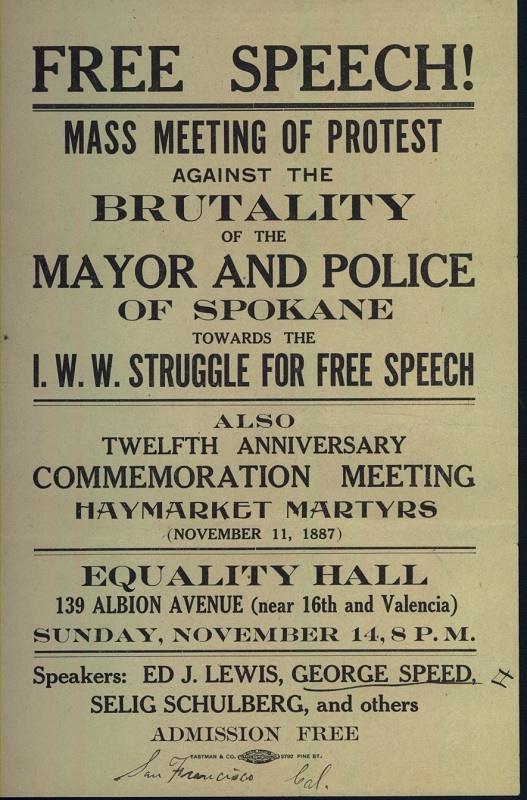
This gave the rubber barons their opportunity. They saw the change in the state of mind and played upon it. They then changed the editor of the local paper and secured a reverend gentleman expert in throwing vitriol. Yet he had but little sense. He published all of our speeches and gave us wide publicity. He organized a welfare or hellfare committee. Our halls were closed and we were compelled to purchase a large tent to hold our meetings.
The bulk of the strikers had little knowledge of the import of a strike and for aught they knew it was a vacation, a picnic, and they enjoyed the parades on the picket line and decorated themselves with ribbon till the stores were empty of this article. We pointed out to them while everything on the surface was peaceful, they should prepare for the storm. Soon the welfare committee blocked the mill roads with their autos, armed with guns and pick handles. Our former friends, the storekeepers now carried pick handles.
Margaret
Many socialists took part in the strike. Margaret Privey [Prevey] was among the most active and did fine work with the woman strikers. The state sent a probe committee to Akron to investigate the strike but rather to investigate the strikers. I had no faith in it and looked upon it as a move to distract attention and that it would be of no benefit to the strikers, while the socialists favored it.
Threatened While Testifying
I was called before the probe committee and questioned for some time. Green of the United Mine Workers of America was a member of the committee. While the rubber barons sat behind the rail and their attorney was questioning me about sabotage and violence, there sat the inventors of sabotage and violence and no one asked them a question. I told the committee that to work for these owners a worker must adulterate the very food he would afterwards have to eat; that he would have to adulterate all the products, and that these masters were ever ready to use violence to defeat or to discredit the workers in their efforts for better conditions. While I was testifying, the reporter of the probe committee whispered over to me, “We have a good place for you in Columbus.” I suppose he meant the pen, because it could not have been the legislature.
When I was through, and was starting out the attorney for the rubber interests called me back and stated he would call for my impeachment and he asked me if I did not say, “If the workers did not win the strike, we would blow up the rubber works.” Turning around I said, “Sir, you are judging me by your own make up. It is such things that enter the minds of your kind in order to defeat an enemy who threatened your profits; but the workers are the only constructive force, they would preserve the plant but abolish the profit system.” I was then allowed to depart.
We sent for Bill Haywood. We marched down to the train to meet him. On the depot platform was a bunch of officers. Threats were made to deport Bill and to pick up several to send along with him. Better council prevailed and he was allowed to pass. We walked up together to Margaret Privey’s home and a huge meeting was held at Grace Park with a movie man taking pictures, which were never placed on the screen. Presumably, the company bought them.
Strike Officials Were Traitors
Then came the great Ohio flood, which was to the disadvantage of the strike and made it more difficult to finance it and finally the effort petered out with but little gained for the strikers.
During the strike we discovered that the chairman of the strike committee was a dick. He was dismissed but we learned afterwards that another difficulty was that a former official, of the foreign speaking bunch would not act in harmony with the committee. He went so far as to accuse myself and Jack Whyte with placing roofing tacks on the street for puncturing tires. This was read off as part of the minutes of a meeting of the committee. I demanded that this be stricken out and that the party who made this charge be required to bring proof or stand condemned as a contemptible liar unworthy of further confidence. They struck out the charge from the minutes and the author did not open his mouth or produce any evidence. Shortly afterwards he left for Pittsburgh.
Whyte stayed to look after interests of the organization and I soon after went to Pittsburgh, Cleveland and other points and then on to Chicago, leaving there when my term of office was ended for San Francisco where I took the secretaryship of the local. I could get some pay when the sale of dues stamps exceeded the amount of the rent, light, fuel and other bills. To show what was the conditions of the I.W.W. at this time I will state that my wages as secretary and janitor of the hall during a period of a year were $258. All other officials of the I.W.W. at this time were in as a bad or a worse fix.
After moving several times in San Francisco, we finally located on Third street near Mission and with renewed activity we managed to pay off a huge debt incurred before I entered the secretaryship and all the indebtness thereafter. During this time I attended and talked at many street meetings as well as hall meetings. I was also called upon to appear before the United States Industrial Relation Commission, then sitting at the Palace Hotel.
CHAPTER X.
In about 1914 there was another movement among the unemployed and the same old Kelly suddenly arrived to be its leader. I spoke at many of the meetings which took place on a lot near Fifth and Mission streets. Again the cry was on to Washington. I was satisfied that any attempt of that character would be a failure and I so stated. This Kelly came to me and stated that he had talked with Joe Ettor and he would like me to help in the movement. I told him that I had a letter from Joe Ettor and that he warned me against Kelly, but nothing like that bothers Kelly. I then mounted the rostrum and told the crowd what I knew about Kelly and his methods and that the unemployed would get no good from him; that his whole life was spent in exploiting the misery and want of the unfortunate; that he had the reputation of being a good printer but preferred to scab, having left a scab job at Tacoma to come to San Francisco and take advantage of the unemployed. I spoke many times to this body pointing out the futility of their plan and they would be lucky if they were not stopped in Oakland. They were divided into two companies, one presided over by Bill Thorn and the other by Kelly. They got as far as Sacramento where the fire hose was turned on them and Gov. Johnson earned the title of “Pick-Handle” Hiram. Kelly was sentenced to six months with several of his followers.
Thence afterward, I followed the routine of work and helped in organizing the International Workers Defense League representing a score or more of unions and which assisted in the defense of Ford and Suhr, Rangel and Kline and others. This body met in the I.W.W. hall weekly. After our efforts to help these cases had ceased, the League virtually went out of existence. Next came the strike of the Cooks and Waiters for the eight-hour day. After three weeks of struggle a committee of the rank and file came to me with their grievances and asked for assistance.
Advice to A. F. of L. Strikers
I informed them that the I.W.W. was ever on the side of the workers; that we had thrown in our lot with them and had often assisted in strikes of the A. F. of L. and invariably we were made the goat, win or lose. I advised them, “You boys should put up your grievances in an organized way before your board. Show by your own initiative that you mean something more than words. Then we will consider your matter.” Two weeks later they got out a dodger, announcing a monster mass meeting of the rank and file of the cooks and waiters and called upon the I.W.W. for speakers. Mortimer Downing and myself addressed the strikers in behalf of the I.W.W. My talk was in the form of questions, asking, “Are the following statements correct, that in the formation of the central body and the shaping of its purposes by the A. F. of L. the workers selected from among themselves those whom they think best fitted to advocate their wants and advance the interest of workers as a whole; is it a fact that in case of the demands of a union upon their employers these delegates are loyal and present their wants to a central body, and use every honorable means to adjust the matter without resorting to a strike, and only when such means are exhausted do you resort to a strike, with the sanction of the central body and with their moral and financial support; did you not go out filled with enthusiasm to the picket lines feeling success was yours, having the backing of 60,000 fellow workers only to find when on the picket line that the good union milk wagon drivers, the butchers, in fact all who furnish supplies to restaurants drive up while you are asking the public whether they are union men or not and not to patronize the struck restaurant? How do you feel when you find those unions closely related with you supplying food stuffs to those scab joints? Who is it I ask you that defeats you? Is it the boss or your form of organization?”
Strikers Join the I.W.W.
Getting an affirmative answer to this I pointed out how leaders were like leeches upon them and it is practically impossible to throw them off but that the rank and file is responsible because of its own lack of interest and its willingness to let George do it. It has been too lazy to do its own thinking and acting by not feeling any responsibility, that the membership only wakes up when brought face to face with the problem of existence and learns that eternal vigilance is the price we must pay if we will be free.
Several hundred strikers lined up in the I.W.W. but being home guards could not adapt themselves to the new surroundings and in a few months they were gone.
My next encounter was with Andrew Fureseth of the Sailors’ Union, who ever feared the I.W.W. and induced the central body to adopt a resolution to organize the migratory workers and Dale was selected as state organizer. Fureseth gave a lecture on the structure of organization at Albion Hall. Someone asked him if the I.W.W. was not organizing that class of labor. The answer was, “no, it is a scab organization.” I awaited my time and got the floor, walking up to Fureseth, I said, “A party asked you a question, your answer was that it was a scab organization. Now, Andy, I challenge you and defy you to produce any proof to back up your wild assertions. Andy, I am going to prove that you are a scab and behind you there is organized scabbery and I will not go outside of San Francisco Labor Council. In the Fort Bragg strike, of moral and financial assistance given them, two steam schooners were loaded with scabs for Fort Bragg. The sailors proved they were union men and refused to go to sea with them. When the shipowners called you up about the actions of the crew, what did you do, Andy? You ordered them to take the vessels out or you would put another crew in their places. Now, who were the scabs, Andy?” I pointed out several more instances of like character. When Andy got the floor to close all he could say was, “I was a damn fool for coming here and I will never come again.”
About now several strikes were on, among them the Longshoremen also the San Francisco Labor Council was making a drive to organize the street car men. Those that were organized were discharged and they made an appeal to the Labor Council for protection. Several big meetings were held but all the leaders soft peddled and advised against any action, although the time was most favorable for action. Why? Because the leaders of the San Francisco Labor Council were engaged in a political campaign with their Union Labor Party and one of the leaders was a candidate for mayor, and any effort on the part of the workers to improve conditions no matter how favorable would not be tolerated during this period of industrial peace. Such was the slogan. It would not interfere with the chances of these politicians to secure election. Labor must be sacrificed upon the altar of their ambitions. This is another proof that politics and economic organization can not work together or sleep together.
The carmen, unable to get any support from the Central Labor body called upon the I.W.W. We offered them our hall free of rent for meetings, but told them to get busy among their carmates. Upon their efforts to induce carmen to attend their meetings would depend largely our ability to aid them. We, on our own hook, would be able to do but little. Tom Mooney was a delegate to the Labor Council. He took deep interest in their cause, gathered all data possible as to the status of the workers on United Railroads. He interviewed numbers of carmen and received, I believe, a commission from Wm. D. Mahone, President of the International, as organizer. He worked like a beaver to get them together and made a fine clear-headed struggle of it so far as the platform men went, but he did not step outside of that. He brought their case before the Labor Council as a delegate, stating that there was $60,000 at their disposal in case of a strike; but the labor leaders preferred to see the cash. Tom called conferences with blacklisted men to which I was invited and attended. Tom was enthusiastic and believed that a strike could be successfully carried out and that the carmen he had interviewed on the United Railroad lines would respond.
I asked questions in relation to powerhouse men and shop men; that they were necessary and so proved it by past experiences. So long as juice could be furnished that outfit would get men who would take a chance to run cars. I also stated that I had talked with carmen and I had an entirely different impression from that held by him, as these men knew Tom and did not know me they talked honestly to me and that they did not need to shape their answers to me so as to avoid discussion. I greatly feared that the strike would be a fizzle. I withdrew from the conference and I did this largely because of the turn down by the Labor Council which necessarily had a discouraging effect.
However, the attempt at a strike was pulled when a number of cars were stalled at Third and Market streets, the main business intersection of San Francisco. But the strike was soon over.
Prior to this the Defense League was reorganized and a change was made in the secretaryship. Tom Mooney was elected to the post. He was full of life and energy and ever tried to accomplish something.
Tom Mooney Frame-Up Is Seen
During this period a supposed attempt had been made to blow up some electric power towers and Tom was suspected of this and he was arrested but released because they had no evidence to support the charge, but as usual they tried to throw a stigma on an active organizer.
When the agitation for “Preparedness” was on it met with a great deal of opposition from all classes and the parade was postponed once for fear of failure. When it was pulled off it fell far below the expectations of its friends. From some unknown source a warning had been sent that something might happen during the parade. Organized labor warned its membership. The warning came true. The explosion took place at Stuart and Market streets. A few days after, four were arrested. Tom gave himself up. Charges of murder were placed against all five arrested, which included Rena Mooney, Tom’s wife.
All of Tom’s correspondence for a number of years was seized. Out of these files, the framers tried to build their case, by garbling and distorting many of the letters and dwelling upon and broadcasting any of this correspondence that dwelt indignantly upon the wrongs of labor.
During a short time after the explosion, this crime was charged to the I.W.W. and after the arrests were made I was advised by one of the most active supporters of Tom Mooney to publish a letter stating the position of the I.W.W. and that none of the persons arrested were members of the I.W.W. The press published but part of this letter.
At this time, I was secretary of the local organization of the I.W.W. and one day when I went over to pay a light bill at the office of the Pacific Gas and Electric Company, I met Warren Billings at the corner of Market and Fourth streets. He wanted to speak to me when I was through with the party I was then talking to. Billings walked into a saloon on the corner and I followed but he told me there was a dick standing at the bar and I walked down Fourth street with him. He showed me a circular with the offer of a $5,000 reward for the arrest and conviction of persons who were alleged to have dynamited certain power towers. He told me that this sum had been offered him if he would furnish information. We walked to Mission street and then up to Fifth. At the Mint, he gave me a note and asked me to deliver it to Tom Mooney. This brought me into the case as a state’s witness. Meantime, I had had some three hours) grilling by Fickert and two hours by Captain of Detectives Mathison. At the trial I was on the stand only a few minutes and I could only state that an attempt was made to bribe Billings and that he asked me to deliver a note for him, the contents of which I did not know.
As one of the delegates from the I.W.W. to the Mooney Defense Committee, we suggested plans to make for action and publicity, but as most of the delegates were A. F. of L. as was the entire executive committee they soft peddled the I.W.W. taking an active part and thought our prominence might make it more difficult to raise funds. However, the I.W.W. membership throughout the country were the most active element in keeping the Mooney case before the unions. During a long period of these trials, the President of the San Francisco Labor Council was an employe of District Attorney Fickert’s office and a friend also and be it said to the credit of the council, he was ousted out of his job for defaming delegates who defended Tom Mooney.
CHAPTER X.
Shortly after this came the war hysteria. Several times the soldiers were induced to attempt to wreck the I.W.W. hall. The first attempt they charged that an I.W.W. had beat up a soldier. They were argued out of their purpose. Shortly after they wrecked the hall in Oakland and burned up everything in sight while the heroic defenders of law and order looked on in glee.
We were fortunate by being located on Third street, a busy thoroughfare. Had we been located outside of the business district we would have been wrecked. The second attempt the merchants called the police and prevented the raid. On the third occasion, we received a warning from two sources that certain elements were. seeking to recruit a force on the Barbary Coast to raid our hall and were furnishing drink to soldiers. They were advised to move in pairs not to bunch up, so as to avoid suspicion. This time some eight of us remained in the hall and prepared to defend it if attacked. While they were passing up and down the street, a provost guard appeared and they were moved on.
In September 28, 1917, the United States marshal and aids swooped down on our hall and carted away all our property and I was arrested along with four others who were thrown on the Chicago indictment against the I.W.W. under the Espionage Act. We here fought extradition, but two months later we were shipped to Chicago and placed in the Cook county jail awaiting trial.
Occupied Parsons’ Old Cell.
As jails usually are, the Cook county jail was a filthy hole unfit for the habitation of hogs let alone men. My first night’s sleep in Chicago was in the cell occupied by Albert Parsons who gave himself up in order to face the charges against the so-called Anarchists and died a martyr to labor. The cells were dark and dreary, damp and poorly lighted. We lived three to a cell, 6 by 8, confined twenty hours out of the twenty-four. When out in the bull pen we were herded with drunks and criminals and others with loathsome diseases. We were celled with hold up men and murderers. When they attempted to put a fourth man in I revolted and asked the fellow to refuse to come in and that if he did he would be compelled to sleep on the cold slab of a cement floor. He showed a willingness to come in and the guard pushed him in, so I made a rush and pushed him out. They called the captain of the guard and I was taken to what is called the “island” or the punishment cells. But the boys put up such a protest that I was brought down in the morning and we were then given a tier of cells to ourselves. Two months before the opening of the trial, I was transferred to the Wheaton jail. We had the use of a large room and only used the cells to sleep in. When the trial was on we were brought back to the Cook county jail.
Espionage Conviction Was Certain
Our trial lasted five months and our conviction was as sure in this trial as I had felt it in Spokane. All the lawyers this side of hell could not have got an acquittal in the hysterical frame of the people’s mind as a result of the war propaganda. With the prostituted press howling no jury could have brought in a verdict of not guilty to do otherwise would have meant their ruination, they would have been branded and howled down as is the I.W.W. now. No other verdict was possible. Landis well knew this. He could afford to play apparently fair. It took him some two hours to instruct the jury and it took them less than an hour to find a verdict of guilty against 93 men. One thing I am more fully convinced of than ever before and that is Dr. Johnson’s definition, “Patriotism is the last refuge of a scoundrel.” As patriotism is taught today it is a vice and not a virtue. True patriotism need not be taught because a happy and contented people secure in their firesides, without the fear of want, would rise as one man in the defense of their inheritance.
I was one so fortunate as to receive a sentence of only a year and a day and a trifling fine of $30,000. I never could understand the variations in sentences, knowing so many of these prisoners and their activities and knew some had no connection with the organization for two years before their arrest.
While I was in Leavenworth I was elected to the General Executive Board of the I.W.W. and so again became active as soon as I was released. After finishing up work made necessary by my membership on the board, I went on the road in the interest of the organization.
Work Resumed Upon Release
When I reached New York, I made several talks to large meetings and was invited to speak before the striking J.T.U. of A. tailors on the I.W.W. Some two thousand were present and I was most heartily received, then I left for Philadelphia to work among the longshoremen for several weeks.
When I returned to New York, a strike was on at South City, New Jersey, among the unorganized rubber workers. I proceeded to that point to find the affairs in bad shape. I made every effort to straighten out the tangle and get the strike on a sounder basis and obtained some results in this respect. Our headquarters were in New Brunswick five miles from South City where the bulk of the strikers lived. Once when returning from South City in an auto, we were waylaid on the road by a bunch of thugs, who jumped from the brush and threatened our lives saying that the citizens would regard them if they filled us full of lead and run us out of South City. They took us back to the city, hauled us before a court of injustice where we got a dressing down, then run out of the city with more threats. The strikers were of many languages and were in fear. Many could not speak English and had families. The strike was weakening. I concluded one more effort should be made and if not successful to call off the strike. Calling a special mass meeting, I laid the cold facts before them stating, “We must all go on the picket line. You must consider the facts when you vote. We want to know if you will stick. It is just as easy to say no as to say yes. If you are in favor say yes and mean it. If you are not in favor of going on the picket line vote no, for in order to get to South City we will need to hire auto trucks to take us there. This will be our last effort unless we get the proper support. Upon your action depends the future of the strike.” This was repeated in several languages.
Then we took the vote which was for the picket line. We hired the trucks for the early morning. Only a corporal’s guard showed up and we saw the heart was not there. We held several meetings; many feared to come and we were forced to put a vote to call off the strike. We settled up accounts and turned over to the workers $1,200.
CHAPTER XI.
Returning to New York, I took part in the longshoremen’s strike. The police raided three of our halls destroying all our property and clubbing the members and visitors out of the halls.
I was called back to Chicago and took charge of the stock room of the I.W.W. and spoke at meetings around the city and addressed the stockyard workers until the police entered the hall, seized literature and burned it on the street. Then word came from New York demanding action be taken by the General Executive Board concerning the Philadelphia longshoremen. After receiving six or seven telegrams not one of which furnished the information asked for by headquarters, the newly elected G.E.B. member reached Chicago and informed us that if we did not take action, an exposure would be made of the alleged actions of the Philadelphia longshoremen and that action was only delayed as the forms of the printed matter were already set up and only waited word as to the intentions of the G.E.B. of the I.W.W. It was charged that the Philadelphia longshoremen were loading a ship with ammunition for Wrangle to fight the Russian Revolutionists.
After we had debated the question fully, I moved that the Philadelphia longshoremen be expelled. This carried. We were told this was the only way to avoid the publicity of their alleged action and to stop the appearance of this document. I was then requested to go to Philadelphia and New York to see what could be done about the matter, although I had no desire for this duty as my term of office had expired. After dinner the new G.E.B. member, McClellan, came to me and advised, “I would not go if I were you, George.” This seemed strange to me. I could not understand why he did not so express himself at the meeting. This fixed my purpose to go. I felt there must be something wrong.
Plot to Destroy Longshoremen Union
When I reached New York, I went to the secretary of the Marine Transport Workers, I.U. 510, and he offered me $40 per week to work for him. I played for all the information I could get and found he wanted Philadelphia expelled and that he was actuated by a desire to retain his position as he believed that Philadelphia would vote him out of office. McClellan was working with him for another purpose and was participating in a communist plot against the I.W.W., at least all the circumstances pointed that way.
After getting all the information I could find in New York, I went to Philadelphia and there gathered information from every available source. I then called upon the Philadelphia Marine Transport Workers and put the case before them. They made a statement to me which was verified by others outside of the M.T.W. They admitted a number of Polish workers did load a ship with ammunition, but that neither McClellan nor the New York secretary would listen to reason to give the 24 hours notice in order to call a special meeting as required by their rules, but created greater antagonism by abusive language, which caused bitter feeling toward McClellan and they refused to recognize his authority. He had not been recognized officially as a member of the G.E.B. They showed U.S. government documents to prove that protest was made against the loading of ships with ammunition for Russia and the ships complained about did not take arms to Russia. They also said that the waterfront is long and they were not aware that this work was being done and that had the G.E.B. requested that they do not load ammunition they would have complied with the suggestion. They showed that motions had been made in business meetings that the Philadelphia M.T.W. would expel any member found guilty of loading ammunition to be sent to Wrangle and such a motion carried without a dissenting vote. They also agreed to comply with any demand made by the G.E.B. through any proper agency and they so informed the G.E.B.
Reinstatement of Men Asked
I reported to Chicago and requested that they should reinstate Philadelphia and publish the fact in the press.
Instead of doing this the board brought up a foreign matter concerning the initiation fees and accused Philadelphia of violating the I.W.W. constitution in one or more instances. I informed the board that this was a matter unrelated to the first charge, and that when we had acted on the first charge a new set of charges should be drawn up concerning the violation of the constitution and that copies be sent to Philadelphia for its action and that then we could regularly try the case. To do otherwise would confuse the issue and lose sight of the main factor which brought on the controversy.
George Hardy, who was a delegate to the M.T.W. convention, knew at that time that the constitution was violated by the M.T.W., but he said nothing. He was then seeking office. Now, he became anxious to press new charges. He paid no attention to what I had done, nor of any suggestions offered. I also suggested that they keep McClellan in Chicago and have a committee from Philadelphia together with the secretary treasurer of Philadelphia come to Chicago to sift the whole matter with a hope for settlement. None of these suggestions were considered. Hardy at that time was working with the Communists. His policy was leading anywhere but toward harmony with the best interests of the I.W.W. There seemed to be but one intention and that was to split the Philadelphia Marine Transport Workers away from the I.W.W. and to this in any way and at any cost. I informed them that if they intended to follow their apparent program they would count me out as I would not lend myself to any such work.
Being asked to speak at Gary and Indiana Harbor for the Metal and Machinery Workers I.U. 440, which had rented and advertised a large hall I went to the place and upon arrival I discerned some forty odd city and steel trust bulls lining the street. Upon reaching the hall I found half a dozen more bulls in the hall walking around, sizing up things and our friends. I went out on the street and stopped to talk to one of our boys when the chief bull walked up and asked the man to whom I was talking, “Where are you from? Where were you during the war?” He told the bull he was a steel worker and lived in that town and had a right to be just where he was. Then the chief hauled off and struck him several times and then turned him over to a bull. He then turned to me with vile language and struck me several blows and a swift kick and ordered me out of town. Several hours later he met me again and I received several more clouts. Just a few months after this, our hundred per cent bull chief was sentenced to Leavenworth Penitentiary to serve his country for grafting.
I remained in Chicago, speaking here and there and trying to get in touch with railroad workers in Chicago. I then went on a tour for the metal and machinery workers, going as far as Pittsburg where I was denied the right to speak in the hall and also at Braddock. Shortly after my return to Chicago, the Communist raids were made throughout the East. In Chicago, the district attorney wanted to go Attorney General Palmer one better and he pulled his raid one day ahead of time and some thirty odd members of the I.W.W. were caught in the net in a promiscuous raid upon the Chicago I.W.W. headquarters. We were charged with criminal syndicalism and placed under $5,000 bail per man, but we were never brought to trial.
Workers Release Demanded
Leaving Chicago, I went to Minneapolis and did hall and street speaking for some six weeks, then went to Fargo under instructions of I.U. 110 to speak to harvest hands on the aims and purposes of industrial unionism. I feel I did do some good in the work allotted to me, and that I reached many with the message of industrial solidarity. At Valley City a traveling delegate was arrested and given ten days for vagrancy. It took 24 hours to find out what to charge him with. In the jungles, resolutions were then drawn up withdrawing our labor power from that section unless he was released and a committee was sent to the state’s attorney to give him a copy, which demanded the release of our fellow workers on the ground that there was no justification for his arrest on the charge of vagrancy. We asserted that if the position taken by the district attorney was law and there was a necessity to arrest our fellow worker on the same grounds he could arrest and convict one-half the population and when they came out of jail he could arrest and convict the other half. He pleaded he would like to let the lad go if he would promise to leave the town. We held he had as much right in the town as any of us and even as much right as the state’s attorney; that we were all just as guilty as was the prisoner. The district attorney said he regretted that the affair had happened.
I then challenged him to a debate upon the merits of the conviction. He said, “I go you. We will have it this afternoon down in the jungles.” I replied, “No, these boys know as much about this case as either you or I do. Our debate must be in town so that the citizens of your town can judge the merits of the case.” He backed out.
Then I told him, “This evening, I shall go out upon the streets of this town and present the case to the people, and you, Mr. State’s Attorney, or any one else are challenged to defend or uphold this law.” We held five meetings and sold a great deal of literature. No more arrests were made and while the delegate served the ten days we nevertheless carried the town and came out victors.
Leaving Valley City, I went to Fargo, where Elmer Smith was booked to speak on the attempted massacre of the I.W.W. loggers at Centralia, Washington, by the lumber trusts. While we were in the office of the branch secretary of the Agricultural Workers I.U. 110, a city dick came in and asked if we intended to hold a meeting. He was answered in the affirmative. He told us this meeting was against the law, but the meeting was held and all the city dicks were there but no attempt was made to interfere.
I then went to Leeds where the boys decided to hold a meeting in the town, where a little shriveled up mayor who has large property interests made an ass of himself by trying to play the czar. He drove up in his auto on the wrong side of the street and without his headlights lit and ordered me to quit speaking. Upon my refusal he rang the town, bell so vigorously it is possible he cracked it. Then he mustered up about seven other fossils who got arms at a hardware store. He came down the street with his auto trying to push his way through the crowd, when his gas was suddenly shut off and the town clown tried to get to me, but he met a living wall and the mayor shouted, “Get out your gun.” To which the clown replied, “Get out yours.” They retired downcast and defeated while we continued our meeting.
At Landon, several of the boys were arrested and I was ordered to Landon to look after their case.
Landon was isolated with only one or two Wobblies in it. Hearing the I.W.W. were coming to town, a committee of five were sent to Burkhart to confer with members there and granted a committee from that group freedom of town to investigate causes of arrest. In the meantime the wildest kind of rumors were spread tearing the towns folks to frenzy. The freight pulled in at 10 p.m. Long before that time, the square was crowded with autos, whose occupants were armed with every conceivable kind of weapon. They put out their lights when the train approached and ordered all off. The committee and all were arrested and taken to the city hall, thus violating their agreement. I managed to escape arrest but going to the hall for information the sheriff saw me and I was taken in. They were searching the boys who were going to sack the town as rumor had it, to find they were armed with literature. I asked the states attorney, “Are you going to hold me or let me go. Which is it?” After parley with the sheriff I was let go. The next day they were all placed on a train and shipped back. Few days after, I was talking to a crowd when I suggested to them that a monument should be erected in the square. They wanted to know what for and I told them “to the noble heroes of the bloodless battle of Landon.” This broke up the meeting but for some reason they did not arrest me but ever after stayed clear of me. I remained two weeks attending to their wants and then was called away.
Educational Work Undertaken
When I had finished my work in the Dakotas, I worked through Montana and Wyoming into Colorado and Utah with the intent of going to California when I was called East and upon reaching Chicago I was asked to take charge of the educational work bureau of I.U. 110 and I remained in this position for two months, publishing bulletins and so on. I made tours through the mining fields of Ohio, Pennsylvania and West Virginia and I spoke in several of the camps. I spoke at Altman to a small group in the U.M.W. hall and was invited back during the following week with the assurance of a big audience. Upon my next trip, I did not get within half a mile of the camp as some eight company guards jumped from behind coal cars, grabbed me and with a cuff or two ran me down the track. At several other places, I was also prevented from speaking.
At Homer City, where I had spoken several times upon request of the miners, the officials of the mine workers refused us the hall for other than business meetings, although the miners were paying rent for the hall, and the hall was rented for many other purposes than for business meetings.
I heard of an O.B.U. convention in Altoona to which thirty locals had sent delegates in answer to a circular letter sent to the locals of the U.M.W. of A. I went with a delegate from Homer City. After an address of welcome and talks of organizers several miner delegates requested that I be given the floor. This request was granted but the noon hour having arrived, the chairman called me down although the delegates wanted to hear the finish of my speech. Afterwards a resolution was introduced to join the I.W.W. and the O.B.U. organizer took the floor and consumed the balance of the day giving a detailed history of the Winnipeg strike and he had the I.W.W. resolution referred to the committee of action or inaction or reaction.
From there I traveled to the hard coal fields where most of my work was with a small group of miners. Going to Scranton we had some meetings and a branch of the I.W.W. was formed. Upon the invitation of a local of the U.M.W. of A. I was escorted to a car with two guards to see that I got out of town. This town was controlled by the U.M.W. of A.
Leaving this section, I went back to Chicago and then I went to New York and worked for the M.T.W.I.U. 510 among the longshoremen in Brooklyn. I addressed hall and street meetings until they ran short of an editor for the Marine Worker and I had to fill the bill. This was a job among jobs that was against my grain and one for which I was not cut out; yet my work, while sentenced to this job caused no kick, nor did any complaint come from any branch or the members. Upon my release I went back to Chicago where I remained until January, 1923, when I started West, speaking at several points. My first stop was at Omaha, from there to Rock Springs, Denver and Salt Lake and the Metal Mines of Utah. Then up to Gleens Ferry, where I received a telegram to come to Seattle by way of Portland. I spoke for the Seattle Propaganda Committee and then went over into British Columbia and back through Washington to Marshfield, Oregon, where I shipped to San Francisco. Since reaching San Francisco, I have talked at a number of meetings, then going to San Pedro and Los Angeles. Upon returning, I was arrested with 18 others on a one-day vagrancy charge. We were hailed before Judge O’Brien. We were under bail of $20. At our trial, while many down and outs were dismissed, we were placed by this judge under $500 bail to hold us in jail, not a word being said about vagrancy, but about our activities on the waterfront and boycott stickers. At the trial we were asked about our citizenship and if we would leave town.
Upon our refusal we were sentenced to thirty days in jail and our bail was raised to $5,000. We took it up to the Superior Court and were dismissed. I have been doing what I can in the struggle against the infamous criminal syndicalism law, under which 131 persons have been sentenced to terms in the penitentiary running from one to 28 years.
Conclusion
In concluding this brief story of a class conscious wage slave, I have arrived at certain opinions. In spite of the little time I have had for study, I realize that the history of life is a history of pain and struggle.
Between the masters and the slaves this struggle is a cold blooded proposition in which there is no quarter.
Any act which the brain can conceive these masters will commit whether it be within or without the law if it will only keep their clutch upon the throat of labor.
True it is that sentiment, pity and emotion play their parts, but they are not solvents in the struggle for emancipation of labor from wage slavery.
Power is the sole thing, outside of themselves for which the ruling class has any respect.
From this it is evident that labor must organize its power in a solidified whole throughout all industry. Labor must divorce itself from all concepts of bourgeois morality.
Labor must build up its own process of organization and education and do so out of its own resources. Education and organization of the working class must go together as either is impotent when alone. Unity of thought brings unity of action.
For these purposes the I.W.W. is the only constructive organ–the only power possible to organize that may hope to bring order out of the present chaos with the least amount of friction.
Capitalist society is not a static institution, it is in constant change.
Moreover, capitalist organization and rule no longer supply the wants, hopes and desires of the multitudes. Capitalist society is on the decline, while the I.W.W. organizing in all the industries upon which human life depends is building the new society within the structure of the old and is doing this out of the ruins of the decadent capitalist class.
To solve the labor problem is the all important task as upon it depends all problems affecting the material welfare of the human race.
Labor alone understands this problem. To labor belongs the future.
Men and women cannot find a nobler objective than to free humanity from slavery; to abolish from this world all those forces that make for poverty, want and crime.
For the I.W.W. it is to usher in the era when all shall enjoy in fullness the benefits of a free and happy life.
(The End)
The Industrial Union Bulletin, and the Industrial Worker were newspapers published by the Industrial Workers of the World (IWW) from 1907 until 1913. First printed in Joliet, Illinois, IUB incorporated The Voice of Labor, the newspaper of the American Labor Union which had joined the IWW, and another IWW affiliate, International Metal Worker.The Trautmann-DeLeon faction issued its weekly from March 1907. Soon after, De Leon would be expelled and Trautmann would continue IUB until March 1909. It was edited by A. S. Edwards. 1909, production moved to Spokane, Washington and became The Industrial Worker, “the voice of revolutionary industrial unionism.” A victim of finances and internal disputes, the IW ceased publication in 1913, only to be revived in 1916 and surviving as a weekly, sometimes more, until 1931. Easily among the most important working class newspapers in U.S. history and an essential resource on the wobbly, and larger radical labor experience.

