Contemporary Marxist analysis of the Pahlavi Dynasty coming to power in Iran in 1925 with the self-proclaimed regency of Reza Shah; his relationship with British imperialism, the Iranian masses, oil, and state-building. The grandfather of today’s pretender started his adventurer’s life as an illiterate private in the Shah’s elite, and Russian-controlled, Persian Cossack Brigade. He quickly rose through the ranks when the new British overlords purged the Russians after WWI. A counter-revolutionary White General under British tutelage who put down the country’s Soviet movement along the Caspian, a coup plotter against the monarch he swore to protect, then a civilian Iranian politician who declared himself the Shah. I am not sure of who the author is.
‘The Events in Persia’ by Andrei Chervoni from Communist International. Vol. 2 No. 17. October, 1925.
THE high-tide of events threatens to swamp Persia. This time the creator of the national army and the centraliser of its feudal boundaries, Riza Khan, who accomplished this task by means of fire and sword and who led the struggle with the recently deposed Shah dynasty, has himself become a pretender to that inglorious throne.
What then is the nature of this movement and what are its driving forces?
All who are acquainted with the history of colonial countries know that usually the orientation of the imperialism ruling there is towards the most backward, the most reactionary classes and groups of native society, whether the theocratic circles of Turkey and Mongolia, the feudal-khan circles of Afghanistan and Irak or the army-militarist circles of China.
In Persia the ruling imperialism built up for a number of years its might on the support of the feudal and landed aristocracy and on the weakening of the centralising connection of the Government with the borderlands of that country, even when it was headed by avowed Anglophiles–representatives of the oldest aristocratic families.
This was the substance of the policy of imperialism.
To support the borderlands against the centre, the feudals against sincere supporters of centralisation and bourgeois-democratic progress–the nationalists–such was the programme of the British.
The most effective support for such policy was, of course, feudalism with its desperate opposition to the centralisation and modernisation of the country; the best political system was the rickety constitutional Kodzhar monarchy and Persian parliamentarism which was utterly demoralised by foreign bribery and corruption.
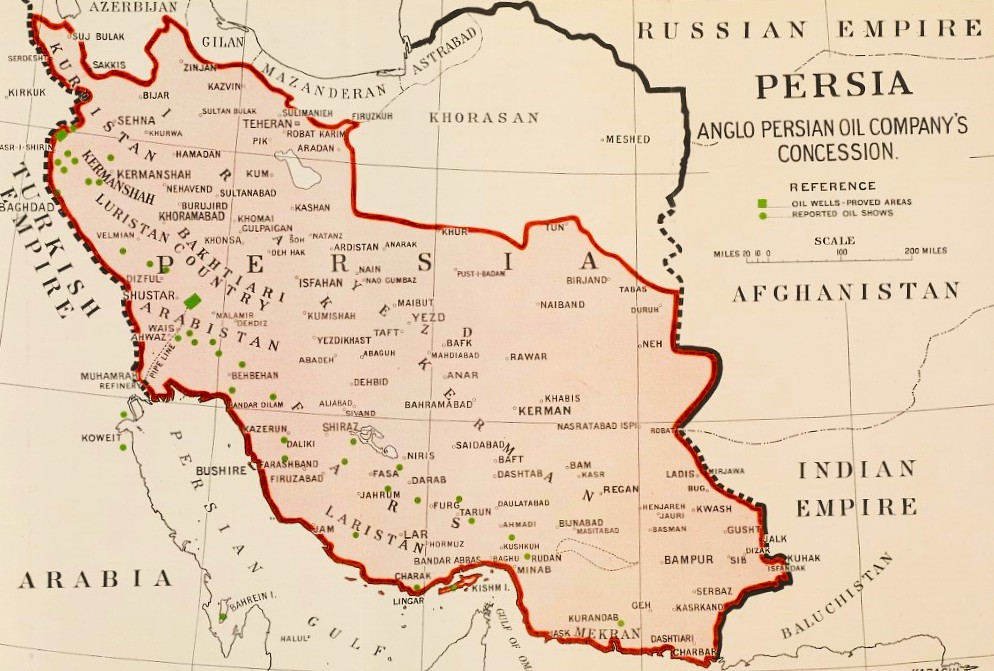
That feudalism and the Kodzhar dynasty served the interests of imperialism is exemplified by the seizure of the oil areas of the South by the British, a seizure accomplished in spite of the constitution of Persia–without the endorsement of the concession agreements by the Medjelis (parliament), but merely by setting the border feudal lords against the centre–by means of signing agreements with individual feudal lords.
Therefore, in Persia, as in every country where imperialists are continually struggling for the possession of more and more branches of the economic financial and political life of the country, there is a continuous kaleidoscopic change of events: Government crises, parliamentary intrigues by the lackeys of imperialism unwilling to pay taxes or wishing to annoy their central Government, strikes of reactionary intriguers, “Bestas” (rebel sections of the population seeking refuge in the mountains, etc.), open feudal risings, secession of border regions, etc.
All this is, so to speak, part and parcel of the policy of the rule of the strong over the weak.
But as these events generally take place unexpectedly, breaking out like abscesses on the worn-out body of Persia, we wish to record here the most characteristic of these events during the past two years, describing the forms which this disease takes in our times and following up the most important stages of the colonial fever which for the past decade has been ravaging a country in friendly relations with the U.S.S.R.–the country of Persian tillers of the soil and shepherds.
1. The Struggle in Connection with the Oil Concession and Preparation of the First Government Crisis in 1924.
It was in the summer of 1924. Persia was in the throes of a financial crisis. Its small financial resources were taxed to the utmost, taxation had almost reached breaking point. The country was resisting the imperialists–it did not want to deliver the oil concessions to the adjoining British imperialists and, choosing between two evils the lesser, it carried hurriedly a measure through the parliament (Medjelis) concerning the handing over of this concession not to the neighbouring, namely British, capitalists–but to the “neutral” American capitalists represented by the Sinclair Co. which at that time was negotiating an agreement with the U.S.S.R. with respect to Kamchatka. Apparently this was enough to infuriate British imperialism and to make Persia, which had dared to follow its own choice, feel the full weight of its Government machine.
With the help of foreign gold a fantastic movement was started throughout Persia. Agents of British imperialism found their way into city slums and for a mere pittance incited the half-famished population to all manner of excesses. Greedy reaction, by orders coming from the same source, provoked pogroms against Persian dissenters. (How this reminds one of the Tsarist days in Russia). On this basis the situation developed. The mercenary section of the Persian clergy, controlled by the British agents in the service of a British oil company (Anglo-Persian Oil), began to discover miracles: a dissenter had become blind by using water from one of the town cisterns. With the assistance of foreign gold the clergy organised sumptuous religious processions, exciting the fanaticism of the masses to the pitch of excess and when the ground seemed sufficiently prepared the reactionaries dragged the casual victim of this colonial fever–the American Consul, citizen Imbrie–to the “miraculous” source to exact an atonement sacrifice for Anglo-American competition. The blind tool of reaction and imperialism–the fanatical crowd–killed the American Consul, giving thereby the imperialists an opportunity to proclaim throughout the world by means of the mercenary capitalist press and through their telegraph agencies the brutality of the population of Persia, the absence in that country of security for the interests of foreigners, the absence of peaceful conditions for taking over and developing the oil concession in the North and the impossibility of floating loans, etc., for Persia under such conditions.
This is how public opinion was manufactured by which capitalism endeavoured to dope the masses. Torrents of lying information swept over Europe and America–the savages of Persia were supposed to “have risen against civilisation”; the then Government of the Persian National Independence–Riza Khan’s Cabinet–was described as the leader of the rebellious slaves. It was said that this state of affairs prevented any business being done in Persia and made it impossible to float any loans for that country.
In the meantime, towards the end of the summer of 1924, the world oil lords met in conference in Paris: the Dutch-Shell, the Standard Oil, Sinclair and others. At this conference a friendly agreement was arrived at with respect to the oil concessions of Persia. As a result of this the Sinclair Co. received a money bribe for the expenses which this company incurred during its endeavours to get an oil concession in the North of Persia and for the bloodshed incurred by the Republic of Trans-Atlantic brokers through the assassination of its consul.
Thus Persia was again in the devil’s grip–with the financial lasso of its old creditor, Great Britain, around its neck.
The curtain dropped and the next act of the Persian people’s drama began.
II. Preparation of the Second and Third Government Crises in 1924.
As soon as it became evident that the plan to enslave Persia by means of the assassination of the American Consul and by Sinclair’s refusal to negotiate a loan, the imperialists lost no time in organising the next Government crisis for the purpose of exhausting the country.
For this purpose all the reactionary forces were mobilised the feudal lords, the aristocratic bureaucrats and the reactionary clergy. With the help of foreign gold a special opposition fraction was formed in parliament which was to carry out this plan. Its immediate task was the overthrow of the military Government plus the overthrow of the Riza Khan Cabinet, for the imperialists and feudal reactionaries were quite right in looking upon this Cabinet and upon this personality, who headed the young National Army of Persia and who had got rid of the foreign army instructors, as their irreconcilable enemies and the basis of the future complete State independence of Persia.
The struggle began.
The opposition placed before parliament an interpellation, the importance of which was skillfully magnified by the press, which had been bribed by the imperialists and the feudal nobility.
The authors of the interpellation–the “black bloc” in and outside parliament–drew up the following list of the “sins” of the national independence Government.
“We, the undersigned, ask the President of the Council of Ministers for information on the following points:
“1. Unsatisfactory internal and external policy. [The latter refers to the signing of the trade agreement with the Soviet Government.–A. Ch.].
“2. Infringement of fundamental laws and insulting the Medjelis. [This referred to the declaration of martial law throughout the country after the assassination of the American Consul.–A. Ch.]
“3. Non-delivery to the treasury of the confiscated property of the rebels.” [This was intended to compromise the army which was engaged at that time in the liquidation of the feudal lords of Luristan.–A. Ch.].
The interpellation made a strong impression on Persian society and on the Government, as everyone knew that at the back of the author–the leader of the black bloc in parliament, Mudarres–were the old enemies of that country, the imperialists.
However, it soon became evident that the interpellation was something more than the lever with the help of which the foreigners meant to overthrow the Riza Khan Cabinet. It came to light that they were prepared for a compromise–if they could only make him innocuous, and if they could only compel him to acknowledge the old Persian debts of 21 million to the British, which also include several millions distributed long ago by the imperialists in the shape of bribes and various sops thrown to the mercenary feudal-reactionary bureaucrats of Persia, if they could only compel the head of the Persian Government to relinquish the centralisation of the country, the liquidation of feudalism within it and all attempts to hand over the oil concessions in the North to “neutral” capitalism (i.e., to capitalism which is not a territorial neighbour), if they could only compel him to hand it over to the British oil company.
At that time all the sincere friends of Persia did their utmost to persuade its Government, to persuade Riza Khan not to agree to any compromise, not to be afraid of the idol with feet of clay–the black parliamentary bloc, but on the contrary to beat it with its own weapons, exposing from the parliamentary platform this new imperialist conspiracy against the independence of Persia.
The struggle for and against the interpellation continued over a month. The Government of Persia could not for a long time make up its mind to take up this parliamentary challenge, which served as the constitutional screen for the imperialists’ plan and that of the feudal lords to carry out a coup d’état, or at least to exact a compromise and to compel the Government of Persia to be the tool of the imperialists.
But this time Riza Khan stood firm. A child of the people, a plebeian by birth, the premier felt that if he accepted compromise, if he asked the British to act as mediators, if he were to let the reins of government go out of his hands and if he were to withdraw the order for martial law–as demanded by the imperialists and feudal lords–the enemies of the country would take possession of it, giving it perhaps foreign gold as a bribe and would wring his neck as soon as they possibly could.
So the Persian Government again declined to follow the path of mediation, the path of compromise.
The day of the interpellation–August 19th, 1924 was a stormy day.
Both contending parties had thoroughly prepared “the popular masses”–thousands of people had collected outside parliament, some shouting “Long live” and others “Down.”
But the morning session was brought to nought by cleverly engineered provocation: someone in the lobbies struck Mudarres, the leader of the opposition.
This was enough to keep away the opposition, which evidently foresaw its own defeat from the evening session. When the latter was opened there was no one to bring forward and defend the interpellation and the President of the parliament was obliged to declare it withdrawn.
Indignant at this provocative farce, the Cabinet, through the Premier, demanded from parliament a vote of confidence and approval of all and especially of the recent measures of the Persian Government.
Then something happened which was hardly expected by the clever manipulators of the opposition: all the deputies present, and there were 91 of them, recorded a unanimous vote of confidence in the Cabinet.
This is how this new effort of the imperialists to take over into their own hands the Government of Persia, by manipulating parliament, was frustrated.
Though beaten at this game, the imperialists did not give up the struggle and would not leave Persia alone.
Hardly had the passions aroused by the interpellation died down when from all the dark nooks and corners of Teheran the cry was raised about the necessity to” renew” the Cabinet, to “rejuvenate” it and to make it more homogeneous.
Everyone knew, of course, whence this idea of national salvation originated, everyone knew what aims it pursued, in fact whom from amongst their friends the imperialists wanted to drag into the Council of Ministers.
As usual, all manner of means were used for the realisation of this new plan: financial pressure, organisation of conspiracies and mutinies in the army itself (attempted rising of the Chief-of-Staff of the Khorosan Division, formation of an anti-Government organisation among staff officers, etc.).
As a result the Premier, in spite of his recent brilliant victory, had to consent to the resignation of all his ministers and to the complete reconstruction of the Cabinet.
A fresh pretext had been created for the renewed activity of the imperialists–a regular barter for ministerial posts was in process.
The Anglophiles demanded that the portfolios of the Foreign Ministry, of the Ministry of Public Works and of the Ministry of Posts and Telegraphs be given to their supporters–most of them landowners in the South of Persia.
In the end the Anglophiles were victorious and succeeded in getting, if not all, at least some of the portfolios of the chief ministries. They would have trumpeted their victory, but as Riza Khan, the centraliser of the country, still remained at the head of the Cabinet and the army was in his hands, it was quite clear that for the imperialists this victory was far from decisive. The numerical consolidation of the Anglophile wing of the Cabinet, with the retention of its leader, was, as it were, a mockery of the high and mighty imperialist plans. This leader had all the threads of the struggle for centralisation in his hands, and with a wonderful persistence and in the teeth of enormous difficulties continued to build up the national army and to disarm the tribes.
III. Preparations for the Rising in Arabistan.
Having failed to achieve the desired results by means of the policy of making and unmaking Cabinets, the imperialists reverted once more to their time-honoured methods of reacting on the small and subordinate people.
They began to foment a movement of the border feudal lords against the central government.
This time it was the turn of Sheik of Arabistan, Sardar Akdes, popularly known as the Sheik Feisal.
The map of the estates of this feudal lord is the exact map of the field of activity of the British concession company, the Anglo-Persian Company. Therefore, the interests of this feudal lord had become to such an extent identical with the interests of the owners of this company, that he could not, as the saying goes, even sneeze without consulting the British.
It was this “independent” feudal lord who raised the rebellion against the Persian Government.
The official version of the beginning of this movement is as follows:
The Persian Government received information about negotiations which Sardar Akdes was carrying on with the British Bank of Persia concerning the sale of land to the latter, whilst in Persia the sale of land to foreigners is prohibited. As it was also known that this feudal lord had in his possession large areas of State land, the so-called ‘Khalise,” he was ordered from the centre to hand over to the State Treasury all the State estates in Arabistan. As an out-and-out feudal lord, who was moreover supported and encouraged in his attitude by foreigners, Sardar Akdes could not tolerate this, as the relinquishment of these estates meant for him loss of influence over all the tribes of Arabistan, this influence passing over to the central government. It also meant the loss of British influence.
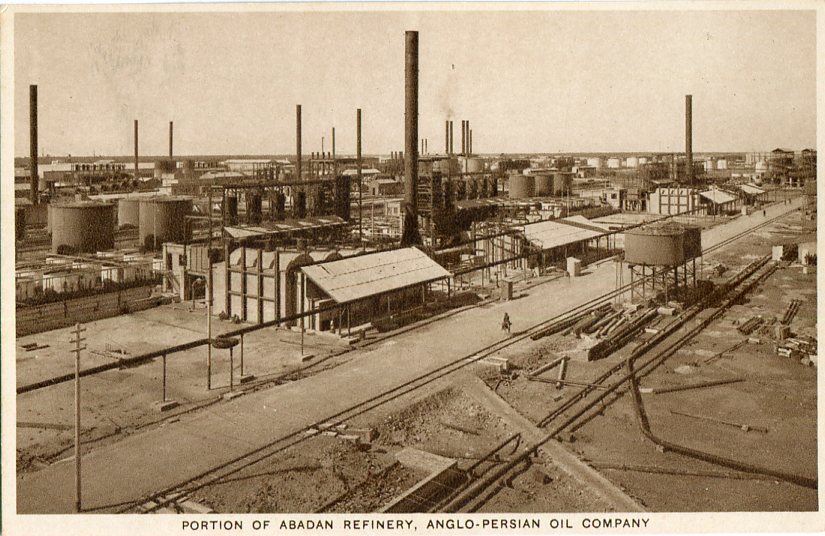
The actions of the central government of Persia touched the British to the quick, so much so that Mr. Nichols, the Director of the Anglo-Persian Oil Company, a diplomat to his finger-tips, could not conceal his annoyance in the letter he addressed to the Persian Government on September 3rd, 1924:
“The purpose of our letter of August 21st, was to draw the attention of your Excellency to the seriousness of the present political situation in Khusistan. We think that the question of the annulment of or the threat of annulment of the ‘Fermans’ of the Sheik Mikhammera is a question of paramount importance.
“We do not intend to complain to your Excellency about the actions of the Persian Government of which we have received information and which amount to a refusal to legalise the land purchases recently made by the Imperial Bank [of England–A. Ch.], and in the letter to which we refer we assert that we have not received any special communication whatever concerning the annulment of the Fermans of the Sheik, as a justification of the aforesaid refusal.
However, we know only too well what will be the results in Khusistan if the Sheik Mikhammera realises that his Fermans are annulled or on the eve of annulment by your Government, to refrain from drawing your attention to the very serious consequences which such divergence of opinion (between the Sheik and the Persian Government) will have on the security of our property and of our employees in Khusistan.
“As to the origin of the Sheik’s Fermans we have been informed that they were granted him by Shah Musa Fer Eddin in 1903 as compensation for the relinquishment of the rights the Sheik had then to the Khusistan Customs, and that by these Fermans the Sheik and his successors and their tribes were given rights of perpetual ownership over a large section of South Khusistan, which rights they preserved on condition of yearly remittance to the Governor-General of Khusistan of the then Custom revenue, these payments not to be increased at any future time. We have not here authentic copies of these Fermans to send you for perusal.
“We would be grateful to your Excellency if you would assure us of your desire to maintain friendly relations between the Imperial Government and ourselves, and we trust that you will find ways to place before the Persian Government our serious apprehensions with respect to the results which might arise if the present situation in Khusistan is allowed to develop results unfavourable to our mutual interests.”
Those were the covert springs of the ownership interests of the British oil kings. To defend these interests another adventure in the shape of a feudal rising in the South of Persia became necessary.
IV. The Rising of Sheik Feisal.
The premier, Riza Khan took no heed of the appeal of the managers of the Anglo-Persian Oil Company and its lackey–the feudal lord of this district, Sardar Akdes–Sheik Feisal, began the rising, having previously sent to all the embassies in Teheran and to the Medjelis the following telegram drawn up in the usual florid Persian style:
“Your Excellencies, Ambassadors of the Great Powers and deputies of the Medjelis are aware that immediately after the revolution of the eighth Khuta, 1300 (Persian Calendar), in view of the disinterested endeavours of Riza Khan, Sardar Sepekha (the present premier and Commander-in-Chief) to carry out fundamental reforms and to promote the happiness and well-being of the Persian nation–the Persian people responded enthusiastically to these noble patriotic endeavours and were ready to help wholeheartedly to introduce the attempts.
“However, about a year ago, as a result of the immoderate love of power of this person (Sardar Sepekha), of his usurpation of the rights of the people and particularly because of his recent acts of violence and insults to lovers of freedom, the nationalists and representatives of the Moslem faith, attacks on our holy fundamental laws, expulsion of the spiritual leaders of the people, oppression and insults meted out to the true representatives of the nation–the deputies of the Legislative Chamber [the Anglophile opposition–A. Ch.] and finally as a result of his greed and determination to increase his personal wealth–the affairs of the State became disintegrated and the unfortunate Persian people were driven to despair.
“Therefore, we, the society of the originators of this movement called “Kigam-e-Seadet,” looking upon the premier and Commander-in-Chief of the so-called Persian army as a usurper of State power in Persia, declare him a violator and oppressor of the country and of the people, and being resolved to fight to the utmost for the liberation of our country, for the prevention of its financial ruin, for the confirmation of its fundamental laws and for the recall of our beloved ruler, His Majesty the Shah–for whom we are ready to sacrifice our souls–exiled to Europe by this violator and usurper, will not be deterred by any obstacles. We draw your enlightened attention to the contents of this our appeal in order to prevent any misunderstandings and so that our patriotic movement, directed only against the rebel and usurper, be not interpreted as rebellion and mutiny against the State power. SARDAR AKDES (FEISAL).”
In this manner was accomplished the open rebellion of Sardar Akdes, begun in defence of his own feudal interests and in defence of British interests, paraded as “defence of the Shah, of the constitution and of freedom,” and as defence “against the encroachments of the usurper.”
The imperialists and Anglophiles having failed to bring the Persian Government to reason by money–the financial noose decided to make it amenable to their desires by means of the big stick–the armed rising of the most influential and richest feudal lord of South Persia, Sardar Akdes, whose yearly income is estimated at 4,000,000 roubles (£500,000).
When this trouble was brewing the premier and Commander-in-Chief of Persia, Riza Khan, was not in Teheran.
Shortly before this trouble started he had gone to the so-called Lursk front where his young army had recently liquidated the last imperialist adventure-the spring rising of the Lursk feudal lords and tribes.
When in the centre of Luristan–in the town of Khuremobade–he received a telegram about the rising of the Sheik and at the same time the request of the Council of Ministers to return immediately to Teheran where a very alarming and strained situation had arisen in connection with the ultimatum of the rebel feudal lord.
The premier returned to Teheran on September 16th, 1924. He found his Ministers literally in a panic, which the agents of the imperialist States and the entire reactionary fraternity did their utmost to maintain.
As reported, the premier had hardly entered the capital when the British descended upon him, offering to be mediators for his reconciliation with the rebel Sheik of Arabistan. In the event of peace being made they held out promises of a big reward, but in the event of a refusal to negotiate they hinted in a very remarkable manner at consequences “fateful” to the premier and to the Persian Government.
At the same time the reactionaries began to bring pressure to bear on the Government. Their minions began to come out of their nooks and corners and poisoned the atmosphere with rumours and conspiracies in relation to mutinies in the army, violation of the population by the army, etc., in fact the usual reactionary litany.
When rumour, the loquacious and sharp-tongued rumour of the streets and market places of Persia, began quite openly to connect the adventure of Arabistan’s feudal lord with the intentions of the British, the latter, so we are told, began again to besiege the premier assuring him that they “had nothing to do with this,” that the rebellion of Sheik Feisal was his own affair, that this action which caused disorder in the district of the Southern (British) oilfields is inimical to British interests, that they were prepared to cooperate with the Persian Government in the settlement of the conflict, etc.
In the meantime the reactionary and Anglophile elements dinned into the ears of the premier their “Leitmotif”:
“Give your Consent to British Mediation–If You Don’t it Will be the Worse for You.”
Nevertheless in this case too, the premier was not willing to compromise. He was aware that support for feudal adventures is not a casual thing with the imperialists, but a system and part and parcel of their policy not only in Persia but also in Afghanistan. Therefore, in answer to their assurance of not having a share in the adventure and in answer to their proposal to mediate, he declared, as we have heard from reliable sources, that the sheik who depends in everything on the British cannot act without their consent and that in the event of the British not taking immediate steps to liquidate the rising of this rebel, he (Riza Khan) will assemble the Medjelis and will publicly expose the whole history of this rising and the motives for it.
This threat had a sobering effect on the peacemakers and made them give up their reticence. They came out into the open and began to talk not as high-minded witnesses, but as the interested Party, in fact they started bargaining with the Persian Government about the conditions of this reconciliation.
What then were the immediate aims of the imperialists when they encouraged the Sheik of Arabistan to rebel?
We find an answer to this question by studying the conditions which they laid before the Persian Government as soon as they were able to make use of the aforesaid pretext–the premier’s demand to them to liquidate the rising of Sardar Akdes.
These demands were the embodiment of the entire programme of militant imperialism and feudalism, the latter being indispensable for the predatory purposes of the former.
Firstly, as retaliation for the crushing defeat of the feudal lords of Luristan–the work of the Western division of the Persian army–the imperialists demanded the dismissal of Akhmed Aga, the commander of this division.
Secondly, they demanded that not a single concession for railway construction in Persia be granted without the consent of the British.
Thirdly, they demanded that the concession for the Northern oil, for which they had recently paid in Paris a considerable sum to buy the goodwill of the American Sinclair, be given by Persia only to a company friendly to the British.
Fourthly, they demanded that henceforth the Persian Government should take up a more restrained and neutral [read, hostile–A. Ch.] attitude to the U.S.S.R.
Fifthly, they demanded from the Persian Government the fulfilment of the “four points” laid before it by the British Ambassador in Persia, Lorraine, including such a serious point as the payment of all debts, etc., by Persia.
This was the price demanded by the imperialists from Persia for their abstention from supporting the adventures of the Southern feudal lords.
What was the answer of the Government of Persia to these extortionate demands?
It had to manoeuvre and to adapt itself to circumstances. It could not, of course, carry on a direct struggle with the colossus of imperialism. Following the tortuous path of the imperialists and under cover of protracted negotiations, it began to prepare for the despatch of its armed forces to the South.
Ten years of diplomatic training which this country received in its dealings with the imperialists had taught their politicians how to gain time, how to resist the imperialists with their own weapons. The fact is that feudalism has within itself a number of contradictions. The feudal system consists of a number of composite elements: the chieftain of the tribes, the heads of separate branches of the tribes, the chieftains of separate clans and other degrees of the hierarchic ladder.
While carrying on diplomatic negotiations with the imperialist peacemakers about mediation, the Persian Government began to make use of all the differences between the various degrees of this ladder of feudal relations; it began to make use of the jealousy between the minor and medium heads of the tribes and the chieftains; by these methods the forces of the enemy became disintegrated to such an extent that the rebel feudal lord, Sardar Akdes, could only send one thousand out of his 10-12 thousand armed horsemen against the regiments of the Persian Government commanded by Riza Khan himself.
The result was–defeat of the forces of the rebel sheik.
Riza Khan, however, did not succeed in definitely overcoming him. The British brought pressure to bear on the premier and he accepted a compromise. Formally he pardoned the sheik, but in fact he came to an amicable arrangement with him in which the high protectors of the rebel had a hand, leaving this sore to fester in the shape of fresh rebellions in Persian Arabistan whose connection with the centre was still very weak.
V. The Government Crisis in 1925. Reconstruction of the Cabinet. Monarchist Movement. Overthrow of the Shah–the Sultan Akhmed.
Such a result of its struggle with Riza Khan could not give satisfaction to the imperialists and in the spring of 1925 British agents renewed a fierce campaign against his Cabinet, accusing the latter of connivance with and sympathy for the Bolsheviks, of hostility to the Shah, because this pleases the Russian Bolsheviks, and of all such deadly sins.
Riza Khan resisted, as only the head of a colonial government can resist.
But as his resistance grew, the demands of the British grew also. In the spring of this year, the British mission in Teheran went so far as openly to demand from Riza Khan reconciliation with the Shah and to despatch a telegram asking him to return to Persia as soon as possible.
Under British pressure Riza Khan sent this telegram, but began at the same time to give support to the anti-Monarchist movement in Persia, a fact which the Shah, whom he had invited to return, could not ignore.
Then the British adopted other methods. Taking advantage of the financial difficulties of the Persian Government they compelled Riza Khan to make a considerable advance of money, the price of another Government crisis, as a result of which by orders of the British two more weighty and out-and-out Anglophiles were introduced into the Cabinet Prince Foruz, one of the authors of the famous Anglo-Persian agreement of 1919 and a still more devoted servant of the British, Kovam-ed-Doule.
Having increased the number of their creatures in the Cabinet, increasing thereby their influence on the Government, the British decided to carry on an open struggle against Riza Khan under the slogan of the return of the Shah to Persia.
With this purpose in view their agents decided to make use of the famine which was threatening Persia as a result of the bad harvest.
With the help of the clergy, the masses in Teheran were brought out into the streets with the cry: “Bread and the Shah,” a cry put into their mouths by “shukuks” (agents provocateurs), as if one could feed the famished masses of a country pillaged by the imperialists with the stone of decaying Monarchism.
This time, too, the provocateurs did not succeed. Having let loose an elemental popular movement, the British could not keep it within the limits of provocation. Therefore renewed and this time real revolutionary demonstrations swept the country; the result of this was that the Kodzhar dynasty and the Shah Sultan Akhmed were overthrown and Riza Khan was proclaimed supreme ruler of the country until the convocation of the Constituent Assembly to decide on the form of Government in Persia.
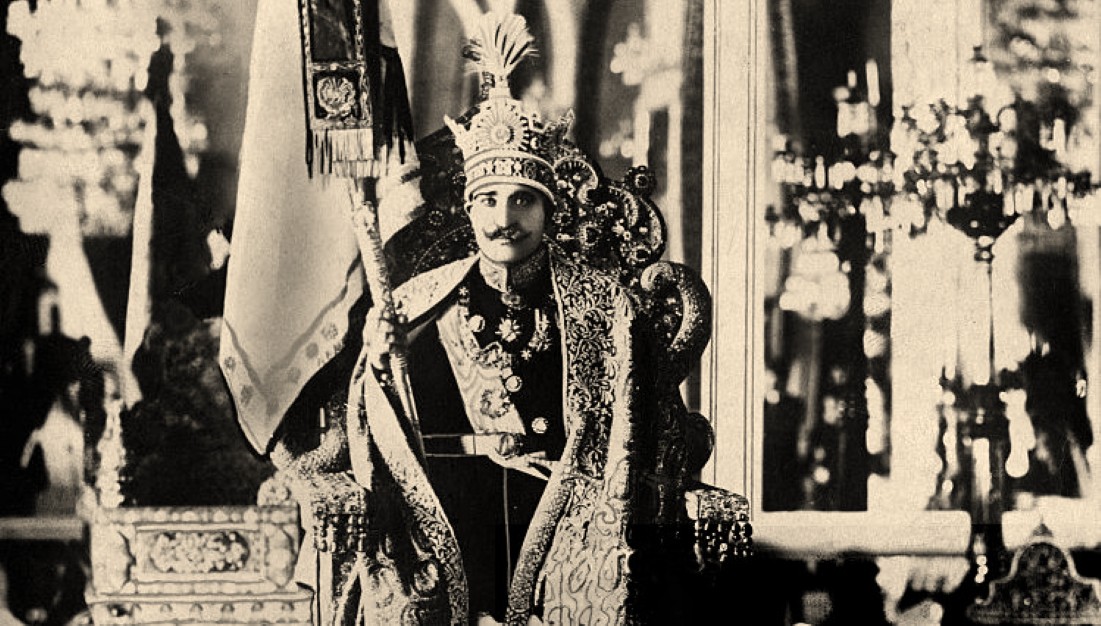
But even at this juncture the British did not lose their heads. With their usual cleverness they began to push Riza Khan towards the throne of the Shah, realising that Riza Khan–President in name, closely connected with the popular movement which bestowed on him this high post–was much more dangerous to them than Shah Riza Khan, enthroned by British efforts, would be.
In the very near future the Constituent Assembly, already convened by Riza Khan, will have to be the arbiter in this fundamental dispute between the national liberation forces of the country and imperialism.
On the choice made by Riza Khan, namely on his decision either to be put on the throne of the Shah by the British or to cast in his lot with the National-Revolutionary movement, to overthrow finally this throne and to place himself at the head of the movement in the capacity of President of the Persian Republic, will depend the victory or defeat of this movement. On this too, will depend the ascent of Riza Khan as the promoter of bourgeois-democratic progress, or the decay of the movement, hopeless reaction and Riza Khan’s silent retirement from active State activity to the lifeless park and palace of the dethroned Shah-Gulistan, with the prospect of eternal fear and expectation that the Persian people, having thrown off the imperialist yoke, or a new protégé of Great Britain, might repeat with him their experiment of the overthrow of Sultan Akhmed.
ANDREI CHERVONI.
NOTE. Since the above article was written Riza Khan has been proclaimed Shah of Persia with the approval and patronage of Great Britain.
The ECCI published the magazine ‘Communist International’ edited by Zinoviev and Karl Radek from 1919 until 1926 irregularly in German, French, Russian, and English. Restarting in 1927 until 1934. Unlike, Inprecorr, CI contained long-form articles by the leading figures of the International as well as proceedings, statements, and notices of the Comintern. No complete run of Communist International is available in English. Both were largely published outside of Soviet territory, with Communist International printed in London, to facilitate distribution and both were major contributors to the Communist press in the U.S. Communist International and Inprecorr are an invaluable English-language source on the history of the Communist International and its sections.
PDF of full issue: https://www.marxists.org/history/international/comintern/ci/new_series/v02-n17-1925-new-series-CI-grn-riaz.pdf

