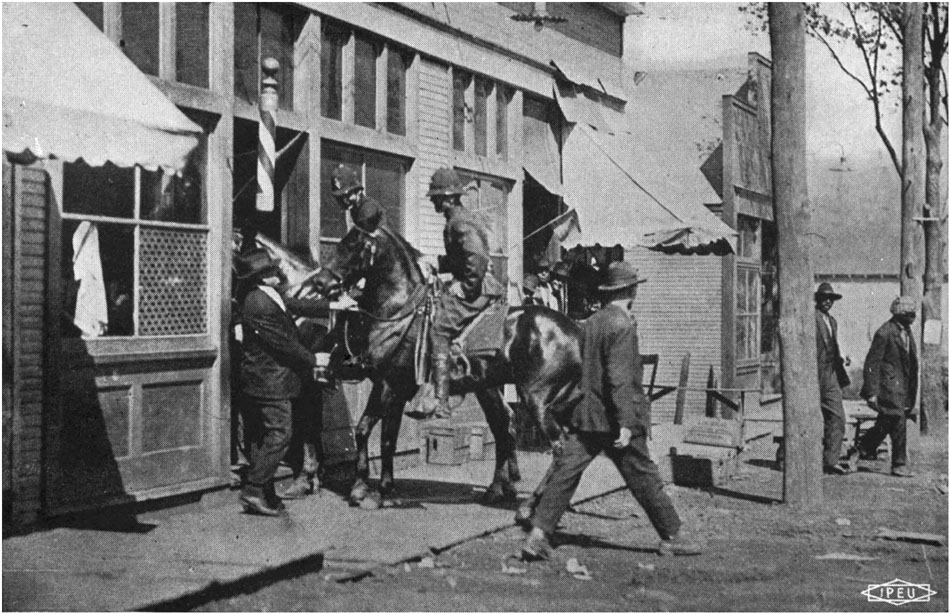
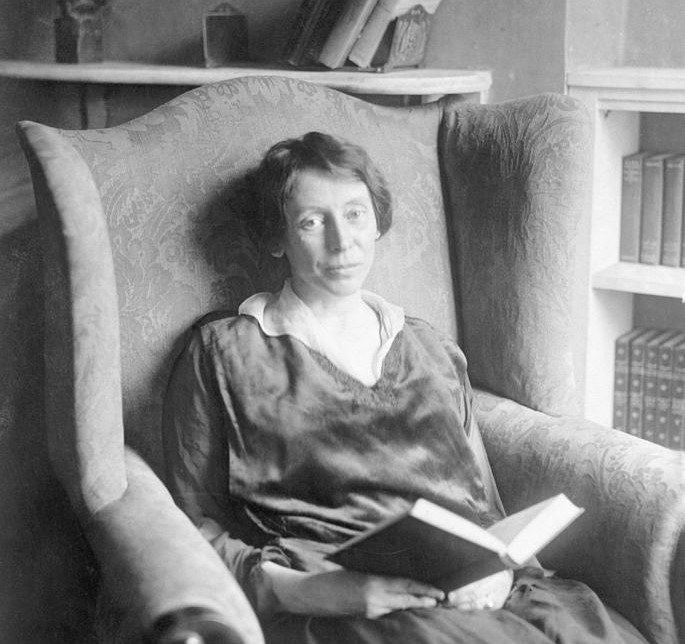
Mary Heaton Vorse was a key radical chronicler of one the great battles of the U.S. working class, the monumental 1919 steel strike that attempted to organize all of the workers, millions of people, in that central industry. Many died, many more were wounded, jailed, or lost their employment in the bitter, ultimately losing, struggle.
‘What the Steel Strike is About’ by Mary Heaton Vorse from Workers World (Kansas City). Vol. 1 No. 33. November 14, 1919.
Do you know what this strike about?
It is about the right of free men to join freely in organizations which will deliver them from conditions which prevent them being men. It is a fight as to whether one man can coerce the men in the industries of five great states.
There are wars being fought now in Europe over territories not so large and involving the lives of fewer human beings.
This strike is a strike for democracy. It is a fight for the opportunity for wider citizenship. People against profit.
Feudalism against Americanism–a blacker feudalism than the world has known for a long time, for in the most autocratic monarchies the people had the right of petition.
If they had something they wanted to say to their king, they could say it. He would read their petition, he would reply to it.
Judge Gary is more autocratic than any monarch. He denies his men the right of petition. He throws their petitions into the waste basket.
For principles’ sake, Mr. Gary has let this strike go on.
People have died, people have been wounded, they have been beaten, ridden down by mounted police, and have suffered in great numbers, fine and imprisonment–because of Mr. Gary’s principles.
The people in autocratic monarchies had another right which custom gave them. This was the right of demonstration. When something happened that they liked or didn’t like they demonstrated. They marched in processions with banners, and Judge Gary does not allow demonstration.
The rights of the citizens of this free republic are denied them. Free speech and free assembly do not exist, they have been killed so that free organization shall be crushed.
More than this, the elementary rights allowed to the people of despotic countries–these do not exist in the steel strike.
Look around, look over the wide expanse of this country–and there you will see the most dramatic thing in the world–thousands on thousands of patient men doing nothing.
Hundreds of thousands of patient, quiet men staying home.
All are men striking for freedom–some of them blindly, some of them ignorantly striking for the right to live a public life.
These men from the north to the south, from the east to the west are actuated by a common purpose. They are fighting a common enemy, a very powerful enemy who will stop at nothing to break the will of the hundreds and thousands of patient toiling men–the conditions of whose lives he controls more surely than has any despotic monarch. How strong Judge Gary is he has just shown.
The industrial conference in Washington has just been ended by him. He was a representative of the public, but he and he alone, closed the, conference–but behind him and supporting him were all the big steel interests so highly coordinated, so highly organized, and vowed to crush organization among their employes–the men who control the metal miners and who have twice broken their strikes.
All that is anti-democratic and anti-American backed Mr. Gary. All that was anti-American and anti-democratic won.
With the close of the industrial conference a new phase of the steel strike begins.
The steel strike has completed its fifth week. It was born in oppression and it has grown in it. Now it definitely enters a new phase.
War is on. Capital as represented by Garyism has now come out in the open and is prepared to wage on organized labor a war which shall include “force without stint or limit.” The industrial conference in Washington hinged on the steel strike. It might be said of that conference that it talked of nothing else. No matter what other topic seemed to be uppermost, it was really the steel strike which was under discussion.
The conference split on the right of collective bargaining, or rather it would be fairer to say that Mr. Gary was stronger than anyone else. If the principle of collective bargaining was admitted, then the principle of arbitration would be admitted.
Mr. Gary’s principles wouldn’t let him arbitrate. The president couldn’t make him. Public opinion couldn’t make him nor finally, could pressure put on him during the conference.
This is Foster’s idea of what result the breakup of the conference will be:
“The strike forced Gary to come out wholesome,” he said. “It has cleared the air. To have it staggering along was no good for anyone. It kept the idea of arbitration before the minds of the public. The leaders in Washington always hoped for it, but the organizers in the field have known from the first just where we stood–now our position in regard to the strike has been proven the true one.”
“The strike forced Gary to come out in the open and show his hand. Although he was supposed to be a representative of the public he was stronger than anyone else in the conference. He and the employers were willing to break up the conference and to enter into a period of open warfare rather than yield to any idea by mediation. The president asked that some means of arbitration should be found. It is for the interests of the public and for the three hundred thousand men and their families in volved in the strike. President and public mean nothing to Gary.
“This shows the utter fallacy in the theory that the strike could have been delayed. The union men were being discharged wholesale–and we were at a point when a series of uncoordinated and sporadic strikes were inevitable. These two things would have destroyed the organization.
“Capital as represented by Garyism has come to a place where it will listen to nobody. They are the bitter enders–they have always waged their relentless warfare on labor secretly, and now they have come out in the open.”
The sixth week of the strike begins, then, with this open warfare, with all lingering hopes of arbitration gone and the strike settles down to a long gruelling endurance test.
Meantime the press has been trying to smother the strike by suppressing the news. On every hand the idea has been driven into the public mind that the strike is dying.
You who read this have probably thought so, too. But what you have been reading has been enemy propaganda front our home-made Prussians. One of the organizers of the steel strike went to New York this week and the first person he met was a man in the publishers’ business. He is a forward looking man, and a friend of organized labor. He said–“Well, how’s the strike going?” Pretty bad, isn’t it? Only a matter of a short time before everyone will be back at work.”
That night he was having dinner with some other labor men. They all commiserated with him over the de mise of the strike, until he wanted to know over whose coffin they were hanging crepe.
Next morning he went to see another friend of his, the editor of a paper. The editor said: “Don’t you think Foster and the other steel organizers have made a mistake in identifying themselves with the communists and Reds?” The organizer sat down limply. “Communists–Reds?” he asked. “They’ve been helping you all along, haven’t they,” said the editor calmly. “See what that man Margoles said in his testimony!”
That was when the organizer realized how well the steel company had done its work. It has from the first tried to give the Impression that the strike is nothing, a mere ripple on the surface of the industrial ocean. It has tried to belittle a strike which in its wide sweep takes in Pueblo, and all the large steel towns of Illinois. Which carries on in its sweep Pittsburgh and all the clustering towns whose funnels belch up smoke on the Monongahela and Allegheny rivers. Which swept down to the south and put out the furnaces in Wheeling. West Virginia, and which has blackened and laid that Youngstown, and the other furnaces in Ohio and at Buffalo, N.Y.
This steel strike has been a very strange strike. There has probably been no great strike where the men were so slenderly organized, which so far as money is concerned, is no more than a shoestring. There was everything on the other side. All the might and wealth and power of a great community matched against slender organization of industrial workers. A little thin line scattered up and down the industry through the steel towns. Just an office opened without any fuss, without any noise or advertisement, and a stream of men came in to take out their red-white-and-blue cards. Then one day little bits of stickers appeared all over the steel district. It just said:
“Strike September 22.” That was all.
That was all, but 325,000 men, more or less, were out on strike, and that same number of men have stayed out on strike. For what few have seeped back, others have gone out.
The company had many weapons which it could use against the strikers. There was no one weapon which was used more to undermine the morale of the strike than the steady assault of the headlines of the papers. “Strikers go back to work.” Furnaces have all resumed work.” So goes the daily press.
It has probably affected the spirits of almost everyone who reads this, if they read the local papers which are fed by the great newspapers, and these are all busy in keeping a casually agreed on policy, a gentlemen’s agreement, which is to mute down the strike, not to play it up.
These people that the organizer talked to were all either labor men or else they were enthusiastic friends of labor. Yet they had been fed on the defeatists’ doctrine “the strike was over, men were going back to work.”
Here is some real news. The report in the New York Times gives steel production fallen off 40 percent, but as a certain part of this 40 percent is produced by scab labor, the steel is no good.
Without a conspiracy of silence, the papers would be full of the results of this falling off in the manufacture of steel, but nothing is said about it. We only learn through the unions that works in various parts of the country are being shut down. From the structural iron workers comes the news that they are beginning to feel the crimp. They were running full blast in construction work all over the country. Now they are slowing down. Steel isn’t being made.
Steel isn’t being made, but smoke is. There is a smudge that extends all over the Allegheny valley. The great black chimneys belch out black oily smoke made from tar.
Industrial warfare has its camouflage as well as real warfare. In Youngstown one of the union men saw at a mill he thought had been struck, the deep glow of pouring iron He re-passed the place latter in the night and iron was still being poured. There was something unnatural in the way the iron poured hour after hour. They got a man inside the mill and this is what they found an immense glass tube lighted with electric lights.
The noise of production, the glare of melted iron and smoke, are all being manufactured, but steel isn’t. Here is a curious thing in this strike. It is the sympathetic public that is discouraged–not the organizers nor the strikers. Whenever an organizer leaves the strike zone he goes from an atmosphere of hope into one of depression.
Here is a letter from an organizer which gives at once the difficulties which confront the strikers and their spirit.
“In great shape here. The mills are trying to import some strikebreakers, but getting nowhere. We met 125 of them at the Baltimore & Ohio station at midnight last night. The chief of police was there, too, assuring the strikebreakers “police protection” to go into the mills. However, we got them to come to our headquarters instead for some affidavits as to the methods used to get them to come to Youngstown, etc., and then shipped them all out of town again to Chicago, Akron, Cleveland and Pittsburg, where they came from. A good many strikebreakers who have been in the mills are quitting. The mills have lost between 500 and 600 in the last two days and 65 mill guards struck Friday night. Three mills which employed about 30,000 men before the strike now have together a total of about 280 strikebreakers and scabs, exclusive of bosses. The spirit of the men here is actually better than the first day of the strike because the strikers are now thoroughly convinced that they can hold the mills down fight just exactly as long as necessary to win.”
The Workers World, published weekly in Kansas City, Missouri during much of 1919 was a mix of regional and national working class news, international socialist events, and the growing fights within the Socialist Party. It was one of many left-wing Socialist Party journals inspired by the Russian Revolution to emerge. Edited alternatively by future Communist Party leaders James P Cannon and Earl Browder, The Workers World ceased publication in November, 1919 as writers and readers moved on to build the Communist movement and its early parties.
PDF of full issue: https://www.marxists.org/history/usa/pubs/workersworld/WW33.pdf

