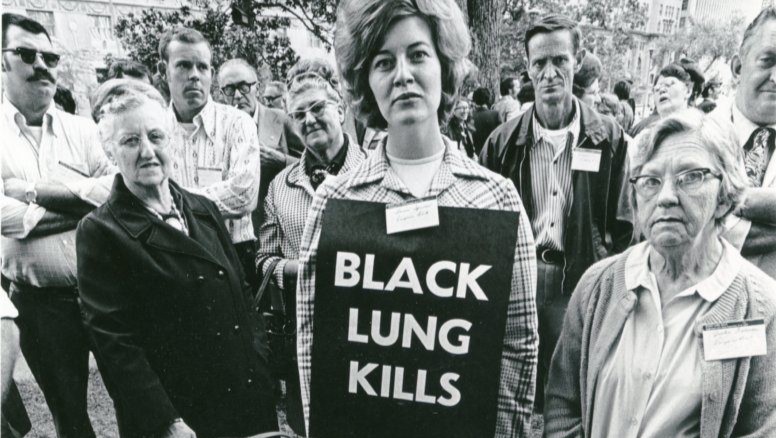
Sigerist, Swiss-born medical doctor and determined advocate of universal, socialized medicine, was director at the Johns Hopkins University Institute of History of Medicine who fought a long, dogged battle against the A.M.A. over its medically inexplicable, but financial rewarding, rejection of universal healthcare. A foremost historian of health policy and industrial and workplace illnesses, Dr. Sigerist gifts us with this damning, long-view historical survey of workplace disease and injury. One shudders to think of the current reality after decades of deregulation and abandonment of any and all accountability. A fine essay that demands a sequel. With my own long ancestry of coal miners, more than a few of my family were felled by Black Lung, as my uncle was, and associated diseases. In deed, my great-grandmother–daughter, sister, wife, and mother–to miners died of Black Lung without ever setting foot in a mine, but living her whole life next to its poison tipple.
‘Historical Background of Industrial and Occupational Disease’ by Prof. Henry E. Sigerist from Health and Hygiene. Vol. 5 No. 3. March, 1937.
Of Johns Hopkins University
An abridged version of the Wesley M. Carpenter lecture by the world’s foremost authority on the history of medicine.
IT IS the destiny of man that he has to work to maintain his life. He has to produce and gather the food that his organism requires and has to produce goods to protect himself against the climate and to make his life easier and more enjoyable. The greatest advance in the history of human civilization was the step from the paleolithic to the neolithic age, from the food-gathering to the food-producing stage, when man had learned to cultivate plants, to domesticate animals, to perfect his tools. Man struggled with nature and he is conquering it gradually through his intelligence, inventiveness, and skill. The productive forces, animate and inanimate, active and passive, man and his raw material, the laborer and his tool, were the decisive factors in history.
Man has to work in order to live–and this is good. Work gives significance to our life. It ennobles it. It allows us to create material and spiritual values without which life would not be worth living. If society progressed, it was due to the cooperative efforts of all its members. Man has a duty to work but he should also have a right to work.
Work balances our life and is therefore an essential factor of health. Yet we all know that man in the pursuit of his work is exposed to all kinds of hazards which threaten his life. This has always been the case no matter what the work was. The stone age man gathering his food, hunting animals, was subject to accidents. Neolithic bones showing traces of fractures make this evident.
With developing civilization production increased. New occupations created new hazards. The working conditions of a definite period and country represent an important criterion a given civilization. When we look at the history of civilization from this point of view, we certainly have no reason to be proud of our past.
We are inclined to value a civilization according to its artistic achievements. We admire the pyramids and the temples of ancient Egypt which have survived the centuries and millenniums but we forget that they were built with the blood and tears of thousands of human beings. Labor in ancient civilization was primarily slave labor. The pyramids were built by state slaves whose lives had no value whatever, whom every war would replace. We still can see the Egyptian workers laboring under the whip as represented on wall paintings and in reliefs. The lot of the city workers was hardly any better and we can still perceive their voice of rebellion. Egyptian literature has preserved, besides a huge mass of religious texts written in praise of the gods, a few scraps which tell us of the hard life of the people.
I have never seen a blacksmith acting as ambassador or a foundry worker sent on a mission, but what I have seen is the metal worker at his work: he is grilled at the mouth of the furnace. The mason, exposed to all weathers and all risks, builds without clothing. His arms are worn out with work, his food is mixed up with dirt and rubbish: he bites his nails, for he has no other food. The barber breaks his arm to fill his stomach. The weaver engaged in home work is worse off in the house than the women; doubled up with his knees drawn up to his stomach, he cannot breathe. The laundryman on the quays is the neighbor of crocodiles. The dyeworker stinks of fish spawn: his eyes are tired, his hand works unceasingly and as he spends his time in cutting up rags he has a horror of clothing.
WE admire the graceful Greek bronze statuettes that fill our museums but we do not think of the copper miners providing material for these works of art, or the coal miners digging for coal to make the bronze, working ten hours in narrow galleries suffocated by heat and smoke. They were prisoners of war or convicts as a rule.
The ancient physicians, keen observers as they were, noticed the influence of certain occupations on the worker’s health. A good deal of information is scattered all over the Greek and Roman literature. But nothing was done to protect the workers. They had to help themselves as the minimum refiners described by Pliny did who put membranes as a mask before their faces. Medical care was given to those who served to entertain the people, the gladiators. Galen started his career by being physician to a gladiator’s school in Pergamon.
The ancient physicians were not actually interested in the health of the manual laborers. They devoted their attention almost exclusively to the upper class. It would never have occurred to them to prescribe any definite hygiene to craftsmen or workers.
We must not forget, however, that ancient technology was mostly small scale technology. The artisans frequently worked in the open air, as they still do in the Orient, so that the hazards were infinitely less than in later centuries after technology had assumed larger proportions.
Ancient civilization created great cultural values but it was a culture that was shared by only a small upper class and endless human lives had to be sacrificed and a great deal of suffering had to be endured to allow this culture to flourish.
The Middle Ages scarcely made any contributions to the subject and it is not before the end of the fifteenth century that we begin to find a special literature devoted to occupational diseases.
WHY then? For various reasons. Medicine had progressed and the physicians were keenly interested in describing new diseases. But there are other, economic reasons. The volume of trade had increased considerably which created a great demand for metals, particularly gold and silver for currency as a medium of exchange. The voyages of discovery were undertaken not so much in the interest of science as primarily in search of precious metals. Besides, fire arms were used more and more frequently which created a strong demand for iron, copper, and lead. The shallow mineral deposits were exhausted and it was necessary to dig deeper which obviously created increased hazards. At the same time in many countries the farmers were evicted, were divorced from the means of production and became proletarians who had nothing to sell but their labor powers. Many of them went into industry.
In 1473 a German physician in Augsburg, Ulrich Ellenbog, wrote a little pamphlet of seven small printed pages: On the poisonous wicked fumes and smokes. Augsburg at that time was famous for its goldsmiths. Ellenbog, who apparently had such goldsmiths among his patients, noticed that some of their troubles were probably due to their working conditions. He wrote his pamphlet as a memorandum describing the dangers of fumes that developed from coal, nitric acid, lead, mercury and other metals. He advised the goldsmiths to work, whenever possible, in the open air, to cover their mouths when fumes developed, and, in the style of the time, recommended a number of drugs to be smelled as a measure of protection.
Ellenbog’s was just a short memorandum. The first monograph devoted to occupational diseases is due to Paracelsus who, greatly interested in chemistry, visited many mines. He lived and worked with the miners and got first-hand evidence of the appalling conditions under which they were laboring and the very serious hazards to which they were exposed.
Paracelsus’ monograph is a beginning. Every writer on mining after that time never failed to touch the diseases peculiar to this industry. A very good example of this type of literature is Agricola’s work On Metals, published in 1556. In Book VI he says,
“It remains for me to speak of the ailments and accidents of miners, and of the methods by which they can guard against these, for we should always devote more care to maintaining our health, that we may freely perform our bodily functions, than to making profits. Of the illnesses, some affect the joints, some the eyes, and finally some are fatal to men.”
He then goes on describing the various hazards that threaten the miners, the abundant water often collecting in shafts making them cold and, in this way, injuring the workers; the dust that “has corrosive qualities and eats away the lungs, and implants consumption in the body; hence in the mines of the Carpathian Mountains women are found who have married seven husbands, all of whom this terrible consumption has carried off by a premature death.” Stagnant air produces a difficulty in breathing. The remedy is to be found in the ventilating machines. Or, the air is infected with poison, causing swellings and paralysis. Accidents are described as being not rare, workmen slipping from ladders in the shafts, breaking their arms, legs or necks, or falling into the sumps and being drowned. Mountain slides occurred as was the case in Rammelsberg where in one day “400 women were robbed of their husbands.” Venomous ants were found in several mines. And finally there was one hazard that we no longer know. “In some of our mines, though in very few, there are pernicious pests. These are demons of ferocious aspect…demons of this kind are expelled and put to flight by prayer and fasting.”
THERE is no doubt that mining was the most dangerous of all occupations and therefore was given attention first. In the seventeenth century books began to be written on the diseases of other occupational groups. They concern less the working class than the upper class, the courtiers, the scholars, men of letters in general, but then also soldiers and sailors because the fighting strength of an army or navy was determined to quite an extent by the health conditions.
And then, in 1700, the Italian physician Bernardino Ramazzini published his famous book: A treatise of the diseases of tradesmen, shewing the various influence of particular trades upon the state of health; with the best methods to avoid or correct it, and useful hints proper to be minded in regulating the cure of all diseases incident to tradesmen–the first textbook on occupational diseases. I have just re-read it. It is a fine book, a real medical classic.
Ramazzini was a distinguished physician in Modena, professor at the University of this city and in 1700, the year his book was published, he was called to the University of Padua. Discussing the diseases of “Cleaners of Jakes” (privy cleaners), he tells us how he became interested in his subject.
The Accident, from which I took occasion to write this Treatise of the Diseases of Tradesmen is as follows. In this City, which is very populous for its Bigness, and is built both close and high, it is usual to have their Houses of Office cleansed every third Year; and, while the Men employed in this Work were cleansing that at my House, I took notice of one of them, who worked with a great deal of Anxiety and Eagerness, and, being moved with Compassion, I asked the poor Fellow, Why he did not work more calmly and avoid overtiring himself with too much Straining? Upon this the poor Wretch lifted up his Eyes from the dismal Vault, and replied. That none but those who have tried it could imagine the Trouble of staying above four Hours in that Place, it being equally troublesome as to be struck blind. After he came out of the Place, I took a narrow View of his Eyes, and found them very red and dim; upon which I asked him, if they had any usual Remedy for that Disorder? He replied, their only Way was to run immediately Home, and confine themselves for a Day to a dark Room, and wash their Eyes now and then with warm Water; by which Means they used to find their Pain somewhat assuaged…Immediately after he clapt his Hands over his Eyes, and run Home. After this I took notice of several Beggars in the City, who having been employed in that Work, were either very weak-sighted, or absolutely blind.
Ramazzini gave the medical world a text book outlining a new subject. His distinction of two great groups of occupational diseases, one due to the material and one due to the labor involved, was very good indeed and was accepted by most physicians who in the following…If we should suppose that 50,000 persons die years wrote on the subject. Ramazzini’s book was a mine of information often consulted during the eighteenth and early nineteenth centuries. As a matter of fact the eighteenth century had very little to add to what Ramazzini had said.
THE physicians knew how to prevent many such accidents and yet, hardly anything was done to protect the workers during the eighteenth century. They had to protect themselves as well as they could. At the same time, how ever, the industrialization of Europe progressed faster than ever before. The steam engine introduced in the textile and mining industry accelerated the development, created different working conditions, and, at the same time, new hazards. Mechanical forces of high potency were brought close to man, threatening his life. In the early nineteenth century, beginning in England, the industrial population increased tremendously and was living and working under appalling hygienic conditions. The death rate was high and the duration of life exceedingly short. Public opinion was aroused by the report of a committee of investigation in Manchester in 1795. The ruling class recognized that a sick proletariat was a menace to its own health. Another report on “The sanitary conditions of the laboring population,” published in 1838, revealed that the condition had not improved but, on the contrary, had become even worse. A very fine little book published in 1832 by a physician in Leeds, C. Turner Thackrah, on the effects of arts, trades, and professions, and of civic states and habits of living, on health and longevity, revealed striking figures. In the industrial city of Leeds in 1821 there was one death per 55 inhabitants, while in a neighboring rural district there was one death per 74 inhabitants. “At least 450 persons therefore die annually in the borough of Leeds from the injurious effects of manufactories, the crowded state of population and the consequences of bad habits of life,” was the conclusion of Thackrah who then proceeds,
“Everyday we see sacrificed to the artificial state of society one and sometimes two victims, whom the destinies of nature would have spared. The destruction of 450 persons year by year in the borough of Leeds cannot be considered by any benevolent mind as an insignificant affair. Still less can the impaired health, the lingering ailments, the premature decay, mental and corporeal, of nine-tenths of the survivors, be a subject of indifference annually in Great Britain from the effects of manufactures, civic states, and the intemperance connected with these states and occupations, our estimate I am convinced would be considerably below the truth. Can we view with apathy such a superfluous mortality, such a waste of human life?”
Thackrah wrote his courageous book “to excite the public attention to the subject.” He was well aware that the upper class did not like to have this subject discussed but he was convinced that conditions could be, and must be, improved.
“Most persons, who reflect on the subject, will be inclined to admit that our employments are in a considerable degree injurious to health, but they believe, or profess to believe, that the evils cannot of such evils can produce only pain and discontent be counteracted, and urge that an investigation From a reference to fact and observation I reply, that in many of our occupations, the injurious agents might be immediately removed or diminished. Evils are suffered to exist, even where the means of correction are known and easily applied…But even where no adequate response immediately presents itself, observation and discussion will rarely fail to find one.
THE work of the physicians was important but it was obvious that conditions could only be improved by way of legislation. The first Factory Act “The Health and Morals Apprentices’ Act” was passed in 1802 and was followed in the ensuing years by other acts removing some of the worst abuses, particularly in the exploitation of women and children. In spite of them conditions were still bad enough.
In France it was the report of the Prefect of Police, Dubois, of 1807 that revealed the terrifying health conditions of the industrial population. The physicians were not idle in France either. The relationship between deathrate and wages was clearly seen by Villermé who, later, in 1840 published very interesting statistics. What should be done? Patissier suggested the following. First, dangerous trades should be entirely forbidden or, if this proves impossible, only criminals sentenced to death and pardoned to hard labor should be allowed to work in such trades. Second, research should be done so as to improve the working conditions by applying measures of industrial hygiene. Third, the states should have public baths easily available to the workers. Fourth, workers injured through their labor should be compensated and should have old-age insurance.
Germany was industrialized much later than England or France and it is characteristic that it was the report of a recruiting officer that drew the attention of the public to the health conditions in the working population. Travelling in the Rhine region he found the health conditions such that the army would soon be deprived of recruits. The North German Union in 1869 in its Industrial Code stated that “every manufacturer must at its own cost establish all necessary appliances for safeguarding its employees against dangers to health and life.” Social insurance was inaugurated in Germany in 1883 and as it included accidents and diseases, provisions were made to give medical service to the working population.
IN THE United States the literature on occupational diseases began in 1837 with a dissertation on the influence of trades, professions and occupations written at the instigation of the New York Medical Society. Factory legislation followed from the middle of the century on and developed rather slowly.
It is not until the twentieth century that there was a real improvement in working conditions. The World War proved to be a strong stimulus. Workers were scarce. Their health, therefore, meant a great deal. Research was done, chairs for industrial hygiene were established in quite a few universities, industrial clinics were opened, the first in 1910 in New York and Milan, museums were established in various countries showing the sources of industrial hazards and the way to prevent them. The most important improvements were due to legislative acts, their principles being the same in all countries: medical inspection of industrial undertakings, compulsory reporting of industrial diseases and compensation of the diseased and disabled workers. In 1906, revising the Workman’s Compensation Act of 1897, England included 31 industrial diseases. This act had a great influence upon the United States.
It is obvious that the Soviet Union would pay great attention to industrial diseases and accidents. Research institutes have been created all over the Union and the health of the working population is being improved not only through measures of industrial hygiene but also through the reduction of working hours, the organization of rest and recreation, and a system of socialized medicine that makes medical care available to all.
There can be no doubt that the working conditions have greatly improved in almost all civilized countries and yet, you know as well as I, that what has been achieved so far is just a beginning. In a highly industrialized society where the machine is no longer restricted to the workshop but has invaded the streets, the hazards will always be great. To reduce them to a minimum is only possible through the cooperative efforts of physician, engineer, statesman, and educator.
Health was the precursor to Health and Hygiene and the creation of Dr. Paul Luttinger. Only three issues were published before Health and Hygiene was published monthly under the direction of the Communist Party USA’s ‘Daily Worker Medical Advisory Board Panel’ in New York City between 1934 and 1939. An invaluable resource for those interested in the history history of medicine, occupational health and safety, advertising, socialized health, etc.
https://www.marxists.org/history/usa/pubs/health/v5n3-mar-1937-health-hygiene.pdf

