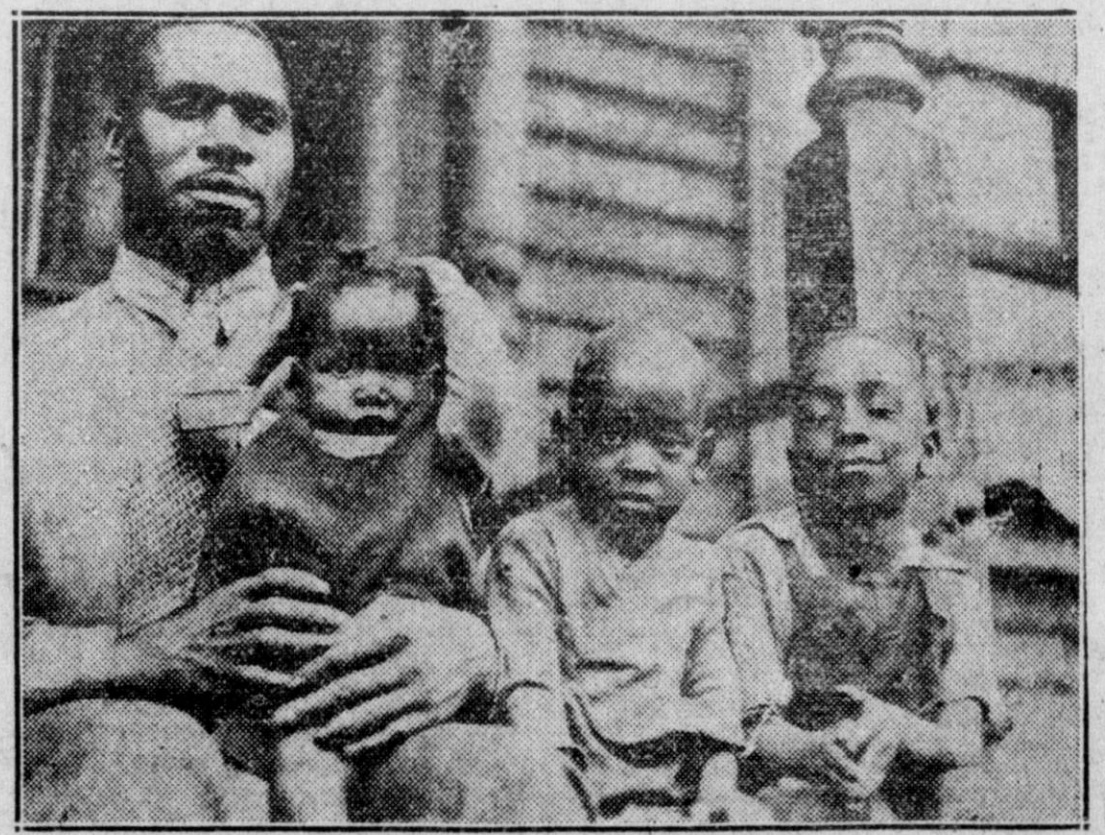
This noted Daily Worker series sees Michael Gold visit the hard-hit center of Black working class Chicago as the Great Depression, with its evictions and hunger, sees a whole layer of activists move toward the Communist Party.
‘Struggles on the Southside: The Negro Reds of Chicago’ by Michael Gold from The Daily Worker. Vol. 9 Nos. 232-237 September 28-October 4, 1932.
THE STRUGGLES ON THE SOUTHSIDE
I.
THIS unemployment is a famine, a Mississippi flood, a major disaster to the human race. But the Negro and white capitalists of Chicago, like their fraternity the world over, have been concerned only with preserving dividends.
More than 200,000 Negroes are segregated in Chicago alone. It is estimated that more than 50 percent of the Negroes in the city are unemployed,
A year ago they were throwing thousands of Negro workers out into the naked streets to die. But then a revolt began. Unemployed Councils sprang up, under Communist guidance, which fought the evictions. As fast as a poor worker’s furniture was throw into the street, the councils carted it back. The police used clubs, blackjacks and jail sentences, but the revolt could not be stopped.
LANDLORDS GROW DESPERATE.
The landlords grew desperate. Oscar DePriest, the Negro congressman who has so often proved a Judas to his race, is also one of the chief landlords on the south side. He retained as lawyers certain other Judas-liberals from the National Association of Advancement for Colored People. Then he called a secret conference.
What was decided at this meeting of landlords, politicians and liberals, is not known to everyone. That night the profit-hoarders and racketeers decided on nothing short of murder.
THERE was to be an eviction on Dearborn Street the next day. A 72-year old Negro working woman was to be kicked out like a dog to die. But the council arrived to stop the crime.
While they placed back the furniture, the police appeared. This time they did not merely club, maim, gouge and crack skulls. They had been instructed to use stronger measures. With not the slightest warning, they shot their H.P. rifles again and again into the crowd. They killed three Negro workers, one of them a communist, and wounded many others.
It was a murder plot. I found proof of this a year later when I came to Dearborn Street.
ON DEARBORN STREET.
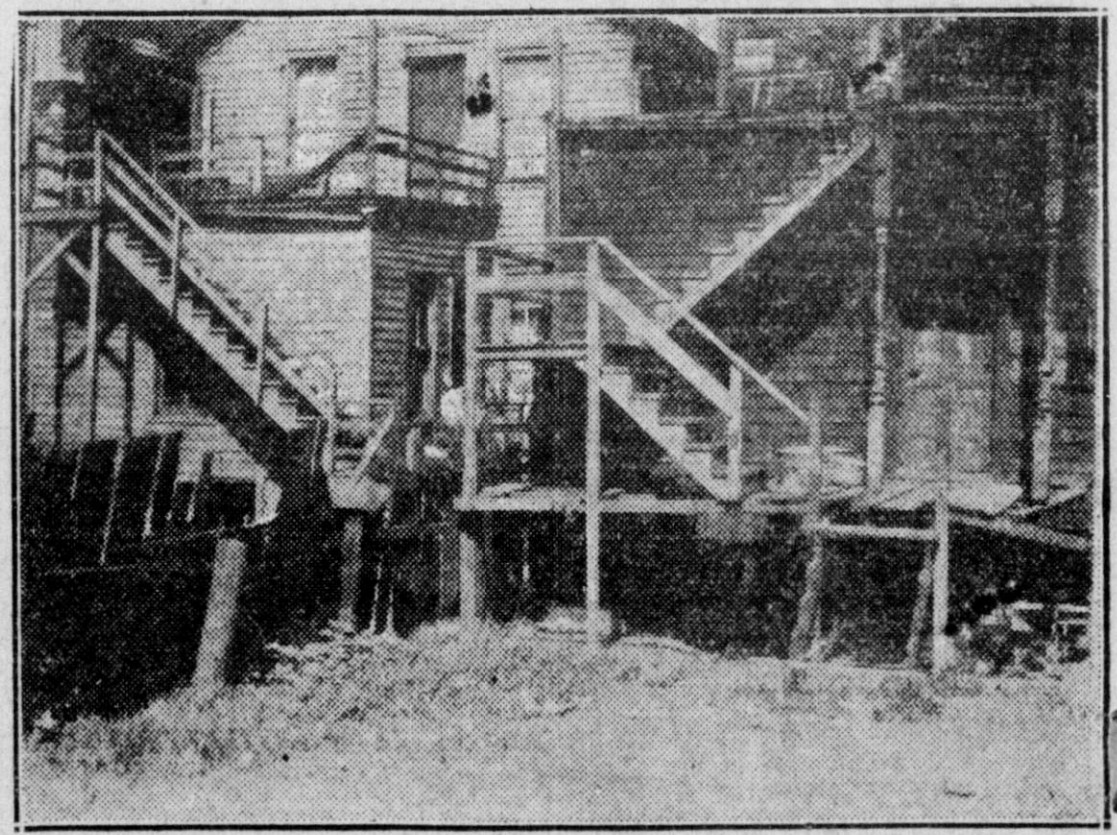
This street offers the usual stage setting of Negro tragedy in Chicago. The brown ruined wooden shacks have not been painted or repaired for decades. They are allowed to rot away. It is the landlord-economy in America to buy up putrid slums that should be burned, and rent them to Negroes. When the houses finally collapse they are torn down; meanwhile they pay high dividends and cost nothing to maintain.
(Clever, clever, American landlords, some day you will yourselves pay a high dividend for this.)
ΟN DEARBORN Street the garbage is heaped everywhere, foul as a landlord’s heart. The city has not removed garbage for months: it is bankrupt. Garbage, flies, stink, leaky roofs, broken windows and doors; mouldy wet shacks swarming with vermin; all the houses in crazy tatters and out of plumb, this Is Dearborn Street, that has sent so many landlord’s esthetic–wives to Paris, their sons to Harvard or Fisk. And women agonize in childbirth, and strong men rot of hunger and despair, and babies’ bones shrivel because there is no milk.
THE LANDLORDS’ WARNING.
We went Into one of those miserable scaly tenements, and knocked at a door. An old woman answered, a soft-voiced gentle person with a motherly face. She apologizes for her appearance: her gray hair was knotted in paper, she was dressed in a wrapper and apron.
“I’ve been cleaning,” she said, “and look a fright, but do come in and rest yourself.” Her home, despite the cracked plaster and grimy walls where lathes stuck out like a pauper’s ribs, was as neat as two hands could make it. It was touching to see her beautiful natural courtesy. It moved one to find her home so painfully clean. Would a landlord’s wife have retained the human dignity in such surroundings?
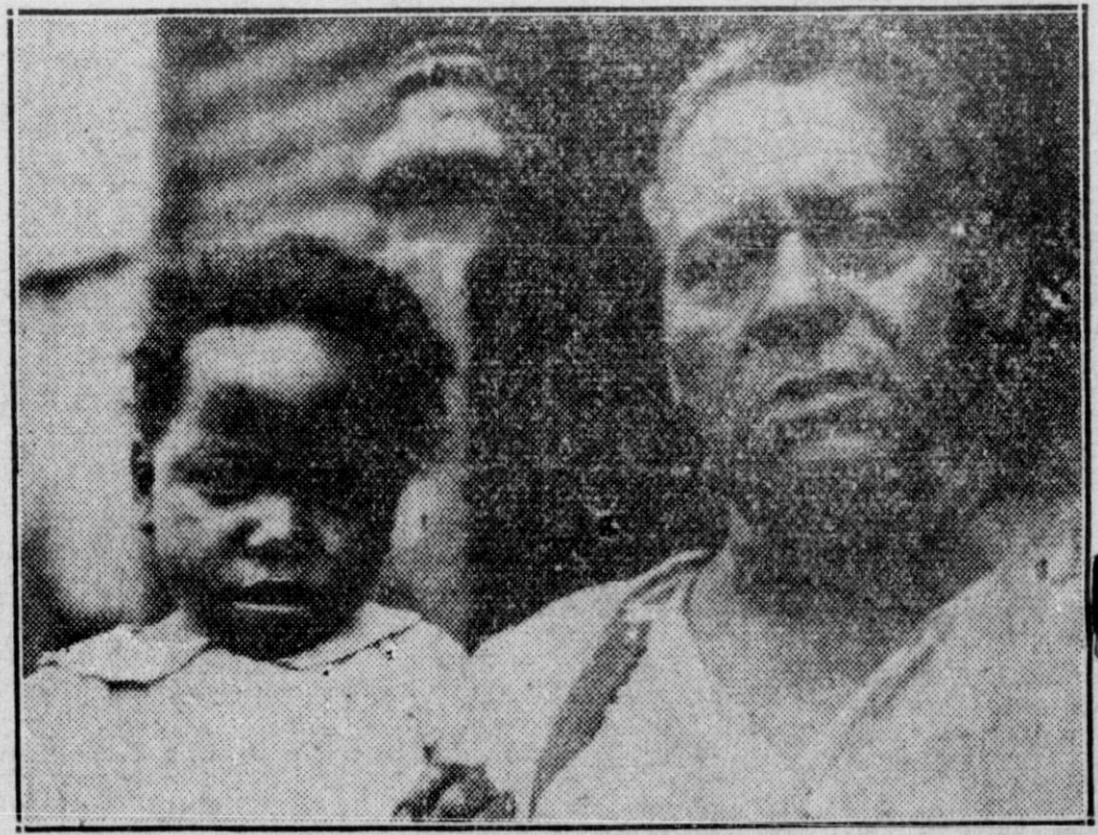
She was Mrs. Martha Ormsbee, wife of a stockyard’s worker. She did not want to talk at first; the Negroes have learned not to trust whites. But then, convinced that we came from the workers’ press, she told us an amazing fact.
Her windows look out over the spot where the eviction-murders took place. The night before, her landlord had phoned her a warning not to look out of those windows the next day; there would be shooting.
“But we did look out until the shots began coming too thick,” she said, “and my husband and I had to throw ourselves on the floor. It was murder; the police warned nobody, just started to shoot. Such a lot of black smoke around; my, my, they just kept on shooting and shooting! And those poor people had nothing to fight back with, just a few stones. It wasn’t right. Everyone on this street is still wild about it.”
OTHERS on Dearborn Street had much the same story to tell, of whispers, telephone warning, and the like. It was a plot The landlords evidently decided to create an atmosphere of fear, to demonstrate to all that they controlled the police. But the plot failed.
Three Negro workers were killed, but during the next weeks five thousand others joined the Unemployed Councils; 500 filled out applications to the Communist Party; hundreds of others became members of the International Labor Defense. Many of these Negro workers are now in the leadership of these organizations.
Some of them have since drifted away. The Party in America has not yet worked out some simple, consistent plan that would hold such masses. Yet the South Side was a forest fire of indignation. Nothing else but the eviction-murders was talked about in barber-shops, restaurants and churches. Groups of Negro workers, after much hunting and questioning, would discover the address of party headquarters and march there in grim, determined squads to join up.
A GREAT MASS FUNERAL
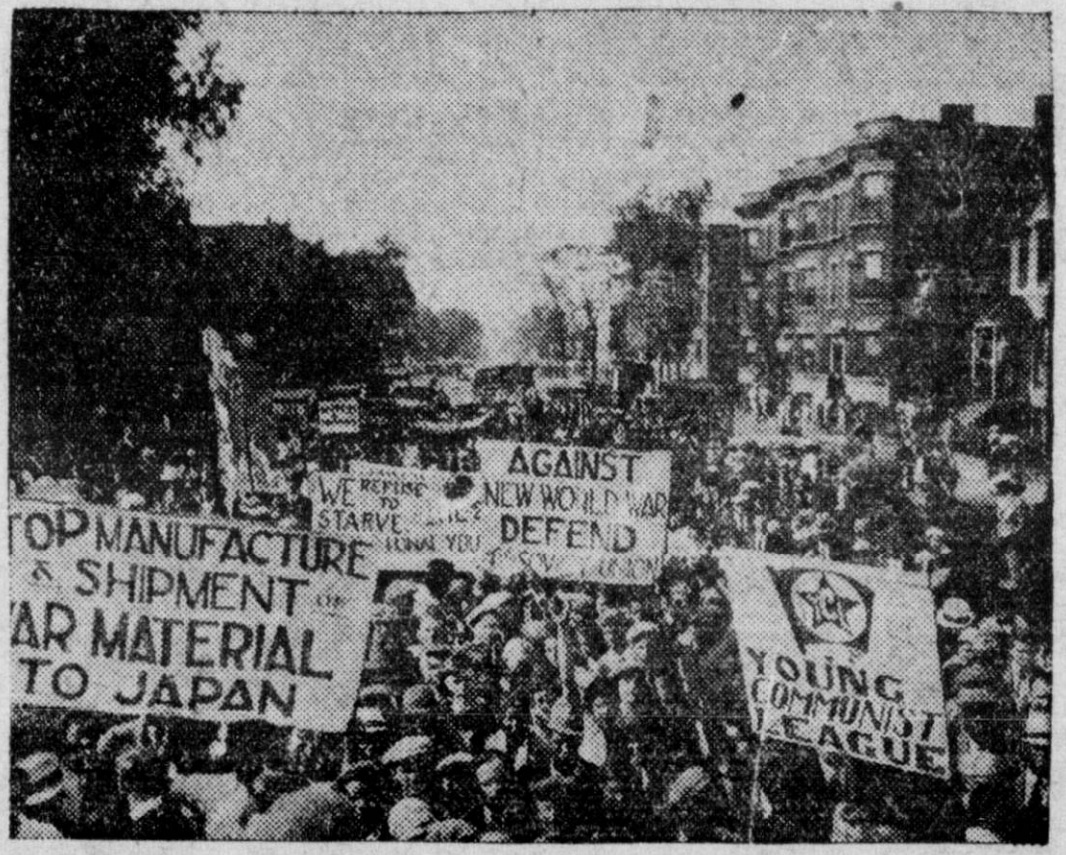
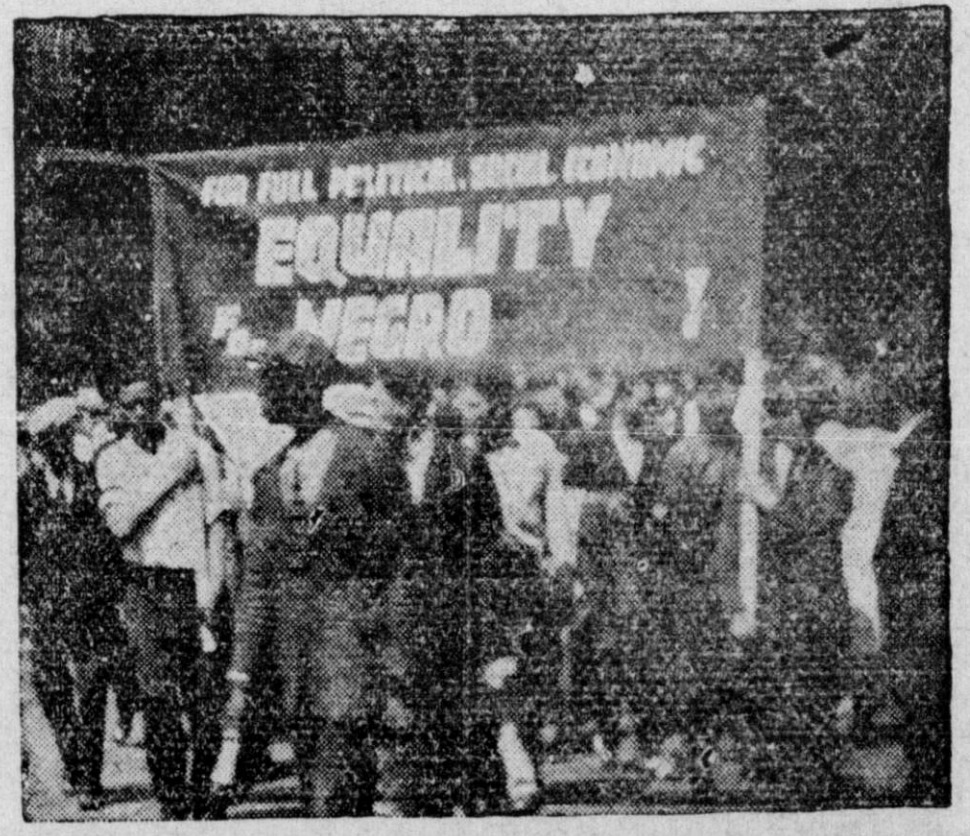
There was a mass-funeral for Abe Gray, John Oneal and Thomas Paige, the three victims of the blood stained landlord system. More than 100,000 workers, black and white, marched through the South Side streets, a great solemn army of proletarian vengeance waving red banners. That day has never been forgotten. It marked the beginning of the revolt.
Hundreds of evictions since then have been foiled by the Unemployment Councils. They take place almost every day. As Brown Squire, one of the leaders, told me, “when the first stick of furniture gets thrown out, a crowd gathers like magic. Somebody unknown telephones at once to the nearest council; everyone knows us. We first send a few delegates to investigate, to see whether the tenant wants us to move him back. If he does, we go there and carry on.”
***
II.
THOUSANDS gather round these eviction scenes, and watch the council volunteers hauling in furniture. At first the crowd seems only a casual and neutral observer. But if the cops come, and begin their usual murderous slugging, the crowd turns partisan at once. It jeers, boos and even stones the gangsters in uniform; the heart of the southside is with the Councils.
Everyone on the south side knows and sympathizes with the work of the councils. It has penetrated everywhere. In a little barbecue restaurant, five truckdrivers were at lunch, devouring huge platters of pork ribs. I heard their talk; they were discussing that morning’s editorial in the Daily Worker on Germany. On a wooden stoop at sunset sat a group of tall jobless men and their wives. One giant in overalls fingered at a guitar; another was reading aloud to the serious little group out of a pamphlet by Lenin,
IN CHICAGO’S PARKS
There are several parks on the south side where enormous meetings are held daily. I spoke at the Washington Park public forum. The Communists speak here every day to crowds averaging two to five thousand, all afternoon until 10 o’clock.
The meeting was to begin at three. But at least 500 Negro workers were already gathered at two o’clock, lounging on the benches around the speakers’ stand, or arguing in groups under the trees of the massive meadow.
Many of them sleep and eat here. They have no other home. There are sardine tins and empty biscuit cartons in all the garbage cans–workers’ food. “Comrade, can you spare a cigarette?” It is a chunky little woman in a torn gray sweater who asks. She has the “New Masses” and the monthly “Communist” under her arm. On her other arm sits a brown big-eyed infant. A dozen young Negroes in jazz pants and flashy suspenders wait around, and talk in low voices. I hear the magic word, “Russia,” from these tap-dancers.
UNDER an elm tree fifty husky steel mill and stockyard workers are talking, shouting, arguing, roaring with Homeric laughter. A fat little buttertub of a man in comic spectacles is the butt of their jokes. All try to shout down his loud passionate speeches. He is a preacher, I am told, and every day he comes here to win back some of his vanished flock. They used to fear, respect and bribe him for a pass to heaven, now they laugh at the sweaty little humbug.
“Get that good old Moscow News, daddy of all the workers’ press!” This is what a coffee-skinned little man in a torn yellow shirt and salvaged yachting cap is shouting. He is a news vender, with a line of conversation that amuses the crowd, and makes them buy. “Get that good old Daily Worker, and learn about the world you live in! How can you talk about the revolution, if you don’t read about it? I’m always reading, and I can tell you what is happening in Germany right this minute! Read, read, read, and grow yourself a set of proletarian brains! If I had the money, I’d pay you to read, fellow workers! Get some ammunition against the boss-class! Get the Soviet Russia pictorial, or some of these here pamphlets, and learn the workers’ truth!”
“THE COMRADE PARTY”
On one of the benches sits an old woman who fascinates me. She has a grim, mysterious face, like an Indian’s, and her old shawl and bonnet seem the costume of a witch. She sits there like fate and smokes a large briar pipe. All through the meeting later, and as I spoke, I could see her. She listened and puffed grimly at her pipe. On the lap of this old pipe-smoking granny from the piney backwoods, lay a Daily Worker.
Fathers, mothers, grandmothers from the deep south, and scores of children–all the generations were at the forum, this Communism has become a folk thing. They have taken Communism and translated it into their own idiom.
“For this cause I am ready to eat corn husks and sleep in the cold fields,” said an old Negro. “This is the comrade party, the others are the boss parties.”
“We Negroes love our party, because it means freedom,”
“From east to west, from north to south, the news is going forth, and as to a mother, the Negro is rushing under the wings of our comrade party.”
If we must die, we will die for Communism and a great cause, not like stuck hogs.”
ELLIS PARK (now renamed by the workers “Newton Park” in recognition of the militant leadership of Herbert Newton is another south side forum. Around its square had flourished many churches; those shabby little sectarian flytraps where some windy greasy ignoramus in a frockcoat passed himself off as minister, and fleeced the humble-minded out of their nickles and dimes.
After the Communists spoke in Ellis Park for some months, seven of these churches found themselves bankrupt. The preachers grew thin and indignant, and seeing the pork-chops of this world fade and heaven approach their persons, they complained bitterly to the cops. Another plot followed, of course. It was decided to prohibit all speaking in Ellis Park,
But the Communists held a meeting. That brave and sensitive young leader, Herbert Newton, was speaking when the thugs arrived. He climbed into an old oak tree went on talking from its branches. Some of the uniformed killers tried to climb up after him, but their graft-swollen bellies interfered. It was comical, and the crowd laughed.
Then several cops pulled their guns and pointed at the crowd. The people did not flinch, nobody ran away, they cheered, booed and yelled, “Stay up there, Comrade Newton, we are with you!” A Cop fired a shot. Instantly a shower of stones and rocks fell upon the cops. Then Newton came down, rather than give the police a “justification” for killing. He submitted to arrest, but the fight was won; the speaking continues in Ellis Park.
“YES, THEY’RE HUNGRY”
This south side mass is so fed with misery, so desperately hung and oppressed, that it has to be restrained by the leaders, rather than pushed forward. Yes, they are hungry. Does Oswald Villard of “The Nation” know what hunger feels in the belly, do Messrs. Hoover, Morgan, or Roosevelt know what men think when they see their babies’ bones rotting for lack of milk? These artificers of well-tempered prose, these Lippmans and George Soules and other “rational” thinkers in offices, these well-padded, well-heeled liberal “planners” on their way to fascism, none of them can understand why hungry men fight, and how hunger makes the politics of an epoch.
***
III.
THERE was the funeral of an old Negro woman. She had died of hunger; the doctor’s certificate called it “malnutrition.” The councils arranged a mass funeral; they rented a large lot for such services. The great procession marched through the streets, carrying hundreds of banners slogans telling the story. Ah, from all the sidewalks and tenement windows, what groans, wails, sobs, what shrieks of pity and anger! A race was lamenting; this mourning was real: these workers knew what the funeral said: they knew they might be next to die of–“Malnutrition.”
YES, yes, all the revolutionary slogans that well-fed liberals sneer at as cliches, the South Side takes to its heart. They are life. “Fight Against Hunger” is a literal command, it has helped to many victories.
The Negroes were once physical slaves to the white man; they were also made into mental slaves. The chains of a slave religion were fastened on their minds; it proved their worst handicap to freedom. But on the south side the old slavish spirituals are being rewritten by a new race. The deep yearning that once turned to a mythical heaven for freedom, now fights for a real and wonderful future on this earth.
“THAT NEW COMMUNIST SPIRIT”
“Gimme That Old Time Religion, it’s good enough for me,” they used to sing at their prayer meetings. Now I heard them sing it fervently: “Gimme that new Communist spirit
Gimme that new Communist spirit,
Gimme that new spirit, Communist
It’s good enough for me. “It was good for Comrade Lenin, And it’s good enough for me. “It’s against the labor fakers And it’s good enough for me. “It has built the Soviet Union, And it’s good enough for me. “It’ll free the world of sorrow, And it’s good enough for me (and so on, dozens of verses)
Many such new songs and singers. At mass meetings their religious past becomes transmuted into a Communist present. They follow every word of the speaker with real emotion; they encourage him, as at a prayer meeting with cries, of “Yes, yes, comrade” and often there is an involuntary and heartfelt ‘Amen!”
THE Chicago politicians are alarmed by this local revolution. Many of them, in speaking to the Negro workers, practice a demagogy worthy of a Milwaukee Socialist. Pork-jowled pimps and bootleggers sometimes come to the forums and begin their harangues with the salutation, “Comrades!” The workers laugh at them. They hooted and laughed down Big Bill Thompson, ex-gangster mayor of Chicago when he came to Washington Park, and pulled this new “Comrade” gag.
It’s hard to fool them any more. It’s not all blind emotionalism with them; they read, study, think. They have built up the best unemployment movement in America, a model to the white comrades, in the sweat of their own minds and bodies. They have developed their own leaders.
TYPICAL BIOGRAPHIES
Of the hundreds of leaders let me give three typical biographies:
Claude Lightfoot, a brilliant youth of 21 developed as a speaker at Washington Park forum. He was a Garveyite, and American patriot, and won a large following among the young Negro workers.
Democratic and Republican politicians came to him and offered hi hundred dollar a week jobs, to campaign for them. But he was honest, the questions fired at him by Communist hecklers made him think.
The work of the unemployment councils interested him. The fact that white workers fought and shed real blood in defence of Negro workers gave Lightfoot a new vision of the race question.
HE IS ARRESTED
He read, studied, argued he wrestled with his own mind. During this transition period, he happened, by accident to be arrested in one of the eviction fights.
He was beaten, stripped, thrown into a dark unheated small stone cell on bread and water.
When I got out of there, the cell house, foul, damp and with no sanitation, looked like heaven, and that rotten prison grub like à chicken dinner.”
He personally knew the capitalist politicians who were prosecuting him. In the very prison they came to him, and offered him his release and a good job if he would surrender his new ideas. He told them to go to hell. He was given the maximum sentence in the Bridewell, that ancient hell of stone and hate.
WHEN he came out he joined the Communist Party. He has been an active force ever since. Here is an episode out of his new life of struggle:
The workers’ children in the Raymond Public School were starving. Many fainted daily of hunger in the classrooms. The nearby Unemployed Council decided to organize a demonstration. Oct. 13, last, some 500 children of the ages of five to ten, assembled before the Council, intending to parade before the United Charities at 45th and Prairie, with banners demanding food and clothing.
At 45th and Michigan three police cars drove up; the cops rushed at the children, cursing, punching, smashing their clubs into young frail bodies. (Yes, cops do such things, Lightfoot, and nine others, seven Negro and two white comrades, were arrested and herded into the Bull Pen, a room packed with 75 other prisoners, the result of raids on gambling dives and speakeasies. Here they were held for three days without being booked.
“But we kept up a wonderful spirit during that time, singing the old revolutionary songs all through the nights, and improvising new ones.”
A DRAMATIC TRIAL
There was a dramatic trial, The state shrewdly designated a Negro assistant on the State’s Attorney staff as prosecutor. “There will be bloodshed on our streets this winter,” he orated, “if these Moscow agitators are not locked in the Bridewell.”
Albert Goldman, the fearless attorney for the International Labor Defense, made a most moving reply. “Yes, there will be bloodshed, unless economic conditions change, unless the naked are clothed, the hungry fed, and police do not stop beating in the heads of men who are only asking the right to live.” The Judge handed out the maximum sentence.
Lightfoot had no more than been taken from the, court of capitalist justice when Lieutenant Barker of the Chicago police entered his cell, offering him again his freedom if he would return to the fold.
***
IV.
“I AM no damn traitor,” was the young Communist’s brief answer. Captain Stege of the police came in, to add pathos to the capitalist side of the argument.
“Young man,” he said, “I want you to promise me sometime, to visit the fields of Gettysburg. There look at the tomb of my grandfather who died that colored people like you might be his equal.”
“Yes,” answered young Lightfoot, “if you will visit Boston Common, to look at the statue of Crispus Attucks, a man of my race. He was the first to fall in the revolution. He died that your ancestors might be free from England, while Negroes like us remained in slavery.”
The Negroes, like workers ever where, have to break through many crooked paths of illusion before they reach the broad highway of revolutionary thought.
LEONIDAS MACDONALD.
Leonidas MacDonald, candidate for Governor of Illinois on Communist ticket, was a Mohammedan only a few years ago. He joined that sect, which finds a fertile field for proselytes among the Chicago Negroes, after he had become disillusioned with the Garvey movement and the Christian religion. There are several Arabian and American gentlemen in Chicago who have made quite a racket out of this Mohammed. But MacDonald took it seriously; once he fasted 40 days.
“It appealed to me on race grounds”, he said, “I had seen so much of the brutality and hypocrisy of white Christians. Mohammed was colored, and I thought maybe it was more fitting for us to follow him. Anyway, I can’t tell what I expected, but one day I started to read the Koran. It was the same old bible bunk–Adam and Eve and the rest of it. I quit about a month after I had finished studying the Koran.”
He was ever searching for a way out for his suffering Negro race. Tall, lean, humorous, always neat but out at the elbows and knees, MacDonald is one of those born intellectuals who come out of the working class. Some betray it, sell out to the capitalists, others are loyal to their class and lead the fight for freedom.
BORN in Jackson, Tenn., in 1897, MacDonald’s father was a railroad brakemen earning $35 a month, “swell money, big money”, and there were eight children. The parents were ambitious to give all their brood a first-class education on $35 a month. But Leonidas went to school only two years; then the inevitable proletarian tragedy. The father was killed: the child was left with a large family.
He was six feet tall at the age of fifteen, and tried to join the army, but was rejected because he was a Negro.
He drifted north. Working in all the southern states, then came to Chicago in 1916 and held a swell foreman’s job in Thompson’s commissary for some years. The war came and he volunteered.
“One bright and shiny Tuesday afternoon on Jackson Boulevard, when the bands were out and the pretty society girls talked of Huns and freedom, and the bold Babbitty three-minute men made their fiery speeches-well, comrades, I could not resist, and joined up for the slaughter.”
He served in the 307th Infantry, a Negro regiment attached to the 10th French Army. He went through the battles of Soissons, Metz, the Argonne, and was wounded and invalided home.
Much to his regret at the time; “the war wasn’t so bad, I wanted to be a soldier.” He was mustered out in July, 1919, year of the race riots in Chicago. These made a deep impression on him; killed some of his orthodox faith in Christ, and roused his race consciousness.
MacDonald had been working for years as a butcher in the Chicago stockyards when Garvey came to town. The man swept him off his feet; he was ready for this message, and soon became an active speaker and organizer at night, rising to the position of Colonel in Garvey’s fantastic empire.
“Whatever the crimes and mistake of this misleader Garvey, I learned a lot about organization from him,” says MacDonald. “I was completely upset when the whole. thing collapsed, and I learned of Garvey’s secret deals. I could see, too, that all this talk of returning to Africa was a false solution. Liberia was a slave-holding colony controlled by the United States government; the rest of Africa was owned by other white imperialists. We were as enslaved in Chicago as we could hope to be there; like the Jews, we would have to fight for our freedom in the place we lived.”
BEWILDERED FOR A TIME.
It was then MacDonald joined the Mohammedans. When that failed to satisfy his clear, hungry mind, he felt lost, bewildered. In his bewilderment he took to the soapbox and every night, after his day’s work, he talked to the south side crowds. He was thinking aloud, trying to find his way. He discussed the racial problem, the social problem, he read every book or pamphlet that came to his hands.
One night some heckler shouted at him, “You talk like one of those damn reds.”
“Do I?” Mac answered in amazement. “Do I? If so, I am going to study the matter, and see whether I am a red.”
This taunt opened his eyes to the work of the Unemployed Councils. Now he first began to see the mass funerals, the demonstrations of the Reds. He began to discover Lenin and Marx, it all beat on him like a cloud- burst—the new world, the new world was being born again in another proletarian mind.
Scottsboro, the funeral of the three Negroes murdered at the eviction—
Quoted Mac: “If the white man suffers, the Negro always is made to suffer twice as hard. That is proving true in tills depression. But where did Oscar DePriest the Negro landlord fit in? He wasn’t offering, he was causing Negro workers to suffer. Class interests were stronger than race.”
***
V.
MACDONALD flung himself into the Unemployed Council work–a fine speaker and able organizer. He spoke at the hunger march at the stockyards, four cops surrounded him. He went in with the delegation to see “Comrade Swift” and “Comrade Armour.” He was arrested often, he studied and grew. In August, 1931, he joined the Communist Party.
“My doubts were settled; now I knew where I belonged. I came to my home, where I shall live and die. Yes, comrade, I found the Party at last, but it was through much struggle, many struggles and illusions. This is the crooked path that life takes.”
Candidate for Governor
Now he is candidate for Governor. Albert Goldman, the I.L.D. lawyer, went to bail him after a demonstration. From a dark cell, a lanky figure stuck out, and a deep, humorous voice chuckled, “Comrade, here’s your Governor.” It was Mac.
Another ex-soldier and South Side Communist is that remarkable person, Brown Squire. I shall never forget the afternoon I spent in his home.
It’s a bit tricky for whites to visit the South Side. The police roam these streets ceaselessly in their squad cars. They pick up all whites who don’t look like landlords, instalment agents or other exploiters. Then a visit to the police station, a few hours of questions, clubs, fists, etc.–it has happened often.
One of these squad cars filled with beefy brutes rounded the corner just as we ducked into Brown Squire’s home.
Manly and attractive, one of those calm, smiling giants such as the Negro and Slavic races produce, it was good to see Comrade Squire. He was dressed in a khaki shirt, one of his seven kids on his powerful arm. Behind him, on a battered dresser stood a bust of Lenin. In the bookcase one saw Daily Workers, pamphlets, books.
ALL this in a typical Chicago slum, in a ruined shanty facing out on a backyard piled with a hill of the most amazing garbage, Signs of the new age: Lenin in the steel mills, Lenin in the stockyards, Lenin hovering over workers’ children playing on a garbage dump in Chicago.
Brown Squire fought in France for two years and eight months. He was a good soldier, a born leader, and rose from the ranks to return a second lieutenant.
“Yes, I was a good instrument for the capitalists,” he smiled, “a first-class soldier. You can still blindfold me, throw all the parts of a machine gun on the floor, and I will re-assemble it by touch.” back Lieutenant Squire came from the war in 1919, believing he’d won his freedom. A month later the race riots broke out.
“I’m a Communist Now” “I can understand them, now that I’m a Communist. They were part of the capitalist strategy, by which they tried to separate the white and Negro soldiers and workers. But then I was bitter. I fought in the riots; some of us captured guns from the lynchers and barricaded this street. No lyncher could enter it; many tried, but failed.”
Then he shared, with most of his race in America, the years of the Garvey mirage. When he came out of that, he didn’t know where to turn. One day he saw a parade with banners against lynching. He was still bitter, couldn’t believe that whites would fight for such a cause. So he began to study this thing, “to see whether the Communists really meant it.” After two years he decided that they meant it, and joined the party.
“I was one of the first Negroes in the party then. We were isolated, the cops singled us out. I can remember my first arrest. They almost tore off one ear, and shut my left eye. They stomped on my bare feet with their boots, and almost broke my bones. Then they burned my body with cigar butts; yes, they like to kill me. They wanted me to say I’d go to no more Communist meetings. But I would not say it. It was pretty bad, comrades. I lay in bed for a week afterward, coughing up blood.
“But it made a solid red out of me.”
THAT was on March 6, 1929. Since then Squire has been arrested at least a hundred times for his speeches and other activities. He is a leader in the fight against evictions, and in the Workers’ Ex-Servicemen’s League. This day of our visit was typical of all his busy days. He had just come from a meeting of vets. The bonus marchers needed food and tobacco, and he had been collecting nickels and dimes. This afternoon he was collecting signatures for the Communist election campaign; he had already signed up eight blocks in his house-to-house canvass, At 5 o’clock he was due to speak in Ellis Park, at a demonstration against the Republican Presidential convention, at which the Negro delegates were jim-crowed. In the evening he was booked to speak in a Negro church on Communism.
The Road to Communism
And this man and his seven kids were living on charity relief; he had not been able to work in years. What courage, what heroic faith! The room filled up with people as we talked. One by one they drifted in, saying “Hello, comrades,” even the children. His wife came from her boiling kettle of clothes in the kitchen and listened to the talk.
“Yes,” said Brown Squire, in his deep, rich baritone, “We Negroes have gone through many disappointments in America, But more and more of us will find the road to Communism. It is our only way out. Only through the Communist revolution will the Negro ever find freedom here, exactly as the Jews, Tartars, Mongols and other races found it in the Soviet Union.
“We have trusted many leaders, and they have let us down. But Comrade Lenin will never let us down. The Communist International can never let us down, The Scottsboro case and the nomination of James Ford as Vice-President proves that the American Communist Party has not let us down.
“The white Communists need us, as we need them. We are a fourth of the American working class, and how can the white workers free themselves if they do not free us, also? For, when the land is nationalized, when the factories belong to the workers, when all wealth is socially owned, who will want to exclude us? Who will be able to?
“No, comrades, this is no Garvey rainbow, or Christian hokum, it is the real thing at last. The price we will have to pay is high, but freedom is worth any price. And is there any easier way out for the Negro? Where is it? The Socialists never did anything for us; they never went South like the Communists, and fought there for Negro rights. Certainly Hoover and Roosevelt, all the capitalists, have done nothing but oppress the Negro. If Communism seems the long way, the bitter and costly way, it happens to be the only way. Short cuts and opportunistic approaches to freedom have always been traps for us. Garvey, Dubois, Booker Washington, Oscar De Priest–where have they led us but into stagnation?
“THIS is the cause I have enlisted in for life. I am a good soldier, comrades, and I know what I am fighting for. If I must die, it I will not be as a coward running away from the lynchers, but as a man fighting for the freedom of my race and my class.”
“That’s right, Brown,” said the others, “that’s right, comrade.” They clapped their hands, and the children shouted, and tears stood in the eyes of Brown Squire’s young wife. She is less than thirty, the mother of seven kids whom she cooks and washes for, and a Communist Party member, busy with meetings. Withal, handsome and slim, as a tigress.
“Do you know,” said Brown Squire joyfully, “that everyone on this street is a Communist or Communist sympathizer? Go into any home and they know about the Soviet Union. We have educated them; no, sir, I could not live now unless everything about me is red. Even my kids are red.”
“PIONEERS ARE WE”
He lined up his seven kids, and from the lean, serious 11-year-old girl, who led them, to the baby on his arm, Brown’s children sang the Pioneer songs.
“One-two-three
Pioneers are we
Fighting for the working class
Against the bourgeoisie–“
***
VI.
THEY sang in their high, treble voices, then they yelled some of the lively Pioneer chants: “Stand ’em on their heads, stand ’em on their feet, Pioneers, Pioneers, can’t be beat!” then a dozen others of the lively tunes of red kids the world over, finally the ‘International.”
Outside in the street at least twenty other kids had gathered, attracted by the singing. They joined lustily in the chorus, lifting their fists in the Red Front salute. I have heard our great anthem sung on the streets of Paris, Berlin, Moscow and New York, but never did it seem so moving as in this home of a jobless Chicago worker.
“Hundreds of kids here want to Join the Pioneers, but we have no books, literature, instructions. A comrade has taught these kids–he’s a war vet, and has a way with kids. Too bad, though, we can’t get the right books.”
AN EVICTION
Then a very subdued, heavy-eyed man in old pants and with a bald head, entered the room. Two boys were with him.
Brown Squire leaped up and shook his hand.
“What’s wrong, Comrade Williams, are they evicting you again?”
“Yes, Brown.”
“Do you want us to put you back?”
“Yes, I guess so.”
“But your wife refused last week, said they’d try the charity again.” “They turned us down, Brown, and I don’t know what we’ll do now.”
Brown Squire, who had been chatting, laughed easily, turned into a red commander before our eyes. “Round up some of the boys end let’s go.” Men left the room hastily and visited some of the neighborhood homes. Five minutes later thirty soldiers of the class struggle were lined up in the street, and ready to fight evictions. Brown Squire led them, they sang the International as they marched, and the sidewalks cheered and applauded.
SUCH is the spirit of our Negro comrades in Chicago. Such is the movement they have built up, almost spontaneously.
This is the first mass revolutionary movement among Negroes, and as such, of world importance. It will affect the great Negro race everywhere. Writers, leaders, thinkers, will spring from this mass, their deeds will make history. It is a pity no one in Chicago has dedicated himself to the task of making a day-to-day chronicle of this tremendous event.
Brown Squire told me two anecdotes that revealed like lightning this world of new history.
TWO STORIES.
At one eviction the cops arrived and began beating the comrades. They fought back as best they could, all the time carting back furniture, piece by piece. Most of the furniture was covered with workers’ blood.
“I tell you, that poor man’s wife must have had a lot of scrubbing to do that night. My own blood spilled over a table and dresser; I never did think I could bleed so much. But we kept right on, and got that furniture in.”
Courage.
Another anecdote:
There was a Communist demonstration and some republican politician ran in his truck with all his signs in an effort to utilize the demonstration to advertise his candidacy. The workers forced the ballyhoo truck from the scene, at the same time tearing some of the signs down. When the truck returned, another scuffle took place in which one of the Negroes who had sent this truck raced out and shot a white comrade named Madden. Three months later, when I met him, Madden’s arm was still paralyzed.
The Negro comrades rushed out, found the thug, and gave him the beating of his life. The cops arrived and saved him, arresting, of course, not this willful republican murderer, but Squire Brown and another worker.
That night in the cell this comrade said to Squire: “HAVE COME A LONG WAY.”
“Squire, you and I together fought with guns in the race riots. We hated the whites. Do you realize what we two did today? We beat up a Negro capitalist in defense of a white worker.”
“Yes, buddy,” said Squire, “we have come a long way.”
“Yes,” said the other, “we have come a long way, and I know it has been the only way.”
INTELLIGENCE.
History in the making.
The Negro workers of Chicago are the proletarian vanguard of their race, and they have come a long way.
The Daily Worker began in 1924 and was published in New York City by the Communist Party US and its predecessor organizations. Among the most long-lasting and important left publications in US history, it had a circulation of 35,000 at its peak. The Daily Worker came from The Ohio Socialist, published by the Left Wing-dominated Socialist Party of Ohio in Cleveland from 1917 to November 1919, when it became became The Toiler, paper of the Communist Labor Party. In December 1921 the above-ground Workers Party of America merged the Toiler with the paper Workers Council to found The Worker, which became The Daily Worker beginning January 13, 1924. National and City (New York and environs) editions exist.

