An important document in the history of the Soviet experience, below is the original, largely Bukharinist defense and vision of the firs Five-Year Plan. Necessarily factional, this thesis of the Comintern explains the original Five-Year plan as first conceived by the 15th Congress of the C.P.S.U. at the end of 1927 and consumed by the final fight with the United Opposition by the Stalin-Bukharin-Rykov majority. While under the New Economic Policy, a multi-faceted debate on implementing industrialization had been going on in the Party. Very broadly speaking, two tendencies had developed on how to proceed. One, the so-called ‘genetic approach’ based the plan on existing trends within the largely peasant economy (Rykov, Bukharin, Bazarov, Kondratyev, and initially Stalin); another, the so-called ‘teleological approach’ sought to transform the existing economy through rapid industrialization (Kuibyshev, Strumilin Trotsky, and Krzhizhanovsky, who would give a co-report at the Congress along with Rykov. The negotiation of those reports is elaborated below. However, partially as a result of 1928’s bad harvest, Stalin’s faction soon moved towards a position of large scale agricultural collectivization along with rapid, and heavy, industrialization; both general positions of the defeated Opposition. In addition Stalin led forced appropriation of peasant surpluses in response to the crisis, and that policy in particular led to his split with Bukharin-Rykov-Tomsky, who favored retaining internal social peace and who would be accused of ‘right deviationism’ and decisively lose power in the struggle that followed, less than a year after this.
‘Instructions for the Elaboration of the Five-Year Plan for National Economy’ from International Press Correspondence. Vol. 8 No. 8. February 16, 1928.
Theses of the Agitation and Propaganda Department of the E.C.C.I.
The Rate and Programme of Socialist Construction.
1. The main characteristic of the new sector of Socialist construction is the transition from a period of reconstruction in which progress ensued mainly on the old material and technical basis, to one of new construction, in which all progress calls for new investments. Hence there arises the necessity to start planning from a standpoint envisaging a fairly considerable number of years, since without such a perspective it is impossible to effect a construction entailing a complete remodeling of national economy. The presumption for the establishment of such plans lies in the results attained by the planned work of the last few years, while the decisive guarantee for the execution of the plans is to be found in the leading role played by the key positions or commanding positions of the proletarian State in the economic life of the country.
The conditions of the new constructional period show up the fundamental difficulties of Socialist construction, difficulties which may be summed up under the following heads:
a) The tremendous specific gravity of the small goods trade in the economy of the country and the consequent cultural and technical backwardness.
b) The isolation of the Soviet Union as a social and economic system, not only as the first but also as the only proletarian dictatorship, surrounded by a compact capitalist ring.
In consideration of these difficulties, the XV. Party Congress started from the fundamental Leninist thesis that our country undoubtedly contains all that is necessary to overcome such obstacles and to build up Socialism, in which connection the assertions of the Opposition that the cultural and technical backwardness of the Soviet Union defies all efforts at improvement and that it is impossible to establish Socialism in a capitalist environment, were denounced as Menshevism.
2. In summing up the achievements of Socialist constructional work during the period of reconstruction, the XV. Party Congress, in full agreement with the former resolutions of the Party and with the general fundamental principles of Leninism, laid down the chief tasks and methods of Socialist construction during the next few years. These central items of the constructional programme, on which the attention of the Party must be concentrated, in the solution of which the widest possible masses of the working population must be called upon to aid and which must be taken as starting points for the determination of concrete questions of constructional work, are in the main as follows:
a) Elimination of the technical backwardness of the country by the establishment of a far more rapid rate of development of the productive forces than in pre-war Russia or in the capitalist countries.
b) Transformation of the country from an agrarian-industrial into an industrial one with highly developed production of means of production.
c) Guarantee of a more rapid growth of the Socialist section of economy as compared with the private sections.
d) Further consolidation of the alliance between workers and peasants.
e) Improvement in the standard of living of the broad masses.
f) Participation of the widest possible masses of the working population in the creative work of Socialist construction.
g) Elimination of the cultural backwardness of the country. These reciprocally supplementary and indissolubly inter-connected tasks are merely a concrete expression of the individual elements of Socialist construction. It is just for this reason that the XV. Party Congress established them as decisive directives for the elaboration of the five-year plan. They must therefore form the basis of any control of the results achieved and a criterion for the correctness of the economic policy of the Party and of the Leninist Central Committee.
3. The question whether the Soviet Union can attain such rapidity in the development of the forces of production, as will enable it not only to attain but also to surpass the technical level of the most advanced countries of present-day economy, will be ultimately decisive for the issue of the competitive struggle between capitalism and Socialism. The experience gained in the period of reconstruction and the preliminary indications of the five-year plan answer this question in the affirmative.
In 1921, when the civil war came to an end, the total output of agriculture stood at 58.3 per cent., and that of the big industries at no more than 20 per cent. of the pre-war returns. In the year 1927 agriculture registered 108 per cent. and industry 101 per cent. of the output of 1913. Hence it follows that the rate of reconstruction has been unparallelled throughout the world. This is quite particularly astounding if we take into consideration that
a) no country in the world issued so late and so exhausted from the war period as did the Soviet Union;
b) reconstruction ensued without any influx of means from without, whereas all the powerful European countries had more or less outside sources of this kind to rely on.
It is obvious that the period of reconstruction was connected with great difficulties, and that particularly because it entailed the necessity of great investments. The preliminary calculations of the five year plan, however, show that even these difficulties can be overcome. According to these indications, the average yearly accretion, expressed in percentage proportion, will amount in the next five years to 14 per cent. in the case of industry and to 4.8 per cent. in that of agriculture. The latter branch of economy, being split up and devoid of the advantages of wholesale management and also being less easily accessible to a systematic organisation, shows a far slower rate of development than industry.
Such rapidity of development naturally leaves the growth in the Russia of pre-war times far behind. Between 1895 and 1905 industry advanced yearly by 10.7 per cent, and between 1905 and 1913 by 8.1 per cent., while agriculture extended by anything between 3.2 and 3.5 per cent. per annum in the period from 1900 till 1911. Even the rate of development of industry and agriculture in the United States falls far short of the above, for there industry developed between 1895 and 1900 by 8.2 per cent. per annum and between 1900 and 1913 only by 3.5 per cent., while agriculture increased its output in the period from 1900 to 1910 by an average of 3.1 per cent. and between 1911 and 1920 by only 1.4 per cent.
If despite a considerable rise in comparison with pre-war times, the rate of development of our agriculture falls slightly short of such countries as Canada, the rate of development of industry is an absolute record which not a single big capitalist country of the world can equal. This is all the more characteristic, seeing that the Soviet Union cannot count on any great influx of foreign capital, such as enabled Russia’s pre-war industry and the industry of the United States to flourish.
The possibility of such a rate of development is guaranteed a) by the advantages of planned economy, which renders possible the most practical employment of the internal resources of the country,
b) by the expropriation of the landowners and capitalists, which made it possible to employ for purposes of construction that part of the national income which was formerly spent unproductively by the ruling class,
c) by the enormous specific preponderance of the key positions held by the proletarian State in national economy,
d) by the inexhaustible creative forces of the broad masses, placed by the revolution in a position to participate in active and creative work.
The capitalist world, which is hampered by very narrow market limits and possesses an apparatus far in excess of the absorbing capacity of the markets, cannot hope to dream of any such rate of development.
If the rapid growth of the productive forces represents an enlargement of the technical basis of Socialism and an elimination of the technical backwardness which forms the main obstacle in the way of its attainment, special importance attaches from the standpoint of Socialist construction to the growth of the big industries, and that for the following reasons.
a) In the Soviet Union such a growth is tantamount to the growth of the Socialist element in economy, for, in the hands of the proletarian State and under the administration of the working class, this industry remains “consequentially Socialist” in character (Lenin), however much this fact may be denied by the international Social Democrats and the Trotzkyist adherents.
b) Together with the co-operatives, the big Socialist industries are the most important means of guiding the development of the rural districts in the direction of Socialism.
c) The growth of the big industries and particularly the creation of a strong and well-developed engineering industry cannot but strengthen the economic independence of the Soviet Union and weaken the efficacy of all attempts on the part of the international bourgeoisie to strangle the growth of Socialism by economic means. It is just for this reason that the XV. Party Congress resolved to “instruct the Central Committee to continue without slackening the policy of Socialist industrialisation, which has already begun to show positive results”.
These achievements of industrialisation are characterised in particular by the following indications.
For the last two years the rate of development in industry figured at 56 per cent. and will amount, according to the indications of the five-year plan, to 14 or 15 per cent. in the year 1927/28. During the coming five years this development will, as already pointed out, constitute a record in the history of economic development.
The specific weight of industry in the total economy of the country is constantly increasing. During the last two years the quota of industry in the entire output of the country advanced from 32.4 to 38 per cent., while the quota in the entire output of goods rose from 43.1 to 60 per cent.
The number of operatives employed in industry rose during this period by 33 per cent.
The qualitative changes in industry found their expression in an increased proportional importance of such branches of industry as manufacture means of production, the quota of which in the total industrial output advanced in the course of two years from 34.1 to 37.6 per cent., as also in the creation of new industrial branches of production, such as the construction of machines, turbines, and motors, or the chemical industry, of finally in the results of electrification.

According to indications furnished by the Supreme Economic Council it will be possible in five years’ time to cover 80 per cent. of the country’s requirements of machinery by home production. The success of electrification is apparent in the completion of a whole series of large stations (Volkov, Kashira) and in the construction of new super-stations (Dnyeprostroy). Altogether, from 1400 to 1600 million roubles are to be expended in the next five years for electrification, while the output capacity of the works is to be increased to 2.4 times its present extent and the current output raised to 10,000 or 12,000 million kilowatt-hours. Thus the plan of electrification envisaged by Lenin, who considered it the most important step on the way to Socialism, will practically have been realised. These facts are the best possible refutation of all that is said by the Oppositional critics in regard to the “poor” results of industrialisation and of the accusations they are wont to direct in this connection against the C.P.S.U.
These facts demonstrate that the process of industrialisation not only strengthens the specific importance of industry in economic life by ensuring it the leading position in all economy, but also entails far-reaching technical alterations both in industry itself and also in economy in general. The Socialist rationalisation of production and administration is described by the resolutions of the XV. Party Congress as a factor materially accelerating these processes of the technical reconstruction of economy. In contradistinction to the methods of capitalist rationalisation, which entail a deterioration in the position of the working class, the XV. Party Congress emphasised the indissoluble connection between Socialist rationalisation on the one hand and the improvement in the standard of living of the proletariat in general and the introduction of the seven-hour day in particular upon the other.
The Growth of the Socialist Elements.
5. Besides the achievements of industrialisation, the last few years of constructional economic work have brought about a general change of course in the direction of a strengthening of the Socialist elements in economy. If we take upon the one hand the entire socialised section of economy (State and co-operative, transports, electricity) and on the other hand the altogether private section (the small trade in commodities in the rural districts and the output of private industries and crafts), we shall see that the rate of development is far greater in the former than in the latter groups. Thus, in the economic year 1924/25, 43.8 per cent. (1132 million roubles) out of the total sum of all new investments in economy fell to the share of this section, while in 1927/28 the respective quota was already 65.3 per cent. At the same time the quota of the non-socialised section rapidly decreased.
In industrial production the proportional participation of the private economic section dropped from 19 per cent. in 1924/25 to 14 per cent. in 1926/27, the number of larger capitalist concerns, of greater dimensions than mere workshops, decreasing not only relatively but even absolutely. The value of their output fell from 169 to 165 million pre-war roubles and their proportional participation from 3.9 to 2.4 per cent.
In commerce the share of private capital dropped, between 1924/25 and 1926/27, from 9.4 to 5.1 per cent. as regards wholesale, and from 42.2 to 32.6 per cent. as regards retail, trade, the total turnover proportion sinking from 27.4 to 18.1 per cent.
All this, and primarily the tremendous growth of the socialised industry, fully justified the XV. Party Congress in establishing that, whereas at the commencement of the New Economic Policy the State industry was practically at a standstill, so that in the circulation of commodities the State and co-operative organs were obliged to make use of private dealers, as middlemen, while thanks to a rapid turnover private capital still played a fairly important role, the Socialist sections in industry and in other key positions are now, on the threshold between the reconstructional and new constructional periods, decidedly predominant.
In recording these achievements of the socialised section of economy, the XV. Party Congress arrived at the conclusion that the presumption thus obtained for a “yet more pronounced economic ousting of the private capitalist section of economy.” The realisation of these directives of the Party Congress cannot but accelerate the above-mentioned process of a speedy dwindling of the relative importance of the private capitalist section in economy.
How the Difficulties can be Overcome.
6. In establishing the essential points of orientation for the Socialist programme of construction, the XV. Party Congress started from the Leninist thesis that all achievements of Socialist construction must in the first place depend on the consolidation of the alliance between the workers and peasants and that the “main difficulties and most important problems of the proletariat” lie in this direction. The principal difficulty lies in the fact that despite all its achievements industry is not in a position to overcome the rapidly growing demands of the peasants and to get the better of the “hunger” for commodities. Hence follows the disproportion between the prices of industrial products and those of agricultural produce.
The best way to overcome these difficulties lies in the direction of a further intensive development of industry. Before all the Party considers it advisable to promote the development of the crafts and of workshop industries most emphatically, so as to contribute to the mitigation of the excessive demand for commodities. The Party Congress is of opinion that the “price scissors” must again be closed by means of a reduction of the prices of industrial products, an object to be attained by rationalisation.
Seen from the economic standpoint of the capitalists, this price reduction policy in the face of a yet existing “hunger” for commodities would be altogether incomprehensible, for in all capitalist countries an excessive demand for goods would merely entail a tremendous price appreciation. The Opposition attempted to direct the Party into such a private-capitalist policy, but in its desire to safeguard the interests of the alliance between the peasantry and the working class, the Party naturally rejected all such suggestions.
If the only way to get the better of the dearth of commodities consists in industrialisation, the interests of such an industrialisation and the necessity of eliminating a number of other disproportionate relations in Soviet economy call in their turn for a certain rate of agricultural development. In spite of all the important achievements of agriculture, its growth does not correspond to the requirements of the country. Even now the rapid development of industry meets with a dearth of raw materials (e.g. cotton, leather, wool), which cannot be satisfied merely by an intensification of agriculture. The export difficulties merely by an intensification of agriculture. The export difficulties which hamper the import of industrial accessories can also only be met by an improvement in the technical level of agriculture. Finally, the practically stable status of unemployment in the face of constant new openings in industry, is also to be explained by the backwardness of agriculture, which causes the natural accretion of labour to find no employment in the country and therefore to resort to the towns.
The only way to get over these difficulties lies in the direction of a policy of an improvement of agriculture, such as the Party has hitherto pursued and which was confirmed by the resolutions of the XV. Party Congress. The necessity of such a co-ordination between the policy of industrialisation and that of improvement of agriculture was beyond the comprehension of the Opposition, which made suggestions of a “maximum” transfer of the means invested in agriculture to industrial purposes in the interest of a more intensive industrialisation. In reality this would mean a weakening of the alliance with the peasants and an undermining of serious industrialisation.
The Party turned down the suggestion of a “maximum transfer”, though at the same time remarking that it would be wrong altogether to eschew an employment of funds of rural origin for industrial construction, since this would entail “a slowing-down in the rate of development and a disturbance of equilibrium, which would have an adverse influence on the industrialisation of the country”. Thus the Party Congress also severed itself from the other extreme, also suggested by members of the disjointed oppositional bloc, which embraced persons with opposite views on the same subject.
The Enhanced Prosperity of the Masses.
7. Besides the question of the relations between town and country, the problem of the relationship between production and consumption is of great significance. The improvement in the standard of living of the broad masses is one of the most important and decisive tasks of Socialist construction. It is just this that is one of the most essential characteristics distinguishing Socialist from capitalist economy. Therefore Soviet economy is not faced with the main difficulty impeding the development of productive forces of present day capitalism, viz. the contradiction between the level of productive forces and the volume of mass consumption, or in other words the contradiction between the capacity of production and the possibilities of consumption.
By its policy of a systematic augmentation of wages and an improvement in the standard of living of the peasant masses, the Soviet Union secures for itself such tremendous possibilities in regard to the extension of its markets as were never dreamt of in capitalist economy. Thus the actual wages of the working class increased, on an average for all industry, from 25.18 pre-war roubles in 1924/25 to 28.50 roubles in 1925/26 and 30.67 roubles in 1926/27., This average has already surpassed the pre- war level, for at the commencement of 1927 the average wages stood at 100.6 per cent. of the corresponding figure for 1913, without inclusion of the additional improvements (social insurance, better standard of living, etc.), together with which the actual wages amount to 121 per cent. of the 1913 level.
In certain branches of production the wage level of pre-war times has been considerably surpassed. The monthly average wages in the first quarter of the economic year 1926/27, compared with the corresponding figure for 1913, stood at 126 per cent. in the chemical, 130 per cent. in the leather, and 153 per cent. in the foodstuffs industry. The five-year plan provides for actual wages in 1931, which will exceed the corresponding French and German wages by 20 or 30 per cent.
This uninterrupted growth of wages in the Soviet Union is of all the more importance, seeing that in the capitalist. countries the wage level in general remains stable and in some cases is even on the decline. In this connection it should be added that in the last few years the Government spent 644.7 million roubles for the construction of workers’ dwellings and that for this purpose alone 391 million roubles were provided in the budget of 1927/28. The funds for social insurance purposes increased in the course of two years by 85 per cent. and attained a total of 852 million roubles, which made it possible for the unemployed invalids to be insured, the sick to receive their full wages, and 513,000 persons to be sent to sanatoria or recuperation homes. All this had its effect on the standard of living of the proletariat, especially considering the fact that during the last two years almost two million additional wage workers found employment.
If, however, the improvement in the standard of living of the broad masses in the towns promotes the development of industry and the rise of wages, the general progress of agriculture, the diminution of the tax onus in comparison with pre-war taxation, and the emancipation of the peasantry from the payment of tremendous ground-rents to the landlords had the same effect. In the last two years alone, the revenue of the peasantry rose from 3500 to 4800 million roubles, or by 35 per cent.
This improvement in the standard of living among the masses is the basis of a very far-reaching demand, which satisfactorily settles the market problem but at the same time creates a fresh difficulty in the undue demand for commodities, the impossibility of satisfying the increased demand, and the insufficiency of agricultural exports, also largely a result of the increase of the rural consumption beyond the pre-war level. The solution naturally lies in the development of industry. But the new investments do not immediately entail the creation of new values for consumption, while in view of the limitation of the general resources, the increase of these investments sets no definite restrictions to the growth of consumption. Hence there follows the necessity (referred to at the XV. Party Congress) of establishing such an “optimal co-ordination of the two moments” as will ensure an adequate growth of mass consumption, given a sufficient rate of accumulation.
As early as 1923, Trotzky failed to comprehend the necessity of any such co-ordination, when he set up the maxim of a strict concentration of production, the realisation of which would at that time greatly have aggravated the position of the working class. Nor yet did he understand it in 1927, when he resorted to the other extreme and demanded at the same time a “maximum” accumulation and a “maximum” increase in consumption, which is incompatible therewith. The hypocritical character moreover, of this slogan of the “maximum” improvement in the standard of living of the proletariat, as set up by the Opposition, was clearly apparent when the Opposition resisted the introduction of the seven-hour day. When a thoroughly serious and essential measure was suggested for improving the situation of the working class, it was seen that the Opposition opposed it, and that after having prepared, with the help of all sorts of renegades of Communism calumnies all over Europe as to a systematic infringement of the eight-hour day in the Soviet Union, though they knew perfectly well that, as confirmed by official statistics, the average working day in the Soviet Union, including overtime, figured at 7 hours 48 minutes in 1924, at 7 hours 36 minutes in 1925, and at 7 hours and a half in 1926.
The Soviet Union and World Economy.
8. One of the most important problems of Socialist construction, both in principle and in practice, is the question as to the relations between the Soviet Union and world economy. The question of foreign trade, of concessions, foreign credits, and the like, is very closely connected with the question of industrialisation and the general advance of economy. Foreign trade is the weakest point in the economic front, since in spite of the achievements of the last few years the level of the foreign trade turnovers still remains extremely low. During the last two years the total turnover of foreign trade rose from 1282 to 1483 million roubles, there being last year an excess of exports to the extent of 57 million roubles. That is not even 50 per cent. of the pre-war turnover, a fact entailed on the one hand by the resistance of the world bourgeoisie against an extension of Soviet exports and on the other hand by the growth of home consumption beyond the limits of the pre-war consumption.
The XV. Party Congress, which furnished the directives to: an increase of foreign trade on the basis of a rise of agriculture and industry, also prescribed the general lines the Party was to follow in regard to its international economic relations.
The Opposition of Trotzky started by spreading libelous reports in which it was asserted that the Party was aiming at a complete isolation of Soviet economy from world economy; thence they proceeded to make accusations of the opposite nature in affirming that the Central Committee showed tendencies of desiring to liquidate the foreign trade monopoly and to make other concessions to the capitalist world. The Opposition finally outdid itself in establishing a principle advocating a maximum development of international relations, which, as the XV. Party Congress pointed out, would, if consequentially carried out, “mean the abolition of the foreign trade monopoly and an economic and military capitulation to the international bourgeoisie.”
While recognising the necessity of an extension of economic relations with the world’s economy, the Party Congress pointed out in contradiction to the Opposition that such an extension was only so far permissible as it tended “to increase the economic power of the Soviet Union, to make it more independent of the capitalist world, and to extend the Socialist basis for the further industrial development of the Soviet Union”.
The Participation of the Masses in Socialist Construction.
9. While setting up elaborate tasks of Socialist construction, the solution of which will be a matter connected with great difficulties, the XV. Party Congress at the same time started from the Leninist standpoint that the success of the constructional work depends mainly on the participation of the broad working masses. This task, which throughout the years of revolution has enjoyed the greatest possible attention on the part of the Party, will gain special importance when the new constructional period entails a number of fresh difficulties. The stage already behind us shows a whole series of signal successes in this connection.
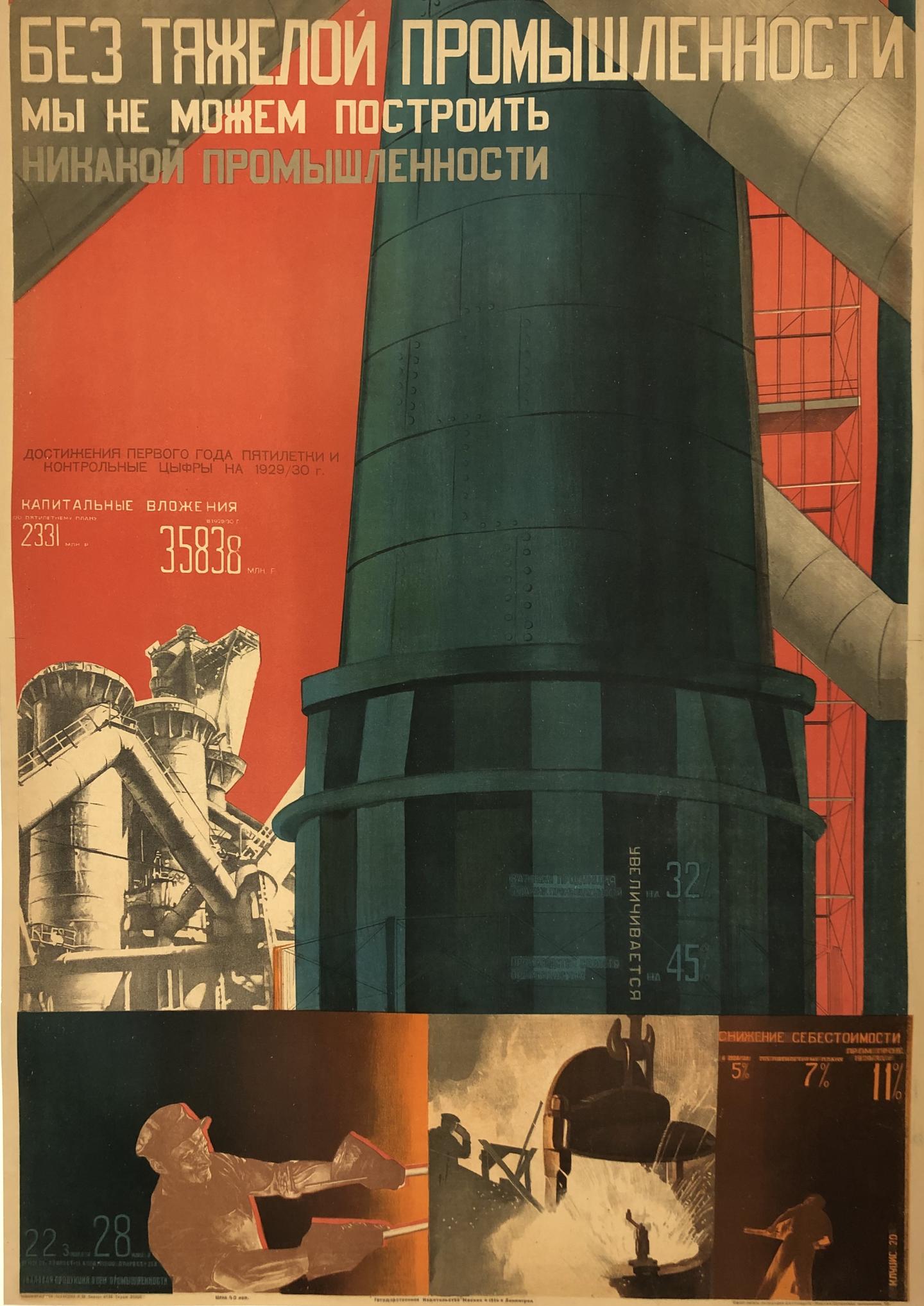
This is best proved by certain facts and figures. Thus the measure of organisation in the working class has greatly increased. The number of those organised in the trade unions increased in the last two years by a full third and has already attained a total of ten millions, of which more than a million are already included in the active work of the trade unions. By means of production conferences, by commissions and conferences, hundreds of thousands of workers have been enabled to take part in the solution of practical questions of industrialisation. In Leningrad alone about 70,000 men take part in the production conferences. In the course of half a year no fewer than 11,000 practical suggestions were accepted at these conferences, more than 80 per cent. of this total being put into execution by the works managements. The most important means by which the workers and peasants are enabled to take practical part in the work of construction, are provided by the Soviets. At Moscow alone some 18,000 workers take part in the work of the different sections in the Soviets. The number of female delegates has reached 90,000 in the urban, and 380,000 in the rural, districts. In the village Soviets alone, 109,000 peasant women are at work.
The most important experiences gained by the working class during the years of revolution in the sphere of construction now enables this class to take a firm hold of the economic apparatus and to conduct it. Thus four fifths of the working managers of the State industries and about half the members of the trust administrations are workers. That shows that tremendous masses have been recruited for the active construction of Socialism. But still greater demands must be made. Bureaucracy in the Soviet apparatus, the negligence practised in the work of the economic organisations, and the lack of active workers in the rural districts prove that there is still much to be done in the direction of mobilising the masses and making them active. The main obstacle in this connection is the yet inadequate cultural level of the rural districts. True, in the realm of cultural work very much has been done since 1917, as will be seen by the following comparative statistics:
The circulation of the newspapers increased from 22 million copies in 1913 to 7 million copies in 1927. The number of books published was double that of pre-war times. The number of pupils in the elementary schools in 1926/27 surpassed that of 1914/15 by 36 per cent., while the corresponding increase figured in the secondary schools at 39, in the technical schools at 120, and in the high-schools at 28 per cent: In the Universities, 50 per cent. of the students are now workers or the children of workers and another 25 per cent. peasants or peasant children. In the revolution years a number of “workers’ faculties” have been created, their object being that of preparing adult workers for the universities. These unprecedented institutions prepare about 45,000 adult workers for university studies.
A very important factor of cultural growth, which is also unique of its kind in all the world, is the Red Army, which for the peasants in particular is not only a military but also a cultural school, the result being that the ex-army men subsequently become the most active participants in the constructional work in the villages. They furnish 34 per cent. of the members and 49 per cent. of the chairmen of the village Soviets, 50.5 per cent. of the members and 67 per cent. of the chairmen of district executive committees, etc.
A tremendous amount of work has also been done towards raising the cultural level of the backward nationalities.
Finally, progress has also been made in the realm of scientific work. Since 1918 the number of scientific institutions and societies has increased by 300 per cent. But all these great achievements in a cultural direction are insufficient in comparison with the requirements of Socialist construction. Cultural backwardness has, in the main, not yet been overcome because its basis, the small production of commodities, has not been surpassed.
Therefor the XV. Party Congress designated as one of its chief slogans a redoubling of all efforts towards raising the cultural level of the working class and the working sections of the peasantry, towards a far-reaching reformation of the manner of living, against drunkenness, towards an elimination of illiteracy, and towards a proletarian consciousness and a proletarian discipline among the peasant and working masses.
International Press Correspondence, widely known as”Inprecorr” was published by the Executive Committee of the Communist International (ECCI) regularly in German and English, occasionally in many other languages, beginning in 1921 and lasting in English until 1938. Inprecorr’s role was to supply translated articles to the English-speaking press of the International from the Comintern’s different sections, as well as news and statements from the ECCI. Many ‘Daily Worker’ and ‘Communist’ articles originated in Inprecorr, and it also published articles by American comrades for use in other countries. It was published at least weekly, and often thrice weekly.
PDF of full issue: https://www.marxists.org/history/international/comintern/inprecor/1928/v08n08-feb-16-1928-Inprecor-op.pdf

