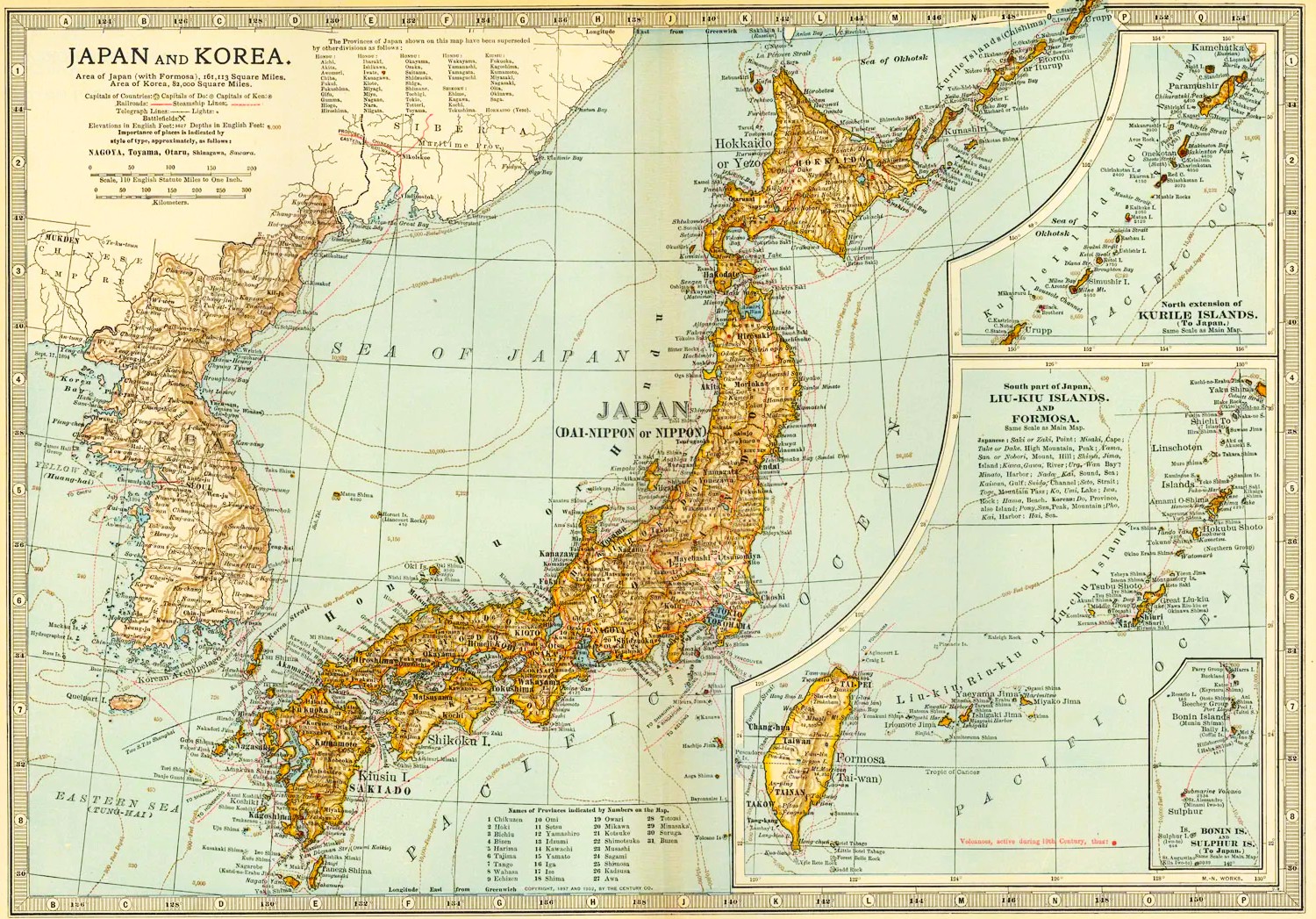
Ward on a quarter century of direct Japanese imperial rule over Korea.
‘Korea: Annex of Japan’ by Harold Ward from New Masses. Vol. 13 No. 10. December 4, 1934.
AN INCONSPICUOUS financial item in the London Times may serve to direct attention to one of the most productive and ruthlessly exploited colonies of Japanese imperialism: Korea. This item states that the “Chosen Corporation” (which “owns nearly all the share capital of three Japanese subsidiaries operating gold mining properties in Korea”) has done so well that its dividends were increased from 4.5 to 15 percent, and that further profits were realized through a remission of taxes.
Another item, in the Transpacific, reports that during 1933 over 5,000 new applications for gold and silver mining permits were received by the Korean Government-General, which gives the total of mine-lots as 3,343, representing one-third of the country’s area of some 80,000 square miles. Mine output increased in value by 14,554,000 yen over 1932, the principal gains being in gold, silver, coal and iron. Eight of the fifteen mining concessions still in foreign hands are under American control (including the powerful Colbran-Bostwick interests), but since 1916 Japan has forbidden outsiders to get away with too much mineral-milk from her fat Korean cow.
As for the Koreans themselves—their story is that of colonial populations the world over, including the American. There are local variations, of course, most of which are the direct consequence of the fact—as stated in the Secret Memorandum of Baron Tanaka—that the Koreans are Japan’s “vanguard in the colonization of untouched lands”: including, besides a “conquered” Manchukuo, a huge slice of the Soviet Union extending westwards to Lake Baikal. (Are not new harbors being built on the coast cities of Yuki, Seishin and Rashin, all within easy striking distance of Vladivostok? And as a base for troops, arsenals and aerodromes northern Korea is ideal.)
“Since we annexed Korea,” remarked that ferocious realist, Baron Tanaka, “we have had very little trouble there. We shall always,” he added, with an eye on a watchful pack of imperialist wolves, “be able to mislead world public opinion.” Another statesman, Terauchi, was more candid: “Koreans must either submit to our laws or die.” The Koreans are not—submitting.
In May, 1930, the Korean peasants who had “emigrated” to Manchuria organized a rebellion whose purpose was to build up a Soviet government among the workers. It took eight months for the Chinese and Japanese imperialists to suppress this movement, and after the travesty of a trial in 1933, those prisoners who still survived jail were sentenced to a total of 1,200 years’ imprisonment. In December of 1930 a further Korean uprising occurred in Manchuria, and was likewise suppressed by the Japanese military—who today are bitterly harassed by constant resistance of “Red Partisans” throughout Manchukuo, among whom Koreans prominently figure.
In Korea itself conditions among the agricultural and industrial workers are appalling. Special privileges and protection is accorded only to the Japanese, who control 1,263 of the total 1,547 commercial undertakings, permitting the natives to engage only in insignificant craft and home industries. Factory and industrial workers are exploited from 13 to 16 hours a day, receiving wages of from five to twenty-five cents (gold) per day: about half that paid to Japanese workers. Mass unemployment exists without even a pretense at relief, and those who do work (including, of course, all able-bodied women and children) are without the protection of any labor laws and denied the elementary privilege of rest days. Prison discipline and unsanitary conditions prevail in the factories, whose Japanese owners savagely repress attempts at organization and strikes. Women textile workers and those engaged on labor for “assisting the poor” (compare with recent “Shops for Jobless” schemes in this country) are especially victimized.
In agriculture, conditions are worse, if possible. We have seen that one-third of the land is exploited by and for mining interests; of the rest (including forest, unoccupied and estate lands), most is in the possession of Japanese agricultural and irrigation companies, money leagues, big land-owners and plantations, which among them maintain a condition of the most extreme feudalism, plus systematic exploitation and taxation of the tenant-farmers. Korean peasants, in addition to handing over their produce—of which rice is the most important—to the owners at monopolistic prices half the open market price, are forced to buy Japanese goods at high prices and to pay a whole series of heavy taxes. There are 52 different kinds of exactions imposed upon the peasants, of which Il are direct taxes. Between 1919 and 1933 the land tax increased by 60 percent; local taxes for administrative upkeep have increased 43-fold since 1913, while the head-tax has risen 240 times in eighteen years! When, completely ruined by such treatment, the Korean peasants flee to the Japanese Paradise of Manchukuo, their land immediately passes into the hands of the great companies and banks—which today possess over half of the ploughed area, and exact from the wretched tenants who remain “crop-rents” amounting to 50-80 percent of the harvest. The agricultural workers, whose labor never stops, average 15 cents gold per day in wages, and the total indebtedness of the poor Korean peasants to their Japanese rulers has now reached the enormous sum of 700,000,000 yen (about $350,000,000 at par).
Now the Japanese government is talking about encouraging sheep-raising in northern Korea, the plan being to require each of some 200,000 peasant families in this district to raise 20 sheep each, or five sheep to begin with. This will add one million sheep to the similar capacity for Japan proper (actually, Japan has only 20,000 head, and Korea one-tenth of that). The product, of course, will go to the great textile mills of the “home” country, thus intensifying the bitter textile war between Japan and Great Britain.
The effect of all this (and I have mentioned only the highlights) on depressing the living conditions of Japanese workers and keeping them down is quite obvious, as are also the consequences for the petty-bourgeois and intellectual elements in Korea itself. A recent report from Tokyo, viewing with alarm the “immorality” of Korean youth, especially those belonging to the favored families, comments with approval on the suppression of public dance halls in the country—such places, it seems, are the ruin of the weak-headed colonials; the more so if they have had a “Japanese education.” The Government-General of Korea professes great sympathy with these reckless young fellows, and even admits that the Korean people may become “a capable people in 30 or 40 years time if they receive the proper moral and spiritual discipline.”
While the rulers chatter and moralize the proletariat observes, thinks and organizes. The Communist Party of Korea, illegal and constantly terrorized as it is, conducts a systematic struggle against the entire policy of Japanese imperialism. Its recently issued “General Demands” have not only a local but an international significance, as readily understood by a share-cropper in our own Southern: states as by every coolie, stevedore and worker in the Orient:
1. Expulsion of all Japanese troops and general: arming of the workers.
2. Immediate liberation of all political prisoners.
3. Unlimited freedom of speech, press, assembly and conscience; repeal of all laws discriminating: against the workers.
4. Abolition of all privileges of rank, all sex and class discriminations.
5. Repeal of the assimilation policy; free general education; no suppression of native languages: or dialects.
6. Free government help for the population in all natural calamities.
7. Abolition of system of monopoly prices on agricultural products.
8. Free medical treatment for all workers.
9. Election of judges and officials from, and by the workers, and the full right of recall at any time.
Korea is a long way from New York, Birmingham, Milwaukee or San Francisco—but only geographically. The struggle of the Koreans is the struggle of workers everywhere in the world today. And their courage is the: same as that which has already established: Soviet power in Russia and in China.
The New Masses was the continuation of Workers Monthly which began publishing in 1924 as a merger of the ‘Liberator’, the Trade Union Educational League magazine ‘Labor Herald’, and Friends of Soviet Russia’s monthly ‘Soviet Russia Pictorial’ as an explicitly Communist Party publication, but drawing in a wide range of contributors and sympathizers. In 1927 Workers Monthly ceased and The New Masses began. A major left cultural magazine of the late 1920s to early 1940s, the early editors of The New Masses included Hugo Gellert, John F. Sloan, Max Eastman, Mike Gold, and Joseph Freeman. Writers included William Carlos Williams, Theodore Dreiser, John Dos Passos, Upton Sinclair, Richard Wright, Ralph Ellison, Dorothy Parker, Dorothy Day, John Breecher, Langston Hughes, Eugene O’Neill, Rex Stout and Ernest Hemingway, Artists included Hugo Gellert, Stuart Davis, Boardman Robinson, Wanda Gag, William Gropper and Otto Soglow. Over time, the New Masses became narrower politically and more journalistic in its tone.
PDF of full issue: https://www.marxists.org/history/usa/pubs/new-masses/1934/v13n10-dec-04-1934-NM.pdf

