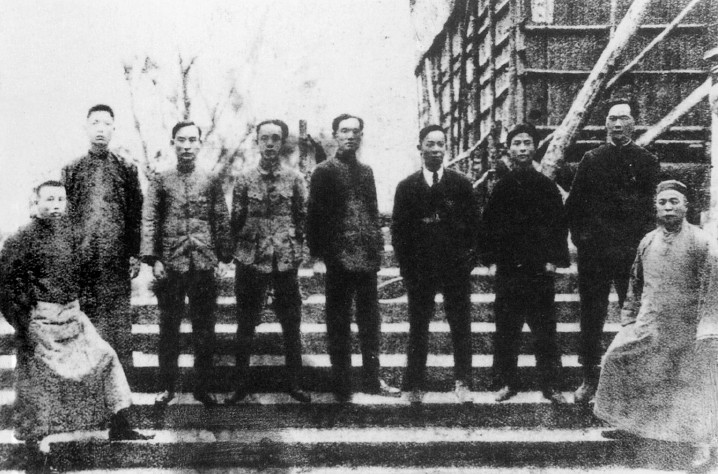
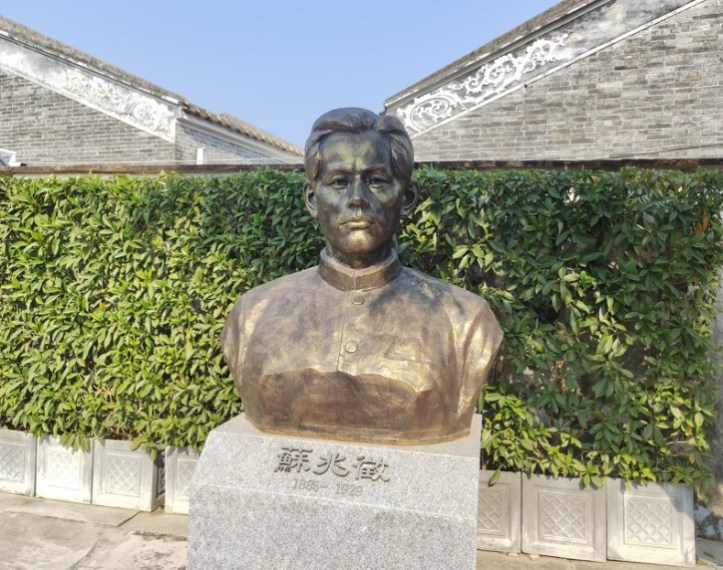
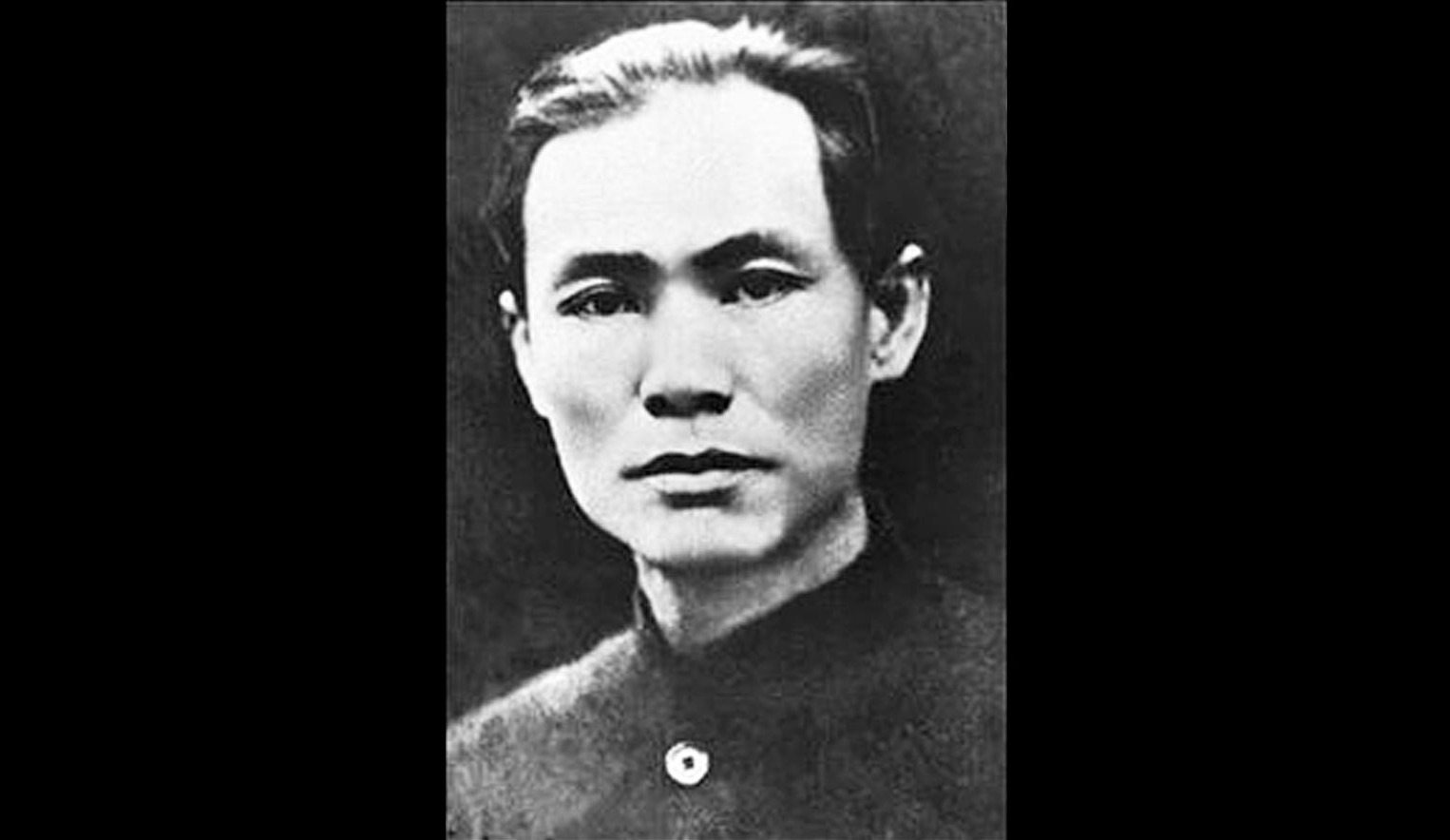
Born to a poor peasant family in 1885 Su Zhaozheng would become a sailor out of Hong Kong, found and lead the Seaman’s union through the 1922 Seaman’s strike and the 1925 General Strike to become Chair of All-China Federation of Trade Unions and a leader of the Pofintern’s Pacific work. A leading Communist he was elected, in his absence, as the Chair of the ‘Canton Commune.’ He would died almost exactly a year after this speech, on February 5, 1929, of appendicitis. Given at a turning point in the Chinese revolution, just after the failed Guangzhou Uprising in December, 1927, this report was given to the Second Meeting of the Pofintern’s Pan-Pacific Trade Union Secretariat held in Shanghai during February, 1928.
‘Labor and the Chinese Revolution’ by Sou Chou-Jen from The Daily Worker. Vol. 5 Nos. 72-77 & 79-80. March 26-31 & April 3-4, 1928.
I. Kuomintang Decree to Crush All Unions
Comrades: On behalf of the All-China Labor Federation I greet this meeting of the Pan-Pacific Trade Union Secretariat, and welcome the delegates from other countries.
For the past three years the Chinese working class has taken the leading role in the revolutionary struggle. The movement of May 30, 1925 aroused the workers and city poor throughout China and brought them actively into the national revolutionary movement. In this movement occurred strikes in every city, peasant struggles began on a large scale, and the Hong Kong strike was carried out with such success as to rouse the entire world. A revolutionary center was created in Canton which crushed the Southern militarists, and launched the Northern Expedition to Wuhan and the Y’angtse Valley. In the struggle the workers and peasants went together with the petty bourgeoisie. But at the same time the conditions of the masses were so poor that they must strive for immediate betterment, to which the bourgeoisie would not agree; a struggle arose within the revolutionary movement, on these class lines, and the bourgeois elements turned against the Revolution.
Attack Working Class.
Since the bourgeoisie turned counter-revolutionary, their one thought is to conduct an offensive against the working class. To this end they called a national meeting of local and provincial Chambers of Commerce, in Shanghai, and formed a central Association. The program of this body, which is being put into, effect by the Kuomintang, has four! main points: (1) The government! shall cancel all agreements made between employers and trade unions during the previous period; (2) All made unions shall he suppressed; (3) the right of hiring and discharging workers shall belong completely to the employer without any limitation; (4) the merchants shall set up their own armed forces (“Merchants’ Volunteers”). At the same time they are forming special employers’ associations for certain industries; British, American and Japanese textile companies recently formed an association to oppose strikes and suppress the workers. Shipping interests on the Y’angtse and in the Canton waters have formed joint associations of Chinese and imperialist employers.
Imperialist Aid.
The principal weapon of the capitalist offensive is military force: foreign forces, and most merciless of all, the Kuomintang militarists. In the strike at the British-American tobacco factories, British troops were used. Japanese textile mills used Japanese troops. In Manchuria the Japanese troops were used against the workers. In Hankow, British and Japanese troops have killed workers. In Hongkong the government arrests any worker it considers undesirable and sends him to Canton to be executed as a Communist; the slightest activity in Hongkong by a worker results in being sent to Canton, the Kuomintang government of which is in closest relation with the British. In Shanghai the police of the International Settlement work with the counter-revolution and regularly turn over workers to be killed. The Kuomintang has published decrees declaring strikes or agitation for strikes punishable by death.
II. Kuomintang Leaders Slaughter Workers
The Kuomintang has become the hangman of the bourgeoisie, the militarists, the imperialists, and the landlords. They have cancelled all agreements of the trade unions; suppressed all the unions; denied all the so-called freedoms to the workers. They say that strikes, meetings, publications, etc., which have the previous permission of the Kuomintang are permitted, but no permissions are granted except for some reactionary maneuver of their own, or to carry out some blackmailing scheme. Workers live under the worst white terror. The Kuomintang has broken relations with the Union of Socialist Soviet Republics, although the proletariat of the USSR has helped China for several years. Workers of China recognize the USSR as our closest friend, which cannot be dispensed with.
The reaction uses the Kuomintang to slaughter the communists. (Since April no party in China has been revolutionary except the Communist Party). They break up the trade unions, arrest the leaders and kill them; they appoint traitors or bourgeois officials to “reorganize” the trade unions, attempting to take them over to be governed by the reactionary Kuomintang. These things happen all over China.
Murder Labor Leaders.
They began the reaction in February in Kanchow, Kiangsi Province, by assassinating the chairman of the Provincial General Labor Union. In Shanghai in March the workers made insurrection against Sun Chuangfang, and helped the southern armies, taking the city with the workers forces before the army arrived; but when Chiang Kai-shek arrived he killed hundreds of workers as his first act. In Shanghai the Kuomintang has never stopped arresting and killing the trade union leaders.
In Kwnangtung in April, the militarists Li Chi-san made a coup d’etat, arrested 2,000 workers in one night, and shot 100s of them without announcing their names. Among those murdered was the chairman of the Canton Workers Assembly. In Hunan the Kuomintang leaders killed thousands. In Hupeh they forced the workers to accept worthless military notes for wages: when the arsenal workers demanded good money, they killed their leaders and suppressed the strike with military force. They killed the Ricksha Coolie union leaders, as well as the officers of the Textile Workers Union. The railway workers of Wuhan made demonstration to demand payment of back wages, of which 11 months are owing, and were suppressed by White Terror.
Feng Kills Workers.
In Honan, under the “Christian General” Feng Yu-hiang. 300 textile workers were slaughtered for striking; the Henan General Labor Union was suppressed and the leaders killed because they supported the railway workers in the demand for back wages. In Szechuan hundreds of workers were killed in the suppression of the trade unions. In Amoy, when the workers gathered to demand the release of their arrested leaders, the troops fired into them, killing many.
In Anhui, the same events; the chairman of the General Labor Union there was arrested because of advancing a demand for wage increases, and he as disappeared, his fate being unknown. In the north, in Fengtien, seven miners were killed for going on strike. In Peking 12 railway workers were shot for demanding hbck wages, which have not been paid for 19 months. In Kuangsi hundreds have been arrested and shot. In all districts the same or similar stories could be related.
Bu! the revolutionary sentiment of the working class has by no means decreased. The workers continue to struggle under their original unions.
III. Workers in Straggle Against War Lords
Can the Chinese ruling classes stabilize their position even by such methods? Our answer is, “No.” As imperialism cannot stabilize itself, even more so cannot the Chinese bourgeoisie, who are the lackeys oi imperialism. They cannot even come to terms among themselves; like the rival imperialists, they can agree only to suppress the revolution.
Struggle for Booty.
Formerly when the working class movement was strongly leading the nationalist revolution, before the treachery of the Kuomintang, the imperialists were being driven back, concessions were being taken over; then the imperialists could unite for a moment to smash the revolution: but now, with the militarists in power in the Kuomintang, the revolutionary struggle against imperialism is set back, and ail the imperialists art rushing in again, intriguing among all the squabbling militarists, grabbing all they can from one another, the Japanese from the British and the American from both, their unity to suppress the revolution gives way to bitter struggle to divide the booty.
Each is trying to win over the various militarists; the militarists, in turn, have nothing in common except their greed for money and power, and degenerate to desperately struggling groups of mercenaries. Therefore, the wars will not stop. Therefore, there is no consolidation, no stabilization. They form all sorts of combinations and associations, which shift from day to day, but They cannot consolidate.
Financial Crisis.
Look further at economics and finance. The bank notes of the militarist governments continue to decline. In Hankow the notes are no longer accepted by anyone. In Canton the notes are quoted at 30 cents to the dollar, and still going down precipitately. Even in the north, the Fengtien notes of Chang Tso-ling are so rapidly becoming worthless as to completely disorganize economic life.
The constant wars are destroying all transportation, trade is declining everywhere, factories are closing down, foreign trade is curtailed. As for the militarists under the flag of the Kuomintang, each fights for his own individual interests; the first aim of each is how to get more money into his own hands, more territory, more troops, more arms. There is a limit to what they can squeeze out of taxation, but that limit is far short of their appetites. They rob the populace, and they turn to rob each other. One day they are all on good terms; the next day they are disarming one another. The armed forces are enlarging all the time, to such an extent that the most extreme exploitation of the suffering people is not enough to finance them; one militarist must destroy the other to make room for himself to live. Therefore, cliques, alliances, constant sifting, constant struggles, constant war. For these reasons also there is and can be no stabilization.
Wages Cut.
Conditions of the workers and peasants constantly grow worse. In Shanghai the average wage of the employed workers is $6.60 per month. In the factories still running, the workers are being speeded up; in the textile mills, since the crushing of the trade unions, every third worker has been eliminated, and the remaining two do the same amount of work formerly done by all three; the eating time has been reduced; workers are forbidden to sit while at work: all former trade union agreement: are cancelled; hours are being lengthened, wages decreased. The Seamen’s Union agreement won in the big strike has been cancelled; the mechanics in Hongkong who won an increase in 1921, are now reduced to their former rates. The same thing goes on everywhere. In such a situation the workers must continue to struggle.
Workers’ Struggle.
The workers have continued to struggle energetically. In Shanghai there were 60 strikes in December alone, including the big strikes of shop assistants, textile workers, and tramwaymen. In Hankow the railway workers surrounded the stationmaster demanding wage payments; more than ten thousand textile workers gathered in public demonstration demanding restoration of their old agreement, and payment of the annual bonus; when the so-called “reorganization committee” tried to stop the demonstration seven of them were kilted; the ricksha coolies struck against an increased rental of rickshas from 80 to 140 coppers per day. In Honan the railwaymen, who had not been paid for from 9 to 11 months, seized the money from the station and distributed it among themselves, because they knew the revenue was being taken by Feng Yu-hsiang for military purposes. Textile workers in Honan recently struck against a wage cut. In Hunan the railwaymen, when refused payment of their wages, gathered an took possession of the town, although they only had one revolver amongst them.
In Amoy the chauffeurs recently struck for an increase in wages. In Manchuria a serious strike of miners took place, while the workers on the Pecking-Seuyan railway engage in a movement for wages. In Hongkong the dockyard workers demanded payment in notes, because silver had depreciated 5 per cent. The rubber workers in Hongkong struck; four leaders were arrested, but the workers, by demonstrating before the governor’s office, secured their release. Not only such struggles as these given for example, led by the Red Trade Unions, have occurred, but even workers who have been under the control of the reactionary Mechanics Union in Kwangtung, have engaged in movements led by us. In the machine shops off Canton they have been striking for 6 months under our leadership; the Mechanics Union has not helped its own members, but on the contrary to “reconcile” the strikers, so that they are now entirely under our influence. Formerly the Hongkong dockworkers were led by the Mechanics’ Union, but their recent movement was led by us.
IV. Revolution Spreads Throughout China
The workers’ struggle in China today cannot be confined to purely economic fights; the workers are compelled to rise in armed force to overthrow the militarists and establish their own power.
In Shanghai last March, the trade unions participated in and led three insurrections to assist the Nationalist government; now the Kuomintang is dominated by the new militarists and the same struggle is necessary against them. After the collapse of the Wuhan government in July-August, the workers in Kiukiang joined with 20,000 troops who revolted against the counter-revolution, in an insurrection.
Recently, in December, the workers of Canton together with the peasants and a regiment of troops participated in a rising which held power for three days; this was the result of a long preparation of struggle ever since the coup d’etat of April 15; on April 23 was a general strike; then a campaign against the cancellation of the trade union agreements; on June 23, anniversary of the Shakee massacre, the workers demonstrated under the slogan “Down with Chiang Kai-shek”; on October 14, the seamen’s one-day strike was joined by the whole labor movement and a mass meeting was held, after which more than 10,000 workers paraded under red flags to the Seamen’s Union Hall, in possession of the reactionaries, which was taken over again at the cost of the lives of four reactionary “Reorganizing Committee” members; all the unions followed this example, driving out the “Reorganizing Committee,” demanding the release of their leaders from prison, etc.; this long line of struggles led straight to the uprising in December.
Peasants Rising.
The peasants are rising everywhere throughout China. The movement is especially strong in Kwangtung; peasant Soviets rule in Nai-feng, Lu-feng, Hainan Island and several districts in north Kwangtung. Risings are spreading in Hunan and Hupeh; in some districts still being in power although not yet so strongly as in Kwangtung. In one Hupeh district a hundred thousand peasants rose but afterwards were crushed by the military. In western Kiangsi, the peasants rule several districts around Ping-hsiang. Even in Kiangsu risings have taken place in a number of districts. Not only the peasant movements in central and southern China, which are under our influence but also in the north and in the most remote places, have been rising; the recent Big Swords movement in Manchuria is an example.
The workers cannot tolerate present conditions. The peasants are in the same position. The struggle goes on always. The masses are now following the way shown by the Canton.
V. Fake Unions Organized By Chinese War Lords
In regard to the present condition of the trade unions, I have already reported to the Pan-Pacific Trade Union Secretariat about the history, development and achievements of our All-China Labor Federation, at the inaugural Conference in Hankow last May. You know of the beginnings of our movement, in 1919, and how, since the great strike movement of May 30, 1925, we have been the dominant force in the development of the Chinese Revolution. The four National Congresses of the All-China Labor Federation, 1922, 1925 and 1926 in Canton, and 1927 in Hankow, each marked a step forward in that development.
Fake Unions.
With the 1927 Congress, however, a new period has been entered. Our previous legal trade union houses have all been occupied by reactionary tools, so-called “Reorganization Committees” etc., appointed by, paid by, and responsible to the militarists, while we are driven underground.
The reactionary appointed leaders are mostly not workers, although they call themselves “executive committees” of the unions; some are military men, some are bourgeois intellectual mercenaries, and a few are renegade workers. They are directly under the orders of the Kuomintang. They tell the workers they are appointed by the government “to direct the trade unions in the interest of the national revolution.” They collect dues forcibly, and use the military to arrest all who refuse to pay. The workers are invited to file their complaints against the employers with these “executive committees” who say they will submit them to the Kuomintang for approval, but really (hey go to the employers, and use these demands to extort bribes from them. Then they tell the workers the Kuomintang has not approved their demands. Thus they get money three ways; salaries from the government dues from the workers, and bribes from the employers.
The War Lords.
Each militarist has his own set of “Reorganizing Committeemen” who fight each other as do their masters. Thus the “reorganization Committee” appointed in Canton by Li Chi-sen to take over the Seamen’s Union, se zed the union’s funds, $43,000 which were in the bank, and spent it. Li Chi-sen was driven out by Chang Fa-kwei, who set up a new “Reorganization Committee” which, without funds, had to find new schemes for squeeze they collected by force $6 from each of the Hongkong strikers who had just been given a bonus by the government in order to liquidate the strike. Now Li Chi-sen has come back to power, the second Reorganization Committee ran away with its new treasury, and a third set of “Reorganizers” is preparing new means of filling their pockets.
Act as Spies.
These “Reorganizing Committees” act everywhere as spies, turning ever workers to the militarists to be executed, while they make paper records of so many thousands of workers in “their unions.” But the workers are not in these “unions”; only a very few backward workers are sometimes fooled for a little while.
VI. Workers Revolt Against Fake Unions
Another instrument of the bourgeoisie within the working class is the Mechanics Union in Canton and Hongkong. This union has a history and some masses. Formerly it had eight or ten percent of the workers; it grew out of a guild, is ruled by a small group of reactionaries who have always been in intimate relations with the reaction; it supported Chien Chung-ming when that militarist drove Dr. Sun Yat-sen out of Canton, and now it supports the new militarists who rule the Kuomintang. But although the leaders who rule this Union with Fascist methods are reactionary, the workers whom they control are not as bad.
Long Strike.
A section of their members have been striking five months under our leadership. The members therefore are now growing friendly to us and hostile to their leaders; they say “our leaders tell us to support the Kuomintang, but they get us nothing from the Kuomintang, the police oppress us and we receive no protection; they have led us on the wrong path,” and “why oppose the Red trade unions and the Communists when they support us and when we agree with their demands?” Another significant development in the Mechanics Union is seen among the dockworkers of Hongkong, who have been dominated by that Union.
Force Action.
They had a movement in November against contracting and for a full money wage; the Mechanics Union opposed them, but our secret unions gave them help. A mass meeting adopted a resolution, proposed by us, forcing action: but the Mechanics Union, hypocritically bowing to this decision of the masses, secretly went to the Government of Hongkong and betrayed the leaders of the movement and advised the government how to crush It. Then they stepped in and accepted a settlement which they called a “compromise” in which the workers lost their demands but gained a few more minutes for lunch time.
The workers are enraged and see the treachery of the Mechanics Union leaders; now it is much easier to discredit this reactionary tool before the workers of Hongkong; although it still in Canton controls the arsenal and waterworks. But even there, the temper of the workers themselves may be seen in the fact that on December 11, 12 and 13, when the Soviet Power ruled in Canton, these workers continued their work without striking, and expressed their approval of our slogans. The entire strength of the Mechanics Union as a counter-revolutionary force lies not in any masses of workers, but in its military force, the so-called “Physical Culture Groups.”
Chiang’s Tool.
A third tool has now been established in Shanghai by Chiang Kai-Shek, known as the “Labor Federation.” The “Labor Unification Committee” originally set up by him had been so thoroughly discredited that it was necessary to find a new instrument. It pretends to oppose the “Unification Committee” but in reality it is the same thing. It cleverly began with new tactics, offering to assist the strikers of the British-American Tobacco Co. (a strike begun by us). Under cover of a subsidy to the strikers, they arrested our leaders, and then compromised with the employers, getting a few insignificant concessions for the workers and several million dollars for the government. When the workers bring forward demands, the new “Federation” is more prompt to attend, and tries to get some little gains. It uses the mask of reformism, and talks about establishing connections with Geneva and Amsterdam. Therefore it, like the Mechanics Union, is more dangerous than the “Reorganization Committees” and the “Labor Unification Committee.
VII. Tests of Labor
In spite of the raging white terror, the Red trade Unions still exist, not openly but secretly. The old Shanghai General Labor Federation, the Canton Workers Assembly, the Hankow General Labor Union, the Hunan) General Labor Unions, all the industrial unions, and the assemblies in the big cities–all still exist and function, but now in secret. All are in close touch with the center, the All-China Labor Federation, and hold full authority over the workers.
But of course, the technical work is in a very chaotic condition. It is impossible now to keep a register of members; that is too dangerous. Dues are not paid regularly, because collectors are immediately shot when caught. Therefore it is impossible for me to give figures on the present strength of the organizations, which had 2,800,000 members last June. We have been dispersed and reorganized many times in our history, so it is not an entirely new experience for us. Our immediate task is to strengthen the trade unions organizationally.
Organization Problem.
Our first task is to root our trade unions more deeply in the masses. Any superficiality in this respect will be a fatal weakness. Formerly we had grown accustomed to legal conditions, a fact which has made more difficult the present period; but we are quickly learning how to adjust ourselves. Already we are more developed, and approached our tasks in a more sure businesslike fashion. In Canton the greatest advance has been made in this respect, for there we had more trained, experienced leaders. In Hankow the trade unions are younger; they began in 1928, but were immediately suppressed, and only worked as mass organs for the six months of our participation in the Wuhan Government; therefore, in Hankow the movement faces more difficulties. Shanghai has had long experience in illegal struggles, like Canton. But everywhere the organization problem is acute.
A second task of our movement is the general creation of self-defense forces, to resist the white terror, to protect the existence of the trade unions, and to prepare for bigger actions which most come.
The third most important task is to improve and consolidate our relations with the peasants, who are marching forward in their revolutionary movement. The peasant movement cannot gain stable successes without the leadership and assistance of the workers, who in turn require the support of the great peasant revolution. Therefore closer connections must be built up; the good working relations that exist in Kwantung must be spread everywhere.
Work Among Troops.
Fourth, is work among the soldiers. Even at present the work of breaking up the militarist forces is very important. Unless this work is successful, the revolution will be in a very difficult position. But this work is not so hard as it seems at first glance; the soldiers have no interest in the objects for which the generals use them, they live lives of the most terrible hardships while the generals roll in luxury, they are mostly landless peasants or unemployed workers who only want a job. They would all have a better living under a workers’ and peasants’ government, and it is not so hard to show them that this is so.
During the Canton rising we took many prisoners from the old armies, whole troops and regiments; we first disarmed them, then at once sent propagandists to explain things to them: almost all immediately asked for arms to fight with us against the militarists. We had not a single case of treachery among these forces, even at the end after we were beaten. This experience shows clearly that the soldiers are not bound to the Kuomintang or to the generals. We must further carry on the disintegration of the armies. Must Destroy Kuomintang Tools Our fourth task is to finally destroy the reactionary tools of the Kuomintang and generals among the workers, the “Unification Committee,” the “Reorganization Committees.” the “Labor Federation,” etc. Finally, our comrades must know that we not only prepare for the rising against the militarists, but also we fight daily for the small immediate needs of the workers; any neglect of this basic work of the trade unions would be criminal. We must gather the masses around the most concrete and immediate demands, and from these move forward to wider actions. At the same time we do not confine ourselves to immediate demands, but, constantly propagate the most far-reaching slogans. Neglect of either, phase would be treachery.
VIII. Need of the Pan-Pacific Trade Union Secretariat
In conclusion I must say a few words about the Pan-Pacific Trade Union Secretariat. We have known for long the necessity of such an organization, and now we are learning practically the benefits to be gained. It is a necessary organ to lead the movement in the colonial and semi-colonial countries, and to link up the labor struggle in capitalist lands with the revolutionary movement in the colonies; it is necessary in order to meet the special problems in the Pacific, which are growing so acute.
Origin of Pan-Pacific Secretariat.
When, more than two years ago the Australian trade unions initiated this movement, we regretted very much we could not send delegates to Australia: we were prepared to do so, but telegrams and letters were withheld from us by the imperialists until it was too late. We were very sorry indeed. We had many problems which it was necessary to discuss with the trade unions of the Pacific. The Chinese trade unions always felt the need of a Pan-Pacific Trade Union organization. As far back as 1924, there was held in Canton a Pacific Transport Workers Conference, in which Filipinos, Javanese, Chinese and others participated. The revolutionary struggle in China became so sharp and developed so fast, we could not pay the proper continuous attention to our international connections. However, last year in Hankow our Pan-Pacific Secretariat was successfully established; we only regretted the absence then of our Australian comrades, for reasons which we all know. Because of that absence in the Hankow conference, we can be especially glad that our Australian comrade is chairman of these sessions. It is also a great pleasure to us to meet here for the first time the Filipino trade union comrades. The Hankow conference had its due influence upon the Chinese workers; we published resolutions and speeches.
But we must admit that our propaganda was insufficient, especially because the counter-revolution broke out so soon after. But in China we have never been able to do sufficient propaganda about anything, because we are so pressed for action.
Tasks of Pan-Pacific Secretariat.
We believe the Pan-Pacific Secretariat has three outstanding immediate tasks. (1) We must establish wider and more intimate connections with all countries. This meeting must see that initiative is taken on this matter. (2) We must lead in organization of trade unions in all Pacific lands, especially where the movement is young or non-existent In this connection we must note that Amsterdam and Geneva are now beginning to got active in the East on behalf of their imperialist masters; they would not accept the invitations of the All-China Labor Federation but they will now accept the invitation of Chiung Kai-shek. (3) We must rally all our trade unions to the support of the workers of the U.S.S.R., which is the vanguard of the world’s workers, which is hated by all the imperialists, which still, without fear, is leading the world proletariat. We must defend the U.S.S.R., the first country of the workers.
Further written reports will be submitted on the White Terror in China and on the condition of the Trade Unions.
The Daily Worker began in 1924 and was published in New York City by the Communist Party US and its predecessor organizations. Among the most long-lasting and important left publications in US history, it had a circulation of 35,000 at its peak. The Daily Worker came from The Ohio Socialist, published by the Left Wing-dominated Socialist Party of Ohio in Cleveland from 1917 to November 1919, when it became became The Toiler, paper of the Communist Labor Party. In December 1921 the above-ground Workers Party of America merged the Toiler with the paper Workers Council to found The Worker, which became The Daily Worker beginning January 13, 1924.

