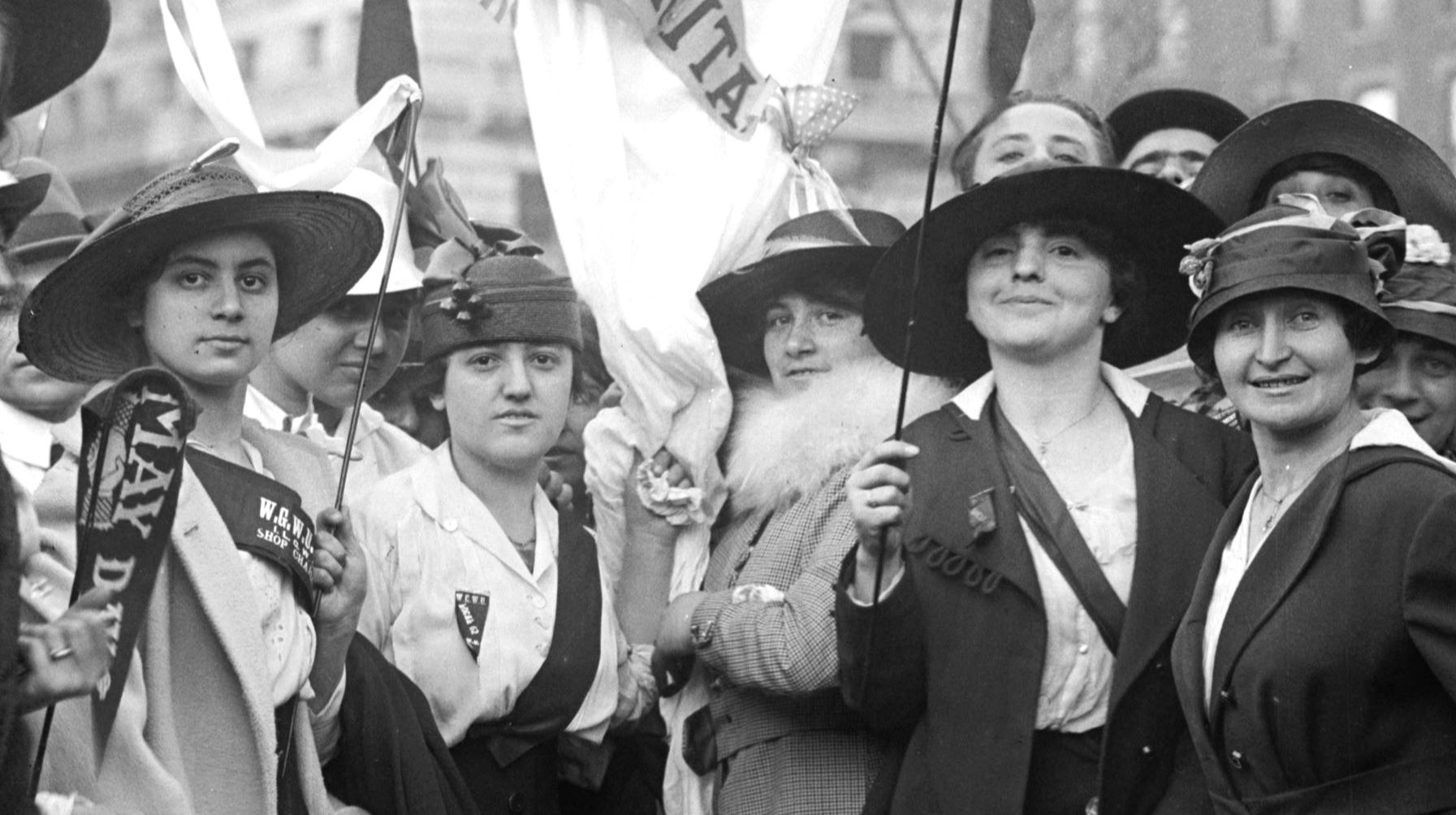
Max D. Danish, who edited the I.G.W.U.’s ‘Justice’ newspaper for decades, with a useful summary of the groundbreaking union’s first decade.
‘A Brief History of the International Ladies Garment Workers Union’ by Max D. Danish from American Labor Year Book. Rand School of Social Science, New York. 1916.
The International organization of the ladies’ garment workers is barely 17 years old, and is comparatively a youngster among the old, powerful organizations of the American labor movement. Its battle-scarred and grizzled existence, however, makes it easily a match to its senior co-divisions in America’s labor army, and its problems and struggles, peculiarly inherent to its trade complexities, have during the past decade put forward some very remarkable labor situations and new industrial methods for their solution, which have since become subjects of research and interest for the student of the labor movement and a guidance to other labor unions through the land.
Roughly speaking, the history of this International Ladies’ Garment Workers’ Union could be divided into two distinct periods: the first covering the seven years, extending from 1900 to the general strike of the reefer makers in New York in 1907, and the second period from 1907 to date. The first organizations among cloakmakers in New York, Chicago and Philadelphia, indeed, date much further back. The last two decades of the past century have, along with the intensified immigration from Russia, Austria-Hungary and Poland, created a very large garment industry in the big centers and the remarkable expansion of these trades brought about the formation of unions of the cloak and skirt makers, composed largely of these immigrant workers. At times these unions were able to exercise considerable influence on the trade, and by means of general strikes, which recurred regularly before every trade season, wrested some wage increases and slight improvements from the employers. There was, however, no permanence to these gains and these unions, which relied chiefly upon the seasonal general strike for their existence, lacked stability, and would, as a rule, go to pieces each time after the wave of the general strike had spent itself and the workers had returned to the shops. Before the following season the workers would again flock into the union, and a new revival for some few weeks would take place, to be superseded again by another period of apathy and indifference. Thus the union, as a pre-season weapon, depending for its partial successes upon strikes, maintained a sporadic existence, flourishing for short periods and lapsing into longer periods of impotence.
The first move for the organization of a country-wide union came about in 1900, when the Cloakmakers’ Union of New York issued a call for a convention to the then existing ladies’ garment locals in the East for the purpose of forming an international union. The principal idea behind this movement was to introduce a union label into the market, and by steady and gradual work to forge it into a weapon for improving the conditions of the workers in the industry. The considerable success achieved at that time by the United Garment Workers, the men’s clothing workers organization, through the use of the union label, served as an alluring example to the few and scattered organizations of the women’s garment workers. The ambitions of the promoters of the movement at that time were limited to the label as a means of strengthening the organization, as they hardly believed it feasible to effect a big, solid international organization by any other means. Between 1900 and 1907 the International body, first organized in Philadelphia, met eight times in convention struggling hard for sheer existence and living, both financially and spiritually, from hand to mouth. It kept no organizers in the field, except for occasional trips by the president of the organization. The methods of organization, practically speaking, remained the same in the International organization as they were in the days before its organization. It was the same strike-club extended over the heads of the individual manufacturers before the advent of the season, and the same subsequent apathy of the workers after the strike—a constant ebb and flow which demoralized the mental attitude of the membership and took the hope and spirit out of the hearts of its leaders.
The Strike of the Reefermakers in 1907
In 1907 an occurrence of far-reaching effect took place in the women’s wear industry of New York, which at once proved the virility and fighting capacity of the masses of workers. This was the successful nine-week strike of the reefermakers. The great tide of Russian immigration, after the revolution of 1905, and the bloody wave of massacres and desolation, brought into the ranks of the cloak and reefermakers a great number of men and women who were imbued with the fighting ideals and experiences of the land they had left behind them. The enthusiastic fight of the young, ardent reefermakers and their eventual success left its mark on the workers in all the other branches of the industry at that time, and paved the way for the impending mass movements of the near future.
The following year, 1908, was the year of the great financial panic which dealt a stunning blow to all organized labor in the land, and which, quite naturally, affected the small International Union of women’s garment workers as well. Its annual convention of 1908, held in Philadelphia, was not a particularly cheerful gathering, and the conditions in the locals were reported as gloomy and depressing. But the optimism engendered by the remarkable fight of the reefermakers during the previous year, saved the organization, and, in spite of the shadow of the economic crisis that hung over the union until the beginning of 1909, they brought to the task every available ounce of strength and energy and preserved the organization. At that time also the attempts to unite the women’s garment workers with the men’s garment workers came to a definite negative conclusion. This proposition was first broached in 1905, with the aim of quickening the process of organizing the workers of both industries by a junction of forces.
From that time the International was entering fast upon its second period of big mass movements and wide organizing activity. The first period of petty and frequent shop strikes, of impotence and uncertainty, the period of internal strife and opposition, when disputes about forms of organization seemed more essential than the real objects and aims of a trade union, was passing out definitely. The tremendous development of the industry in the big cities of the country, the trebled numbers of the workers and their concentration in the big shops, together with the pronounced strains of idealism which marked the influx of the revolutionary immigration from Russia, brought to the surface new potent factors which swept aside the petty practices of the past and laid the foundation for an organization with rational methods, concentrated businesslike activity, and brought to the International immense power and prestige.
The First Shirt Waist Strike
The first real mass movement came in 1909. It came from quite an unexpected quarter of the industry and disturbed the social slumbers of the entire country. The strike of the 30,000 waist and dressmakers in New York served as a jolt to the easy conscience of the women of high society in New York and other cities; it aroused the press and the more liberal-minded churches, and became a potent demonstration of the manner in which tens of thousands of young immigrant girls were being exploited in this golden land of opportunity, while making silk- embroidered shirt waists and dresses to enhance the beauty, increase the comfort and sweeten the lives of the well-to-do. It was a real industrial upheaval. The leaders of the then insignificant waistmakers’ organization had never expected such a record uprising and at most anticipated a walkout of 3,000 workers instead of the great numbers that responded. All Jewish, Italian and other workers, excepting a number of native American women, joined the strike.
This strike might have ended more beneficially had the union been prepared at that time to enter into a collective agreement with a large number of waist manufacturers. It is true, to a degree, that neither side was yet fully ripe for a collective agreement, considering the fact that even the protocol agreement made three years later did not work out as satisfactorily as its promoters had anticipated. However, the Waistmakers’ Union, in spite of the protracted strike, succeeded in making some very positive gains for the workers and in retaining, for some time at least, a membership of 12,000.
The Great Cloak Strike of 1910—the “Protocol”
The moral effect of the strike of the shirt waist girls was far-reaching, and their success imparted a tremendous impetus to the agitation for a strong union and a general strike among the cloakmakers of New York. Within a few months the cloakmakers’ locals were brimming over with organized life. The entire industry was seething with unrest. The men were joining their unions in the thousands and the atmosphere in all the cloak shops was charged with the expectation of great and important events that were about to happen. Finally, after weeks of preparation, the strike was called on July 8, 1910. It lasted for ten weeks and ended in a glorious victory and a collective agreement between the biggest manufacturers in the trade and the union, and hundreds of individual agreements with other employers.
The collective agreement between the cloakmakers and their employers, otherwise known as the “Protocol,” was a radical departure and a notable achievement over former trade arrangements, and brought excellent results in its wake. In its main features the Protocol arrangement amounted to an organized method of settling labor troubles in a big concentrated industry without the weapons of strikes or lockouts—this arrangement to continue for an indefinite time, until both or either side saw fit to abrogate it. Of course, the manufacturers who accepted the proposition to have arbitration, mediation and conciliation take the place of strikes and lockouts were animated not by a desire for peace or from sheer philanthropic motives. It was probably due more to farsightedness and to a keen desire to bring regularity and stability on a large and permanent scale to an industry which in its very nature is subject to marked seasonal influences and changes. The Protocol thus created the system of by-partial investigation of complaints, a mutual Board of Grievances, a Board of Arbitration and later a permanent Impartial Chairman, to decide upon more complicated and knotty problems. Among the other novel and highly interesting features of the new agreement was the establishment of a Joint Board of Sanitary Control. It was created for the purpose of putting an end to the sweat-shop conditions in the cloak factories by a system of regular sanitary inspection, supported jointly by the union and the employers, a system of fire drills and a number of other safety and hygienic features. Later a medical and a dental clinic for the workers were established in connection with this Board, which proved of remarkable service. The controversy on the question of the closed and open shop was settled by a compromise clause, the “preferential union shop,” an arrangement which provided for preference to union workers in the hiring and discharging of employees, and which in view of the fact that the overwhelming majority of the workers belonged to the union proved quite satisfactory.
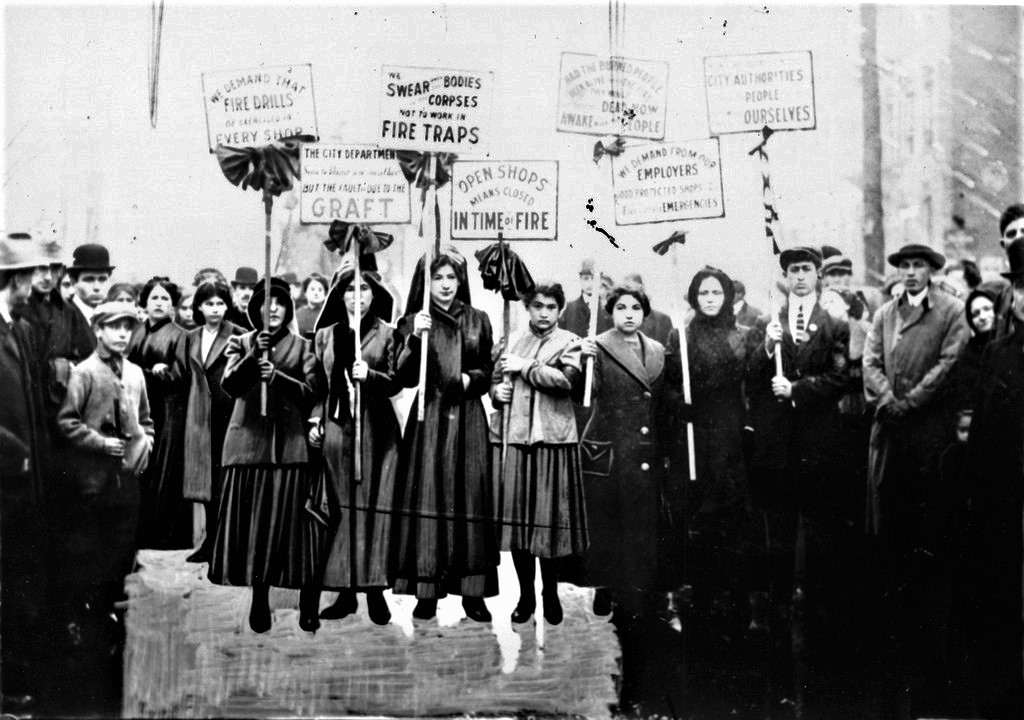
The Protocol agreement worked with excellent results during the first year of its existence. Through the operation of its established boards the union workers, who numbered practically 100% of the 60,000 men and women working in the cloak trade in New York City, received full consideration. The work in the shops, which is largely made on the piece-work basis, was properly distributed, discrimination against active union workers was not practiced, and the principle of collective bargaining and every other union rule was strictly observed. In the second and third year, however, a turning point was reached. Gradually the manufacturers commenced to change their previous policy. The number of complaints increased, and it became increasingly difficult to obtain redress and justice, and the task of enforcing the union rules became ever harder.
The practice of hair-splitting arguments and academic interpretations of Protocol provisions which invaded the relations between the union and the employers, was full of dangers for the very existence of the agreement. It provoked the workers, as it began to appear clear to them that the changed attitude of the employers was due mainly to the fact that the memories of the heroic struggle of 1910 began to wane and the employers were counting upon the subsided enthusiasm of the workers as an asset in their favor. The main issues involved in these disputes revolved around the unconditional right of the employer to discharge, the question of shop reorganization, and equal distribution of work during the slow season. Later came the question of the right to shop strikes to remedy flagrant abuses by individual employers which involved the very basic foundation of the Protocol arrangement.
For months these questions occupied the attention of the Board of Arbitration, which was presided over by Louis D. Brandeis, then a Boston attorney and now a member of the United States Supreme Court. Early in 1915, the Board finally rendered a number of decisions favorable to the union, but the Manufacturers’ Association remained quite obstinate and persevered in its tactics of harassing the union, placing its own interpretations upon the decisions of the Board of Arbitration and continually exposing themselves to the charge that they were unfairly seeking to take advantage of the hard times then prevailing.
Abrogations of the Protocol—Cloak Strike, 1916.
Finally the employers’ association broke up the arrangement by abrogating the Protocol of Peace, after an existence of almost five years, on May 20, 1915. The step was premeditated and was taken by the Association without waiting for the final efforts of the Board of Arbitration to adjust the differences. The ostensible reason given for this abrogation, the recurring stoppages of work in the shops, was rather trivial, as such stoppages of work in the shops had occurred in the past and were made without the consent of the union and could have been adjusted. It was based in reality upon the decision of the leaders of the employers to make nugatory ail the gains made by the workers in the ladies’ garment trades for years past and to defeat the plans of the union for the standardization of labor and prices.
The abrogation of the Protocol by the manufacturers, intended primarily to embarrass and create chaos in the union, served instead to bring about a new and revived spirit among the workers. While negotiations were conducted with the manufacturers, a vile conspiracy was set in motion to involve^ the leaders of the Cloakmakers’ Union of New York in a homicide case which occurred several years before during the cloak strike of 1910. A number of serious criminal charges were started by the office of the District Attorney of New York, based on perjured testimony furnished by scabs and underworld criminals, against some of the leading officials of the union. Their arrest, which resulted later in the celebrated “Trial of the Eight Cloakmakers,” a trial which stirred the entire country and ended in their complete vindication, had roused the workers deeply. They perceived in this conspiracy and in the abrogation of the Protocol an attempt of their enemies to destroy their organization, and responded by a remarkable show of unity and enthusiasm. Soon after, on June 12, 1915, Madison Square, New York’s greatest meeting place, saw a remarkable demonstration of tens of thousands of men and women pledging their loyalty to their organization in an unmistakable temper and with a decision to preserve it at all costs.
Meanwhile a number of forces were set to work to prevent a general conflict. Mayor Mitchel of New York organized a Council of Conciliation, composed of some of New York’s best known citizens, which stepped quickly into the breach with the attempt to heal it and to avoid a strike. After a series of remarkable public hearings which lasted over three weeks at the New York City Hall, the Council of Conciliation handed down a decision which was promptly accepted by the union, and afterwards agreed to reluctantly by the Manufacturers’ Association, under the stress of public opinion. It raised the scale of wages for piece and week workers, granted the right of review of discharges, upheld the principle of collective bargaining and renewed the Protocol peace arrangements that existed heretofore.
But the spirit of aggression that overtook the employers and the counter-spirit of resentment among the workers was only stayed for a time. Again the lack of fair play and the unceasing hair-splitting and everlasting attempts to benefit by technicalities and one-sided interpretations, created a strong and ever-growing belief among the workers that nothing short of a general strike would clear up the relations between both sides. Dissatisfaction grew with startling rapidity, and in the spring of 1916 it became evident that the course of the employers was headed towards a general strike. The blow fell on April 30, when after a second abrogation of the Protocol the 400 members of the Association ordered a lockout in all their shops. It was quickly followed by the proclamation of a general strike by the union on May 3, which closed up every cloak shop in the city, involving 60,000 workers.
A tremendous fight ensued which lasted for fifteen weeks, practically through the entire slack period of the trade, between the spring and fall seasons. This lockout brought forth an outburst of sympathetic public opinion, unparalleled in labor struggles. In spite of innumerable provocations the great army of workers maintained remarkable order and stood their ground firmly. The strike was finally settled on terms which represented strongly modified arrangements from those prevailing under the Protocol. The working hours were reduced from 50 to 49; the wages for both piece and week workers were materially increased, and, principally, the right of shop strikes was conceded to the union. It was the most signal victory for the locked-out workers and lifted the prestige of the union to a remarkable height. It has forged together, as never before, the ranks of the organization in New York and served as a remarkable stimulus for organization of ladies’ garment workers all over the country.
The new agreement was signed for a period of three years, and the union, in addition to the right of shop strikes, also retained the right to confer with the manufacturers when occasion arises on questions of prices and wages and other labor standards. It is remarkable that the unique institution of the Joint Board of Sanitary Control did not relinquish its activities during the periods of the abrogations of the Protocol. It kept up its work of sanitation and inspection as if by tacit understanding between both sides, notwithstanding the fact that the organizations supporting it were engaged in a bitter controversy.
Organizing the Women Workers
We have dealt at length so far on the struggles of the New York cloakmakers, for the reason that in numerical strength they comprise the major and most solidly organized part of the International. They also were the oldest organizations of the International Union.
During the second period of the history of the International, since 1907, there have, however, taken place a number of remarkable organizing campaigns outside of the New York cloak trade, which have netted the International Union over 50,000 members and given it the fourth place in the American Federation of Labor. The most remarkable feature about those campaigns was that they extended largely to women workers, and made this International Union the leading women’s trade union in the country. There are to-day at least 50,000 organized women workers in the ranks of the ladies’ garment workers. By far the biggest single woman’s trade union local in the country is the Waist and Dressmakers’ Union of New York, a part of the International referred to above in connection with its remarkable strike of 1909.
For three years after that strike, the waistmakers’ organization of New York, notwithstanding its considerable membership, maintained a precarious existence. The big change came in the winter of 1913, after a successful general strike in which tens of thousands of women participated. Working hours were reduced to fifty hours, wages materially increased and an agreement similar to the Protocol then existing in the cloak trade in New York, entered into. Later in 1916, this agreement was considerably modified after a two weeks’ demonstration of the workers in the trade. A further reduction in the working hours from 50 to 49 per week and a big raise in wages were among the concessions gained. This local union maintains a remarkable educational department for the tens of thousands of its members and conducted a couple of years ago a very broad statistical investigation into the shop conditions of this very big trade. This woman’s organization, which conducts its varied business through a big executive committee, is also publishing three periodicals in the English, Jewish and Italian languages, and has established a summer vacation home for the members of the organization. The waist and dressmakers’ union is also a partner in the Joint Board of Sanitary Control and its shops are receiving the benefits of the sanitation and fire safety features of that institution.
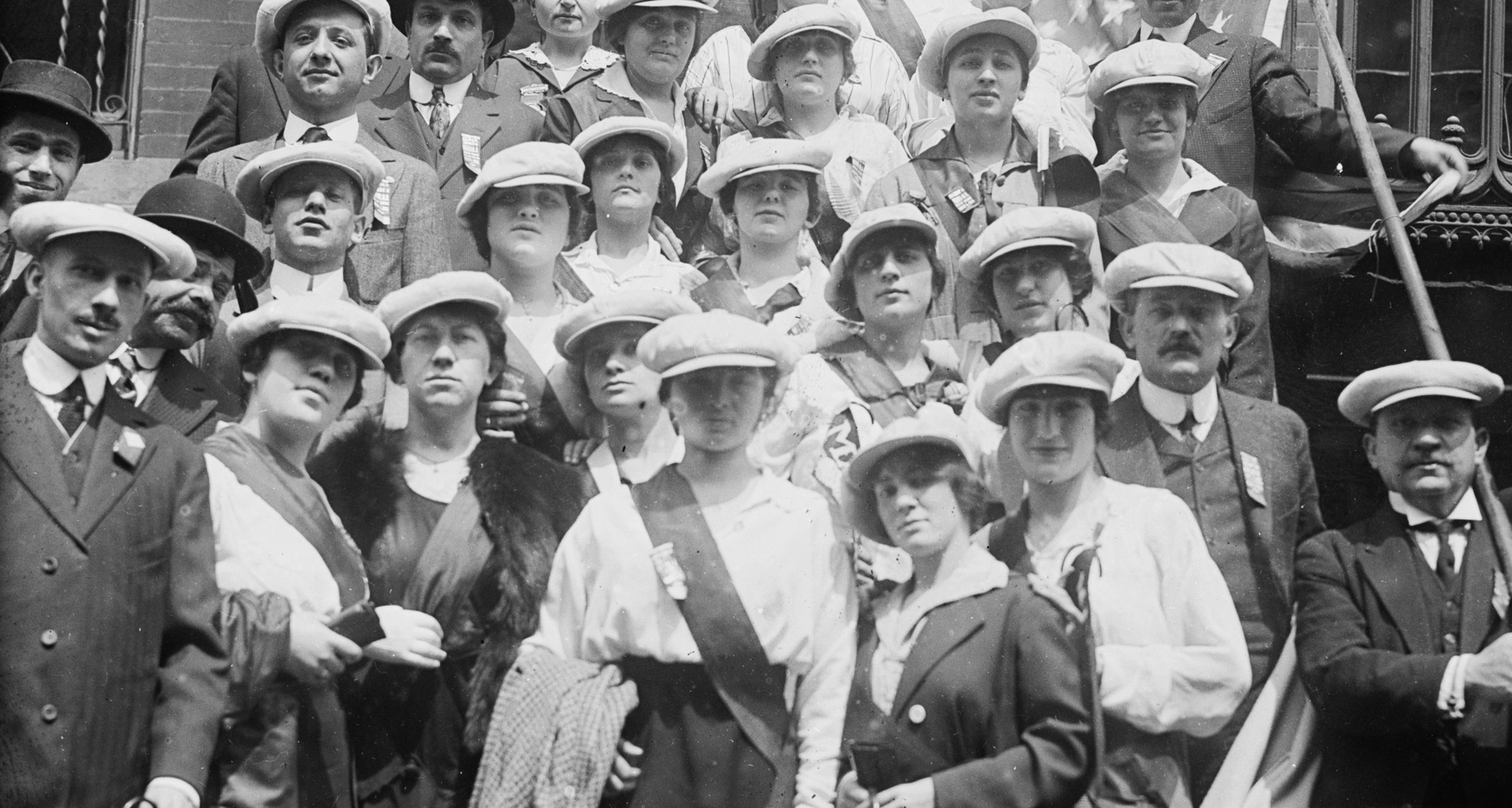
The drive to organize the women’s wear centers outside of New York began with exceptional strength in 1914, when, at the Cleveland Convention, the International Union placed at its head a veteran leader of the organization, its present indefatigable president, Benjamin Schlesinger, Within a period of two and a half years, the International fought through successfully under his leadership more than a dozen of big contests and added or reclaimed to its fold, the house dress, children’s dress and embroidery trades of New York; the cloak and waist trades of Boston; the cloak, waist and dress trades of Philadelphia; the cloak and waist trades in Cincinnati, Worcester, Mass., Toronto and Montreal; the corset workers of Bridgeport and New Haven, Conn.; and several other trades. President Schlesinger was also the leader in all the above cloak struggles in New York in 1915 and 1916.
Conclusion
At present the International Ladies’ Garment Workers’ Union, in the midst of the greatly disturbed economic and general conditions of the country owing to the world war, faces the future with reserve and confidence in its own strength and unlimited faith in the loyalty of its membership. During the last decade it has faced and weathered a number of acute trials and has made good, emerging victoriously from all of them It has for the first time, dealing in terms of tens of thousands ot workers, applied the principle of collective bargaining in the needle trades. The partial failure of the big experiment of the perpetual peace protocol, which lasted for a number of years, proved that the great masses of organized women’s wear workers, while ready and willing to cooperate with their employers in the standardization of labor conditions, were conscious enough not to permit any combination of selfish interests to defeat their rights and just aspirations. The principle of collective bargaining, however, is a firmly established and compelling feature in the ladies’ garment trades throughout the country. It has substituted the archaic and unworkable methods of the past, and, backed by a virile and vigilant membership, bids well to protect the interests of the workers in the industry in a rational and progressive way.
Max D. Danish. Ass’t Sec’y-Treas. I.L.G.W.U.
Rand School of Social Science was founded in 1906 by supporters of the Socialist Party of America in New York City. A worker educations school, in addition to classes a publishing house, research institute, as well as camps and retreats were developed. The school came under the Social Democratic Federation after the split in the Socialist Party in 1936 and changed its name to the “Tamiment Institute and Library” with Its collection forming the basis the Tamiment Library and Robert F. Wagner Archives at New York University.
PDF of full book: https://archive.org/download/americanlaboryea1718rand/americanlaboryea1718rand.pdf

