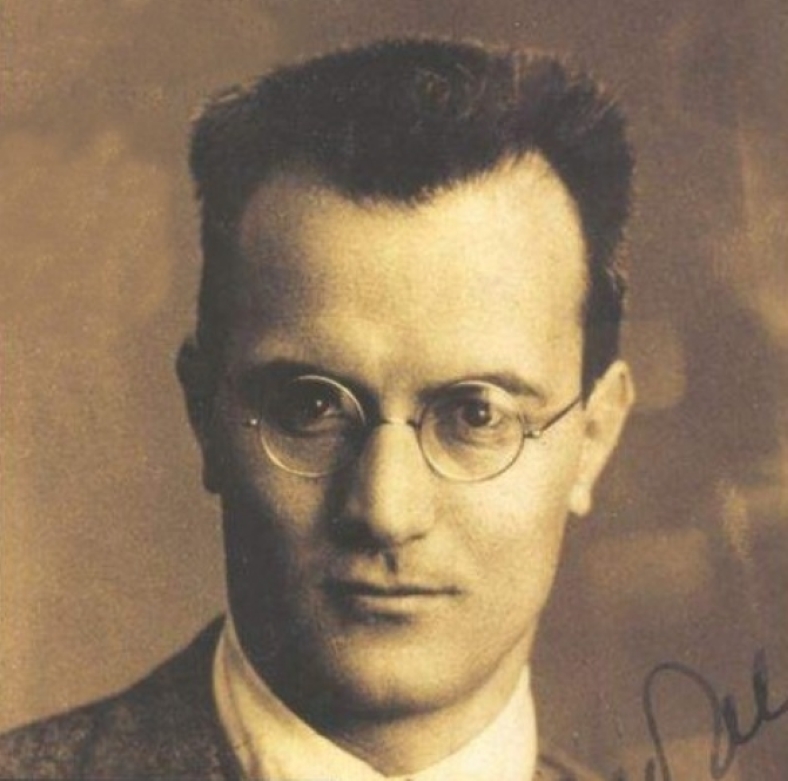
More evidence of the centrality of negotiations between the two foremost revolutionary working class tendencies at the end of the World War, Syndicalism and Communism, in the establishment of the Third International. Here, a leading wobbly argues for the organization to affiliate with the Red International. An activist with the most extraordinary revolutionary career, George Andreytchine was born in Macedonia in 1884 and began socialist and trade union activity in his youth before emigrating to the United States in 1913 where he joined the I.W.W. in Minnesota after his arrival. Rising to prominence in the Mesaba strikes of 1916, he was soon editing Rabotnicheska Misul, its Bulgarian newspaper in Chicago, he quickly mastered English and wrote widely for the revolutionary press. Swept up in the 1917 mass arrest of wobbly leaders, he was the director of the I.W.W.’s Publicity Bureau, and sentenced to 20 years in prison with fa $20,000 fine. He spent a year in Leavenworth before, like Bill Haywood, he was bailed, then edited One Big Union for a time. Also like Haywood, Andreytchine, facing prison and possible deportation to a death sentence, jumped bail and skedaddled to Soviet Russia. There he became active in international trade union work, was a founding member of the Profintern and attended Comintern Executive meetings. In 1922 he became the U.S. representative to the Red International of Labor Unions, though soon quit to be replaced by James P. Cannon. From there he worked as a R.I.L.U. organizer in the Balkans, and worked with U.S. comrades in the Kuzbas and Perm colonies. An early supporter of the Left Opposition, he lost responsible positions in 1924 and was arrested and transported to Siberia in 1928 as a Trotskyist. Released during World War Two, he was placed in the Red Army as a Bulgarian translator and would become an official in the new People’s Republic of Bulgaria’s diplomatic corp. Arrested again in 1947 and imprisoned, George Andreytchine was executed on April 20, 1950.
‘Towards an International of Action’ by George Andreytchine from Industrial Pioneer. Vol. 1 No. 1. February, 1921.
“Russia is on strike against the entire capitalist world. She has struck for the loftiest of ideals, for no less a goal than the introduction of Socialism. Our strike committee is the present government of Russia, the Soviet regime. The Red Army is our picket line, which guards our big factory, Russia, that it might not be captured by these scab agents and gang men, Kolchak, Denikine, Youdenitch, Wrangel, and the rest.”
Comrade Petrovsky, chief of the Soviet officers’ training school of the Red Army, in an interview with Benjamin Schlesinger.—The “New York Globe,” December 6th, 1920.
THREE years ago the workers and peasants of Russia went out on strike against their exploiters and oppressors, the capitalists and traders, the swindlers and landlords. For three whole years the Russian toiling masses have been besieged by the gunmen and thugs of the robber class. One by one the scab herders have been vanquished, and still the workers and peasants of Russia are compelled to fight against the new onslaughts of the praetorian guards of the international bandits. No peace, no truce, no breathing space for the workers and peasants of Russia, because they have overthrown the rule of the masters. In its place they have erected a new order, wherein only those who toil govern. They have lit the torch of the greatest revolt in the history of the human race—the revolt of the exploited and martyrized workers of the world. They have smashed the fabric of capitalist society and have torn the mask off of the face of all governments in the world, and have uncovered the ghastly sight of democratic hypocrisy and deception. They have shown all the horrors of Capitalism and all the grandeur of a Commonwealth of Labor. The Russian Soviet Government is a bold challenge to the vultures of the world and an inspiration to slaves.
The bandits hate and abhor the Russian workers. The name “Bolshevik” is uttered by them with the venom of the snake. They are trying to conceal from their slaves the fact that the Bolsheviki are their brothers in blood, their comrades in the common fight against the common foe.
In the war against the Russian workers the bandits have enlisted the services of their kept press, the whining pulpiteers and the traitors from the ranks of labor—the yellow Socialists, yellow Anarchists and yellow Syndicalists. And if the Russian fellow workers are still in a besieged “factory,” starved and murdered in cold blood, it is not the fault of the capitalist but of the traitor-leaders of the working class in Europe and America, who encourage the masters in their criminal attempt to extinguish the only torch of light and hope of the slave class.
The humble but brave workers of Russia have suffered much for the Revolution, for all of us who strive to break the chains of economic and political bondage. Many times have the factories of Petrograd, Moscow, Toula and Ivanovo-Voznesensk been stripped of their man power and our fellow workers have silently gone to the international front of the revolution, never to return…They have taken the fallen rifles and filled the gaps caused by bullets made, loaded and transported by their fellow workers in France, England and America. But they have not despaired of us. They have not lost faith in us. Fellow Worker Lozovsky-Dridzo, the spokesman of the 5,200,000 organized workers of Russia, said in his masterful speech at Berlin last October: “The Russian proletariat fights, suffers, but never loses courage!” And he knows this to be true. He is one of them; he has shared their tragic lot since the first days of the revolt.
But the Russian workers must not be deceived, betrayed by their comrades in Europe and America. We must go to their rescue. We must fulfill our class duty; we must join them in the struggle against the unchained Beast. We must strengthen their spirit.
The world is split into two camps, the Yellows and the Reds. The Yellows are fighting the Reds. All Yellows are in one camp, all Reds must also join hands and think like one, act like one, so that their Red Army, imbued with idealism and beautiful visions and at the same time full of courage, daring and discipline, shall disperse the mercenary gangs of the robbers and exploiters of the world.
Look at the capitalists: they know what class solidarity is. They may have profound different religious beliefs, or their skins may be totally different—but when it comes to fighting the workers, they all combine into one International of Vultures: Japs and Americans, Italians and Czecho-Slovaks, all fighting like one in Siberia against the Workers’ Government. Germans and Poles, French and Hungarians, all joining hands to crush the Soviet Government. There is a complete accord among them.
Only in the ranks of the workers do we find strife, mutual suspicion and distrust. Instead of the proud battle cry of yore: “Workers of all lands, unite!” we see the ambitious, the morbid-minded, the bigoted leaders urge us to cut each others’ throats, and on their ignoble banner we read: “Workers of the world, divide!”
At the most critical juncture of the epochal struggle of the classes, when all differences should be obliterated in order to form a united front against a common foe, we see people who pretend to be revolutionists, betray the workers and try to lead them into the camp of the enemy, or to make them impotent.
We are now at a stage of the class war where hesitation and equivocation is unpardonable. We must make our choice in the war between the Revolution and Reaction, between the Reds and the Yellows. The Industrial Workers of the World knew no delay, no hesitation. It knew its place in the international front of the class war. So did the masters of the world know where we stood. That is why the three letters—I.W.W.—were a symbol of the proletarian revolution, and consequently a nightmare for the exploiters. It was the symbol of unconquerable militancy of labor.
Only a few short weeks ago there appeared editorials in one of our weekly papers, as well as in our monthly magazine, attacking the Bolsheviki in a manner unwarranted by the facts, and betraying very superficial reasoning. We are certainly glad to note that our publications have of late abandoned this suicidal and reactionary policy.
The I.W.W. has principles which cannot be violated with impunity. The very name of the I.W.W. stands for the International Solidarity of Labor. We will not allow any one to use it as a lever in disrupting the workers’ ranks.
We cannot allow our name to be used in bolstering up the dubious acts of an insignificant group of bigots. The I.W.W. should not oppose the Industrial International founded last summer by the representatives of the French, Spanish, Bulgarian, Jugo-Slav, Russian and Georgian revolutionary unions. On the contrary, it should join it, and work for its triumph over the Yellow International of Gompers, Jouhaux, Legien, Fimmen and Appleton. If we cannot accept the program of an International which has incorporated our main principles of the class struggle—Industrial Unionism and Direct Action,—the first as a practical and scientific form of organization and the second as an efficacious method of combat, I cannot see what more we want. Shall we follow the Swedish Syndicalists? The little information I have of them is very damaging: their puny paper “Syndicalisten” carries correspondence from Paris written by social traitors, calling themselves Syndicalists. Their paper sided with Jouhaux in the bitter fight between his regime and the Syndicalist left, lead by Pierre Monatte, Monmousseau and Rosmer. The French proverb which reads: “Qui se ressemble, s’assemble” (Birds of a feather flock together), leads us to believe that the Swedish Syndicalists are as yellow as the Amsterdam International.
With the new organization we find groups and unions with which we have for years been associated in common thought and action. There we find, beside the Russian Labor Alliances (5,200,000), the British Shop Stewards and Workers’ Committees; the French Left Syndicalists (750,000 strong) ; the Spanish General Confederation of Labor (1,000,000); the Italian Syndicalist Union (called by the Italian counterpart of the I.W.W.—450,000); the Norwegian Labor Unions (160,000); the Jugo-Slav Confederation of Labor (180,000); the Bulgarian Syndical Union (100,000). Last October the Greek Confederation of Labor joined unanimously the new Industrial International. It counts over 60,000 members in Macedonia and Old Greece. The German Syndicalists also joined, but I see now that they are feeding the fire of dissention and disruption. But their leaders—Rudolf Rocker and Kater—are Anarchists, pure and simple, and we cannot follow them into the pitfalls of anarchist metaphysics, and their worship of the abstract notion of freedom. We are a Marxian organization, based upon the sound program of militant and disciplined centralized action. There is no doubt of that!
We have nothing to fear from our contact with the Russian workers, who have put in practice all that we have taught–industrial unionism and direct action; we have nothing to fear from our French revolutionary fellow workers, for they have shown what metal they are made of during the most trying moments of the war. We want an International of Action and not of bigotry and dogma.
The I.W.W. should find its place of honor in the ranks of the above-mentioned organizations, and give its contribution of militancy and fearless action; it should work and fight like a disciplined soldier of the International vanguard of the proletarian Red Army.
Industrial Unionism, endorsed and put in operation by millions of workers, will be our dream realized. But Industrial Unionism militant and revolutionary, not the tame and castrated kind of Industrial Unionism that we sometimes hear preached. Industrial Unionism will be revolutionary or will not be at all!
No Industrial Unionism a la Gompers is wanted m our ranks, nor in the ranks of the powerful International of Industrial Unions, whose cornerstone has been already laid by our comrades in Europe.
Then our International, strong, disciplined and aggressive, will assume the offensive against the International of the capitalists and their minions. We shall overthrow their rule and in its place build the New Order—The Commonwealth of Labor.
***
APPENDA BY THE EDITOR:
(1) We print below a telegram sent to the Industrial Workers of the World by Tomsky of the Moscow Red Industrial International:
Industrial Workers,
1001 West Madison St. Chicago.
December 19, 1920.
Provisional Bureau Council of international organization of trade unions notifies organizations belonging to council that Congress of Red Labor Unions fixed for January first, for technical reason postponed, taking place in spring of 1921. Precise date will be announced later.
Secretary-General Tomsky.
***
Since the receipt of the above telegram we have been informed from authentic sources that the Congress will convene in Moscow on May 1, 1921.
(2) Below is reproduced a clipping from the London Daily Herald, organ of the British Labor Party. In regard to the settling of the differences between the Third International and the I.W.W., it may be appropriate to point out here that the referendum to decide on affiliation has been called in and declared void by the General Executive Board of the I.W.W., as the intent of it was in contradiction to the I.W.W. Constitution, which forbids alignment with political groups or anti-political sects. The clipping reads as follows:
“Berlin, Nov. 29—J.T. Murphy, the delegate to the Moscow Trade Union International from the British shop stewards movement has arrived in Germany, together with the representative of similar bodies in Western Europe. From him I learn that the difficulties between the Third International and the shop stewards, the American I.W.W, and the Italian, French and Spanish Syndicalists may be regarded settled. These organizations are all accepted into the Moscow Trade Union International.
“The work of creating a Red Trade Union International is proceeding. The Congress will be summoned in Moscow next spring, Ind in the meantime bureau will be established in various Western countries.
“Individual trade unions who decide to join the Moscow Trade Union International can still remain in their national trade union federation.”
The Industrial Pioneer was published monthly by Industrial Workers of the World’s General Executive Board in Chicago from 1921 to 1926 taking over from One Big Union Monthly when its editor, John Sandgren, was replaced for his anti-Communism, alienating the non-Communist majority of IWW. The Industrial Pioneer declined after the 1924 split in the IWW, in part over centralization and adherence to the Red International of Labour Unions (RILU) and ceased in 1926.
PDF of full issue: https://www.marxists.org/history/usa/pubs/industrial-pioneer/Industrial%20Pioneer%20(February%201921).pdf
 Revolution's Newsstand