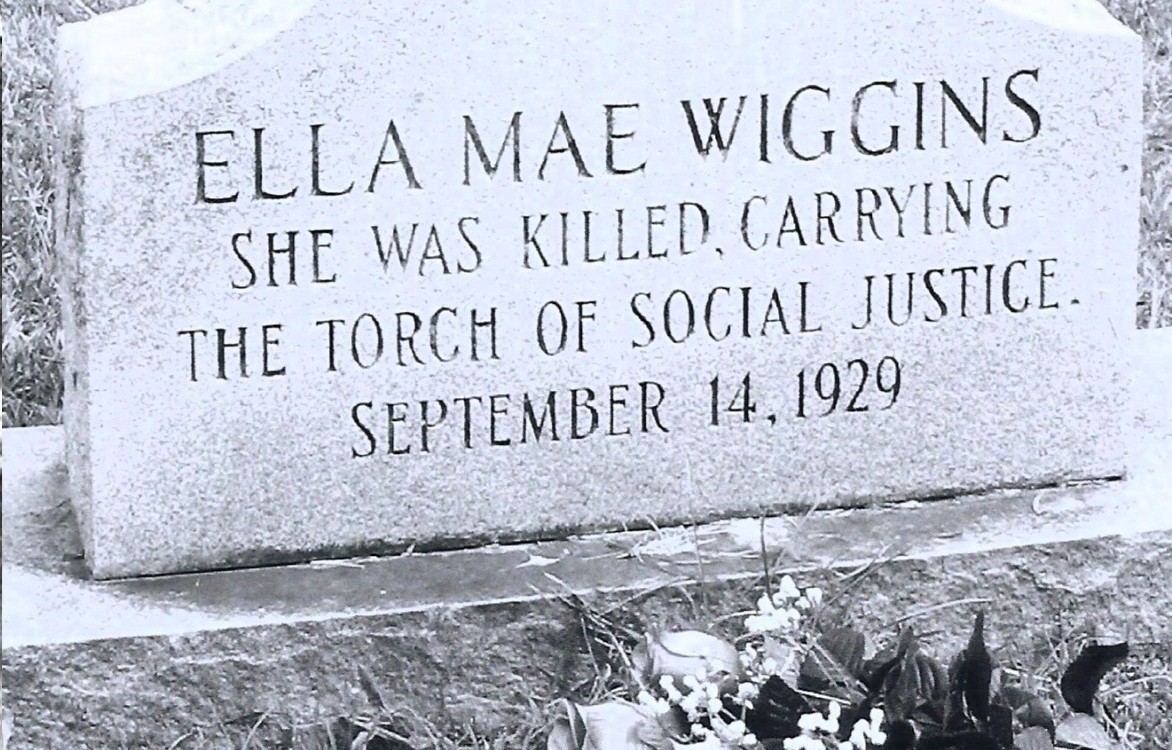
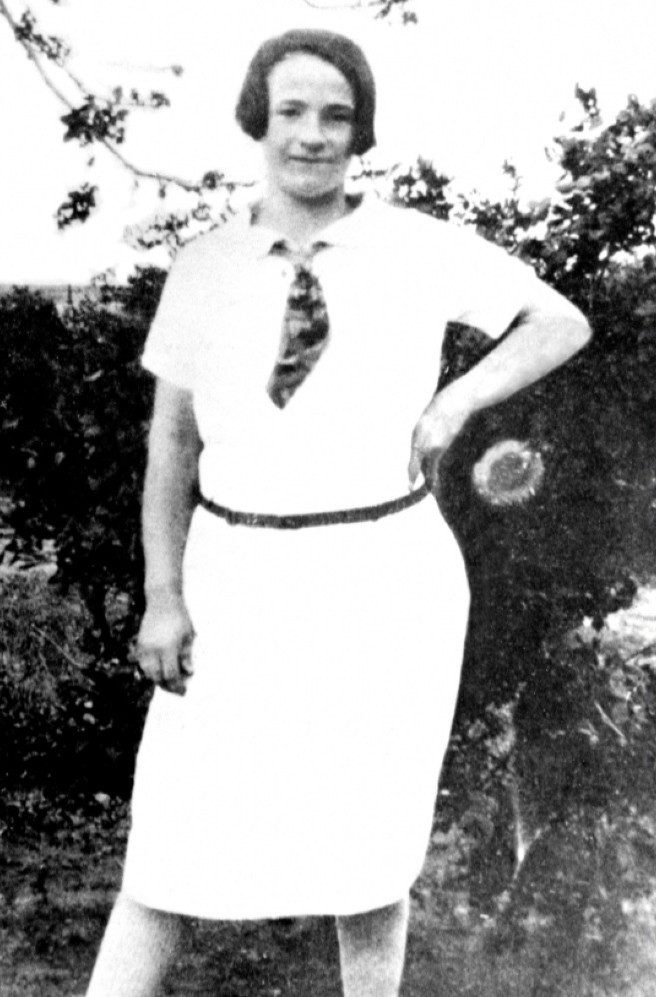
Written on the back of a union leaflet a few days before her murder on September 14, 1929 in Gastonia, North Carolina returning from a union meeting, the words of Ella May Wiggins, striking mill worker, single-mother, and National Textile Workers organizer. Wiggins came to life in the strike, by her own admission, writing songs for the workers and going to Washington to testify before Congress. She left five orphans.
‘What I Believe’ by Ella May Wiggins from Labor Defender. Vol 4. No. 11. November, 1929.
The following article was written by Ella May on the back of a National Textile Workers’ Union leaflet the day after the Manville-Jenckes Black Hundred had raided I.L.D. and Union head- quarters in Gastonia and Charlotte and kidnapped Ben Wells, Saylors and Lell, Union organizers. It was written but a few days before Ella May was killed by a Manville-Jenckes murderer. She had probably intended to send it to one of the papers. It was found among her belongings after her death.–EDITOR.
I THINK that the mill owners see they cannot send our leaders and our other boys to the chair, and last night they made a raid on the headquarters in Gastonia and also Bessemer City. I think they thought it would scare all the workers down here and they would quit the union.
But what buts them is that it only makes us stronger. If I had not already belonged I would join now. But I joined when it first came down here and I am not ashamed of it. I can’t speak to do any good, but I try. And I do anything else I can to benefit myself and other workers. And if every one of the workers could see it as I can, we would have no trouble winning, and I hope whoever was in that mob of thugs last night will have to suffer. But we cannot look for the law to punish their own bunch.
We must still stick out for our rights. That is what will whip the mill-owners and they see we are going to win out. I want every worker to stick together, and if we do we are sure to win, and if we don’t stand up for our rights and we hang on the bosses, we are fighting ourselves and fighting our children and against our freedom for the working class.
Down here in the South we have never had any freedom since I can remember and I am now 29 years old and I have got five children of my own and I want them to have something to want to live for and not have to slave all their days away for nothing, like I have had to do.
When I came out on strike I was only making eight or nine dollars a week and working 11 hours at night. I mean I worked. I did not stop from the time I went in till I came out and I want to say ever since I came out of the American mill on the night of the strike, I have been working for the Union and I am also doing all I can for the I.L.D. and I will continue until it is through.
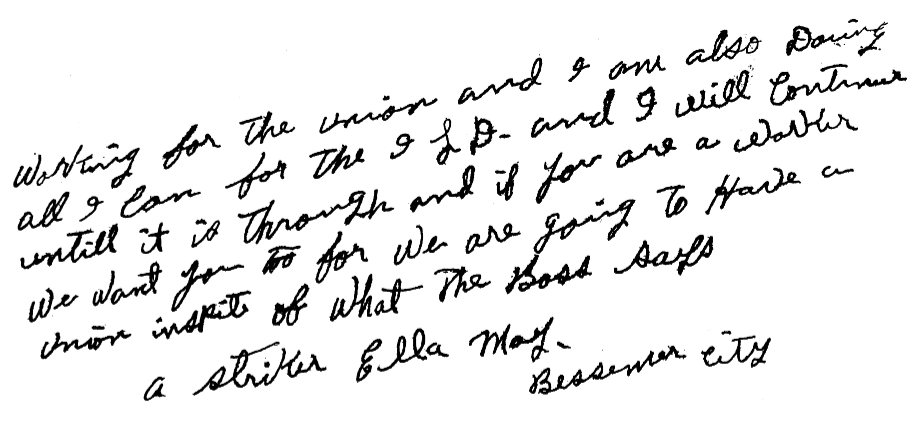
If you are a worker we want you, for we are going to have a union in spite of what the boss says.
Labor Defender was published monthly from 1926 until 1937 by the International Labor Defense (ILD), a Workers Party of America, and later Communist Party-led, non-partisan defense organization founded by James Cannon and William Haywood while in Moscow, 1925 to support prisoners of the class war, victims of racism and imperialism, and the struggle against fascism. It included, poetry, letters from prisoners, and was heavily illustrated with photos, images, and cartoons. Labor Defender was the central organ of the Scottsboro and Sacco and Vanzetti defense campaigns. Editors included T. J. O’ Flaherty, Max Shactman, Karl Reeve, J. Louis Engdahl, William L. Patterson, Sasha Small, and Sender Garlin.
PDF of full issue: https://www.marxists.org/history/usa/pubs/labordefender/1929/v04n11-nov-1929-LD.pdf

