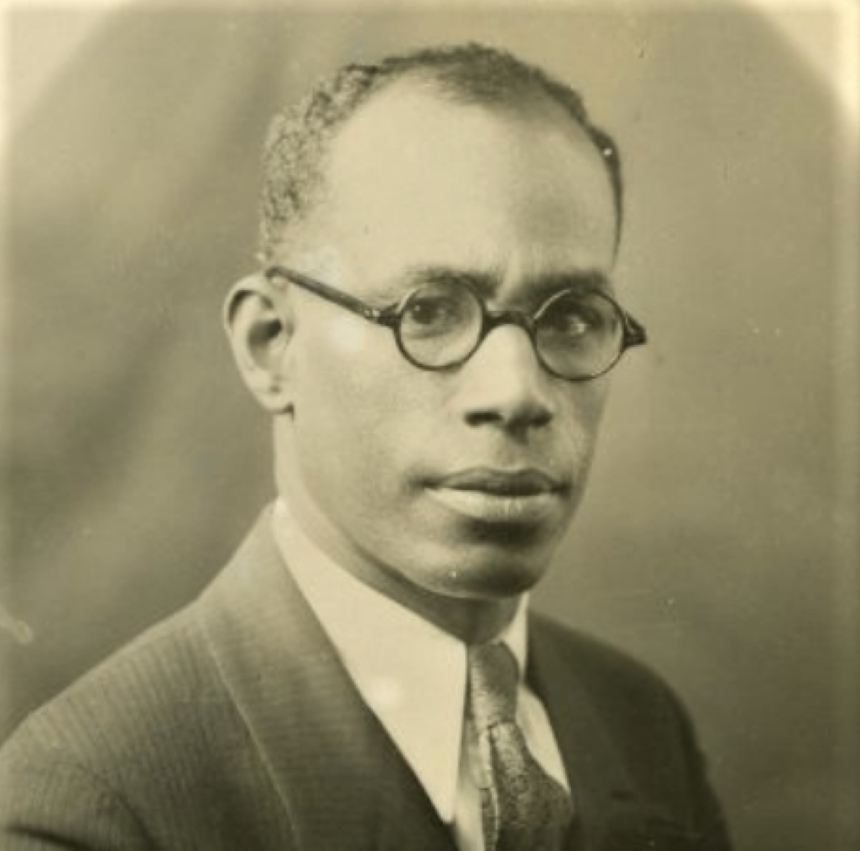
Socialist and union organizer Frank Crosswaith on the breakthrough for Black labor that was A. Philip Randolph’s Brotherhood of Sleeping Car Porters, which had signed up thousands of men and women in its first six months of effort.
‘The Pullman Porters Break All Records’ by Frank R. Crosswaith from The New Leader. Vol. 3 No.1. January 16, 1926.
New Union of Negro Workers Like a Crusade—Workers Answering Call All Through the Nation
After chalking up a record that will stand for many a day unchallenged in the annals of organizing workers, the Brotherhood of Sleeping Car Porters closed the year 1925 with three monster mass meetings in the Negro section of New York City. During these three days’ rally, December 27, 28 and 29, over 20 porters and maids were enrolled in the fighting Brotherhood.
Within the two last weeks in December, 1925, the membership of the union was increased by over 500. The porters have displayed a readiness for, and an appreciation of, organization that is at once alarming and gratifying. In the short space of four months more than 45 per cent of the 12,000 Pullman porters of the nation have rallied to the bugle call of unionism and class-solidarity.
No other group of workers in the long history of the working class of America to better its economic and social conditions have shown such results in so short a time. These Negro workers are breaking traditions and establishing the fallacy too long accepted as true, that Negro workers can’t be organized and that they constitute the “scabs” of America.
A New Type Of Negro to the Fore
They have established the unmistakable fact that a new type of Negro is now facing America, and America must heed his presence. Not contented with the remarkable successes of 1925, the Brotherhood is out to eclipse its record for that year by energetically pressing forward a program in 1926 which should win the genuine admiration of every one truly interested in the struggles and triumphs of all workers.
Organizers will be sent into every state where Pullman porters are located. The South will be invaded, the Far West will, in a few weeks, hear the militant demands and resonant voice of A. Philip Randolph and his colleagues in this veritable crusade of 12,000 Negros for a chance to live and to rescue their tip-subdued self-respect from the stultifying and stagnant swamp of tips-taking.
The first meeting of the New Year was held last Friday night, January 8, at St. Luke’s Hall, 125 West 130th street; the spacious and elegant auditorium was filled by Pullman porters and their families, cheering every word that fell from the lips of the speakers and manifesting a spirit of determination to win and an appreciation of the serious task before them as to make even an old labor-war veteran marveled with astonishment. For these black toilers were cheering every reference made to a new “social order.” “The rights of man must supersede the rights of property,” “industrial democracy,” “the class struggle,” and many other phrases well known to the readers of the New Leader. The speakers were: A. Philip Randolph, General Organizer, Brotherhood Sleeping Car Porters; Mrs. Gertrude E. McDougald, Vice-Chairman, Trade Union Committee for Organizing Negro Workers; W.H. Des Verney, Field Organizer, Brotherhood Sleeping Car Porters, and Frank R. Crosswaith, Executive Secretary, Trade-Union Committee for Organizing Negro Workers.
Women Play An Active Part
The role being played in this fight by the wives of these porters should not be permitted to pass unrecorded. In many instances where a porter has been hesitant in joining the union, his wife has sent in the initiation fee of $5 and then compelled him to sign the application blank. Letters are constantly being received at headquarters, 2311 Seventh avenue, from these women, apologizing for the apathy of their husbands.
One militant wife refused to accompany her mate anywhere in the streets of Harlem unless he joined the union. The wife of another porter, herself in a hospital undergoing a serious operation, insisted, nevertheless, that news be brought to her bedside after each mass meeting of the union. An auxiliary to the Brotherhood, consisting of the wives of porters, is now being organized and already its membership is impressive. The fight of the Pullman porters is the all absorbing topic wherever two or more Negroes gather in Harlem. This wave of enthusiasm and genuine interest in the Pullman porters’ fight is confined not only to New York City, but is evidenced wherever the organizers of the Brotherhood have visited: Washington, St. Louis, Kansas City, Boston, Omaha and Chicago, all tell the same story.
There is, however, another side to this picture not so rosy, not so fascinating. The management of the Pullman Company is using all the old tricks so familiar to employers who are determined upon the open shop method of dealing with their employees, such as intimidations, threats, shifting of forces, withholding of pay checks, paid propagandists who ladle out in large portions the spotless virtues and benevolence of the company, and in still larger quantities the vicious vices and tyranny of trade unions.
The Pullman Company’s Army of Hired Men
In the prosecution of its aims to keep the porters from organizing a union over which the company will have no control, and as a last resort to effect this desire, the Pullman Company has been able to purchase a number of so-called big Negroes, Negro newspaper editors, Negro politicians of the two-old-parties, Negro ministers and educators, a veritable battalion of “white hopes,” to stem the tide of organization among the men. King Canute in his famous injunction to the waves, had more success than these dusky tools of the Pullman Company are having.
In all of the scattered railroad centers, there can be found large stacks of Negro newspapers and magazines containing articles lauding the company and advising the porters against the Brotherhood in particular and trade unions in general. These are given away to the men. Quite a few of these papers were born since the porters began to unionize, others were on the verge of collapse; now, however, while they are being well sup plied with Pullman money, it can be safely said, their circulation and influence among Negroes has decreased and their duly earned fate patiently awaits them, for the porters will not read them; the aroused men and wo men of the race will have nothing to do with them, and it is a certainty that as soon as the Pullman Company is convinced–as it should be by now–that these Negro editors can’t produce the desired results, it will withdraw its support and the result will be natural death for these sheets, a fate well deserved, and one that all workers, black and white, will hall with a song of satisfaction.
There are a few outstanding exceptions, however, such newspapers as the Washington Tribune, the Pittsburgh Courier, the New York Age and the New York Amsterdam News. They have thrown in their lot with the porters and are standing by them most admirably; these papers are not found in railroad yards to be freely distributed by the Pullman Company, but in the homes of the porters. Within the next two or three months, it is expected that over the required 51 per cent of the men shall have been enrolled and the Brotherhood of Sleeping Car Porters will take the case of the much abused and brutalized Pullman porters before the Railroad Labor Board or whatever agency will succeed it.
When the Negro Will Assume His Proper Place
The men are asking and should receive the unstinted support of all who are truly interested in the Negro, for it is not by singing “the spirituals,” or by rhapsodizing about “the old time religion,” that the Negro will be able to take his place in the world of men, but by harnessing his powers of production into labor organizations and his consuming powers into genuine co-operatives, will he be in the position to contribute his share in the making of a new society, dedicated to democracy in industry and one in which those who do the world’s useful work, will reap the full social value of their labor.
THE REAL PROLETARIAT OF AMERICA IS AT LAST BEING AROUSED! ALL HAIL THE DAY!
New Leader was the most important Socialist Party-aligned paper from much of the 1920s and 1930s. Begun in 1924 after the S.P. created the Conference for Progressive Political Action, it was edited by James Oneal. With Oneal, and William M. Feigenbaum as manager, the paper hosted such historic Party figures as Debs, Abraham Cahan, Lena Morrow Lewis, Isaac Hourwich, John Work, Algernon Lee, Morris Hillquit, and new-comers like Norman Thomas. Published weekly in New York City, the paper followed Oneal’s constructivist Marxism and political anti-Communism. The paper would move to the right in the mid 30s and become the voice of the ‘Old Guard’ of the S.P. After Oneal retired in 1940, the paper became a liberal anti-communist paper under editor Sol Levitas. However, in the 1920s and for much of the 1930s the paper contained a gold mine of information about the Party, its activities, and most importantly for labor historians, its insiders coverage of the union movement in a crucial period.
PDF of full issue: https://www.marxists.org/history/usa/pubs/new-leader/1926/v03n01-jan-16-1926-NL.pdf

