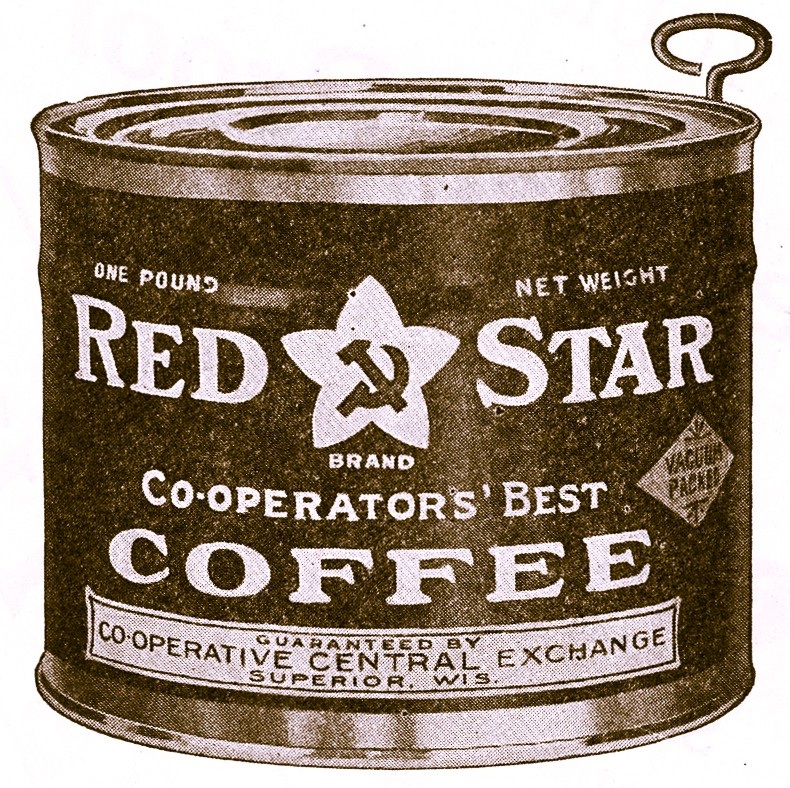
With trade union building and Party work, activity in co-operatives was meant to be among the most important theaters of Communist organizing in the 1920s. This international conference of Communist cooperators was held in Moscow during March, 1926 with the report below containing three speeches: opening the conference, on the work of the Comintern’s Co-operative Section, and on the tasks and methods of work in co-operatives. Following the speeches is discussion and reports from various countries including the U.S., Germany, Belgium, the Soviet Union, Czechoslovakia, France, Britain, Italy, Switzerland, Norway, Bulgaria, and others.
‘International Co-Operative Conference’ from International Press Correspondence. Vol. 6 No. 36. April 29, 1926.
CO-OPERATIVE CONFERENCE during the Session of the Enlarged E.C.C.I. 4-6th March 1926.
(Detailed Report.)
The Co-operative Conference called by the Secretariat of the E.C.C.I. took place in the Kremlin on March 4th and 6th 1926.
The following took part in the Conference: representatives of 20 countries delegated to the plenum of the E.C.C.I., the leader of the Co-operative Section of the C.P. of Germany, the Presidium and Secretariat of the Co-operative Section of the E.C.C.I., as well as representatives of the Org. and Information Departments of the E.C.C.I. and of the International Women’s Secretariat. Altogether 41 comrades took part in the Conference. The members were welcomed and the Conference opened by Comrade Kornblum, Secretary of the E.C.C.I.
Opening speech of Comrade Kornblum (Secretariat E.C.C.I.
The Co-operative Section of the E.C.C.I. and the Co-operative Sections of the Parties are still fighting to get co-operative work recognised as an essential factor in party work. Even though a “de jure” recognition has been attained in many cases, a real “de facto” recognition, in the sense of a firm incorporation of co-operative work in the general party work, has so far hardly been achieved anywhere.
In my opinion, the causes are as follows:
a) The illusions, brought into the co-operative movement by the Reformists, that capitalism can be overcome without fighting, which have had the effect of repelling many revolutionary workers and have brought about a lack of appreciation of the work in the consumers co-operatives.
b) In the period of acute revolutionary situation, our party comrades were tuned to the immediate tasks of the fight and were disinclined to pay serious attention to the detail work in the Co-operatives. This attitude still crops up now and then.
c) The Communist Parties were chiefly concerned in consolidating their own ranks. The present Plenum which is concerned with the question of getting hold of the masses, will certainly help to strengthen the work in the Co-operatives. It is characteristic that the comrades who are most involved in trade union work, in their speeches at the Plenum lay special emphasis on the importance of work in the Co-operatives. We have seen this in the speech of Comrade Tomsky and in those of our English comrades. There is no doubt that the more our parties devote themselves to serious, systematic trade union work, the more they will arrive at an appreciation of the necessity of practical co-operative work.
The Secretariat and the Org. bureau of the E.C.C.I. have lately concerned themselves more than previously with the question of Co-operatives. We are justified in hoping that our Conference will help to bring co-operative work more into the foreground in the Executive and also in the National Sections.
Report on the Activities of the Co-operative Section since the V. World Congress.
Comrade Krüger (Co-operative Section): Comrade Kornblum has already pointed out in his opening speech that the situation of our communist co-operative work may be compared with the general situation of Soviet Russia we are fighting for the recognition of the necessity of this work. Our co-operative work is indeed still in its initial stage, and we cannot yet boast of specially great success in this field. Nevertheless we have undoubtedly achieved appreciable results in some countries of Western Europe. Communist co-operative work is advancing slowly but surely in a number of countries such as Czechoslovakia, England, France and Switzerland. But even in these countries, the connection between the Communists working in the Co-operatives and the centres of the corresponding sections of the Comintern is not yet established in such a way as would be desirable and necessary. In no country of Western Europe is there so close a contact between the Communist Co-operatives and the Central Committee of the Communist Parties, as for example, in Soviet Russia. The Central Committees of the Communist Parties do not yet devote sufficient attention to co-operative work, do not yet allocate sufficient party forces to the work and so on.
In the beginning, even the Executive Committee of the Comintern paid comparatively little attention to our work; as however we always tried to link up our work as closely as possible with the whole Labour movement, and as the work in the separate countries began to develop more and more actively and the Communist co-operators also began to defend their point of view with energy in the sphere of the International Co-operative Alliance, the work of the Co-operative sections has now become inseparably bound up with the whole work of the Executive. Recently we have several times had the opportunity of reporting to the Secretariat and the Org. bureau of the E.C.C.I. and we have received a number of directions and practical instructions.
In the current work of the Section and at the meetings of the Presidium of the Section, we have always endeavoured to adapt our concrete work to the problems which crop up in the various countries. We have made every effort to create a concrete base for our work by pointing out to our comrades in the different countries the necessity of including the Co-operatives in the class front of the fight against the increase of prices, taxation, tariffs and the danger of war. We have devoted great attention to the question of a united front between the Co-operatives and the general Labour movement, and we have always worked towards establishing a close alliance between the opposition movement in the Co-operatives and the Left wing of the trade union movement. Under instructions from the Co-operative Section, our comrades have carried on a number of campaigns in various countries.
In Germany, our comrades have already for several years been working to carry out the instructions of the Comintern Congress and of the International Conferences of Communist co-operators. The formation of fractions in the Co-operatives has proceeded better and more quickly in Germany than in any other country. All the same, we in Germany, cannot yet boast of any decisive success. The German Co-operative movement is in the hands of extremely counter-revolutionary leaders. The Co-operative bureaucracy is fighting desperately against Communism and is leaving no stone unturned to get rid of the Communists. A number of individual Communist comrades having already been excluded from the leading bodies of the Co-operative movement; the Co-operative bureaucracy is now threatening to exclude whole Co-operative stores from the Central League. The objective conditions of development of the German Co-operative movement are at present entirely favourable to our activities. The immediate task of the German Co-operative movement is to form a Left Wing round our Communist fractions as its nucleus.
In Czechoslovakia, the Communists hold firm positions in the Co-operative movement. About 50% of the members of the Czech Consumers Co-operatives belong to our Party or sympathise with it. Our comrades are carrying on successful economic co-operative work, but the political effect of their influence on the Co-operative movement is as yet insufficiently felt. The formation of Communist fractions in the Consumers Co-operative is proceeding very slowly. In the German Consumers Co-operative Societies hardly any fraction work is being done at present. In the future our comrades should devote far more attention to the political side of their co-operative work and aim at bringing about the inclusion of the Co-operative movement to a much greater extent in the revolutionary fight of the Czechoslovakian working masses.
England. The Party has completely recognised the necessity of Communist Co-operative work and has combined it with party work as a whole. It is a fact of special significance that even the trade union Minority Movement is carrying out systematic Co-operative work, thus promoting the formation of an Opposition wing in the Co-operative movement. The further development of Communist Co-operative work, still closer alliance with the Left wing of the trade union movement and the comprehension and intensification of the class problems in the English Co-operative movement will result in the English Co-operative movement gaining a firm foothold.
In France, the Communists, exercise the greatest influence in the Co-operatives of the Paris district, where about 15 Consumers Co-operative Societies are in their hands. There is a Central Co-operative Commission in the Central Committee of the Party which does systematic co-operative work. Individual Communist co-operators have been active since 1920 at the National Congresses of the Co-operative movement and display considerable initiative. Nevertheless the co-operative work of our French comrades leaves much to be desired. One of the drawbacks, for instance, is the concentration of all their forces on the task of creating revolutionary Co-operative circles parallel to the existing Reformist Co-operative circles, instead of concentrating their attention above all on the creation of Communist fractions in the Co-operative organs.
Our French Communist co-operators have also taken the wrong line in the fight against the increase of prices. Instead of mobilising the mass of their members round the fighting slogan against the rise of prices, our comrades took the point of view that the Committees of Action ought, in the fight against the rise of prices, to enforce abatement of prices from private traders. This way of course leads to bargainings and agreements with private trades, and to a misrepresentation of the tasks of the Committees of Action. All these mistakes must be rectified in the near future.
I should like further, speaking quite in general, to say that, in our work of agitation and propaganda we ought particularly to follow the example of the Co-operative movement in Belgium and Austria, where the Co-operative movement forms an integral part of the political movement, it is true in the Social Democratic movement which is hostile to us.
Now a few words on the position of the revolutionary elements of the Co-operative movement within the International Co-operative Alliance. Among the 62 members of the Central Committee of the Alliance, 15 are Communists (14 from the Soviet Union and 1 from Czechoslovakia). Among the 11 members of the Executive of the Alliance, there is only one Communist. Since our comrades have taken part in the work of the Alliance, there has been a change in the character of the conferences and meetings of the bodies forming the Alliance. At these meetings, questions are now constantly being brought up which are of great significance for the whole Labour movement.
In the first place, our comrades are fighting against the principle of the neutrality of the Co-operative movement. There are already signs that some leading co-operators are being compelled gradually to revise their attitude towards this question. At the last meeting of the Central Committee of the Alliance in Paris, even Professor Gide stated that the question of the neutrality of the Co-operative movement is not one of principle but of tactics. Putting the problem in this way undoubtedly means a partial abandonment of the principle of neutrality.
Another question for which our comrades have been fighting since the Congress at Ghent, is the question of connection with the trade unions. Even before the Congress at Ghent, the International Co-operative Alliance had established contact with the Amsterdam Trade Union International, but with that alone. In Ghent, our comrades succeeded in passing a resolution with a majority of votes to establish connections with both Trade Union Internationals, i.e. with the Profintern, though with a number of reservations. As was to be expected, this resolution is being completely sabotaged in practice by the Co-operative bureaucracy. At the last meeting of the Central Committee, the concrete proposals of the Opposition with regard to the nature of these connections were once again rejected, and a resolution was even passed that for the time being, the Alliance should not enter into connections with either of the Trade Union Internationals. The revolutionary Opposition of the Co-operative movement ought to fight both in the national and international field for the establishment of the principle of collaboration between the Co-operatives and the trade unions.
The development of the Soviet Co-operatives and the part played by them is of great significance with regard to the influence of the Opposition in the International Co-operative Alliance. The commercial relations which the Co-operatives of the
Soviet Union maintain with the Co-operative Centres in other countries and chiefly in England, strengthen the position of the revolutionary minority in the Alliance. This is the reason why the violent attacks made by the reactionary elements in the Alliance on the Soviet Co-operatives have hitherto failed, as for instance in the question of the number of representatives of the Soviet Co-operatives in the bodies forming the Alliance.
The further growth of the Soviet Co-operatives and the activity of the revolutionary minorities in the Co-operative movement in the capitalist countries, form the basis on which our work of revolutionising the masses who are organised in Co-operatives, can be successfully carried on.
Within the Party we must establish the closest connection between the leading party organs and the organs of Co-operative work. We must insist that all members of the Party are also members of the Co-operatives, that they take an active share in the work of the Co-operatives, that a Communist fraction is formed in every Co-operative, round which the revolutionary elements in the movement gather.
Only then shall we have a guarantee that the Co-operative movement, in close connection with the Communist party and the revolutionary trade unions, will form real support for the proletariat in its revolutionary class struggle.
The Immediate Tasks and Methods of Communist Co-operative Work.
Reporter Comrade Bittel: First let us describe the soil on which co-operative work is being done. There are three facts:
1. The co-operative movement is a broad proletarian mass movement which, if we include all nations, numbers 60-70 million members.
2. The Social Democratic parties prevail in the Co-operative movement and have in it firm ideological, organisatory and material points of support.
3. The Co-operatives are a broad means of approach to the masses of the workers and peasants, of which the Communist Parties ought to make much better use for the class war, than they have hitherto done.
The Reformists have managed to organise these masses into passivity, so that today the Co-operatives do not rank at all as fighting organisations and their leaders carry on a policy of collaboration with the bourgeoisie for the purpose of “reconstruction”.
The Co-operative movement reflects the situation which prevails in the working class today. The general economic situation, that of relative stabilisation with symptoms of crisis, is affecting the Co-operatives. The working masses bear the costs of stabilisation, their standard of living is sinking, increase of prices and unemployment is spreading not only throughout the working class, but also among the broad strata of the middle class, whose purchasing power is constantly growing less. Dissatisfaction with the achievements of the consumers’ co-operatives is growing amongst their members; voices are being raised in opposition. Opposition groups are being formed among the proletariat and they show leanings towards a united front. In connection with this, the policy of collaboration with the bourgeoisie is being strengthened and sharp conflicts are arising between the “Labour director” in the co-operative movement and the proletarian members. At the same time as the fight of the functionaries against Communism is becoming more acute, the masses are showing increased sympathy with the Co-operative movement of Soviet Russia, demanding delegations be sent and commercial connections established.
In any event, the time is ripe for fighting vigorously and on an international scale against the illusion of neutrality, and to replace it by the principle of proletarian solidarity which enrolls the Co-operative movement in the class war. The working class must recognise that the consumers co-operative are mass organisations of great significance and that they play an important part in the fight of the working class both for its existence and for its emancipation. All the Communist Parties must recognise that practical and systematic work is necessary so that the total of Co-operation may be wrested from the hands of the bourgeoisie and the Co-operatives enrolled in the united proletarian class front against capital.
An examination of the economic basis on which the Co-operative movement stands to-day shows that a complete change has taken place since the movement was first started. The task of the movement remains the same, that of fighting for cheaper prices as a complement to the fight for higher wages. In the early days of capitalism, when the Co-operatives had no opponent but the unorganised small trader, a certain degree of success could be obtained by purely co-operative methods. Nowadays, under the rule of finance capital, of trusts and cartels and in view of the competition of the big stores and multiple shops, the methods employed hitherto are no longer adequate. Nowadays the Co-operatives can only keep their place in the race if they carry on the fight for cheaper prices and for an improvement of the standard of living of the workers, as an organised proletarian class light in common with the trade unions and other class organisations.
The business policy must develop into a deliberate proletarian co-operative policy, and must be linked up with the whole fight which the working class is carrying on against the increase of prices, against the taxation and tariff policy of the capitalist Governments, against the dictation of prices by the cartels, in short, against the whole capitalist system. In this way alone can the Co-operatives become an integral part of the fighting proletariat and real instruments for the improvement of its standard of living.
Why is it that, in spite of the dissatisfaction felt by the mass of co-operators with the leadership of the Reformists, Communist influence is still very small? Because the Communist Parties have not yet taken sufficiently serious interest in systematic work in the Co-operatives. The sections in all countries ought to make this an essential part of their party work. Finally, our method of working must be vastly improved. An end should be put to the sporadic coming out with mere political phrases, protests and resolutions. They must be replaced by intensive practical detail work, which must be carried on with revolutionary zeal.
The chief thing is to find the right starting point and point of contact. In this way it is very easy to convince the masses that the Co-operatives cannot of course fulfil their task if they maintain their present Reformist attitude and their collaboration with the bourgeoisie and the banks, and that it is altogether impossible for an isolated Co-operative movement, relying solely on its own forces, to overcome the capitalist system. In connection with the routine questions by which the Co-operative movement is faced every day, any Communist co-operator will surely be able to convince even indifferent members of the Co-operatives that the capitalist system can only be overthrown if the working class as a whole fights for and obtains positions of power and forms a united front against the bourgeoisie.
If our methods of work are based on practical and concrete foundations, we shall be able to gather together the dispersed opposition tendencies into proletarian opposition groups so as to form a broad fighting front against Reformism. We are now seeing how the miners in England are doing everything in their power to make the Co-operative movement a factor in their great fight, and we also hear that in Germany voices in the trade movement are raised in decisive protest against the declaration of neutrality made by the Co-operative bureaucracy.
The first thing required is that the Co-operatives should participate in the fight against the increase of prices. In this respect we must demand that the Co-operatives themselves, in their Press, at their conferences, their meetings of protest etc. take up a definite attitude in favour of the following questions:
1. That compulsory measures be taken to prevent prices being raised by the cartels and against the competition of the wholesale trade. The present-day attitude that we only have to compete with the small traders, that old Reformist point of view, must be abandoned and, in view of the necessity of fighting against the increase of prices, the Co-operatives must be shown against whom they have to fight.
2. The duties on articles of general necessity must be removed as well as taxes on articles of consumption and imposts.
3. Preferential taxation or exemption from taxes must be demanded.
4. Public long-term credits must be granted.
5. Reduction of freightage on articles of general necessity. The second question is that the Co-operatives themselves must take direct measures. We Communists within the Co-operative movement demand that the Co-operatives take measures for:
1. The establishment of connections with the small peasants’ Co-operatives with the object of direct exchange of goods.
2. Direct connection with the Russian Co-operatives, a movement which is supported by the various tendencies which already exist within the Co-operatives.
3. Carrying on the process of rationalisation within the Co-operatives. In this connection it will be the duty of us Communists, to take a really practical part in the work, to make proposals etc.
4. We must take up a definite attitude towards the internal questions of Co-operation, use our influence to further them, take part in the propaganda, see to it that all trade unionists are organised in Co-operatives and that not only old but also new business methods are used, work to obtain public credits etc.
We urge that, in support of the struggle of the working class, a fight be carried on in the Co-operatives for the following demands:
1. that the Co-operatives should help in preparing for economic fights and support them, especially by supplying food, giving credit for goods and making other arrangements for relief.
2. That special measures should be taken for the unemployed, particularly by demanding public credits in order to supply them with food at cheaper prices and that emergency credits be claimed to help in the enlargement of the co-operative stores.
3. Closer connections with the trade unions, model conditions of labour, obligatory membership of the trade unions for all workers and employees.
4. Support of the fight against war and Fascism which the Co-operative movement even now regards as one of its essential tasks.
A prerequisite for all this work is that the activities of the Co-operatives should be organically incorporated in the work of the Communist Parties as a whole. When the Parties carry on their campaigns they must include the Co-operatives. The chief preliminary however is that the members of the Party should be under the obligation of organising themselves in the Co-operatives and that this should be controlled by the factory nuclei. The Co-operative work must be anchored in the whole Party apparatus, beginning with the factory and street nuclei, which must have a Co-operative leader. Every Central and also the district committees should have a Co-operative department. The question of Co-operation must be included in the training of party functionaries. Special Co-operative functionaries should be trained, the large reservoir of women who are organised in Co-operatives being particularly taken into consideration. The formation of fractions in the Co-operatives must be carried through quite systematically.
In conclusion, I emphasise once more that the Co-operatives offer the Communist parties an opportunity of carrying the cardinal point which is before the Plenum today, that of approaching the broad masses better than hitherto.
The Co-operative movement affords a possibility of putting this slogan into practice. If we understand the best way to apply the tactics of the united front, if we understand how to develop, quite systematically and gradually, proletarian opposition groups and Left wings, the Co-operative movement may become for us a broad way of approach to the masses and may help to procure a strong position for the Communist International and its sections, at any rate a far stronger one than it has held hitherto.
Discussion and Reports.
Comrade Dorsy (United States): I should like to call attention to a quite special problem, the question of trade union capitalism, which is developing in America and is leading along the dangerous path of class collaboration. A large proportion of the workers save small sums from their wages and have to invest these savings somehow. The employers try to make use of this money by selling the workers shares in their businesses. In this way they have invested a great deal of money belonging to the workers in capitalist undertakings and used it to exploit the workers.
In recent times the trade union bureaucrats have begun to collect the savings of the workers and have founded the movement of the so-called Labour Banks, which are also known as Co-operative Banks. There are about 40 such Workers’ Banks which work with a capital of more than 200 million dollars. The trade union bureaucrats in these banks can in no way be controlled by the trade unions. Further, they are members of the boards of directors in the capitalist banks and, vice versa, capitalists have similar positions in the trade union banks.
The trade unions are also proposing to found enterprises of their own. In this way they are becoming more and more reactionary.
If this movement continues, it will assume large dimensions and even become international. The capitalists support them; furthermore they naturally encourage the greatest and worst illusions among the workers; the bureaucrats in the trade unions maintain that, through the development of the Workers’ Banks, they will soon control capitalist undertakings and will be able gradually to defeat capitalism.
The Communist Parties and the Communist International must take up a quite definite attitude towards all these matters, and the Co-operative section should make it its business to work out a practical programme with regard to this question. In the first place, a powerful propaganda should be organised against this trade union capitalism, against trade union bureaucracy and its capitalist methods, against its capitalist undertakings etc. But we must also take positive measures. We must transform these Trade Union Banks into Co-operative institutions of the workers which can be controlled by them.
We must then try to use these savings to help in the development of socialist construction in Soviet Russia. We already have an example of this in the American Garment Workers Union. The Co-operative Conference ought to draw up a resolution in which it deals with this question and should make a positive proposal as to how savings should be employed.
Comrade Schröder (Germany): The Dawes illusion and the ultra-Left policy in Germany has resulted in the Party being isolated from the masses and has weakened our influence in the Co-operatives. When the Party changed its course after the E.C.C.I. letter, its influence among the masses began to increase, and now we have better prospects of success in Co-operative work. This however is rendered difficult for us by the terrorist behaviour of the Hamburg bureaucracy which up to the present has resulted in the exclusion of eleven leading comrades. The proceedings of the Hamburg bureaucracy have to a certain extent led to a retreat on the part of our comrades and to our work being weakened.
In connection with the relative economic stabilisation, the position of the Co-operatives was strengthened, which is particularly shown by an increase of the turnover by 30% in 1925. The fresh economic crisis has already led to a new fall in the turnover of the co-operative stores. The process of rationalisation in industry, which took place at the expense of the standard of living of the workers, is also affecting the Cooperatives, and the Co-operatives themselves are “rationalising” their branches by cutting down the personnel and reducing wages.
Resistance to the offensive of the Co-operative bureaucracy took a foremost place in our work. We have linked up our Co-operative work with the general campaigns of the Party, especially with the object of fighting against the Dawes plan, the rise of prices, protective tariffs, the fight against war and Fascism and all the other questions round which the work of the Party centres. Our work took effect in a broader measure in connection with the action of the Luther Government for “reducing prices”. As regards the question of unemployment, we have put forward our own demands and have succeeded in getting into touch with the small peasant movement, which wishes to free itself from the agrarian League.
An important point of the German Co-operative movement was the demand presented to the Central League that a Co-operative delegation should be sent to Soviet Russia. In doing so we touched the Co-operative bureaucracy on its most sensitive point. In no less than about 15 general meetings of consumers co-operative, resolutions have been passed contrary to the wishes of the bureaucracy, non-party members and Social Democrats having sided with us. The Central League is very touchy on this subject and violently opposes this demand.
In Thuringia, our comrades have inaugurated a special campaign against the co-operative stores being included in the trade tax, a campaign in which the Co-operative bureaucracy joined in the course of the fight.
The greatest failings of our work are that the C.P. of Germany takes in general a passive attitude towards the work of the Co-operatives and that our special campaigns are not in close enough touch with the tasks of the Party as a whole. There is still, as there always has been. a failure to recognise the importance of the work in the Co-operatives.
What is the position of our work at present? There are altogether 26 co-operative stores under Communist leadership; the number has been as high as 30 and then fell to 20. There are about 60 fractions which however, since the reorganisation of the Party on the basis of factory nuclei, have not yet been reorganised. According to our estimate, only about 40-50% of the German Party membership are organised in Co-operatives. Every month we add a supplement, the “Communist Co-operator” to the entire daily Press of the Party; it has an issue of about 300,000 copies.
Comrade llbert (France): What is the attitude of our C.P. of France to the work of the Co-operatives? After the split in Tours, the old Social Democrats who predominated in the Co-operative movement, remained in the ranks of Social Democracy. The young elements who have joined the Party during the last two years, have understood nothing of Co-operative work. We must therefore, by intensive propaganda and by personal influence on our comrades, deal with the question of the Co-operatives, so as, in the first place, to convince the Party as a whole of the importance and necessity of work in the Co-operative movement.
Above all we must really consolidate the positions we already hold in the Co-operatives. We have already, after a great struggle, wrested the “Famille Nouvelle”, a Co-operative in Paris, which runs a number of restaurants in that town, from the hands of the anarchist elements, and placed it completely under Communist leadership. This Co-operative remains an exclusive circle, although 20,000 workers take their meals in the restaurants daily; the membership is maintained at 250. In these circumstances, it cannot of course be said that a Co-operative of this kind holds a class position and really fulfils our purposes of approaching the masses.
Another example is the Co-operative in the 20th district of Paris, the “Bellevilleoise”. We have obtained control of it after two years of hard struggle. Nevertheless we must admit that we have not succeeded in attaching the 16,000 members to ourselves, in conducting mass work among them, in strengthening our position, broadening our basis and winning over the members to our ideas, to Communism. The Co-operative does not even take steps to offer the workers what is accessible to them. In this way of course it even loses touch with the working masses living in its own neighbourhood.
As regards the party organ for Co-operative work, it must be acknowledged that the Central Co-operative Commission in the Party Centre has recently maintained close touch with the Co-operative section, but in spite of this, the general attitude in the Party is such that most comrades still believe that in the Co-operative movement, they need only deal with questions of high politics, and they neither interest themselves in practical questions nor carry them through.
The tasks by which we, in France, are faced in the immediate future, are briefly as follows: we must not only make use of our positions in the Co-operatives, to get a real hold on the masses of members and attracts crowds of new proletarian members, but we must also use all methods in our power, to get hold of and to lead the Opposition in the other Co-operative organisations.
Comrade Jonas (Czechoslovakia): Fairly large masses of workers are organised in the Co-operatives of Czechoslovakia, so that they represent a great force. Under the influence of the Social Democrats and the Reformists, the Co-operatives have renounced the class struggle. The first task of our comrades was therefore to win back the Co-operatives to the idea of the class struggle.
Unfortunately we must admit that this task has been inadequately carried out by our Party. At first not enough attention was paid to it, and it was only after the last congress of the Party that the work was seriously taken up. The Co-operatives offer a good field for work. The workers hope to improve their bad material position through the Co-operatives. Our comrades, who work in the Co-operatives, were not at first sufficiently conscious of their duties. They were first Co-operators and then Communists. For this reason the work of our Party has been of a casual nature. When, for instance, elections have taken place in one of the Co-operatives, all our forces have been concentrated and some meetings held. But that was the end of it, the Co-operative work has not been carried through systematically and according to plan.
In order to carry through this work successfully a broad plan of work is necessary. It is also necessary to have statistics, not only statistics of the Co-operatives, but also statistics of the members of our Party who are working in Co-operatives, so that we may know what comrades are at our disposal. There is a number of small Co-operatives in which we have not a single comrade and in which of course our influence is either very weak or nil.
Our Party is further faced by the task of amalgamating the Small Co-operatives which, in the present economic situation, have a hard fight for existence. The Party has already started on this work and economic conditions favour it.
Comrade Mandel (Switzerland): Of the 3,800,000 inhabitants of Switzerland, 378,000 are members of Co-operatives.
The V.S.K. acts as the centre for the Co-operatives; the policy of the Centre is absolutely bourgeois in character.
In the question of tariff policy and of the corn monopoly, the Central Federation takes an attitude which is injurious to the consumers; the same applies to the prohibition of night work in the bakehouses; the relations to the trade union organisations are in no way regulated by the Centre. The same is Exactly true of the question of tenant protection.
With regard to international relations, we have succeeded in arriving at a rather different attitude. On the occasion of the Paris Conference of the Alliance, the leaders of the V.S.K. declared that they agreed with the view that everything should be combated which tended towards the exclusion of the Soviet Union Co-operatives from the International Co-operative Federation.
At the elections in July last year, we, in common with the Social Democrats, obtained the majority in the largest Society in Basle. Our comrades worked well and maintained strict discipline. The employees of this Co-operative demanded a readjustment of their wages which had been reduced two years previously. The management refused to accede to this demand. Our comrades took the view that the personnel was justified in demanding this readjustment of wages, and made still further demands. The Social Democrats refused them; later however, they were compelled by the attitude of the workers to consent to a compromise. This whole situation affords our comrades an excellent means of showing the workers who defends their interests. The compromise proposed by the Social Democrats was finally accepted.
In this connection it should be stated that especially the women of our Party organisation in Basle took a very energetic part in the elections and afterwards; they undertook the chief responsibility. Our Party was the only party which nominated women and elected them.
By way of contrast to this, we have the society in Zurich, where the majority in the Society is held by the bourgeoisie. In that town, our comrades say: We won’t put our money in a Society like that. Of course we combat this attitude; we do not want to found any new Co-operatives. The slogan of the Party is clear, but it is still difficult to carry it through. At the time of the big lockout in Zurich, we proposed that the Co-operatives should give the locked-out workers credit. The Social Democrats on the other hand declared that it was no affair of the Co- operatives but of the trade unions.
Comrade Mechtcherjakov (Co-op. Section): I would first of all point out a defect in our Conference which is actually a defect in its composition. Those present represent only those countries where Co-operative movements already exist. This is not as it should be; we ought to call the attention of those countries where no Co-operatives exist to the necessity and possibility of such work.
It is just in the Far East that there is a possibility of achieving something, if we seize the initiative to develop a Co-operative movement and use our influence from the beginning to develop it into a real class organisation through our Communist principles. In China for instance, that gigantic nation numbering 400 million, there is much to be done by way of organisation, and the sphere of the Co-operative movement should be included in this work. In the colonial countries things are different. We must draw up in the form of theses exactly what our are duties in respect of Co-operative work in the countries of the Far East, which are chiefly inhabited by workers and peasants.
The general lines which should be considered in such a resolution, are: 1. It should be emphasised in the countries where the old Co-operative bureaucracy does not exist, that it is our duty to start the organisation of Co-operatives according to our communist principles. 2. It should further be emphasised that the Co-operative organisations in those countries should, in the first place, serve as a means for the national fight for liberation, in so far as the national fight for liberation is, at the present moment, the revolutionary slogan in those countries. 3. The absolute necessity of economic and ideological connection of the Co-operative organisations in those countries with the Soviet Union.
A few words with reference to the suggestion made by Comrade Dorsy. The idea of transforming the Trade Union Banks into Co-operative Undertakings, cannot be accepted. The other idea, however, is more practical, that of directing the savings of the workers above all into the channels of Russian undertakings and into collaboration with the Co-operatives of the Soviet Union.
Comrade Kornblum proposed that the question of Co- operative work in the Eastern countries should not be dealt with here, as the question had been insufficiently prepared. The Co-operative section should be commissioned to investigate the question thoroughly after the Plenum, and to work out a resolution accordingly.
(The motion was accepted.)
Comrade Merker (Germany): Comrades, I wish to say a few words on the relations between the trade unions and the Co-operatives. The economic situation in the most important capitalist countries gives us every reason to expect that there will be great economic struggles of the workers in the immediate future. In consequence, the trade union organisations have before them the important task of making it possible for the workers to concentrate their forces into a broad fighting front.
In connection with this the question of the relation between the trade unions and the Co-operatives becomes one of great importance at the moment. The workers’ Co-operatives are, next to the trade unions, the greatest proletarian mass organisations; they embrace millions of workers and have at their disposal great ideological and material power as well as a strongly organised apparatus. If the power of the Co-operatives is rightly used in the interest of the struggle of the workers against the employers, the fighting force of the proletarian class may be enormously increased.
This places the trade unions and the Cooperatives before two fundamental tasks. First, that of making the best use of the trade unions and the Co-operatives for agitation and propaganda among the workers in order to persuade them to join and to strengthen the two organisations, further for developing the political life of the trade unions and Co-operatives. Secondly, that of active, reciprocal material support on the part of both organisations. For this it is necessary that the ready money of the trade unions should be given to the Co-operatives as credits and that, in times of conflict, the Cooperatives should give credit both to the trade unions and to their members who are taking part in the fights.
We must admit that so far very little has been done in this direction. On the contrary, it seems that in very important countries the relation between the two organisations is getting worse and that the trade unions are developing into rivals of the Co-operatives. Many acute differences are also seen between the trade unions and the Co-operatives in the regulation of the conditions of Labour for the workers and personnel employed by the Co-operatives. In Germany for instance, in spite of the existence of a Co-operative Bank, Labour Banks were founded by the trade unions which, to a large extent, are connected with capitalist firms. In the German Co-operative undertakings, strong dissensions arose on the question of the regulation of the conditions of work, so that resolutions were passed sharply criticising the managing committees of the Co-operatives at the Conference of the Railway Workers’ Union, by the leaders of the Food Trade Workers’ Union. the Bakers’ Union and the Central Union of Employees.
All adherents of the Comintern ought to fight actively against a development of this kind. All the above questions should be put on a practical basis, an intensive and active propaganda should be developed to strengthen both organisations, the leaders of the Co-operatives should be interested in the conduct of the campaign and the Co-operatives, according to their material situation, should be mobilised for support or for the organisation of relief work. The Co-operatives should also be brought into closer touch than hitherto with the unemployed movement. The Communist Co-operators should insist on the Co-operatives supporting the demands of the unemployed and working actively to get them carried out.
It is necessary to collect all the experiences on this subject in all countries and to keep all sections of the Comintern supplied with the information.
Comrade Jacquemotte (Belgium): We have the International Co-operative Day on the first Saturday in July every year. Could we not at once elaborate a plan as to how the work should be done before that date? In order to present demands within the Co-operatives and to ensure that control is exercised by the Communist members of the Co-operatives, we must have an exact knowledge of co-operative legislation. In Belgium, where our Party is small we nevertheless have representatives in Parliament and in the provincial administrations who make direct proposals concerning social co-operative legislation with the object of procuring material facilities for the Co-operatives. We should make concrete proposals to this effect and enquire in what way it has been carried out in every country.
Another question is the fight for better conditions of work and wages in the Co-operatives. Our chief task seems to me to be that of showing the masses in the Co-operatives that we further the interests of the Co-operatives, that we make these interests our own, that we ameliorate their situation by our activities, that it would be of great benefit to the members of the Cooperatives if our demands were carried out.
From the point of view of organisation, it is best for the work of the Co-operatives to make use of the street nuclei of the Party, as the Co-operatives themselves are within their scope. In these street nuclei we choose out comrades who carry out the Co-operative work in the co-operative societies, who get hold of the Communist members of the Co-operatives and interest them in the work of the Co-operatives.
Comrade Paulsen (Norway): Co-operative work is one of the weakest sides of our party activities. The comrades who are entrusted with the direction of the work in the Co-operatives are very efficient specialists. They have however, to a certain extent, been overburdened with other party functions and on the other hand, they were not sufficiently in touch with the political life of the Party so that the work is not proceeding as well as it should.
No particular progress can be reported in the question of the formation of Party fractions in the Co-operatives since the last Plenum. In Oslo we have a fraction consisting of 6 comrades in the central management of the consumers co-operative society. These 6 comrades, who are in agreement with the Co-operative department of the district executive, do very good work. In other districts also, for instance Akershus and Loerenkog, the Party is represented in a few Co-operative societies, and a certain amount of progress can be recorded in our work. In Trondheim our position in the Co-operatives is a fairly important one; out of 7 members of the directorate of the co-operative society, 4 are Communists. A committee has been formed, embracing members of all three Labour parties, in order to carry on a propaganda campaign; in this committee also we are in the majority.
In some sections, especially in Oslo, the tasks of the Party in the Co-operative movement, have been thoroughly discussed. At the last Congress of the Co-operatives, our Party had a small fraction, 5-6 strong; these comrades took a good and practical part in the discussion and put forward a number of proposals of some importance. The Communist member of the Central Committee was re-elected at the Congress, and another comrade was elected on to a very important organisation committee. The Tranmaelites on the other hand, came off very badly.
At the time when the reports were published an article of great interest appeared in the Tranmael Press on the work of the Co-operatives and trade unions. The article stated that it had been observed that since the Russians had been accepted in the Cooperative Alliance, they had, as a matter of fact, contributed good work. It has thus been proved that it is possible to work with the Russians and that there are no objective arguments against international trade union unity.
We have not yet done sufficient work in the Co-operatives with regard to organisation. We have, it is true, many positions scattered throughout the country, but these are, as in Trondheim, rather to be attributed to the personal esteem in which the comrades in question are held as practical co-operators, than to systematic work of the fractions. Quite recently the chairman of our co-operative department undertook a few co-operative lecturing tours.
Comrade Kantor (Russia): There is nothing to be found in our theses on the connection between co-operative work as a whole and all the great problems by which the Comintern is faced at present.
It must be said that in the work of the Co-operatives the period of detail work has come, by which we can group the masses round us. The question of the fight against Fascism and the organisation of this fight is entirely omitted from the theses. Concrete instructions for the detail work and for the methods of winning over the masses must be included in the co-operative theses. It is also very important to point out the danger of isolation. The Co-operatives are organisations in which it is easiest for our comrades to isolate themselves. We must lay more stress on the fact that the Communist who becomes a co-operative functionary, remains in the first place a Communist. If we remove these defects, the theses will gain in clearness and distinctness and will be correspondingly more useful.
Comrade Oberdoerster (Germany): It has been rightly emphasised that the work among the 20 million organised trade unionists is more important than the work among the 50 million members of the Co-operatives. But if we nowadays regard the winning over of the masses as the central task of our whole party work, then of course much more attention must also be devoted to the work in the Co-operatives than has hitherto been the case. That which should now be placed in the foreground, is the improvement of the basis of Co-operative work within the Party. In Germany, in those towns where our Party largely consist of young members, as for instance in Breslau, only 10% of our comrades are members of the Co-operatives. On the other hand there are towns where the majority of the Social Democratic party have joined us; in those towns, 70-80% of the members of the Party are organised in Co-operatives and our influence in the Co-operatives is predominant. It is our task to persuade the Parties to make up for lost time.
I should like briefly to add that, in the next stage of our work we must focus our attention on building up the basis of our work within the Party. Further we must see to it more than hitherto that, what we demand by way of propaganda from the Reformist Co-operative bureaucracy can be carried out in the Co-operatives under our guidance.
Comrade Welen (Bulgaria): At its congresses and conferences, the International has often laid stress in resolutions and decisions, on the importance of work in the Co-operatives. I have however observed that whenever I discuss the work of brother Parties with comrades from other countries, they tell me about almost all other branches of work, but never yet has a comrade spontaneously told me about the Co-operative work of his Party. If questioned, they answer that something is indeed being done in this field, but that they have not the right people for it. A characteristic example of this is that Comrade Bela Kun, in his book “The Comintern in Its Resolutions” does not devote as much as three pages to the resolutions of the Co-operatives. This is much to be regretted. We must take steps to see that the importance of co-operative work penetrates into the consciousness of our party comrades.
A further reason why in former years, too little attention was paid to co-operative work is that in almost all sections we had a revolutionary fighting mood.
Another important question is that our comrades still very often take a Social Democratic attitude towards the Co-operatives. They see nothing but the co-operative shops, not the organisation in which proletarian masses are organised. We must make it our object to develop the Co-operatives into a real organisation of the masses of their members. We must see that the Co-operatives become an organisation in which the members have all democratic rights.
At present we see in all the work of the Plenum, that the Parties concentrate on the fight for the demands of the day, on every day detail work in general. In this case, the soil is very favourable for work in the Co-operatives. The Co-operative sections must carry on their work in this sense, so as constantly to remind the Parties of the co-operative work. Just now, when conditions are so favourable for direct work among the masses, we shall find an understanding for the co-operative work among the Parties.
It is well known to the comrades, that the Co-operatives in Bulgaria were destroyed by Zankoff. Until they were destroyed, our Party had always regarded the Co-operatives as an actual class organisation which had to be included in the class war. We must now so work that the Co-operatives which are ruled by the Social Democrats, are converted into the kind of organisations which from our point of view are necessary for the proletarian class war.
Comrade Ferguson (England): I will only point out the three most important points which are of particular significance in the English Co-operative movement.
Firstly, we have no prospect of leading the Co-operatives into the revolutionary path and making them a factor which will be a support in the revolutionary fight, unless we have the whole of our Party members organised in the Co-operatives and understand how to draw them into the work.
Secondly, it is necessary not only to see that political agitation and propaganda are carried on in the Co-operative movement; it is wrong to regard the Co-operatives as organisations representing a receptacle for political agitation. The most important thing is that political agitation should be in a particularly effective form, that of introducing and carrying out the every day work for small daily demands. The attention of the Co-operative departments in the Central Committees of the Parties must be called, in the form of resolutions, to the great importance of explaining to their members how this daily work can be accomplished, often on a small scale. We have been very successful in the English movement through working in this way.
Thirdly, the Co-operative and trade union organisations must be enjoined to aim at a close, and in a certain sense organisatory alliance between the Co-operative movement and the trade union organisations. This alliance means a strengthening of the working class in cases of active struggles, strikes etc., in some cases material support of the trade unions by the Co-operatives. On the other hand, this circumstance gives the trade unions the possibility of helping the Co-operatives. The trade unions might deposit their money to a certain extent in the Co-operatives in the form of granting credits to the Co-operatives, a measure through which the Co-operatives would acquire a sound basis for the development of their business activities.
Comrade Ormanoff (England): We naturally always approach Co-operative work from the point of view that it is work among the masses. We must however bear in mind that the Co-operatives are an economic organisation and that, in capitalist circumstances they come into close connection with capitalist undertakings, that their development even leads them into capitalism. Thus the time comes when Co-operative undertakings are faced by the alternative of either capitulating or taking up the cudgels against capitalism. Since however the Co-operatives are in the hands of Social Democrats, they choose the first alternative and capitulate. In this way, the advantages which the Co-operatives can offer to their members, become less and less. It is just our task to lead the Co-operatives in this fight. In order to achieve this, we must bring about that the Co-operatives are organisations of the consumers and not merely shops. Hence the appropriate demands such as that for more frequent meetings, democracy among the members of the Co-operatives, so that the members can act as an organisation.
Comrade Viola (Italy): The traditional Italian Co-operative movement has been completely destroyed; it has suffered the same fate as all the political and trade union organisations of the proletariat. In a few important centres only have they been spared from destruction, and attempts made to conquer them by other means.
The beginning of the Fascist activity for the formation of Co-operatives dates back to 1921; the Fascists had recognised their importance and their first Co-operatives were those formed by ex-service men and disabled soldiers. The Fascists used the situation of these classes to oppose them to the other associations, especially those of the State.
In the first half of 1924, the National Fascist Federation numbered 430 Co-operatives. Needless to say, not all of those Co-operatives had been newly formed, but the greater part of them had gone over to Fascism under the pressure of the terror.
The Communists have always resisted the legal and illegal pressure of Fascism; many of the Co-operatives under our control were defended to the last, even with arms. Where the majority of the workers follow us, we are still, in this field, a decisive force.
I propose an amendment to the theses before us which should apply to those countries which are in the same situation as ourselves; the Communists must work in illegal groups and propagate the question of Democracy and of the right of election for the leaders even in the Fascist and reactionary Co-operatives.
Comrade Schröder (Germany): All-round progress can undoubtedly. be reported since the last Conference of the Communist Co-operatives in June 1924. The Chief defect however remains, that our co-operative work is still no organic factor in the party work, either in the Comintern or in the national sections. If, in the future, we are to concentrate more on the practical detail work, we shall have to concern ourselves more thoroughly with the question of prices in the Co-operatives.
The adviser of the Co-operative department of the C.P. of Germany has already twice moved a resolution that an international co-operative programme be worked out so that it can be discussed on an international scale. There are still a number of problems which remain unsolved, with regard to which there must be a better exchange of experiences. The Comintern and Co-operative sections must also take up a definite attitude towards commercial treaties and tariff policy. We ought, on the basis of experience, to draw up concrete directions for the practical detail work in the Co-operatives and above all among their functionaries. The problems should be systematically worked out in the “Bulletin”. The Reformist co-operative theories, which nowadays contradict one another in the various countries, offer a good starting point from which to develop the revolutionary Co-operative policy and to collect the proletarian masses in Opposition groups round the Communist nucleus.
Comrade Bittel (Closing Remarks): The course of the Co-operative Conference convinces us that the attitude and lines on which the Co-operative section has carried on the work, were the right ones. The reports of the representatives of the various countries have shown that progress has been made in almost every country; sometimes it has been very small, but things have improved everywhere.
The prospects of our work are good, both in view of the political situation and with regard to the attitude taken by the Plenum of the Executive in general. There certainly exists the will to work systematically among the proletarian masses and the mass organisations. This cannot fail to further the work of the Co-operatives.
The suggestions made during the discussion have already been worked into the theses by the Commission. Four special tasks, with which we must still occupy ourselves, have been established: the question of Co-operative delegations to Soviet Russia, the problem of the trade union and Co-operative Banks, the examination into the business and organisatory methods of the Co-operatives and of how to further the process of rationalisation and finally Co-operative work in the Far East, where a Co-operative movement must first be created.
Almost all the tasks which were allotted to the Co-operative Section at the last International Conference of Communist Co-operators in July 1924, have been completed. The conception of the situation of the Reformist Co-operative movement and of the Communist positions in the individual countries are nowadays fairly clear, as can be seen from the extensive reports which have been presented to the Conference. The exchange of information has greatly improved. The “Coop-Inform” appears once a fortnight in German, French and English, and the “Bulletin” in three languages, Russian, German and French. It has not yet been possible to carry out in sufficient measure, the direct connection by means of tours for information and instruction and the work of training in the individual countries (Co-operative courses).
To what should our attention be chiefly directed in the future?
1. That the Parties must no longer neglect the work as has been done up to the present, in such a way that although fairly strong activities have been developed in certain fields, the Party as such took little interest in co-operative work.
2. The base must be enlarged in that as high a percentage as possible of the members of the Party should be organised in Co-operatives and work seriously in the fractions. We must concern ourselves with questions of Co-operation within the whole party apparatus.
3. Systematic work must be done in the fractions and not only sporadic appearance at general meetings and elections. Speaking generally the old method of working only with protests and long resolutions must be abandoned. The demands of the day, the special wishes of the members of the Co-operatives are the points of attachment which provide model practical work within the movement; mutual confidence is the sound foundation on which the broad lines of the proletarian policy of co-operation can be developed.
The opposition moods must be gathered together by organising them in proletarian Opposition groups, so as to unite them into a Left wing of the Co-operative movement.
Our task as Communists is to incorporate the Co-operative organisation in the proletarian class front as a reliable and useful factor in the fight of the proletariat for its existence and emancipation.
Comrade Kornblum: I will only make a few observations. I would first establish the fact that the view held by the Co-operative Section, that the work of the Co-operatives has not been included in the general party work, has proved absolutely correct. The comrades from other countries who have spoken here, have confirmed this in various speeches. Starting from this, we must fight for a change in the situation. This fight is indeed a fight within the C.I. and not against our enemies, but it must be carried on with equal energy.
I would once more emphasise the importance of connection with the trade unions. I have already said that, wherever the Co-operatives are united with the trade unions, the work is better conducted. If the trade unions once realise to what an extent the Co-operatives can help them in their fight, they will support them.
A few words more on the question of fractions. It is clear from the speeches that this work is being begun in all countries. In this respect we must proceed very energetically. Where fractions exist, they work on the whole on their own lines without any connection with the local executives. This must be changed.
Another fault, either too much politics is carried on or nothing but the detail work of the Co-operatives is done; this must also be changed.
In conclusion, let me express the wish and the hope that, with the help of the E.C.C.I. and with the help of the comrades who work in the Co-operatives, we shall succeed in breaking through the front of indifference.
In this connection, I have the pleasure of informing you that we have just experienced a great success, for the Political Commission of the Enlarged Executive has without any alteration accepted our proposal with regard to Co-operative work. I herewith close the Conference.
International Press Correspondence, widely known as”Inprecorr” was published by the Executive Committee of the Communist International (ECCI) regularly in German and English, occasionally in many other languages, beginning in 1921 and lasting in English until 1938. Inprecorr’s role was to supply translated articles to the English-speaking press of the International from the Comintern’s different sections, as well as news and statements from the ECCI. Many ‘Daily Worker’ and ‘Communist’ articles originated in Inprecorr, and it also published articles by American comrades for use in other countries. It was published at least weekly, and often thrice weekly. Inprecorr is an invaluable English-language source on the history of the Communist International and its sections.
PDF of full issue: https://www.marxists.org/history/international/comintern/inprecor/1926/v06n34-apr-29-1926-inprecor.pdf

