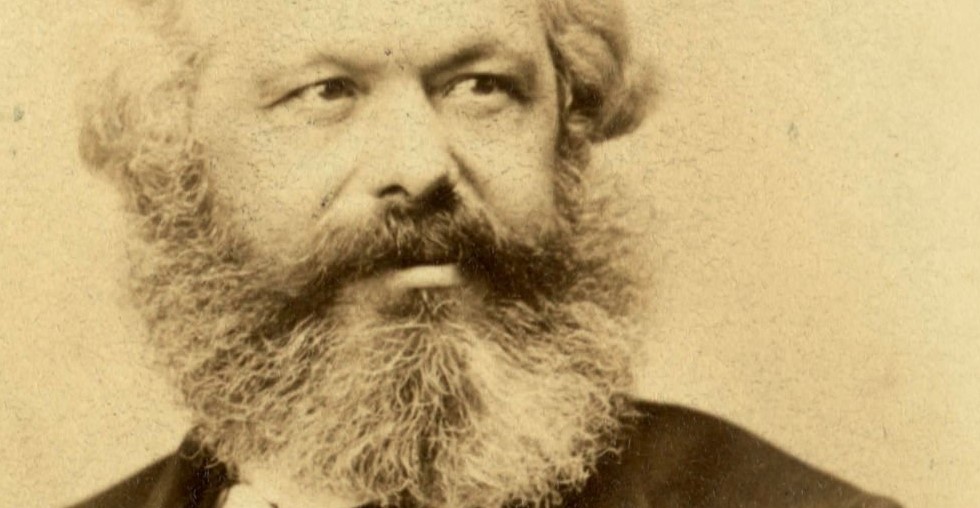
A letter of Marx to Kugelmann; this one where he gallantly offers aid to a traveling women, and ends up spending the day with her only to learn she was the niece of Herr Bismark, Elisabeth von Puttkammer.
‘A Marxian Anecdote’ (1867) by Karl Marx from The Daily Worker Magazine. Vol. 3 No. 188. August 21, 1926.
London, June 10, ’67.
To Dr. L. Kugelmann,
Dear Friend:
The tardiness of this letter leaves me open to the more or less “well-grounded” suspicion of being a “bad fellow.” As a basis for mitigation, I merely need to state that it is only a few days that I am “living” in London. In the interval I was at Engels in Manchester. But you and your dear wife know me well enough now to find letter-sinning normal with me. In spite of that, I was with you every day. I count my stay in Hanover among the most beautiful and happiest oases in the desert of life.
In Hamburg I had no other adventure, except, in spite of all precautionary measures, to get acquainted with Mr. William Marr. Judging from his personal manner, he is, as christian translator of Lassalle, of course worth much less. Mr. Niemann also played during the few days that I still remained there. But I was much too spoiled by the society in Hanover to want to be present at a theater performance in less good company. So Mr. Niemann slipped me by.
The passage from Hamburg to London, discounting somewhat raw weather the first day, was on the whole favorable. A few hours before London a German young lady, who had already struck me with her military bearing, declared that she wanted to leave that same evening from London for Weston-on-the-Sea and did not know how to begin to do it with her voluminous baggage. The case was so much the worse since helping hands are missing in England on the Sabbath. I had the young lady show me the railroad station to which she was to go in London. Friends had written same on a card. It was the Northwestern station, past which I had to ride, too. As a good knight, I therefore offered to let the young lady off at the place. Accepted. On closer reflection, however, it occurred to me that Weston-on-the-Sea is southwest, the station to be passed by me, on the contrary, and the one written down for the young lady northwest. I consulted the sea captain. Right. It proved that she was to be deposited in a part of London lying in an entirely opposite direction from mine. Still I had been engaged and had to make bonne mine a mauvais jeu. We arrived at 2 in the afternoon. I brought the donna errante to her station, where I learn that her train doesn’t leave until 8 p.m. So I was in for it and had six hours to kill with mademoiselle by promenading in Hyde Park, stopping in ice shops, etc. It turned out that her name was Elisabeth von Puttkammer, niece of Bismarck, with whom she had just spent a few weeks in Berlin. She had the entire army list with her, since this family provides our “brave army” abundantly with gentlemen of honor and taille. She was a cheerful, educated girl, but aristocratic and black-white up to the tip of her nose. She was not a little astonished when she learned that she had fallen into “red” hands. I consoled her, however, to the effect that our rendezvous would pass without loss of blood, and saw her depart safe and sound for her destination. Imagine what food this would be for blind or other vulgar democrats, my conspiracy with Bismarck!
Adio,
Your Karl Marx.
(Note–April-May, 1867, Marx traveled to Hamburg for the purpose of handing over the manuscript of “Capital” to his publisher, Meissner, and to visit Dr. Kugelmann in Hanover, A.L. [Avrom Landy])
The Saturday Supplement, later changed to a Sunday Supplement, of the Daily Worker was a place for longer articles with debate, international focus, literature, and documents presented. The Daily Worker began in 1924 and was published in New York City by the Communist Party US and its predecessor organizations. Among the most long-lasting and important left publications in US history, it had a circulation of 35,000 at its peak. The Daily Worker came from The Ohio Socialist, published by the Left Wing-dominated Socialist Party of Ohio in Cleveland from 1917 to November 1919, when it became became The Toiler, paper of the Communist Labor Party. In December 1921 the above-ground Workers Party of America merged the Toiler with the paper Workers Council to found The Worker, which became The Daily Worker beginning January 13, 1924.
PDF of full issue: https://www.marxists.org/history/usa/pubs/dailyworker/1926/1926-ny/v03-n188-supplement-aug-21-1926-DW-LOC.pdf

