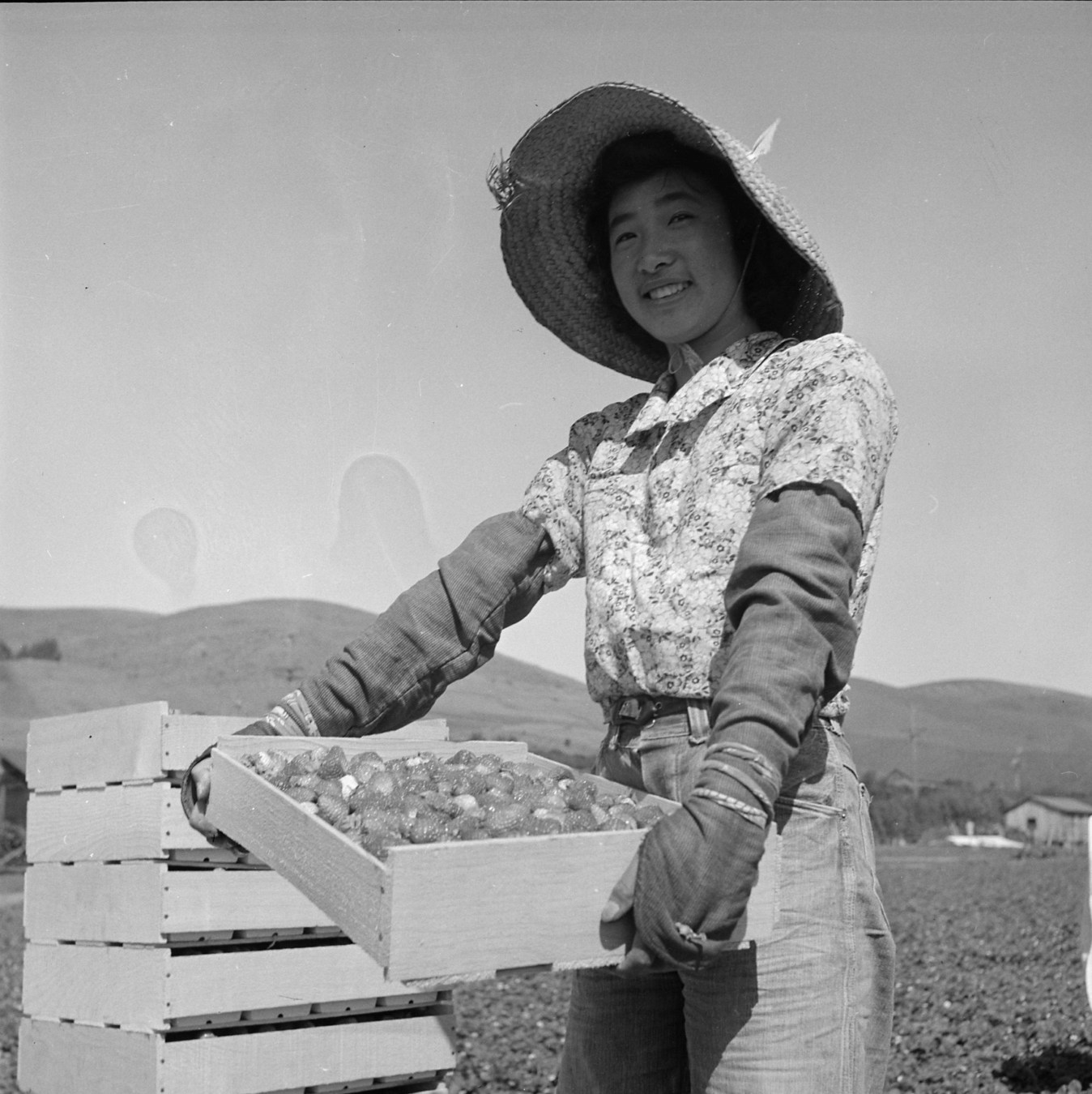
A fellow worker says that the conditions of Japanese women have been ignored for too long by labor and it was time to organize ‘this class of slaves.’
‘Japanese Women are Persecuted in the United States’ from Industrial Worker. Vol. 7 No. 88. July 24, 1926.
SAN FRANCISCO, Cal. Readers of the Industrial Worker and other advanced periodicals often read and hear of the different varieties of slaves that exist under capitalism.
But there is one kind of slave that is never heard from, the Japanese female slave. Just recently, there was a big deportation of those slaves from the Pacific Coast, in particular from California, while fresh slaves are brought in through that platte of land recently leased by Mexico to Japan. This outrage against defenseless women of the working class is not only carried to extremes by the white politicians and grafters, but the Japanese consuls do not stop to investigate but take the word of any stoolpigeons and degenerates who are on the lookout for a meal ticket, and who are willing to stoop as low as even the Gold Dust Twins, Coutts and Company did in the swearing of working men’s lives away in the so-called trials of I.W.W.s in California.
A Japanese woman can be deported for quitting her job; she can be deported for leaving her lord and master, her husband, no matter how cruel he may be, and she can be deported for striking for better conditions and wages. But if she is a good and willing and obedient slave, lives with some old man, old enough to be her grandfather, bears a large flock of children, then she is free to stay in America, where legalized prostitution is a business and a profit for the master class. The woman deportee, as soon as she lands in Japan, can go to work in the tea houses for four cents a day and prostitute her body to all kinds and colors of foreigners visiting in Japan.
A few years ago, I worked as a cook in the rice fields of California for a Japanese company. The Japanese straw boss, who represented the millionaire stockholders in Japan, who own five thousand acres of land in California, told the Japanese women waitresses and kitchen helpers that they would all get $75 per month during the rice harvest which lasted two months. But he paid them off with $60. If they made any complaint, they would be deported.
Another case I know of was a young Japanese woman who was only two weeks in America when she got a job as a domestic slave in the home of a very respectable high-class lawyer in San Francisco. She worked two years, drawing no wages, only enough for clothes. The lawyer’s wife left him, so the servant wasn’t wanted any more. Getting discharged, she was told that she could not claim any wages on the ground that it was the wife who employed her. The labor commission had the case in hand seven weeks, postponing it from time to time and from court to court. I met her in the court-room and she said she would count herself lucky if she could only get half of what was owed her. Legalized robbers like this lawyer are lauded as honorable gentlemen of the hundred percent American class.
This class of women slaves has no protection. I know that in every county in the state of California, Japanese and Chinese women working in restaurants and on farms and in other industries, twelve to fourteen hours a day, receive wages that would make any Indian squaw go on the war path forever. Just recently a Japanese woman, born in America, was educating some of her less enlightened sisters on the subject of birth control. She was given to understand by some of her own color exploiters that if she did not cease such educational measures, she would be deported.
This class of slaves has been neglected by the I.W.W. There should be I.W.W. literature printed and published in the Japanese language and this should be distributed among those slaves. It would do a great deal of good. (Card No. 65873).
The Industrial Union Bulletin, and the Industrial Worker were newspapers published by the Industrial Workers of the World (IWW) from 1907 until 1913. First printed in Joliet, Illinois, IUB incorporated The Voice of Labor, the newspaper of the American Labor Union which had joined the IWW, and another IWW affiliate, International Metal Worker.The Trautmann-DeLeon faction issued its weekly from March 1907. Soon after, De Leon would be expelled and Trautmann would continue IUB until March 1909. It was edited by A. S. Edwards. 1909, production moved to Spokane, Washington and became The Industrial Worker, “the voice of revolutionary industrial unionism.” A victim of finances and internal disputes, the IW ceased publication in 1913, only to be revived in 1916 and surviving as a weekly, sometimes more, until 1931. Easily among the most important working class newspapers in U.S. history and an essential resource on the wobbly, and larger radical labor experience
PDF of full issue: https://washingtondigitalnewspapers.org/?a=d&d=IWW19260724

