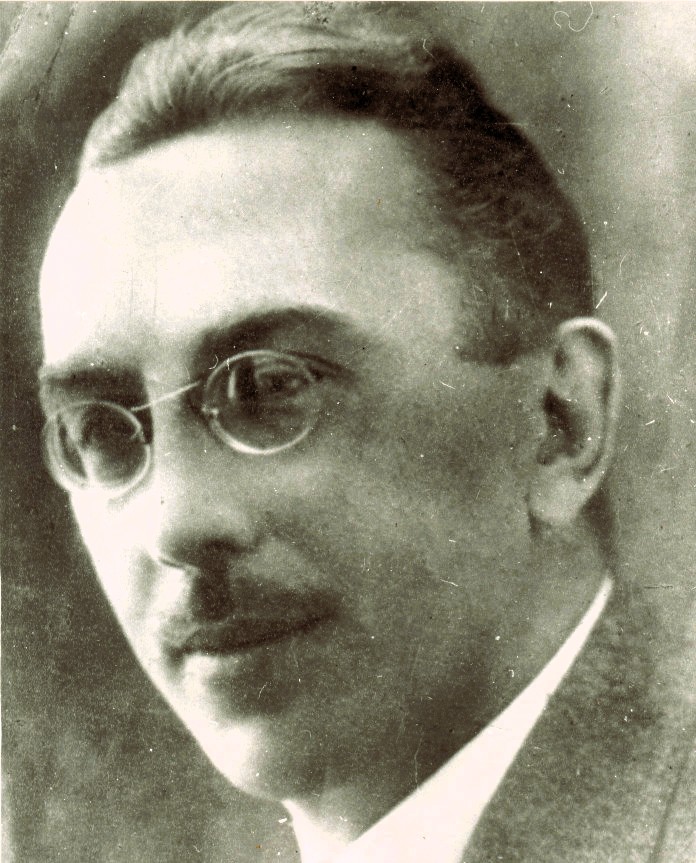
How interesting that is was Ossinsky who was chosen to draft and present this key resolution on the Wilsonian plan for post-World War One Europe passed at the Comintern’s first congress. Ossinsky had recently been a ‘Left Communist’ who had favored a ‘revolutionary war’ against Imperial Germany and would be founder of the Decist opposition around the 8th Party Congress two weeks after this. Valerian Ossinsky (Obolensky) came of age politically during 1905 and joined the Bolsheviks in 1907. In a leadership role in Moscow during 1917, he was a leading early Soviet economist and supporter of Bukharin’s opposition during Brest-Livotsk, later a ‘Democratic Centralist’ and in 1923 one of the signatories of the The Platform of the 46. He was a lead voice of the Opposition on economic matters in the debates of 1923-1924. Like a number of Oppositionists, Ossisnsky was moved to the diplomatic corp, becoming ambassador to Sweden. Breaking with the Opposition in 1925, he was elected to the Central Committee with much of his work with Gosplan and in agricultural planning. He aligned himself with Bukharin in the collectivization debate, but retained his membership in the Party, with academic work largely replacing Party and state activities after his involvement in the First Five Year Plan. Arrested in October, 1937 during the Purges, Ossinsky was a witness in the trial of Bukharin and Rykov. He was executed on September 1, 1938, convicted of the ridiculous allegation of being an ‘agent of fascism’ who had plotted with Bukharin and others to kill Lenin, Stalin, and Sverdlov in 1918.
‘Theses on the International Situation and the Policy of the Entente’ by Valerian Ossinsky from Communist International. Vol. 1 No. 1. May, 1919.
Drawn up and Moved by Comrade Ossinsky, and Passed by the Congress.
THE experience of the imperialist world-war has facilitated the unmasking of the imperialist policy of the bourgeois “democracies” as a war of Trust-States, for the division of the world and for the strengthening of the economic and political dictatorship of financial capital over the exploited and oppressed masses. The slaughter or crippling of millions of people, the enslavement of the proletariat, the destruction of the middle class, the unprecedented enrichment of the upper sections of the capitalist class as a result of contracts, loans, etc., the triumph of militarist reaction in all countries—these have begun to dissipate the illusions of national defence, of civil unity and of “democracy.” The politics of peacemaking, revealing the true aims of the imperialists of all countries, are bringing this scattering of illusions to its fullest accomplishment.
THE BREST-LITOVSK PEACE AND THE UNMASKING OF GERMAN IMPERIALISM.
The Brest-Litovsk peace, and, following it, that of Bucharest, revealed the predatory and reactionary character of the imperialism of the Central Powers. The conquerors secured annexations and indemnities from defenceless Russia. They converted the principle of the self-determination, of nations into the fig-leaf of a policy of annexations, by creating vassal States, whose reactionary governments assisted the policy of robbery and crushed the revolutionary activity of the labouring masses. German imperialism, which had not won a complete victory in the international struggle, had not at that time the occasion to reveal its true intentions in all their nakedness, and was forced to live in a bad peace with Soviet Russia, cloaking its plundering and reactionary policy by hypocritical phrases.
The Powers of the Entente, having won the final victory, have thrown off all masks, and have openly disclosed the real features of world imperialism.
THE VICTORY OF THE ENTENTE AND THE GROUPING OF THE STATES.
The victory of the Entente Powers has divided the so-called civilised countries of the world into several groups. The first of these is composed of the rulers of the capitalist world, the triumphant imperialist Great Powers (England, America, France, Japan, Italy). Opposed to them are the countries of conquered imperialism, broken by the war and undermined by the beginning of the proletarian revolution (Germany, Austria-Hungary, with their former subject States). The vassal States of the Entente Powers form the third group. This is constituted by, first, the smaller capitalist States which entered the war on the side of the Entente (Belgium, Serbia, Portugal, etc.), and, secondly, the newly-created national Republics and buffer States (Czecho-Slovak Republic, Poland, the Russian White Guard Republics, etc.) The neutral States are approaching the position of the vassals, but are experiencing a strong economic and political pressure which frequently approximates their position to that of the conquered. The Russian Socialist Republic is a workers’ and peasants’ State standing outside the boundaries of the capitalist world, and constituting a gigantic social threat to victorious imperialism—the threat of the destruction of all the fruits of victory under the pressure of world-revolution.
THE “PEACE POLICY” OF ALLIED IMPERIALISM AND ITS SELF-UNMASKING.
“The peace policy” of the five great masters of the world—the Entente Powers—has been and remains, viewed as a whole, a policy of continuous self-unmasking.
In violent contradiction to all phrases about “a democratic foreign policy,” it has given a complete victory to secret diplomacy, which decides the fate of the world by means of arrangements between the plenipotentiaries of the financial trusts, behind the back and at the expense of the labouring millions of all countries. All vital questions without exception are decided at Paris by a committee of the five Powers, in secret session, and in the absence of representatives of the conquered, neutral, and even vassal States.
The necessity of annexations and indemnities at the expense of the defeated countries has been openly proclaimed and definitely accepted in the speeches of Lloyd George, Clemenceau, Sonnino, and others.
Just as openly, in spite of empty phrases about “a war for general disarmament,” has been proclaimed the necessity for further armaments and for the conservation in particular of the British naval supremacy—in the interests of the so-called “freedom of the seas.”
The principle of the self-determination of nations formulated by the Entente is openly trodden underfoot, and just as openly replaced by a division of the disputed territories amongst the dominating and vassal States. Alsace-Lorraine has been united to France without any consultation of the population. Ireland, India, and Egypt have been deprived of the right of self-determination; the Jugo-Slav monarchy and the Czecho-Slovak Republic have been created by sheer violence; the most shameless bargaining is going on about the partition of European and Asiatic Turkey; the distribution of the German colonies has began; and so on.
The policy of indemnities has reached the stage of complete spoliation of the vanquished. The latter are not only presented with financial demands amounting to many millions: they are not merely deprived of all war material. The Entente countries deprive them of steam engines, trucks, ships, agricultural implements, gold reserves, etc.; and to this is added the transformation of prisoners of war into slaves of the victors. Projects are being advanced for the imposition of serfdom upon the German workers, whom the Entente Powers desire to make the penniless and starving slaves of Allied capitalism.
A policy of extreme nationalist jingoism expresses itself in a ceaseless campaign against the defeated nations by the Allied Press, the armies of occupation, and the hunger blockade, which condemns the peoples of Germany and Austria to extinction. This policy leads to German pogroms amongst the satellites of the Entente—the Czech and Polish chauvinists—and also to massacres of the Jews, which surpass in thoroughness all the exploits of Russian Tsarism.
The “democratic” countries of the Entente are carrying out a policy of extreme reaction.
Reaction is triumphant both in the Entente countries themselves—amongst whom the condition of France in particular recalls the very worst periods of the rule of Napoleon III—and also throughout that part of the capitalist world which is under the influence of the Entente. The Allies are throttling the revolution in the occupied regions of Germany, Hungary, Bulgaria, etc., and are inciting the bourgeois opportunist governments of the defeated countries against the revolutionary workers by threatening to deprive them of food. The Allies have announced the sinking of the German ships which dared to raise the Red Flag of revolution; they have refused to recognise the German Soviets; they have abolished the eight-hour working day in the occupied districts of Germany. Besides giving direct support to reaction in neutral countries and forcibly setting it up in vassal States (e.g., the Paderewsky regime in Poland), they are mobilising the reactionary forces of these countries (in Finland, Poland, Sweden, and elsewhere) against revolutionary Russia, and are exacting the employment in this cause of German troops also.
DIFFERENCES AMONG THE ENTENTE POWERS.
Amongst the Great Powers dominating capitalist society, a series of profound differences is showing itself in spite of the apparent harmony of the fundamental principles of their various imperialist policies.
These differences are chiefly accentuated in connection with the world-programme of American financial capitalism (the so-called Wilson programme). The main points of this programme are: “The freedom of the seas,” “the League of Nations,” and “the internationalisation of colonies.” The principle of “freedom of the seas”—if it is divested of its hypocritical outer-covering—means in practice the abolition of the naval supremacy of individual Great Powers (first and foremost, of England), and the opening of all sea routes to American trade. “The League of Nations” means that the European Great Powers (first and foremost, France) are deprived of the might of subordinating directly or uniting with themselves the weaker States and peoples. “Internationalisation of colonies” sets up the same principle in the case of colonial territories.
The origin of this programme is due to the fact that American capitalism, not possessing the largest fleet in the world, is not able to effect direct annexations in Europe, and therefore strives to exploit the weaker States and peoples by means of commercial intercourse and investment of its capital. Consequently American capitalism wishes to force the other Powers to form a syndicate of Trust-States for the purpose of “justly” apportioning each one’s share in world-exploitation; thus transforming the political struggle between the Trust-States into a purely economic struggle. In the arena of economic exploitation, the highly-developed financial capitalism of America expects to win practical leadership, and thus to guarantee for itself the economic and: political supremacy of the world.
“Freedom of the seas” is in violent antagonism to the interests of England, Japan, and, to a certain extent, Italy (in the Adriatic Sea). “The League of Nations” and the internationalisation of colonies are schemes profoundly opposed to the interests of France and Japan —in a lesser degree to those of the other imperialist Powers. In France, where financial capital is saturated with the spirit of moneylending, where industry is feebly developed, where productive forces have been completely ruined by the war, the policy of the imperialists is directed towards the support of the capitalist order by the most desperate methods—the barbarous plundering of Germany, the direct subjection and piratical exploitation of vassal States (e.g., the “Danubian League” project, the Jugo-Slav State, etc.), and the forcible extortion from the Russian people of the loans which Russian Tsarism contracted with the French Shylocks. France, Italy, and, in a different way, Japan, can also, in virtue of being continental Powers, follow a policy of direct annexation.
While all are inimical to America, the Great Powers at one and the same time are opposed to one another. England fears the strengthening of France on the Continent, British interests in Asia Minor and Africa are antagonistic to those of France, Italian interests in the Balkan Peninsula and Tyrol are in antagonism to those of France, Japan is at variance with Anglo-Saxon Australia over the Pacific Islands, and so on.
ALLIANCES AND TENDENCIES IN THE ENTENTE RANKS.
These differences between the Great Powers lead to the formation of different combinations in the ranks of the Entente. Two main groupings have already been noticeable: France-England-Japan, directed against America and Italy, and England-America, against the other great Powers. The first combination was predominant until the beginning of January, 1919, when President Wilson abandoned his demands for the abolition of British naval supremacy. The development of a revolutionary movement amongst the English workers and soldiers, which is driving the imperialists of several countries towards a mutual agreement, a liquidation of the Russian adventure, and a speedy conclusion of peace, increases the partiality of England for the second combination, which has become the predominating fact since January, 1919. The Anglo-American bloc is struggling against the exclusive right of France to rob Germany, and against the unchecked exercise of that right. It is limiting the boundless annexationist demands of France, Italy, and Japan. It is preventing them from subjecting to themselves directly the newly-created vassal States. On the question of Russia, its attitude is more peaceable: it wishes to free its hand in order to complete the division of the world and throttle the European revolution, so that finally it can crush the Russian revolution as well.
These two combinations correspond to two tendencies in the heart of the greatest Powers—one of extreme annexationism, the other more moderate—of which tendencies the Wilson-Lloyd George alliance supports the latter.
THE LEAGUE OF NATIONS.
In view of the irreconcilable differences that have made their appearance amongst the Entente Powers, the “League of Nations,” if it is realised on paper, will mean only a holy alliance of capitalists to crush the workers’ revolution. At the same time the “League of Nations” propaganda is the best way of confusing the revolutionary consciousness of the working class, substituting as it does for the idea of an International of revolutionary Labour Republics the idea of an international union of sham democracies, attainable through a coalition of the proletariat with the capitalist classes.
The “League of Nations” plays the part of a false ideal by means of which the social-traitors, on behalf of international capitalism, can divide the forces of the proletariat and assist the imperialist counter-revolution.
The revolutionary workers of the whole world must carry on an uncompromising struggle with the Wilsonian idea of “the League of Nations,” and must protest against entry into this league of robbery, exploitation, and imperialist counterrevolution.
THE FOREIGN AND INTERNAL POLICY OF THE DEFEATED STATES.
The military destruction and internal collapse of Austro-German imperialism have led, in the first stages of the revolution, to a supremacy of bourgeois-opportunist “Socialism” in the Central Empires. In the name of democracy and Socialism, the German social-traitors are, at home, guarding and restoring the economic supremacy and political dictatorship of the capitalist class, and, abroad, striving to set German imperialism on its feet again by insisting on the return of the colonies and by demanding the admission of Germany into the robber “League of Nations.” In proportion to the strengthening of the White Guards in Germany and the growing disruption in the Entente camp, the “Great Power” aspirations of the German capitalists and social-traitors are developing. At the same time, by carrying out the counterrevolutionary instructions of the Entente and, in some measure, by inciting the German workers against the Russian labour revolution for the benefit of the Entente, the bourgeois-opportunist Governments are undermining the international solidarity of the proletariat, and isolating its German detachment from the other fellow detachments. The policy of the capitalists and opportunist Socialists in Austria and Hungary is a repetition, in a less marked form, of the policy of the bourgeois-opportunist bloc in Germany.
THE VASSAL STATES OF THE ENTENTE.
In the vassal States, and in those newly set up by the Entente (Czecho-Slovakia, the Jugo-Slav kingdom, Poland, Finland, etc.), the policy of Allied imperialism relies upon the ruling classes and social-nationalists to create centres of nationalistic counter-revolutionary activity. This activity is to be directed against the defeated countries; it is to maintain a balance of power by creating mutual conflicts between the new States and is to keep them in dependence upon the Entente; it is to serve as a check upon the revolutionary movement developing in the heart of the new “national” Republics; finally, it is intended to create White Guard cadres for the struggle with the international revolution, and, in particular, the Russian revolution.
As to Belgium, Portugal, Greece, and other similar small States connected with the Entente, their policy is determined entirely by that of the greater bandits, on whom they are in complete dependence, and on whom they rely for help in securing less important annexations and indemnities.
THE NEUTRAL STATES.
The position of the neutral States approximates to that of the non-privileged vassals of Allied imperialism; the Entente treats them almost the same as it does the vanquished. A few who enjoy the good favour of the Entente see the opportunity to make various demands of the defeated States (e.g., the Danish claims to Flensburg, the Swiss demand: for internationalisation of the Rhine, and so on). At the same time they carry on the counter-revolutionary role entrusted to them (e.g., the expulsion of the Russian embassies, the recruiting of White Guards in the Scandinavian countries, etc.). The others are threatened with territorial dismemberment (e.g., the project for uniting Dutch Limburg with Belgium and internationalising the mouth of the Scheldt).
THE ENTENTE AND SOVIET RUSSIA.
In its attitude towards Soviet Russia, the rapacious, jingoist, and reactionary character of Allied imperialism shows itself most clearly of all. From the first day of November revolution, the Entente Powers took up their stand on the side of the counter-revolutionary parties and governments of Russia. Supported by the bourgeois counter-revolutionaries, they seized Siberia, the Urals, the coasts of European Russia, the Caucasus, and part of Turkestan. From the occupied territories the Allies have been, and are still, exporting raw material (timber, petroleum, manganese, etc.). With the help of hired Czecho-Slovak bands they succeeded in stealing the gold reserve of the Russian State. French and English spies, under the direction of the British diplomat, Lockhart, contrived to destroy bridges, railways and trains for the purpose of interrupting the provisioning of the country. The Allies have supported with money, munitions, and military aid the reactionary generals, Demkin, Kolchak, and Krasnov, who hanged and shot thousands of workmen and peasants at Rostov, Yuzovka, Novorossiisk, Omsk, and elsewhere.
Through the mouths of Clemenceau and Pichon, the Allies have openly proclaimed the principle of “economic encirclement,” i.e., of the destruction by starvation of the revolutionary; Republic of workmen and peasants, and they have promised “technical assistance” to the bands of Denikin, Kolchak, and Krasnov.
The Allies have consistently refused to accept the repeated peace proposals of the Soviet Republic.
On January 23, 1919, the Entente Powers, in whose midst at that time the more moderate tendency had the upper hand, addressed a request to all the Russian Governments to send representatives to the island of Prinkipo. This proposal undoubtedly concealed a provocative attitude towards the Soviet Government. However, in spite of the fact that on February 4 the Entente received a reply in the affirmative from the Soviet Government—a reply in which the latter declared its readiness to offer the Alles annexations, indemnities, and concessions, for the sake of freeing the Russian workers and peasants from the war into which the Entente had dragged them—the Entente left even this peace proposal of Soviet Russia unanswered. This shows that the annexationist—reactionary elements in the camp of the Allied imperialists have a firm footing. They are threatening the Socialist Republic with new annexations and counter-revolutionary attacks.
The “peace policy” of the Entente is finally disclosing to the eyes of the international working class the true nature of Allied imperialism, and of all imperialism m general. At the same time it is proving that imperialist governments are not capable of concluding a just and lasting peace, and that financial capital is not capable of rebuilding the shattered economic order. The further supremacy of financial capital would lead either to the complete annihilation of civilised society or to an unprecedented development of exploitation, enslavement, political reaction, and militarist armament, leading in the end to new destructive wars.
N. OSSINSKY
The ECCI published the magazine ‘Communist International’ edited by Zinoviev and Karl Radek from 1919 until 1926 irregularly in German, French, Russian, and English. Restarting in 1927 until 1934. Unlike, Inprecorr, CI contained long-form articles by the leading figures of the International as well as proceedings, statements, and notices of the Comintern. No complete run of Communist International is available in English. Both were largely published outside of Soviet territory, with Communist International printed in London, to facilitate distribution and both were major contributors to the Communist press in the U.S. Communist International and Inprecorr are an invaluable English-language source on the history of the Communist International and its sections.
PDF of full issue: https://www.marxists.org/history/international/comintern/ci/old_series/v01-n01-1919-CI-grn-goog-r2.pdf

