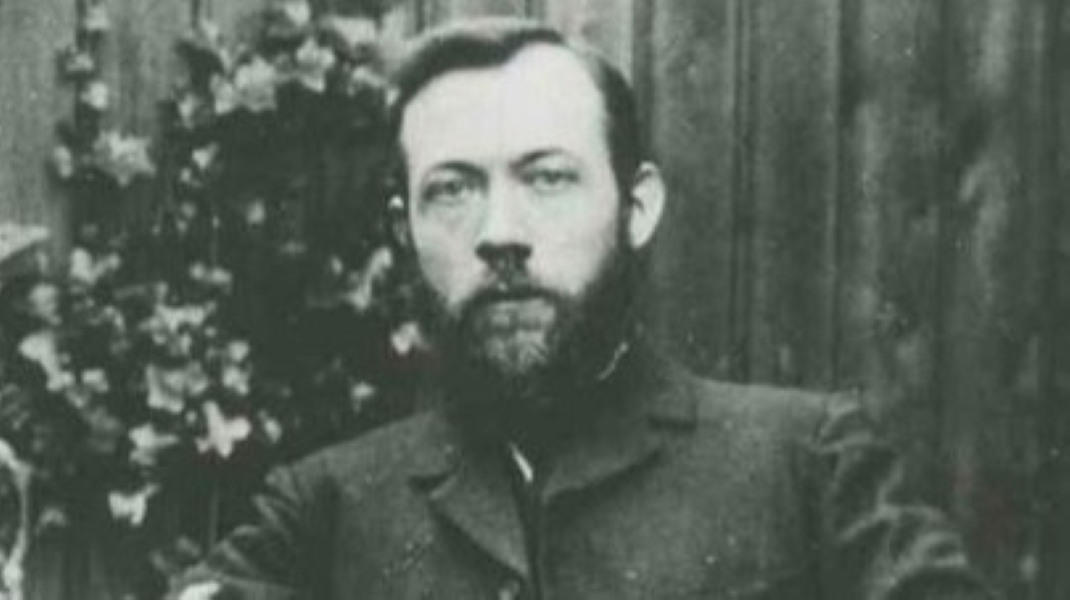
The full text of Pannekoek’s substantial 1909 essay exploring the emergence of a revisionism leading to opportunism in the workers’ movement, and the revolutionary Marxist counter-current advocated by Pannekoek.
‘The Tactical Differences in the Labor Movement’ (1909) by Anton Pannekoek from The Radical Review. Vol. 1-2 Nos. 1, 2 & 1. July, 1917-July, 1918.
Translated from the German by KARL DANNENBERG
I. THE GOAL OF THE CLASS STRUGGLE
The tactics of the proletarian class struggle are an application of that science, those theories, which teach us the causes and tendencies of social development.
The capitalist mode of production uses the production of use-values or commodities necessary to society as a means to enlarge its capital. The owner of capital purchases the labor-power of the propertyless workers; applies it to the means of production, of which he is the owner; and to him then belongs the product of labor: the value created in this process of production. Labor-power produces a greater value than it needs for its own subsistence and reproduction. The exploitation of this labor-power forms the means and furnishes the source of enrichment, because everything the workers produce over and above the value of their labor-power, the surplus value, is appropriated by the capitalists, and serves in the main to increase the value of their capital.
The most important feature of capitalism, however, does not rest in this structure, i.e. in this general exploitative character, but can be located in its rapid development to forms of an ever changing and more modern type. The driving force of this development is competition.
The laws of competition effect and decree that the total amount of surplus value, produced in a given period in all capitalist establishments, is not distributed in proportion to the various sums of capital invested. Namely, the enterprises possessing the most productive machines and efficient methods, those enterprises which can produce the cheapest, get an extra profit; whilst the most unproductive establishments hardly receive little or nothing, yes, eventually, even suffer a loss.
The first consequence of these circumstances gives birth to a steady increase of social productivity. The results obtained through the rapid development of the natural sciences are applied to improve the methods of labor and to perfect the machines, etc. A race in the application of the most modern technical achievements is the logical result of this situation; old and antiquated technical means or tools of production are cast aside: the creative powers of the machines and the yielding faculties of labor grow incessantly.
It is a general rule that the largest and most expensive machines are also the most productive. And even if the machines and tools were of the same quality, the large factories, in which a scientific division of labor and a saving of operating expenses through expert management can be accomplished, would nevertheless be able to produce cheaper than their smaller competitors. From the foregoing it can be deduced: that generally the largest establishment is also the most productive establishment. In the competitive struggle, therefore, the large concern finds itself in an advantageous position, to the detriment of the small establishment, which is slowly pressed into the background. The organization of a modern factory, the installation of the huge and expensive machinery, requires large sums of capital. And this requirement, which, as you have seen, is but a creature of economic conditions, is the driving force that continually compels the capitalists to increase and concentrate their capital so it assumes ever greater proportions. And inversely conceived, the large investments of capital also absorb by far the largest portion of the sum total of surplus value produced in a fixed period, so that the same comparatively increase far quicker than the capital invested by the small exploiters.
The effects of the development just touched upon can be noticed in the ever changing structure of society. The collapse or the extinction of the independent middle class on the field of production is now practically an accomplished fact; only in certain special branches and mostly amongst concerns performing repair work can we still find this small phase of capitalist enterprise. In the retail business industry, this revolution is now in progress. This collapse goes hand in hand with the growth of the propertyless proletariat, which partly recruits its members out of this category of erstwhile small bourgeois and on the other hand is made up of the large immigration of peasants to the cities. All these additional proletarians are quickly absorbed by the large industries of modern capitalism. The concentration of capital, which can not be quickly enough accomplished through the natural process of growth, is hastened by the formation of corporations and the organization of banks, in which the small sums of wealth are collected and pooled into large accumulations of capital. The organization of capitalist establishments also undergoes a change. The capitalist, who in former days was also the manager and actual director of an enterprise, swiftly disappears. The management of the large factories and industries is turned over to paid officials, directors, who again engage and command a large staff of managers, inspectors, foremen, technical experts, engineers, chemists, etc. These paid officials and servants of the capitalist class form a new middle class which, however, due to its dependent social position, can be easily distinguished from the old and legitimate middle class. Thus the owners of capital forfeit every active role or position in the process of production, and assume evermore the characteristics and functions of pure spongers and parasites. Production is carried on absolutely without their assistance, but nevertheless their interest remains the determining and governing factor in the productive process.
The development of capitalism leads to ever greater contradictions. The gigantic forces of production permit a nearly unlimited increase of products: an increase that could serve to satisfy the wants of humanity. However, as soon as these forces are permitted to develop and exert their productive faculties in an unrestrained manner, they collide with and shatter upon the limited buying power of the masses; an economic crisis is the result, an uncountable number of small capitalists are ruined and large numbers of workers are thrown out of employment. These modern social conditions, conditions which force the large army of producers to live in permanent poverty and condemn them to an existence of economic insecurity; which surrender to a minority of parasites all the fruits of increased productivity; such social conditions are not compatible with the juridical foundations of the system of private property. In the days of handicraft and small workshops, private property in the instruments of production served as a means to insure to every producer a livelihood. Under capitalism this juridical conception has developed into a means which permits and legalizes the robbery of the fruits of toil from the producers. Production has assumed a cooperative, social character and is at absolute variance with the old inherited form of private ownership and appropriation.
These contradictions become more marked and perceivable, because the result of free competition, the concentration of industries, leads partly to the abolition of free competition. As soon as the large mass of small capitalists have disappeared, it then becomes advantageous for the large capitalists to combine, instead of weakening or exterminating themselves in the competitive struggle. Combination takes the place of competition. At first these combinations assume the shape or form of simple agreements on prices, probably brought about through the destructive influence of a competitive struggle; however, as the effects of development make themselves felt, this form advances in the direction of ever greater compactness and social significance, until it reaches the economic stage of the syndicates and assumes the relatively permanent organic form of the trusts. These trusts unite all the individual enterprises, all the undertakings in an industry, into one gigantic establishment: into a single colossal concern controlling a given industry in society.
The effects of this process of centralization tend partly to abolish the boundless anarchy underlying private production: in a limited degree, a force regulating production appears upon the scene. However, the benefits derived from this adjustment only flow into the pockets of the industrial lords who rule the trusts, and now begin to use their control over the industries of the land to fleece the consumers. It will readily be conceded that syndicates and trusts represent a higher form of capitalist organization and development: a form that eliminates the useless squandering of strength necessitated by the antiquated and unproductive small capitalist enterprises and the destructive elements of competition. With the elimination of competition, however, the fruit of competition, the incentive to increase the productivity of labor, also disappears.
These contradictions, which assume ever greater proportions as capitalism progresses, will be finally abolished by a revolution in the system of production itself. With the abolition of the title of private ownership in the means of production, production will cease to serve the lust of the parasitic capitalists for profit. The various industrial enterprises will then no longer meet each other as competitors on the economic field, but will become parts of a consciously regulated, social system of production. The people, the producers, will thus again become masters over the instruments of production, which they will now operate or use for the satisfaction of their own wants and desires. However, not individually, but collectively as a community will production be carried on to satisfy the communal wants and requirements. Now the forces of production may develop unrestrainedly and exert their fullest productive qualities, because the greater productive capacities these forces assume, the larger will the quantity of products be resulting therefrom, and in the same proportion will the hours of labor, which the members of society are compelled to perform for their livelihood, be shortened. The socialization of the means of production, the Socialist system of production, solves the contradictions of capitalism.
Capitalist evolution, therefore, itself points to the goal towards which it is steering; and it is again this development that accentuates and sharpens the contradictions to such a degree, so they become unbearable and culminate into a social revolution: a revolution that will remove the capitalist mode of production and replace the same through the Socialist Commonwealth.
However, these contradictions do not mechanically effect such a revolution. They only act in this direction, insofar as the effects of the same become unbearable or inconvenient to the people. All conditions of production are human conditions; everything which transpires in society is but the result of human action. The invention and introduction of new machines; competition; the concentration of capital; the organization of ever larger manufacturing plants or establishments; the formation of syndicates and trusts: all these accomplishments are the work of human endeavors. Of course, it is not an activity intentionally performed and clear in aim; every human being only perceives his or her own conditions, and is animated and driven on by the force of immediate poverty or necessity; everyone seeks to serve his own interests: seeks to maintain himself against others–seeks to get ahead of his fellow-men in the competitive struggle. Social development is the product of all these individual acts, of these individual desires, and is not brought about by the intentional or conscious labors of anyone. That is why the results representing the total of human activity seem and appear to the individual as the work of a superhuman power, and act like a supernatural force: unrelenting, inexorable–like a necessary dictate of nature. Society is like an organism without a head, a social organism without a collective thought, which never acts according to conscious considerations, but that performs everything in obedience to blind laws. This social organism is, nevertheless, constructed out of conscious, thinking individuals.
All social effects are, therefore, only brought about through the action of individuals. The contradictions of social development are contradictions felt by the people, and the overthrow of a system of production can, consequently, also only be the work of the people. However, this work is not performed by penetrating individuals, who stand above society and who, following a conscious purpose, change social institutions; because, as stated before, every individual only does that what his immediate interests compel him to do. The acts of the people, necessarily and so to speak instinctively performed in pursuit of their interests, grouped together and in their totality, must and will so shape themselves as to result in the overthrow of the present system of production.
For members of the same class, the interests are the same. However, for different classes, the interests are different and even opposed to each other. The pursuit of their conflicting interests, therefore, brings with it the war of the classes. The interests of the exploited worker are absolutely opposed to the interests of the exploiting capitalist. In order to increase the surplus value, which serves as the element for the growth of capital, the capitalist seeks to intensify exploitation. By attempting to reduce wages, to prolong the hours of labor and to whip on production, the capitalist seeks to accomplish his purpose. The worker, whose health and vitality are ruined by this process, opposes the attempt of his master, and aims to procure a shorter workday and a higher wage, in order that his existence also assume a human form. The laboring conditions, therefore, form the object and base of a struggle in which at first the capitalists and workers participate singly and in an isolated manner; a struggle, however, that gradually and in proportion as the participants recognize the class-character of their interests leads them to unite with their class comrades into compact organizations.
Gradually the class struggle of the proletariat develops. This struggle begins with the isolated insurrections of workers in certain factories against intolerable working conditions. After a while, permanent organizations are formed, and the fact gradually begins to dawn upon the workers that their interests did not merely accidentally come into conflict with those of their employer, but that they are in permanent opposition. Amongst the workers the consciousness that they form a distinct class develops; and with the growth of this perception their vision also begins to expand, conceive and embrace the whole class. This, however, switches the struggle to the political field upon which the general differences of the classes find expression.
As long as the state appears to the workers in the form of the most supreme power, the wage slaves will also turn to it with the request or demand to curb their misery or protect them against an oppression too brutal to describe, through some form of legislation. In their struggle against the capitalists, the workers, however, gain the experience that the exploiters use their control over the machinery of state, in order to safeguard and defend their class interests more effectively. The workers are consequently compelled to take part in the political struggle. And the more they recognize the dependency of the state on the exploiting classes and the importance of political power for the advancement of economic interests, just so much clearer must the workers perceive and formulate their goal: the conquest of political supremacy. If, however, the working class adopts this aim, then it must at the same time be clear on the question: How or in what form it desires to use or exploit this political supremacy. In other words, the proletariat needs a programme for the future. The clear insight into the nature of capitalism, an insight acquired through the experience gained in the class struggle, teaches the workers that the palliation of certain isolated evils does not suffice. The cause of their poverty is to be found in the innermost basic elements of capitalism. The proletariat is the class which suffers the utmost from all the contradictions of this system of production. It is this class which experiences the keenest hardships under the industrial panics; it is this class which furnishes the mass of actual producers, who are robbed daily of an ever larger part of their product by a minority of useless parasites. The interests of this class demand the abolition of the groundwork of capitalism: the overthrow of this system of production and the inauguration of Socialism. We can now perceive how the immediate material interests of the working class and the evolutionary tendencies of capitalist development run together. The revolution of the present order of things, i.e. the Socialist system of production as the ultimate goal of the proletarian struggle, now becomes the fundamental demand of the political programme which this class is compelled to formulate and seeks to realize through the conquest of political power. Therefore, Socialism will not be the product of all sane people and not be instituted because it is better than capitalism whose evil conditions it eradicates. The people can only be guided in accord with their immediate class interests. Viewed from the angle of a conscious arrangement of social conditions, the people can be called an unconscious mass. The bourgeoisie feels its immediate interests closely allied with a system that permits it to live from the exploitation of the workers; therefore, the bourgeoisie will have nothing of Socialism. Socialism, however, is the inevitable consequence of a victory of the working class in the class struggle: Socialism can only emanate from this class war. In this way Socialism, the social goal of the working class, comes to be the object itself, or, to be more exact, becomes the slogan of the class struggle between the bourgeoisie and the proletariat.
Socialism cannot be the immediate aim of every single act in the daily class struggle. Socialism can only be considered the result, the product, of a long struggle. Therefore, Socialism is the ultimate aim of the class struggle, and we must differentiate between the ultimate and the immediate aim. As the ultimate aim, Socialism imparts to the fighting working class consciousness appertaining to the trend and direction of social development; as a vision of future reality, it serves this class in the form of a yardstick with which it can measure and compare all capitalist conditions; and as an ideal, furthermore as a critical expression of the nature and character of capitalism scientifically conceived, Socialism, through its ideal splendour and scientific soundness, whips the movement on to an ever greater exertion of strength.
The immediate result of the struggle is the increase of our power. Every class has control over a small or large influence (power) in society. If a class is in the ascendancy, its power is also in the ascendancy and vice-versa. The class possessing the largest power has control over the government. A class, desiring to capture the government, must develop its power to such a degree, so as to be able to defeat the hostile class. Development and increase of the social power is, therefore, the immediate aim of the class struggle.
The factors out of which the might of a class is constructed are different for different classes, and are dependent upon the general social conditions: the conditions of production, and the functions performed therein by the class under consideration.
The might of feudality in the Middle Ages was based largely upon the fighting faculties of its followers: followers, who were recruited out of the subject population of the feudal lord and only awaited his bidding. The might of the bourgeoisie in its struggle against absolutism was based chiefly upon money; the bourgeoisie was the class in possession of rich monetary sources, and from this class the feudal lords had to get the funds with which to operate the machinery of state.
In the modern nation, the rulership of the bourgeoisie is predicated in the first place upon its economic indispensability. Members of this class are managers of the most important branches of production in industry and commerce, upon which large layers in society depend. Through this economic power and function, this class receives in the eyes of the workers a certain moral standing, who, as long as they have not recognized the class distinctions, see in the members of the ruling class its leader.1
Through its monetary possessions, the bourgeoisie becomes the dominant class in the state, and can, therefore, compel the directly ruling bureaucracy to safeguard its interests. This ownership of money and all it implies also makes plutocracy powerful in its struggle with the proletariat. To this the important factor must be added that in large circles a conviction holds sway which considers the rule of the bourgeoisie perfectly in order and necessary. This conception flows from the circumstances that quite a large social layer is constituted out of a middle-class element of independent speculators, who even though they are oppressed heavily by plutocracy, nevertheless feel the same interests, when it comes to maintaining the supremacy of the capitalist system, as the large capitalists themselves. However, to a degree, this factor in the social consciousness is a negative one, i.e., it exists due to a lack of class-consciousness in a section of the working class. These two reasons steadily contribute to diminish the social significance or effect of aforementioned factor. In the first place, the number of those who have a direct interest in the exploitation of the workers is steadily decreasing. Furthermore, more workers are awakening daily to class-consciousness, and change from followers to enemies of the bourgeoisie. As the remaining co-related factors and props, upon which the rule of a disappearing class rests, begin to diminish in importance, a single prop steadily develops to the most important factor for the preservation of this might, namely: the actual control of this class over the powers of government. Through its political power, a ruling class can hold itself in the saddle against the onslaughts of a young, rising class, even though practically all other roots of power, with which it was firmly implanted in the social soil, have been lost. The modern state places powerful means of a moral and physical character at the disposal of the class that exercises command over it. It forms a well branched-out organization, which, through an army of employees, carries and compels recognition of a certain central–will into the remotest quarters: everywhere acting in accord with the same fundamentals, thereby possessing a tremendous advantage over the unorganized masses. The modern state disposes over moral authority which, through its influence upon education, church and science, it seeks to maintain and to increase artificially. The modern state has control over the physical means of force, the army, which, held together by iron bonds of discipline, can be employed in the utmost case, if the forces of the law and the police should not suffice to crush a rebellious populace with the might of their superior arms. If, therefore, conditions were otherwise equal and well balanced between the two struggling classes, the ruling class, by virtue of being the ruling class and exercising control over the powers of government, would far outmatch its antagonist.
The working class, consequently, can not be satisfied to increase its might over and above that of the bourgeoisie and the other classes affiliated therewith, but it must develop its power to such proportions, as to be able to conquer and gain victory over the forces of state.
II. The Power of the Proletariat
Out of what elements does the social power of the working class consist?
In the first place it rests in its numbers. The proletariat of today constitutes in an ever larger proportion the great mass of the people. In the most developed countries, the wage-earning class already represents a significant majority of the population. However, a majority which is dependent upon the minority, like, for instance, the numerous slum proletariat, can never develop its own power. To the numerical strength of the proletariat, the economic importance of the workers must be added. In the course of evolution, the working class is developing gradually to the economically most important class in society. To social production, the industrial proletariat of modern industry is of far greater significance than the comparatively still large class of small bourgeois and farmers. These proletarians live massed together in the large industrial centres, the cities, in which also political life is concentrated; while the farmers, on account of their isolated position, exert far less influence. The basic establishments which really govern social life autocratically: the iron and steel industries, the railroad traffic, mining, etc., are all such large centres, and the workers engaged therein can, therefore, through a strike, for instance, exercise an influence upon society far out of proportion with their numerical strength. Consequently, through the importance of their economic function, through their irreplaceability in the process of social production, the power of the working class is much greater than its numerical strength would have it appear.
However, mere numbers and economic significance can not alone give a class power, if it is not conscious of the same. If a class has not recognized its peculiar position in society, and the distinct interests interwoven therewith; if a class, thoughtless and enervated, submits to the domination of its oppressors, thinking this to be the eternal order of things, then all its numbers and economic significance will not carry any weight. Therefore, to these factors of working class power, clear conception and knowledge must be added. Only through class-consciousness will this large number of workers become a contingent of workers for its own class, only thereby will they become conscious of the might slumbering in their economic irreplaceability, and be able to apply the same in their own interests. Class-consciousness first infuses this gigantic, muscular but dead body with life, and makes it competent to engage in class activity.
With the simple conception of belonging to a certain class having distinct interests, the knowledge which imparts power to the working class does not end. This class will be able to conduct the struggle against its opponents firmer and more successfully, in the same degree as its insight into the social relations that condition this struggle grows. In this respect, the proletariat has a great advantage over its enemies, because it disposes over a science of society, over a social science, that enables it to appreciate the cause of its misery, and to clearly recognize the trend and aim of social development. Just because the working class is familiar with the forces that determine and shape political events and can foresee the tendencies inherent in them, that is why this class distinguishes itself in the struggle through a calm determination, an inner firmness, which keeps it erect through all the vicissitudes of battle. Upon these elements is based that political maturity, so often emphasized in political struggles by this class. Science enables the proletariat to vision the most remote effects of its own acts, and thus protects it against the possibility of deceiving itself through the sometimes misleading appearances of the moment. The certainty with which science announces the future, final victory of the workers over Capitalism imparts to this class a firm morale, while the other classes, for want of scientific conception, grope about in darkness, feeling with dismay the approaching collapse, and swaying without support from one side to the other. In this form social clarity and science, from their simplest phase, reflecting the awakening class-consciousness, up to the most difficult chapters in the teachings of Marx, which we call scientific Socialism, symbolize one of the most important pillars of the proletariat.
The appreciation of how to act is, however, not at all sufficient, if the strength with which to act is missing. The thoughtful brain must be supplemented by the strong arm, which executes that which the former evolves. For a powerful activity large numbers are not sufficient. History of civilization is replete with illustrations of masses of people being ruled by numerically insignificant minorities. It is furthermore a historic fact, that these masses attempted in vain to throw off the yoke of slavery, because the ruling minorities in every case were securely fortified behind strong organizations. Organization, therefore, is also absolutely essential in order to impart strength to the masses in order to make the masses vigorous and strong. As long as a class is made up out of a series of unorganized units, of which each one desires to attain something else, just so long it can not hope to exercise any power. Organization alone will mold these units together and unite the different aspirations to a single aim, behind which the united class power of the masses will then stand. The tremendous strength of an army, yes of the whole machinery of state, rests upon the closely knitted character of these organizations, which in turn, like one great body, are actuated and governed by a single will.
What, however, makes an organization out of a number of individuals? Only the subjugation of the individual, the acquiescence of the personal will to the collective will-discipline. In the army, it is a subjugation to a strange will: military discipline is attained through the fear of severe punishment, that threateningly follows on the heels of disobedience. Amongst the workers the collective will, to which the individual bows, is the will of the organization itself, ascertained and adopted through a majority decision. The discipline here is a voluntary discipline–a voluntary submission to the whole. This does not imply the surrender of an individual’s personal opinion, nor obliteration of the distinct personality, but announces the conscious conclusion: that only when led and animated by a single will, the masses will be able to develop power; furthermore, that the minority has no right to demand subjection of the majority to its dictates. Only through the unification of his power with that of his fellow-workers can the individual attain his goal. Alone he is powerless. That is the reason why simple reflection, if not elementary instinct, dictates to him that he must join with others into an organization. However, to achieve this, it is essential that the organization can always rely upon the support of all its members, even if some should entertain views and opinions different or at variance with those of the organization. And in just this unity of action we perceive the discipline, which is the mortar of an organization, the intellectual binding substance, that cements the otherwise scattered units into a compact, powerful mass.
Out of the aforementioned three principal factors: numbers and economic significance, class-consciousness and correct social perspective, and organization plus discipline, the power of the working class constitutes itself. With their growth, the power of the proletariat also grows. The first of these factors grows irrespective of our will and influence, as the result of economic development. This development makes out of the wage-earning class an ever larger part of the population; presses the workers closer together in the large establishments, and rears social production as the most fecund system of modern industries; thereby making mutual dependence and interrelation of all productive branches, on the scale of an immense world industry, the peculiar characteristic of capitalist production. This development of the economic significance of the proletariat takes place independently of our intervention; we can not speed or retard it; it is an effect of the economic laws.
Contrary to this, the two other factors are an effect of our own efforts. Of course, they are also called into existence by the same economic evolution that furnishes us with an insight into society and compels us to organize. However, here the economic effects act through the people in such a manner, that they compel us to work consciously and intentionally in the direction of their intensification. To develop aforementioned factors; to raise and stimulate the knowledge and class-consciousness of the proletariat; to strengthen the workers’ organizations and perfect their discipline, that is the aim of all our agitation of all our struggles. In the realization of these aims rests the enlargement of the power of the working class, in so far as the same is dependent upon our will. And this clearly defines the aim of the class struggle. Here we also have a yardstick for the appraisal and judgment of our tactics and actions: everything that increases our power is good and brings us nearer to our ultimate goal; everything that reduces the same is wrong, etc.
The above also furnishes us with the only sensible conception of the significance of the “movement,” which Bernstein, in those memorable days of revisionistic aggression, sought to place in a juxtaposition to the ultimate aim. The movement, unqualifiedly conceived, is not only nothing to us, but in reality signifies nothing: it is, again viewed disconnectedly, a word without specific meaning. Rocking to and fro without progressing from the premises is also movement; furthermore, retrogression reflects a certain form of movement. Nevertheless, it can not be denied that this conception contains an instinctive feeling, a correct perception, impressing the individual with the proposition that phenomena are not static, but that change takes places daily, constantly affecting the present–a metamorphic process which actually exhausts our whole vitality. The desire to comply with the demands growing out of these continually changing social conditions, is the force at the bottom of or behind this perception. The goal visioned and striven for rests in the increase of our power. This, however, can not be considered to stand in contradiction to our ultimate aim, but is fully in accord with the same, because in the aim that strives unceasingly to increase the power of the proletariat the ultimate aim is already included.
Quite frequently the opinion is aired that the immediate aim and purpose of all our work rests in the attainment of reforms. As has been explained here, however, this conception is erroneous. Of course, certain reforms, which in any shape or form improve the conditions of the working class, may also increase the power of the proletariat; however, this is not always the case. For instance, a law limiting the time of labor or the work-day can raise a totally exhausted, degenerated and intellectually stunted layer of the proletariat to a healthier and higher social standard, return to these workers their physical and mental energies, give them leisure to recuperate, to exercise the intellect and to work for the organization, and thus eventually result in the growth of the working class’s power. This applies still more to laws granting to the workers political rights, for instance like universal suffrage. However, conditions may also arise where the bourgeoisie, through so-called friendly legislative palliatives, attempts to deaden or stifle the only awakening class-consciousness, and seeks to create the impression amongst the workers that improvements of their lot can best be obtained through the good-will of the masters, and not through their own organizations. In such a case, the power of the proletariat is not strengthened but weakened. Such cases are, however, becoming quite rare; since the proletariat is everywhere developing a feeling of class-consciousness, the fight for every law is becoming an object around which the struggle of the classes rages. And this struggle, whether crowned with a complete victory, or only partially or not at all successful, is at all times a potent force in the development of the proletariat’s class power, because the resistance of the bourgeoisie, the trickery of the politicians, the discussions in the press and meetings all tend to arouse the apathetic and unconcerned masses, and instill in them the first rudiments of class-consciousness. For the more developed workers, these factors furnish practical illustrations to their theoretical conceptions, thereby broadening their faculty of understanding and showing up quite forcefully the productiveness of organized action. A reform obtained via the road of struggle, a certain legislative enactment of importance to the working class, is in the above sense not a factor of power as to the proletariat; such a reform is better defined a position of power. The difference between these two conceptions will be immediately recognized, when we think of war. Factors of power determine the strength of the armies; however, positions of power are objects of the battle, which can be in possession of the one as well as the other combatant. Of course the possession of important positions extends great advantages to the enemy, consequently, the whole battle is a struggle for such positions. They are the immediate aim for which the fight is conducted; whether they are by themselves unimportant or their permanent possession is not even contemplated matters little. In 1870 the German army fought with great sacrifices for the possession of hills and villages, in which it had at best only a passing interest; yes, fortresses were captured that were not even in the remotest sense the object of the war, and which were afterwards quietly returned to the enemy.
Similar conditions and tactics exist in the labor movement and are employed in the class struggle. The positions of power, which we possess and utilize to the advantage of our class, are not our aim; neither are they the foundation of working class strength, although being quite important positions of its power. All political liberties, the right of assembly, freedom of the press, and by all means universal suffrage are such positions of strength. They can be temporarily taken from us; we will then be compelled to battle under more unfavorable conditions; but the original sources of our power are thereby not affected. For the time being we only consider ourselves pressed back. The size and strength of our parliamentary group is such a position of power. Here we advance steadily and as a rule continue to capture more mandates and offices. If, however, through an unforeseen political constellation or a deterioration of the suffrage, the political organization of the proletariat should suffer a defeat in the political arena, then we, of course, have lost many powerful positions, i.e., outer manifestations of our strength, but need not necessarily have suffered an actual reduction of our power. It is even more logical to assume that through such a political setback, the workers have acquired a better insight into the situation, been animated to think and compelled to build up and strengthen their organizations: thus turning a nominal defeat into an actual victory. Through the autocratic powers of the ruling class, organizations may even be destroyed, however, such an action can again only affect their outer structures; because the factors constituting the groundwork of the same, the firm discipline and spirit of an organization, can not be destroyed by persecution. The destruction of the workers’ organizations signifies or means the loss of a very important strategical position. This loss, however, does not affect the power of the proletariat itself, as long as the spirit and courage of the workers remain intact.
From these examples, setting forth the difference between the real factors of power and the strategical positions of strength which the proletariat occupies, we can now conclude that the latter, as tangible outer objects, may be gained and lost in the social struggle, but that the former, firmly implanted in the intellects of the workers, are indestructible. This means: Power from without can not destroy these forces of class-consciousness, only elements from within, as with hard granite, can slowly undermine them and accomplish their destruction. If a working class permits its own clear science to be obscured and darkened by bourgeois conceptions, if it allows its organizations and integrity to be crippled and disintegrated by the introduction of erroneous tactics, then it automatically reduces its social power and becomes, in relation to its foe, weaker. It is self-evident, that such unsound tactics can only maintain themselves for a short while and only under certain conditions.
Social reforms are, consequently, not to be considered in the sense of being stations on the route to our ultimate aim. Furthermore, the popular impression, that the ultimate aim is made up of the sum total of such reforms, is basically defective and wrong. At present we are struggling for measures that do not at all represent or form a component part of what the Socialist movement desires to realize through the organization of the Industrial Republic. In this respect legislative enactments for the regulation of the work-day, the prevention of accidents, etc., belong to the most important social reforms of to-day; however, when Capitalism is abolished, these laws will become absolutely useless, like all regulations enacted for the protection of the workers against the autocratic rule of exploiterdom. Only such reforms, that have been wrung from the capitalists through incessant struggle, form stations on the road to our ultimate aim, in the sense that they bring with them an increase of our power. And only as such, as representing a factor in the growth of the proletariat’s power, have they any value for Socialism.
Science forms for any class possessing it a very important source and factor of power. It is a historical fact, that ruling minorities have been only able to retain their rule over the oppressed class by their intellectual superiority. Their keener and more developed conception of social phenomena gave them the means with which they again and again successfully quelled the uprisings of the desperate slaves. An oppressed class was only then able to gradually advance to a dominating position and vanquish its oppressors, after social evolution had pressed new intellectual weapons into its hands, and through superior knowledge imparted fresh vitality to it.
The same conditions and theories exist in or are applicable to the class struggle. A casual investigation leads to the opinion that the bourgeoisie controls all agencies of science–is in possession of all educational channels. Scientists, professors, clergymen, teachers, all professions boasting of a certain degree of “education” are found on the side of “property,” or, to be more definite, are in the paid employ of “property.” Through this influence, the bourgeoisie is still able to keep a large part of the proletariat in mental subjection. However, social evolution presses new intellectual weapons into the hands of the proletariat, because it is the rising class. The bourgeoisie may have undisputed control over all other knowledge, the proletariat, however, is in possession of the Social Sciences. These sciences, which we owe to the life-work of Karl Marx, teach us the causes, forces and tendencies of social development, and are naturally a monopoly of the proletariat, because the bourgeoisie regards this intellectual force, which clearly and convincingly demonstrates its downfall, with disdain and inveterate hatred. To admit the accuracy of these deductions, flowing from a proper application of this science to capitalist production or historical development, would be synonymous with an unconditional capitulation of the bourgeoisie, i.e., would spell the surrender of a class still in possession of a greater volume of power than the proletariat to the proletariat. Every member of the bourgeoisie, however, who through conscientious investigation comes to the conclusion admitting the correctness of these teachings, is bound to ally himself with the cause of the ascending class, with the class to which belongs the future, and so becomes a soldier in the ranks of the proletariat. That is why all power flowing from this science only benefits the working class.
Through these circumstances, however, the proletariat is placed in an entirely different position than occupied by all previous ruling classes. In the first chapter we stated that the social forces dominate the people like blind elements of nature, because every individual only perceives his immediate interests, and is compelled to instinctively follow his promptings, thereby being unable to ascertain or control the effects or consequences of his actions. However, as his scientific perception grows, his faculty to adapt his deeds to purposes of a broader and more general character also develops, and he is thus enabled to make his impulses subservient to the larger visions of his reason in an ever larger degree. In this respect, the Social Sciences of the proletariat are a decisive factor. They instruct us in and enable us to recognize the mysterious and powerful social forces, and gradually we come to know out of what substances and manifold instincts and desires of innumerable individuals and classes they are constituted. We are thus able, to a certain extent, to determine in advance the consequences of our own actions and those of our opponents. This eliminates the unconsciousness in social activity, and for the first time a certain element develops in the proletariat which can be termed the self-consciousness of society. Through this class society becomes conscious of its own nature, and prepares to regulate its own life through the conscious organization of production. Social science substitutes blind, instinctive social activity for an activity conscious in aim and based upon a sound conception of social phenomena. This stage in social evolution will fully assert itself, as soon as the proletariat has become the ruling class and begins to subject social production to its will; then the present aimless economy will be relieved by a conscious and methodical industrial administration, in which the unknown and so-called supernatural powers no longer dominate, and man has at last become absolute master over his own destiny. However, this also applies, in a limited but nevertheless growing measure, to the fighting proletariat of to-day. As an organization of the masses, properly educated in the science of Socialism, it already forms a body which can, conscious of the results, organize and regulate its actions accordingly. It may not as yet be able to dominate production; for this, it has not the necessary power. The deeds of the working class can at present be only deeds of battle. However, as a struggling class, it need not, like the other classes, follow aimlessly the direct class instinct prompted and created solely by the immediate interests, but it can control the force, which really emanates from the class interests, with a broad and penetrating vision predicated upon a scientific conception of Capitalism.
III. The Tactical Differences Causes of the Differences
AFTER the discourses in the preceding two chapters, it may seem as if the working-class advances with a firm and conscious step upon the road denoting a steady increase in power and leading to Socialism–as if the differences with reference to the methods to adopt or course to take in particular instances were only such flowing from subordinate details. However, just the opposite is the case. The history of the labor movement shows a continuous struggle amongst the workers as to the tactics or methods of warfare to be employed against Capitalism. The Socialist Movement in Germany, during the first ten years of its existence, was split into two factions which fought each other most severely. At the same time, the International reflected a picture of a steady struggle between the Marxian and Proudhonistic conceptions. Even after its dissolution the feud continued in all countries as a battle of the Anarchist against the Socialist wing.
Quite often the claim is made that these struggles symbolize or are comparable with the children’s ailments of a movement which had to be overcome in the beginning, when the workers were still lacking the necessary experience and understanding. The social sciences, the proper insight into the goal and methods of the struggle, cannot be acquired in the same way as school knowledge. Neither can the workers arm themselves with them before entering the battle. On the contrary, these sciences are fruits of the struggle. Instinctively, through oppression and exploitation, the workers are driven to resistance. At this stage, they are still filled with illusions and prejudices brought along from school, church and their past life. Only one illusion they have lost, when they prepare to defend themselves–the illusion that the capitalists are their well-wishing benefactors, from whose humanitarian spirit they may expect an improvement of their miserable condition. The labor movement is not the history of a struggle fought by a fully armed army, but the history of an army slowly recruiting its forces, gradually gaining in practice and acquiring the technique of war. And it cannot be any different, because as soon as the proletariat as a class is permeated with a fully developed science and strongly organized, then the end of the struggle–victory–is also here.
During the struggle the workers must look for the road to take and also seek to improve their faculties of understanding. The knowledge or scientific data contained in theoretical works will serve as a tremendous aid in quickly ascertaining and formulating the proper principles and tactics, although it cannot replace actual and personal experience. Therefore, the differences and the tactical fights, the momentary errors and subsequent disappointments form an unavoidable part of the advancing labor movement.
We, furthermore, perceive that the sharpness and profundity of these tactical differences rather increase than decrease with the growth of the movement. During the nineties, when Anarchism had petered out, just then new differences began to develop. Starting with the Erfurt convention, there has been no conference of the party without tactical struggles and at which the same elements did not oppose the accepted tactics of the organization. After Bernstein’s demand for a revision of the party’s program, the tactical and theoretical conceptions, advocated by the opposition, began to be known as Revisionism. This struggle was not confined to Germany. In all countries the difference between the two wings began to show itself. According to their theoretical conceptions, these groups or organizations were classified as advocates of Marxism and Revisionism, respectively; and in political life their tactics began to be known as radicalism and reformism. Socialists of all countries participated in the discussions, which at times through resolutions of various congresses, national as well as international–Hanover, 1899, Dresden, 1903, and Amsterdam, 1905–seemed temporarily ended, only to flare up again and again, nourished and vitalized by new differences. At the same time Syndicalism appeared in countries like France and Italy, acting as a substitute of Anarchism and termed Anarcho-Socialism in Germany. This force tended to make the split or gap in the ranks of labor still wider.
The fact that the labor movement has really never existed without struggles within its ranks should alone convince us that they are not abnormalities or mere children’s ailments of a movement, but unavoidable normal effects of natural causes. It is, therefore, also poor policy to ascribe and charge these fights to the disruptive activities of a few chronic kickers, etc. This would be just as consistent, as the conception of the bourgeoisie proclaiming the labor movement to be the work of a few agitators. Instead of being so indignant over “the perpetual quarrel,” and this indignation serves quite often as a weakness in the fight, it is necessary that we examine and understand its causes. Even if the origin of the various wings in the Socialist movement is ascertained, it does not follow that the brotherly feuds will thereby be made impossible for the future, because their origin is of a general character and does not reside within the good will of a comprehending individual. However, the damages or injury undoubtedly accruing to the movement out of these struggles will greatly diminish, when the comrades will no longer follow their instinctive feeling, but participate in them with a conscious understanding of their causes and effects. We will then be able to understand and respect the opinions of an opponent in the party, at the same time, and without consideration, fighting them in the interest of the movement.
At the time the Bernstein debates were agitating the movement, the opinion was formulated that the inner struggle only expressed a crisis of growth. This sentence lays bare a general cause of the tactical struggles, sufficiently indicating that we ought not be perturbed over them. Any one who does not measure the labor movement with the yardstick of phantastic idealism, but seeks to comprehend it as a practical movement of ordinary workers, will understand that just from its growth all the complications and differences, which manifest themselves in the party conflicts, must emanate. The growing strength of the Socialist movement brings with it changes in the social and political relations of the classes towards each other–changes which place the labor movement continually before new problems and duties. This growth attracts ever larger layers of the proletarian population to the Socialist movement, and thereby makes it inevitable that right along large masses of its followers consist of untrained recruits without experience and sound knowledge, and who will first have to, gradually, through practice and mistakes, become acquainted with the difficult tasks that the Socialist struggle for emancipation confers upon them. To a certain degree, we perceive in the development of these new followers a repetition of the conditions, as they existed at the beginning of the movement, when the party was itself groping about wearily seeking the proper road to take. However, this fact cannot alone give birth to different factions in the party, because the inexperienced and newly recruited followers will generally be influenced and led by the more matured experience, profound understanding, scientific conception and the conscious activity of the older comrades. As a whole, the manifold experience obtained in the struggle must then gradually remove the other illusions or prejudices–the trust in the government and dependence upon the bourgeois political parties of opposition. Thus the social knowledge of the workers, their tactical and theoretical understanding and also their organization steadily gains in depth and size respectively. The Marxian teachings meet with more appreciation, because they in an ever greater degree coincide with the actual experience of the wage-slaves. In this respect the battle field serves a twofold purpose–first as a training-school and, secondly, as a medium for the practical application of theoretical values. Therefore, the comparison with the first stages of the movement is only partly permissible, because it is not at all necessary that every recruit commit all the errors or harbor all the illusions that were so prominent in the earlier periods of the party. The fruits of this so strenuously acquired experience and knowledge are in a condensed form at the disposal of the new recruits as Socialist theory. A half century of a rising labor movement and struggle between the bourgeoisie and the proletariat has netted a rich harvest of experience, to which the present Socialist movement owes its sound and resolute tactics, and its history offers to the recent followers and younger generations an invaluable source of education.2 Through just this historical data the teachings of social development and the class struggle, already formulated by Marx and Engels in the Communist Manifesto in 1847, have become a well-established and substantiated science amongst large layers of the proletariat. Just this scientific training gives to the labor movement that firmness in its forward march of which we have always boasted. According to this, an increasing clarity of conception and a corresponding diminishing of the tactical differences are to be expected.
As already emphasized, if this expectation is not realized, it is to be attributed to the peculiar nature in the development of Capitalism and the labor movement. As more immediate causes for the remaining tactical differences, the following circumstances can be cited: the unequal pace of development in different districts; the dialectical character of social development; the existence of other classes alongside the capitalists and wage workers.
Undeveloped Districts
Socialist conceptions and aims are the product of an intelligent observation of social upheavals–of the development of Capitalism. However, this development has not everywhere assumed the same forms. Capitalism does not develop everywhere with the same degree of speed. There exist districts in a country where this system first gets a footing, assumes gigantic proportion, rears large industries and cities, and organizes colossal armies of workers under its command. Then there are other regions which are hardly affected by these changes, where the petty bourgeoisie and small industries operate under the same outward forms as in previous centuries.
Socialism, expressed in the goal and organization of a class, is in its entire character a product of developed and highly centralized industrial conditions. These conditions show to the workers the necessity and possibility of a Socialist order, and also call their attention to a power inherent in the masses and imperative to the realization of such an order. Out of just these conditions the workers derive the confidence in their own growing might and ability to capture the reins of government in society.
A movement, however, that desires to capture the state and revolutionize the whole of society cannot confine itself to these centers. It must spread to the small cities, villages and the agricultural districts. And everywhere its agitators will find dissatisfied and oppressed elements who will listen to the joyous message. Because everywhere capital has penetrated and decomposed, here in a smaller and there in a larger degree, the old conditions; everywhere it has earned the animosity of large masses of the people; everywhere wage workers reside, and, therefore, everywhere Socialism finds followers who are willing to participate in the struggle against capital.
These followers, however, live under conditions which furnish them with an entirely different social perspective and conception of our aims. However, as the effects of actual reality brought forth by the immediate environment most strongly determine the views of individuals, it is quite evident that these workers must by themselves begin to doubt the correctness of our theory and tactics taken from highly developed capitalist conditions. Here we perceive the first cause for axiomatic and tactical differences.
Highly developed Capitalism creates a sharp and deep chasm between the class that owns the means of production and the class of workers, while the independent middle-class disappears or loses its independence. In the undeveloped districts, however, we still find a large and well situated middle-class, which serves as a buffer between the two extreme classes. This middle-class consists in part of independent artisans and small masters, who only under exceptional circumstances have need for an assistant, and in part of petty-bourgeois, who regularly employ a small number of laborers. The boundary between the artisan and worker is not very marked; socially, they associate with each other; also the relations between the workers and the small capitalists are quite friendly and pleasant, or, in case of a relatively larger establishment, of a patriarchal nature. The capitalist has in many cases only recently emanated out of the layer of small master-workmen; the older workers remembering the time when he participated in the work and was one of them. It demands quite a faculty of penetration and abstraction to perceive behind these congenial forms, under which the conditions of labor seem to be determined by personal relations or chance, the exploitation of invading capital and the beginning of the class struggle. And even less so are the conditions, as our theory has described them for full-fledged industry, applicable to the rural regions, where the relations between the peasant family and farm laborers are still of the primitive kind. Of course, also here we can readily recognize the soundness of the general tenets of Capitalism–exploitation, greed for profit and the contrasts of interests. However, when taking the clear and distinct forms as displayed by modern industry as a criterion, we can only begin to locate them behind the primitive glimmer with which these remnants of a once powerful system are enveloped.
In such districts the working class finds itself in a minority and is quite often looked upon with disdain by the somewhat better situated artisan class. Socialism, however, awakens the thought in the proletariat that it also possesses rights and demands. However, the thought of desiring to be everything, of attempting to gain the supremacy over all classes, must impress this layer of the working class as an impossible utopia. In this district, the workers can impossibly consider it their aim to continually increase the power of their class, because it constitutes amongst other classes a hopeless minority.
The worker perceives here a different goal. In such districts, as a rule, the wages are low and the conditions of existence miserable. To improve this immediate situation, strikes him at least as an aim that can be realized. The employers do not as yet possess the prudish haughtiness of the trust barons; furthermore, as already indicated, they entertain personal relations with the workers, in many cases being intimately acquainted with them. The organization and the first unified struggles of the previously not even noticed masses of workers stir the exploiters out of their tranquility. The public opinion of a numerically quite powerful middle-class grows quite indignant over the exposed social evils. What these workers strive for, namely: to be subjugated no longer, but to be considered as equals, finds amongst quite large layers of this class intelligent appreciation. Under such conditions quite a lot can be accomplished through negotiation, yielding and agreement.
Another factor must be taken into consideration, namely that a significant part of the middle-class or petty bourgeoisie instinctively feels its position in society menaced by legitimate capital, and, consequently, has a very plausible reason to hate it. The members of this class have a still more substantial reason to grow indignant over the abominable conditions in a factory, especially if its owner is, by virtue of his competitive superiority, a source of unrest and misery to them. Therefore, quite often the petit-bourgeoisie finds it necessary to struggle against the progress of centralized capital on the political field, and to unite with the workers for this purpose. This was illustrated in their unified demand for the improvement of the suffrage.3 In past periods the small bourgeoisie and the working class always cooperated in the defense of Democracy. And on a smaller scale, such a coalition can again appear in undeveloped districts. Of course, under such peculiar conditions, the theory of the class struggle appears one-sided and unsound, and the tactics based thereon, emphasizing the uncompromising prosecution of the class war, erroneous.
Marxism as the theoretical conception of the revolutionary proletariat brings with it a basic revolution in the thought of the workers. Therefore, this philosophy can only be sympathetically adopted by such whose thoughts have also been revolutionized by the tremendous upheavals and changes perceived and suffered under. Modern industrial evolution destroys the old traditions, casts aside values of the past, cleanses the intellect of all popular prejudices etc., and makes it susceptible to an absolutely new conception of society. However, in the nooks and corners of the country, unaffected by this development, the heavy atmosphere of old traditions remains; there the old ideologies still reign supreme and the antiquated ideas of the past will not be cast aside, because the conditions of the past are still maintained. Here the social conception of the petty-bourgeoisie will remain the predominant one; and here Socialism will not be appraised as a revolutionary proletarian conception, but merely as a theory comprising a series of practical but limited demands and aims which the prevailing bourgeois mode of thought can quietly tolerate.
Now we can readily understand why the advance of our party in undeveloped districts necessarily brings with it a doubt as to the efficiency of our tactics, and also produces different tactical views than those developed in purely industrial centers. That, however, does not mean that to such reactionary tactical conceptions we should accord the same right of assertion as to those resulting from advanced capitalist development. The social appearance of the undeveloped districts in relation to full-fledged Capitalism is, however, only an appearance in the sense that the latter clearly reveals tendencies and efforts which the former undoubtedly possesses in its embryo, but by a casual inspection does not reveal. The laws of Capitalism are applicable everywhere, even if in undeveloped regions they are partly obscured by traditional influences. The concentration of capital remains a significant truth, even if it does not make its appearance in every out-of-the-way village. The village, however, remains a component part of society, controlled by it and sharing its vicissitudes. And this society is not governed by the middle-class of the small cities, but by the international full-fledged capitalist class of the world. History is not made in these remote districts, but in the large cities–the centers of the world. A worker in an industrial plant of a metropolis, consequently, weighs more in a decisive political struggle than a worker or peasant in an out-of-the-way town, because a thousand wage workers through their compact organization can exercise a greater influence in a city than a thousand scattered individuals in the rural districts. That is the reason why the conditions, and the social relations and conceptions flowing therefrom, of the industrial localities can be taken as a criterion for the proper appreciation of social events and upheavals.
The conditions in backward districts are, therefore, not without influences on the social whole, but only play a role as a hindrance or impediment to social development. Their effect must, therefore, be reduced and fought against as much as possible. In the same manner the “subdued” and “opportunistic” conceptions thriving in these regions serve as an obstacle to and weaken the offensive of the revolutionary proletariat. Even if it is inevitable that these conceptions are born out of certain social conditions, nevertheless, when appraised from a general social standpoint, they are erroneous, and no consideration should be shown them. It rests in the interests of the workers of these undeveloped districts themselves that the views, which seem quite natural to them, do not come to the front. Despite the difference of conceptions, their interests are the same as those of the industrial proletariat. It is not necessary and desirable that these workers pass through all the phases in the long and painful evolution from handicraft to centralized factory productions; they should rather hope that the proletariat in the large cities develop as rapidly as possible sufficient power for the abolition of capitalist rule.
Can we, however, locate a method by which these views, which are really the logical products of again quite normal conditions, can be combatted? We possess these means in our system of theoretical enlightenment. Such education leads the thoughts out of the immediate small environment into the wide bustle of the universe; it lays bare the conditions of Capitalism proper, exposing the respective functions of capital and the proletariat in their developed form–thereby making it possible for the student to comprehend the intricacies of his own social position and environment. Therefore, it is especially wrong to attempt to gain members in undeveloped or backward districts by showing indulgence for their errors and prejudices; here intensive theoretical enlightenment becomes an ever greater necessity the greater difficulty its dissemination assumes.
1. At the last (1908) elections in America, the workers and small bourgeois voted in a mass for the party representing the large trusts, because, they asserted, that their immediate interests in good conditions depended upon prosperity amongst the trust magnates.
2. This work was written in 1909, when the German Social-Democracy was still considered a party worthy of emulation. The Translator.
3. This demand, of course, has only a bearing on countries of a semi-constitutional type like Germany and Austria-Hungary, in which the purely democratic suffrage employed in electing the national parliaments, is curtailed and corrupted by a system of election to the state legislatures and upper chambers based upon hereditary prerogatives, property or the economic status of the voter. Such political conditions, bearing still the earmarks of the feudal principle of government, are bound to produce constitutional struggles, and also at times a unity amongst even the most diametrically opposed economic interests (see coalition of the bourgeoisie and the workers in Germany in 1848) for the abolition of such political prerogatives, be they based on hereditary or property claims. In this connection the question of the House of Lords in England, and the parliamentary struggle that waged around it for more than thirty years, may also be cited as an illustration. The United States, by virtue of its written Constitution extending political equality to all its citizens, irrespective of birth, race or economic prerogatives, can, consequently, not bring forth struggles or coalitions of the above type. Here the political life is cleansed of all constitutional irrelevancies and reflexes a pure expression of economic interests struggling for the control of government. That is why in no other country the class struggle has assumed the colossal proportions and dramatic vividness–that brutal but fortunate nakedness–and is so openly fought and easily perceivable as in America. The Translator.
The Radical Review was a Marxist theoretical journal published in New York City between 1917 and 1919. Edited by Karl Dannenberg and largely dominated by the perspective and writers of the Socialist Labor Party, it was, however, an independent journal. The Review engaged the Socialist Party and other activists as a vehicle to promote ‘socialist unity’ and ‘ideological clarity’ when the SLP was looking to remain relevant in the the post-War world. With only seven issues produced, the Review hosted several important Marxist thinkers, particularly Harry Waton, international translations, and gave space to long-form articles and serials, and unlike the SLP press, actively engaged its pages in debate.
PDF of whole series (large file): https://books.google.com/books/download/The_Radical_Review.pdf?id=s1feregmhJ8C&output=pdf

