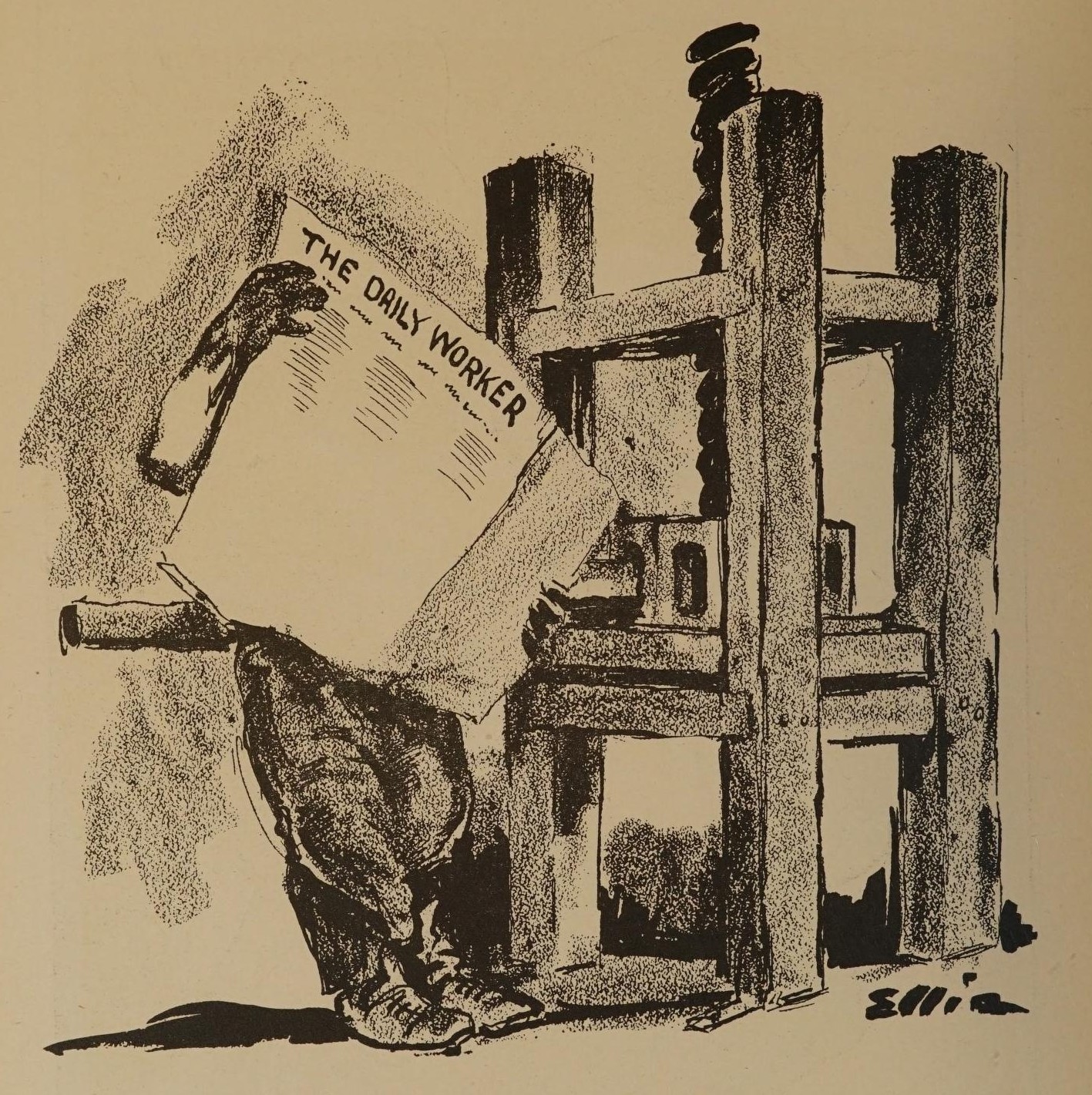
If you don’t have a recognized voice, you can’t be understood. Mediums of political interaction and organizing, publications, have been at the heart of all modern revolutionary projects and define their characters. Dunne gives this report on the Daily Worker in its second full year to the extremely factional 1925 Communist Party convention as an adherent of the Foster-Cannon ‘Left’ wing. J. Louis Engdahl, the editor of the old Socialist Party’s Chicago daily paper and its national organ, would be co-editor for Ruthenberg-Lovestone ‘Right’ faction, and would take over the lead role after this conference. These changes between ‘Left’ and ‘Right’ editors in the 20s are noticeable in any read of the Daily Worker over these years. William F. Dunne was a leading member of the Communist Party with a long history in the Socialist movement, joining the S.P. in 1910, the labor movement, as an electrician and IBEW officer and organizer, and with newspapers, editing the Butte Bulletin in Montana for years before serving on the editorial leadership of the Daily Worker from 1923 until 1936.
‘Report on The Daily Worker’ by William F. Dunne from The Daily Worker. Vol. 2 No. 195. August 27, 1925.
The nineteen months of experience we have had with our daily organ has enabled us to collect Innumerable practical instances from which to judge the way to build and stimulate our press into what Comrade Lenin said it should be, the collective organizer of the party and of the masses.
These experiences have been of many kinds and in almost every field of mass activity, ranging from our national election campaign, thru campaigns against the trade union bureaucracy, to that of spokesman of thousands of workers engaged in the struggle with the bosses, dealing with the smallest item of shop and job news and daily experiences of the working class. Now what do these experiences show?
First, that our press, particularly our daily paper, the DAILY WORKER, is very far from being a mass press. Second, that our party as a whole and a majority of the comrades, I think, do not as yet realize the important function of the Communist press and do not as yet understand the mighty weapon that the Communist press is in every field of party activity.
Now, why is our press not a mass press? Well, the answer of course is easy if one wants to be formal. We can say that it is because our party is not a mass party. But this is an evasion of the real issue and it is only by a clear and merciless criticism of our press, an appraisal of its weaknesses and shortcomings as well as substantial appreciation of its strong points and its services to the labor and revolutionary movement that we can arrive at the correct answer to this question. The party organs have not as yet accustomed themselves to using the DAILY WORKER as their principal weapon in every struggle. The party as a whole and individual comrades, have not as yet realized that it is just as much the duty of Communists to write for their press as it is for them to read it.
There are innumerable instances of both of these weaknesses I have mentioned. Let me cite a few, and I hope that the comrades when I pick out certain districts will not say that I am doing this for factional reasons. I will try to be just as impartial as possible.
Holding Up Good News.
One of the most interesting proofs of the lack of understanding of the role of the Communist press and its relation to the party was disclosed in a very important struggle on the Pacific coast, a struggle important not so much because of the number of our comrades that were involved or in the numbers of non-party workers involved, but because it was an instance of the correct application of Communist tactics in the trade unions and was a continuation in the Pacific coast labor movement of the struggles that we have been waging in much larger and more important industrial centers.
I refer to the expulsion of our comrades from the Seattle Central Labor Council on the grounds that they were members of our party and to their successful fight for reinstatement. It was a week or ten days after the attack had been made on our party by the trade union bureaucracy in this important city on the Pacific coast before the DAILY WORKER received one word or one line about the struggle from the comrades involved and It was necessary for the editors of the DAILY WORKER to send a number of urgent telegrams before we could get our own comrades to tell us what was happening. We carried the news, of course, as well we could, but we were compelled to rewrite the news of this clear-cut Communist struggle was not then the realization that these struggles are not local ones and cannot be localized but that it is just as important and sometimes more important that we carry the news of these local struggles to the hundreds of thousands of workers in other centers: And only thru the Communist press Can the correct stories and interpretation of these struggles be had.
Another instance: In the city of New York–and I speak now of the present, not only of the past, and I can only hope that I am not describing the future. It is almost impossible to secure from the New York comrades stories of the struggles of the workers in New York. It appears to me that the New York party looks upon the Communist press, our official organ, at least as something having but little connection with the struggles of the workers outside of our party and particularly neglect to report to us the struggles of workers in which our comrades are not taking part. We get plenty of reports from New York of mass meetings about to be held and what the speakers said at these mass meetings, and speaking for, I think voicing the unanimous opinion of the editorial staff of the DAILY WORKER, it is impossible to tell from these stories whether the speakers spoke to themselves or to several hundred workers. In the struggle of the needle trades a short time ago, in the millinery trades I believe it was, or of the waist makers, from 20,000 to 25,000 workers being involved, it was five days before we could get any news except what we rewrote from the New York Times. The same thing has been true of dozens of other happenings, and so far as the ordinary routine daily events of the lives of the workers in the shops and factories is concerned, there is no evidence in our press that the New York comrades understand that it is out of these struggles that are welded the broad class struggle. These small struggles for jobs, conditions, wage increases, etc., these struggles develop into the armed struggle for power.
Circulation Weakness.
In Boston the party was conducting, or attempting to conduct, a campaign against wage cuts in the textile industry. It also had a shoe campaign on, a campaign in the shoe industry. Comrade Minor was sent into the textile field and he sent to the DAILY WORKER a number of very well writ ten stories describing in detail the conditions of the workers in the industry, the assaults made upon them by the textile bosses, the attitude of the state authorities in the struggle, etc., just the kind of stories calculated to interest workers facing a slash in their wages and confronted with the need for a struggle against them. But, comrades, I am inclined to believe that the only workers in the textile industry who know that the DAILY WORKER carried these stories are those to whom Comrade Minor talked in a few mass meetings. It was impossible, even after repeated effort, to get the Boston comrades to take a number of issues of the DAILY WORKER or a special edition built around the struggles in the textile industry for distribution in their district, and so far as benefit to our party was concerned received thru the DAILY WORKER the trip of Comrade Minor and the trouble the DAILY WORKER went to chronicle the struggles of the textile workers was absolutely wasted due to the fact, of course, that the Boston comrades did not understand the role of the party press, its relation to the party, and their relation towards it.
Now, the record everywhere is not as bad as this, however. In these same districts and in other districts there have been special distributions of the DAILY WORKER, special editions based on some issue the working class was interested in, some struggle in which they were engaged.
In Detroit, for instance, the comrades made a number of distributions, one of them reaching the total of 20,000 in the automobile industry, but these special campaigns, this concentration of effort for a few days on one particular issue, while it helped our press, while it stimulates the interest of the workers in our press and gives our comrades experience in distributing and using our press, nevertheless is not the kind of work or the method by which a real mass Communist press is built. The building of a Communist press is a year-around task, a task for every day and for every Communist, and I think one of the weaknesses of the circulation of our press is exactly that criticized in the thesis on the Bolshevization of our press, that there is too much specialization or a tendency that way, that once an agent of the DAILY WORKER is appointed in a certain city the other comrades are only too willing that he should have all the work of distributing, circulating, building the Communist press in that district.
Reasons for Small Circulation.
We should try, I think, to inculcate in our party the fixed idea that the Communist press is the care of every comrade and that no communist will go to any kind of a working class meeting unless he is supplied with copies of the official organ of the party.
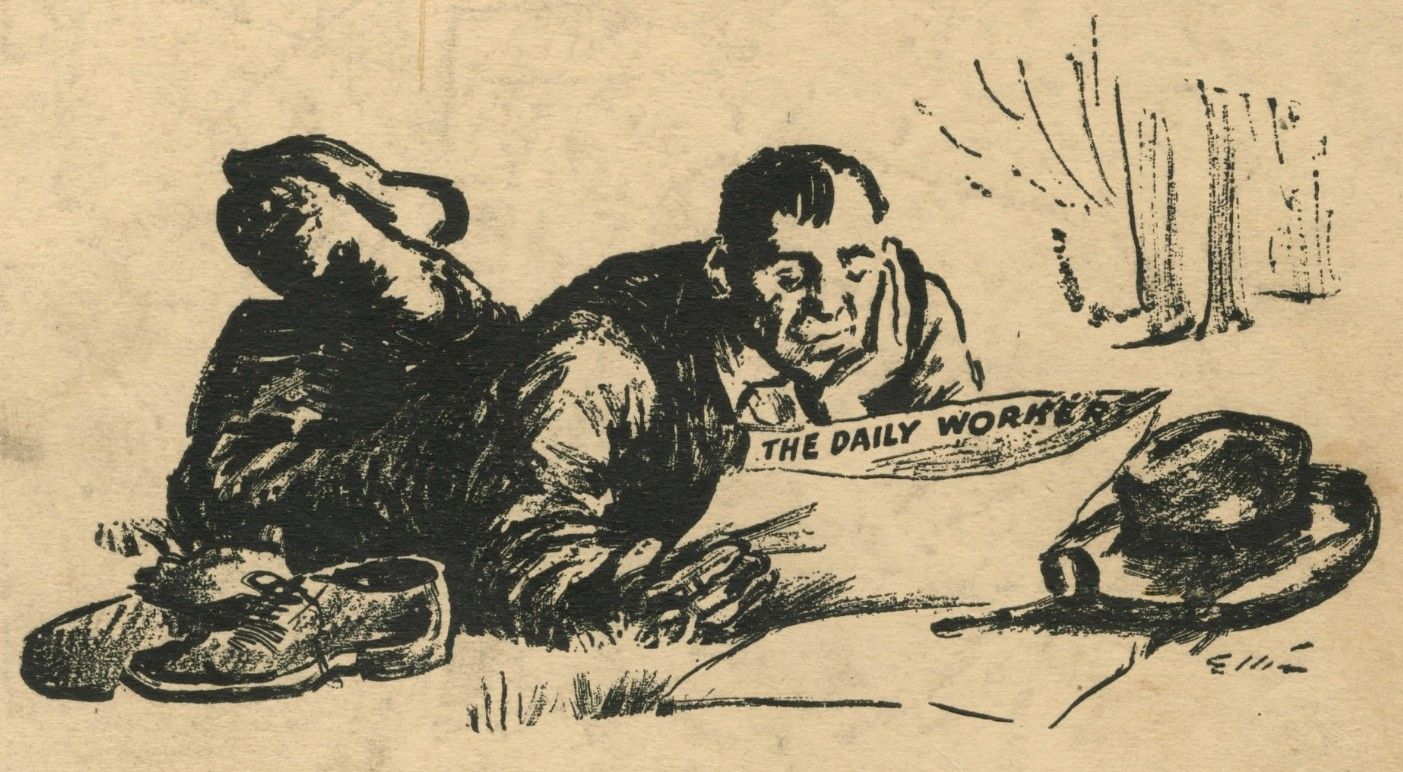
But the small circulation of our press, its lack of influence in the labor movement, the general mass movement of the American working class, cannot be ascribed to mechanical weaknesses in circulation or even to the lack of understanding of the role of our press by many of the comrades. Our press itself has certain weaknesses, although I think that in the last year some of these weaknesses have been corrected somewhat. Nevertheless, there are some of them remaining to constitute an obstacle between us and the masses. What are some of these difficulties? In the first place, I think that our press has the effect in many instances of frightening away many workers who might otherwise be interested I think that the small numerical strength of our party, the desperate struggle it is making for a position of power in the American working class movement, has the effect of making our press too flamboyant, too hysterical, at times too insistent, too loud and screaming. I believe, secondly, that the traditions, of “yellow journalism” in America have not yet been entirely overcome in our press. I think there is too much of a tendency towards sensationalism, toward the picking out of issues that cannot be described accurately as working class issues. Third. I think there is too much tendency on the part of the comrades who contribute to our press to exaggerate, to fall in accuracy in recording the struggle of the workers, and that this more than anything else tends to discredit our press, to make workers doubtful of the statements, to weaken its influence.
Workers Are Critical.
And what is the process by which this is brought about? It is idle to say that workers are not critical in their reading. It is true that they may not be very critical of the capitalist press, but as soon as a worker discovers that the Communist press is challenging the capitalist system he begins to read it very carefully. I want to tell you as the result of concrete experiences that a lack of accuracy in news stories of the struggles of the workers, exaggeration, wild statements, do more to drive workers away from our press than any other one thing.
Suppose, for instance, that we are chronicling a strike and we say that there are twice as many workers striking as are actually involved, and suppose we say that they are asking for a dollar when they are asking for a fifty-cent increase, and suppose we say that the bosses are using gunmen when the bosses are not, for some reason or other. Suppose we build a story in which the only accurate statement is that a group of workers are on strike. It doesn’t make any difference how much you pledge your loyalty to their struggle. Those workers do not give a damn for your pledges. They look for facts. If these are not correct, they will doubt everything you say, and this, comrades, is recognized by the C.I. It has pointed out this error time and time again, and I hope that those comrades who feel moved from time to time to contribute to our press will bear this in mind.
One other reason why our press is not a mass press why its influence is small, is that it is not a workers’ press in the best sense of the word. Because the workers’ press not only must be read by the workers, it must be largely written by workers. By this I do not mean professional journalists. The Communist International has spoken on this question as well and in all the parties of the C.I. those responsible for the press are as rapidly as possible developing groups and chains of workers’ correspondents.
At the present time we have some 75 or 85 worker correspondents located in all the principal centers of the United States, about a third of whom are non-party workers. Within the next year we should try to quadruple this number. At present 50 per cent, perhaps two-thirds, of shop and job news and struggles of the workers is sent in by the workers themselves. We must make it a 100 per cent workers’ paper. It is not sufficient that these news stories and this correspondence just be written by workers. There is no particular magic in having workers write for the press unless they write things that our press wants to record. The workers in this country are very badly infected with the f virus of capitalist journalism. It is extremely disappointing at times to get contributions bearing all the earmarks of being bona fide expressions from workers, to find them dealing with things and questions that a Communist press cannot possibly deal with.
And so we must organize our worker correspondents, instruct them, bring them as close to the party as possible. We have tried to do this by three methods: by personal correspondence, the selection of contributors, casual contributors, who showed promise, and also by the appointment of members of the party. Second, by getting out a pamphlet containing instructions, and a short analysis of the role of the Communist press, its relation to the party and to the struggles of the workers. Third, by personal contact, lectures, instructions, etc.
Staff Close to Party.
As to the question of departmentalization. Most of the papers of the other Communist parties have been severely criticized by the Agitprop department because of too much departmentalization, bringing with it a tendency to pull these departments away from the party and the party life, to set up artificial distinctions and divisions between departments of the press. I think it is only fair to say that our press does not suffer to any great extent from this evil. I speak now of the English language press. I think the staff of the DAILY WORKER is probably more closely connected with the party and the party departments and the party life than any other stage of Communist journalists of the Comintern with the exception of the Russian Party itself. The reasons for this of course are not voluntary ones. It just happens that way to a large extent. The staff is small, our party is small, it requires the aid of every able and willing comrade, and the Communist journalists are therefore forced to take part in the activity of the party just as the other comrades: do. They find it impossible to separate themselves from the party life. And I say very emphatically, I think that our official organ cannot be criticized on this point. This close connection of our press with the party life must be continued and strengthened.
A few words now on the connection between the editorial department and the circulation of our press. I have already pointed out how the press can be used in special campaigns of the party and where failures have been made in this respect, and I have said that these special campaigns are good, but the day-to-day work is what builds our press. I am convinced that with the increase in the number and the activity of our worker correspondent with the closer linking of our party with the lives and struggles of the masses thru the reorganization of our party on the shop nuclei basis, with the realization that stories in the Communist press are not written to satisfy the ego of the writer but to acquaint workers with what is going on and the Communist interpretation of these struggles, our press will begin to develop very rapidly into a real mass press.
Reach Foreign-Born Workers.
The foreign language press is an important part of our party activity not only because of the language groups in our party, but because it is through these language groups that we reach the foreign language speaking workers of America. If our foreign language press was developed only for the members of the party in this country, there is not a single one of the foreign language papers that should be kept in existence 24 hours longer. We strive to make our English language organ speak for our party all thru its struggles in every one of its departments and language sections.
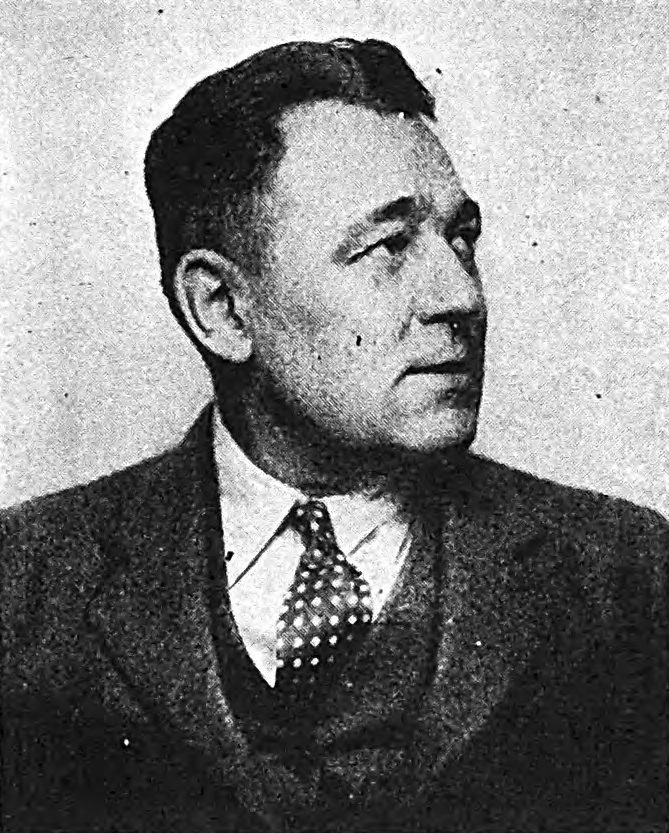
I know that although the foreign language press has been drawn closer to the party the last year and a half than ever before, that it carries more purely party material than ever before, that the foreign language press still suffers from a lack of centralization. And this lack of centralization is due partly to a lack of understanding of the role of the federations and partly to very severe mechanical obstacles. What we need, I think, from the editorial end, is a party press service that takes every day the best material in the DAILY WORKER and our other English language organs, collects other material, and sends it systematically and regularly to the foreign language press. At the present time our party press service is more or less spasmodic. There is no particular system. Sometimes good articles are sent out; sometimes bad ones. Sometimes there is one reason for sending out a certain article; sometimes there is another. What we need first of all is a centralized press bureau that will make, thru the connection of the foreign language press directly with our official organ, that organ the spokesman for every section of the party. Then there must be set up as a section of the Agitpop department, an editorial board or bureau that will follow closer the political lines of the foreign language press as well as that of our official organ, correct any deviation as soon as it appears and not allow these right tendencies, these deviations from the straight line of the Comintern, to become running sores in our party.
Aid in Our Campaigns.
In conclusion, the Communist press is the medium through which our party speaks to its own members and to the working class and without a Communist press the voice of the party cannot be heard unless it be in a very feeble way. I think that it would have been impossible for our party to have carried on successfully any one of its major campaigns: anti-imperialism, the election campaigns, anti-Abramovitch campaign, against wage cuts, etc., if the DAILY WORKER had not taken the lead in these campaigns and in the resulting struggles. And I am certain that unless our English language organ grows just as rapidly in circulation as our party grows in numerical strength and influence, the party will find in spite of all its efforts in other fields–fields of education, reorganization–it will not be able to crystallize organizationally the tremendous energy the party put into every campaign to strengthen its position in the American working class movement, to make itself the leader of the American proletariat. Without revolutionary theory a revolutionary party cannot be born–cannot maintain itself. Without a Communist press, voicing the correct Communist theory and linking that theory up with every problem of the working class life, a Communist party can do little except to stir up the mud in the foul pool of capitalism.
Comrade! When you go back to your districts, try to keep in mind that the press comes first of all; that it not only leads but it interprets and organizes–it builds–it stimulates and inspires the whole party and the whole working class. Without a Communist press–a mass press–a mass party is impossible, and without a mass Communist Party the proletarian dictatorship is impossible. We make mistakes, but we are surely building, by following the lead of the Comintern, the press that prepares the way for working class victory.
The Daily Worker began in 1924 and was published in New York City by the Communist Party US and its predecessor organizations. Among the most long-lasting and important left publications in US history, it had a circulation of 35,000 at its peak. The Daily Worker came from The Ohio Socialist, published by the Left Wing-dominated Socialist Party of Ohio in Cleveland from 1917 to November 1919, when it became became The Toiler, paper of the Communist Labor Party. In December 1921 the above-ground Workers Party of America merged the Toiler with the paper Workers Council to found The Worker, which became The Daily Worker beginning January 13, 1924.
PDF of full issue: https://www.marxists.org/history/usa/pubs/dailyworker/1925/1925-ny/v02b-n195-NYE-aug-27-1925-DW-LOC.pdf

