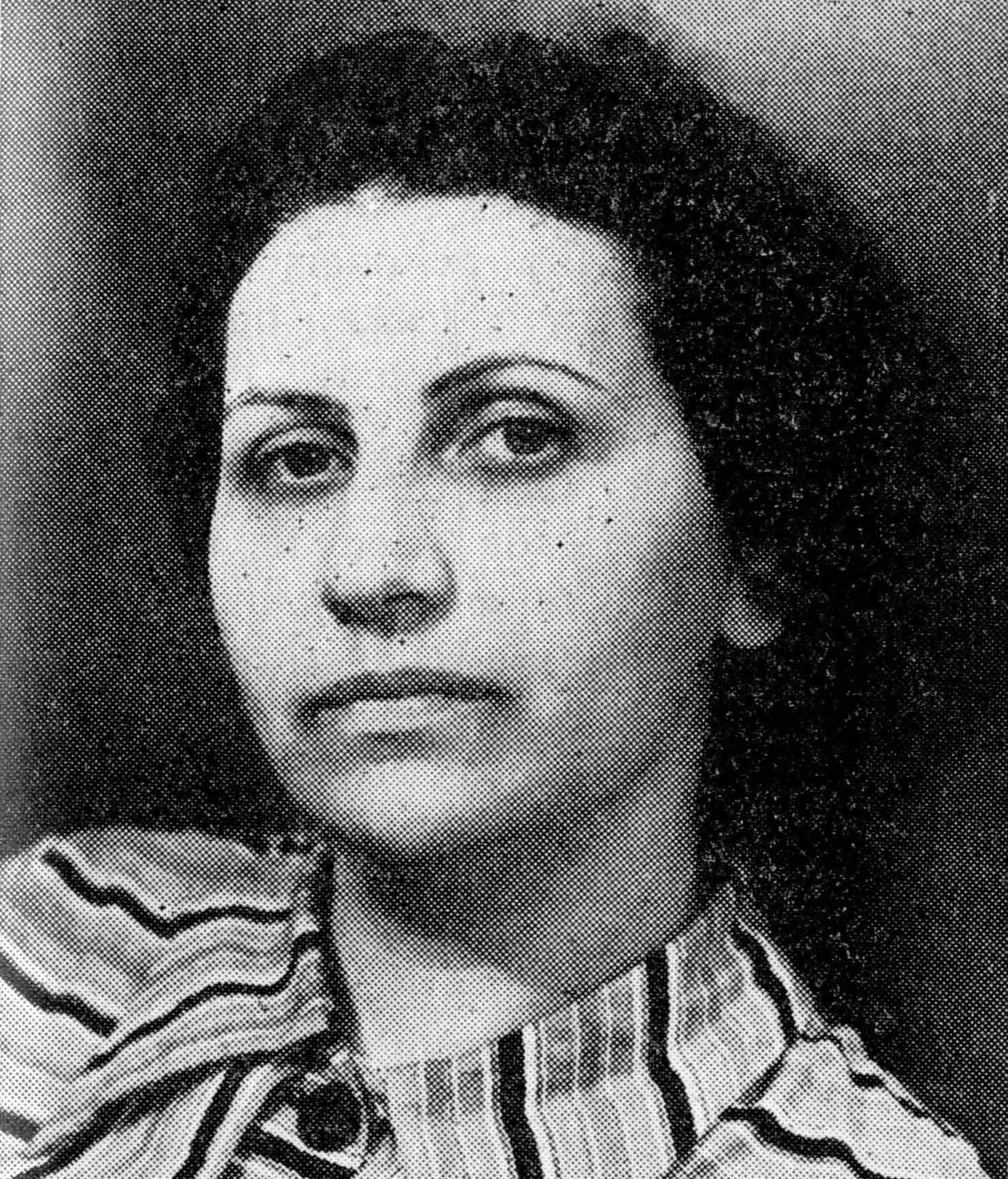
Anna Damon was among the few women to serve on the Communist Party’s leading Central Executive Committee, joining in 1929, during its first fifteen years. Writing a discussion article for the Party’s Eighth Convention, she notes the changing situation of women under the New Deal and the need for strategies to win working class women to the movement, as a requirement for winning a majority of the class as a whole. Born in Latvia, Damon came to the U.S. with her family while young and was active with the I.W.W. as a teenager before becoming a charter member of the Communist movement in 1919. By 1934, Damon was editor of Working Woman and chair of the Communist Party’s Department for Work Among Women, soon to lead the work of the International Labor Defense.
‘Increase Mass Work Among 11,000,000 Negro and White Women Workers’ by Anna Damon from The Daily Worker. March 22, 1934.
Women Workers Doubly Exploited in U.S. Industry– Must Win Over Women to Gain Majority of Working Class
Can we speak of winning the majority of the working class in the U.S.A. for the final struggle of power without bringing to the forefront the struggle around the daily needs of the eleven million doubly exploited wage earning Negro and white women and leading the fight for their demands?
Can we speak of an effective struggle against fascism and imperialist war without winning the millions of toiling women in the U.S. away from the ideological and organizational influences of pacifism and patriotism?
The 13th E.C.C.I. Plenum Resolution on fascism and the danger of war and the tasks of the Communist Parties points to the immediate necessity of broadening our work among women:
“Increasing the mass work among women, at the same time promoting and training even now a body of active Party women who, during the war, could in a number of cases replace mobilized comrades.”
What is the meaning of this declaration in the thesis of the EC.C.I. Plenum?
Why is this great emphasis now placed on work among women in the present period of intensified struggle against fascism and war?
Precisely because without the tens of millions of Negro and white women employed in industry and agriculture, without the women employed in their homes, without the wives and daughters of the workers there can be no serious thought of putting up effective resistance against fascism and imperialist war rushing upon us.
Since in war time practically the entire male population capable of carrying arms will be sent to the front, almost three quarters of the workers employed in industry will be made up of women; the one million Negro domestic workers will be placed in factories. This means that the women will make up the bulk of factory workers producing war materials as well as manning transportation.
Women Will Replace Men in the Coming War
How important the U.S. government considers women for use in war can be seen by the statement, of Major General Ely of the U.S. Army, made in April, 1931:
“Women will play a greater part in future wars. Governments, including our own, have been studying the use of women in war. Woman power in many instances supplements and in other cases supplants man power in war.”
There are in the U.S. close to eleven million wage earning women, two million of whom are Negro women. That is 22 per cent of all wage earners. In addition there are twenty-three million housewives, millions of whom are employed part-time or doing sweat shop work at home and are not listed as wage earners.
It is significant to note that during the ten years 1920-30 (post war period and crisis) the number of women wage earners increased by two and a quarter million. This means an increase of 26 per cent, whereas the number of men increased only by 15 per cent and the general population by 16 per cent. These figures show that women are displacing men in many instances as a cheaper labor source, which has the effect of a general lowering of wages for all workers.
Due to rationalization and mechanization of factories women are to be found in almost all industries and can at a very short notice replace men. Over 180,000 women are working in metal industries including Iron and steel, 50,000 in the automobile industry, 25,000 in rubber factories, 82,000 in the making of electrical supplies, and 86,000 in chemical industries, 452,000 in the textile industry. The rayon plants, employ from 50 to 60 per cent women.
With so many millions of women in production coupled with the fact that night work for women has been reestablished since the N.R.A. the way is paved for factories to be run full speed at a 24-hour stretch during war time by women.
Increase Work Among Factory Women
Generally speaking, along with the improvement of the Party’s mass work, we also see improvement in our work among women–substantial increase of Negro and proletarian women in the Party; in unemployed and farm movements, in our mass organizations, etc.
This, however, cannot be recorded as a result on our part of systematic planned work among women based around their demands. It is rather due to the abilities of our Party and the Trade Union Unity League to involve women in the general strikes and struggles of the workers and to the increased militancy and radicalization of the workers which is reflected among the women masses.
Among the million and a quarter workers involved in strikes since Roosevelt’s administration at least 300,000 were women workers in textile, needle, shoe, food, furniture and other factories. In addition to these, wives of workers in basic industries, in mining, metal, auto, played their part in the strikes, and proved the most militant fighters.
The Party and the T.U.U.L., however, underestimated the readiness for struggle among the masses of women (not in theory, but in daily practice.) We did not recognize the need for special forms of agitation and propaganda against fascism and war to follow up the program laid down at the Anti-War Congress. At the numerous Anti-Fascist meetings leading speakers did not show concretely what fascism means to women, against wage discrimination, high cost of living, relief for unemployed women, etc., and the way out by contrasting conditions of women under fascism with those under Soviet rule.
Didn’t Lead Fight Against Code Discrimination
Let us take as an example the Industrial Codes. Here we have a concrete instance where the government gave official sanction to use women as a cheap labor source by fixing lower wages for women in 25 per cent of all the Industrial Codes, in auto, shoe, printing, cloak manufacturing, etc. Also, no code was drawn up to fix wages for domestic workers who embrace three million women, out of whom 1,138,000 are Negro. Then too, the N.R.A. gave the official sanction through General Johnson, Frances Perkins & Co., to do away with the meager labor legislation barring women from working nights in textile mills in Massachusetts. Surely these issues gave the Party and the T.U.U.L. an opportunity to develop struggles and involve thousands of women around their particular demands, but we did not do it on a large scale.
While we did raise the demand “For equal pay irrespective of sex, color, or age” at the code hearings, we did not bring these issues before the workers in the factories and working class neighborhoods We did not make the fight against wage discrimination a part of our fighting program against Roosevelt’s N.R.A. in the shop nucleus, or trade unions.
Learn to Carry on Bolshevik Work Among Women
The fact that only 15 per cent of the T.U.U.L. membership are women and only 30 per cent of the Textile Workers Industrial Union are women, coupled with the fact that in recruiting during November, December (1933) and January (1934) of the 66 textile workers to the Party only 11 were women This shows that there is still a lack of political understanding regarding the increasingly important role of women in the economic and political life in the United States. Comrade Kuusinen’s report of the 13th EC.C.I. Plenum states, “We have not yet learned to carry on Bolshevik work among proletarian women. The first task of all Sections of the Comintern in this sphere is to get rid, once and for all, of the under-estimation of this work, to get rid of the idea that this work is not part of the general Party work.” This applies with full force to our Party.
Space does not permit discussion of the problems of work among unemployed women, struggles against inflation and high cost of living which directly affects the women who make up 90 per cent of the consumers, the struggle for children’s demands, etc., which would prove that the Party still does not recognize special work among women a component part of general Party work.
Make Turn Toward Systematic Work Among Women
The districts should without delay review International Women’s Day campaign and the status of work among women and lay immediate plans of work in connection with May Day campaign and the International Women’s Congress Against War which will be held in Paris in August.
The plan should be in line with the concentration of work of the District. Each District must choose one or two important factories where women are employed. There the shop nucleus or individual Party members must be made responsible to form circles by grouping contacts of women with a view of developing women’s delegate meetings. At these factories as well as other large factories where women are employed the Party must carry on simple agitation through shop gate meetings and meetings in neighborhoods, THE WORKING WOMAN, shop bulletins, group meetings, etc., based around the grievances of the women. The Party must link up these grievances with the danger of fascism and war and the need for the women to organize a struggle against them.
The fractions in the trade unions, especially textile, auto, mining, steel and A. F. of L opposition should review their work among women and work out ways and means of recruiting women into the T.U.U.L; how to build Auxiliaries; how to begin a movement in the A. F. of L. opposition among women, especially in the Hosiery Workers Union.
Win Women for United Action
Through the fractions in the National women’s organizations and in the mass and language organizations. Councils of Unemployed, I.W.O., F.S.U., L.S.N.R., I.L.D. plans should be laid for broadening the anti-fascist work among women. Special women’s mass meetings, forums, education classes should be arranged as well as women’s literature to be issued.
The mass organizations under our influence should take initiative in penetrating the Federation of Women’s Clubs, Women’s Trade Union League, Young Women’s Christian Association, Girl Scouts, Cause and Cure for War, Women’s League for Peace and Freedom as well as church and neighborhood organizations under bourgeois leadership.
With the correct approach we can win masses of Negro and white women for united action against lowered standards of living, against fascism and war.
Let us carry through in life the decisions of the 13th Plenum of the E.C.C.I. and the 8th Convention Resolution of our Party which states:
“The Party must take the initiative in leading struggles in defense of the daily needs of white and Negro women in factories, among the unemployed, to combat the pacifist and reformist propaganda carried on among women, and win them for united fight against fascism and war.”
The Daily Worker began in 1924 and was published in New York City by the Communist Party US and its predecessor organizations. Among the most long-lasting and important left publications in US history, it had a circulation of 35,000 at its peak. The Daily Worker came from The Ohio Socialist, published by the Left Wing-dominated Socialist Party of Ohio in Cleveland from 1917 to November 1919, when it became became The Toiler, paper of the Communist Labor Party. In December 1921 the above-ground Workers Party of America merged the Toiler with the paper Workers Council to found The Worker, which became The Daily Worker beginning January 13, 1924. National and City (New York and environs) editions exist.
PDF of full issue: https://www.marxists.org/history/usa/pubs/dailyworker/1934/v11-n070-mar-22-1934-DW-LOC.pdf

