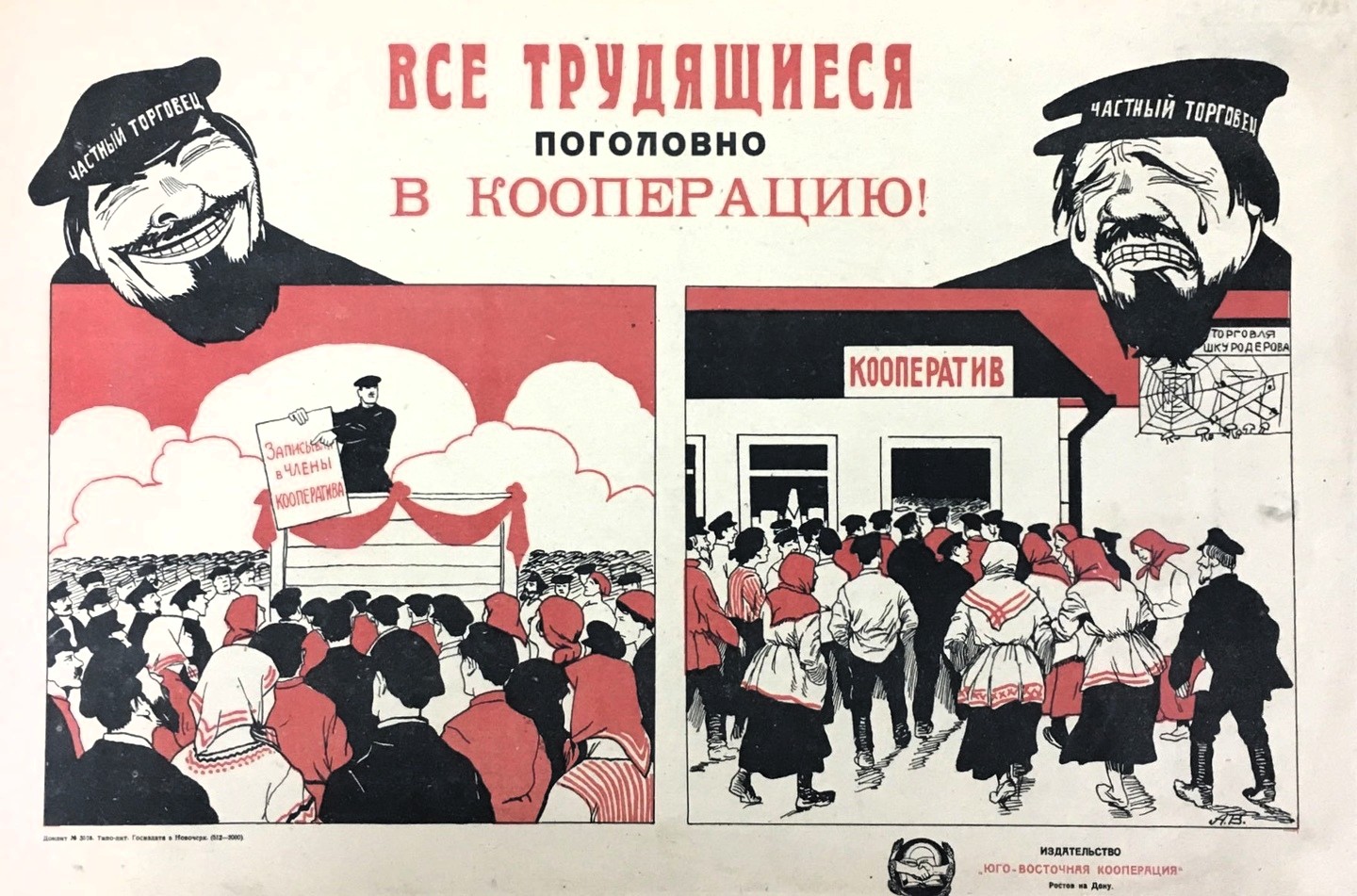
Economic planning during the N.E.P.-era. This Resolution on the work of Gosplan, signed by Rykov and co-workers in the Council of the People’s Commissaries and of the Council for Labour and Defence, also acts as a report and was given in the context of a renewed struggle, a defense of the leading majority’s policies, after the formation of the United Opposition in early 1926.
‘The Economic Situation in the Soviet Union in the First Half of the Economic Year 1925-1926 and the Measures taken by the Soviet Government’ from International Press Correspondence. Vol. 6 No. 52. July 15, 1926.
The Economic Situation in the Soviet Union in the First Half of the Economic Year 1925-1926 and the Measures taken by the Soviet Government.
Preliminary Remarks:
The documents reprinted here will be read with the greatest interest by all who wish to be informed as to the economic position of the Soviet Union. The bourgeois Press and the ultra-Left are spreading the most fantastic rumours as to the catastrophic position of Russian economics. Without presenting things in a too favourable light, but without exaggerating the difficulties, the resolutions of the Soviet of the People’s Commissaries and of the Council for Labour and Defence give an exact picture of the real difficulties and of the measures which the Government has taken to remove them.
The way in which the Soviet Government tackles the questions of the economic life of the country is an excellent example of how the proletarian dictatorship renders it possible to regulate economic life in the interest of the workers themselves. The fact that the whole of large industry and the most important sections of all other branches of industry, transport, wholesale trade and the banks, are in the hands of the proletarian Government, makes it possible to recognise in good time and to regulate the fluctuations in economic affairs, under which the workers suffer so severely in capitalistic countries. That such fluctuations still exist in economic affairs and that some features of economic life are still beyond the control of the systematic intervention of the leading organs, is explained by the fact that the Soviet Union is still surrounded by a capitalist world economy and that our economic body itself is composed of several forms of economy pertaining to various stages of development, the most important of which, socialist State industry and agriculture in private hands are diametrically opposed to one another.
Though these documents make it clearly evident that the Soviet Union is still only on the way to socialism, they show on the other hand to what a degree the proletarian Government has already succeeded in introducing system into economics.
One of the most interesting examples of this is the policy of the Government in the question of the circulation of money (section 1, §F of the document). The economic difficulties which arose through the plan for raising corn which had been drawn up for the previous economic year not being carried out, led to symptoms resembling inflation at the end of the winter; the Chervonetz fell a few points on the internal money-market. The proletarian Government knows from the experience of other countries how disastrous is any inflation for the workers in town and country. Consequently it devoted the whole of its attention to the immediate removal of these symptoms.
The symptoms of inflation in the Soviet Union resulted from the fact that, in consequence of the said circumstance, the quantity of goods did not increase as had been anticipated and in accordance with which expectation money had been put into circulation. This led to a disparity between the quantity of goods and the pecuniary resources. As a rapid increase of the goods in circulation was outside the bounds of possibility, the Government had to resort to restricting the money in circulation. The Government actually succeeded in carrying through this restriction in the second quarter of 1925-26 and in withdrawing 64 million roubles from circulation. In this way the symptoms of inflation were gradually removed and can to-day be regarded as overcome.
Where is the capitalist Government which even thinks of, much less succeeds in removing symptoms of inflation in its country in so short a time, and that in the interest of the working strata of the population?
Each of the following measures of the Government gives us similar examples of how the proletarian Government is mastering the mighty mechanism of the economic life of the Soviet Union.
Resolution of the Council of the People’s Commissaries and of the Council for Labour and Defence.
I. On the basis of a survey of the economic position in the first half of the economic year 1925/26, and on the basis of the provisional data with regard to the economic position in April and May, the Council of the People’s Commissaries and the Council for Labour and Defence state:
a) In the Domain of Industry.
In the domain of industry, the first half of the current economic year is characterised by a considerable increase of industrial production.
A summary of the economic plan for the whole State industry for 1925/26, confirmed by the Council for Labour and Defence on April 26th, 1926, has been carried out up to 50,1%; in the branch of heavy industry it was completed up to 44,6%, and in the branches of light industry up to 55% (in the cotton industry it was fulfilled by 58% of the programme for the year).
The month of April has shown a further increase of production by 3,3% as compared with March, the chief growth being in light industry.
On the basis of the data for the first six months, we can rely on the industrial plan, which has been confirmed, being fulfilled even without the supplementary import of textile goods, leather and raw materials, which was approved by the Soviet for Labour and Defence even beyond the original plan for export and import. If the supplementary import is carried out, uninterrupted work is guaranteed in the cotton and leather industries, and in this case it is possible that the programme laid down for these branches of industry will be to a certain extent exceeded, which in its turn will make it possible to enter the approaching corn season this year with a larger store than in 1924/25. But even if the supplementary import of raw materials for the textile and leather industries should prove impossible, the quantity of goods put on the market in the second half of the current year will, according to the data of the Supreme Soviet for National Economy, be higher by about 250 million roubles than the quantity of goods in the second half of 1924-1925.
In the course of the period reported upon, the stocks of fuel and raw material for industry have decreased. At the same time it may be observed that there is a superfluity of workers in a number of works as compared with the scheme. The process of a fall in the cost of production of industrial products has continued, but at a slower rate which does not correspond with the presuppositions of the scheme. In a number of enterprises a considerable increase of the cost of production (metallurgy) can be seen as compared with the plan.
The productivity of labour has increased in the past six months, but at a slower rate as compared with the first half of the past year and with the assumptions of the plan; this is to be explained by the accession of new cadres of unskilled workers, by the use of equipment which is getting more and more worn out and more and more technically out of date, and, finally, by deficiencies of organisation and administration in industry.
In the first six months of the year 1925/26, the accumulation of capital in industry was, on the whole, supported by the money and credit provided for in the Budget. The difficulties in carrying out the plan of capital outlay depended to a large degree on the difficulty of deriving the means for industry out of the turnover in the measure which had been provided for in the scheme for financing the work representing capital expenditure and also on the difficulty of distributing those means within the industry.
Further, the delay in receiving foreign equipment in accordance with the plan of importation inevitably made it impossible to carry out the plan of capital outlay arranged for in those branches of industry the building up of which was mainly dependent on imports. At the same time it became evident that supplementary capital outlay was necessary in other branches of industry (metal, coal, paper and electro-technical industries). On the other hand we have to record individual cases in which the capital outlay exceeded what had been planned (the trust of the Ivanovo-Wosnessensk, the sugar trust, chemical industry, coal etc.).
The short-term credits for industry provided for in the plan which had been agreed upon for the whole of industry and in the plan for capital outlay during the first six months, was on the whole carried through (a yearly increase of the indebtedness of industry to the banks to the amount of 390 million roubles had been provided for and, in the first six months, industry received about 165 million roubles in the form of short-period credits).
When we take into consideration that in this period, on the one hand industry had improved conditions for settling accounts with those with whom it entered into contracts, and on the other hand the current accounts of industry did not yield the increase expected, we must appreciate the fact that the amount of the short-period credits to industry mentioned satisfied its requirements during the first six months.
The financial difficulties which had set in in some branches of industry in the third quarter of the year, could not be removed completely and in good time by granting a sufficient increase of credit, because the money market was permanently in a tight condition and it was therefore necessary to restrict the bulk of money in the country.
The worsening of the financial position of industry which became evident at the beginning of the second half of the year, occasioned difficulties in carrying out both the plan of production and the plan for capital outlay and, in the turnover of industry, caused a further stoppage of excise and payments to the State from the profits, as well as a further fall of the current accounts of industry with the banks. In recent times there have been frequent cases of delay in the payment of wages.
The improving condition as regards the circulation of money ensures the possibility of carrying through in the future the plan for supplying industry with money and credit in accordance with the industrial schemes and the scheme for capital outlay, and also of beginning with it in the second half of the current economic year, in that industry will be compelled to hand over to the State Treasury all the money due to it from excise and profits.
b) In the Domain of Transport.
The condition and the work of railway transport in the first half of the year 1925/26 is characterised by a great increase of conveyance which exceeds that of last year by 75%. Thus the total amount carried in the current year is at present, according to estimates, about 7,200,000,000 poods as compared with 6,110,000,000 poods which were assumed in the estimate of the People’s Commissary for Transport.
As the anticipated rate of increase of goods traffic was exceeded from the beginning of the current year, there was, in the second quarter, a noticeable lack of technical means on the railway with regard to the quantity of rolling stock, the capacity of certain sections and stations etc., which is further complicated by the circumstance that in the goods traffic there continues to be insufficient and irrational use of the technical means of transport and inadequate regulation of the stream of goods.
The increased goods traffic on the railways leads to an exhaustion of the working capacity of the railways and makes increased demands on the re-equipment, both of the permanent ways and of the rolling stock.
During the period reported on, the stocks of fuel have decreased on the railways just as in industry.
Towards the end of the six months, financial difficulties became apparent in transport because the amount of income on the railways, which just about corresponded with the assumptions of the estimate, only reached this level in consequence of a considerable increase of traffic, which on its part, demanded an outlay which was not provided for in the estimates.
In the second half of the year, the increase of railway tariffs arranged by the Council for Labour and Defence, which ensures an increase of income from the railways, offers on the whole the possibility of carrying out according to the Budget the enlarged programme of work while fulfilling the conditions laid down by the People’s Commissary for transport (16 million roubles).
The temporary financial difficulties in transport are partly liquidated by the resolutions passed by the Council for Labour and Defence, while to a certain extent they require supplementary measures.
c) In the Domain of Agriculture.
In the domain of agriculture the past six months are characterised by an appreciable growth in the production of goods, both with regard to quantity and value, along with a simultaneous reduction of the burden of taxation, which has led to a certain supplementary accumulation in farming and to an increased effective demand for goods.
The world economic situation and the relation of values within the country in the current year have proved to be unfavourable for agricultural production. Owing to the tendency to a decrease of world prices for agricultural products, the State was faced by the question of a technical reorganisation of agriculture in order to rationalise it still more and to reduce the cost of production. Nevertheless the process of the intensification of agriculture which already exists, though for the time being it is weak, is being continued in spite of the inadequate provision of machines for the villages which has become evident. There was revealed a general unpreparedness of the apparatus of the State and of the whole national economy of the country in respect to the export of agricultural products, especially as regards poultry and cattle bred in the country, as well as a technical and commercial unpreparedness in connection with the inadequate development of cold storage, warehouses etc.
d) In the Domain of Commerce.
In the domain of commerce, the six months are characterised by a hunger for goods and by a considerable excess of effective demand over supply. The difference between wholesale and retail prices increased in the markets where there was a shortage of goods.
Apart from the insufficient production of industrial goods, the following must be regarded as the chief causes of this phenomenon:
a) the costliness of the co-operative and State apparatus of trade which devours an important part of the accumulation; b) the excessive financing of the collection of corn in the second quarter of the previous year; c) the high prices of corn which increased the purchasing power of the village; d) the increase of consumption in private households.
The sudden increase of actual wages in the course of a short period during the autumn of the previous year together with an insufficient increase in the productivity of labour, had a great effect on the increased effective demand for goods in the towns, whilst at the same time there was a remarkable growth in the number of proletarians engaged in production.
In view of the satisfactory prospects for the harvest and a drop in the demand for goods on the part of the peasants due to the season the measures taken for regulating supply and demand and for controlling the traffic in goods have, at the present moment, produced a certain improvement in the outlook on the market; this improvement opens up justified hopes for a further increase in the course of the remaining months of the economic year, provided that the policy of regulating the turnover of goods is continued. The measures referred to are: the restriction of the expenditure side of the Budget in order to form a national reserve, a definite end being put to the issue of Chervonetz in the second and third quarters, the raising of means of credit from the turnover of goods, measures for organising the trade in corn, restriction of the amount of corn purchased, measures for enforcing economy in all national and industrial bodies, a campaign against excessive additional charges in retail trade etc. The prices of corn are falling almost throughout the country. The index figure of industrial goods in wholesale and retail trade also shows a tendency to fall in recent times. On the Exchange there has been in the course of the six months a considerable increase of contract business accompanied by prepayment in cash on the part of the trade organisations which shows that they have large sums in ready money at their disposal.
The commercial practice in the past six months has once more most impressively confirmed the overburdening and parallelism in the commercial apparatus of the Soviet Union, both in the field of co-operative and of State trade, the high additional costs, the large number of hands through which the goods pass, the slowness of the turnover of goods and capital, the weakness of the systematic work in the field of commerce as well as the bad and exaggerated rendering of reports. Thus it seems that our most important task during the coming period is that of rationalising the commercial apparatus.
The share of private capital in commerce both as regards buying operations and acting as agents for distribution has, while increasing absolutely decreased relatively (with the exception of the market in leather, raw materials and meat), the activity of speculation in the goods’ market and especially in the currency market having at the same time augmented.
As a result of the rise of prices in the country during the first half of the year and of the simultaneous fall of world prices, some articles of export could only have been sold without profit or even at a loss, and a situation arose which was favourable for the import of certain goods.
The balance in foreign trade remained negative in the first half of 1925/26.
e) In the Domain of the Budget.
In the process of carrying out the budget it transpired that the income from the excise on corn-spirits and sugar was considerably less than had been provided for when the Budget was passed. Furthermore, the income of the National Treasury from the profits on industry was delayed. The higher income from other excise still fail to cover the reduced income from the articles mentioned.
These circumstances made it imperative to take special measures to ensure the income from the Budget in order to produce the National reserve provided for in the Budget.
f) In the Domain of Money Circulation.
The bulk of money has increased in the six months by 61 million roubles (in the first quarter there was an increase of the bulk of money by 125 million roubles, in the second quarter it decreased by 64 million roubles), whilst there was a great increase in the quantity of goods which were turned over in the goods’ traffic. Thus for instance the monthly quantity of industrial goods in the first half of 1925 26 was higher by 38% than the average monthly quantity of goods in 1924/25, the increase in the branches of light industry amounting to 40% as compared with the previous year.
In spite of this increase in the quantity of goods it was not possible to arrive at normal relations between the bulk of goods and of money in circulation because of the excessive activity of emission in the last quarter of the past year and the first quarter of the current year.
The index figures of the prices of goods increased in the last six months, the index figure of retail prices more than overtaking wholesale prices in their growth. Beginning with the end of April, the agricultural index figures, and in May both the agricultural and industrial index figures showed a tendency to sink.
II. Starting from the above estimation of the economic situation, the Council of the People’s Commissaries and the Council for Labour and Defence resolve as follows:
a) In the Domain of Industry.
1. The financial scheme of industry until the end of the economic year, must be built up on the basis of the following guiding lines:
a) Security for undisturbed work in all branches of industry and for the prompt payment of wages.
b) Security for the payment of the excise and levy on profits due from industry.
c) Security for the investment on the part of industry of the sums fixed for capital outlay.
d) The balance of credit must not be on the negative side for industry in the third quarter.
2. In view of the obvious impossibility of carrying out the plan for capital outlay in some branches of industry in the current year, and on the other hand in view of the urgent necessity of increasing the capital outlay in a number of other branches of industry (metal paper, electro-technical and coal
industries) within the current year, the Supreme Council for National Economy is called upon to lay before the Council for Labour and Defence within a forthnight a draft for alterations in the plan for capital outlay which has already been passed, with the corollary that the total amount of expenditure shall not exceed the amount fixed in the plan which has already been passed.
3. As a binding instruction, the necessity should be pointed out of carrying through in the course of the remaining months of the present economic year the resolution of the Council for Labour and Defence of May 18th 1926 regarding the increase of the productivity of Labour.
4. It is demanded that the People’s Commissary for Labour and the Supreme Council for National Economy should, within a fortnight, lay before the Council for Labour and Defence proposed measures for combating the loss of hours of work. The People’s Commissaries for Labour must especially expound their views as to the necessary alterations in the practice of paying allowances from the Sickness Insurance Funds.
5. All bodies and undertakings of the State are strictly bound to see to it that all the available means of the corresponding economic bodies and undertakings should serve in the first place to ensure the punctual payment of wages.
b) In the Domain of Transport.
In view of the necessity of taking measures at once to prepare for the transport by rail and water in the autumn of 1926:
a) the State Bank is called upon to expound, within a week, its views as to the possibility of supplementary credits to the People’s Commissaries for Transport for the purpose of carrying out the scheme of credit for the third quarter of the year.
b) in drawing up the scheme for the third quarter, the State Bank and the State Commission for Planned Economy (Gosplan) must take into consideration the necessity of granting short-period credits to the People’s Commissaries for Transport for the same purpose, it being understood that the People’s Commissaries for Transport will pay their debts at the end of the quarter in proportion to the increase of takings on the railways resulting from the raising of tariffs.
c) it is proposed that the People’s Commissaries for Finance and the State Bank should, in the course of 1-2 weeks, lay down to the full the loan provided for economic reconstruction (5 millions) for the purpose of building new railways.
c) In the Domain of Commerce.
1. As the campaign for the reduction of retail prices is regarded as the most urgent of all the economic duties by which the State and economic bodies are faced in the remaining months of the economic year, the Central Inter-Departmental Commission for the reduction of retail prices is called upon to intensify its work and, within a week, to lay before the Council for Labour and Defence a system of measures directed towards the solution of this most urgent economic task.
2. It is regarded as essential that the granting of credit to Co-operatives by all banks, including the co-operative banks, should be made dependent on the actual achievements in the reduction of additional expenses and of retail prices and also on the successful work on the part of the members of the Co-operatives for bringing in profits to the advantage of the business.
3. The Centrosojus (Central Federation of the Co-operatives of the Soviet Union) and the Supreme Council for National Economy are in duty bound to present to the Council for Labour and Defence within a fortnight, their views as to the regulation and rationalisation of the network of both Co-operative and State trade, paying particular attention to the greatest possible economy and to the reduction of the total personnel employed in the apparatus of trade. It will be the duty of the People’s Commissaries for Commerce to present to the Council for Labour and Defence their expert opinion on the draft scheme of the Supreme Council for National Economy and Centrosojus.
4. The Centrosojus has to take all necessary measures to limit the number of paid members of the management as well as of the Commissions of Inspection of the lesser co-operatives.
5. The Centrosojus should expound its views as to the steps to be taken to combat the reselling of goods, and measures by which the members of the Co-operatives can be induced to advance money on security in order that the necessary goods may be delivered to them at reasonable prices.
6. The People’s Commissaries for Commerce are enjoined to take measures for extending the practice of applying standard prices, to enquire into the possibility of introducing lists of retail prices for a number of new goods and to take measures for combating any infringement of these standard prices.
The People’s Commissaries for Commerce have to lay their views before the Council for Labour and Defence within a fortnight.
The committee for standardisation is entrusted with the duty of discussing the possibility of extending the use of standard prices.
7. The People’s Commissaries for Commerce and the Supreme Council for National Economy are called upon to lay before the Council for Labour and Defence their scheme for the introduction of industrial goods for the 4th quarter of the year, at the earliest possible moment.
8. The Supreme Council for National Economy and the People’s Commissaries for Commerce are entrusted with the task of providing, within the scope of the scheme for the supply of industrial goods, beginning in July and August, in every possible way for the districts in which the purchase of corn begins to increase rapidly and of creating an emergency fund in case an additional supply of goods to these districts should prove necessary.
In the practical carrying out of the scheme of supply the greatest elasticity must be guaranteed in the way of timely consideration of changes in the market conditions in the different corn-growing districts, of acceleration of turnover and transport of goods.
d) In the Domain of the Budget, of Credit and of the Circulation of Money.
1. In carrying out the resolutions of the 2nd Congress of the Central Executive Committee of the 3rd Legislative period, the State institutions and undertakings are to be informed that no consideration will be given to requests for accumulation, reduction or respite in the payment of taxes and of other payments due from them to the National Treasury in the economic year 1925/26.
All State institutions and State bodies, on the personal responsibility of their leaders, are called upon to fulfil punctually and without reserve their obligations in respect of paying to the National Treasury the sums prescribed for them and provided for in the Budget.
It should be demanded of the People’s Commissaries for Finance that they issue instructions to the local bodies in question with regard to carrying out a vigorous campaign for the liquidation of all arrears of taxation and other payments due to the National Treasure in the last quarter of the year.
2. In view of the slow inflow of national income from State industry and State trading, which is partly to be explained by the work of auditing the balances not being carried through to an end, the Supreme Council for National Economy and the People’s Commissaries for Finance should be called upon to complete the work of auditing the accounts of October 1st 1925 by July 1st at latest.
3. A commission consisting of Comrades Rutsutak, Piatakov and Briuchanov is to be appointed to examine all accounts which fail to balance; they are to be instructed to examine summarily, not later than at the most within five days from the time the material which is laid before them, all irregularities already existing, and all which occur in the future. The resolutions of the Commission are to be regard as final. For the balances of the undertakings under the control of the People’s Commissaries for Commerce, a commission consisting of Comrades Rutsutak, Schleifer and Briuchanov is to be responsible.
4. The managers of State undertakings should be bound to hand over to the National Treasury by, at the latest August 1st of this year, 75% of the share of the profits which they have to pay for the economic year 1925/26, and the other 25% by September 1st at the latest.
5. The People’s Commissaries for Finance and the Supreme Council for National Economy should be called upon to examine within a week whether the terms for the payment of excise (for instance tobacco, matches, tea, cotton textiles, naphta, salt etc.) could not be shortened. In the case of differences of opinion, the question should be immediately laid before the Council for Labour and Defence for decision.
6. All State institutions and undertakings, including municipal and cooperatives ones, should be admonished to observe the laws in force as to the regulations concerning the storing up of sums of money and the People’s Commissaries for Finance should be entrusted with the task of supervising that these regulations are inflexibly maintained.
7. The People’s Commissaries for Finance of the Soviet Union should be called upon to take decisive steps for collecting arrears of the State income, the managers of State and cooperative undertakings, through whose fault arrears have accumulated, being, if necessary, made responsible to the administrative and legal authorities.
8. The People’s Commissaries for Labour and the People’s Commissaries for Finance of the Soviet Union should be instructed to fix terms for issuing the money for wages to the employees of State institutions, so that wages can be paid for the time worked.
9. The special Finance Committee should be instructed to examine the draft scheme laid before the People’s Commissaries for Finance for the re-organisation of industrial taxation and, in particular the question of the possibility of altering the time allowed for the selection of patents with a view to fixing an earlier selection, beginning with the 4th quarter.
10. In view of the fact that the excise on corn-spirits and sugar is not paid, the Supreme Council for National Economy should be called upon to report at the next meeting of the Council for Labour and Defence on the measures necessary, both as regards corn-spirits and sugar, for guaranteeing punctual payment of the excise duties imposed.
The People’s Commissaries for Finance should be called upon to observe strictly the resolution of the Central Executive Committee of the Soviet Union with regard to carrying out the outlay provided for in the Budget only in the measure of the actual receipt of income and in consideration of the necessity of forming a free reserve.
11. The policy with regard to the circulation of money must be directed towards maintaining and increasing the purchasing power of the Chervonetz within the country and towards the absolute maintenance of the gold parity of the Chervonetz. This point of view must be kept in mind in deter mining the total amount of money in any form which is in circulation.
12. All organs which take part in the composition of the Budget for the economic year 1926/27 should be instructed to provide, in the expenses side of the Budget, with regard to the institutions which appear in the State Budget, for a restriction of the total estimate for these institutions to an average amount of 10%.
These restrictions should be accompanied by the necessary measures in the direction of limiting the total number of persons employed, of improving their qualifications and the capacity of work of the whole apparatus of maintaining net wages and increasing to the highest degree the responsibility of all managing officials in every branch of the apparatus.
III. On the Figures for Control for the Coming Year. The draft of instructions to all offices and organisations for compiling the control figures for the economic year 1926-27, presented by the Gosplan is accepted.
It is suggested to the Gosplan and all offices that the assumptions of the Gosplan for the economic year 1925-27 should only be regarded as provisional and informative and should be defined more precisely as the prospects of the harvest become clearer, and in conformity with the work of compiling comprehensive informative figures and economic schemes. The Gosplan should be called upon to present the control figures of national economy for the economic year 1926/27, which have to be precisely defined, within the period laid down by the scheme of work of the Council for Labour and Defence which has already been confirmed.
Moscow, The Kremlin, June 28th, 1926. The President of the Council of the People’s Commissaries of the Soviet Union. A.I. Rykov.
The Secretary of the Council of the People’s Commissaries of the Soviet Union. Gorbunov.
The Secretary of the Council for Labour and Defence. Maximov.
International Press Correspondence, widely known as”Inprecorr” was published by the Executive Committee of the Communist International (ECCI) regularly in German and English, occasionally in many other languages, beginning in 1921 and lasting in English until 1938. Inprecorr’s role was to supply translated articles to the English-speaking press of the International from the Comintern’s different sections, as well as news and statements from the ECCI. Many ‘Daily Worker’ and ‘Communist’ articles originated in Inprecorr, and it also published articles by American comrades for use in other countries. It was published at least weekly, and often thrice weekly. A major contributor to the Communist press in the U.S., Inprecorr is an invaluable English-language source on the history of the Communist International and its sections.
PDF of full issue: https://www.marxists.org/history/international/comintern/inprecor/1926/v06n52-jul-15-1926-Inprecor.pdf

