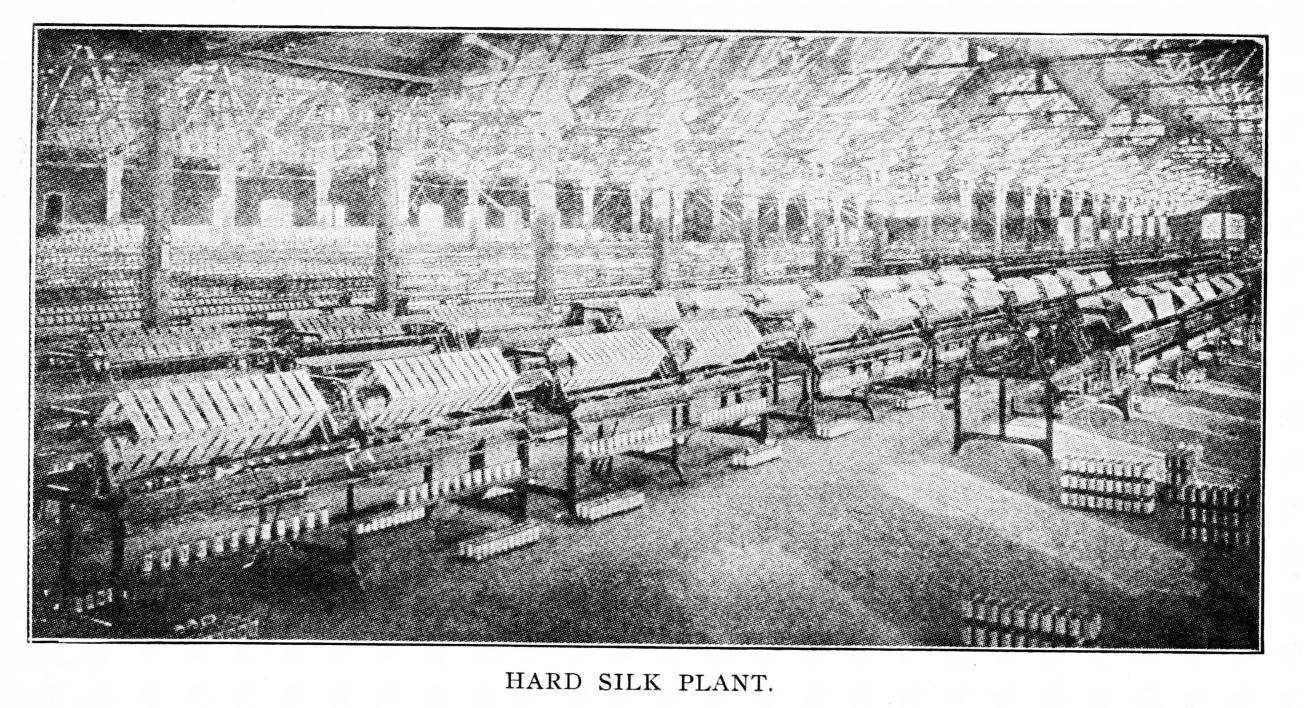
No one knows an industry like those who work in it. Ewald Koettggen, who grew up in a textile mill, talks about the changes to the process and their consequences. Koettggen (recorded in a variety of spellings), was veteran New Jersey silk worker, I.W.W. organizer and G.E.B. member, best known for his leadership in the 1913 Paterson Silk Strike.
‘The Textile Industry’ by Ewald Koettgen from Solidarity. Vol. 4 No. 46. November 22, 1913.
The Development of the Machine Process-Why the One Big Union is Needed.
THE TEXTILE INDUSTRY, the making of cloth, is one of the oldest industries known to mankind. The development to its present high standard has been accomplished in recent years, in fact only since the advent of the power loom.
The hand loom of our grandfather differed very little from the looms of their grandfathers or great-grandfathers.
The old hand loom was constructed almost entirely of wood and consisted of four posts standing upright, joined together by cross-pieces. In many cases the weavers made their own looms. The beam holding the warp was laid in the back of the loom and in front was another beam winding up the woven cloth.
The harness consisted of two shafts, or four at the most. The lade holding the reed had to be pushed back and forth by the hand of the weaver.
The treadle used to part the warp had to be operated by the feet of the weaver and the shuttle had to be thrown by hand, in fact the weaver had to sit at the loom and use both hands and feet in order to operate it. Nor was this all the weaver had to do. The thread or yarn had to be made into a warp. The warp had to be beamed and had to be entered through the harness and reed, twisted or tied on. If it was jacquard work the harness had to be made and the cards cut for the machine.
The loom had to be rigged up. The filling had to be wound upon quills and after the cloth was woven, the weaver had to finish it.
The weavers in fact comprised the whole textile industry and when the cloth left the weaver it was ready to be made up into garments. The weaver was a warper, a beamer, a harness builder, a warp enterer, a twister, a loom fixer, a winder, a quill winder, a cloth picker, a finisher, etc. The weaver of old was a highly skilled mechanic and it required years of training to become efficient.
The work was carried on in their homes, and they had to work long hours and produced comparatively few yards per day.
When the weavers organized into Weavers’ Unions at that time they had the whole industry organized because the weavers constituted the textile industry.
With the advent of the power-loom things began to change. The work was no longer carried on in the homes of the workers, it was done in mills built for that purpose. The work was divided and sub-divided. Some workers would do nothing but tend looms as weavers, others became winders, quill-winders, warpers, beamers, twisters, enterers, harness-builders, reed makers, loom-fixers, card-cutters, designers, cloth-pickers, finishers, cloth-examiners, spinners, etc.
The workers became mere tenders of machines.
The weaver of old was, figuratively speaking, cut into a dozen or more different parts. Instead of being the whole industry, he became only a small part of it.
The old unions, as represented by the American Federation of Labor in this country did not keep pace with this development of industry. Instead of organizing all the workers working in a textile mill or mills in a given locality into one big union of textile workers, they organized them into small unions of weavers, warpers, loom-fixers, twisters, harness-builders, card-cutters, reed-makers, designers, spinners, slashers, wool-sorters, etc., etc.
Each of these little unions would consider itself distinct and separate from all the others, making contracts with their employers, regardless of the other workers working for the same employer. This division was carried on still further. Silk weavers’ unions, for instance, would not take in cotton, woolen, tapestry, passementerie weavers, etc., or vice versa.
A weaver was not allowed to become a fixer, a twister, a warper, etc. The result was that when one craft had to strike to maintain their standard or improve on it all the other workers would stay at work and thereby help the boss defeat their fellow workers on strike. For instance, when the weavers struck the loom-fixers, winders, warpers, twisters, carders, spinners, sorters, engineers, firemen, etc., would stay at work, having been organized separately and taught that their interests were different from the others. The employers were not slow to take advantage of this state of affairs. Wages were reduced gradually, one craft at a time. More work was forced onto the workers. For instance, a weaver who was operating one loom containing 18 inches of cloth was compelled to run two looms. First only on plain work, after a while he was given two looms on fancy. When this had become general he was compelled to take two looms each containing 36 inches of cloth, then two looms containing 54 inches and even 72 inches. Then the number of looms was increased to three, then to four, etc.
The winders fared just as bad. They were compelled to tend to two sides instead of one, then to three sides, then the machines were made larger. All the other crafts got the same.
In the production of silk ribbon the 24-foot double decker loom is the order of the day. In the cotton mill it is common for a weaver to operate from 12 to 24 looms and the woolen weavers must operate two looms on fancy. All the machinery was run at a much higher rate of speed.
The increase in the productivity of the textile workers has been tremendous. Skill has been eliminated to a great extent. Women and children have entered the mills in large numbers and today we find that about 60 or 70 per cent of all the employes in the textile industry are women and children.
The once skilled textile workers have become the most abject slaves, mere appendages to machines. The wages paid are lower than in any other industry and the profits made by the bosses are tremendous.
We are forced to ask: What are the rea sons for this state of affairs? Are the textile workers unwilling to fight to get and maintain a higher standard of living? The answer must be NO.
They have fought many a noble battle, but they were always defeated by their own fellow workers, mostly with union cards in their pocket. The sole reason for their low standard is that they have clung to an old and out-of-date form of unionism and the false teachings of these organizations.
To organize weavers’ unions, carders’ unions, wool-sorters’ unions, spinners’ unions, slashers’ unions, loom-fixers’ unions, twisters’ unions’ etc., at this period of development, each of them making terms with the employer, independent of all the others,” is nothing but criminal. The false teaching of these out-of-date unions that “The interest of Capital and Labor is identical” has contributed a large part to the present miserable conditions of the textile workers. The teaching that the interests of the bosses and the workers are the same, seems logical to a group of workers who were trained in the old unions. Take a group of loom-fixers for instance. They make an agreement with the employer whereby they get an increase in wages. This increase does not come out of the profits of the boss. He reduces the wages of a group of workers who are numerically much larger than the fixers, the weavers, for instance. Out of this reduction he pays the advance of the loom fixers. The amount gained by the employer from the reduction forced on the weavers is greater than the increase granted the fixers and this establishes the proof in the minds of the workers “that the interest of capital and labor is identical.” Did not the boss, as well as the loom-fixers, gain by the bargain?
This fosters animosity among the workers, kills the class spirit and prevents solidarity, so necessary to working-class emancipation. The old form of unionism and their false teachings must go, if the textile workers ever wish to better their condition.
Solidarity and unity of action must be established and it can never be done by dividing the workers up into small groups, all fighting one another.
The form of organization and principles advocated by the Industrial Workers of the World must take the place of the old craft unions as represented by the American Federation of Labor.
The I.W.W. claims that all workers working in a textile mill are necessary to operate that mill and that their interests are the same. They all have one common enemy, the boss.
The I.W.W. claims that the engineer, firemen, carpenters, machinists, etc., while working in a textile mill are textile workers and must belong to the same union together with every other worker working in that mill. If any of them change their job to any other industry, they would be given free transfer cards to the union in that industry. For instance: If the engineer changes his job from a textile mill to a brewery he would be transferred to the brewery workers’ union, because then he would be a brewery worker.
All workers working in a shop or mill should meet together in their shop-meetings to discuss affairs relative to that particular shop or mill. All workers employed, engineers, firemen, carpenters, machinists, loom-fixers, warpers, weavers, winders, twisters, beamers, spinners, carders, slashers, quill-winders, blockers, cloth-pickers, dyers and helpers, finishers, designers, harness-builders, reed makers, in short every worker employed in any capacity, must take part in the shop meeting and be a member of the same union.
Each shop or mill must have a shop committee representing as near as possible all the various departments.
This shop committee acts as the representative of the workers. Any worker who has any grievance with the employer reports it to the shop committee and if the shop committee fails to get justice for the worker, they call a meeting of all the workers in the shop or mill.
The workers decide what shall be done and if a strike is declared all the workers strike together, making it almost impossible for the boss to get his mill under operation with scabs.
Each mill or shop must elect delegates to a central committee. The delegates from each mill must report to this central committee all about the conditions in their respective mills. The action taken in the central committee must be reported back by the delegates to their respective mills. Thus the workers are always kept in close touch with one another and informed what is going on in the various mills. This form of organization creates a feeling of solidarity and enables the workers to act as a unit in any mill or all mills together if found necessary. This constitutes the Local Union of Textile Workers, embracing all the textile workers in a locality.
The work of organization must go further than a locality, however, because the mill-owners have organized themselves and own mills in various parts of the country. If the workers in a locality strike, the employers transfer their orders to one of their other mills in another part of the country until the workers are compelled to return to work through starvation.
The workers must be in close touch with the workers in all parts of the country in order to close down all the mills of an employer in any part of the country in case of a strike, if found necessary.
This can only be done by combining all the Local Unions of Textile Workers into a National Industrial Union of Textile Workers and in turn affiliate the National Union with other National Unions of Textile Workers in other countries, thus establishing local, national and international solidarity.
The aim of the textile workers must not be merely a fair day’s wage for a fair day’s work. Who is to determine what constitutes a fair day’s wage or a fair day’s work? The mill-owners consider that anything is fair that they can get the workers to work for.
The aim must be the control of industry, and the slogan must be:
“To the workers all they produce.” The battle cry must be:
“An injury to one worker is an injury to all workers.”
The whole matter is only a question of power. The workers will never get more than they have the power to make the bosses give. The only power the workers have is their power to stop industry at any time they see fit. This can only be done through a strong organization, embracing all the workers.
In a mill where there is no organization the boss is the absolute master. Whatever he says will be the law of that mill. He will determine what wages the workers shall receive, how long they shall work, under what condition they shall work, how the work shall be distributed, who shall be employed or discharged and so on. When the workers organize they will demand that they will have something to say as to what the wages shall be, how the work shall be distributed, what the sanitary conditions. shall be, whether or not a worker shall be discharged or kept on, what the hours of labor shall be, etc. The stronger the workers organize, the more power they will assume. Whatever power the workers assume is taken away from the bosses and makes them so much weaker. This holds good in all industries.
Through close compact organization the workers can gain any demand by using direct action. For instance, the textile workers can gain the eight-hour day by organizing in the I.W.W. When they get a good per centage organized take a vote in the organization and set the date when they want the eight-hour day. When that date comes every textile worker, leaves the mill when they have worked eight hours.
If this is done all over the country at the same time, there is no power on earth to compel the workers to work longer than eight hours. United action will get the workers anything they want. Organization, as advocated by the I.W.W., makes this possible.
Craft unionism as advocated by the United Textile Workers, A. F. of L. never.
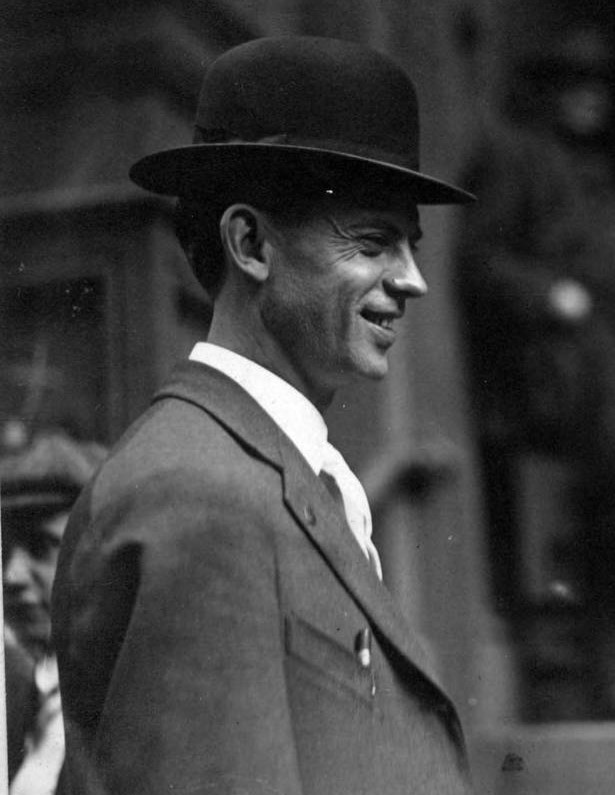
The employers will dispute every inch of ground. They will fight hard to maintain control of industry. The weapons used by the workers in their fight for control of industry may vary greatly. Any weapons which will give the workers the desired results, the workers are justified in using. If the boss refuses to deal with a committee elected by the workers, a good move is to stop all work but stay in the mill and constitute themselves as one big committee of all the workers. Wherever this has been tried, it has been found very effective. The boss has always called for a committee, because he is very sensitive about having his whole place stopped.
Even if the boss is willing to receive a committee it is a good idea to stop the whole mill; this helps the boss to make up his mind quickly. To strike in the mill without leaving it is often better than leaving. Make your demand, stop the mill and stay by your machines while you present your demands. After you have stopped the mill for a few hours and the boss does not give in to your demands start to work again and try the same thing again the next day. Keep this up until the boss gets tired of it and gives in to your demands.
To strike often but never very long is better than these long drawn out hunger strikes. When the workers act directly for themselves they can be relied upon to use the right methods to gain their point. They will learn by acting, and gradually gain more and more control over industry until finally they have full control.
When all the most important industries have reached this point, the working class will be the dominant class and refuse to be slaves any longer. They will run the industries for the benefit of the workers and establish a new society where there are no masters and no slaves. We often hear the question asked: How shall this new society be constructed? While the details must depend upon future development of industry, we are safe to say that it will be constructed along industrial lines instead of geographical, or political lines, The means of production, distribution, transportation and the land must be owned jointly by the workers. The political state with its geographical demarcation will disappear and the industrial state will take its place. The workers working in an industry will make the rules, or laws if you wish to call it that for that industry. These are the only ones qualified to do so, being the only ones who I have any intricate knowledge of that industry.
Their representatives will be workers who are thoroughly familiar with the industry and are elected by all the workers working in that particular industry. For instance: The textile workers will elect representatives from among their own ranks. These representatives will be the administrative body for the textile industry, taking the place of the state representatives as we know them now in the political state. All the other industries will do the same and combined will constitute the nation, thus establishing a new society, an industrial democracy.
The most widely read of I.W.W. newspapers, Solidarity was published by the Industrial Workers of the World from 1909 until 1917. First produced in New Castle, Pennsylvania, and born during the McKees Rocks strike, Solidarity later moved to Cleveland, Ohio until 1917 then spent its last months in Chicago. With a circulation of around 12,000 and a readership many times that, Solidarity was instrumental in defining the Wobbly world-view at the height of their influence in the working class. It was edited over its life by A.M. Stirton, H.A. Goff, Ben H. Williams, Ralph Chaplin who also provided much of the paper’s color, and others. Like nearly all the left press it fell victim to federal repression in 1917.
PDF of full issue: https://www.marxists.org/history/usa/pubs/solidarity-iww/1914/v04n52-w205-jan-03-1914-solidarity-texas.pdf
 Revolution's Newsstand