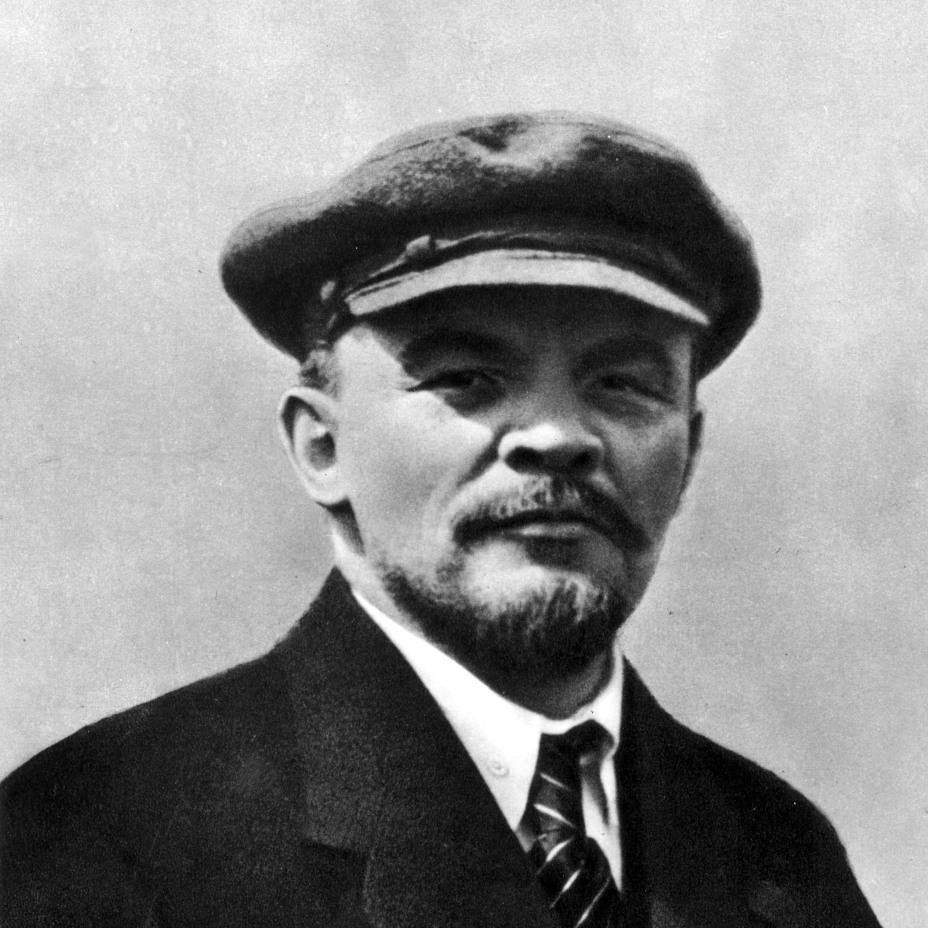
There is much in these speeches, Lenin’s portion of a divided report with Bukharin to the Eighth Congress of the Russian Communist Party on March 19, 1919 on changes to the Party’s program. Some of the points Lenin presented included those under dispute; the framing preamble, a general or specific character, the national question, small proprietors and the middle peasantry, cooperatives, the utilization of bourgeois experts, bureaucracy and of enlisting the broad masses in Soviet work, and leading role of the proletariat and disfranchisement. In the second part, Lenin’s response to the discussion, particularly to Osip Piatnitsky, is illuminating for what it says of Lenin’s method and practice. How he dealt with internal debates, his insistence on the practical and on viewing the world as it was, and his sense, in 1919, that the Soviet experience was only the beginning of a Revolution that must engulf leading capitalist countries, most importantly Germany. As well, Lenin’s abiding rejection of all Great Russianisms and distaste for any national chauvinism is displayed.
‘On the Party Program’ (1919) by V.I. Lenin from Selected Works, Vol. 8. International Publishers, New York. 1937.
COMRADES, according to the division of subjects agreed on between Comrade Bukharin and myself, there devolves on me the task of explaining the point of view of the commission on a number of concrete and most disputable points, or points which interest the Party most at the present time.
I shall begin by dealing in brief with the points which Comrade Bukharin touched on at the end of his report as points of dispute among us in the commission. The first relates to the manner of drawing up the preamble to the programme. In my opinion, Comrade Bukharin did not quite correctly set forth here the reason why the majority of the commission rejected all attempts to draw up the programme in such a way as to delete everything that dealt with the old capitalism. Comrade Bukharin spoke in such a way that he sometimes seemed to imply that the majority of the commission feared what might be said about this, feared that the majority of the commission would be accused of insufficient respect for the past. There can be no doubt that when the position of the majority of the commission is put in this way it seems very funny. But it is very far from the truth. The majority of the commission rejected these attempts because they would be wrong. They would not correspond to the real state of affairs. Pure imperialism, without the fundamental basis of capitalism, has never existed, nowhere exists, and never will exist. This is a wrong generalisation of everything that was said of the syndicates, cartels, trusts and finance capitalism, when finance capitalism was depicted as though it had none of the foundations of the old capitalism under it.
That is wrong. It would be particularly wrong for the era of the imperialist war and for the era following the imperialist war. Engels in his time, in one of his reflections on the future war, wrote that it would involve more devastation than that which followed the Thirty Years’ War; that in a large degree mankind would be reduced to savagery, that our artificial apparatus of trade and industry would collapse. At the beginning of the war the social-traitors and opportunists boasted of the tenacity of capitalism and derided “the fanatics or semi-anarchists,” as they called us. “Look,” they said, “these predictions have not been fulfilled. Events have shown that they were true only of a very small number of countries and for a very short period of time!” And now, not only in Russia and not only in Germany, but even in the victorious countries, a gigantic collapse of modern capitalism is setting in, so gigantic that it frequently removes this artificial apparatus and gives birth to the old capitalism anew.
When Comrade Bukharin stated that an attempt might be made to present an integral picture of the collapse of capitalism and imperialism, we objected to it in the commission, and I must object to it here. Just try it, and you will see that it cannot be done. Comrade Bukharin made one such attempt in the commission, and himself rejected it. I am absolutely convinced that if anybody could do this, it is Comrade Bukharin, who has studied this question very extensively and thoroughly. I assert that such an attempt cannot be successful, because the task is a false one.
We in Russia are now experiencing the consequences of the imperialist war and the beginning of the dictatorship of the proletariat. At the same time, in a number of the regions of Russia, cut off from each other more than formerly, we are frequently experiencing a regeneration of capitalism and the development of its early stage. That is something we cannot escape. If the programme were to be written in the way Comrade Bukharin wanted, it would be a false programme. At the best, it would be a reproduction of all the best that has been said of finance capitalism and imperialism, but it would not reproduce reality, precisely because there is no such integrality in this reality. A programme made up of heterogeneous parts is inelegant (but that, of course, is not important)—but any other programme would simply be incorrect. However unpleasant it may be, whatever it may lack in proportion, we shall be unable for a long time to escape this heterogeneity, this necessity of constructing from various materials. When we do escape it, we shall create another programme. But then we shall already be living in a socialist society. It would be ridiculous to pretend that things will be then what they are now.
We are living at a time when a number of the most elementary and fundamental manifestations of capitalism have been revived. Take, for instance, the collapse of transport, which we are experiencing so well, or rather so badly, in our own case. Why, this same thing is taking place in other countries, even in the victor countries. And what does the collapse of transport mean under the imperialist system? A return to the most primitive forms of commodity production. We know very well what bag-traders are. This word, I think, has hitherto been unknown to foreigners. But what is the case now? Speak to the comrades who have arrived for the congress of the Third International. It appears that similar words are beginning to appear in both Germany and Switzerland. And this is a category you cannot fit into any dictatorship of the proletariat; you have to return to the very sources of capitalist society and commodity production.
To escape from this sad reality by creating a smooth and integral programme is to escape into something ethereal and super-mundane, to write a false programme. And it is by no means reverence for the past, as Comrade Bukharin politely hinted, which induced us here to insert passages from the old programme. What appeared to be implied was this: the programme in 1903 was written with the participation of Lenin; the programme is undoubtedly a bad one; but since old people love to recall the past, in a new era a new programme has been drawn up which, out of reverence for the past, repeats the old programme. If it were so, such cranks ought to be laughed at. I assert that it is not so. The capitalism that was described in 1903 remains in force in 1919 in the Soviet proletarian republic just because of the disintegration of imperialism, because of its collapse. Capitalism of this kind can be found, for instance, both in the Samara Gubernia and in the Vyatka Gubernia, which are not very far from Moscow. In a period when civil war is rending the country, we shall not emerge from this situation, from this bag-trading, very soon. That is why any other structure of the programme would be incorrect. We must state what actually exists; the programme must contain what is absolutely irrefutable, what has been established in fact. Only then will it be a Marxist programme.
Comrade Bukharin fully understands this theoretically and says that the programme must be concrete. But it is one thing to understand and another to practise. Comrade Bukharin’s concreteness consists in a bookish exposition of finance capitalism. Actually, we are observing heterogeneous phenomena. We observe in every agricultural gubernia free competition side by side with monopolised industry. Nowhere in the world has monopoly capitalism existed in a whole series of branches without free competition, nor will it exist. To write of such a system is to write of a system which is divorced from reality and false. If Marx said of manufacture that it was a superstructure on mass small production, imperialism and finance capitalism are a superstructure on the old capitalism. If its summit is destroyed, the old capitalism is laid bare. If one holds the point of view that there is such a thing as integral imperialism without the old capitalism, the wish is father to the thought.
This is a natural mistake, one into which it is very easy to fall. And if we had an integral imperialism before us, which had entirely made over capitalism, our task would have been a hundred thousand times easier. It would have resulted in a system in which everything would have been subordinated to finance capital alone. It would then only have remained to remove the top and to transfer what remained to the proletariat. That would have been extremely agreeable, but it is not so in reality. In reality the development is such that we have to act in an entirely different way. Imperialism is a superstructure on capitalism. When it begins to collapse, we find ourselves dealing with the destruction of the top and the exposure of the foundation. That is why our programme, if it is to be a true one, must state what actually exists. There is the old capitalism, which in a number of branches has grown to imperialism. Its tendencies are exclusively imperialistic. Fundamental questions can be examined only from the standpoint of imperialism. There is not a single big question of home or foreign policy which could be settled in any way except from the standpoint of this tendency. It is not of this that the programme now speaks. In reality, there exists a vast subsoil of the old capitalism. There is the superstructure of imperialism, which led to the war, and from this war followed the beginnings of the dictatorship of the proletariat. This is a phase you cannot escape. This fact is characteristic of the very rate of development of the proletarian revolution throughout the world, and will remain a fact for many years to come.
West-European revolutions will perhaps proceed more smoothly; nevertheless, very many years will be required for the reorganisation of the whole world, for the reorganisation of the majority of the countries. And this means that during the transition period through which we are now passing, we cannot escape this mosaic reality. We cannot cast aside this reality composed of heterogeneous parts, however inelegant it may be. If the programme were drawn up otherwise than it has been drawn up, it would be a false programme.
We say that we have arrived at the dictatorship. That is clear. But we must know how we arrived at it. The past holds fast to us, grasps us with a thousand tentacles, and does not allow us to make a single forward step, or compels us to make these steps as badly as we are making them. And we say that in order that the situation we are arriving at may be understood, it must be stated how we proceeded and what led us to the socialist revolution. We were led to it by capitalism in its early commodity production forms, Al] this must be understood, because it is only by taking reality into account that we can solve such problems as, let us say, our attitude towards the middle peasantry. And how is it, indeed, that there is such a thing as a middle peasant in the era of purely imperialist capitalism? Why, he did not exist even in purely capitalist countries. If we are to solve the problem of our attitude towards this almost medieval phenomenon (the middle peasantry) purely from the standpoint of imperialism and the dictatorship of the proletariat, we shall be absolutely unable to fit ends together, and we shall land in many difficulties. But if we are to change our attitude towards the middle peasant—then also have the goodness to say in the theoretical part where he came from and what he is. He is a small commodity producer. And this is the ABC of capitalism, of which we must speak, because we have not yet got away from it. To brush this aside and say, “Why should we study the ABC when we have studied finance capitalism?” would be frivolous to a degree.
I have to say the same thing with regard to the national question. Here too the wish is father to the thought with Comrade Bukharin. He says that it is impossible to admit the right of nations to self-determination. A nation implies the bourgeoisie together with the proletariat. And are we, the proletarians, to recognise the right to self-determination of the despised bourgeoisie? That is absolutely incompatible! Pardon me, it is compatible with what actually exists. If you eliminate this, the result will be sheer fantasy. You refer to the process of differentiation which is taking place in the depths of nations, the process of separation of the proletariat from the bourgeoisie. But let us take a look at the way this differentiation is proceeding.
Take, for instance, Germany, the model of an advanced capitalist country, which in respect to the organisation of capitalism, finance capitalism, was superior to America. She was inferior in many respects, in respect to technical development and production and in respect to politics, but in respect to the organisation of finance capitalism, in respect to the conversion of monopoly capitalism into state monopoly capitalism, Germany was superior to America. She is a model, it would seem. But what has taken place there? Has the German proletariat become differentiated from the bourgeoisie? No! Why, it was only of a few of the large towns that it was reported that the majority of the workers are opposed to the Scheidemannites. How was this? It was owing to the alliance between the Spartacists and the thrice-accursed German Menshevik-Independents, who make a muddle of everything and want to wed the system of Soviets to a Constituent Assembly! And this is what is taking place in Germany! And she, mark you, is an advanced country.
Comrade Bukharin says, “Why do we need the right of nations to self-determination?” I must repeat what I said in objection to him in the summer of 1917, when he proposed to delete the minimum programme and to leave only the maximum programme. I then retorted, “Don’t shout until you’re out of the wood.” When we have conquered power, and even then after waiting a while, we shall do this. We have conquered power, we have waited a while, and now I am willing to do it. We have fully launched into socialist construction, we have beaten off the first assault that threatened us—now it will be in place. The same applies to the right of nations to self-determination. “I want to recognise only the right of the toiling classes to self-determination,” says Comrade Bukharin. That is to say, you want to recognise something that has not been achieved in a single country except Russia. That is ridiculous.
Look at Finland; she is a democratic country, more developed, more cultured than we are: In Finland a process of separation, of differentiation of the proletariat is proceeding, proceeding in a peculiar way, far more painfully than was the case with us. The Finns have experienced the dictatorship of Germany; they are now experiencing the dictatorship of the Entente. And thanks to the fact that we recognise the right of nations to self-determination, the process of differentiation has been facilitated there. I very well recall the scene when, at the Smolny, it was my lot to hand an act to Svinhufvud—which in Russian means “swinehead”—the representative of the Finnish bourgeoisie, who played the part of a hangman. He amiably shook my hand, we exchanged compliments. How unpleasant that was! But it had to be done, because at that time the bourgeoisie was deceiving the people, was deceiving the toilers by declaring that the Muscovites, the chauvinists, the Great-Russians, wanted to stifle the Finns. It had to be done.
And yesterday, was it not necessary to do the same thing in relation to the Bashkir Republic? When Bukharin said, “We can recognise this right in some cases,” I even wrote down that he had included in the list the Hottentots, the Bushmen and the Indians. Hearing this enumeration, I thought, how is it that Comrade Bukharin has forgotten a small trifle, the Bashkirs? There are no Bushmen in Russia, nor have I heard that the Hottentots have laid claim to an autonomous republic, but we have Bashkirs, Kirghiz and a number of other peoples, and to these we cannot deny recognition. We cannot deny it to a single one of the peoples living within the boundaries of the former Russian Empire. Let us even assume that the Bashkirs have overthrown the exploiters and we have helped them to do so. But this is possible only where a revolution has fully matured. And it must be done cautiously, so as not to restrain by one’s interference the process of differentiation of the proletariat which we ought to expedite. What, then, can we do in relation to such peoples as the Kirghiz, the Sarts, who to this day are under the influence of their mullahs? In Russia the population, having had a long experience of the priests, helped us to overthrow them. But you know how badly the decree on civil marriage is still being put into effect. Can we approach these Sarts and say, “We shall overthrow your exploiters”? We cannot do this, because they are entirely under the influence of their mullahs. In such cases we have to wait until the given nation develops, until the differentiation of the proletariat from the bourgeois elements, which is inevitable, has taken place.
Comrade Bukharin does not want to wait. He is possessed by impatience: “Why should we? When we have ourselves overthrown the bourgeoisie, proclaimed a Soviet government and the dictatorship of the proletariat, why should we act thus?” This has the effect of a rousing appeal, it contains an indication of our path, but if we were to proclaim only this in our programme, it would not be a programme, but a proclamation. We may proclaim a Soviet government, and the dictatorship of the proletariat, and utter contempt for the bourgeoisie, which it deserves a thousand times over, but in the programme we must write absolutely and precisely just what actually exists. And then our programme will be irreproachable.
We hold a strictly class standpoint. What we are writing in the programme is a recognition of what has in fact taken place since the period when we wrote of the self-determination of nations in general. At that time there were still no proletarian republics. It was when they appeared, and only as they appeared, that we were able to write what is here-written: “A federation of states of the Soviet type.” The Soviet type is not quite the Soviets as they exist in Russia, but the Soviet type is becoming international. And this is all we can say. To go farther, one step farther, one hair’s breadth farther, would be false, and therefore unsuitable for a programme.
We say that account must be taken of the stage at which the given nation finds itself on the way from medievalism to bourgeois democracy, and from bourgeois democracy to proletarian democracy. That is absolutely correct. All nations have the right to self-determination—there is no need to speak specially of the Hottentots and the Bushmen. The vast majority, most likely nine-tenths of the population of the earth, perhaps ninety-five per cent, come under this description, since all countries are on the way from medievalism to bourgeois democracy or from bourgeois democracy to proletarian democracy. This is an absolutely inevitable course. More cannot be said, because it would be wrong, because it would not be what actually exists. To cast out the self-determination of nations and insert the self-determination of the toilers would be absolutely wrong, because this statement of the question does not reckon with the difficulties, with the zigzag course which differentiation within a nation takes. In Germany it is not proceeding in the same way as in our country: it is proceeding in certain respects more rapidly, and in other respects in a slower and more bloody way. Not a single party in our country adopted so monstrous an idea as a combination of Soviets and a Constituent Assembly. Why, we have to live side by side with these nations. The Scheidemannites are already saying that we want to conquer Germany. That is of course ridiculous, nonsensical. But the bourgeoisie has its own interests and its own press, which is shouting this to the whole world in hundreds of millions of copies; and Wilson is supporting this in his own interests. The Bolsheviks, they declare, have a large army, and they want by means of conquest to implant their Bolshevism in Germany. The best people in Germany—the Spartacists—told us that the German workers are being provoked against the Communists: See, they are told, how bad things are with the Bolsheviks! And we cannot say that things with us are very good. And there they influence the masses with the argument that the proletarian revolution in Germany would result in the same disorders as in Russia. Our disorders are a protracted malady. We are striving against desperate difficulties in creating the proletarian dictatorship in our country. As long as the bourgeoisie, or the petty bourgeoisie, or even part of the German workers, are under the influence of this bugbear—“the Bolsheviks want to establish their system by force”—so long will the formula “the self-determination of the toilers” not help matters. We must arrange things so that the German social-traitors will not be able to say that the Bolsheviks are trying to impose their universal system, which, as it were, can be introduced into Berlin by Red Army bayonets. And this is what may happen if the principle of the self-determination of nations is denied.
Our programme must not speak of the self-determination of the toilers, because that would be wrong. It must speak of what actually exists. Since nations are at different stages on the road from medievalism to bourgeois democracy and from bourgeois democracy to proletarian democracy, this thesis of our programme is absolutely right. With us there have been very many zigzags on this road. Every nation must secure the right to self-determination, and that will make the self-determination of the toilers easier. In Finland the process of separation of the proletariat from the bourgeoisie is proceeding with remarkable clarity, force and profundity. At any rate, things will proceed there not as they do in our country. If we were to declare that we do not recognise the Finnish nation, but only the toiling masses, that would be sheer banality. We cannot refuse to recognise what actually exists; it will itself compel us to recognise it. The demarcation between the proletariat and the bourgeoisie is proceeding in different ways indifferent countries. Here we must act with great caution. We must be particularly cautious with regard to the various nations, for there is nothing worse than lack of confidence in a nation. Self-determination of the proletariat is proceeding among the Poles. Here are the latest figures on the composition of the Warsaw Soviet of Workers’ Deputies: Polish social-traitors—333, Communists —297. This shows that, according to our revolutionary calendar, October there is not very far off. It is somewhere about August or September 1917 there. But, firstly, no decree has yet been issued stating that all countries must live according to the Bolshevik revolutionary calendar; and even if it were issued, it would not be observed. And, secondly, the situation at present is such that the majority of the Polish workers, who are more advanced than ours, better educated, share the standpoint of social-defencism, social-patriotism. We must wait. We cannot speak here of the self-determination of the toiling masses. We must carry on propaganda on behalf of this differentiation. This is what we are doing, but there is not the slightest shadow of doubt that we must recognise the self-determination of the Polish nation now. That is clear. The Polish proletarian movement is taking the same course as ours, towards the dictatorship of the proletariat, but not in the same way as in Russia. And there the workers are being scared by statements to the effect that the Muscovites, the Great-Russians, who have always oppressed the Poles, want to carry their Great-Russian chauvinism into Poland in the guise of communism. Communism cannot be imposed by force. When I said to one of the best comrades among the Polish Communists, “You will do it in a different way,” he replied, “No, we will do the same thing, but better than you.” To such an argument I had absolutely nothing to object. We must | give them the opportunity of fulfilling a modest wish—to create a better Soviet government than ours. We have to reckon with the fact that things there are proceeding in rather a peculiar way, and we cannot say, “Down with the right of nations to self-determination! We grant the right of self-determination only to the toiling masses.” This self-determination proceeds in a very complex and difficult way. It exists nowhere but in Russia, and, while foreseeing every stage of development in other countries, we must decree nothing from Moscow. That is why this proposal is unacceptable in principle. I now pass to the other points which I am to deal with in accordance with the plan we have drawn up, I have given first place to the question of small proprietors and the middle peasants. In this respect, point 47 states:
“With respect to the middle peasants, the policy of the Russian Communist Party is gradually and systematically to draw them into the work of socialist construction. The Party sets itself the task of separating them from the kulaks, of winning them to the side of the working class by carefully attending to their needs, of combating their backwardness with ideological weapons and not by measures of repression, and of striving in all cases where their vital interests are concerned to come to practical agreements with them, making concessions to them in determining the methods of carrying out socialist reforms.”
It seems to me that here we are formulating what the founders of socialism have frequently said regarding the middle peasantry. The only defect of this clause is that it is not sufficiently concrete. We could hardly give more in a programme. But it is not only questions of programme we must discuss at the congress, and we must devote profound, thrice-profound attention to the question of the middle peasantry. We have just received information to the effect that in the revolts which have already begun to sweep like a wave through agricultural Russia, a general plan is clearly discernible, and that this plan is obviously connected with the military plan of the White Guards, who have decided on a general offensive in March and on the organisation of a number of revolts. In the presidium of the congress there is a draft of a manifesto in the name of the congress, on which a report will be made to you. These revolts show as clear as clear can be that the Left Socialist-Revolutionaries and a part of the Mensheviks—in Bryansk it was the Mensheviks who instigated the revolt—are acting as direct agents of the White Guards. A general offensive of the White Guards, revolts in the villages, the interruption of railroad traffic—perhaps it will be possible to overthrow the Bolsheviks in this way? Here the role of the middle peasantry stands out very clearly, very forcibly and insistently. At the congress we must not only lay particular stress on our accommodating attitude towards the middle peasantry, but also think over a number of measures, as concrete as possible. which will directly give the middle peasantry something at least. This is insistently demanded both by interests of self-preservation and by the interests of the struggle against our enemies, who know that the middle peasant vacillates between us and them and who are endeavouring to win him away from us. Our position is now such that we possess vast reserves. We know that both the Polish and the Hungarian revolutions are growing, and very rapidly. These revolutions will furnish us with proletarian reserves, will ease our situation and will to a very large extent reinforce our proletarian basis, which is weak. This may happen in the next few months, but we do not know exactly when it will happen. You know that an acute moment has now arisen, and therefore the question of the middle peasantry now assumes tremendous practical importance.
Further, I should like to dwell on the question of cooperation—that is point 48 of our programme. To a certain extent this point has become antiquated. When we wrote it in the commission, co-operatives existed in our country, but there were no consumers’ communes; but a few days later the decree on the fusion of all forms of cooperatives into a single consumers’ commune was issued. I do not know whether this decree has been published and whether the majority here present are acquainted with it. If not, tomorrow or the day after this decree will be published. In this respect, this point is already out of date but it nevertheless appears to me that it is necessary, for we all know very well that it is a pretty long way from decrees to fulfilment. We have been toiling and moiling over the cooperatives since April 1918, and although we have achieved considerable success, it is not yet a decisive success. We have at times succeeded in organising the population in the cooperatives to such an extent that in many of the uyezds ninety-eight per cent of the agricultural population are already so organised. But these cooperatives, which existed in capitalist society are thoroughly imbued with the spirit of bourgeois society, and are headed by Mensheviks and Socialist-Revolutionaries, by bourgeois experts. We have not yet been able to gain their submission, and here our task remains unaccomplished. Our decree is a step forward in the sense of creating consumers’ communes; it decrees that all forms of cooperation all over Russia shall be merged. But this decree, too, even if we carry it into effect entirely, preserves the autonomous sections of workers’ cooperatives within the future consumers’ communes, because the representatives of the workers’ cooperatives who have a practical knowledge of the matter told us, and proved, that the workers’ cooperatives, as a more highly developed organisation, should be preserved, since their operations are demanded by necessity. There were quite a few differences and disputes within our Party over the question of cooperation; there was friction between the Bolsheviks in the cooperatives and the Bolsheviks in the Soviets. In principle, it seems to me that the question should undoubtedly be settled in the sense that this apparatus, as the only apparatus which capitalism set up among the masses, as the only apparatus which operates among the rural masses, who are still in the stage of primitive capitalism, must be preserved at all costs, developed, and at any rate not discarded. The task here is a difficult one because in the majority of cases the leaders of the cooperatives are bourgeois specialists, very frequently real White Guards. Hence the hatred for them, a genuine hatred, hence the fight against them. But it must, of course, be carried through skillfully: we must put a stop to the counter-revolutionary attempts of the cooperators, but this must not be a struggle against the apparatus of the cooperatives. While cutting off the counter-revolutionary leaders, we must subordinate the apparatus itself to our influence. Here the aim is exactly what it is in the case of the bourgeois experts. That is another question to which I should like to refer.
The question of the bourgeois experts is provoking quite a lot of friction and divergence of opinion When I recently had occasion to speak in the Petrograd Soviet, among the written questions submitted to me there were several devoted to the question of rates of pay. I was asked: is it feasible for a socialist republic to pay as much as 3,000 rubles? We have, in fact, included this question in the programme, because dissatisfaction on these grounds has gone rather far. The question of the bourgeois experts has arisen in the army, in industry, in the cooperatives, everywhere. It is a very important question of the period of transition from capitalism to communism. We shall be able to build up communism when, with the aid of bourgeois science and technology, we make it more accessible to the masses. There is no other way of building a communist society. But in order to build it in this way, we must take the apparatus from the bourgeoisie, we must enlist all these experts in the work. We have intentionally developed this question in detail in the programme in order that it may be settled radically. We are fully aware of the effects of Russia’s lack of cultural development, what it is doing to Soviet government—which in principle has provided an immeasurably higher proletarian democracy, which serves as a model of such democracy for the whole world—how this lack of culture is depreciating Soviet government and reviving bureaucracy. The Soviet apparatus is accessible to all the toilers in word, but in fact it is far from accessible to all of them, as we all know. And not because the laws prevent it from being so, as was the case under the bourgeoisie; on the contrary, the laws’ assist in this respect. But here laws alone are not enough. A vast amount of educational, organisational and cultural work is required, which cannot be done rapidly by legislation and which demands a vast amount of prolonged work. This question of the bourgeois experts must be settled at this congress absolutely definitely. The settlement of the question will enable the comrades, who are undoubtedly following this congress attentively, to lean on its authority and to realise what difficulties we are up against. It will help those comrades who come up against this question at every step to take part at least in propaganda work.
The comrades here in Moscow who are representing the Spartacists at the congress told us that in Western Germany, where industry is most developed, and where the influence of the Spartacists among the workers is greatest, engineers and managers in very many of the large enterprises would come to the Spartacists, although the Spartacists have not yet been victorious there, and say, “We shall follow you.” That was not the case in our country. Evidently, there the higher cultural level of the workers, the greater proletarianisation of the technical staffs, and perhaps a number of other causes of which we do not know, have created relations which differ somewhat from ours.
At any rate, here we have one of the chief obstacles to further progress. We must immediately, without waiting for the support of other countries, we must immediately and at once develop our productive forces. We cannot do this without the bourgeois experts. That must be said once and for all. Of course, the majority of these experts are thoroughly imbued with the bourgeois outlook. They must be surrounded by an atmosphere of comradely collaboration, by workers’ commissars and by Communist nuclei; they must be so placed that they cannot break away; but they must be given the opportunity of working in better conditions than was the case under capitalism, since this stratum, which has been trained by the bourgeoisie, will not work otherwise. To compel a whole stratum to work under the lash is impossible—that we know very well from experience. We can compel them not to take an active part in counter-revolution, we can terrify them so as to make them fear to take a White Guard manifesto into their hands. In this respect the Bolsheviks act energetically. This can be done, and this we are doing adequately. This we have all learnt to do. But it is impossible in this way to compel a whole stratum to work. These people are accustomed to cultural work, they advanced it within the limits of the bourgeois system; that is, they enriched the bourgeoisie with tremendous material inventions, while conferring them on the proletariat in insignificant doses—but they advanced culture, that was their profession. As they see the working class promoting organised and advanced strata, which not only value culture but also help to convey it to the masses, they are changing their attitude towards us. When a doctor sees that the proletariat is arousing the toilers to independent activity in fighting epidemics, his attitude towards us completely changes. We have a large stratum of such bourgeois doctors, engineers, agronomists and cooperators, and when they see in practice that the proletariat is attracting an increasing number of the masses to this cause, they will be conquered morally, and not merely be cut off from the bourgeoisie politically. Our task will then become easier. They will then of themselves be drawn into our apparatus and become part of it. For this, sacrifices are essential. To pay even two billions for this is a trifle. To fear this sacrifice would be childish, for it would mean that we do not comprehend the tasks that confront us.
The dislocation of transport, the dislocation of industry and agriculture is undermining the whole life of the Soviet Republic. Here we must resort to the most energetic measures, bending all the energies of the country to the utmost. We must not practise a policy of petty pinpricks with regard to the experts. These experts are not the servitors of the exploiters, they are active cultural workers, who in bourgeois society served the bourgeoisie, and of whom all Socialists all over the world said that in a proletarian society they would serve us. In this transition period we must endow them with the best possible conditions of life. That will be the best policy. That will be the most economical management. Otherwise, while economising a few hundred millions, we may lose so much that no number of billions will restore what we have lost.
When we discussed the question of rates of pay with the Commissar of Labour, Comrade Schmidt, he mentioned facts like these. He said that in the matter of equalising wages we have done more than has been done anywhere, and more than any bourgeois state can do in scores of years. Take the pre-war rates of pay: a manual labourer used to get one ruble a day, twenty-five rubles a month, while an expert got five hundred rubles a month, not counting those who were paid hundreds of thousands of rubles. The expert used to receive twenty times more than the worker. Our present rates of pay vary from six hundred rubles to three thousand rubles—five times more. We have done a great deal in the matter of equalisation. Of course, we are now overpaying experts, but to pay them a little more for science is not only worth while, but necessary and theoretically essential. In my opinion, this question is dealt with in sufficient detail in the programme. It must be profoundly stressed. Not only must it be settled here in principle, but we must see to it that every member of the congress, on returning to his locality, should, in his report to his organisation and in all his activities, secure its accomplishment.
We have already brought about a profound change of attitude among the vacillating intellectuals. If yesterday we spoke of legalising the petty-bourgeois parties, whereas today we are arresting the Mensheviks and Socialist-Revolutionaries, we are applying an absolutely definite system in these oscillations. A very firm line runs through these oscillations, namely, to destroy counter-revolution and to utilise the cultural apparatus of the bourgeoisie, The Mensheviks are the worst possible enemies of socialism, because they clothe themselves in a proletarian disguise; but the Mensheviks are a non-proletarian stratum. In this stratum there is only an insignificant proletarian upper layer, while the stratum itself consists of petty intellectuals. This stratum is coming over to our side. We shall take it over wholly, as a stratum. Every time they come to us, we say, “Welcome!” With every one of these vacillations, part of them come over to us. Such was the case with the Mensheviks and the Novaya Zhizn-ists and with the Socialist-Revolutionaries; such will be the case with all these vacillating elements, who will long continue to get in our way, whine and desert—from one camp to the other—you cannot do anything with them. But through all these vacillations we shall be enlisting strata of cultured intellectuals in the ranks of Soviet workers, and shall cut off those elements that continue to support the White Guards.
The next question which, according to the division of subjects, falls to my share is the question of bureaucracy and of enlisting the broad masses in Soviet work. We have been hearing complaints about bureaucracy for a long time; the complaints are undoubtedly well founded. We have done what no other state has done in the fight against bureaucracy. The apparatus which was a thoroughly bureaucratic and bourgeois apparatus of oppression, and which remains such even in the freest of bourgeois republics, we have destroyed to its very foundations. Take, for example, the courts. Here, it is true, the task was easier; we did not have to create a new apparatus, because anybody can act as a judge with the help of the revolutionary sense of justice of the toiling classes. Here we—have still far from completed the work, but in a number of regions we have made the courts what they should be. We have—created bodies in which not only men, but also women, the most backward and immobile of elements, can serve without exception.
The employees in the other spheres of government are more hardened bureaucrats. The task here is more difficult. We cannot live without this apparatus; every branch of government creates a demand for such an apparatus. Here we are suffering from the fact that Russia was not sufficiently developed capitalistically. Germany, apparently, is suffering less from this, because her bureaucratic apparatus passed through an extensive school, which sucks people dry but which compels them to work and not just wear out armchairs, as happens in our offices. We dispersed these old bureaucratic elements, shook them up and then began to place them in new posts. The tsarist bureaucrats began to enter the Soviet institutions and practise their bureaucratic methods, they began to assume the colouring of Communists and, for greater success in their careers, to procure membership cards of the Russian Communist Party. And so, having been thrown out of the door, they fly in through the window! What makes itself felt here most is the lack of cultured forces. These bureaucrats may be dismissed, but they cannot be reeducated all at once. Here what chiefly faces us is organisational, cultural and educational problems.
We can fight bureaucracy to the bitter end, to a complete victory, only when the whole population participates in the work of government. In the bourgeois republics not only was this impossible, but the very law prevented it. The best of the bourgeois republics, no matter how democratic they may be, have thousands of legislative hindrances which prevent the toilers from participating in the work of government. We have removed these hindrances, but so far we have not managed to get the toiling masses to participate in the work of government. Apart from the law, there is still the level of culture, which you cannot subject to any law. The result of this low cultural level is that the Soviets, which by virtue of their programme are organs of government by the toilers, are in fact organs of government for the toilers, by means of the advanced stratum of the proletariat, but not by means of the toiling masses.
Here we are confronted by a problem which cannot be solved except by prolonged education. At present this task is an inordinately difficult one for us, because, as I have had frequent occasion to say, the stratum of workers who are governing is an inordinately, incredibly thin one. We must secure help. According to all the signs, such a reserve is growing up within the country. There cannot be the slightest doubt of the existence of a tremendous thirst for knowledge and of tremendous progress in education—mostly attained by means of extra-school methods—of tremendous progress in educating the toiling masses. This progress cannot be confined within any school framework, but it is tremendous. All the signs go to show that this may result in a vast reserve in the near future, which will replace the representatives of the thin stratum of proletarians who have over-exhausted themselves in the work. But, in any case, our present situation in this respect is an extremely difficult one. Bureaucracy has been defeated. The exploiters have been eliminated. But the cultural level has not been raised, and therefore the bureaucrats are occupying their old positions. They can be forced out only if the proletariat and the peasantry are organised far more widely than has hitherto been the case, and only if real measures are taken to enlist the workers in the work of government. You are all acquainted with such measures in the case of every People’s Commissariat, and I will not dwell on them.
The last point I have to touch on is the question of the leading role of the proletariat and disfranchisement. Our constitution recognises the privileged position of the proletariat over the peasantry and the disfranchisement of the exploiters. It was this that the pure democrats of Western Europe attacked most. We retorted, and retort, that they have forgotten the most fundamental propositions of Marxism, they have forgotten that with them it is a case of bourgeois democracy, whereas we have passed to proletarian democracy. There is not a single country which has done a tenth of what the Soviet Republic has done in the past few months for the workers and the poor peasants in enlisting them in the work of administering the state. That is an absolute fact. Nobody will deny that in the matter of true, not paper, democracy, in the matter of enlisting the workers and peasants, we have done more than has been done or could be done by the best of the democratic republics in hundreds of years, It was this that determined the importance of the Soviets, it was owing to this that the Soviets have become a slogan for the proletariat of all countries.
But this in no way saves us from the fact that we are up against the inadequate culture of the masses. We do not regard the question of disfranchising the bourgeoisie from an absolute point of view, because it is theoretically quite conceivable that the dictatorship of the proletariat may suppress the bourgeoisie on every hand without disfranchising the bourgeoisie. This is theoretically quite conceivable. Nor do we advance our constitution as a model for other countries. All we say is that whoever conceives the transition to socialism without the suppression of the bourgeoisie is not a Socialist. But while it is essential to suppress the bourgeoisie as a class, it is not essential to deprive them of the suffrage and of equality. We do not want freedom for the bourgeoisie, we do not recognise equality of exploiters and exploited, but in the programme we treat this question from the standpoint that measures such as the inequality of workers and peasants are by no means prescribed by the constitution. They were embodied in the constitution after they were already in actual practice. It was not even the Bolsheviks who worked out the constitution of the Soviets; it was worked out against themselves by the Mensheviks and the Socialist-Revolutionaries before the Bolshevik revolution. They worked it out in the way it had been worked out in practice. The organisation of the proletariat proceeded much more rapidly than the organisation of the peasantry, which fact made the workers the bulwark of the revolution and gave them a virtual privilege. The next task is gradually to pass from these privileges to their equalisation. Nobody drove the bourgeoisie out of the Soviets before the October Revolution and after the Bolshevik revolution. The bourgeois themselves left the Soviets.
That is how the matter stands with the question of the franchise for the bourgeoisie. It is our task to put the question with absolute clarity. We do not in the least apologise for our conduct, but give an absolutely precise enumeration of the facts as they are. As We point out, our constitution was obliged to introduce this inequality because the cultural level was low and because with us organisation was weak. But we do not make this an ideal; on the contrary, in the programme the Party undertakes to work systematically for the abolition of this inequality between the more organised proletariat and the peasantry, an inequality we shall have to abandon as soon as we succeed in raising the cultural level. We shall then be able to get along without these limitations. At present, after some seventeen months of revolution, these limitations are in practice already of very small importance.
These, comrades, are the main points on which I considered it necessary to dwell in the general discussion of the programme, in order to leave their further consideration to the discussion. [Applause.]
***
REPLY TO THE DISCUSSION ON THE PARTY PROGRAMME
Comrades, I could not share this part of the question with Comrade Bukharin, after preliminary consultation, in such detail as in the case of the report. And perhaps there will even be no necessity to do so. It seems to me that the discussion which developed here in the main showed one thing: the absence of any definite and formulated counter-proposal. Many spoke about individual parts, desultorily, but there was no counter-proposal. I shall dwell on the chief objections, which were mainly directed against the preamble. Comrade Bukharin told me that he belongs to the number of those who advocate the possibility of combining in the preamble a description of capitalism with a description of imperialism in one connected whole, but that, in the absence of such, we shall have to accept the existing draft.
Many of those who spoke advanced the point of view—it was advanced with particular emphasis by Comrade Podbelsky—that the draft in the form in which it has been presented to you is wrong. The arguments of Comrade Podbelsky were strange to a degree. For instance, that in point 1 the revolution is referred to as the revolution of such and such a date. That for some reason gave Comrade Podbelsky the idea that this is even revolution under a registered number. I can say that we in the Council of People’s Commissars have to deal with very many documents with registered numbers and frequently get a little tired of them. But why transfer this impression here? And why indeed talk about a registered number here? We fix the day of the holiday and celebrate it. How can it be denied that it was precisely on November 7 (October 25) that power was seized? If you were to try to change this in any way, that would be artificial. If you call the revolution the October; November revolution, you make it possible to say that it was not accomplished in one day. But, of course, it took place over a longer period—not in October, not in November, and not even in one year. Comrade Podbelsky took exception to the fact that one of the paragraphs speaks of the impending social revolution. On this basis he depicted the programme almost as contempt of “His Majesty”—the Social Revolution. We are in the midst of the social revolution, and here they speak of it as impending? Such an argument is obviously groundless, because what is referred to in our programme is the social revolution on a world scale.
We are told that we approach the revolution from the economic standpoint. Is this necessary or not? Many over-enthusiastic comrades went so far as to talk of a world Sovnarkhoz and of subordinating all the national parties to the Central Committee of the Russian Communist Party. Comrade Pyatakov almost went so far as to say that [Pyatakov (from the body of the hall): “And do you think that would be a bad thing?”] Since he now remarks that it would not be a bad thing, I must reply that if there were anything like this in the programme, there would not even be any need to criticise it: the authors of such a proposal would have dug their own graves. These over-enthusiastic comrades have overlooked the fact that in the programme we must base ourselves on what actually exists. One of these comrades—I think it was Sunitsa, who very vigorously criticised the programme as a wretched one, and so forth—one of these over-enthusiastic comrades said that he cannot agree that it must contain what actually exists, and proposes that it should contain what does not exist. [Laughter.] I think that owing to its obvious falsity this formulation legitimately arouses laughter. I did not say that there must be only what actually exists. I said that we must base ourselves on what has been absolutely established. We must say and prove to the proletarians and toiling peasants that the communist revolution is inevitable. Has anybody here said that it is unnecessary to say this? If anybody had attempted to make such a proposal, he would have been shown that it is not so. Nobody has said or will say anything like that, because it is an undoubted fact that our Party came to power with the support not only of the Communist proletariat but also of the whole peasantry. Are we then to confine ourselves to telling these masses who are now marching with us, “It is the business of the Party only to carry on socialist construction. The communist revolution has been accomplished, it is for you to put communism into effect.” Such a point of view is fundamentally unsubstantial, it is theoretically false. Our Party has absorbed directly, and still more indirectly, millions of people, who are now beginning to understand the question of the class struggle, the question of the transition from capitalism to communism.
It may now be said—there will, of course, be no exaggeration in doing so—that nowhere, in no other country, have the toiling population so interested themselves in the question of transforming capitalism into socialism as in our country at the present day. They think about this in our country more than anywhere else. And is the Party not to give a reply to this question? We must demonstrate scientifically how this communist revolution will progress. In this connection all the other proposals are incomplete. Nobody wanted to delete this entirely. The talk was indefinite: perhaps it could be cut down and the old programme not quoted, because it is wrong. But if it was wrong, how is it that we could base ourselves on it in our work for so many years? Perhaps we shall have a common programme when the world Soviet republic is created; by then we shall probably have written several more programmes. But it would be premature to write it now when only one Soviet republic exists, replacing the old Russian Empire. Even Finland, which is undoubtedly moving towards a Soviet republic, has not yet accomplished it—Finland, which is distinguished from all the other peoples that inhabited the former Russian Empire by her greater culture. So that to demand now that the programme should give a reflection of a finished process would be highly mistaken, it would be as though we were now to advance a world Sovnarkhoz in the programme. Yet, we ourselves have not been able to accustom ourselves to this ugly word “Soynarkhoz”; as for foreigners, it is said that there have been cases when they searched the time-table for a station of that name. [Laughter.] We cannot decree such words on the whole world.
To be an international programme, our programme must take account of the class factors which are economically characteristic of all countries. It is characteristic of all countries that capitalism is still developing in a large number of places. That is true of the whole of Asia, of all countries which are passing to bourgeois democracy, it is true of a number of parts of Russia. Comrade Rykov, who in the economic sphere knows the facts very well, told us of the new bourgeoisie which exists in our country. That is true. It is arising not only from among our Soviet government employees—to an insignificant degree it can arise from them also—it is arising from among the peasants and handicraftsmen, who have been liberated from the yoke of the capitalist banks and who are now cut off from railway transport. That is a fact. How do you expect to get around this fact? You are only flattering your illusions, or introducing badly digested book learning into reality, which is far more complex. It shows us that even in Russia capitalist commodity production is alive, operating, developing and giving birth to a bourgeoisie, just as in every capitalist society.
Comrade Rykov said, “We are combating the bourgeoisie which is arising in our country because peasant economy has not yet disappeared, and this economy gives rise to a bourgeoisie and to capitalism.” We do not know much about it, but that it is taking place is beyond doubt. In all the world a Soviet republic so far exists only within the boundaries of the former Russian Empire. It is growing and developing in a number of countries, but it does not yet exist in any other country. Therefore to claim in our programme something we have not yet reached would be fantasy, it would be a desire to escape unpleasant reality, which shows that the birth-pangs of the socialist republics in other countries will undoubtedly be more severe than those we experienced. It came to us easily because on November 9 (October 27), 1917, we legalise what the peasants demanded in the Socialist-Revolutionary resolutions. This is not the case in any other country. The Swiss comrade and the German comrade pointed out that the peasants took up arms against the strikers in Switzerland as never before, and that in Germany not even the slightest fresh breeze is to be felt in the rural districts as far as the appearance of Soviets of agricultural labourers and small peasants is concerned. In our country, after the first few months of the revolution, the Soviets of Peasants’ Deputies embraced almost the whole country. We, a backward country, created them. Here a gigantic problem arises, which the capitalist peoples have not yet solved. And what sort of model capitalist nation are we? Up to 1917 we fell short as a model nation: we still had relics of serfdom. But not a single capitalistically constructed nation has yet shown how this problem is solved in practice. We achieved power under exceptional conditions, when the oppression of tsarism made it necessary at one great lunge to accomplish a radical and rapid change, and in these exceptional conditions we were able for several months to lean on the support of the peasantry as a whole. This is a historical fact. As late as the summer of 1918, before the formation of the Committees of Poor Peasants, we held on as a power because we had the support of the peasantry as a whole. This is impossible in any capitalist country. And it is this fundamental economic fact that you are forgetting when you talk of a radical reconstruction of the whole programme. Without this your programme will not rest on a scientific foundation. We are obliged to start from the Marxist thesis, recognised by all, that a programme must be built on a scientific foundation. It must explain to the masses how the communist revolution arose, why it is inevitable, what is its significance, its essence, its power, and what problems it must solve. Our programme must be a summary for agitational purposes, a summary such as all programmes were, such as, for instance, the Erfurt Programme was. Every paragraph of that programme contained hundreds of thousands of speeches and articles for agitators. Every paragraph of our programme is something that every toiler must know, assimilate and understand. If he does not know what capitalism is, if he does not know that petty-peasant and handicraft economy inevitably and necessarily gives rise constantly to this capitalism—if he does not know this, even if he were a hundred times to declare himself a Communist and glitter with the most radical communism, that communism would not be worth a farthing, because we value communism only when it is based on economic facts.
A good deal will be changed by the socialist revolution even in certain of the advanced countries. The capitalist method of production continues to exist in all parts of the world, often preserving its less developed forms, even though imperialism has assembled and concentrated finance capital. There is not a single developed country in which only capitalism in its most perfect form can be found. There is nothing like it even in Germany. When we were collecting material for our concrete tasks, the comrade in charge of the Central Statistical Bureau informed us that in Germany the peasant concealed from the food departments forty per cent of his potato surplus. In a capitalist state, where capitalism has reached full development, small peasant farms with free petty selling and petty profiteering continue to exist. Such facts must not be forgotten. Of the 300,000 members of the Party here represented are there many who fully understand this question? It would be ridiculous conceit to assume that since all this is known to us who have had the fortune to write the draft, the mass of Communists have come to understand it. No, they need this ABC. They need it a hundred times more than we do, because there can be no communism among people who have not grasped, who have not come to understand what communism is and what commodity production is. We come across these facts of petty commodity production every day, in every question of practical economic policy, whether it be food or agriculture, or whether it concerns the Supreme Council of National Economy. And yet we are not to speak about this in the programme! If we did this we should only be showing that we are unable to solve this problem and that the success of the revolution in our country is to be explained by exceptional conditions.
Comrades come to visit us from Germany in order to get an idea of the forms of the socialist system. And we must act so as to prove our strength to the comrades from abroad, we must act so that they may see that in our revolution we are in no way exceeding the bounds of reality, and so as to provide them with material that will be irrefutable for them. It would be absurd to represent our revolution as an ideal for all countries, to imagine that it has made a number of brilliant discoveries and has introduced a lot of socialist innovations. I have heard nobody say this, and I assert that we shall not hear it from anybody. We have had practical experience in accomplishing the first steps towards destroying capitalism in a country where a particular relation exists between the proletariat and the peasantry. Nothing more. If we behave like a frog and puff ourselves out, we shall make fools of ourselves in the eyes of the world and shall be mere braggarts.
We educated the Party of the proletariat on the Marxian programme, and the tens of millions of toilers we have in our country must be educated in the same way. We have gathered here as ideological leaders and must say to the masses, “We educated the proletariat and we always proceeded primarily from a precise economic analysis.” This is not a task for a manifesto. The manifesto of the Third International is a call, a proclamation, it directs attention to what confronts us, it is an appeal to the sentiments of the masses. Take the trouble to prove scientifically that you have an economic basis and that you are not building on sand. If you cannot do that, do not undertake to draw up a programme. And in order to do it, we must examine what we have lived through in these fifteen years, and nothing else. Does the fact that fifteen years ago we said that we were moving towards the social revolution, while now we have arrived at it, really weaken our position? It reinforces and strengthens our position. It all comes to this, that capitalism is passing into imperialism, and imperialism leads to the beginning of the socialist revolution. This is a tedious and lengthy process, and not a single capitalist country has yet passed through this process. But it is essential to refer to this process in the programme.
That is why the theoretical objections that have been made will not bear even the slightest criticism. I have no doubt that if we were to set ten or twenty writers, experienced in setting forth their ideas, to work for three or four hours a day, they would in the course of a month draw up a better and more integral programme. But to demand that this should be done in a day or two, as Comrade Podbelsky does, is ridiculous. We worked not merely a day or two, or a couple of weeks. I repeat that if it were possible to select a commission of thirty persons for a month and set them to work several hours a day, ay, and not allow them to be disturbed by telephone calls and news of the offensive, there can be no doubt that they would produce a programme five times better. But nobody here has disputed essentials. A programme which says nothing about the fundamentals of commodity production and capitalism will not be a Marxist international programme. In order to be an international programme it is not enough that it should proclaim a world Soviet republic, or the abolition of nations, as Comrade Pyatakov proclaimed when he said: Nations are not necessary, what is necessary is a union of the proletarians. Of course, that is an excellent thing, and it will come to pass, but at an entirely different stage of communist development. Comrade Pyatakov said with an obvious air of superiority, “You were backward in 1917 and you have progressed now.” We progressed when we put into the programme what began to correspond with reality. When we said that nations move from bourgeois democracy to proletarian government, we stated what was a fact, whereas in 1917 it was something you desired.
When there will be that complete comradely confidence between the Spartacists and us that is needed for a united Communism, the comradely confidence that each day is in process of birth and which perhaps will come to be in a few months, it will be fixed in the programme. But as long as it still does not exist, to proclaim it would be to drag them to something at which they have not yet arrived by their own experience. We say that the Soviet type has achieved international significance. Comrade Bukharin mentioned the British Shop Stewards’ Committees. That is not quite the Soviets. They are growing, but they are still in embryo. When they appear in the light of day, we shall see. But to say that we are presenting the British workers with Russian Soviets will not bear the slightest criticism.
Further, I must dwell on the question of the self-determination of nations. This question has acquired an inflated significance in our criticism. Here the weakness of our criticism was expressed in the fact that this question, which essentially plays a less than secondary part in the general structure of the programme, in the sum total of programme demands—this question has acquired a special significance in our criticism.
When Comrade Pyatakov spoke I wondered: What is this, a discussion of the programme, or a dispute between two organisation bureaus? When Comrade Pyatakov said that the Ukrainian Communists act in accordance with the instructions of the Central Committee of the Russian Communist Party, I could not understand in what tone he was speaking. Was it in a tone of regret? I do not suspect Comrade Pyatakov of that, but the idea of his speech was as follows: What is the good of all this self-determination when there is a fine Central Committee in Moscow? This is a childish point of view. The Ukraine was separated from Russia by exceptional circumstances, and the national movement did not take deep root there. In so far as it did manifest itself it was knocked out by the Germans. This is a fact, but an exceptional fact. Even with the language there, the position is such that it has become uncertain whether the Ukrainian language is the mass language or not. The toiling masses of other nations were imbued with distrust for the Great-Russians, as a kulak and oppressing nation. That is a fact. A Finnish representative told me that among the Finnish bourgeoisie, who hated the Great-Russians, voices are to be heard saying, “The Germans turned out to be vile beasts, the Entente turned out to be vile beasts, we had better have the Bolsheviks.” This is a tremendous victory we have gained over the Finnish bourgeoisie in the national question. This in no way prevents us from fighting it as a class enemy, selecting suitable methods for the purpose. The Soviet Republic, which has been formed in a country whose tsarism used to oppress Finland, must declare that it respects the right of nations to independence. We concluded a treaty with the Red Finnish government, which existed for a short time, we consented to make certain territorial concessions, on account of which I have heard not a few purely chauvinistic objections, such as, “There are excellent fisheries there, and you have surrendered them.” These are the kind of objections of which I have said: Scratch some Communists and you will find Great-Russian chauvinists.
It seems to me that this example of Finland, and of the Bashkirs, shows that in the national question you cannot argue that economic unity is necessary at all costs. Of course it is necessary! But we must endeavour to secure it by propaganda, by agitation, by a voluntary alliance. The Bashkirs distrust the Great-Russians because the Great-Russians are more cultured and used their culture to rob the Bashkirs. That is why in these remote places the name Great-Russian for the Bashkir is tantamount to oppressor, swindler. This must be reckoned with, it must be combated. But, after all, this is a prolonged process. You cannot eliminate it by a decree, you know. In this matter we have to be very cautious. Caution is particularly necessary on the part of a nation like the—Great-Russian nation, which aroused furious hatred among all the other nations, and we have only now learnt to correct the situation, and that badly. For instance, there are in the Commissariat of Education, or connected with the Commissariat of Education, Communists who say: There is a unified school, and therefore don’t dare to teach in any language but Russian! In my opinion such a Communist is a Great-Russian chauvinist. He lurks in many of us, he must be combated.
That is why we must declare to the other nations that we are out-and-out internationalists and are striving for a voluntary union of the workers and peasants of all nations. This in no way precludes wars. War is another question, and arises out of the very nature of imperialism. If we are fighting Wilson, and Wilson makes a small nation his instrument, we say that we shall oppose this instrument. We have never declared ourselves against this. We have never said that a socialist republic can exist without military force. War may be a necessity under certain conditions. But now the essence of the question of self-determination is that various nations are following a similar historical road, but by zigzags and footpaths differing extremely, and that the more cultured nations are obviously moving in a different way from the less cultured nations. Finland moved in a different way. Germany is moving in a different way. Comrade Pyatakov is right a thousand times when he says that we need unity. But we must strive for it by means of propaganda, by Party influence, by the creation of united trade unions. However, here too we cannot act in one stereotyped way. Just try to extend this to Germany now! We have conquered the trade union movement, but the German comrades say, “In our country the leaders in all the trade unions are so yellow that our slogan is to liquidate the trade unions.” We tell them, “You have national peculiarities, you are absolutely right.” If we suppressed this point, or formulated it in a different way, we should be deleting the national question from the programme. This might be done if there were people without national peculiarities. But such people do not exist, and we cannot build a socialist society in any other way.
I think, comrades, that the programme proposed here should be accepted as a basis and submitted to the commission, which should be supplemented by representatives from the opposition, or rather from comrades who have here made businesslike proposals, and that the commission should decide on 1) the amendments to the draft enumerated, and 2) the theoretical objections on which no agreement is possible. I think that this would be the most businesslike way to put the matter, one which would lead to a correct decision in the quickest possible way. [Applause.]
PDF of full book: https://archive.org/download/vileninselectedwviiivari/vileninselectedwviiivari.pdf

