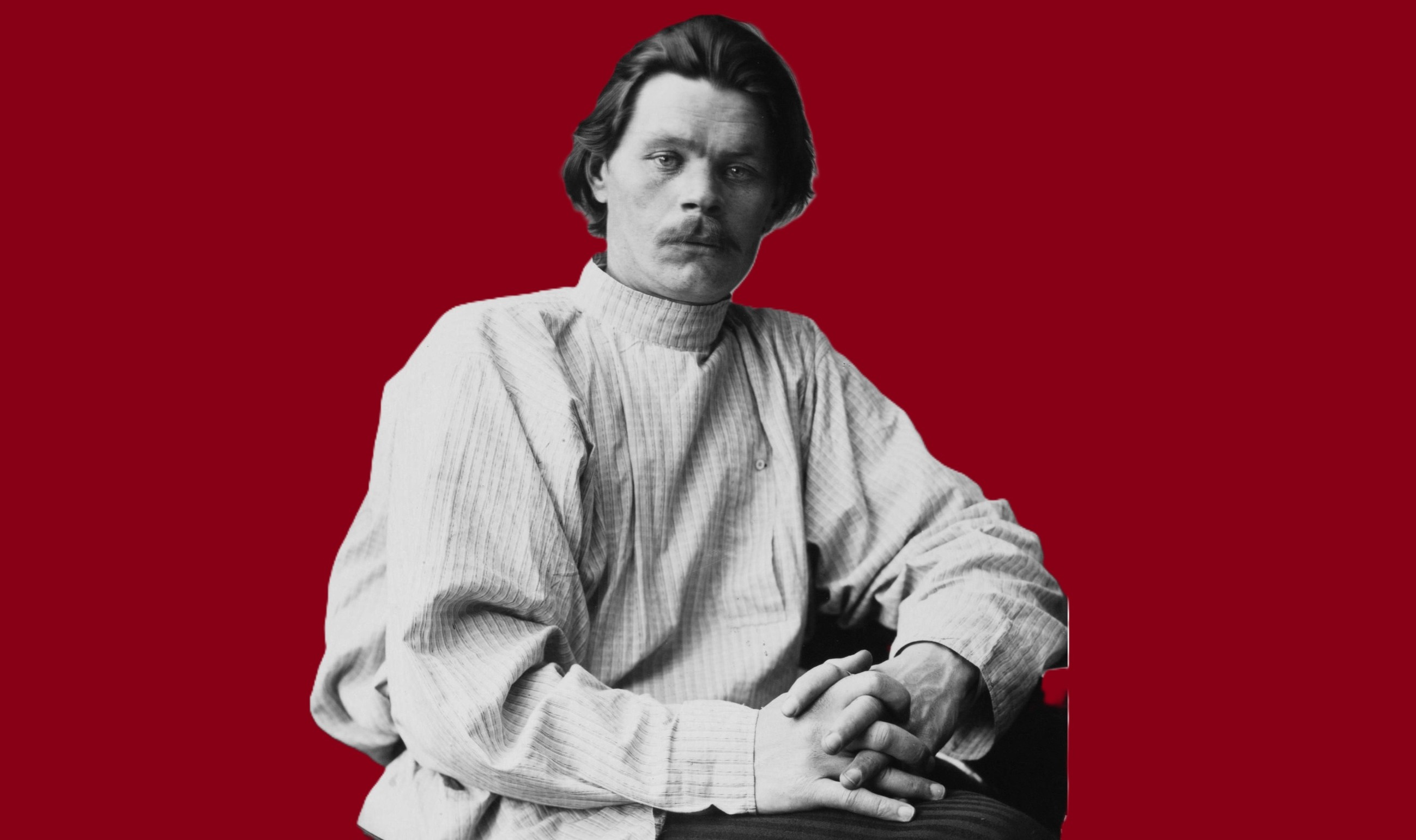
Gorky’s unmistakable voice in this enraged pen-picture of the systemic, everyday, anti-Jewish violence of the Czar’s regime.
‘Russian Tale’ by Maxim Gorky from Class Struggle. Vol. 3 No. 2. May, 1919.
In a certain Czar’s reign, in a certain state, there lived common everyday Jews—for pogrom purposes, slander purposes, and other requirements of the state.
The procedure was as follows: Whenever the indigenous population began to display symptoms of dissatisfaction with their condition, then, from the observation towers of order, the well-born uttered the call, resounding with hope:
“People, approach the seats of power!”
The people approach, and the words of charm begin:
“What is the matter?”
“Your Highness—we have nothing to chew.”
“But you still have teeth?”
“Yes—some—”
“There you are at it again! — Always managing to conceal something from the authorities!”
And if the high-born find that the agitation is due to the presence of teeth, they resort at once to the painless method of removing all those that remain, and if they find that harmonious relations have not by this method been restored, they seductively obtain their information:
“What is it you want?”
“A bit of land would—”
Some, in the savagery of their misconception of the needs of the state, go even further and asseverate:
“We should like some reforms, for instance, that our teeth, ribs, and internal organs might be considered, in a manner of speaking, to be our own, and should not be interfered with by others!”
And then the little officials begin talking to them seriously:
“See here, boys! Why these vain dreams? Man does not live by bread alone—it is written, and it is also written: One man beaten is worth two men not beaten.“
“And would they agree?
“Who?”
“The unbeaten ones?”
“Heavens! Of course! Three years ago, after Ascension, the English came to us and asked: Look here, please, why don’t you take your whole people and carry them to Siberia, and put us in their place; we shall pay you well and promptly, and we shall start in drinking vodka, twenty buckets a year for each man, and anyway…No, we answered them, what for! We are satisfied with our people; they are peaceful, obedient. We know how to get along with them. You see, boys, wouldn’t it be better, instead of getting excited over nothing, to go and beat up the Jews? What are they good for, anyway?”
The native population thinks and thinks and can find no other solution to the question than that proposed by the authorities, and decides:
“Well, come on, friends, let’s first cross ourselves…”
They turn half a hundred houses inside out, beat to death a few of the Hebrew nation, and, having tired of their labors, feel no further desire for reforms, and—order has triumphed!…
In addition to the well-born officials, the native population, and the Jews, there existed in this same state, for the turning aside of discontent and the appeasing of passions, also some good people, who, after each pogrom, having gathered in their full strength, sixteen men, issued to the world their written protest:
“Although the Jews are also Russian subjects, we are nevertheless convinced that it is ill-advised to wipe them out altogether and therefore express in this document—from every point of view our dissatisfaction with the immoderate destruction of living people. (Signed) Humanistov, Hairsplitter, Ivasov, Lipbiter, Lout, Shrieker, Three-eared Ossip, Grokhalo Queen Anne’s Fan, Cyril Methodieff, Logorrhea, Kapitohna Kolymskaya, Drinknobeer, Lt. Col., retired, Attorney Nary Busybody, Pritulikhin, Grisha Futurity (seven years old).”
And so it was after each pogrom, except that Grisha’s age changed, and that Kolimskaya signed for Nary, after his unexpected disappearance from the town of the same name.
From time to time from the provinces came answers to these protests:
“I sympathize and join with you,” telegraphed Razdergayeff from the Backwoods; Zatorkanny of Myamlin also joined in; and from Okoruv, “Samogryzov, etc.” sent their approval, but everyone knew that the “etc.,” had been carefully added to swell the apparent force of the threat, for there was no “etc. in that place outside of Samogryzov.
When the Jews read the protest they wept still more, but once upon a time, one of them, a very cunning man, proposed the following:
“You know what we’ll do? Don’t you? Well, just before the next pogrom, we’ll hide all the paper, and all the pens, and all the ink, and then we’ll see what these sixteen creatures, with their Grisha, will do!”
The people were agreeable—no sooner said than done: they bought up all the paper and all the pens, and hid them, and all the ink they poured into the Black Sea, and they sat and waited.
They were not obliged to wait very long: the word was handed out the pogrom was put through, the Jews lay m the hospitals, and the humanitarians rushed to Petrograd and looked for paper and pens, but there was no paper, there were no pens, except in the bureaus of the well-born bureaucrats, and none could be gotten from there!
“What?!” they were told, “we know what you want these things for! No! you can get along without them!”
Shrieker begged:
“How can we get along without them?”
“Well, we’ve read enough of your protests, find some way yourselves!”
Grisha (who has now attained the age of forty-three) cried:
“I bish to dodge a plotest!” and he began to weep.
What should they write on? Queen Anne’s Fan darkly suggested:
“On the brick walls along the streets!”
But there are no brick walls in old St. Petersburg, only wrought-iron fences. So they went out to the suburbs, and found an old stone wall, and as Humanistov had just finished executing the first character in chalk, a policeman appeared as if from the clouds and began addressing him seriously:
“What do you call this? We lecture little children when they write things in this way, and you seem to be respectable, intelligent people! Oh dear, oh dear, oh dear!”
Of course, he did not understand them, thinking that they were literary men of the type who have written 1001 articles, but they became embarrassed and decided to go straight home.
So one pogrom remained unprotested, and the humanitarians remained without their satisfaction.
Persons acquainted with racial psychology rightly assert that the Jews are a cunning people!
The Class Struggle and The Socialist Publication Society produced some of the earliest US versions of the revolutionary texts of First World War and the upheavals that followed. A project of Louis Fraina’s, the Society also published The Class Struggle. The Class Struggle is considered the first pro-Bolshevik journal in the United States and began in the aftermath of Russia’s February Revolution. A bi-monthly published between May 1917 and November 1919 in New York City by the Socialist Publication Society, its original editors were Ludwig Lore, Louis B. Boudin, and Louis C. Fraina. The Class Struggle became the primary English-language paper of the Socialist Party’s left wing and emerging Communist movement. Its last issue was published by the Communist Labor Party of America. ‘In the two years of its existence thus far, this magazine has presented the best interpretations of world events from the pens of American and Foreign Socialists. Among those who have contributed articles to its pages are: Nikolai Lenin, Leon Trotzky, Franz Mehring, Karl Liebknecht, Rosa Luxemburg, Lunacharsky, Bukharin, Hoglund, Karl Island, Friedrich Adler, and many others. The pages of this magazine will continue to print only the best and most class-conscious socialist material, and should be read by all who wish to be in contact with the living thought of the most uncompromising section of the Socialist Party.’
PDF of full issue: https://www.marxists.org/history/usa/pubs/class-struggle/v3n2may1919.pdf#page=21
 Revolution's Newsstand