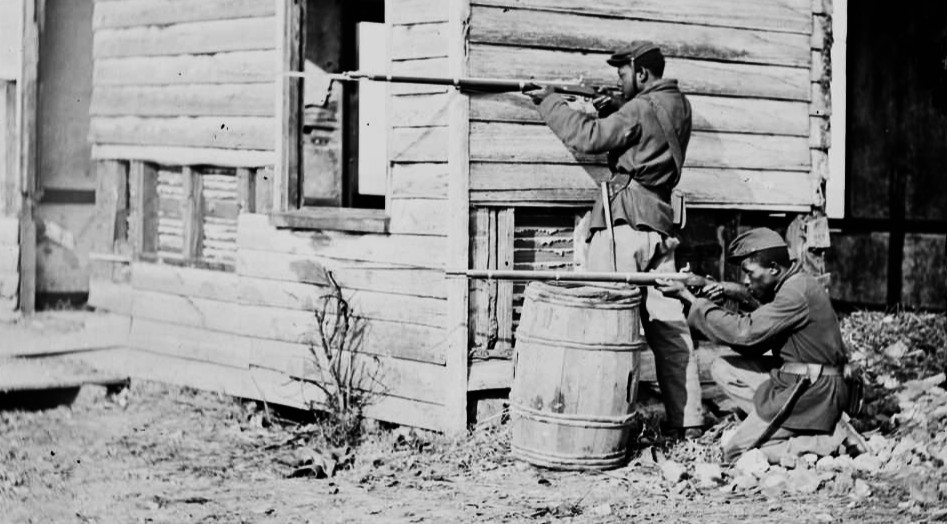
Though very much influenced by the overly-deterministic, vulgar economy of Charles Beard and Richard Ely, Justus Ebert’s accounting for the ending of chattel slavery in the United States is far better than most of his ‘Marxist’ peers, centering as he does the work and ideas of radical abolitionists in creating political conditions and perspectives that made emancipation possible. In doing so he draws a direct parallel between the Socialist of today and abolitionist of yesterday.
‘Slavery, Abolition, and Emancipation’ by Justus Ebert from The Weekly People. Vol.15 No. 36. December 2, 1905.
The approaching centenary of the birth of William Lloyd Garrison, the famous abolitionist, is likely to be something more than the occasion for the celebration of his life and works: it will give stimulus to a re-examination of the causes leading to emancipation. This is well, for the prevailing opinion regarding these causes are mainly ideological and, as such, disregard material factors. They proceed on the theory that Slavery was abolished from moral and intellectual motives, without questioning whence these took their rise and striving to determine whether or not they were forced into prominence by the economic growth of the country, which made the predominance or abolition of Slavery, a matter of paramount importance to the country’s future welfare.
Of the noble disinterestedness and sterling qualities of the abolitionists it is futile to attempt a disparagement. They were good men and women. They made precept synonymous with practice, setting free their own slaves without remuneration and providing them with the means to secure a start in their new condition. Morally and mentally far in advance of their contemporaries, they suffered the penalty thereof, as do all their kind in all ages and movements, in ostracism and martyrdom. They know not expediency, which, when permitted to infect them, palsies all great causes. The constitutionality, sacredness or antiquity of Slavery did not protect it from their hatred and wrath; nor did the cry of “confiscation” stay their efforts to destroy the institution. On the contrary, they condemned and exposed the first for what they are, i.e., the sophistical props of monstrous wrong; and declared the emancipation of the slave without compensation to his master “is not wronging the master, but righting the slave, restoring him to himself.” Slavery is robbery; emancipation, restitution.
The abolitionists had no mental cobwebs to hide from their prophetic foresight, the inherent national dangers of Slavery. To them, Slavery was “a most Atrocious villainy”, “a flagrant robbery of the inalienable rights of man”, an abomination in the eyes of God and man, that nothing could justify or extenuate. Truth will prevail even though the heavens fall. And so Slavery had to be wiped out even if the nation perish. And if it were not out, awful disaster would eventually result–a prediction amply verified by the Civil War.
The abolitionists called a spade a spade, and, for the benefit of those whose moral turpitude endeavored to mistake the implement for a priceless jewel, they accentuated the fact as strongly as possible. Garrison was the foremost man of this outspoken, Spartan band–its organizer and leader from the early thirties down to the close of the Civil War, more than three decades after. A keen, rugged, bold and vigorous man, thoroughly imbued with his great cause, he cursed Slavery with the merciless irony, cohesive logic, violent dogmatism, relentless opposition, and dramatic intensity, that constitute the hallmark of strong convictions, great men and epoch-making movements.
The high moral and intellectual stand taken by Garrisonian abolitionists was neither peculiar or accidental. It was a revival of anti-slavery sentiment growing out of the politico-economic conditions and aspirations attending the formation the nation. This sentiment stood first for gradual and peaceful abolition; but later, in Garrison’s times, under the pressure of new conditions, evolved into immediate and forceful emancipation. No longer is the theory of the independent growth of this country entertained. It is now recognized that this nation is but the continuation of the great social movements that had their origin in Europe. French and Puritan bourgeois Republicanism and Capitalism, as opposed to medieval Monarchy and Feudalism, rocked the cradle of the United States. The new born was their legitimate descendant. Under the circumstances, the leading elements of the nation were bound to be at war with slavery, which, antedating Feudalism, as even worse than it. Vice verza, slavery was bound to be at war with it. John Randolph, the eloquent representative of Slavery, speaking in Congress on December 1811, execrated the French Revolution for its impressive effort in clanging the composition and character of the nation, by instilling in greater aspirations for equality than ever possessed before. He referred to se effects as “the foundations of the [word missing] deep of abomination” whose [letters missing]ge “even the poor slaves did not aspire to. The French Revolution has polluted even them.” On the part of oncoming Capitalism, Jefferson contemplated the retention and extension of Slavery with a troubled brow. So did the sagacious Franklin, and Jay, and many other leading men, who, scanning the future of the nation in the light of its development, foresaw “the irrepressible conflict” between Slavery and “Free Labor” long before Seward proclaimed it.
It was in line with this development–a development that broke down the ownership of man in favor of his mastery through the means by which he lives–that the North, growing in agriculture, commerce, capital and manufacture, sloughed off Slavery, as inefficient, wasteful, and in no wise as humane, productive or progressive as “free labor.” It was under these favorable conditions that the first abolition societies were established in the middle and some of the Southern States–where the leaven of Capitalism was also at work. Aided by the material development thus described they were on the high road to success when two things happened, one economic, the other political, to give renewed strength and power to Slavery, and change the course of American evolution from peaceful, gradual abolition to one of violent emancipation.
The economic event of such great import was the invention of the cotton gin by Eli Whitney. Without the gin a slave could only clean a pound of cotton a day; with it, a thousand pounds, thus increasing his productive capacity a thousandfold. The result was a revolution. Immediately cotton growing and manufacture received a great impetus. Southern lands and slaves began to double, treble, quadruple in value. Slave trading, breeding and holding underwent a renaissance, as a result. Moral progress, arising from the depreciation of slave wealth, received a halt. Material interest, formerly acute in behalf of “free labor,” now stimulated by the appreciation of slave values, asserted itself more strongly in behalf of Slavery–a great change set in!
The moral effects of the invention of the cotton gin on Slavery, is told by Henry Ward Beecher1, in his own inimitable style, in his “English Speeches on the American Rebellion,” thusly:
“Slaves that before had been worth from 300 to 400 dollars, began to be worth 600 dollars. That knocked away one third of the adherence to the moral law. Then they became worth 700 dollars, and half the law went; then 800 or 900 dollars, and then there was no such thing as moral law; then, 1000 to 1200 dollars, and slavery became one of the beatitudes.” (Cheers and laughter.)
This moral revolution–this beatification of Slavery–affected a considerable portion of the North, which profited from its commercial and financial relations with the South.
The political event of such serious, consequence was the raising of revenue by means of a “poll” or head tax. Taxation and representation went together. In the matter of assessments five slaves counted as three men in slave states: swelled their assessments and their representation. The North consented, for in proportion as the slave states swelled their assessments and representation they were compelled to contribute to the national exchequer. When, as was the case later, federal revenue was raised by tariff instead of a “poll” tax, the representatives were still chosen in the same way, five slaves still counted for three men. This gave the South a great advantage, for while the representatives of the North represented men only, those of the South represented both men and property. In this way, the institutions of the country were dominated by the South. The slave owners dictated the political policy of the nation.
Thus it was that, in Garrison’s time, Slavery was not only an ancient social system, at war with its more progressive and modern contemporary, but also a vicious recrudescence in American development itself. As such, there were two-fold reasons for endeavoring to stamp it out before greater injury could result; and the enlightened, far-seeing self-interest of Capitalism was attempting to do so an effort which was most radically reflected in the activities of the abolitionists, who, under the stress of the new conditions, spurned gradual and compensatory, for immediate and confiscatory, abolition.
It is needless to say that the abolitionists did not abolish Slavery. But they contributed greatly to that end by their unflagging opposition to, and well-organized agitation against it. They did a great work in preparing the way for emancipation, so that when the Civil War made the latter possible, the public mind accepted it as the logical solution of the great problem of Slavery.
Abolition was affected by the forces of the capitalist revolution, aided by the counter-revolution of Slavery. This revolution and counter revolution found expression, on the one hand, in the desire to limit and expand Slavery; on the other, to expand and limit capitalism; that is, Slavery and “Free Labor”, each sought to grow at the expense of the other. The result was an endless conflict of interest, ending, eventually, in secession, with its crushing defeat.
The reasons for expansion on the part of Slavery, were, as in the case of its revival, twofold–one economic, the other political. Slavery needed new lands. This was caused by the increasing demand for cotton, due to the cotton gin and cotton manufacture; and the impoverishment of the soil which was often exhausted by the system of extensive agriculture employed. Slavery needed increased political power. The slave owners instinctively recognized that the preservation of property in slaves dependent on their continued political dominance. They accordingly sought to conquer new areas and convert them into slave states, that is states which gave a constitutional sanction to Slavery, and were controlled by its policies. In pursuit of this aim, Slavery caused, among other events, the Mexican war and the annexation of Texas. It cast also longing eyes on Cuba, and looked in the direction of South America for future conquests. Slavery, under the pressure of its inherent necessities, labored for the building of a great “slave empire.”
It was not until Slavery, circumscribed by its southern territorial limitations, began to move West and Northwest that it collided most forcibly with “free Labor”, or Capitalism. Then it began to threaten the latter’s development in a manner that meant restriction and death. For, like Slavery, only in a more pregnant degree, Capitalism had been expanding, too. It was no longer pronouncedly New England. Immigration, repelled from the South by its peculiar institutions–which encouraged increase of population mainly by slave-breeding, and treated with suspicion and contempt all the whites not of the slaveholding aristocracy. Immigration gave Capitalism both the impetus and the recruits necessary for its expansion. Thus it came about that, aided successively by the national turnpike, the canal and the railroad, Capitalism crossed the Alleghenies, and pushed westward to the Paci fic Coast and northward to Alaska. Diversified agriculture was developed, and local markets were extended into interstate ones. Machinery passed from the horse and water into the steam power stage; and industry, gradually losing Its small individual character, laid, under corporate ownership and control, the foundation for the system of factory and wage-slave labor that we now see fully erected. Capitalism, in contradiction to Slavery, strove for free states, that is, states in which the principle of “free labor” was the basis of the constitution. It sought to extend the domain of “free labor” in order to encompass the political overthrow and limitation of Slavery, through which, it was believed, final abolition would be possible.
Thus did these two social forces, based on conflicting methods of production and distribution, and the property rights and political institutions arising therefrom, struggle for ascendancy.
Of course, the struggle was not merely economic and political: it was also, by way of reflex, moral and intellectual. The two systems sought to justify themselves before the bar of mankind, in order that the support of civilization might be theirs, and victory perch on their banners, in consequence thereof. It was in this respect that the abolitionists did the most splendid work, blazing the way and stirring the nation to a sense of its perfidy in sustaining Slavery.
It was an acrimonious debate that was thus precipitated–a debate in which both systems were overhauled and submitted to the critical tests of history, economics and morality. For the South, such men as Hammond and Fitzhugh, argued, that human progress was impossible without Slavery; that, call it with whatever name we will, it must form the basis of Society in which Labor is the main essential. With them, as with Stephens, Slavery was more than “the cornerstone of the Confederacy”–it was the cornerstone of civilization. If removed, the whole structure collapsed. Hammond contended: “In all societies there must be a class to do the mean duties, to perform the drudgery of life. Such a class you must have, or you would not have that other class that leads to progress, refinement and civilization. It constitutes the very mudsills of society and of political government, and you might as well attempt to build a house in the air, as to build either the one or the other except on mudsills.” Fitzhugh argued: “Your capital will not bring you an income of a gent nor supply your wants without labor. Labor is indispensable to give value to your property, and if you owned everything else, and did not own Labor you would be poor.”
These arguments were met by the defenders of Capitalism by an appeal to material results and the class instincts of the workingman. Hear Henry Ward Beecher once more: “The American question is the WORKINGMAN’S QUESTION, all over the world! the slave master’s doctrine is THAT CAPITAL SHOULD OWN LABOR–that the eployer should own the employed. Northern doctrine and Northern practice is that the laborer should be free, intelligent, clothed with full citizen’s rights, with a share of the political duties and rights…There is more real wealth in the simple little state of Massachusetts than in any ten Southern states. In the free states everything flourishes, in the slave states everything languishes. I point to the North and say, Behold the testimony of Providence for free labor! I point to the South and say, Behold the legitimate results of slave-labor!”
Beecher might also have referred to the awful cruelties perpetrated upon the Lowell mill operatives and said “Behold the testimony of Providence for free labor!” But despite his cant and hypocrisy, he made clear that machine industry is a factor that the “mudsill” philosophers and economists overlook–that with it properly employed both the mudsills and the masters–all humanity–can achieve culture–civilization acquires a new cornerstone!
Both Hammond and Fitzhugh paid their compliments to the hypocrisy of Capitalism.
Hammond argued: “Among the innovations of modern times, following ‘the decay of villeinage’, has been the creation of a new system of slavery. The primitive and patriarchical, which may also be called the sacred and natural system, in which the laborer is under the personal control of a fellow being endowed with the sentiments and sympathies of humanity, exists among us. It has been almost everywhere else superseded by the modern ARTIFICIAL MONEY-POWER SYSTEM, in which man–his thews and sinews, his hopes and affections, his very being, are all subjected to the domain of Capital–a monster without heart-cold, stern, arithmetical–sticking to the bond-taking ever the pound of flesh-working up human life into engines, and retailing it out by the weight and measure.” Fitzhugh contended that “Property in man is what all are struggling to obtain. Why should they not be obliged to take care of man, their property, as they do their horses and hounds, their cattle and their sheep? Now, under the delusive name of liberty, you work him from morn to dewy eve–form infancy to old age–then turn him out to starve. You treat your horses and hounds better. Capital is a cruel master; the free slave trade, the commonest, yet the cruellest of trades.”
The answer to such arguments came in Mrs. Harriet Beecher Stowe’s “Uncle Tom’s Cabin,” which showed the atrocities committed under Slavery to be far more excessive than those of embryonic Capitalism. Wendell Phillips also answered them, when he said: “The North thinks,–can appreciate argument, is the nineteenth century–hardly any struggle left in it but that between the working class and the money kings. The South dreams,–it is the thirteenth century, baron and serf,–noble and slave, Jack Cade and Wat Tyler loom over its horizon, and the serf, rising, calls for another Thiery to record his struggle.”2 While Olmstead and a host of others, proved by an overwhelming array of facts that Slavery, instead of promoting culture and kindness, throttles it, not only among the blacks, but the whites as well.
Thus the debate, went on! It was well rounded out when Christy, proclaiming defiantly that “Cotton is King!”–the basis of the world’s commerce, dictating the financial course of England–and as such could not be overthrown, was answered by Helper, in his “Impending Crisis,” which demonstrated the immense superiority and possibilities of Capitalist agriculture and manufacture over Slavery.
This debate left no doubt that Slavery was inferior to Capitalism. Slavery was limited by its own necessities. These, requiring traffic in, and the exploitation of a low order of labor, made it cruel and oppressive, thus hampering its own productive and consumptive abilities; and through them, its ultimate triumph; for, with such shortcomings, it could not compete successfully with the superior material wealth and culture of Capitalism. Capitalism, on the other hand, knew no such restrictions. It was not tied by labor nor absolutely dependent on it. With “free labor” and machinery at its command, it possessed productivity and unlimited possibilities of expansion. Its people were more aspirational, always growing in desires and achievements, and, as such, more progressive–which is at necessary adjunct to morality. Only Reaction and Retrogression are immoral. Slavery proved that!
The aggressions of Slavery, the growth of Capitalism, and the debate attending the conflict arising from both, waxed stronger from year to year. While there were compromises, such as that of Missouri, these only made matters worse. There could be no quarter given in such a conflict. Thus, when it was proposed to make Kansas a slave state, the crisis was already reached. Capitalism–the North–rallied as it never did before–the extension of slavery must be stopped! Kansas was flooded with the friends of “free labor” and Capitalism won! Slavery was hit a blow that the election of Lincoln but emphasized–it had reached the end of its tether: it could go no further West nor North–it would have to stifle in its own limitations and be overborne by Capitalism. With the ascendancy of Capitalism, the political and economic doom of Slavery stared the slave oligarchy in the face. Consequently, when Lincoln took his office, Slavery was forced to take the fatal step that ended it–it revolted–seceded on the plea of state’s right–and was crushed! Capitalism had to crush Slavery to save itself. To permit state’s rights was to permit interminable border and tariff wars–perpetual revolution and strife–and invite absorption by a united and aggressive foreign nation. The Union must be made one and indivisible!! It was so made: and in the making came the opportunity for emancipation–the cancer spot was cut out–the chattel slave was freed! Garrison, vindicated by events, amid rejoicing, disbanded the Abolitionist Society, its aim accomplished!
In the language of the peerless Wendell Phillips, there still remains the struggle between “the working class and the money kings”–the capitalists–the struggle between two modern systems and their interested classes–the struggle between Capitalism and Socialism! Capitalism, with its wage slavery, must be abolished! It, too, has its abolitionists–the Socialist Labor Party.
1. “The English Speeches on the American Rebellion” of Henry Ward Beecher, should be read by every Socialist. Theologian and patriot though he was, Beecher understood the conflict of economic interests underlying the question of slavery. Though he employed both the theological and patriotic argument well, be used the capitalist argument most effectively. Thus was especially the case in his Liverpool speech, where he appealed to the material interests of its manufacturers, in search of markets for their goods, by showing them that Slavery could not furnish the latter in as great proportions as could “free labor” The friends of the South met this argument with demonstrations of hostility. They realized that it was a most vital one to them, for no appeal to “our common Anglo-Saxon origin and our common Father” could affect the Liverpool capitalists in quite the same way.
2. Philipps here refers to what John Randolph in the speech above quoted, called “an insurrection of the slaves.” The South lived in fear of such an insurrection; so much so that, Randolph tells us, “the night-bell never tolls for fire in Richmond, that the mother does not hug her infant more closely to her bosom.” This will explain the detestation the South had for John Brown, who labored to promote the freedom of the slave, on the theory that “he who would be free must himself strike the blow.”
JUSTUS EBERT.
New York Labor News Company was the publishing house of the Socialist Labor Party and their paper The People. The People was the official paper of the Socialist Labor Party of America (SLP), established in New York City in 1891 as a weekly. The New York SLP, and The People, were dominated Daniel De Leon and his supporters, the dominant ideological leader of the SLP from the 1890s until the time of his death. The People became a daily in 1900. It’s first editor was the French socialist Lucien Sanial who was quickly replaced by De Leon who held the position until his death in 1914. Morris Hillquit and Henry Slobodin, future leaders of the Socialist Party of America were writers before their split from the SLP in 1899. For a while there were two SLPs and two Peoples, requiring a legal case to determine ownership. Eventual the anti-De Leonist produced what would become the New York Call and became the Social Democratic, later Socialist, Party. The De Leonist The People continued publishing until 2008.
PDF of full issue: https://www.marxists.org/history/usa/pubs/the-people-slp/051202-weeklypeople-v15n36.pdf

