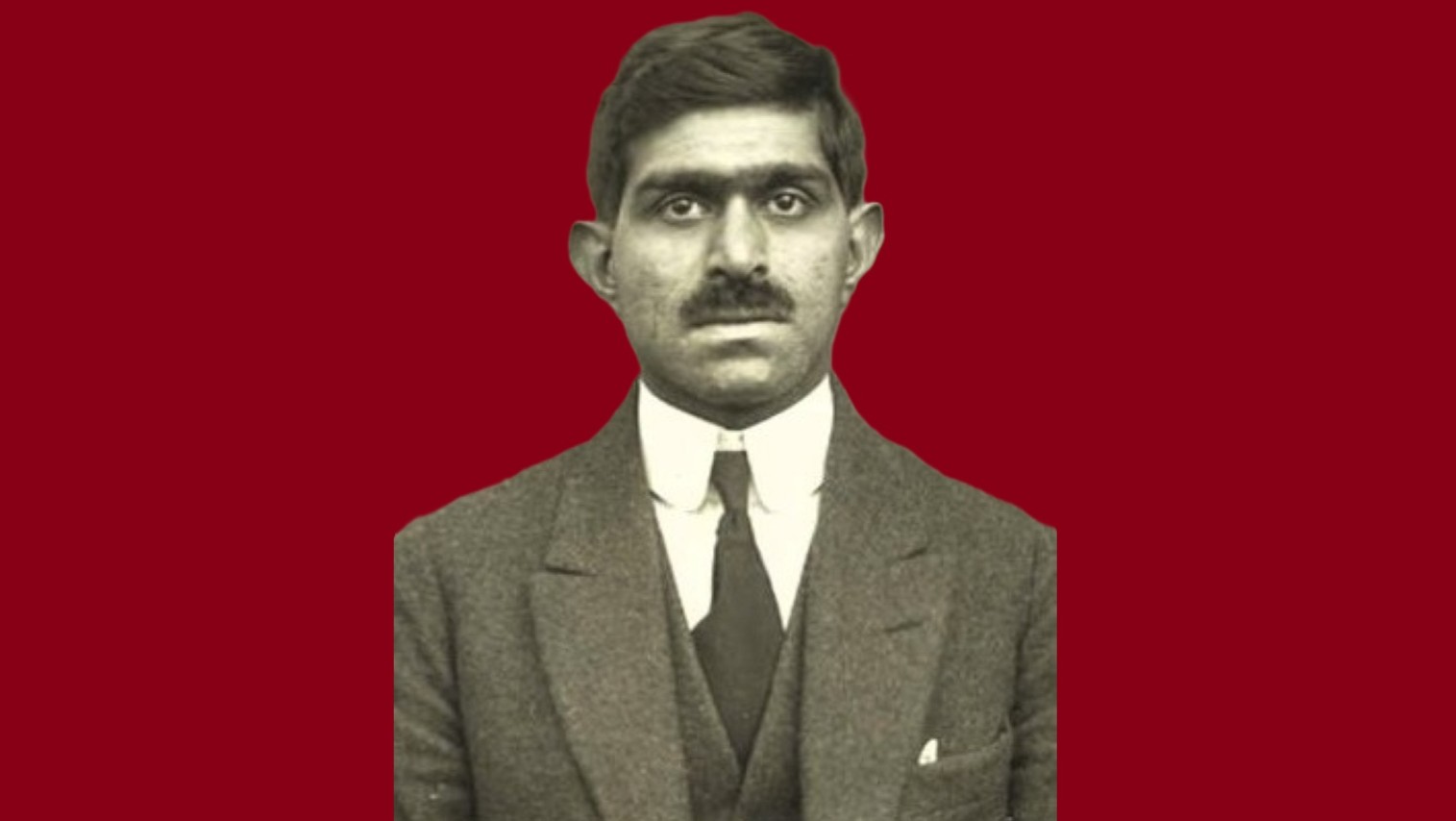
Chattopadhyaya on the events of 1930 in British-ruled Burma, where the nationalist and workers movements conflict as an immigrant Indian dockworkers strike leads to riots and hundreds of deaths.
‘The Background of the Revolt in Rangoon’ by Virendranath Chattopadhyaya from International Press Correspondence. Vol. 10 No. 28. June 12, 1930.
Burma, which had been an independent country until 45 years ago, was finally annexed by British imperialism in 1885 after the “successful” conclusion of the Third Burmese War, one of the most disgraceful acts of aggression even in the criminal history of the British Empire. The first two wars (1852-1856) had deprived Burma of important provinces bordering on India, but the great Indian revolt of 1858 prevented further invasions, and the British robbers had to wait until India had been “pacified” and disarmed. Since its annexation Burma has been a province of India. It is governed from Delhi and Simla, it pays an annually large contribution to the Indian Treasury, it is subjected to laws enacted by the so-called Indian Legislative Assembly in Delhi, for the benefit of the British imperialists and of their agents, the Indian landlords and bourgeoisie.
Of this province of Burma, which is exploited solely by British capitalists, the capital is Rangoon. Until a few years ago it was only a commercial port of considerable importance to British merchants and the British shipping companies for the export trade in rice, timber, silver, tin, petroleum, etc., in which the country has enormous resources. But it is now becoming also a strategic centre of first-rate importance. It is being developed into a naval base which is to be subsidiary to the Singapore base. It is, along with Halfa, Baghdad and Karachi, one of the important bases on the air-routes of the Empire. It is to be provided shortly with a meteorological forecast centre and observatory for the needs of military and civil aviation, the other centres being Quetta, Peshawar, Karachi and Delhi, all cities of military and political importance.
British imperialist policy in the exploitation of Burma has been the same as in East Africa. For forty years it has been robbed of its minerals and foodstuffs by British capitalists with the help of cheap labour imported chiefly from South India. Some 350,000 Indian workers are employed annually in the rice-fields, mines, docks and industries. In addition, the educated Indian is pushing the Burman out of the banks, commercial companies, schools, colleges and Government service. Indian lawyers, medical men, journalists and engineers occupy important positions in Burma. There has therefore arisen a strong anti-Indian feeling among all classes, the Indian being regarded as a foreigner and a parasite, who has come to exploit the Burmese people in the wake of British imperialism. Among the landowners, the commercial bourgeoisie and the upper strata of the intelligentzia there has therefore arisen a demand for separation from India–a demand that coincides today with British interests in Burma.
British imperialism finds it necessary now to separate Burma administratively and politically, in order to isolate it from the revolutionary movement in India, and to use the finances of Burma, (seven-tenths of which has hitherto gone into the Indian Treasury) for “developing” Burma, that is, for constructing new railways, docks, public works, etc., which mean a new source of enormous profits for British heavy industry. The demand for “separation” is therefore endorsed by the British Governor of Burma, the arch-reactionary Sir Charles Innes, supported by the commercial and shipping interests in Rangoon. And the Government has been encouraging the formation of various political organisations–the “People’s Party”, the “Separation League”, “Burma for the Burmans League”–which demand immediate separation from India, but a “free” place for Burma within the Empire, while the party of the peasants, small farmers and petty bourgeoisie, the Baho G.C.B.A. (General Council of All Burmese Associations) demands complete independence for Burma, but only after India and Burma have jointly overthrown British imperialism.
The main centre of this struggle between the broad masses on the one hand and British imperialism aided by the Burmese landowners and bourgeoisie on the other, is naturally Rangoon. It is the visible centre of imperialist exploitation. But it is also one of the largest immigration ports in the world, 90% of the imported labour being from India. Owing to the rapid increase in the rate of immigration, which in the eyes of Burniese nationalists has “assumed alarming proportions” Rangoon has already become practically an Indian town. The “New Burma” of Rangoon, the organ of the anti-Indian separationists, raises the alarm in its issue of April 6th, in which it says that “a similar fate awaits some of the other town and villages in Burma” and regards the “ever growing number of Indian immigrants as a terrible menace to the nations”.
We have therefore two forces at work in Rangoon and Burma generally–a strong anti-imperialist movement among the working masses the peasantry and the radicalised intellectuals, and an anti-Indian movement arising out of Indian immigration supported by the British Government. The position is in some respects comparable to the Arab feeling against the Zionists.
It is with this background that the recent Rangoon must be judged. On February 15th and 20th, the Major of Calcutta, J.M. Sen Gupta, a follower of Gandhi’s events in doctrine of non-violence, delivered three lectures in Rangoon in which he denounced the annexation of Burma as sheer robbery, and called upon the Burmese to join the campaign of nonviolent civil disobedience. He was arrested by the Burmese Government and after a short trial which took place on March 20th, he was sentenced for sedition to ten day’s imprisonment. During the trial thousands surrounded the court and demonstrated, but the police provoked the demonstrators by throwing bricks and stones at them from behind the shelter of buildings. This led to retaliation, and in the violent conflict that ensued, several were killed and a large number wounded. On March 25th a mass meeting of 3,000 Burmans and Indians was held, to protest against this imperialist terror. Several anti-imperialist demonstrations took place during the next few weeks, marked by the same conflicts with the police.
The anti-imperialist temper of the masses in Rangoon was further enhanced by the events in India during the month of April. Nationalist leaders created an atmosphere of unrest by pointing out that the currency notes of the Government of India would become useless if Burma was separated from India (as the Government intended), and advised to cash the notes as quickly as possible in Rangoon into gold or silver. The rapid and steady fall of rice prices has led to acute suffering among the peasants and to unemployment among the commercial employees. The agitation for the abolition of the highly oppressive capitation taxes, resulted in meetings and demonstrations with the usual exhibition of police hooliganism. The earthquake on May 5th which destroyed the town of Pegu, sixty miles from Rangoon, and which caused serious losses in Rangoon itself, resulting in the partial or total destruction of hundreds of houses, created further unrest and bitterness against the Government. It was declared by the nationalists that the Government showed bureaucratic delay in calling out troops to help the victims of the earthquake, while no time was lost by the Government in dispatching police and military to shoot down the masses engaged in demonstrating for their freedom.
In this atmosphere of anti-imperialist excitement, the Indian dock workers known as Coringhis, mostly recruited from South India, struck work on May 25th, and dozens of ships lay idle in the Rangoon harbour. The agitation of the Burmese separationists had worked up the Burmese workers against the Indians, and attempts to break the strike resulted in bloody conflicts in which the police fired upon the workers, killing hundreds and wounding over a thousand. The infuriated masses stormed the police prison and set fire to it after having liberated the prisoners. Rangoon is under martial law and the city is occupied by the military. 4,000 Indian dockers have returned to India, and of the 1,600 who were imported to break this strike, 1200 refused to do so and proposed to return to India.
That these riots were engineered by interested agencies and do not represent the actual sentiment of the workers, is proved by the solidarity actually shown by the Burmese working class families. Six hundred Indian workers were kept by the latter in the Kemmerdine suburb for three days, while Indian women and children were removed by the Burmese themselves to places of safety.
The strike at the docks is still unbroken in spite of imperialist intrigues to bring about racial conflicts, and the port is at a complete standstill. But the imperialist shipping companies are suffering heavy losses and the Government has therefore appointed a “conciliation board”. There is also strike among the Indian conservancy workers employed under the Rangoon Corporation, who refuse to return to work in spite of the Government’s promises and assurances.
International Press Correspondence, widely known as”Inprecorr” was published by the Executive Committee of the Communist International (ECCI) regularly in German and English, occasionally in many other languages, beginning in 1921 and lasting in English until 1938. Inprecorr’s role was to supply translated articles to the English-speaking press of the International from the Comintern’s different sections, as well as news and statements from the ECCI. Many ‘Daily Worker’ and ‘Communist’ articles originated in Inprecorr, and it also published articles by American comrades for use in other countries. It was published at least weekly, and often thrice weekly.
PDF of full issue: https://www.marxists.org/history/international/comintern/inprecor/1930/v10n28-jun-12-1930-inprecor-Virginia.pdf

