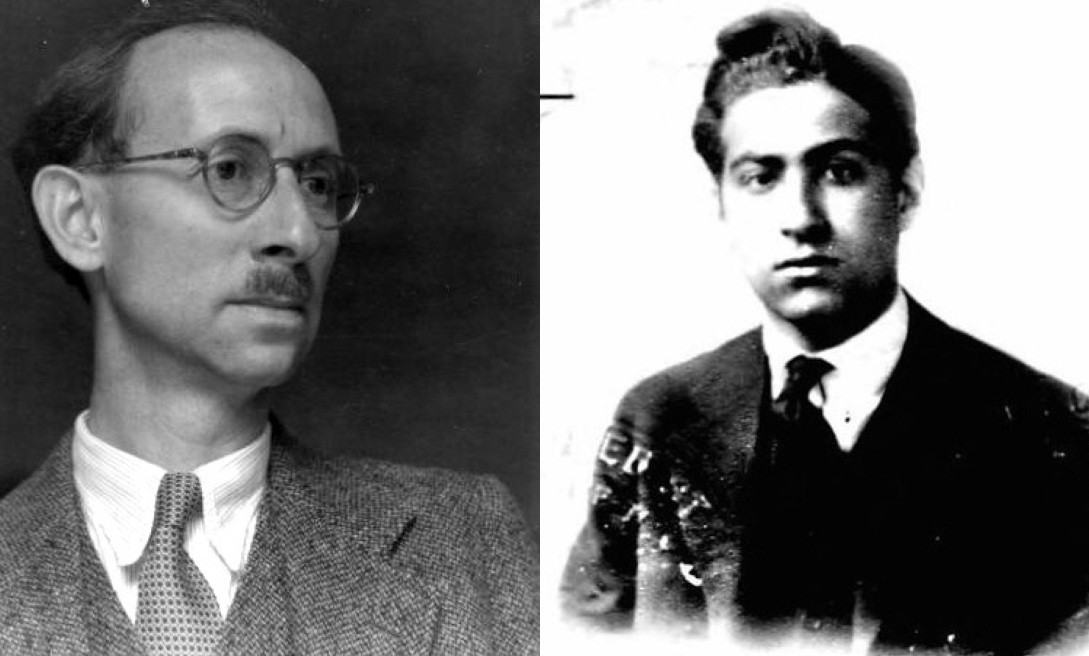
Two leading, and rival, voices of the early Communist Party’s anti-imperialist work, Bertram Wolfe and Manuel Gomez, debate ‘super-profits’ during a larger debate around imperialism that was a part of the 1920s factional struggles. That decade saw U.S. imperialism and its economy stabilized greatly expand, as a key question became the impact of empire on the objective and subject condition of U.S. workers and the subsequent need for moderations of Communist policy. As a leading member of the ‘Foster-Cannon-Bittelman’ ‘left’ faction Gomez (born Charles Phillips, he took the name Gomez while living in Mexico on the run from World War One draft evasion) would became the central figure of the All-American Anti-Imperialist League, while Wolfe, a member of the ‘right’ ‘Ruthenberg-Lovestone-Pepper’ faction was a founding member of the Mexican Communist Party, who spoke for Latin American affairs as a member of the Comintern’s Executive Committee. While there was much to lament in the 1920s faction fights that would hobble the Communist movement, some of the debates engaged in were exceptionally rich; serious comrades doing serious work with real consequences.
‘An Un-Leninist Analysis of Imperialism’ by Bertram D. Wolfe from The Daily Worker. Vol. 2 No. 191. August 22, 1925.
(Critique of Gomez’s Article, “Labor and Empire,” in the July Workers Monthly.)
The article, “Labor and Empire,” written by Manuel Gomez in the Anti-Imperialist (July, 1925) Number of the WORKERS MONTHLY, purports to contain a theoretical analysis of the historic background of imperialism, its economics and its political Implications for the working class of the imperialist nations, and for the exploited or subject peoples. The article in question is replete with errors of un-Marxian and un-Leninist nature; in fact, all of its basic theoretical propositions are partly or wholly incorrect.
This is all the graver because the magazine in which it appears is a Communist (and hence Marxist-Leninist) organ; because its author is the secretary of the American section of the All-America Anti-Imperialist League and, as such, his words carry more weight and responsibility than would those of an individual of lesser official importance or activity; and finally, because it is the only article that seeks to make a general analysis of the theoretical basis of imperialism in the anti-imperialist number of a would-be Marxist-Leninist organ and therefore its errors cannot be left uncorrected. Nor would a mere “correct” analysis in the August issue, without reference to the article of Gomez, be adequate, as that would leave undisturbed the errors already absorbed in the minds of many readers. Moreover, that is not the way that a Communist organ corrects the errors committed in one of its articles.
So much by way of explanation. Now to an analysis of the more important errors, not in the order of their importance, but rather in the order of their statement in the article.
“Historic Background of Imperialism.”
Under this heading the article begins with the remarkable statement: American workers might have already thrown off the whole system of wage slavery if it were not for the appearance of imperialism.” Such speculations are un-Marxist and futile. Marx showed that capitalism leads through accumulation to concentration and centralization of capital. This leads inevitably to monopoly capitalism, which is the primary economic basis of imperialism. Thus Comrade Gomez’s “if” partakes of scholastic medieval speculation and not of Marxism. Moreover, there is no justification for the conclusion, even allowing the premises. Countries that have not “developed monopolistic finance capitalism are “backward countries.” On what ground does Comrade Gomez assume that non-imperialist backward countries imply a victory of the proletariat? Moreover, America, more than any other advanced country, still has, or has had until recently, an expanding home market–but to go further would be to lose one’s self in the very maze of scholastic speculation that Comrade Gomez’s “if” hypothesis implies.
“The Peaceful Period of Capitalism.”
This is Leninist phraseology, but Comrade Gomez gets his dates, or rather, his periods, mixed. The “peaceful period of capitalism” in the United States Gomez dates from 1894 to the world war. This, he adds, is an international phenomenon. In another part of the article he even speaks of the “peaceful period of imperialism (!)” The truth of this “historical” matter is that the peaceful period of capitalism ends precisely where imperialism begins. By the “peaceful” period is meant that period roughly included in the second and third quarters of the nineteenth century when the first wars for capitalist unity were generally at an end (the so-called national wars) and when capitalism was based on the production of consumption commodities as its typical industry, and when liberalism, “free trade,” and Jeremy Bentham” prevailed in economic practice and political theory in the most advanced countries. The classic land of the peaceful free trade, free competition and non-state-intervention period was England. The classic industry textiles. The climax of this period is roughly from 1840 to 1880.
It was a peaceful period because the “struggle for markets” with textile products as the typical export, does not require spheres of influence, colonies, the intervention of states and armies, etc., but merely quantity production, cheapness and good salesmanship. To sell red flannel underwear to equatorial savages, it is not necessary to own the country, to bribe its government, to subsidize a revolution or to pry a colony loose from its mother country by war. A German firm can sell red flannel underwear to naked savages in Madagascar (French colony) if it sends missionaries to convince them of the iniquity of going naked, sends cheaper, brighter-colored underwear and good patient salesmen willing to learn the language and the peculiarities of the natives. As long as free competition continues and “light” or consumption industries such as textiles continue to be the basic ones, there is no great need of colonies, spheres of influence, etc.
“Colonies,” says the imperialistically–minded Disraeli in 1852, “are just millstones around our necks.” From 1840 to 1860 and even later bourgeois politicians of the liberal school were in the saddle and opposed any colonial aggressiveness on the part of England itself, the characteristic colonizing country.
But the last quarter of the nineteenth century is characterized by the change from “light” to “heavy” basic industries–that is to say, from textiles to metallurgy. Also monopoly begins and finally the export of capital itself.
The export of metal products implies the export of capital. It also implies colonies, spheres of influence, control of the governments of backward nations, subsidized revolutions and colonial wars.
A typical form of exported “metal product” is a railway. A railway cannot be sold to an equatorial savage by a salesman and a missionary. It can only be “sold” to a backward country through political influence or control of that country’s government. A railroad, to begin with, runs at a financial loss on the basis of its net returns, above all in a country backward industrially. To make it profitable, the government of the backward country must (1) grant a concession of the right of way (2) an exclusive monopoly to that right of way, eliminating parallel lines as a possibility; and (3) subsidize the venture with land or money grants or grants of natural resources. Finally, it is superfluous to point out that the exporting of the “metal product” called a railway implies the export (investment) of capital as well.
Thus begins the scramble for concessions and spheres of influence, for colonies and protectorates, for governments “friendly to foreigners” and governments friendly exclusively to American or British or German or French capital, and all the other sources of imperialist wars and onslaughts of imperialist nations on backward ones and on each other. This, the warlike period of capitalism, is the imperialist period, and begins with the beginning of monopoly capitalism, and export of capital. In other words, the warlike period of capitalism, in the Leninist sense, begins when Gomez says the peaceful period of capitalism begins. Anyone who fails to take into account this fundamental difference between the textiles and metallurgy, between the export of underwear and the export of metals and dollars, cannot grasp the first essentials of imperialism and the imperialist epoch.
Moreover, it is a contamination with bourgeois pacifist “Hague conference” illusions on the one hand, and with the psychology instilled by imperialist apologists on the other, to believe that the period preceding 1914 (roughly from 1890 to 1914) was a peaceful period. The Hague conferences were only the plaster on the ulcer. The armament race was on, the world war was brooding. It almost broke out in 1905 and again in 1911.
And the so-called “minor” wars, as imperialist apologists would call them, do they count for nothing because they were waged against black and yellow men and not between whites? Naturally, the weak nations were attacked first, but robber imperialism is no less warlike because its victories were easier. Germany, in 1885, seized German East Africa, in 1897 German Southwest Africa, New Guinea, Kamekun and Samoa. In 1899, Kaiu-Chau.
France in 1885 occupied the Congo, in 1895 appropriated Madagascar, in 1904 Morocco (cause of the crisis of 1905 which was of world-war magnitude), in 1913 Syria. America in the same period took Hawaii, while Japan seized Formosa.
If that is not enough evidence of a warlike period for Gomez (and it might be multiplied) how about the Spanish-American war of 1898 for Cuba, Porto Rico, the Philippines and the control of the Caribbean? How about the English-Boer war? The Boxer war of the combined powers against China? The Russo-Japanese war for spheres of influence in Manchuria, Korea and China? The Italo-Turkish war for the possession of Tripoli in 1912? The Algerian Crisis, etc.?
The period of imperialism is the warlike period of capitalism. A failure to grasp this makes the world war a phenomenon without precedent causes, and makes the wars against yellow and brown and black-skinned races no wars at all (or “peaceful” wars). In other words, it is an unconscious reflection of pacifist illusion and imperialist apologetics.
Gomez, in his “historical background” takes the strikes of 1870 to 1894 in the United States as an evidence that up till 1894 there was a warlike period and after 1894 a peaceful period. This, of course, has nothing to do with Leninist analysis of imperialism although Lenin is dragged in and quoted. The strike epidemic in question was due to the world commercial crisis of the period. The relative “class peace” period that followed 1894 (very relative indeed) was caused by the expansion due to monopoly growth and other factors, and I was broken by repeated strike crises of great magnitude. But, I repeat, it is not this kind of “peace” to which the Lenin quotation on “peaceful period” refers.
The Gomez confusion in the article goes so far as to say that “It (the peaceful period when strikes lessened in scope, number and intensity), was purchased at the expense of the backward and undeveloped countries of Asia, Africa and Latin America, through the policy of imperialism.” (!) But enough of the “historic background.”
“Super-profits.”
The second part of the article deals with the economic basis of capitalism, under the heading of “Super-profits.” Here the errors are even graver and in much more elementary things. Marxian economics is turned inside out and upside down.
By “super-profits” Gomez means profits in excess of the average rate of profit. He points out that imperialism yields such excess profits or “super-profits.”
This is essentially correct, and very important. The understanding of the economics of this profit in excess of the average rate, that is yielded by imperialism, is the understanding of the economics of the exploitation of the oppressed peoples. This makes it all the more unfortunate that Gomez’s analysis is incomplete, incorrect and anti-Marxian.
The first source of “super-profit” according to Gomez “results from THE GREATLY INCREASED RATE OF EXPLOITATION AS REFLECTED IN THE COMPOSITION OF THE CAPITAL EMPLOYED, WHICH, IN BACKWARD COUNTRIES, SHOWS MUCH GREATER PROPORTION OF VARIABLE CAPITAL TO CONSTANT.” (Emphasis mine.)
This is, of course, economic nonsense. The rate of exploitation has nothing to do with the composition of capital, although vulgar economy at times tries to calculate the rate of exploitation on the total capital invested. The rate of exploitation is the proportion of the unpaid labor to the paid labor performed by a worker. The proportion of capital invested as constant or variable capital does not enter into its calculation.
The essence of imperialist exploitation is found in the use of a cheap and docile labor supply, a low living standard among the backward people, inhumanly long hours, inhumanly low wages, dispossessing of the backward peoples from the land, and forced labor. All of these, which form the essence of imperialist exploitation, make it the brutal thing it is and explain the revolt of China, Morocco, etc., from the imperialist yoke, are not mentioned in the four enumerated points. Some of the other points are incorrectly stated, and other important factors are omitted, but this article will be prolonged unduly if I analyze the economic section of Gomez’s article any further.
“Workers, Subject Peoples and the Revolution.”
Passing over other errors of a minor nature, I jump to the end of the article. The last section is called “Workers, Subject Peoples, and the Revolution.” The questions here considered are of a tactical, political nature and therefore vital for the action and “practical conclusions” for a Bolshevik party. Again there is lamentable confusion and even a false tactical position.
Gomez discusses, citing Bukharin (in his battle with Boris-the alliteration is mine) and drawing on Lenin, the corruption that is engendered in the labor movement by imperialism which is able to bribe leaders and even whole sections of the “aristocracy of labor” with some part of the enormous profits, and thus win them to class collaboration and support of imperialism. This is correct, as is the position of Gomez that this corruption must be fought and an effort must be made to win away the “aristocracy” of labor from class collaboration. But the vagueness of the passage and the failure to draw a distinction between corrupted leaders and labor aristocracy leads to this lamentable sentence in which the two are unconsciously merged and illusions fostered on the possibility of winning the corrupted leadership. Here is the sentence:
“While we fight to win the masses away from the leadership of these corrupted elements, we must endeavor to break the LATTER away from the bosses and draw them more and more into the struggle. It is in unceasing struggle that the hope of the working class lies.”
Of course, it is possible that Gomez meant to write “former” in place of “latter,” but even if that is so, the correction must be made. Moreover, the passage in question sins terribly by omission as well as by what is stated. The masses must be broken away, not only nor directly from the bosses, but precisely from these corrupted leaders. This is a fundamental error in trade union policy–the omission of the necessity of struggle against this corrupted leadership. Lenin advocated it all his life, and precisely because he comprehended that they were bought by a share of imperialist profits and were obpectively, to use a Deleonite phrase, quoted by Lenin, “labor lieutenants of the capitalist class.” If Gomez actually meant what the words appear to say, the passage is even worse for it implies that the corrupted leaders as a class can be won to fight against the bosses, thus fostering an illusion in them. If we demand that they break with the bosses, it is not with the hope of winning them, but as a means of exposing them and annihilating them utterly.
Follows a return to the economic theory in the sentence: “By the export of capital, the capitalists have unwittingly helped to build up a native industry in the subject countries with its own bourgeoisie. This is of course, incorrect. The export of capital, neither wittingly nor unwittingly creates a native bourgeoisie On the contrary, it tends to destroy it. Again Gomez is confusing the export of commodities with the export of capital. Again the economic error implies a grave political one. If the export of capital creates a native bourgeoisie, then such native bourgeoisie should welcome imperialism and its gifts. But the export of capital destroys the native bourgeoisie by competition, by absorption, by monopoly concessions and by use of force–precisely for this reason, the native bourgeoisie fights against imperialism and is a potential ally in the struggle for national liberation which gives the proletariat its allies in the struggle with finance-imperialist capitalism.
Who does not understand the economic fact in question will not understand the political corollary expressed in the theses on imperialism of the Comintern and will not be able to utilize, as we must and can, the national bourgeois revolutionary movements as partial allies in the struggle against capitalist imperialism, the final stage of capitalism.
***
‘A Reply to Wolfe’s Uncritical “Critique”’ by Manuel Gomez from The Daily Worker. Vol. 2 No. 191. August 22, 1925.
ACCORDING to Comrade Wolfe, my article on Labor and Empire in the July number of the Workers’ Monthly is replete with errors. Inasmuch as there was no polemical discussion under way at the time he might, of course, have come upstairs and talked to me about it, and tried to convince me to correct my point of view in detail in the succeeding number of the magazine; but in that case he might have had no article to write–and besides, he would perhaps say, “This is not the way that a Communist organ (even a would-be Marxist-Leninist one) corrects the errors committed in one of its articles.”
Comrade Wolfe rushes to the attack. To those who have not read my article, he seeks to give the impression that I am not only an ignoramus and an eclectic, but also a social-democratic apologist for imperialism, with secret leanings toward Hague conference pacifism. He does not scruple to make use of insinuation, deliberate misquotation, and falsification of facts. For these reckless epithets, my article itself is sufficient refutation, representing as it does an attempt to arouse American workers) to the necessity of active alliance with the exploited peoples of the colonies and semi-colonies for the overthrow of American imperialism.
IT is with the doctrinal inadequacies of Comrade Wolfe’s criticism that I shall deal here.
At the outset I want to say that I should have been sincerely glad of a better if less pompous and pretentious criticism of my article. The article was, in a sense, pioneer work in a new field; it was, so far as I know, the first attempt to give the Leninist conception of imperialism a wider practical application in the American class struggle by showing the effects of imperialism upon the American working class as well as on the subject peoples. For the first time a detailed explanation of the mechanics of super-profit in the American empire was essayed, together with the mechanics of the relationship between the super-profit reaped by the capitalists and the poisonous “class collaboration” policy in American trade unions. I also pointed out the sinister connection between super-profit and the role of the American socialist party. Many of these things had been dealt with before, some of them in much greater detail, but nowhere had they been brought into direct juxtaposition in an article on imperialism. This I conceive to be one of the most important tasks of our party in the struggle against imperialism. We do not direct our articles on imperialism written in English to the colonial and semi-colonial peoples, but to the American working class. And it is essential not only to make the American workers realize that American imperialism exists, by printing long lists of statistics (although this also is of vital importance), but to make them realize how imperialism bears they must fight it. I do not claim any basic originality for my article. It is simply an adaption of the theses on national and colonial questions adopted at the second congress of the Communist International. I have drawn freely for material upon widely-known writings of Lenin, Bukharin,” Zinoviev, Stalin, and Pavlovitch. Practically all of the information on “class collaboration” is taken from the little pamphlet by Comrade Browder, which is undoubtedly the meat authoritative work in its special field. Yet the article was in many respects pioneering. Better articles on the same subject will certainly be writ ten, but in its fundamental propositions the article is correct as it stands.
AND here I encounter Comrade Wolfe, who declares that all of my basic propositions are incorrect. What are these propositions? I have set them down plainly in my article, the first six of them tabulated, with numerals precisely as all of them are tabulated here:
(1.) That by intense exploitation of subject peoples under the conditions of imperialism, the capitalist derive a super-profit which becomes the mainspring of imperialist relationships.
(2.) That as a result of this the capitalists are able to continue the system of wage slavery in the home countries of imperialism.
(3.) That imperialism thus becomes a burden not only upon the colonial and semi-colonial peoples, but upon the workers in the developed countries as well, whose conditions moreover becomes worse and worse as the race for super-profit becomes hotter.
(4.) That the American workers are therefore obliged to struggle energetically to retain even their hard-won gains of the past.
(5.) That a section of the working class, including the trade union bureaucracy and the privileged workers, refuses to take part in the struggle and actually betrays it, having been won over to the bourgeoisie through a share in the super-profits.
(6.) That, sharing directly in the spoils of empire, these corrupted labor elements have a vested interest in imperialist expansion and become conscious or unconscious accomplices in the enslavement of subject peoples.
(7.) That super-profits are also the basis for social-democratic pacifism, whose appeal is made to the aristocracy of labor.
(8.) That, unlike the socialists, the Communists do not base their policies on a privileged group but on the needs of the broad masses, which require unceasing struggle against capitalist exploitation and imperialism.
(9.) That, while the reactionary officialdom of the trade unions (the bureaucracy) are cynical traitors to the working class and must be gotten rid of, some sections of the labor aristocracy as such (the better-paid, highly skilled workers) can and must be won away from collaboration with the bosses to fight for their own ultimate class interests side by side with the rest of the workers.
(10.) That the theory of super-profits is thus a strong weapon in our hands against the labor bureaucracy and the socialists, and against the imperialist policy of the bourgeoisie, an instrument which enables us to establish a connection between the industrial proletariat in this country and the national liberation movements in the countries under the heel of American imperialism.
(11.) That the American workers must take the lead in establishing a fighting alliance with the peoples of America’s colonies and semi-colonies.
THESE are the propositions that Comrade Wolfe says are incorrect. He does not prove they are incorrect. He scarcely deals with them at all. Instead, he restates them to suit himself, and then proceeds to give me an elementary school lecture on the A.B.C. of imperialism, the development of monopoly, the transition from the era of the hegemony of the textile industry to the era of the iron and steel industry, the difference between selling railroads and flannel underwear, etc., If my critic did any research work to get this material he might have saved himself the trouble by consulting one of my own articles, entitled, “Lenin and the New Wave of Marxism,” which appeared in the March number of the Workers’ Monthly, this year, Comrade Wolfe’s criticism shows that he does not even perceive what the basic propositions of my article on Labor and Empire are, notwithstanding the fact that they are clearly stated and enumerated. One might read his article through without having the slightest conception of what I had been writing about. The truth is that he, and the group in our party which he represents, are not deeply interested in the problem of getting the American masses into motion against imperialism but rather in academic generalizations separating theory from action.
THE foregoing paragraphs sum up my article on Labor and Empire and give an idea of the persistent wrong-headedness of Wolfe’s attitude toward it. They do not touch upon the specific points that he tries to make. I shall now take these up one by one, answering them not only in my own words, but by quotations from official documents and recognized leaders of the Comintern.
The analysis begins by ridiculing my statement that the American workers might have already thrown off the whole system of wage-slavery if it were not for the appearance of imperialism.
“Such speculations,” says Wolfe, “are un-Marxist and futile. Marx showed that capitalism leads through accumulation to concentration and centralization of capital. This leads inevitably to monopoly capitalism which is the primary economic basis of imperialism. Thus Comrade Gomez’s “if” partakes of scholastic medieval speculation and not of Marxism. On what ground does Comrade Gomez assume that non-imperialist background countries imply a victory of the proletariat?”
WOLFE ought to know that I do not assume non-imperialist backward countries imply a victory of the proletariat–although in the present, imperialist epoch, the overthrow of capitalism in even a “backward” country would be such a victory, and if Wolfe does not understand this his conception has nothing in common with Leninist theory. What I was concerned with was to show how capitalist rule was prolonged through imperialism, this historical example serving as an introduction to the proposition that imperialism is the backbone of wage slavery today. Whether or not my use of hypothesis was un-Marxian and un-Leninist, I leave for the reader to judge after comparing it with the following sentence from the theses on the national and colonial questions at the second congress of the Comintern, presented by Comrade Lenin himself:
“But for the extensive colonial possessions acquired for the sale of her surplus products and as a source of raw materials for her ever-growing industries, the capitalistic structure of England would have been crushed under its own weight long ago.”
Will Comrade Wolfe have the temerity to say that the “but” in this sentence “partakes of scholastic medieval speculation and not of Marxism?”
My critic will no doubt reply that the conditions in England were quite different from those in the United States, but that does not alter the question of the allowability of hypothesis. Moreover, Comrade Wolfe does not give my original statement intact. In my article I did not speak of the United States alone, but of England, France and the other capitalistic countries of Europe (in much the same form as the above quotation from Lenin’s theses), at the same time drawing in America which as part of a world system could not help but be profoundly influenced by the general development,
Now as to the “peaceful period of capitalism,” about which Comrade Wolfe gets very much excited–so much so that he repeatedly misquotes me.
This is the main section of Wolfe’s “analysis” and it shows him at his worst. There is in it not a trace of understanding of the development of imperialism in its relation to class war, nor any more than the most superficial conception of Lenin’s method of considering it.
BEFORE touching upon my critic’s misconceptions, however, I am obliged to clear away some false impressions that he endeavors to create about my article, In the first place, it is untrue that I said or intimated that imperialism is not war-like; such an intimation would be ridiculous, and is the exact opposite of the point of view expressed in my article, Wolfe quotes me as having used the term “peaceful period of imperialism” and he places an exclamation point after the misquotation. No such phrase appears anywhere in my article. What I did say was: “The climax of the struggle to obtain super-profits is thus far different from the period of ‘peaceful development’ which characterized its earlier stages.” A peaceful period in the struggle to obtain super-profits is something quite different from a “peaceful period of imperialism,” as the reader will see further on. But where Wolfe has played me most foul is in the important matter of dates; by taking two statements of mine out of their context and placing them in unnatural association, he arrives at the following monstrous distortion:
“The ‘peaceful period of capitalism’ in the United States, Gomez dates from 1894 to the world war. This, he adds, is an international phenomenon.”
AND this, when I expressly stated that early period of storm and stress of European capitalism culminated around 1871, adding that this development in the United States came “later and in a necessarily modified form.” Farther along in the same paragraph I remarked that “the so-called peaceful period of capitalism” (which everywhere followed the period of storm and stress) “was an international phenomenon.”
To anyone reading the paragraph without deliberate perverseness of intent, the meaning is quite clear. No one who has seen any of my articles on imperialism–Wolfe least of all–could honestly believe that I date the so-called “peaceful period” of world capitalism from 1894 to the world war.
But I must admit that I cannot agree with Comrade Wolfe’s dates. “By the ‘peaceful period,” he says, “is meant that period roughly included in the second and third quarters of the 19th century when the first wars for capitalist national unity were generally at an end (the so-called national wars).
In the second and third quarters of the 19th century occurred the revolutionary uprisings of 1830-31, 1848-50, 1863 and 1871, and that wars of 1854- 55, 1859, 1864, 1866 and 1870. The period between 1848 and 1871 brought into being modern Italy, Hungary, and Germany. Incidentally, the years 1868-71 marked the peak of the activity of the International Workingmen’s Association (the First International), which could hardly be said to reflect a peaceful epoch of capitalism.
THE second and third quarters of the 19th century–the middle years of the century, that is–are revolutionary and not “peaceful.” They are 80 characterized by Comrade Bukharin, who points out that a new period did not set in until later. In his report on the Question for a Program for the Communist International, delivered at the fourth congress of the C.I. (November 18, 1922), he says:
“Following the revolutionary epoch of the middle of last century, an entirely different historic epoch in the development of the capitalist system set in. It was the epoch of the gigantic growth of capitalism. This growth was chiefly based upon the colonial policy of the bourgeoisie and the stupendous development of continental industry which was chiefly stimulated by the exploitation of the colonial peoples. This created a certain community of interests between the continental bourgeoisie and the continental proletariat which was the basis for a great psychological and ideological tendency manifesting itself within the working class and, ergo, within the socialist parties.”
Comrade Zinoviev, in his great work on “The War and the Crisis of Socialism,” declares that “the year 1871 marks the close of the national wars for western and central Europe” (German edition, page 33) and this hap pens also to be the date I assigned in my article to the end of the first period of storm and stress,
If I had more space at my disposal I could show how Wolfe’s confusion as to dates is due to his pedantry in simply affirming to himself that any peaceful period of capitalism would have to fit neatly within the confines of the period of the hegemony of the textile industry. It is true that the rapid growth and dominant position of the textile industry furnished the basis for what Lenin has termed the “so-called ‘peaceful development’ of capitalism.” But how? Not simply, as Wolfe tells us, “because the ‘struggle for markets’ with textile products as the typical export does not require spheres of influence, colonies, the intervention of states and armies, etc.”, but also by the very fact of the expansion of the market itself. Capitalism” was “boiling over” within its narrow state confines and the expansion of the market provided an escape valve. It was this that made possible comparative “class peace” in the home countries of capitalism. To conceive of the “peaceful” phase of capitalist history apart from the development of the class struggle, as Wolfe apparently does, is undialectical and un-Leninist. That the leaders of the Communist International do not have any such conception, is shown by the quotation from Bukharin’s speech at the fourth congress, given above.
“How are we to combat socialist-jingoism?” asks Lenin in his pamphlet on “The Collapse of the Second International.” “The latter is opportunism which has become ripe, strong, and impudent, during the long, comparatively ‘peaceful’ era of capitalism.” (page 53.)
Was this the second and third quarters of the 19th century? Was it in the revolutionary upheavals of 1830, 1848 and 1871 that opportunism became ripe, strong and impudent? Or was it in the parliamentary epoch which followed?
SUPER-PROFITS played their role in the development of the so-called peaceful-period.” It is very important to bring this out here, because Comrade Wolfe’s main trouble comes from the fact that he cannot think of super-profits except as an attribute of the later period of world imperialism. To him they belong only to the warlike era of capitalism whereas actually they were one of the bases. for the establishment of the “peaceful period.”
Bukharin, in his answer to Boris at the fifth congress of the Comintern, quotes Marx as follows:
“J.B. Say, in his comments on Constanzie’s translation of Ricardo, made just one correct observation on foreign trade. Profits can also be made by cheating. One wins what the other loses. Gains and losses within a country cancel each other. But this is not the case between various countries. And even according to Ricardo’s own theory–which Say does not notice–three working days of one country can be exchanged for one working day of another. Here the law of values must be essentially modified. Or, as highly skilled, complex labor within a country contains a certain proportion of unskilled simple labor, so the working days of one country can bear a certain proportion to the working days of another country. In such a case the richer country exploits the poorer.
And Bukharin adds: “The decisive factor is that we clearly see that this doctrine of super-profits of richer countries is an entirely Marxian doctrine.”
In the paragraph quoted Marx is dealing with super-profits realized in trade, quite before the epoch of world imperialism–super-profits which can be realized from the sale of flannel underwear as well as from the sale of iron and steel.
IN my article on Labor and Empire I referred to the so-called “peaceful period of capitalism” to show not only that it rested on the extension of markets (in primitive countries, etc.) but also to explain how it damped down the class struggle at home–not just automatically, thru “capitalist stabilization,” but thru the purchase of class peace. The possibility of working within the law bred reformism. But how was capitalism able to grant reforms and amelioration of the conditions of the workers? Through the super-profits, which were partly shared with the upper strata of labor.
I was also interested to show that this did not put an end to the class struggle, but that it merely offered the chance to the opportunists to betray the class struggle and sell out to the capitalists. No article such as mine on Labor and Empire would be complete without a suggestion of how the opportunists and reformists betrayed the working class during the period of the so-called “peaceful” development of capitalism.
When textiles gave way to iron and steel as the dominant industry the problem of capitalism had become not simply one of extension of the market but also bf export of capital, acquisition of raw materials, etc. Moreover, monopoly was displacing “free competition” in the home countries of capitalism. The race for colonial possessions was on, full blast. For these reasons, and because of the special attributes of the iron and steel industry which differentiate it from the peacefully expanding textile industry, this later period is characterized by increasingly war-like developments between nations and an intensification of the class struggle at home.
BUT it must not be supposed that this change came about all at once, or that it can be explained by the mere fact of export of iron and steel products instead of textiles. It is true that Wolfe mentions also the other factors (such as export of capital, colonies, spheres of influence, etc.–in short, imperialism) which must be considered in connection with the iron and steel industry. But can he maintain that imperialism was full-blown in 1871? Or that, as he says in his criticism, “the war-like period of capitalism in the Leninist sense, begins when Gomez says the peaceful period of capitalism begins?” (Emphasis his.) As a matter of fact, the so-called “peaceful” or “stabilization” period of capitalism continued and was actually further developed by some of the very factors which later became integrated into the system of imperialism (i.e. super-profits from the colonies.) The period lasted practically until the last decade of the 19th century and the beginning of the 20th century.
“Let us recall what induced a substitution of the present-day imperialist era for the former ‘peaceful’ era of capitalism,” says Lenin in his “Collapse of the Second International.” “The facts are that free competition has given way to capitalist monopolies, and that the whole globe has been divided up. It is clear that both these facts and factors have a real world significance. Free trade and peaceful competition were possible and necessary as long as there was nothing to hinder capital from increasing the number of its colonies and from seizing unoccupied lands in Africa and elsewhere, the division of the globe compels the rivals to pass from peaceful expansion to an armed struggle for a redivision of colonies and of spheres of influence.” (page 29.)
And in his book on “Imperialism, the Final Stage of Capitalism,” he says:
“When the colonies of the European powers comprised one-tenth of the territory of Africa, as was still the case In 1876, then the colonial policy could yet develop non-monopolistically, that is, the development of the colonial policy could, so to speak, proceed along the lines of ‘free seizure of territory. But when nine-tenths of Africa was found to I have been already occupied (about 1900), when the world was found to be divided, then Inevitably ensued the era of monopolistic possession of colonies, and, what follows there from, of a particularly sharpened struggle for the division and redivision of the earth.” (pages 126-7; Marxian Educational Society edition.)
REFERRING specifically to the United States, Wolfe objects to my having taken the strikes of 1870 to 1804 “as evidence that up until 1894 there was a war-like period (in the class struggle of this country) and after 1894 a peaceful period.” Whereupon he declares innocently that “the strike epidemic in question was due to the world commercial crisis of the period.” What is there in this to contradict my statement? Nothing. On the contrary, it merely serves to bear out my contention that the same general factors which had caused European capitalism to “boll over” took effect in the United States, “later and in a necessarily modified form.”
My critic goes on to say that the “class peace” that followed 1894 was only relative, which of course, it was–although it was marked enough for every outstanding writer on American labor history to take note of it. His comment on this is that the relative “class peace” “was caused by the expansion due to monopoly growth and other factors.” My only answer is that this is exactly what I have been maintaining.
But, says Wolfe, this “class peace” “is not the kind of ‘peace” to which Lenin’s quotation on ‘peaceful period’ refers.” Here I must begin to differ with my critic again. Relative “class peace” within a country is naturally not all that is meant by the term, “so-called ‘peaceful period’ of capitalism”–indeed it may continue to prevail long after the nation in question is embarked on imperialist wars, as I think I have already shown. Nevertheless, the relationship between “class peace” and the so-called “peaceful period” as a whole is of fundamental importance. I refer my critic to the various quotations from Lenin which I have given above.
WOLFE blithely misrepresents me as having said in my article that the “peaceful” period in the United States, when strikes lessened in scope, number and intensity, “was purchased at the expense of the backward and undeveloped countries of Asia, Africa and Latin America, thru the policy of imperialism.”
What I did say was:
“In Europe, the social-democratic parties built themselves into mass organizations. The “peaceful period of capitalism” was an international phenomenon, as Lenin has shown us. It was purchased at the expense of the backward and undeveloped countries of Asia, Africa and Latin America, through the policy of imperialism.”
It might be reasonably objected that the word “imperialism” is used somewhat loosely here, but the import of the above sentences is clearly quite different from what Wolfe’s misquotation implies. If my critic questions that the so-called “peaceful period” was purchased at the expense of the backward countries, it would be well for him to re-read the following already quoted passage from Bukharin:
“Following the revolutionary epoch of the middle of last century, an entirely different historic epoch in the development of the capitalist system set in. It was the epoch of the gigantic growth of capitalism. This growth was chiefly based upon the colonial policy of the bourgeoisie, and the stupendous development of continental industry which I was chiefly stimulated by the exploitation of the colonial peoples.”
Comrade Wolfe’s superfluous information that the world did not enjoy peace in the years “preceding 1914” and his insulting assurance that “the Hague conferences were only the plaster on the ulcer,” I find it unnecessary to reply except to say that they are in the same class with his nasty insinuation to the effect that I believe the so-called “miner” wars count for nothing because they were waged against black and yellow men and not between whites.
Comrade Wolfe finds fault with my explanation of how super-profits are wrung from the colonies and semi-colonies. I maintained in my article that In the last analysis super-profit may be said to result from: (1) the greatly increased rate of exploitation, (2) the exaggerated extension of monopoly characteristics in dependent countries, (3) the pressure of the imperialist state, (4) robbery of virgin resources, These four points include all the items cited by Wolfe–the low living standard, the inhumanly long hours, inhumanly low wages, dispossessing backward peoples from the land, and forced labor, Moreover, I went into most of these factors in detail. I admit that I ought not to have said the rate of exploitation is reflected in the composition of capital employed. This is incorrect. The confusion is due to the fact that in one paragraph I speak of the rate of exploitation and in the following paragraph of the rate of profit.
Now as to the section of my article dealing with the corruption of the bureaucratic trade union officialdom as well as a whole section of the upper strata of skilled workers (the labor aristocracy), through their, share in the super-profits. Wolfe speaks of many “mistakes” in this connection but he does not show a single one. It is untrue that the passage is vague or that I fail to draw a distinction between the union officialdom and the privileged workers making up the labor aristocracy.
I say in my article (page 422 of the Workers’ Monthly):
“It is not only fakers that are corrupted in this way (thru a share in the super-profits), but the entire crust of the trade union movement, the so-called ‘labor aristocracy’ consisting principally of the most highly skilled workers and workers engaged in privileged trades.”
On page 423 I go on to say: “The whole matter is not as simple as the payment of a bribe–although in the case of reactionary trade union officials, bribery, “rake-offs” and the awarding of all sorts of contracts are no inconsiderable item.
“As for the labor aristocracy,” I continue, “its share of the super-profits comes primarily in the form of increased wages–and indeed all other sources of its income (insurance schemes, etc.) really constitute an addition to wages.”
I explain that “the selling out of the reactionary officials is in this sense a special problem which the workers I will one day deal with as it deserves.”
IN the passage quoted by Wolfe quite out of its context–I am referring to the labor aristocracy and not to the bureaucrats. Anyone who takes the trouble to read the entire paragraph from which this quotation is abstracted will convince himself of this at once.
I stand by the paragraph exactly as it is, and Wolfe’s suggestion that I might have meant to say “former” where I said “latter” is sheer nonsense.
Comrade Wolfe’s “critique” closes with a final misconception. He sets forth the novel idea that the export of capital does not help to build up a native capitalist, class in the backward countries. According to him, it is not the export of capital that creates the native bourgeoisie, but the simple export of commodities. Does not Comrade Wolfe know that the existence of a powerful bourgeois class in the colonial and semi-colonial countries is comparatively recent? This class sprang into prominence with the general industrial development of the colonies and semi-colonies, a development which had been systematically retarded in the period when export was primarily of commodities, but which became an inevitable concomitant of the export of capital.
THE theses of the second congress of the Comintern declare: “Owing to the Imperialist policy of preventing Industrial development in the colonies, a proletarian class, in the strict sense of the word I could not come into existence until recently. The ingenious craft industries were destroyed to make room for the products of the centralized Industries in the imperialistic countries, consequently a majority of the population was driven to the land to produce food, grains, and raw materials for export to foreign lands.”
Obviously there could be no bourgeoisie without a proletariat. The entire system of capitalism in the backward countries was advanced by the export of capital from the imperialist nations, The monopolistic holdings of foreign finance capital could not stand alone, without a host of smaller native Industrial and commercial enterprises growing up in their very shadow, “The export of capital,” says Lenin in his book on Imperialism, “tends to hasten greatly the development of capitalism in the country to which it is exported.” (page 66.) cannot be denied that export of capital carries with it the tendency to monopolize everything and thus to destroy the native bourgeoisie. The revolt against this is, as Wolfe says, a basis for the national liberation movements in the colonial countries. But side by side with this tendency is the conflicting tendency to build up capitalism in the exploited countries, which has the result that the native bourgeoisie grows with extraordinary rapidity instead of being destroyed. Here we have one of the fundamental contradictions of Imperialist capitalism. Wolfe’s failure to comprehend it leads him into the absurdly extravagant statements of his paragraph on the export of capitalism.
All in all, my critic’s article shows the work of self-conscious student detached from reality, without an appreciation of the dialectic movement of things. For him the problem of imperialism is a matter of half a dozen simple formulas. I did not mark and ticket my article on Labor and Empire with the exact familiar phrases of these formulas, so Comrade Wolfe was inspired to display his knowledge of them. Unfortunately, his knowledge of them is rather uncertain, and appears to have been gleaned by more assiduous reading of Louis Boudin than of Lenin.
The Daily Worker began in 1924 and was published in New York City by the Communist Party US and its predecessor organizations. Among the most long-lasting and important left publications in US history, it had a circulation of 35,000 at its peak. The Daily Worker came from The Ohio Socialist, published by the Left Wing-dominated Socialist Party of Ohio in Cleveland from 1917 to November 1919, when it became became The Toiler, paper of the Communist Labor Party. In December 1921 the above-ground Workers Party of America merged the Toiler with the paper Workers Council to found The Worker, which became The Daily Worker beginning January 13, 1924.
PDF of full issue: https://www.marxists.org/history/usa/pubs/dailyworker/1925/1925-ny/v02b-n191-supplement-aug-22-1925-DW-LOC.pdf

