
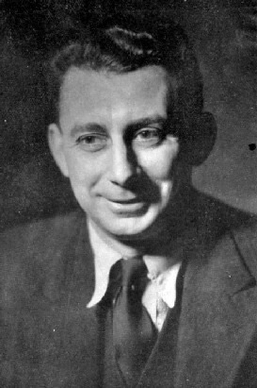
Ralph Fox, who would perish sixteen years after this fighting the fascists in Spain, with a fine essay on the interwoven roles of hate and love in the class struggle.
‘The Ethics of Hate’ by R.M. Fox from Truth (Duluth). Vol. 4 No. 22. May 8, 1920.
To Hate the Wrong and Fight It, In the Persons of Those Who Stand For It, Is Essential To Human Progress.
In these days of rapid social change we have many who talk learnedly of the superiority of reason over force, who urge that what is needed is the radication of hate by uniting everybody in the bonds of love.
The root error of these people is that they start out from some principle of abstract morality instead of applying their principles in a flexible manner to existing situations and taking such action as is calculated to bring them nearest to their goal.
Lenin does not try to model his conduct upon abstract perfection because he knows that nothing could be more futile. Such a policy leads to sterility, self-deception or hypocrisy. Morality develops and progresses from age to age, and is conditioned by circumstances.
The development of private property brought the moral conception of monogamy with it, with rights of inheritance and the right to the labour of wife and children.
Cannibalism gave place to the relatively higher conception of slavery when production had advanced far enough to make the slave more valuable alive than dead.
The point to be noticed is that morality is the result and not the cause of social change, though the abstract moralist persists in putting it the other way round.
Again, how many pacifists are prepared to do away with the police force, the law courts, and all the machinery of force for upholding the present order? Very few indeed. They are against the use of force to destroy Capitalism, but they acquiesce in the force that maintains it.
These people create philosophic abstractions witch they term men. True, they give them two legs upon which to stand, but beyond that nothing at all human. Their creations are not swayed by passion and interest, but are supposed to be responsive to some vague idea of the wellbeing of all in society. The normal man does not feel like this. His ideas arise from–and are coloured by his interests and his environment, so that he tends to range himself in one or other of the two main social camps–the possessors or the workers. Many workers attach themselves to the possessors out of ignorance. This ignorance is carefully fostered by the rulers. As they get to know more they gather into the workers’ camp. Hence the increasing clearness of the Class Struggle.
In this struggle the qualities of love and hate are exercised. Both are valuable human qualities–necessary for the development of the complete human being. Those who want to eliminate hate are, fortunately for human progress, attempting the impossible. They would mutilate humanity to save it. Graham Wallas in the “Great Society,” p. 162, says: “In its evolutionary origin hatred helped man to survive because it was a means of securing that the useful acts of acquisition, patriotism, sex-leadership and the rest should take place.”
It would be a poor day for Freedom if man could not hate. To hate the wrong and to fight it, in the persons of those who stand for it, is essential to human progress. Emerson writes truly of the healthy influence of hate when love pules and whines.
The argument of the other side assumes, without any proof, that hatred is always a bad thing, and then after pointing out that Bolshevism, as a live force includes hatred, claims that, therefore, nothing good can come of it. They have first to prove that to hate the wrong is bad.
They proceed to say that Bolshevism builds on hate instead of love, and excludes love altogether. By opposing love to hate they try and split man in half. They cannot conceive man as a unity, possessing both qualities and using both as the occasion demands. They are wrong in this. It is the love of humanity which causes the Bolsheviks to hate that which is injurious to humanity. Loving the right, they must hate the wrong, that is if their love is something true and genuine, and not a feeble make-believe. The critics themselves talk of hating wrong–they cannot keep it out–but they try to separate the wrong from those who do it.
The only way to oppose tyranny is to oppose the tyrants. You can’t in this practical world separate emotions and actions from people. Here we get the great contradiction of the sentimentalist.
He tells us, first:
That men are not made by systems. That brotherly love must commence right now.
That a man can rise superior to his environment.
All this implies, of course, that man is to blame for not living up to a given standard and realising this, the sentimentalist rushes off at a tangent and says, second:
That a capitalist is the victim of circumstances. We should all do the same in his place. Therefore we should attack the system not the attack the man.
It is quite clear that the two positions above are irreconcilable, but usually the sentimentalist contrives to hold them both. The truth is that although one realises the extent to which the capitalist is made what he is by conditions; yet we cannot love a defender of exploitation, we rather hate him for the misery he perpetuates.
If the aim is to create a world of mutilated people who cannot hate anything. Socialism will not help to do this. The complete human being will always possess love and hate, and the measure of the strength of one quality will often be the measure of the other.
Abstract humanity constructed on an “all love” plan can never be–it would be a one-sided monstrosity. All that is necessary to a well-developed manhood and womanhood, is retained in Socialism. A finer morality will inevitably rise out of finer conditions, which allow for human development on unperverted lines.
We are told that previous revolutions have failed; that conditions are still bad in spite of them. The Puritan Rebellion left the people poor and enslaved, so Revolutions must always be futile. This shows a lack of historical sense. Cromwell and the movement he stood for were bound by the limitations of their age. From the standpoint of the abstract moralist, of course, Cromwell might have achieved perfection, but from the Socialist standpoint this is not so. We can only explain Cromwell in the light of his age. The conditions were that Feudalism and personal monarchy, with restrictive powers, were crumbling, and Capitalism with its rampant individualism was coming in. Puritanism with its individualism in religion and its economic virtues–frugality, industry, etc., expressed one side of the new thought. Cromwell represented this growing force. Most probably he was not very conscious of this. Yet the Levellers who expressed the weak communistic tradition lingering from past society found no support in him.
So later with Robespierre, great Bogey of Revolution, the man who is always used to scare people from revolt. He represented admirably the rising Capitalists who have since repaid him with abuse. He even expressed their meanness of character too. His solemn and priggish reinstalment of the “Supreme Being” as an object of worship, expressed all the later Capitalist timidity of intellectual liberty. In his passion for a perfect constitution he resembled many “advanced” bourgeois reformers of today. The French Revolution broke Feudalism and established Capitalism–recording the inalienable right of every man to life, liberty and properly all being qualified by the last.
Both revolutions were successful. They did their work. They cleared out Feudal conceptions and hastened Capitalism, thus advancing human society another stage onward. They altered the moral code to suit Capitalist Society: Naturally they did not, and could not deal with modern problems.
We are faced with an altogether different situation now. The working class has developed. It is demanding freedom not to exploit others or to possess private property as the Capitalists did. It demands freedom for all. It is strong and is imbued with communistic ideal. This is because of conditions not because of original virtue. The conditions and inspiration of the modern working class movement are different altogether from the conditions and inspiration of the Capitalist Revolutions.
Lenin and Trotsky are the prominent peaks of this world movement, and the ideas common to it find expression through them. This movement brings its own morality with it and does not worry about abstract morality. Its morality will be noble; it will be the flower of freedom. All the conditions for the development of this higher morality are present in Socialism.
The use of force is not to the discredit of the Bolsheviks. Cromwell was more right than George Fox when he did the work which had to be done. Abraham Lincoln was right from the national standpoint when he told the pacifists in America, during the Civil War, that to stand aside would not solve anything. It would have been an easy piece of moral attitudinising that was all. The Bolsheviks would be less moral and not more moral if they flinched from the struggle on some ‘moral’ sense. Theirs is a higher morality, a morality of life and of the necessity for breaking down slavery: the noble morality of the advancing working class.
Truth emerged from the The Duluth Labor Leader, a weekly English language publication of the Scandinavian local of the Socialist Party in Duluth, Minnesota and began on May Day, 1917 as a Left Wing alternative to the Duluth Labor World. The paper was aligned to both the SP and the I.W.W. leading to the paper being closed down in the first big anti-I.W.W. raids in September, 1917. The paper was reborn as Truth, with the Duluth Scandinavian Socialists joining the Communist Labor Party of America in 1919. Shortly after the editor, Jack Carney, was arrested and convicted of espionage in 1920. Truth continued to publish with a new editor J.O. Bentall until 1923 as an unofficial paper of the C.P.
PDF of full issue: https://www.marxists.org/history/usa/pubs/truth/1920/v04n22-may-28-1920-truth.pdf
 Revolution's Newsstand