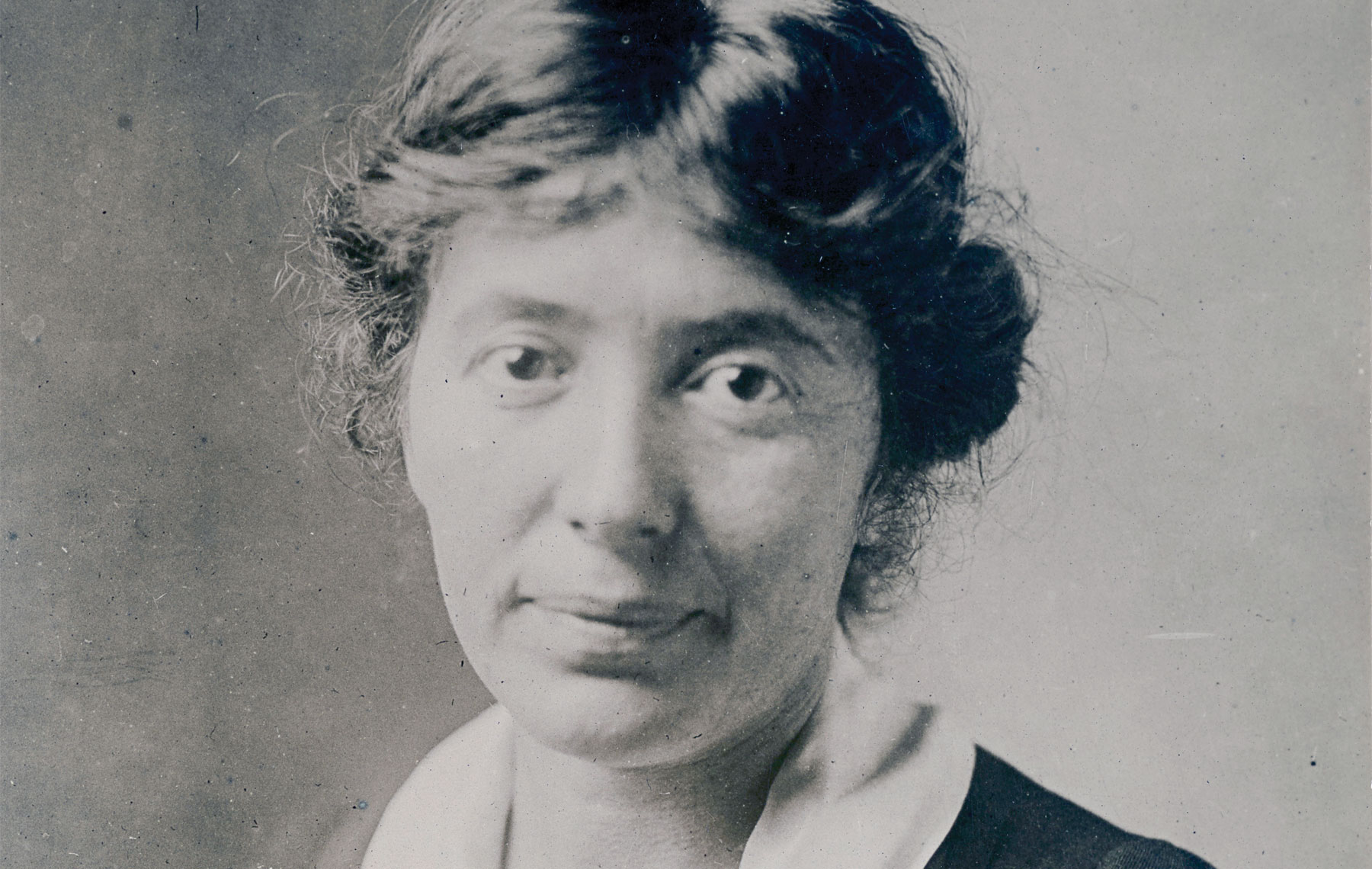
The remarkable life of Rose Pastor Stokes is reviewed on her passing. A Russian Jewish immigrant, a cigar-maker who became a founder of the Communist Party and first woman to serve on its leading Central Committee.
‘Rose Pastor Stokes, U.S. Revolutionary Leader, Dead’ from The Daily Worker. Vol. 10 No. 148. July 21, 1933.
Rose Pastor Stokes in Workers’ Struggles For 30 Years
Following an illness of three years, Rose Pastor Stokes, one of the founders of the Communist Party of the U.S., and one of the ablest agitators in the American labor movement, died yesterday in a municipal hospital in Frankfort, Germany, where she had been receiving treatments for cancer. She was 54 years old. She is survived by her husband, Comrade V.J. Jerome, who is a member of the National Agitprop Commission of the Communist Party and an instructor in Marxism at the Workers School.
The death of Rose Pastor Stokes was a direct consequence of a police clubbing which she received at a demonstration in New 1 York in December, 1929, called in protest against imperialist rule in Haiti. At the demonstration, she attempted to protect a young boy from a policemans club. The cop struck her on the breast with his nightstick, and it was necessary to amputate the breast shortly afterward. It was this blow which brought on the cancer from which she died.
Active 30 Years.
The news of her death will be a distinct shock to thousands of workers in the United States, who knew Rose Pastor Stokes as the result of her more than 30 years activity in the revolutionary labor movement.
She was arrested in Kansas City In 1918 and charged with violation of the Espionage Act. She was convicted and sentenced to serve 10 years in prison, but mass protest forced the setting aside of the verdict by a higher court, two years later Her arrest was the basis of the historic speech made by Eugene V. Debs in Canton. Ohio, in 1918, which resulted in his sentence to the Federal Penitentiary for ten years. Quoting her fiery speech in which she exposed the Wall Street character of the Imperialist war, Debs said, “If Rose is guilty, then I am guilty”. Debs’ arrest and indictment followed soon after.
Figured In Strikes.
Rose Pastor Stokes was an active, dynamic figure in scores of strikes in the East. Herself a worker, a cigar-maker, she led militant struggles of telegraph operators, rent strikers, hotel and restaurant waiters, silk workers in Patterson, needle trades workers in New York, etc., from 1907 until her illness forced her to discontinue activity.
In 1905 she married J. G. Phelps Stokes, a millionaire-philanthropist, who later figured in the Socialist Party, eventually turning Social-patriot during the war and ending as an arch-imperialist. They were divorced in 1925 after years of alienation as a result of political differences.
The daughter of Russian Jewish workers, Rose Pastor Stokes came to this country at the age of 11 from London, East End, whither her parents, had gone from Czarist Russia. She immediately went to work in a Cleveland cigar factory where she remained for 11 years. Later, she came to New York, where she became a prominent and colorful figure in the struggles of the workers, most of them immigrants exploited in sweatshops under the worst conditions. She was a staunch champion of the struggles of the Negro masses for liberation, and in her burned a passionate hatred for all forms of racial oppression.
For a short time she fell under the influence of the opportunist leadership of the Socialist Party and supposed the war. Long before the war ended, however, she was again taking an active part in exposing its Wall Street basis, and her arrest in Kansas City followed soon afterward.
Leader in Left Wing of S.P.
Leaving the Socialist Party with other militants of the left wing in that organization in 1919 she became one of the founders of the Communist Party of the United States, serving as a member of the Central Committee. Before that time she was part of the active left wing which fought the opportunist leaders and policies of the Socialist Party.
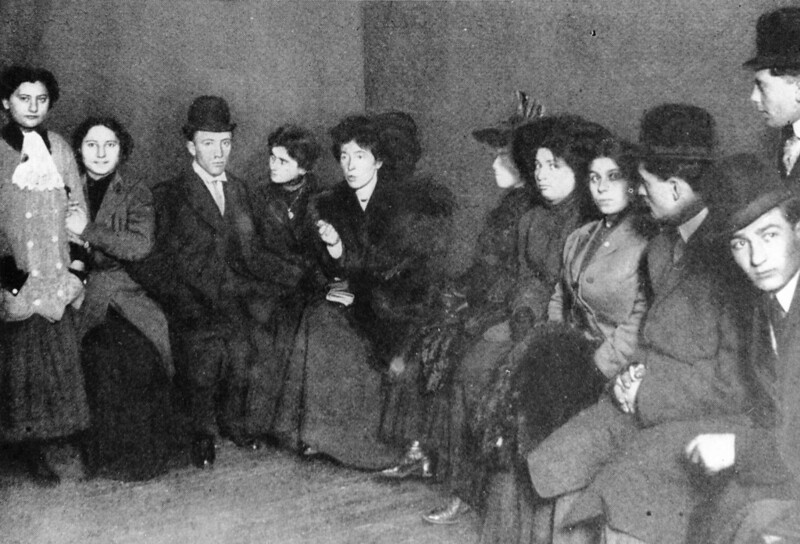
In 1922. with a number of other Communist leaders, she was arrested in Bridgeman Mich., and charged with “sedition”. Michigan authorities recently were forced to quash all the indictments in connection with this case.
Up to the very moment of her death, Comrade Stokes followed every development of the revolutionary movement with unflagging interest. Just before she left for Germany, several months ago, she said. “I’ll pull through. I’m determined. I must see a Soviet America. I will sec the workers rice to power and build their own world, as they are doing in Soviet Russia, a world in which there will be no unemployment, hunger, insecurity or war.”
A more detailed account of the life and working class activities of Rose Pastor Stokes will be printed in tomorrows Daily Worker.
***
Rose Pastor Stokes
The workers of the United States and their revolutionary Party have lost a heroic comrade and fellow soldier of the class struggle.

Rose Pastor Stokes is dead. She died yesterday, after a- long and painful illness, as the direct result of a blow of a policeman’s club received three year? ago in a demonstration against the American imperialist invasion of Haiti.
This was a woman of the revolution. In the story of her life is mirrored much of the history of the modern labor movement of this country and of the formation and growth of that American revolutionary Party of the working class which is destined to overthrow American capitalism.
After the formation of the left wing section of the Socialist Party, Rose Stokes was inevitably drawn into it and became a member of its executive committee, participating actively in the struggle to win the rank and file of the Socialist Party for affiliation with the Communist International, In the organization of the Communist Party in September 1919, she became a member of the Central Committee of one of the factions of the then divided party. The prosecutions by the Federal Government, by which was attempted the destruction of the revolutionary Party, involved her, and she was the first American indicted under the war-time sedition laws. She was convicted at Kansas City in 1918 and sentenced to ten years in Federal prison, a sentence which was never served She was indicted again for participating in the formation of the Communist Party in 1919, and once more as a participant in the convention of the Communist Party in Michigan in 1922. During the period when the Communist Party was outlawed as an illegal organization, Rose Pastor Stokes functioned practically without intermission as a member of the Central Committee. From her earliest days in she revolutionary movement, Rose Pastor Stokes was a persistent and belligerent fighter for the bringing of the Negro masses into the revolutionary movement and for a struggle against the persecution of the Negro people. In the Communist Party she. in 1921, undertook this as her special work.
The revolutionary working clas6 of America and its Communist Party honor the memory of our Comrade Rose Pastor Stokes. The history of the American revolution will give a splendid page to her.
But the lesson of Rose Pastor Stokes’ life and death is a lesson of action, not of mourning. Let us not forget the way she died—victim of the murderous violence of the capitalist police of the metropolis of American Imperialism! The lesson we learn from this revolutionary comrade is the lesson of courageous, persistent, unrelenting class struggle against that class which she hated and which the American masses will overthrow.
On with the fight: Honor to our fallen comrade!
The Daily Worker began in 1924 and was published in New York City by the Communist Party US and its predecessor organizations. Among the most long-lasting and important left publications in US history, it had a circulation of 35,000 at its peak. The Daily Worker came from The Ohio Socialist, published by the Left Wing-dominated Socialist Party of Ohio in Cleveland from 1917 to November 1919, when it became became The Toiler, paper of the Communist Labor Party. In December 1921 the above-ground Workers Party of America merged the Toiler with the paper Workers Council to found The Worker, which became The Daily Worker beginning January 13, 1924.
PDF of full issue: https://www.marxists.org/history/usa/pubs/dailyworker/1933/v010-n148-NY-jun-21-1933-DW-LOC.pdf

