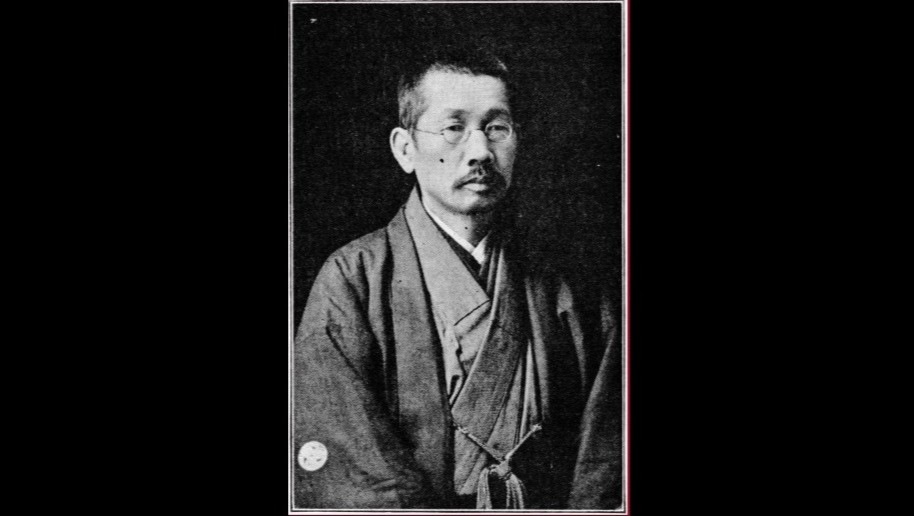
Katayama speaks to the Russo-Japanese War on its outbreak, soon to travel to the Amsterdam Conference where he would famously shake Plekhanov’s hand in a show of international solidarity, and his second move to the U.S.
‘Attitude of Japanese Socialists Toward Present War’ by Sen Katayama from International Socialist Review. Vol. 4 No. 9. March, 1904.
THE attitude taken by the Japanese Socialists toward the present war with Russia has been clearly and well defined from the very beginning. They were and still are against war, not only with Russia, but with all other nations. It was perhaps the very first time in the history of Japan that such an anti-war cry was raised in the land of the Samurai and New Japan. But it is a fact that Japanese Socialists boldly and loudly raised their voice against the war.
Some of the comrades employed on one of the largest dailies in the city of Tokio made this a point of honor and left their editorial position for that very cause. Since then I am glad to say that these two comrades, with the aid of some other Socialists, have started a weekly by themselves, through which they have been speaking against the war and in favor of the Universal peace that shall reign under the supremacy of Socialism. And, moreover, this little, but ably edited weekly, promises to be a great success. It shows that Socialists have been voicing the true sentiments of Socialism. They have been, moreover, holding anti-war meetings in and about the city of Tokio. I am informed that they have been very successful in this movement. An admission fee of five cents has furnished a sufficient income to carry on the work. They have to pay for the small hall each time and for advertisements. It shows that Socialists have gained a foothold with the public large enough to support such a movement as this. The very first meeting of the kind, held at the Y.M.C.A. Hall, Tokio, was well attended and was a great success. There were some representatives of the war party who tried to disturb the meeting, but failed entirely. At this success of theirs the press as well as the public were astonished. It was thought that the Socialists would never dare to hold such a meeting at such a time, because the war fever is at such a height.
I am sure that their attitude on the question is still the same as it was when I left the country, though Japan has entered into war. The Socialists will hold the same position as those of Germany during the Frailco-Prussian war. This sentiment was voiced many a time at their late meetings and approved by all the Socialists of Japan.
As to the probable effect of this war on the wakening class-consciousness of Japanese laborers, I can say this much with a greater certainty that working classes will realize more clearly the great evils of war than ever before. Many of them knew by their late experiences in the Chino-Japanese war that the war benefited them practically nothing. It is true that as a result of the late wars Japan’s industry has grown, but all the same their living became much harder than before the war. Japan got a large indemnity from China, but this did not benefit the workers. They have to produce much more to support the increase of the army and navy than they did before. I heard last summer from many workers in the country that they do not like the war at all, for the war will immediately raise the price of rice, while wages will not be raised so soon, at least not for those who are not directly connected with war. They know very well that in the late wars with China the workers fought the battles but the medals and rewards of the victory went to those who did not fight.
Now these are the reasons of mine against the war and supported by my comrades as well as by laborers. Laborers alone work for the preparation of the army and navy and are ever supporting them. The largest majority of the Japanese soldiers are of the working classes.
2. In the war laborers will be killed and suffer the most.
3. After the war they must work to pay the expenses of war and possibly for the increase of army and navy.
4. Japanese workingmen will fight with Russian workingmen who are in no way their enemy.
Now the war is going on in a brutal manner. I am opposed to this war, but as a Japanese I do not wish Japan to be beaten by Russia who in the past treated the Jews as she has in Kishineff, and is still dealing with Fins in the most brutal fashion, and moreover she has shot down many laborers during strikes! And above all I wish that the war may end as soon as possible, and I strongly desire that the working classes of the two countries may realize the true outcome of the war, and unite together to oppose the capitalist governments that are the cause of all the wars.
The International Socialist Review (ISR) was published monthly in Chicago from 1900 until 1918 by Charles H. Kerr and critically loyal to the Socialist Party of America. It is one of the essential publications in U.S. left history. During the editorship of A.M. Simons it was largely theoretical and moderate. In 1908, Charles H. Kerr took over as editor with strong influence from Mary E Marcy. The magazine became the foremost proponent of the SP’s left wing growing to tens of thousands of subscribers. It remained revolutionary in outlook and anti-militarist during World War One. It liberally used photographs and images, with news, theory, arts and organizing in its pages. It articles, reports and essays are an invaluable record of the U.S. class struggle and the development of Marxism in the decades before the Soviet experience. It was closed down in government repression in 1918.
PDF of full issue: https://www.marxists.org/history/usa/pubs/isr/v04n09-mar-1904-ISR-gog-Harv.pdf

