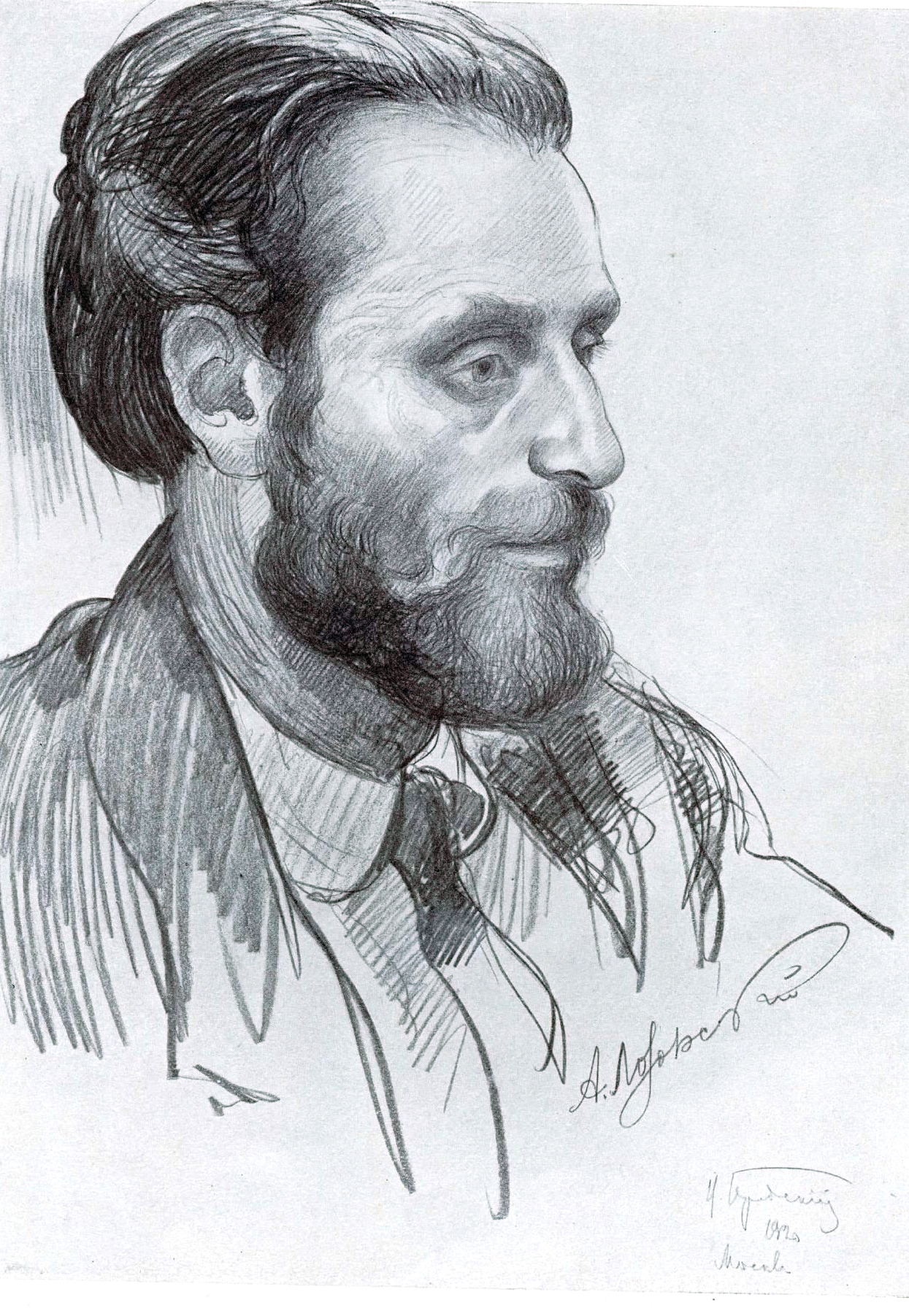
Head of the Profintern with a discussion piece for the upcoming Fourth R.I.L.U. Congress, the first since 1924 and also the first of the emerging politics of the ‘Third Period.’
‘Problems of Strike Strategy’ by Solomon Lozovsky from Communist International. Vol. 5 No. 5. March 1, 1928.
(For the forthcoming Fourth Congress of the R.I.L.U.)
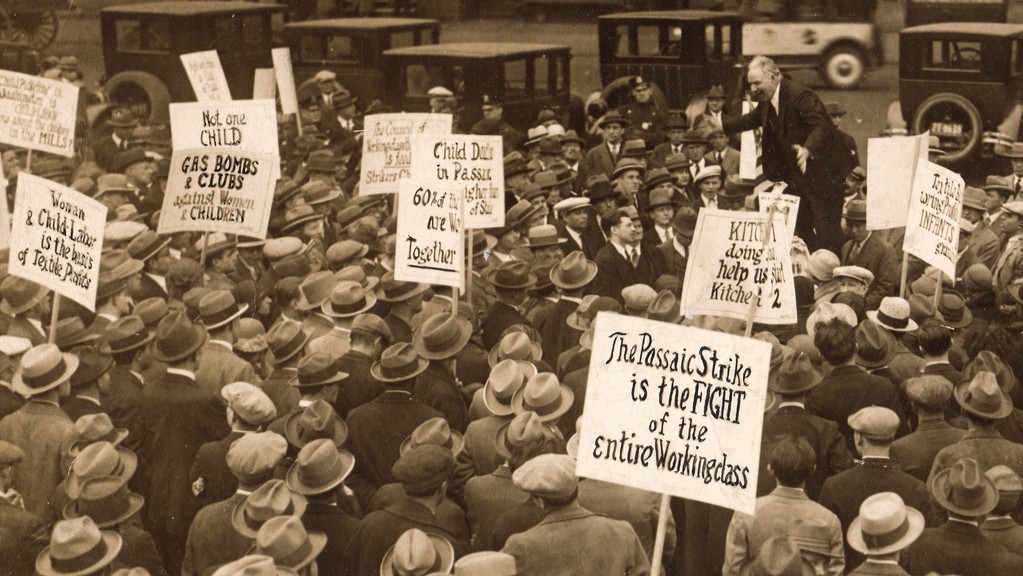
THE existence of a rising strike wave in all countries, and the dimensions and character of the economic conflicts, make the problems of strike strategy of exceptional importance at the moment for the revolutionary wing of the workers’ movement. The question arises with all the more severity since the number and the dimensions of those economic conflicts are extending, and since little by little a large strike now takes on an intensified political significance. The importance of small conflicts and strikes is continually declining. In all the large capitalist countries where industry is concentrated, and the industrialists well organised, a petty conflict in any single factory is only the starting-point for a conflict between organised capital and much less organised labour. Whether we take the miners’ lock-out in Britain, the lock-out in Norway, the lock-out and strike in the mining industry of the United States, the conflict in the iron-working industry of Germany, or any conflict of less importance, always and everywhere we are faced with the complex question of the forms and methods of the revolutionary workers’ movement’s participation in these conflicts, and the means of mobilising the masses for a defensive struggle not only against capital, but also against its allies in ‘the workers’ midst.
The problems of strike strategy are not problems of abstract theory, but of vital, everyday practice. Because the problem is not an abstract one, but is concrete and practical, it is necessary first and foremost to turn one’s attention to the circumstances of the struggle and to those forces which are set in motion in every large economic conflict.
During the last two years the circumstances of this struggle have greatly changed. We must first of all clearly realise the fact that capital is swiftly concentrating. Powerful industrial organisations, possessing large funds and supported by the whole apparatus of the bourgeois State, have a complete series of important advantages over the workers, advantages which they exploit very cleverly. The more powerful the federation of employers, the larger. sums the concerns and trusts have at their disposal, the less desire do they show to reckon with any federation of trade unions whatever.
In the large industry of old capitalist countries there is now being revived a slogan which long since passed out of usage: “No unions whatever.” As was the case several decades ago, the employer wishes to deal with each individual worker, and not with the collective will of the proletariat organised according to industry. And this greatly increased might of the employers’ organisations, their absolute command of all the resources of the bourgeois State, is the most characteristic feature of the present day economic conflicts. In their frenzied hunt for markets the employers of every country are striving to surpass their competitors by lowering the standard of existence of “their own” working class. All the employers’ efforts are directed towards this end, and that is the whole meaning of the capitalist offensive which has now been going on for several years.
The second peculiarity of the present situation consists of the role which the large trade union organisations of Europe and America are playing. The trade unions of Britain, Germany, the United States and other countries have ignored this violent concentration of capital. One would have thought that the first obligation of trade union leaders would have been to organise the masses as swiftly as possible in order not to fall behind in comparison with the employers. And, on the other hand, one would have thought the capitalist offensive would have aroused an intensified activity in the trade union organisations, and a feverish political and organisational work to reconstruct their ranks and to adapt them to the new conditions of the class war. But the leaders of the trade union organisations of Europe and America have taken another road. The more violent the bourgeois became, the more moderate became these leaders; the more sharply the employers forced any question, the more gently did the reformists act; the stronger the attack, then, despite all the laws of defence, the weaker was the counter-action.
How the Reformists Act
First and foremost it began with their ideological disarmament and their philosophical adaptation to the contemporary capitalist State. At the very beginning of the German revolution the reformists put forward the slogan of “Economic Democracy,” which signified agreement instead of struggle. When the attack was intensified in Britain, the leaders of the British trade unions held forth on “Industrial Peace” with an energy worthy of a better cause, while the chairman of the General Council, Ben Turner, quite recently emphasised the view that peace in industry must be established in the name of Christ. Economic democracy and peace in industry are different forms of terminology for one and the same capitulation, for the starting-point of economic democracy and peace in industry is first and foremost a recognition of the inviolability of capitalist relations and an endeavour to revive and rehabilitate the capitalist system which was shaken during the war.
What is economic democracy? The German reformists, who suffer from philosophic verbal incontinence, define it as the equality of labour and capital, while this “equality” arises from the basis of the assurance f6 the factory owners, manufacturers and bankers of their property and the continuation of the system of wage slavery.
What is peace in industry? Peace in industry is a system of mutual relations between labour and capital which has to give definite advantages to a small minority of workers, under the conditions of the exploitation of the majority of the British working class and of hundreds of millions of colonial slaves. Such, too, is the purpose and the whole philosophy of the American trade union bureaucrats, who have long since covered themselves with glory as the finest of strike-breakers even among their own reformist colleagues.
Economic democracy and peace in industry are both the reformists’ music of the future. The reformists realise this full well, and consequently they put forward something in the nature of a minimum programme, something in the nature of transitional demands. Until this glorious economic democracy is established, until peace in industry is established, we must in the meanwhile achieve our ideal even in sections! When the whole aim is the rehabilitation of capitalism it is necessary to save the national industry from stagnation, from loss of time owing to strikes, from the unproductive expenditure of labour, time and so on. From this view logically develops a system of long-term trade agreements, compulsory arbitration and a whole series of other delightful things, which have as their aim the establishment of peace in industry at the expense of the working class. Thus step by step international reformism has come to a complete renunciation of the leadership of the working class’s economic struggles, and now puts all its hopes on peaceful discussions and on the method of attempts to persuade the employers.
Frightening the Bourgeoisie
This method has a two-fold character. On the one hand they address themselves to the employers, to the bourgeois State, and say: “If you do not make us this concession you will be compelled to make this concession on a much larger scale to the workers, for they will strike!” In the same way the Russian Liberals frightened the Tsar in their day: “Make us concessions or else they [the revolutionaries] will shoot!” In this regard the innumerable speeches and declarations of the bankrupt British leaders are of particular interest at the present time. They resort to all measures to persuade the employers to agree to negotiations for industrial peace, and these bankrupts rely on the argument that if they are not successful in reaching agreement after them will come the deluge, disintegration, chaos, and other jungle-passions. And as, according to the reformist dictionary, chaos, disintegration and the other terrifying words are synonymous for revolution, the reformist leaders frighten the bourgeoisie with revolution, in order to compel them to a more gracious attitude and to concessions.
What does this move towards economic democracy, industrial peace, long-term agreements, compulsory arbitration and so on signify? The idea behind it is seen with particular clarity in every fresh economic conflict, in which always and everywhere the reformists pursue one and the same tactic. As soon as the bourgeoisie, in the name of national industry, begin to attack, the Amsterdamers turn to the workers and say: “Don’t get agitated, don’t allow yourselves to be provoked, don’t listen to the left wing visionaries and agitators; allow us to carry on negotiations and by peaceful methods, without the loss of your resources, without the expenditure of superfluous energy, we shall compel the employers to retreat. We are all the more able to do this since we exploit the whole democratic apparatus of the State, which of course will always be on the side of justice and the interests of the working class.”
Then the Amsterdamers begin to maneuver. We saw this maneuvering going on especially clearly during the conflict in the iron-working industry of Germany. The maneuver consists in the reformists beginning negotiations both openly and behind the scenes, attempting to frighten the employers by reference to the indignation of the masses. If the dissatisfaction grows among those masses and the workers begin to pass resolutions of protest in their factories against the conduct of their leaders, the latter strive to hand the question as speedily as possible into the competence of some governmental authority (compulsory arbitration) and to obtain as speedy a decision as possible, previously announcing that they will accept that decision. And when the workers resolutely declare themselves against compulsory arbitration the reformists come out against the workers and say: “What, you don’t wish to submit to the decision of an institution established by law? You are not satisfied with the ‘achievements’ we have succeeded in obtaining by means of arbitrations In no circumstances can we give our sanction to any kind of attack. Do what you like, you will not get any trade union money if you strike.”
That is the average programme of action resorted to by the trade union bureaucracy and their methods of “defending” the interests of the working class. And if any kind of offensive movement sets in among the working class, the entire tactic of the trade union bureaucracy consists in damming the movement, and not allowing it to break out, not allowing it to take on a mass character. They run to the employers and to the State institutions, and, attempting to frighten everybody with the rising workers’ wave, they tearfully lament: “Yield on this point, or worse will follow.” If the pressure of the workers is still very great the employers make “voluntary”? concessions, and then the Amsterdam leaders turn to the workers and say: “You see, we were right when we advised you not to strike. Only thanks to our tactics, thanks to peaceful negotiations, thanks to our influence in the State, and our power with the employers have we been able to obtain a concession, and if you had struck we don’t know what it would all have led to.” That is the nature of Amsterdam strike strategy, and that is how it is pursued with very small variations by all the Amsterdam organisations in every country.
The United Front with the Capitalists
And what does the very latest strategy of the Amsterdamers signify? It signifies no more nor less than that the trade union apparatus created by the working class not only does not decide all questions in favour of the working class, but frequently decides all questions together with the employers and against the workers. We have now entered into a phase of development of the class struggle in which the reformist trade unions and employers’ organisations are not two warring parties but are one party, which reaches agreement in the measure that the dissatisfaction of the masses accumulates, in order to prevent the discontent of the masses from breaking out and in order to direct everything along the old, customary channel.
The reformists now say openly that they are one of the most important factors in the stability of capitalist society. They even have their own programme directed towards this end. While in Germany they talk themselves into a stupor with their economic democracy, in France the former syndicalists are working out an economic platform, the political idea of which consists in the formal assimilation of trade unions into organs of the capitalist State. This assimilation of the trade union apparatus into the bourgeois State bears an extremely varied character, but in general it indubitably presents a growing alliance between the Amsterdam organisations and the bourgeois State, a continually increasing alliance between the trade unions and employers’ organisations.
Before our eyes is going on a process of fusion of the Amsterdam unions with the employers’ organisations and the transformation of those unions into organs for strike-breaking. And it is no accident that in Germany, for example, in every conflict the Amsterdamers at once find a common language with the Catholic and the Hirsch Dunker unions. This unity and this united front arise on the basis of the strike-breaker platform of the Catholic unions, on which platform the All-German Federation of Trade Unions has now also taken up its stand. Thus we have a complete political line of approach, which witnesses to the fact that strike-breaking has become the most important principle of the Amsterdam International and its sections.
Some New Problems
The transformation of the Amsterdam trade unions into open strike-breaking organisations, which interfere with the struggle of the working class, raises before us a number of extremely important problems, without a practical settlement of which it is impossible to move forward a single step. In the given circumstances the problem of strike strategy is especially complicated owing to the fact that in many countries the revolutionary workers still represent a minority inadequately organised, insufficiently consolidated, and not always acting according to a single plan.
It goes without saying that our tactics during economic conflicts will have to alter in accordance with the situation. Our tactics in those countries where we have independent organisations (France, Czecho-Slovakia) must be different from those in the countries where we have no independent organisations, and where the workers sympathetic to us are members of reformist unions, and are caught in the cogs of the reformist apparatus. In such a situation the struggle against the strike-breaking tactic of the official organisations is particularly difficult and complicated, the more difficult since we can depend only on those workers who set up special organisations (strike committees, councils of action, and so on) to counteract the united front of the employers and the Amsterdamers. “There was a time when strike-breaking was punished by the workers with general contempt and expulsion from the place of work. Since the war international social-democracy has made political strike-breaking the basic principle of their tactics, and now strike-breaking in the sphere of economic struggles has become an inseparable function of all the troubadours and minstrels of economic democracy and industrial peace. In connection with this fact a number of extremely serious problems of a general character arise before the revolutionary wing of the workers’ movement, and without an understanding of these problems it will be difficult to pursue a correct line of action in any particular country and in any particular economic conflict.
The first problem that has to be discussed under such conditions is the problem of the staff and the army. An army at the head of which stand representatives of the enemy country cannot be victorious. It is predestined to continual defeat. If during the world war several secret agents of Germany had been on the French general staff, could France have carried on the fight? Everyone will answer, of course not. Despite everything, France would have been smashed. If several agents of Hindenburg’s and Ludendorff’s general staff had been on the British general staff, could the British army have maneuvered as it did during the world war? Of course not. This may all seem to be very elementary and may arouse no question, yet we have a close analogy in the workers’ movement of quite a number of countries, and the workers’ army has not yet been able to free itself from the spies of the enemy.
Remove Capitalist Agents
During the General strike, on the General Council of the British trade unions were Thomas, Bevin, Pugh and other spies and allies of capital. The struggle was lost, but the spies remained in the general staff. We see an analogical state of things in America at the present moment in the miners’ strike; we saw the same position arising during the conflict in the iron-working industry of Germany. Do the leaders of the All-German Federation of Trade Unions represent the workers in the very slightest degree? Is not all their activity directed to avoiding offence to the employers? Haven’t they more than once organised the break-up of the German proletariat? And yet they are on the general staff of the German trade union movement. Taking one reformist organisation after another, and taking the strikes that have occurred in the corresponding countries, we see that the Amsterdamers have occupied themselves with systematic strike-breaking, with systematic disorganisation of the ranks of the proletariat and the cession of the positions already won. Consequently the first step on the road to the working out of a genuine, serious, militant tactic in the economic struggle must be the driving out of the strike-breakers, the spies and the allies of capital from the governing organs of the trade union movement.
When a staff is in continual relations with the enemy the struggle becomes doubly difficult. It is all the more difficult since part of the army trusts that staff in the hope of obtaining a real advance without a struggle. Under such conditions a double wisdom and a double stand in defence of the interests of the working class are called for from the revolutionary wing of the workers’ movement. First and foremost, it is absolutely obvious that the army is not only not obliged to submit to the staff, but has the right (the realisation of this right demands the presence of large forces) to attack the employer and its own staff. The whole problem consists in when and how to attack. Such attacks are particularly serious because no united front exists in the heart of the army. Frequently the reformist staff carries a large part of the army with it, and then the attack of the minority is clearly destined to defeat. In cases where the staff is followed by a minority the situation is also extraordinarily difficult, for it is necessary to carry on a struggle simultaneously against the employers and against one’s own trade union organisation.
This difficulty is increased in those countries where the revolutionary workers are inside the reformist organisations without having any perfected organisation of their own, for manoeuvring can only be carried on by organised sections which are based not on an attitude but on complete unity. Meanwhile in a number of countries the adherents of the Profintern, who stand for the unity of trade unions, do not wish to set up parallel organisations, and consequently are compelled to act under extraordinarily difficult circumstances. This all has to be taken into consideration in order to estimate with entire accuracy all the difficulties which lie in the way of the Profintern’s adherents in their strike strategy.
The difficulties are not lessened in those countries where parallel revolutionary and reformist organisations exist. If the revolutionary organisations take up a struggle and the reformists sabotage that struggle, as has taken place more than once in a number of industries in France, the position of the employers is once again much more advantageous than that of the workers. These countries have their own specific difficulties. There both armies are divided by an organisational barrier one from the other, and our influence on the rank and file of the reformist unions is very often negligible. Thus in both cases, whether there be present parallel unions or a single union, the position of the revolutionary army is extraordinarily difficult, for it has to deal with an enemy strongly consolidated organisationally, and also with organised strike-breaking in the ranks of the working class.
As the result of all these difficulties every class-conscious worker, every adherent of the Profintern is faced with the problem first of all of how to strengthen the ranks of the revolutionary trade union movement in order that it may be possible to maneuver successfully and to carry on a defensive and offensive fight with the maximum hope of victory.
Difficulties where T.U. Movement is Split
In those countries where the trade union movement is split, the most important task of the present moment is to increase our strength by means of recruitments. If we consider France, where go per cent. of the workers are unorganised, the field of activity open to the Unitary Confederation is very wide. All energies must be directed towards drawing hundreds of thousands of workers into our trade union organisations. The greater the flow of workers into the unitary unions, the easier will it be to carry on a strike struggle, for the correlation of forces between the unitary unions and those of the reformists will be changed in our favour, and thus our chances of victory in the struggle against the employers will be greatly increased. But although the making of new members is a task of the highest importance, it is not the only task. The revolutionary unions are faced with the problems of strengthening their local organisations, of having a direct connection with enterprises, of the creation of a flexible, militant organisation from bottom to top, and all these things can only be achieved by means of detailed day-to-day organisation work and unbroken day-to-day struggle in all parts of the country, in every sphere of industry, for the improvement of the position of the working class.
While in France, Czecho-Slovakia and other countries where the trade union movement is split the problem of enrolling new members and the forms and methods of the day-to-day, practical training of these members and the transformation of indefinite sympathies into militant solidarity takes first place, in those countries where the trade union movement is united, and where our adherents are inside the reformist unions the same aim (of increasing the fighting ability of the proletariat) can be achieved by other methods. Here it us a question of more intensive work. This has relation both to those countries where we have a definitely formulated opposition, on the lines of the Minority Movement (Britain) and to those countries where the opposition movement has not taken an organised form (Germany). Both in Britain and in Germany the problem of our strike strategy is organically connected with not only the degree of our political influence on the masses, but the degree of our organised capture of those masses. We may have ideal tactics, ideal slogans, but if there are only 5 or 10 per cent. of the workers in any particular sphere of industry on our side it is quite obvious that we can play no role whatever in the struggle between labour and capital.
We Must Consolidate our Forces
The forms of consolidation will, of course, inevitably be different in different countries. In the United States, in Britain, Germany, Austria, Holland, or in Sweden the organisational forms by which the opposition in the trade unions will be united cannot but be different. Everything depends on the distinctive features of the workers’ movement of the given country. But the point that is absolutely obligatory in every country without exception, quite independently of how the Profintern’s followers are organised in any particular country, is that our influence inside the trade unions should be extended, fresh and ever fresh positions in the lower and in the regional and central trade union organisations must be captured, and there must be the ability to estimate our own forces and those of the enemy when circumstances demand that the revolutionary wing of the workers’ movement should attack despite and against the will of the leaders of the particular union concerned.
Now as to the question of slogans and demands. Everybody knows that the revolutionary workers are distinguished from the reformists by the fact that they connect the day-to-day struggle of the workers with the ultimate aim of the struggle, but that does not mean that every strike can be linked up with the slogans of the dictatorship of the proletariat and the overthrow of capitalism independently of that strike’s dimensions and character. The economic struggle faces the workers with a number of concrete problems: that of the trade unions’ right to legal existence and representation, etc. And consequently we should first and foremost give an answer to these concrete, practical questions. We must be more sensitive to the demands of the masses, we must react more energetically to every blow dealt by the employers; at every given moment we must know where the shoe is pinching the worker; we must know how to canalise the accumulating discontent and must be able to transform the unclass-conscious discontent into political consciousness and to prepare the masses for the struggle. Our difference from the reformists consists in the fact that we are at any moment ready to put forward more radical economic demands, and in the fact that the reformists hope to obtain their demands without a struggle, while we know and must impregnate the consciousness of the working masses with the fact that without a struggle the working class will achieve absolutely nothing.
Wage Agreements
Since the reformists endeavour to avoid any struggle whatever the cost they strive by all means to conclude long-term wage agreements. There are Communists who think that long-term wage agreements are more advantageous than short-term ones—more advantageous because the workers, they say, are safeguarded for a long period, independently of the possible changes in the economic situation in the given sphere of industry. This hope that one can by means of long-term agreements compel the employer to take the way of sacrificing his own interests in periods of unfavourable economic circumstances implies a primitive understanding of the logic of the class struggle. At the basis of this “justification” lies a reformist understanding of the character and significance of wage agreements.
What is the reformists’ view of a wage agreement? It is peace in industry. It is an agreement of brotherhood and friendship between the employers and the workers, an agreement which will eliminate all misunderstanding and unfriendly activities arising out of fortuitous causes.
What is the wage agreement from our point of view? It is a temporary armistice, and that armistice has for us the purpose of affording a breathing space for the organisation, consolidation, development and strengthening of the class army. If we are daily going to consolidate, increase and develop the fighting ability of our class army a long-term agreement is advantageous to us. If we are not going to worry about the fighting ability of the army, the improvement of its divisions, the raising of its fighting spirit, then, of course, it is more advantageous to have a long-term agreement. Thus, in this question of the period of wage agreements two fundamental tendencies in the trade union movement have their reflection: the revolutionary and the reformist tendency. If the followers of the Profintern give thought to this question they will come to the conviction that long-term agreements are in contradiction to our fundamental task of increasing the fighting ability of the proletarian army.
Arising out of our general position, we must carry on the most resolute struggle against all attempts to tie down the workers by compulsory arbitration. Compulsory arbitration has its origin in the assumption that between capital and labour there is also a third, neutral force. This neutral force, this super-arbiter is usually synonymous with the bourgeois State in the form of the Ministry of Labour or judiciary organs, the “extra-class” character of which we know well enough. There would appear to be complete unanimity in the ranks of the revolutionary wing of the workers’ movement on this question, but that unanimity is not actually a hundred per cent, unanimity. Many opponents of compulsory arbitration are put to perplexity by decisions which have already been made, especially when those decisions, taken under extreme pressure from the masses, contain certain concessions to the workers. “The decision is made and you can do nothing now,” so think some revolutionary workers, albeit not many. In these reflections and attitude is mirrored a social-democratic conception of compulsory arbitration.
No Compulsory Arbitration
May we for even one moment slacken our campaign against compulsory arbitration after a decision has been taken? Our campaign should be intensified, strengthened, developed farther and farther, and we should be able to prove to the workers that there is no such thing as neutral arbiters, and that if any particular Minister of Labour or State official, even if they bear the “proud title” of social-democrat, has made an arbitral decision, as happened recently in Germany, which allows of certain concession to the workers, it is because the pressure from below is very great and the arbiter gives a little in order that the employer should not lose still more in a struggle. This point has to be thoroughly elucidated, and around it the masses must be mobilised.
The question of compulsory arbitration is at the moment being raised in a very severe form. We know how compulsory arbitration has corrupted part of the workers’ organisations of Australia, what demoralisation this arbitration has induced in the trade union movement of Germany, and consequently a most vehement and ruthless struggle against compulsory arbitration is the first obligation of the revolutionary wing of the workers’ movement.
But the struggle against long-term agreements, against compulsory arbitration and for the rising of wages, the shortening of the working day and so on cannot be carried on sporadically, by fits and starts, by sudden advances based only on the enthusiasm of the leaders. The struggle against concentrated capital is daily becoming more and more complicated. Readiness for the struggle is extremely good, yet not only one’s own readiness but the readiness and fighting ability of the army have also to be taken into consideration. And at this very point we have two highly dangerous and injurious deviations in our midst. The first is chiefly to be met with in France. If the tactics of the Unitary Federation of Miners are attentively studied, an extremely interesting lesson can be drawn of how one ought not to organise a strike.
Quite recently the Federation called a strike in Annecy, and only after the calling of the strike was it convinced that 80 per cent. of the workers would not answer their call. Was it really impossible to check this beforehand? Surely it was not necessary to call a strike in order to be convinced that foreign workers would not answer to the call of the Federation? It is long past the time when we should have renounced our anarcho-syndicalist traditions, which consisted in calling a strike (on paper, of course) almost every day, whether the working masses followed us or not. This readiness to declare a strike whenever we feel like it, without taking into consideration the question whether the army would answer to our call or not, witnesses to anything except an understanding of the elementary principles of the class struggle.
In Czecho-Slovakia we have the other extreme. There the trade union movement is still more disintegrated than in France. Naturally, with such disintegration a double caution, firmness, and solidarity in the struggle are necessary. But here we have a leaning in the other direction, a deviation which particularly revealed the weakness of our comrades during the last conflict in the textile industry of Czecho-Slovakia. Our comrades saw that the overwhelming majority of the textile workers were ready for the struggle, and even desired to struggle for a rise in wages. According to their own words it was an excellent moment for a struggle, but they reflected: “We have very little money in our funds, we cannot, guarantee the workers prolonged support in the event of struggle, and so we ought not to attack.”
To place the success of a strike in dependence on the strike fund is a reformist tendency against which a ruthless struggle must be waged. The conflicts become more mighty with every day, and to count on ever having adequate strike funds to carry on the gigantic social conflicts which shake one or another country daily is a reformist utopian hope.
Does that mean that we are against strike funds? Not in any circumstances. We are in favour of strike funds, of collecting the maximum amount of money, but we must not over-estimate the value of such funds, and we must not put everything in dependence on the amount of money accumulated, otherwise we shall go the way already marked out by the Amsterdamers. As we know, on this question the Amsterdamers have followed a line of evolution, the first stage of which was insistence on the necessity to collect strike funds in order to carry on a genuine struggle against capitalism; the second stage was that when they had large funds they considered it impermissible to expend them idly on fruitless strike struggles. And their last stage was their submission to compulsory arbitration, thus preserving the funds collected by them. That was the way of international reformism, a road which runs in quite a different direction from the general line of the revolutionary trade union movement.
The reformists do not want a struggle, and consequently neither prepare for it themselves nor do they prepare the masses for it. Inasmuch as we regard the struggle as inevitable we must prepare the masses for the struggle and subordinate all our agitational and propaganda work to this task. How are we to prepare them? There are two roads our adherents inside the reformist trade unions can take. The first way is to prepare the masses for independent struggle, warning them that the reformist leaders will always act against them at the decisive moment. This line of approach presumes the possibility of the masses attacking in opposition to the official trade union lead. This line of approach sets the course only in the direction of the activity of the masses, previously taking the official reformist course into account as a negative factor in the struggle.
But there is also another attitude taken up. In the view of those who hold this attitude the whole task consists, in jogging the reformist leaders into the struggle, and if they do not wish to act we shall submit, restraining our indignation. If our “jog” is unsuccessful we shall put off the struggle until we have won the entire apparatus of the trade unions. This is putting the emphasis not on the masses but on the apparatus. If anyone doubts the existence of this second attitude, we advise him to read the articles of a number of responsible workers of the German Communist Party in connection with the conflict in the iron-working industry. From those articles he will come to the conviction that there is still a good deal of confusion in many Communist heads on the problems of our strike strategy.
If the adherents of the Profintern were to take this line they would commit an irremediable error. The theory of jogging the trade union bureaucrats leftward recalls to our mind the Menshevik theory of jogging the bourgeoisie leftward. Whether the trade union bureaucrats will go left or not, whether they will condescend to head the movement in order to behead it, these are not the kernel of the question. The crux of the question lies in the way the great masses of workers will go and what they will do at that time. The crux of the question consists in whether we shall be capable of placing ourselves at the head of a growing movement, without taking any formalities and the “acquired rights” of the trade union bureaucrats into account. The man who hands the agitated masses, who are rising in protest and entering on a struggle, over to the leadership of the reformist leaders merely because that leadership belongs to them in conformity with the constitution of the trade union, is sabotaging the strike with his own hands. That is why as soon as a conflict develops we should immediately put forward the slogans of an elected strike committee, of councils of action, unity committees, and so on. For only after we have set up a directing organ which reflects the will of the masses can we count on a successful struggle.
Guerrilla Tactics
It is quite natural now to turn to the problem of guerrilla attacks in the economic struggle. In the complicated situation of the present day, is a guerrilla movement possible in the strike struggle? The problem is raised by the whole course of the economic struggle and the conduct of the reformists of all countries.
What do we mean by a guerrilla movement in the economic struggle? We mean the refusal of workers in separate enterprises to submit to the trade unions and their independent entry on a struggle for the demands they are putting forward. Guerrilla attacks can be of various types: (1) A strike; (2) the introduction, as a method of protest, of a restricted working day; (3) an “Italian” strike (go slow, work to rule, etc.) in the works, and so on. In all these instances the workers of one particular enterprise put themselves in opposition to the organised employer and the apparatus of the trade unions. Under such conditions the struggle is very difficult, and the question has to be determined, not on the grounds of principle, but from a practical point of view. It entirely depends on the correlation of forces. It is impossible to object to guerrilla attacks of workers in separate enterprises, separate districts, and so on. But at any given moment it is necessary to estimate the correlation of forces. For example, a situation is possible in which the struggle, begun at one factory, may, owing to the extreme tension in the working masses, serve as a signal for a general attack on the part of the workers despite all the decisions of the union officials. In such circumstances a guerrilla attack is of advantage, and consequently it is obligatory. But if the attack is limited to one or two enterprises, if it does not draw in large forces of workers from the very beginning, that kind of guerrilla movement may lead to a cruel defeat and to the discrediting of the revolutionary wing of the trade union movement. Again we come up against the question of the evaluation of one’s own forces, only this time from another angle. This is of particular importance at a moment of large social conflicts; then every mistake may be very expensive and consequently the utmost coolness, firmness, cold calculation and merciless struggle against empty talk are especially necessary. To summon the workers to the struggle, and to receive an answer from 5 or 10 per cent., in other words, to be left in splendid isolation, connotes the establishing of a barrier between the advance guard and the army; and that is the greatest of defeats, one which will leave its effects for years after. Hence the necessity for especially cool calculation of the maneuvering abilities not only of the advance guard but of at least a large part of the proletarian army, in such circumstances.
Caution not Inaction
But if we approach the problem of strikes in this way shall we not be forced to reject them altogether? Is this not the preaching of superfluous caution and a demand of a guarantee of victory? So speak those who think that the revolutionary impatience of the leaders is an absolutely adequate basis for an advance on the part of the masses. It would be simply foolish to make a guarantee of victory a condition of attack on the part of the masses. And, generally speaking, no one can give such a guarantee. If there was a complete guarantee of victory then any fool could maneuver. There is a large element of risk in every attack of the masses, and the more severe the social conflict, the greater the risk.
Lenin taught us that no one can guarantee a 100 per cent. victory, but he also taught us another principle—it is not possible to play about with insurrection. That which is correct in application to an insurrection is correct in application to a strike. It is not possible to play about with a strike; a strike is a sharp weapon and often double-edged, and consequently it is necessary to try to call a strike at a moment when there is a minimum chance of defeat and a maximum chance of victory. That is all we have in mind.
People are always to be found who will carry a sound idea to a point of political absurdity. The reformists say: “A strike is a sharp weapon of struggle and consequently we must reject it.” Against that theory and practice we must wage the most ruthless struggle. On the other hand, the anarchist-syndicalists say: “A strike is a sharp weapon, and consequently we will organise strikes almost every day.” We answer that this point of view also has nothing in common with the revolutionary strategy of the working class. Old Engels taught us the “concrete truth,” and consequently in dealing with this question of strikes we must take into consideration the situation in the given sphere of industry, the correlation of forces between the employers and the workers, the economic position, the degree of organisation of the employers and the workers, the character of the trade union organisation, the correlation of forces as between the revolutionary and the reformist wings in the given union and in the whole trade union movement, and on the basis of all these factors taken together must work out our tactics.
If all these separate points are taken into account then, with their various conjunctions, a varying tactic is possible according to industries and according to countries. In certain conditions we can not only defend ourselves but even attack, in others we can only defend ourselves. A situation is possible in which it is not possible to take up a defensive position (a small revolutionary minority, and a large union which is being brought under the rein of the employers). In the general arsenal of the class struggle every weapon may be utilised; a strike, and a boycott, and passive resistance, and guerrilla attacks, and demonstrations, and the summary putting into operation of the demands being put forth, and so on. Only he can be called a genuine trade union leader who in the given concrete situation, and basing himself on the actual forces present, applies various methods and means of struggle in order to achieve the maximum results in thorough-going defence of the interests of the working class.
Different Conditions—Different Tactics
The problems raised in this article touch upon one of the most important spheres of our work. Even at the Third Congress of the Profintern the question of strike strategy was raised. This question was then raised for the first time at an international congress. Except for the Profintern no one has ever yet considered the question. As the question was then raised for the first time one can only regard the debates at the Third Congress as an introduction to the problem, as an indication to the organisations attached to the Profintern to occupy themselves with the problems of strike strategy.
Three and a half years have passed since the Third Congress. During this period we have lived through a number of gigantic economic conflicts. The problems of the economic struggle have become much more complex, and a number of new problems have arisen, which can only be resolved on the basis of the study of the wealth of material available and the situation in each country. All Profintern organisations must seriously occupy themselves with the problems of the economic struggle, our weaknesses must be ruthlessly exposed, and a most resolute struggle must be waged against the vestiges of anarcho-reformism in our midst; we must think and work over the accumulated experience in order that a new step forward in this question may be made at the Fourth Congress.
Strike strategy is part of our general class strategy, but it is just that very part which has been least studied and least worked over, despite the fact that every day supplies us with dozens and hundreds of fresh facts. We must realise that until our organisations and minorities are able to play the leading role in the economic battles of the proletariat they will not succeed in winning the trade union movement. That must be realised once for all and all the necessary deductions drawn from the fact.
13th January, 1928.
The ECCI published the magazine ‘Communist International’ edited by Zinoviev and Karl Radek from 1919 until 1926 irregularly in German, French, Russian, and English. Restarting in 1927 until 1934. Unlike, Inprecorr, CI contained long-form articles by the leading figures of the International as well as proceedings, statements, and notices of the Comintern. No complete run of Communist International is available in English. Both were largely published outside of Soviet territory, with Communist International printed in London, to facilitate distribution and both were major contributors to the Communist press in the U.S. Communist International and Inprecorr are an invaluable English-language source on the history of the Communist International and its sections.
PDF of full issue: https://www.marxists.org/history/international/comintern/ci/vol-5/v05-n05-mar-01-1928-CI-grn-riaz.pdf

