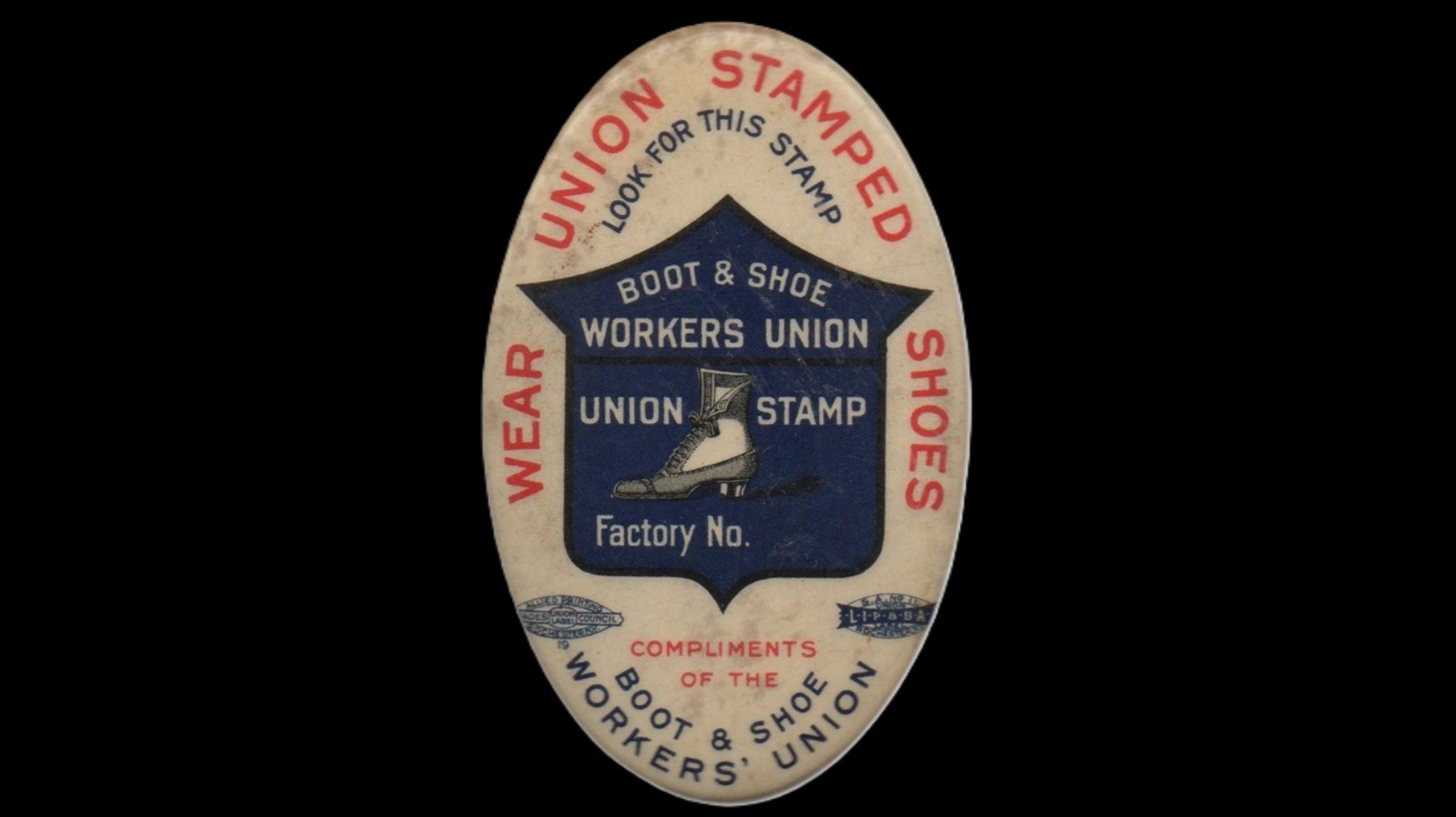
A series that will be of interest to all students of the U.S. labor movement. Michael T. Berry was the very definition of the Socialist labor activist, working for decades in the Massachusetts shoe industry, battling against the labor bureaucrats, and fighting for union militancy and democracy, all while also a prominent Socialis. He would late in life support the T.U.E.L. and the Communist movement. Below is some essential history, from the Knights of St. Crispin to the Amalgamated Shoeworkers Union, of the fight to organize the industry from an active participant.
‘Amalgamation or Annihilation for Shoe Workers?’ by Michael T. Berry from Voice of Labor (Chicago). Vol. 11 Nos. 611-13. July 28, August 4 & 11, 1923.
This is the first of a series of three articles by Michael T. Berry, of Lynn, Mass, on the problem of organizing the shoe industry. Comrade Berry has spent the greater part of his life actively in the trade union movement and particularly in the shoe workers, organizations. This article is particularly timely as the Amalgamated Shoe Workers Union will hold its convention on August 20th. Militants in the shoe industry should see that this article has as wide a circulation as possible. The two articles to follow will deal with past efforts to organize the shoe workers, the influence of the church and betrayals by the leaders. ED.
After decades of experience with the futility of the craft form of organization, or rather disorganization, the shoe workers of America finally started out some three years ago to get all the independent shoe workers unions to amalgamate.
Conferences were held at various times during a period of two years in Chicago, Lynn. Haverhill and other eastern shoe centers, winding up with a conference in Rochester, N.Y. in the early days of 1922, which ordered the holding of a convention to amalgamate the independent shoe workers bodies in one union. This convention was held in Paine Memorial Hall, Boston, beginning May 31, 1922. where the delegates representing the United Shoe Workers of America, the Shoe Workers Protective Union, the Allied Shoe Workers, the Childreng Shoe Workers (NY.), Amalgamated Fitters (N.Y.), the Independent Edgemakers of Salem, Mass., the Pattern Makers, and one or two locals, the name of which does not readily come to the writer’s mind. After a week spent in trying to launch the ship, the convention ordered the Committee on Constitution to draft along lines already indicated, a constitution which was to be submitted to the entire rank and file represented, for amendment, alteration, acceptance or rejection.
Amalgamated Launched.
The convention made the requisite preparations for the reconvening of the convention at a later date to complete the programme and to launch “The Amalgamated Shoe Workers of America,” the name given the new body by the convention at its first sitting. The convention reconvened the first Monday of October, and after two weeks spend in discussion most of which would be useless among men who knew the goal of the labor movement, and who were not disturbed by incidental trifles, finally as they thought, launched an amalgamated movement. But did they?
At the first session of the convention the writer introduced a manifesto, the text of which appears in the records calling for an out and out industrial organization both as to form and goal, and setting forth the reasons therefor. This was voted down by a vote of 70 to 16, as I remember. The general argument that was advanced against the Industrial program was that the rank and file would not stand for it, not that it was wrong. In short the majority of the delegates held the post on that expediency, and not right, was the North Star that was guiding them. Unacquainted with anything but the opportunistic ideas that craft union teaching has corroded their reasoning powers with and which they think is “Diplomacy,” others call it “Salve,” but experience calls it ignorant “bull,” they were unable to understand that where there is not unity of mind there can be no unity of purpose.
Business Agents Hostile.
Very few of them knowing about the evolution of the system, most of them denying the evidence which the class struggle forces on all who are possessed of that intellectual rectitude which precedes clear thinking, they built an organization that is industrial in form, but even that is veiled, and ever since it was launched they have at great financial cost been forced to recognize the above, stated principle, i.e., “where there is no unity of mind there can be no unity of purpose,” and the end is not yet.
The convention ordered that the amalgamated start to function as near January 1, 1923 as possible. The two large groups represented were the Shoe Workers Protective Union and the United Shoe Workers of America. The first of these groups were generally speaking represented in the convention by a group of business agents who were hostile to the principle of amalgamation unless they were the ones who specified the “how” and “why,” and they convulsed the convention almost to the breaking point with their hackneyed arguments concerning “property rights,” which had to do with a building which is their headquarters in Haverhill. In this way they hid their real opposition which was to amalgamation, which they feared would put an end to certain salaried jobs that they had no idea of parting company with, and which are still in their possession minus amalgamation.
The United Shoe Workers, so far as delegates went, were the largest group in the convention. In fact it was in that camp that the original propaganda for the early amalgamated conferences originated, and at no time from first to last were they outnumbered in any of the several conferences held.
Bill Dwyer of Brockton.
Shortly after the deflection of the “Protective,” which followed soon after the adjournment of the October convention, the United official family made up of Thomas F. Lynch, Gen. See, John R. Oldham, Gen. Organizer, aided by their “literary bureau,” one Bill Dwyer of Brockton, typical strong jawed omadhaun of the Biddy Moriarty type, aided by a retinue of crumb-catchers began war on the amalgamated, claiming that inasmuch as “the Protective had not come in,” then all amalgamation was at an end. This concept took on a violent turn and eventuated in a long legal battle which is still on, and which began with the attempt of Walter B. Fogarty and James J. Coleman who were respectively, the Gen. President, and Gen. Sec-Treasurer of the amalgamated, to set in motion the amalgamated machinery last Feb. 5.
This fight was waged to keep bunch of labor fakirs in the “United,” discredited for more than two years previous to, the convention in office. To do that they split the shoe workers ranks wide open, forced them to spend thousands of dollars in legal proceedings, they even resorted to filling the places of the Amalgamated, or that portion which were the former Allied workers of Lynn, with scabs when these locals went on strike recently to bring the thing to a head and stop the cutting of prices on the part of the United, under a contract which the Lynn manufacturers association had previously forced on them.
The Fact Confidence Man.
They are still at it, aided by Fred Mansfield, a prominent Boston lawyer, who has sucked a good part of his living for years out of a gullible working-class who have the unhappy faculty of seeing things as they are not, and who in this case imagine that this two hundred and fifty or more pounds of animated protoplasm, because he was a former candidate for governor on the Democratic ticket, and one of the “Red” destroyers of the Knight of Columbus, possessed of an amazing assurance of his own ability, with a “brass” that surpasses anything the writer knows about; this gent is valiantly struggling to collect $3,300 from the wreck which he, and his, and not the industrialist, made of craft unionism in the shoe Industry.
The Amalgamated will hold its first national convention, beginning Aug. 20 in Paine Memorial Hall, Boston. The lessons that has been brought to them since they last met in that hall will not be too costly if they but draw the conclusion that should be drawn from it. When the Amalgamated Shoes Workers was formed, many of its promoters held up the Amalgamated Clothing Workers as something to fallow foresting that, like Postum, “there is a reason.” That reason stated, in the terms of biology, explains that if one plants a crab apple tree besides a Bartlett pear tree, the reason why one grows crab apples and the other juicy Bartlett pears is explained by the cellular structure through which the sap is drawn that ultimately eventuates in the ripened fruit. No sane man expects to produce Kentucky stallions from coyotes, and no sane man can reasonably expect anything better in shoe workers unions as long as they are dominated by the concepts of craft unionism, which were all right in the days of the hand shoe maker and the “ten footer,” but all wrong today, when just around the corner can be visioned without drawing heavily on the imagination the outlines of the Shoe and Leather Trust, made up of the United Shoe Machinery Company, The Singer Company, The Chicago Packers and a few of the largest of the manufacturers like the Endicott Johnson Co., the International Shoe Co.. etc.
The Table Tells Story.
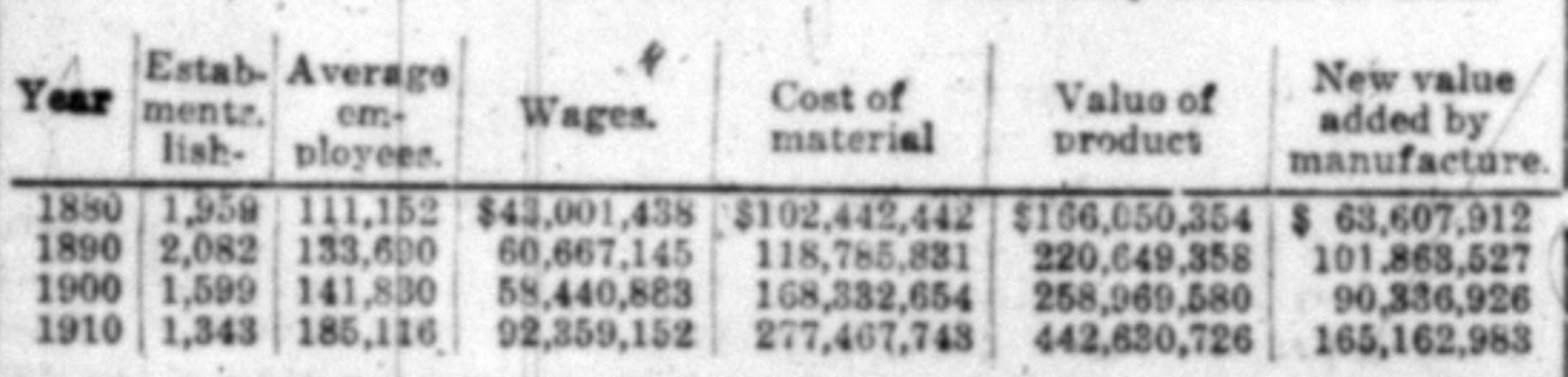
This is the log book of craft unionism, as the writer knows it, for the past forty years, during which time he has helped to build at least three of the makeshifts that shoe workers have called unions, and which leaves the workers, who pin their hopes on them, further away from a real organization today than they were In the early ’80s in the days of the K. of L.
The table which follows and which gives the important frets as to wages, etc., for three census decades from 1880 to 1910, expresses mathematically and eloquently the impotence of craft unionism to even maintaining its grip, much less to improve the conditions which surround its victims.
During slavery days, when the word “Americanism” meant something, when principle was the test of men’s worth, Lowell wrote:
“New occasions teach new duties, time makes ancient good uncouth, We must ever up and onward, who would keep abreast of truth.”
This admonition of the poet should occupy a large place in the minds of the delegates to the next Amalgamated convention. If it does not, then add one more fiasco to the already too-large list of fiascos in the organization of shoe workers.
Need one go further to prove that craft unionism is but a rope of sand? Mathematically, in the above table the creation of a census expert, and not an industrial unionist, is to be found the evidence that marks it impotent even as a palliative, to say nothing about it as a cure for the troubles that beset the shoe workers.
Shoe Workers Going Down.
Here is revealed the fact that despite all the energy spent by, the shoe workers in “organizing” since, 1880, they have gone down the tobogan so far as the share of the wealth that falls to them is concerned. Not alone was this imbecilic idea called craft unionism unable when subjected to the strain which concentrating, and later concentrated capitalism subjected it to hold the wages paid forty years the shoe workers got a reduction of approximately 6%, and yet there are men who claim to be labor leaders and honest to the rank and file who dares to defend craft unionism. It is indefensible. The man who would ask the shoe workers of today to still continue on craft union lines, if he is honest in his belief he is a fool, and if he knows batter and still defends such a course for any reason whatever, he is a fraud, who is deliberately gambling on the future liberties of his class to advance his own interest.
Away with such nonsense fellow shoe workers. Line up for complete amalgamation not only of the shoe, but the tire leather industry Educate yourselves as to the case of your misery. Join with the Trade Union Educational League that, are trying to, so organize ail labor that it may present a united front in the battle which because of the rapid concentration of industry cannot much longer be postponed, where the working class as such must choose between industrial freedom, and indie trial feudalism because there is no middle ground, and the hand of evolution, “Grape Juice” Bryan to the contrary, notwithstanding will insist on writing the decree which will spell freedom or slavery for the working class according as their intelligence is developed or undeveloped. That has been the history–of the past, it will be repeated.
***
This is the second of a series of three articles on the shoe industry written specially for the Voice of Labor by Michael T. Berry, of Lynn. Mass. The evils of craft unionism have been amply demonstrated in the shoe industry and Comrade Berry urges all shoes and leather workers to get behind the movement to amalgamate all the workers in this industry into one powerful Industrial union. The Voice of Labor urges all shoe workers to take their place in the Amalgamated Shoe Workers Union–ED.
This is the story of pure and simple, or craft unionism, as it has worked out in the Boot and Shoe industry after three quarters of a century of “organization,” told by one of its victims, who has given his best efforts for forty years to lift the burden of capitalism from the backs of the toilers, not only in the shoe industry, but in all industry.
It is a page of the class struggle wrenched from the book of capitalism, and held up to the shoe workers that its teaching may both enlighten and warn them of their impending fate, before it is too late to avoid an epoch of industrial feudalism, which the employing class, aided by craft unionism through either deliberate crookedness, or hopeless stupidity, are ready to foist upon its gullible victims, the shoeworkers of America.
Evolution of the Industry.
The transformation of the shoe industry from the stage of home manufacture, or hand work, to the stage of modern industry, or machine production, like capitalism itself, practically dates from the period of the Civil War.
Within the memory of living men, and the writer is one of them, machinery in the shoe industry has nearly supplanted hand labor, and specialized to a high degree this entire industry. This specialization has had the effect of wiping out the skill, and the independence as well, of the workers who as shoemakers, were amongst the most independent of craftsmen.
It has made possible that sine quo non of capitalist success, production in gross. And as labor power under the wage system or capitalism is treated as a commodity, and as the cost of commodities, and it makes no difference whether the commodity is shoes or labor power, is determined by that inexorable law of value, which decrees that “the cost of a commodity is determined by the average amount of socially necessary labor power incorporated in it or necessary for its reproduction,” and as there is less socially necessary labor power in the form of food, clothing and shelter needed to produce a specialized attendant of a machine, than is needed to produce the skilled craftsman who performed the entire job himself, that is now done by from one hundred and fifty to two hundred “hands” today, the result is obvious to anyone who is at all capable of thinking.
A low degree of skill, and a super-abundance of bull strength and ignorance has been produced through the operation of that toothsome morsel to the employing class, “supply and demand” and as a result, we find ourselves today where there are 200,000 of us trying to accommodate ourselves to 100,000, or at best 150,000 jobs, with the consequent and natural result that in one of the largest of the industries of the United States the workers are constantly dogged by want, or the fear of want.
Early Organization Efforts.
Amongst the earliest of American craftsmen to discern the growing tendencies of the wage system were the shoemakers, who as far back as the Revolution were organized to resist the encroachments of the employers of that period. There is a record of strikes taking place at that period in both Philadelphia and New York, and from that time on the children of St. Crispin were ever ready to down tools in the interest of a better civilization. The first organization of shoemakers on a large scale was The Journeyman Cordwainers, which was formed in Lynn, Mass., following the panic of ‘57. As a result of that panic the workers were starved into a condition where any wage was better than no wage at all, which caused the wages to sink to a mere nothing until the unbearable conditions forced organization; the result was the Journeyman Cordwainers, which was a craft organization, something perfectly logical at that time when small production and hand tools were the order of the day. The Cordwainers won their demands in the big Lynn strike of that time, and soon after passed out of existence.
Shortly afterwards, because of the exactions of the employing class, as a result of the Civil War conditions (and let it be remembered that the McKay stitching machine was introduced at this time, and did much to win the battles which the armies of the North were waging for the preservation of the Union, and the abolition of chattel slavery, albeit wage slavery was enthroned in America as a result of that struggle), Newton Daniels, a Milford Mass., boot treer, organized what was the first truly national organization of shoemakers, The Knights of St. Crispin, which enrolled practically all the shoemakers in the eastern portion of the country, which at that time was the shoe producing district of the country in another craft anion.
Craft Unions Served a Purpose.
Craft unionism had a logical reason for existence in those days. It has none today. At the time of the organization of the Crispins in the ’60s, the shoemakers were architects of their own fortunes. The tools needed for production were small and the labor power that was needed for production were small and easily acquired, skill was the great asset, the small shop, the “ten footer,” as it was called, was the order of the day. The journeyman of today was the employer of tomorrow, and no one was unemployed unless he wanted to be. But the Civil War, or the necessities that grew out of it, coupled with the introduction of the McKay machine, started a revolution in the industry and the end is not yet. Machinery was introduced in ever greater quantities, and for every purpose, until today, for all practical purposes the hand shoemaker of fifty years ago has gone to join the noble Redskin, who gazed upon the cityless country that unhospitably welcomed the coming of the first settlers to New England’s shores.
The Crispins won many battles in their day, but they were not exempted from the development of the wage system which decrees that progressive concentration is the law of capitalist development, while progressive competition is the law which under, this system says that labor shall live. In other words, the capitalist class, as a class, grow richer while it grows fewer, while the working class grows to ever greater numbers while it grows poorer.
The Crispins never knew that such a law existed, in fact they probably felt, like most of the workers today, that hard work and good luck is all that is needed to insure success. For is not America “the land of opportunity?” where everyone is free, and where any boy born here can be President if he wants to be, and as a consequence of their ignorance they went out to be followed some years later by the once promiseful organization of the American working-class, the “Noble and Holy Order of the Knights of Labor of North America.”
The Knights of Labor.
At the last convention of The Knights of St. Crispin, Wendell Phillips, the grandest character that Massachusetts ever produced, said this: “Give me one thousand men in any land who are organized to secure simple justice, and I will revolutionize that land in ten years.” Keep that saying in your mind, fellow shoeworkers, and ask yourselves why you have so often “organized” only to fail again. The Knights of Labor came after several “lean years” that followed the death of the Chis pins, during which the wages of the shoeworkers–they were then well upon their way in the modern factory system, and consequently. they were shoeworkers, and not shoemakers mad been severely slashed, especially so during and immediately following the panic of 73, that “Grape Juice” Bryan loves to talk about, along with the rest of the silver bugs, who affect to believe that labor’s disasters all date to ’73, and the demonetization of silver, as though silver standard countries were not as great exploiters of labor as gold, or any other standard, placing the question on its head instead of its feet, by failing to make clear the fact that the exploitation of the shoeworkers, as well as all other workers is traceable to the private ownership of the land, mills, mines, factories, farms, railroads, etc., by a small class who do not use them, while the majority, the working class, are forced to use them, but do not own them.
Creator of Knights of Laber.
The Knights of Labor was the creation of Uriah S. Stephens, a Philadelphia tailor, and was the first intelligent attempt made to weld the American working class into an irresistible fighting body. Stephens, who was one of those great characters that time now and again produces, spent ten years in working out the program of the K. of L. While traveling in Europe in ’59, he made the acquaintance while in London of the man who was the secretary of the International Association of Workmen, which had previously been formed by Marx and Engels, the secretary of which was a Jewish tailor, Geo. J. Eccarius. Eccarius gave Stephens the “Communist Manifesto,” the joint product of Marx d Engels, which by that time was gripping the thought of the European workers as well as bothering the midnight siestas of their exploiters and rulers. Stephens, from that Manifesto worked out the program that ten years later was launched under the name of “Noble and Holy Order of the Knights of Labor of North America.” That was in ’69. It was not until the early ’80s that the K. of L. began to grow and attract the attention of American ruling class, who soon found the way to inject the virus which ultimately ended the K. of L. and ever since has hamstrung the American labor movement under the name of “labor fakir,” or as the late Mark Hanna so felicitously called them, “My trusted labor lieutenants.”
After the death of the Crispins, and until the coming of the K. of L., the shoe workers were without organization except here and there where some local body was set up. It was during this period, or in ’79, that the Lasters Protective Union was organized in Lynn, following the big strike of the year previous. This body grew from a local to a national body, and afterwards was merged in the Boot & Shoeworkers’ Union, when that body was formed in ’95. While the L.P.U, existed, or more properly speaking, while shoes were lasted by hand instead of by machine as it won many a wage contest for its members, but with the coming of the machine it was forced down and out compelled to bow to the inevitable. During the yearly ’80s the rank and file of the shoe workers all over the country began to wake up and turn their attention to organization. For years they had been forced to accept degrading conditions because they had no organization to fall back upon.
Disintegration Begins.
The K. of L. enrolled thousands of them during this period, and continued to do so until after the Richmond Convention of ’86, when the K. of L. began to disintegrate. The cause of this disintegration is an interesting story, and should never be lost sight of by the working class in its march to freedom, because it vindicates the poet, who said: “They enslave their children’s children when they compromise with sin.” It [Tear in the paper this paragraph] compromise with sin that wro [] wreck of the K. of L., the most successful organization of the working class to date [] ment, and one that had the [] of its founder been followed, it would have placed us today in the forefront of the militant labor movements the world, in fact, did that in the ’80s. “The compromise with sin” that ended the K. of L, came about this way. For years after the organization of the K. of L. its name never spoken in public. Stephens was spending his time laying broad and deep, as he thought, the foundation of the organization that he intended to be the emancipator of American labor.
***
This is the third and final article of a series written on trade unionism in the shoe industry by Michael T. Berry of Lynn., Mass., an active participant in the struggles of the shoe workers for decades. In the first article he tells of the present efforts of the progressive shoeworkers to bring about industrial unionism through amalgamation. In the second article he tells of the organization of the Knights of Labor and the appearance of Sammy Gompers on the scene as the tool and agent of Andrew Carnegie, the steel Magnate. The role of the Catholic church as an ally of capitalism is clearly indicated in the final installment.–Ed.
Capitalism even then had its “under cover men” who were snooping around to see what if anything threatened the existence of the then embryonic American plunderbund, amongst the protecting saints of which the name of canny Andy Carnegie, who was then dreaming of the Billion-dollar Steel Trust, and who needed peace and contentment in the Jungle if that program was to go through, will forever stand high amongst the Gods of Rent, Interest, and Profit. The slumbers of canny Andy were disturbed when he learned of the existence of the K. of L. and he lost no time in putting his Man Friday to work to counteract its influence.
That Man Friday was and is Sammy Gompers, and the counter irritant was the A. F. of L, something that it has been ever since. If my memory is not at fault that act of kindness on the part of Gompers was never forgotten by the canny Sect, who as we remember rewarded that Judas Iscariot of the American labor movement with a bequest of a few paltry thousands of dollars at the time of his death. Some two years later the “Noble and Holy Order” was attacked from another angle, this time by the Church.
The K. of L. threatened the existence of American Capitalism and all its retinue of brain twisters, Press, Pulpit, and Bar. These kept men of the robber system that says to you, “Blessed are the poor for they shall be poo: er,” included amongst the watch dogs of capitalism a certain Canadian Cardinal named Tachareau.
This gentleman sought to make his place at the table of capitalism secure by threatening to excommunicate every Roman Catholic who was a member of the K. of L. Cardinal Gibbons, less spectacular than his Canadian colleague interposed an objection, and had the secret work. “AK” etc., submitted to him for examination. He evidently examined it, as shortly afterwards the Order found itself passing through an enfilading fire, on one side was the “smashing from without” of the Gompers gang, while on the inside were developed the labor fakirs who smashed or sold for greed or gold the last remnants of what might have been today the shock troops of the World Revolution, had the teachings of Stephens, instead of the teachings of Powderly and Sovereign prevailed. Out of the “sanctuary” of the K. of L. were graduated the labor fakirs who became the lieutenants of Gompers and Capitalism.
Harry J. Skeffington, the notorious hounder of the “Reds” as well as lecturer for the Knights of Columbus, was one of this corrupt hell houndish crew. In ’89 this bird formed the International Boot and Shoeworkers Union, which was a cheap caricature of pure and simple unionism, an attempt to fight the German army at the height of its glory, with a bean shooter, so to speak. At this time, 1889, there were in existence the following organizations of shoeworkers, claiming to represent the workers, all of them national in scope, all of them ever ready to give the other fellow the leg even to the point of scabbing: there was the Lasters’ Protective Union, which controlled the lasters. The International, (Skeffington’s meal ticket), and District Assembly 216, K. of L., which was the last of the Order so auspiciously born twenty years before in Philadelphia.
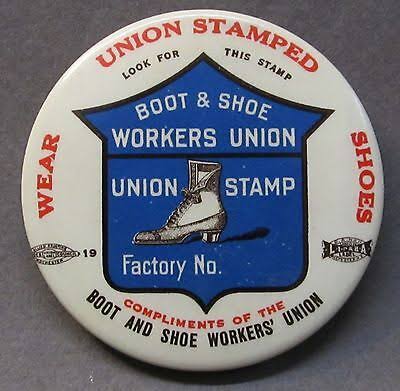
So stood matters when in 1895 the Boot and Shoeworkers’ Union (the Tobin outfit) was born. As a result of the numerous unions in the trade and the propensity of their leaders to try to bask in the smiles of the employing class, especially so in the case of Skeffington, who was so crooked even when he thought he was right, that he could hide behind a cork screw or go to sleep comfortably in a wash tub. The worker inherently tries to shield himself from the blows of the ruling class, and at this time the shoeworkers were getting many of them, because of this condition and the scabby practices of dual unionism, followed by the Haverhill, Mass., strike, during the winter of 94-5. Then the Boot and Shoe Workers Union was formed.
For fear that an important point may be overlooked in the consideration of shoeworkers unions, the writer would observe right here that the Boot and Shoeworkers Union was an honest, though ignorant attempt to bring about one union of the trade, its first President, John F. Tobin, who held the Presidency of this Union from the time it was formed in 95 up to his death a few years ago, being when elected an honest man devoted to the interests of the rank and file. He was a socialist, and amongst the best informed of the leaders of the American working-class movement. The Boot and Shoeworkers Union at its birth had a clause in its constitution, placed there after two days fight on the part of the writer and others who were “Reds,” that declared for the collective ownership of the means of production, distribution, and exchange. Amongst others who fought to place that advanced doctrine as a part of the Preamble, was Tobin, who later became an all-round reactionary. Why? Because no movement can rise higher than the intellectual level of the men who make it, and the rank and file of the Tobin union were a long way behind the few enthusiasts who in that early day of advanced working class thought were gullible enough to believe that putting new wine in old bottles would effect the desired result.
From its formation in ’95 until about ’98 the Boot and Shoeworkers’ Union was fairly representative of its rank and file, as much so as conglomerate ignorance can represent anything. Suddenly, as a result primarily of two strikes, which took place at this time, one in Brockton, the other in Marlboro, and which nearly swept the Boot and Shoeworkers’ Union into the ash can of history, the officialdom veered about with a new policy. They had discovered that there was no money in running a labor union if it was run in the interest of the rank and file, so they went to the extreme and boldly came out with a program that meant slavery to the rank and file, and strike insurance for the employer. It was like Dante’s inscription over the door of Inferno, “Abandon hope, all ye who enter here,” and it has been so regarded by all thinking shoeworkers ever since.
As a result of the adoption of this policy by Tobin and his followers, the shoeworkers in such centers as Lynn, Haverhill, Brooklyn, Rochester, Philadelphia, Chicago, and St. Louis declared war and set up rival unions. In Haverhill, the Shoe Workers’ Protective Union was organized as a protest to Tobinism. In the other centers, but at a later date, the United Shoeworkers of America was set up. Other small groups, local in character, such as The Allied Shoeworkers in Lynn, completed the picture. The shoeworkers had now got back to the days of rival-dual unionism that existed when the L.P.U.D.A. 216, K. of L., and the Skeffington outfit occupied the stage; the vicious circle had been completed and the decks cleared for more “organization” in the not far distant future. War has been the natural order of things in the shoe industry ever since the Tobin bunch promulgated the “Rochester Constitution” in ’99.
All of the independent unions were in a state of war against the Boot and Shoeworkers and vice versa. And on other occasions, the independents fighting each other to see who would grab the crumbs that fell from the employer’s table. A highly edifying situation, you say? Yes, but what else can be expected while the shoeworkers are taught to understand things from a capitalist standpoint? To ignore the class character of labors’ conflicts for better conditions, to regard capital and labor as identical in interest; along with all the rest of the cobwebs that pure and simple craft union teaching has wound their brains with, until they know not, and as a rule don’t care, whether they are going or coming, as long as they have a job, never mind what the conditions are.
Fifteen years or more of fratricidal struggles, workers scabbing on workers, thousands of dollars spent to win superficial victories, every one of which was deepening the long night of bondage and mourning, positive defeats of labor as a whole, was the result of this asinine policy that forever dooms the rank and file of the shoeworkers, along with the rest of the so called “organized” patriotic paupers, the free born American voting kings. This is the result of craft union teaching for three quarters of a century in a land where the working class, were they but to use their brains and organize their economic and political power in THEIR interest, could make this country their country, in practice as well as in theory. There is no silver lining to this dark cloud that is still settling down upon the 200,000 men and women in the shoe industry, until they right about face and part with the past.
They must begin along new lines to rear the engine of their emancipation by educating and organizing along industrial lines the industry they are engaged in, and they must throw overboard all of the “Medicine Men” of the employers, who insist on keeping them firmly riveted to the employers’ political-economic machine. Some of these are stupidly ignorant, most of them are hopelessly corrupt, but it matters not which impediment afflicts them, in the result to the rank and file. It is all the same whether one is shot by a crooked knave or a stupid fool, who “didn’t know it was loaded.”
In a more or less vague way the rank and file are coming to know, perhaps feel, is the better word, that this is true, so after bumping their heads for years, they now see glimpse of the new dawn, and in their struggle to bring about industrial unionism in the shoe industry through amalgamation, they are on the right road at last.
The Voice of Labor was a regional paper published in Chicago by the Workers (Communist) Party as the “The American Labor Educational Society” (with false printing and volume information to get around censorship laws of the time) and was focused on building the nascent Farmer-Labor Party while fighting for leadership with the Chicago Federation of Labor. It was produced mostly as a weekly in 1923-1924 and contains enormous detail on the activity of the Party in the city of those years.
PDF of issue: https://www.marxists.org/history/usa/pubs/vol/v11n611-jul-28-1923-VOL.pdf
PDF of issue 2: https://www.marxists.org/history/usa/pubs/vol/v11n612-aug-04-1923-VOL.pdf
PDF of issue 3: https://www.marxists.org/history/usa/pubs/vol/v11n613-aug-11-1923-VOL.pdf

